The Official Blog of the

Archive for the ‘Middle East & North Africa’ Category

Havrin Khalaf: A Light Has Gone Out But The Tasks of Reconciliation Remain

In Being a World Citizen, Conflict Resolution, Cultural Bridges, Current Events, Democracy, Human Rights, Humanitarian Law, International Justice, Middle East & North Africa, Solidarity, Syria, The Search for Peace, War Crimes, World Law on October 22, 2019 at 10:02 AM

By René Wadlow

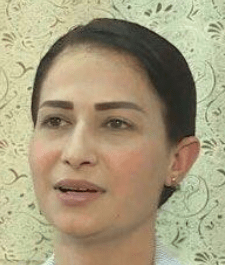
On October 12, 2019, Havrin Khalaf, the Co-Secretary-General of the Future Syria Party was shot to death at a roadblock by the Turkish-backed militia, Ahrar al-Shargiya. The Future of Syria Party had been formed in March 2018 in Raqqa with its aim of a “democratic, pluralistic, and decentralized Syria.” The Party was active in the Autonomous Administration of North and East Syria — an area often referred to by the Kurds as Rojava. The area is highly diverse in both population groups and religions. Thus, the Future Syria Party wanted to build bridges of understanding among Kurds, Arabs, Turkmen, and other ethnic groups as well as among Muslims, Christians and Yezidis. The hope was that this bridge-building effort would become a model for all of Syria.

Even before the fighting began in Syria in 2011, the Syrian society was divided along ethnic and religious lines. The fighting, the displacement of people, the rise of the Islamic State (ISIS) has increased ethnic and religious divisions. In many cases, trust among groups has been broken, and even minimal cooperation through economic links has been broken. Rebuilding cooperation, a chief aim of the Future Syria Party, will be difficult. The move of Turkish forces and their Syrian allies into northeast Syria will make cooperation across ethnic and religious divides even more difficult.

Havrin Khalaf was a symbol of this reconciliation effort. She was also a symbol of the quest for equality between women and men. As a Kurdish woman she had an Arab man as Co-Secretary-General of the Party. As an educated woman – she received a degree from the University of Aleppo in 2009 – she was particularly active for the empowerment of women. She often served as spokesperson for visiting diplomats, journalists, and aid workers. As a highly visible person, her killing was deliberate. The driver of the Party car she was in was also killed at the same time.

There is a real danger that such killings increase as Turkish troops advance and control an ever-larger part of what the Turks have ironically called “the safe zone.” Earlier Turkish occupation of the Efrin area has led to the displacement of people, looting, hostage-taking and torture. We can also fear that areas in northeast Syria newly under the control of the Syrian Government will not be free from revenge killings and politically-motivated violations of human rights and international humanitarian law.

With the death of Havrin Khalaf at the age of 34, a light has gone out. The tasks of reconciliation remain. New voices are needed. We outside of Syria must see how best we can facilitate this vital role of bridge-building.

Prof. René Wadlow is President of the Association of World Citizens.

Avec l’avancée des troupes turques, les dangers échappent à tout contrôle

In Being a World Citizen, Conflict Resolution, Current Events, Human Rights, Humanitarian Law, International Justice, Middle East & North Africa, NGOs, Solidarity, Syria, The Search for Peace, Track II, United Nations, War Crimes, World Law on October 13, 2019 at 2:59 PM

Par René Wadlow

Le 9 octobre, confirmant des suspicions déjà anciennes, les troupes turques ont lancé une attaque contre les Forces démocratiques syriennes, milice opérant sous commandement kurde au nord-est de la Syrie. L’opération kurde a pour nom de code «Opération Printemps de Paix», mais le danger est réel de voir la situation tourner à une «Opération Hiver de Violence» alors que les habitants de la région fuient en nombre les attaques aériennes et les bombardements de l’artillerie.

Soldats turcs en action

En conséquence, dans un message adressé le 10 octobre aux ambassadeurs turcs auprès de l’ONU à New York et Genève, ainsi qu’à l’ambassadeur turc auprès de l’UNESCO à Paris, l’Association of World Citizens (AWC) a exprimé sa préoccupation devant les opérations militaires auxquelles se livrent les forces armées turques et leurs alliés syriens au nord-est de la Syrie. L’AWC a appelé à une solution politique permettant de réconcilier les intérêts tout à la fois de la Turquie et de l’Administration autonome de la Syrie du Nord et de l’Est, région largement désignée par les Kurdes sous le nom de Rojava. Il s’agit d’une région multiethnique peuplée de Kurdes, d’Arabes et d’Assyriens, des groupes plus circonscrits de Turkmènes, d’Arméniens et de Circassiens l’habitant également. Avec le temps, les relations entre ces groupes se sont envenimées du fait du conflit en Syrie et de la création de l’Etat islamique (Daesh).

L’Appel Citoyen du Monde se poursuivait ainsi : «Un cycle de violence dans la région serait à même d’entraîner des conséquences funestes pour les civils qui y vivent, et ils sont plus de deux millions dans ce cas. L’Association of World Citizens appelle le Gouvernement turc à entreprendre des négociations de bonne foi avec l’Administration autonome de la Syrie du Nord et de l’Est, ainsi qu’avec les autres parties concernées, afin de parvenir dès que possible à un cessez-le-feu. Nous tenons également à ce que les forces armées turques se conforment à leurs obligations en droit humanitaire international, ce qui consiste notamment à s’abstenir de toute attaque contre des civils, ainsi que de toute attaque aveugle ou disproportionnée ».

Combattantes kurdes de Syrie

Les guerres d’Irak et de Syrie ont toutes deux entraîné de nombreuses violations du droit humanitaire international. A bien des égards, le droit humanitaire international est le fondement du système de droit mondial que promeut l’AWC.

Pour l’heure, les discussions à huis clos qui se sont tenues au Conseil de Sécurité des Nations Unies n’ont mené à aucune déclaration que tous aient pu soutenir. Les divers Etats concernés présentent en la matière des politiques très diverses. La Russie se targue de pouvoir faciliter d’éventuelles discussions entre les factions kurdes et le gouvernement d’Assad. Le Président Trump a laissé entendre qu’il pouvait servir de médiateur entre Turcs et Kurdes. La position qu’affichent les Etats européens membres du Conseil de Sécurité semble voisine de celle de l’AWC, puisqu’ils appellent à un cessez-le-feu. La direction de l’OTAN ainsi que l’ambassadeur chinois à l’ONU appellent tous deux à la «retenue».

C’est pourquoi, alors que la situation actuelle peut prendre tous les chemins possibles vers le pire, les organisations non-gouvernementales doivent faire preuve d’un leadership clair et dynamique. Il faut un appel aussi large que possible au cessez-le-feu ainsi que des négociations de bonne foi, de manière à pouvoir commencer à satisfaire les intérêts communs aux diverses parties dans une société qui soit à présent en paix.

Le Professeur René Wadlow est Président de l’Association of World Citizens.
As Turkish Troops Advance, Dangers Escalate

In Being a World Citizen, Conflict Resolution, Current Events, Human Rights, Humanitarian Law, International Justice, Middle East & North Africa, NGOs, Solidarity, The Search for Peace, Track II, United Nations, War Crimes, World Law on October 13, 2019 at 2:57 PM

By René Wadlow

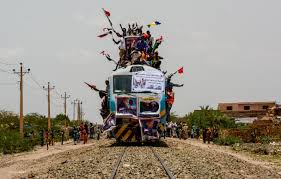
On October 9, Turkish troops began a long-anticipated cross-border assault against the Syrian Democratic Forces, a Kurdish-led militia in northeastern Syria. The Turkish operation is code-named “Operation Peace Spring”. There is a real danger that the situation turns into “Operation Violent Winter” as many flee from the air attacks and artillery bombardments.

Therefore, in an October 10 message to the Turkish Ambassadors to the United Nations in New York and Geneva and to the Turkish Ambassador to UNESCO in Paris, the Association of World Citizens (AWC) expressed its concern at the military operations carried out by the Turkish armed forces and their Syrian allies in northeast Syria. The AWC called for a political solution that would reconcile the interests of both Turkey and the Autonomous Administration of North and East Syria – an area often referred to by the Kurds as Rojava. The area is a multi-ethnic region with Kurds, Arab and Assyrian populations and smaller groups of Turkmen, Armenians, and Circassians. Relations among these groups have grown tense as a result of the conflict in Syria and the creation of the Islamic State (ISIS).

Turkish army soldiers

The World Citizen Appeal continued “A cycle of violence may induce dreadful consequences for civilians in the area, nearly two million people. Therefore, the Association of World Citizens calls on the Turkish Government to enter negotiations in good faith with the Autonomous Administration of North and East Syria as well as other stakeholders with a view of securing a prompt ceasefire. In addition, we are concerned that the Turkish military lives up to its obligations under international humanitarian law including refraining from carrying out attacks on civilians as well as indiscriminate and disproportionate attacks.”

The wars in both Iraq and Syria have produced numerous violations of international humanitarian law. In many ways, international humanitarian law is the basis of the system of world law which the AWC promotes.

Syrian Kurdish fighters

For the moment, closed-door discussions in the United Nations (UN) Security Council have not led to a statement on which all can agree. States have a range of policies. Russia proposes that it can facilitate discussions between the Kurdish factions and the al-Assad government. President Trump suggested that he could mediate between the Turks and the Kurds. The position of the European States members of the Security Council is close to that of the AWC. They call for a ceasefire. NATO leadership as well as the Chinese Ambassador at the UN call for “restraint”.

Therefore, as the current situation may grow worse, clear and dynamic leadership from non-governmental organizations is required. There should be a broad call for a ceasefire and negotiations in good faith so that common interests in a peaceful society can be put into practice.

Prof. René Wadlow is President of the Association of World Citizens.
International Humanitarian Law, Constant Challenges, NGO Responses

In Africa, Being a World Citizen, Conflict Resolution, Human Development, Human Rights, Humanitarian Law, International Justice, Middle East & North Africa, NGOs, Refugees, Solidarity, The Search for Peace, Track II, United Nations, War Crimes, World Law on August 12, 2019 at 8:38 AM

By René Wadlow

August 12 is the anniversary of the signing of the Geneva Conventions of 1949. The 1949 Geneva Conventions and the 1977 Protocols Additional are central instruments of International Humanitarian Law. The Geneva Conventions, are also often called the Red Cross Conventions as the International Committee of the Red Cross is the institution which is to promote and protect the articles of the Conventions, although the Convention opens the door to other organizations “which offers all guarantees of impartiality and efficacy.”

The 1949 Geneva Conventions were drawn up in light of the violations of earlier international humanitarian law during the Second World War. The first Geneva Convention was drawn up in 1864, the time of the birth of the International Committee of the Red Cross (ICRC). The aims of the ICRC were set out at the time: the development and universalization of humanitarian law and as a neutral go-between in armed conflicts, enabling contact to be maintained between combatants. There could also be a role to serve as an intermediary between victims and States, reminding States of their obligations towards those victims.

The Geneva Conventions have evolved as the nature of armed conflicts has evolved. The 1977 Protocols Additional were drawn up by a diplomatic conference held in Geneva in light of the experiences of the war in Vietnam, the greater number of conflicts that could be called “civil wars” and the greater use of armed militias which were not regular military forces. In the 1977 discussions, there was greater awareness of the conditions of refugees, already protected by the international refugee agreements but also a growing awareness of persons displaced within the country, a pattern which has grown.

Closely related to the Geneva Conventions is a second tradition of international humanitarian law, what may be called “the Hague Tradition” growing out of the Hague Peace Conferences of 1899 and 1907. This tradition places its emphasis on banning the use of certain types of weapons. The 1925 Geneva Convention prohibiting the use of poison gas was a direct result of poison gas use in World War I. Since then, there has been a treaty banning the use of land mines, of cluster munitions, and a wider ban on chemical weapons.

There are two other sources or traditions in the development of international humanitarian law. One is respect for human rights provisions as set out in the Universal Declaration of Human Rights and the conventions which followed focused on different aspects of the Universal Declaration. While the provisions of the Universal Declaration are to be upheld at all times, there are highly visible and wide-spread violations during armed conflicts. Thus the United Nations (UN) Commission on Human Rights (become the Human Rights Council) became concerned with situations of armed conflicts.

Palmyra, the ancient city in Syria, much of which has been destroyed by both the ‘Islamic State’ (ISIS) and the Syrian Arab Army of the Assad regime.

The fourth tradition is the development of the 1936 Roerich Peace Pact to protect cultural heritage during armed conflicts. The 1936 Pact, signed at the White House in Washington, D.C. was a Pan-American Union Treaty. Its provisions served as the basis of the 1954 Hague Convention on the Protection of Cultural Goods with UNESCO as the official body for its safeguard. The 1954 Treaty has been progressively enriched by the development of UNESCO’s Cultural Heritage sites. The International Criminal Court has recently condemned a person for his role in the destruction of UNESCO Cultural Heritage sites in northern Mali, West Africa.

These traditions of international humanitarian law have been highlighted in a number of United Nations (UN) General Assembly resolutions such as that on Basic Principles of Protection for Civilian Populations in Time of Armed Conflict, Resolution 2625 (1971).

Thus, the provisions of international humanitarian law are well developed and cover many issues that are likely to arise in armed conflicts. There are two major challenges for their respect. One is that the provisions of international humanitarian law are not well known, neither by the military nor by possible victims. Thus, education concerning international humanitarian law is necessary. During the 1969-1971 Nigeria-Biafra War, I had been a member of an ICRC working group as the Nigeria-Biafra war was the first war among Africans without a colonial power being involved. There were many violations during the war, including the use of starvation as a military policy. After the end of the war, the need for teaching international humanitarian law was obvious. I helped in the preparation of a textbook using African examples that the Red Cross used fairly widely in Africa. The teaching of international humanitarian law in the context of local cultures and values is still a vital challenge.

The second and more important challenge is that international humanitarian law is not respected even when its provisions are known. The current conscious violation of international humanitarian law including some of the oldest provisions – not attacking medical facilities or not shooting prisoners – has been widespread in armed conflicts in the Middle East, Africa, Asia and elsewhere. More than preparing handbooks for the military and the militias is needed.

The Association of World Citizens has been stressing the need for a UN-led world conference on the reaffirmation of international humanitarian law in which governments, nongovernmental organizations (NGOs) and armed factions could participate. The degree of respect for humanitarian standards is far from satisfactory, as has been repeatedly pointed out. However, for the moment, there has not been the needed momentum. Such a momentum is likely to arise only from NGOs. The August 12 anniversary is a reminder that we need to work creatively before major wars not afterwards.

Prof. René Wadlow is President of the Association of World Citizens.

Libya: The Blitzkrieg Breaks Down, Negotiations Needed

In Africa, Being a World Citizen, Conflict Resolution, Current Events, Humanitarian Law, Libya, Middle East & North Africa, Migration, Modern slavery, NGOs, Refugees, Solidarity, The Search for Peace, Track II, United Nations, War Crimes, World Law on July 20, 2019 at 10:29 AM

By René Wadlow

Dozens of people were killed in an air raid on July 3, 2019 on a detention center holding migrants in a camp at Tajoura, a suburb of Tripoli according to the United Nations (UN) Support Mission in Libya. Most of those killed and wounded were Africans from Sudan, Eritrea and Somalia who had hoped to reach Europe but were blocked in Libya. Others held in the detention center had been returned to Libya, arrested trying to cross the Mediterranean Sea.

In 2018, some 15,000 persons were intercepted on boats at sea and returned to Libya, placed in detention centers without charge and with no date set for release. The detention centers are officially under the control of the Government of National Accord’s Department for Combating Illegal Migration. In practice, most of the detention centers are controlled by militias. The former UN High Commissioner for Human Rights has described the conditions in these detention centers as “an outrage to the conscience of humanity.”

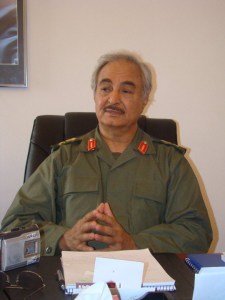
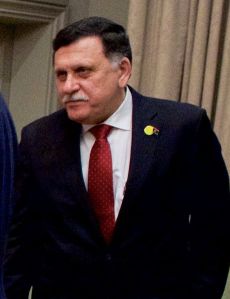
Since the outbreak of armed conflict on the outskirts of Tripoli on April 3, 2019, many persons have been killed or wounded in what General Khalifa Haftar hoped would be a blitzkrieg advance. He badly underestimated the degree of military response that he would meet from the militias loyal to the Government of National Accord led by Prime Minister Fayez al-Sarraj. Since the blitzkrieg bogged down, in the absence of a ceasefire, the humanitarian situation is dramatically degenerating.

General Khalifa Haftar

The dramatic conditions in Libya have a double aspect. One is the need to create a stable administrative structure of government taking into consideration the geographic and ethnic diversity of the country. The second aspect is the humane treatment of refugees and migrants from other countries who have tried to cross Libya or have been returned from failed crossings of the Mediterranean.

Libyan Prime Minister Fayez al-Sarraj

Therefore, the Association of World Citizens (AWC), as an immediate step, calls for a humanitarian ceasefire and the resumption of UN-led negotiations in good faith among a broad spectrum of Libyan political parties and tribal representatives.

Secondly, the AWC calls for an end of returning refugees and migrants to Libya. Other countries must welcome migrants while longer-range cooperative structures are put into place. Migration issues will continue to challenge the world society.

Prof. René Wadlow is President of the Association of World Citizens.
جمعية المواطنين العالمية تدعو للسلام في ليبيا

In Africa, Being a World Citizen, Conflict Resolution, Current Events, Democracy, Human Rights, Humanitarian Law, Libya, Middle East & North Africa, NGOs, The Search for Peace, Track II, United Nations on May 8, 2019 at 4:25 PM

Appel de l’AWC pour la Libye

In Africa, Being a World Citizen, Conflict Resolution, Current Events, Humanitarian Law, Libya, Middle East & North Africa, NGOs, Solidarity, The Search for Peace, Track II, United Nations, World Law on April 30, 2019 at 10:09 AM

L’ASSOCIATION OF WORLD CITIZENS APPELLE A UN CESSEZ-LE-FEU EN LIBYE, AU RESPECT DU DROIT HUMANITAIRE INTERNATIONAL ET A L’OUVERTURE DE NÉGOCIATIONS DE BONNE FOI SUR LA FUTURE STRUCTURE CONSTITUTIONNELLE DE L’ÉTAT

L’Association of World Citizens, réagissant aux appels à l’aide de personnes déplacées et menacées par les bombardements dans les combats aux alentours et au cœur même de Tripoli, appelle à un cessez-le-feu immédiat qui permît de distribuer de l’aide humanitaire, ainsi que de sauver des vies.

Les affrontements ne donnant pas signe de fin entre, d’un côté, le Général Khalifa Haftar à la tête de son Armée nationale libyenne et, de l’autre, les milices locales contrôlées par le Gouvernement, créent toutes les conditions d’une intensification des atteintes aux lois de la guerre, en particulier d’attaques contre les civils et les installations médicales.

L’Association of World Citizens appelle instamment à ce que des négociations aient lieu sous l’égide de médiateurs des Nations Unies, comme il était prévu qu’elles aient lieu du 14 au 16 avril, et à ce que ces négociations soient ouvertes à un éventail de participants qui soit aussi large que possible. Il faut des structures constitutionnelles nouvelles et adéquates pour assurer l’administration d’un Etat par nature complexe et diversifié. Depuis un certain temps, notre association met en avant l’éventualité de structures administratives de type confédéral au sein de l’Etat.

L’Association of World Citizens, qui s’était préoccupée de la situation des Droits Humains et de la liberté d’expression en Libye du temps où Mu’ammar Kadhafi dirigeait le pays, demeure préoccupée par le sort du peuple libyen depuis la mort de l’ancien leader en 2011. A présent, le temps est venu pour toutes les parties d’agir de manière responsable pour mettre fin aux combats et entamer des négociations de bonne foi.

POUR L’ASSOCIATION OF WORLD CITIZENS,

Professeur René WADLOW

Président

Bernard J. HENRY

Officier des Relations Extérieures

An AWC Appeal for Libya

In Africa, Being a World Citizen, Conflict Resolution, Current Events, Humanitarian Law, Libya, Middle East & North Africa, NGOs, Solidarity, The Search for Peace, Track II, United Nations, World Law on April 30, 2019 at 10:05 AM

THE ASSOCIATION OF WORLD CITIZENS CALLS FOR A CEASEFIRE IN LIBYA, THE RESPECT OF INTERNATIONAL HUMANITARIAN LAW AND THE START OF NEGOTIATIONS IN GOOD FAITH ON THE FUTURE CONSTITUTIONAL STRUCTURE OF THE STATE

The Association of World Citizens, responding to calls for assistance from persons displaced and in danger of bomb attacks by the fighting in and around Tripoli, calls for an immediate ceasefire so that humanitarian aid can be provided, and lives saved.

Continued fighting by the forces of General Khalifa Haftar and his Libyan National Army opposed by local militias under the control of the Government is likely to lead to increased violations of the laws of war, especially attacks upon civilians and medical facilities.

The Association of World Citizens urges that negotiations under the leadership of United Nations mediators, originally to be held April 14-16, be undertaken with a range of participants as wide as possible. New and appropriate constitutional structures are needed for the administration of a complex and diversified State. This association has proposed the possibility of con-federal administrative structures for the State.

The Association of World Citizens had been concerned with human rights and freedom of expression in Libya during the time of the leadership of Mu’ammar Gaddafi and has continued to be concerned with the fate of the people of Libya since his death in 2011. Now is the time for responsible action by all parties for an end to the fighting and the start of negotiations in good faith.

FOR THE ASSOCIATION OF WORLD CITIZENS,

Professor René Wadlow

President

Bernard J. Henry

External Relations Officer

Libya: Will the UN Appeal for a Halt to the March on Tripoli Be Heard?

In Africa, Conflict Resolution, Current Events, Democracy, Libya, Middle East & North Africa, NGOs, The Search for Peace, Track II, United Nations, World Law on April 10, 2019 at 9:51 PM

By René Wadlow

With the administrative-political situation in Libya badly stalemated and a meeting for negotiations to be held April 14-16 unlikely to make progress, on Thursday, April 4, 2019, General Khalifa Haftar, one of the key players in the drama decided to start a “March on Tripoli” and to take overall power by force.

Most of the significant buildings in Libyan cities were built by Italians during the Fascist period, when Libya was an Italian colony. Thus, General Haftar has patterned himself on Mussolini’s 1922 “March on Rome”. In 1922, the diplomats of most States looked away when Mussolini marched or the diplomats took it as a domestic affair.

In 2019, the “March on Tripoli” has drawn more international attention and concern. The United Nations (UN) Secretary-General, Antonio Guterres, met with Haftar a few hours before the March began. Guterres was in Libya to facilitate the April 14-16 meeting on which his Special Representative, Ghassan Salamé, has been working for some time in the hope of drawing a road map for long-delayed elections. On Friday, April 5, the UN Security Council held a closed-door emergency meeting. The Security Council called for a halt to the March on Tripoli and the de-escalation of the growing armed conflict.

The Security Council recognized the real possibilities of broader armed conflict and its consequences on the civilian population. In the recent past, the Libyan armed factions have violated the laws of war and have a sad record of abuses against civilians.

We will now have to see if Khalifa Haftar is more open to international appeals than was Benito Mussolini. My impression is that the goal of holding overall power is stronger than the respect of international law. However, even a successful “March on Tripoli” will not create the conditions for an administration of a culturally and geographically-diverse country. New and appropriate constitutional structures must be developed.

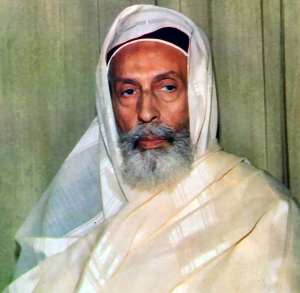
There cannot be a return to the earlier Italian colonial structures, nor to the forms of government at independence developed by King Idris al Sanussi which depended largely on his role as a religious leader using religious orders, nor the complicated pattern of “direct democracy” developed by Muammar al-Qadhafi. The Association of World Citizens has proposed the possibility of con-federal structures.

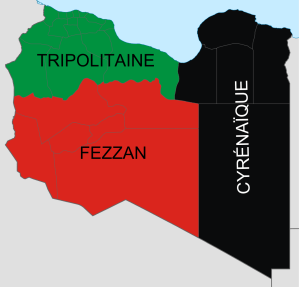
The post 2011 Libyan society faces large and complex issues. Resolving the institutional, economic and political issues is urgent and cannot be settled by elections alone. There are three distinct regions which must have some degree of autonomy: Tripolitania and Cyrenaica both bordering the Mediterranean and Fezzan in the southern Sahara. Within each of the three regions there are differing and often rival tribal societies which are in practice more kinship lines than organized tribes. (1) There are differing economic interests and there are differing ideologies ranging from “Arab Socialism” to the Islamist ideology of the Islamic State which has spread from its Syrian-Iraqi base.

The situation is critical, and the next few days may be crucial for the future of the country.

Note

1) See J. Davis. Libyan Politics, Tribes and Revolution (London: I. B. Tauris, 1987)

Prof. René Wadlow is President of the Association of World Citizens.
Navroz: Turkish Troops in Afrin: Renewal and Complexity

In Conflict Resolution, Current Events, Middle East & North Africa, NGOs, Solidarity, Syria, The Search for Peace, Track II, United Nations on March 22, 2019 at 11:45 PM

By René Wadlow

May the soul flourish;

May youth be as the new-grown grain.

Navroz, usually celebrated on March 21 in Iran and Central Asia, is the “New Day”, the end of the old year with its hardships and deceptions and the start of the New Year to be filled with hope and optimism. With each periodical festival, the participants find the same sacred time – the same that had been manifested in the festival of the previous year or the festival of a century earlier. It is a day for spiritual renewal and physical rejuvenation and is usually a time for reciting devotional poetry, presenting food with symbolic meaning to guests, and visits among family and close friends.

Navroz, which coincides with the Spring Equinox, is related to myths focused on the sun and thus symbolizes the connections of humans to Nature. In some of the myths, Navroz is considered as symbolizing the first day of creation − thus a time when all can be newly created. It is a day between times − old time has died; new time will start the day after Navroz. In this one-day period without time, all is possible. The seeds are planted for a new birth. Among some who celebrate Navroz, real seeds are planted, usually in seven pots with symbolic meanings of virtues. Their growth is an indication of how these virtues will manifest themselves in the coming year. Among those influenced by Islam and Christianity, Navroz is the day when God will raise the dead for the final judgment and the start of eternal life.

Navroz has an ancient Persian origin, related to Abura Mazda, the high god who was symbolized by the sun and manifested by fire. Navroz is also related to the opposite of fire, that is, water. However, water can also be considered not as opposite but as complementary, and thus fire-water can become symbols of harmony. Fire – as light, as an agent of purification, as a manifestation of the basic energy of life − played a large role in Zoroastrian thought and in the teachings of Zarathoustra. Thus, we find fire as a central symbol and incorporated into rituals among the Parsis in India, originally of Iranian origin.

From what is today Iran, Zoroastrian beliefs and ritual spread along the “Silk Road” through Central Asia to China, and in the other direction to the Arab world. As much of this area later came under the influence of Islam, elements of Navroz were given Islamic meanings to the extent that some today consider Navroz an “Islamic holiday”. Navroz is also celebrated among the Alawites in Syria, the Baha’i, the Yezidis, and the Kurds, each group adapting Navroz to its spiritual framework.

In Turkey, for many years, Navroz was officially banned as being too related to the Kurds and thus to Kurdish demands for autonomy or an independent Kurdistan. I recall a number of years ago being invited to participate in a non-violent Kurdish protest in Turkey on Navroz to protest the ban. I declined as the idea of going from Geneva to be put in a Turkish jail was not on top of my list of priorities. Fortunately, for the last few years, the ban has been lifted.

Navroz was marked in 2018 in the Syrian Kurdish area of Afrin by the arrival of Turkish troops and their Syrian allies. One of the first acts of the Turkish troops was to pull down and destroy a statue of Kawa, a mythological founder of the Kurdish people. In the myth, Kawa is a blacksmith who melted iron to make swords and liberate the people from an evil ruler who had been helped by spirits.

2018 Navroz was also the end of a seven-year cycle begun in March 2011, the uprising and then war in Syria. Seven years in many traditions is a significant number.

Thus, Navroz as a day outside of time can be a moment of reflection on the armed conflict in Syria, and on our inability as peace makers to facilitate negotiations in good faith. Now, a new cycle of secular time has begun, made even more complex by the arrival of Turkish troops.

The armed conflict in Syria is complex with outside official players: Iran, Russia, USA, Turkey, the United Nations, the Arab League and more shadowy characters: the Islamic State, a host of intelligence agencies, money and fighters from a variety of sources. We find some of the same players in the war in Yemen. There is, however, agreement among all that killing those who disagree is the only realistic policy. It is a very old and wide-spread idea found in most cultures. The techniques of killing have become more sophisticated – drones and car bombs – but the idea has remained the same and is easily understood.

In contrast, ideas of conflict reduction through changes in structure are more complex: broadening the base of the Syrian government by bringing in individuals from groups largely excluded, creating con-federal forms of association among the Kurds without necessarily creating a separate State, creating a cosmopolitan, humanist society which meets the basic needs of all. Moreover, we on the outside can suggest approaches, but the effort will have to be made by local people.

Those who advocate (and carry out) killing have funds and staff which conflict resolution nongovernmental organizations lack. Yet conflict resolution efforts must continue and grow stronger. A new, even more complex cycle of time has started. The old approach of killing those who disagree remains strong. Yet, I believe that there are possibilities of renewal and cooperative action for a more peaceful and just wider Middle East.

Prof. René Wadlow is President of the Association of World Citizens.