The Official Blog of the

Archive for the ‘Cultural Bridges’ Category

Le droit universel à la fraternité

In Being a World Citizen, Cultural Bridges, Fighting Racism, Human Rights, Solidarity, The Search for Peace, Uncategorized, World Law on February 11, 2014 at 9:25 PM

LE DROIT UNIVERSEL A LA FRATERNITE

Par Bernard Henry

(D’après « The Universal Right to Brotherhood », du même auteur :

https://awcungeneva.com/2014/02/10/the-universal-right-to-brotherhood/)

En tant qu’Organisation Non-Gouvernementale (ONG) dotée du Statut Consultatif auprès de l’ONU et active au sein du Conseil des Droits de l’Homme, l’Association of World Citizens a toujours défendu les Droits de l’Homme partout dans le monde, tous les Droits de l’Homme, qu’ils soient civils, politiques, économiques, sociaux, culturels ou autres, tels que ceux plus récemment reconnus au développement et à un environnement sain.

Depuis le début de la décennie, le désir mondial de Droits de l’Homme est plus visible que jamais auparavant. Mais les nombreux auteurs de violations auxquels le peuple du monde doit faire face – les gouvernements des Etats, les corporations multinationales, les groupes politiques non-étatiques, armés ou non – balaient ouvertement les Droits de l’Homme comme étant de simples revendications politiques qui en valent d’autres, leur refusant le moindre caractère de prérogatives universelles reconnues en droit international.

Parfois même, les gouvernements répressifs et autres entités qui le sont tout autant vont jusqu’à prétendre qu’ils agissent au nom même des Droits de l’Homme, accusant en cela leurs critiques et leurs opposants d’attenter eux-mêmes aux Droits de l’Homme.

C’est comme si chacun ne revendiquait plus les Droits de l’Homme qu’à son seul profit, ignorant superbement autrui et considérant les Droits de l’Homme comme étant tout ou rien – mes droits ou les leurs, l’un ou l’autre mais pas les deux. Rien ne saurait être plus contraire à l’idée même de défense des Droits de l’Homme.

Le Préambule de la Déclaration universelle des Droits de l’Homme, depuis 1948 clé de voûte du droit international des Droits de l’Homme, affirme très clairement qu’une protection effective des Droits de l’Homme par la loi est essentielle « pour que l’homme ne soit pas contraint, en suprême recours, à la révolte contre la tyrannie et l’oppression ». Même si certains peuvent voir en les Droits de l’Homme une question trop « conflictuelle » à aborder, ignorer ou renier les Droits de l’Homme rend bel et bien impossible à toute personne, tout gouvernement, ou toute autre entité que ce soit, d’espérer en tout bon sens atteindre une quelconque paix ou un quelconque progrès dont il ou elle puisse tirer parti.

L’Article Premier de la Déclaration se fait encore plus explicite sur ce point :

« Tous les êtres humains naissent libres et égaux en dignité et en droits. Ils sont doués de raison et de conscience et doivent agir les uns envers les autres dans un esprit de fraternité. »

Fraternité – c’est bien là le mot qui compte, car c’est là tout ce que les Droits de l’Homme veulent dire.

Se soucier de son prochain, un être humain comme soi-même. Accorder de l’importance à la vie, la liberté, la sécurité d’un ou d’une autre autant qu’aux siennes propres. Vouloir faire le bien des autres plutôt que de concevoir sa propre vie comme un combat permanent et inexorable contre tous. C’est cela, vivre « dans un esprit de fraternité », et partant de là, respecter les Droits de l’Homme, à commencer par le plus essentiel d’entre eux – le droit à la fraternité.

Même s’il est devenu très à la mode de chercher des noises à autrui en invoquant les Droits de l’Homme, se conduire ainsi n’a aucun sens, dans la mesure où la défense des Droits de l’Homme doit être par essence inclusive et jamais sectaire. Lorsque l’on reconnait le droit à la fraternité en tant que droit inaliénable devant être garanti à toutes et à tous, l’on en vient tout naturellement à reconnaître tous les autres droits consacrés par la Déclaration et par bien d’autres instruments internationaux de Droits de l’Homme – civils, politiques, économiques, sociaux et culturels.
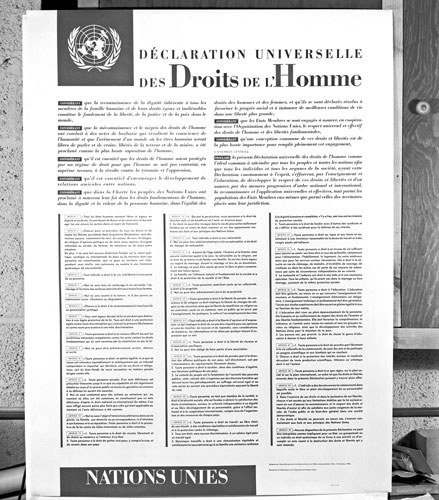
La Déclaration universelle des Droits de l'Homme en langue française, langue maternelle de son principal créateur, le Français René Cassin.

La Déclaration universelle des Droits de l’Homme en langue française, langue maternelle de son principal artisan, le Français René Cassin.

Dans la droite ligne de ce principe, la Déclaration se termine sur trois articles rappelant la primauté du droit à la fraternité sur tous les autres :

Article 28

« Toute personne a droit à ce que règne, sur le plan social et sur le plan international, un ordre tel que les droits et libertés énoncés dans la présente Déclaration puissent y trouver plein effet. »

Bien évidemment, cela veut dire que chacun a droit à la paix, et plus évident encore, il ne peut y avoir de paix sans la fraternité.

Article 29

« 1. L’individu a des devoirs envers la communauté dans laquelle seul le libre et plein développement de sa personnalité est possible. 

2. Dans l’exercice de ses droits et dans la jouissance de ses libertés, chacun n’est soumis qu’aux limitations établies par la loi exclusivement en vue d’assurer la reconnaissance et le respect des droits et libertés d’autrui et afin de satisfaire aux justes exigences de la morale, de l’ordre public et du bien-être général dans une société démocratique. 

3. Ces droits et libertés ne pourront, en aucun cas, s’exercer contrairement aux buts et aux principes des Nations Unies. »

Peut-on être plus clair ? L’on ne peut jouir de ses droits qu’au sein de la communauté humaine, « dans un esprit de fraternité », donc, ni en dehors de la communauté ni contre la communauté.

Article 30

« Aucune disposition de la présente Déclaration ne peut être interprétée comme impliquant pour un Etat, un groupement ou un individu un droit quelconque de se livrer à une activité ou d’accomplir un acte visant à la destruction des droits et libertés qui y sont énoncés. »

La plus forte, et la plus logique, conclusion possible à une déclaration universelle des droits – les droits ne peuvent être revendiqués, à plus forte raison utilisés, pour faire du tort à qui que ce soit, ce en aucune circonstance. En d’autres termes, si vous ne reconnaissez pas le droit à la fraternité, vous ne pouvez tout simplement pas vous prévaloir de vos droits du tout.

Jargon juridique mis à part, ce n’est là rien d’autre que ce que disait déjà Albert Schweitzer lorsqu’il a créé son concept de Respect de la Vie (Ehrfurcht vor dem Leben). Dans son livre paru en 1923, La Civilisation et l’Ethique, Schweitzer résumait ce concept ainsi : « L’éthique n’est rien d’autre que le Respect de la vie. Le Respect de la vie me fournit le principe fondamental de la morale, à savoir que le bien consiste à entretenir, assister et mettre en valeur la vie, et que détruire la vie, lui faire du tort ou y faire obstacle est mal. »

En un temps où il n’existait aucune véritable institution politique ou juridique au niveau mondial, ce qui s’en rapprochait le plus étant une Société des Nations bâtie pour l’essentiel sur des vœux pieux et dénuée de tout pouvoir de promulguer des lois, Schweitzer proclamait déjà, de la manière la plus claire qui puisse être, le droit universel à la fraternité.
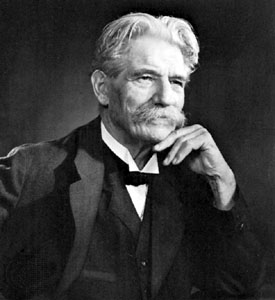
En 1952, la philosophie de "Respect de la Vie" valut à Albert Schweitzer le Prix Nobel de la Paix.

En 1952, la philosophie du “Respect de la Vie” valut à Albert Schweitzer le Prix Nobel de la Paix.

Plus le « respect », selon l’idée que Schweitzer s’en faisait, du droit à la fraternité est important, plus l’oppression et l’injustice ont du mal à s’installer dans une société. Que l’on se batte contre une dictature, que l’on engage le combat contre des politiciens qui propagent le racisme, que l’on manifeste pour un salaire décent, que l’on dispense un enseignement à des enfants démunis ou que l’on fournisse à un village isolé l’accès à l’eau potable, l’on affirme une seule et même chose : nous sommes citoyens du monde entier, l’humanité est notre famille, et en tant qu’êtres humains, nous avons le droit de vivre en famille avec nos frères sur la Terre.

Bernard Henry est Officier des Relations Extérieures du Bureau de Représentation auprès de l’Office des Nations Unies à Genève de l’Association of World Citizens.

The Universal Right to Brotherhood

In Being a World Citizen, Cultural Bridges, Fighting Racism, Human Rights, Solidarity, The Search for Peace, World Law on February 10, 2014 at 7:47 PM

THE UNIVERSAL RIGHT TO BROTHERHOOD

By Bernard Henry

As a Nongovernmental Organization (NGO) in Consultative Status with the United Nations (UN) and accredited with the UN Human Rights Council, the Association of World Citizens has always stood up for human rights everywhere in the world, all human rights, whether civil, political, economic, social, cultural or others, such as the more recently recognized rights to development and to a sound environment.

Since the beginning of this decade, the global yearning for human rights has been more visible than ever before. But the many violators to whom the people of the world have had to stand up – national governments, multinational corporations, non-state political groups, whether armed or not – have been openly dismissing human rights as mere political claims pro se, denying these may ever be a universal prerogative officially recognized in international law.

Sometimes repressive governments or other entities even claim to be acting in the very name of human rights, accusing their critics and opponents of being themselves human rights offenders.

It looks like everybody is now claiming human rights for their sole benefit, totally leaving out others and viewing human rights as a zero-sum game – my rights or theirs, it can’t be both. That is completely out of line with the concept of human rights advocacy.

The Preamble to the Universal Declaration of Human Rights, since 1948 the cornerstone of international human rights law, makes it clear that effective legal protection of human rights is essential “if man is not to be compelled to have recourse, as a last resort, to rebellion against tyranny and oppression”. Even though some people may think of human rights as an overly “divisive” issue to deal with, ignoring or rejecting human rights makes it impossible for any person, government, or other to sensibly hope to achieve any peace or progress for their own enjoyment.

Article 1 of the Declaration is even more explicit about it:

“All human beings are born free and equal in dignity and rights. They are endowed with reason and conscience and should act toward one another in a spirit of brotherhood.”

Brotherhood – that is the one word that counts, for that is just what human rights are all about.

Caring for one’s fellow human being. Valuing another person’s life, liberty, and safety like one’s own. Wishing well on others rather than thinking of one’s own life as an inescapable, permanent fight against everybody else. That is what it means to live “in a spirit of brotherhood”, and accordingly, to respect human rights, starting with the most essential of them all – the right to brotherhood.

Although it has become fashionable to antagonize others while citing human rights, a conduct like that makes no sense, as the defense of human rights shall be by essence inclusive, never sectarian. In recognizing the right to brotherhood as an inalienable right to be guaranteed for everyone, one naturally comes to recognize all other rights enshrined in the Declaration and other international human rights instruments – civil, political, economic, social and cultural.

The Universal Declaration of Human Rights in French, the mother tongue of its main initiator, Frenchman René Cassin.

In line with this principle, the Declaration ends with three articles that recall the primacy of the right to brotherhood over all other rights:

Article 28

“Everyone is entitled to a social and international order in which the rights and freedoms set forth in this Declaration can be fully realized.”

Obviously, this means everyone has a right to peace, and more obviously still, there can be no peace without brotherhood.

Article 29

“(1) Everyone has duties to the community in which alone the free and full development of his personality is possible.

(2) In the exercise of his rights and freedoms, everyone shall be subject only to such limitations as are determined by law solely for the purpose of securing due recognition and respect for the rights and freedoms of others and of meeting the just requirements of morality, public order and the general welfare in a democratic society.

(3) These rights and freedoms may in no case be exercised contrary to the purposes and principles of the United Nations.”

Clear as day. Rights are there to be enjoyed within the human community, “in a spirit of brotherhood”, thus neither apart from the community nor against the community.

Article 30

“Nothing in this Declaration may be interpreted as implying for any State, group or person any right to engage in any activity or to perform any act aimed at the destruction of any of the rights and freedoms set forth herein.”

The strongest, most logical possible conclusion to a universal declaration of rights – rights can never be claimed, let alone used, to do any harm to anyone under any circumstances. In other words, if you don’t recognize the right to brotherhood, you just cannot claim any rights at all.

All legalese aside, that is just what Albert Schweitzer was already saying when he developed his concept of Reverence for Life (Ehrfurcht vor dem Leben). In his 1923 book Civilization and Ethics, Schweitzer outlined the concept in these words: “Ethics is nothing other than Reverence for Life. Reverence for Life affords me my fundamental principle of morality, namely, that good consists in maintaining, assisting and enhancing life, and to destroy, to harm or to hinder life is evil.”

At a time when there was no real global political or legal institution in existence, the closest thing to it being a League of Nations largely built on wishful thinking and with no lawmaking powers, Schweitzer was already asserting, in the plainest possible manner, the universal right to brotherhood.

In 1952 Albert Schweitzer was awarded the Nobel Peace Prize for his philosophy of “Reverence for Life”.

The greater the “reverence”, as Schweitzer said, for the right to brotherhood, the harder it gets for oppression and injustice to settle down. Whether fighting a dictatorship, confronting racist politicians, demonstrating for decent wages, teaching poor children or providing a remote community with access to clean water, it all comes down to stating loud and clear this one universal claim: We are citizens of one world, humanity is our family, and as human beings, we all have a right to family life with our brothers on earth.

Bernard Henry is External Relations Officer of the Representative Office to the United Nations in Geneva of the Association of World Citizens.

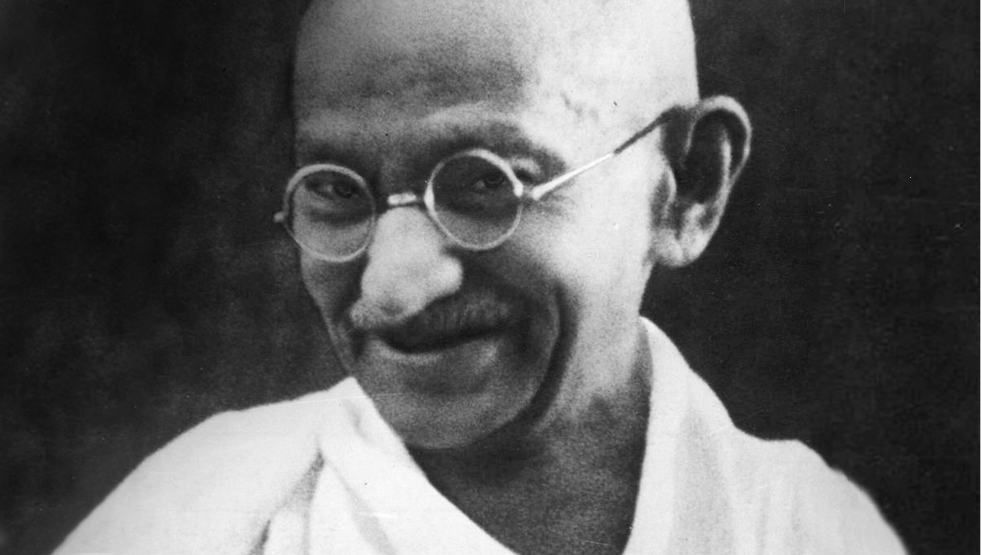
M.K. Gandhi: “The Free Spirit: One and manifold”

In Anticolonialism, Asia, Being a World Citizen, Conflict Resolution, Cultural Bridges, The Search for Peace on January 30, 2014 at 1:41 PM

M. K. GANDHI: “THE FREE SPIRIT: ONE AND MANIFOLD”

By René Wadlow

I do daily perceive that while every thing around me is ever changing, ever dying, there is underlying all that change, a living power that is changeless, that holds all together, that creates, dissolves, and re-creates.  That informing power or spirit is God. I see it as purely benevolent, for I can see in the midst of death, life persists.  In the midst of untruth, truth persists.  In the midst of darkness, light persists.  Hence I gather that God is life, God is light, God is love. God is the supreme good.”

Mahatma Gandhi

On the anniversary of the assassination of Mahatma Gandhi, January 30, we still try to find peaceful ways to resolve conflicts.  Mahatma Gandhi was a man of dialogue and compromise.  A British-trained lawyer, he always knew the limits of the law and when not to push too far or ask for more than what could be seen as reasonable to the authorities in South Africa or British-controlled India even if the authorities were not willing to accept the demands at the time.

Yet what does one do when opponents refuse dialogue and when events move so fast that no compromise seems possible?  These questions are crucial as difficult negotiations on the armed conflict in Syria have started in Switzerland — first one day in the calm of the resort Montreux on Lake Geneva with some 40 states present, some directly involved, others to give moral support to the UN-led negotiations. The negotiations then moved to the UN’s Palais des Nations in Geneva and, no doubt, to restaurants for small groups.

To make matters more complex, some key actors are not officially there, though they are not very hidden in the shadows: Iran has a large mission to the UN in Geneva; the Kurds from Syria-Iraq-Turkey- and Iran have a permanently strong presence in Geneva and gather from outside when events merit; there is a large community of people from Lebanon — some bankers but also, no doubt, representative from Hezbollah as well.  The foothills of the Alps above Montreux have long been the home of international arms merchants — though the arms are stocked elsewhere. If they were unable to make sales on the sideline of the Montreux meeting, they can afford to drive to Geneva to see what factions may want to buy arms which they cannot receive supplied by governments.

Among the dangerous aspects of the armed conflict in Syria is the extent to which all factions use images of the “eternal enemy” — Arabs and Iranians, Kurds and Arab, Christian, Alawit and Muslim, Sunni and Shia.  These enemy images make compromise all the more difficult.  It is sad to see the writing of history deformed, intellectual short cuts taken, the media used to strengthen prejudice rather than to inform.

Thus for the anniversary of Gandhi’s assassination, carried out by a narrow Hindu to cut short Gandhi’s efforts at Hindu-Muslim reconciliation in the middle of the Partition Riots, it is useful to recall the appeal of Romain Rolland, biographer of Tolstoy, Gandhi, Ramakrishna and Vivekananda, who Gandhi visited on his journey to Europe.  In 1919, shortly after the end of the First World War which had divided the intellectual community, Romain Rolland wrote to a wide range of intellectuals to raise the Arch of the Free Spirit.

When asked once by his fellow Hindus to allow retaliatory action against India's Muslims after sectarian violence struck the Hindu community, Mohandas Karamchand Gandhi, the Mahatma, had this to say about revenge: "An eye for an eye only ends up making the whole world blind."

When asked once by his fellow Hindus to allow retaliatory action against India’s Muslims after sectarian violence had struck the Hindu community, Mohandas Karamchand Gandhi, the Mahatma, had this to say about revenge: “An eye for an eye only ends up making the whole world blind.”

“To the pestilence which is corroding in body and spirit, thinkers and artists have added an incalculable amount of poisoned hate; they have searched in the arsenal of their knowledge, their memory and their imagination for old and new reasons, historical, scientific, logical and poetic reasons, for hating; they have laboured to destroy love and understanding. And in so doing they have disfigured, dishonoured, debased and degraded Thought, whose ambassadors they were. They have made it an instrument of passions and (perhaps without knowing it) of the egotistic interests of a social or political clan, of a state, of a country or a class…

“Let us extricate the spirit from these humiliating alliances, this secret slavery!… We serve Truth alone, which is free, with no frontiers, with no limits, with no prejudices of race or caste.  Of course, we shall not dissociate ourselves from the interests of Humanity!  We shall work for it, but for it as a whole. We do not recognise nations.  We recognise the People — one and universal — the People who suffer, who struggle, who fall and rise again and who ever march forward on the rough road, drenched with their sweat and their blood — the People comprising all men, all equally our brothers.  And it is in order to make them, like ourselves, aware of this fraternity, that we raise above their blind battles the Arch of Alliance, of the Free Spirit, one and manifold, eternal.”[i]

* * *

Prof. René Wadlow is President and Chief Representative to the United Nations in Geneva of the Association of World Citizens.

[i] Quoted from Rolland and Tagore (Calcutta: Visva-Bharati, 1945, pp 20-24)

Les Citoyens du Monde condamnent le terrorisme et l’intolérance basés sur la religion

In Cultural Bridges, Current Events, Human Rights, International Justice, World Law on May 30, 2013 at 2:26 PM

awc-un-geneva-logo


ATTAQUES TERRORISTES A LONDRES ET PARIS :

LES CITOYENS DU MONDE CONDAMNENT LE TERRORISME

ET L’INTOLERANCE BASES SUR LA RELIGION

L’Association of World Citizens (AWC) est totalement consternée par les récentes attaques terroristes commises contre des militaires à Londres et Paris par des jeunes gens qui étaient chrétiens au départ et se sont convertis à l’Islam.

Même si elle n’est pas une organisation religieuse, l’AWC estime que la religion est précieuse en ce qu’elle remplit, selon sa définition étymologique, un rôle important de création de liens entre les êtres humains. Invoquer la religion pour justifier des actes terroristes délibérés n’est donc jamais excusable ni a fortiori acceptable.

En conséquence, les convertis d’une religion à une autre qui s’avèrent commettre des actes terroristes au nom de leur nouvelle religion ne peuvent en aucun cas être considérés comme représentatifs de quelque foi religieuse que ce soit.

L’AWC appelle les citoyens tant du Royaume-Uni que de la France à avoir pleinement conscience de ces faits cruciaux et à ne pas céder, en conséquence, à quelque parallèle hâtif et infondé que ce soit entre de tels individus et l’entière population musulmane de l’un ou l’autre des deux pays concernés.

World Citizens Condemn Terrorism and Intolerance Based on Religion

In Cultural Bridges, Current Events, Human Rights, International Justice, World Law on May 30, 2013 at 12:56 PM
awc-un-geneva-logo
TERROR ATTACKS IN LONDON AND PARIS:
WORLD CITIZENS CONDEMN TERRORISM AND INTOLERANCE
BASED ON RELIGION
The Association of World Citizens (AWC) is completely dismayed at the recent terror attacks against soldiers committed in London and Paris by young people who are Christians by birth and converts to Islam.
Although not a religious organization, the AWC values religion as, in its etymological definition, a valuable instrument of bonding between human beings. Citing religion for deliberate terrorist acts is thus never excusable, let alone acceptable.
Consequently, people who convert from their original religion to another and wind up committing terrorist acts on behalf of their chosen religion shall never be deemed representative of any religious faith whatsoever.
The AWC calls on all citizens of Britain and France to be fully aware of these crucial facts and thus refrain from any hasty, unfounded parallel between such people and the Muslim community in either country as a whole.
— 30 —

Does the Non-Aligned Movement Still Matter?

In Africa, Anticolonialism, Asia, Cultural Bridges, Current Events, Middle East & North Africa, United Nations, World Law on August 27, 2012 at 11:36 AM

DOES THE NON-ALIGNED MOVEMENT STILL MATTER?

by René Wadlow

With Iran taking over the three-year term of the presidency of the Non-Aligned Movement (N.A.M.) at the end of August 2012, the question arises: Does the Non-Aligned Movement still matters in world politics and how will Iran use the presidency?

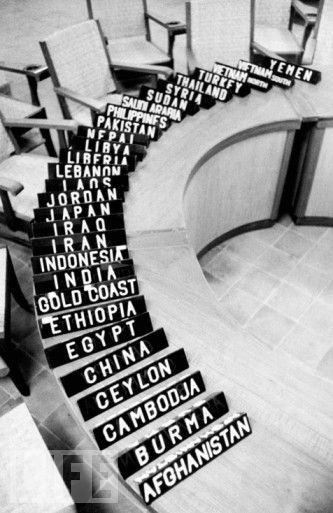
At the time of its founding at the Bandung Conference in April 1955, the major world powers were aligned in Soviet- and United States-led blocs. The war in Korea had recently ended in an armistice with the same frontiers as at the start but could have been the forerunner of a world war. The French war in Indochina had ended with independence of the three Indochina states, but a new independence conflict had just started in Algeria. Basically Bandung marked the end of formal colonialism. As Sir John Kotelawala, Premier of Ceylon (now Sri Lanka), said at the end of the conference “Bandung will be a name to reverberate in history and earn the gratitude and blessings of ages to come.”

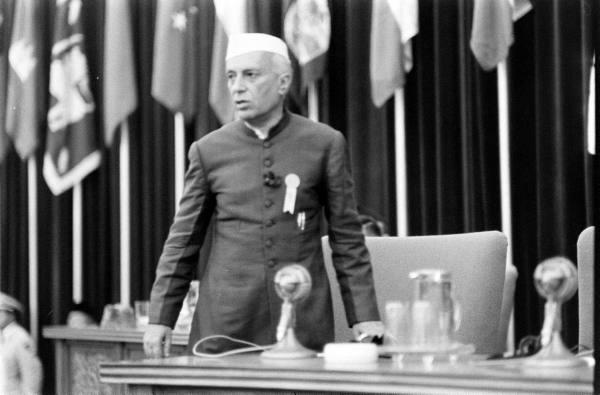
Prime Minister Jawaharlal Nehru of India delivering the closing speech at the Bandung Conference that created the Non-Aligned Movement.

For fear that the new Non-Aligned movement might supplement or weaken the United Nations (UN), no implementary organization was set up. Later, the pattern of three-year rotating presidency was developed, but without a permanent secretariat. The country holding the presidency offers its own diplomats and civil servants to carry on Non-Aligned tasks. The outgoing presidency — Egypt — was so taken up with its own political changes that it virtually played no role on behalf of the N.A.M. Will Iran be able to do more than use the prestige of the Movement to defend its own interests?

In time, the Non-Aligned Movement grew up to become a major player in international relations, providing the Third World with a voice of its own on the world stage.

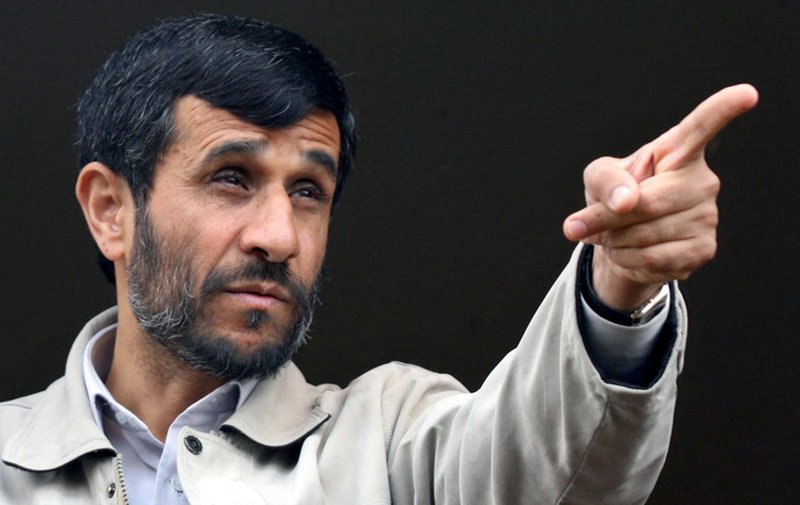
President Mahmoud Ahmadinejad will become the N.A.M. representative for its 118 members. His first presentation will be to the UN General Assembly in September. His talk should be analyzed closely to see if his presentation goes beyond the usual Iranian positions to be more inclusive of the interests of the N.A.M. members. A large conference at the end of August in Tehran will be the formal start of Iran’s presidency. Some Iranian leaders have called for the creation of a permanent secretariat. Thus it will be important to note what structural reforms are made within the N.A.M.

While in 1955, the idea of a “third camp” was a possibility — a wedge of sanity and restraint between the two atomic giants —, now there are real conflicts of interest among the N.A.M. members — the conflict in Syria being a prime example, along with differing territorial claims within the South China Sea among China and its neighbors.

The direct threats issued against the State of Israel by Iran’s President, Mahmoud Ahmadinejad, albeit in response to Israeli Prime Minister Benjamin Netanyahu’s own warmongering rhetoric against Iran, raises serious questions as to what Ahmadinejad can be expected to make of his presidency of the Non-Aligned Movement.

Iran itself is at the center of an international storm, and it is not clear if its diplomats and political leaders will have the energy to deal with the host of current conflicts among N.A.M. states as well as making proposition concerning the important economic, financial and ecological issues that the world faces. Moreover, the N.A.M. states are members of regional, intergovernmental organizations and therefore look less to N.A.M. leadership to structure economic and cultural cooperation.

Yet the N.A.M. does provide a structure for states and a large percentage of the people of the world. N.A.M. leadership has had an erratic relation with non-governmental organizations (NGOs) — sometimes encouraging their participation in meetings and programs and at other times ignoring them completely. Without a permanent secretariat, the N.A.M. has not developed the sort of consultative status that the UN has with NGOs. The Indian government at one stage had encouraged NGO-related activities within the N.A.M. Given the challenges facing the Iranian presidency of the N.A.M. it would be useful for NGOs to propose a more structured and formal relation with the N.A.M. especially if a permanent secretariat is created.

René Wadlow is President and Chief Representative to the United Nations, Geneva, of the Association of World Citizens.

June 21: A Day of Balance and Harmony

In Cultural Bridges on June 21, 2011 at 12:07 AM

JUNE 21: A DAY OF BALANCE AND HARMONY

By René Wadlow


The 21st day of June, the Summer Solstice, is in many cultures the cosmic symbol of balance and harmony between light and dark, between the universal and the local, between giving and receiving, between women and men, and between our inner and outer worlds. History records humanity’s preoccupation with the sun’s annual cycle.  Sites such as Stonehenge in England are thought to have been erected specifically to trace the path of the sun through the heavens.

The sun has always had symbolic meaning. As the ancient Sanskrit prayer, the Gayatri, tells us, the sun is a disc of golden light giving sustenance to the universe. Plato used the image of the sun to represent the idea of the One, the Good.

In Ancient Egypt, summer solstice was the most important day of the year.

There is an old tradition attributed to Hermes Trismegistus and the Emerald Tablet which says “that which is below is like that which is above, and that which is above is like that which is below”.  Thus, the cosmic growth of light should be reflected in our lives in greater light, greater awareness, greater understanding.

Sunrise Solstice at Stonehenge, England, a UNESCO World Heritage Site.

June 21 is a day of recognition of the world-wide increase of light which transforms ignorance. It is a day in which we celebrate illumination as it dispels darkness.  It is a day during which we can all recognize the growth of greater awareness and concern for the common good. We recognize our need to redouble our efforts to restore a golden balance within the natural world.

Due to the work of the United Nations, people throughout the world are recognizing their responsibility to each other and are attempting to resolve ancient and entrenched global problems. June 21 marks our dedication to balance and harmony, to ecologically-sound development and to following a path of light.

Due to the work of the United Nations, people throughout the world are recognizing their responsibility to each other.

René Wadlow is Senior Vice President and Chief Representative to the United Nations Office at Geneva of the Association of World Citizens.