The Official Blog of the

Archive for the ‘Asia’ Category

M.K. Gandhi: “The Free Spirit: One and manifold”

In Anticolonialism, Asia, Being a World Citizen, Conflict Resolution, Cultural Bridges, The Search for Peace on January 30, 2014 at 1:41 PM

M. K. GANDHI: “THE FREE SPIRIT: ONE AND MANIFOLD”

By René Wadlow

I do daily perceive that while every thing around me is ever changing, ever dying, there is underlying all that change, a living power that is changeless, that holds all together, that creates, dissolves, and re-creates.  That informing power or spirit is God. I see it as purely benevolent, for I can see in the midst of death, life persists.  In the midst of untruth, truth persists.  In the midst of darkness, light persists.  Hence I gather that God is life, God is light, God is love. God is the supreme good.”

Mahatma Gandhi

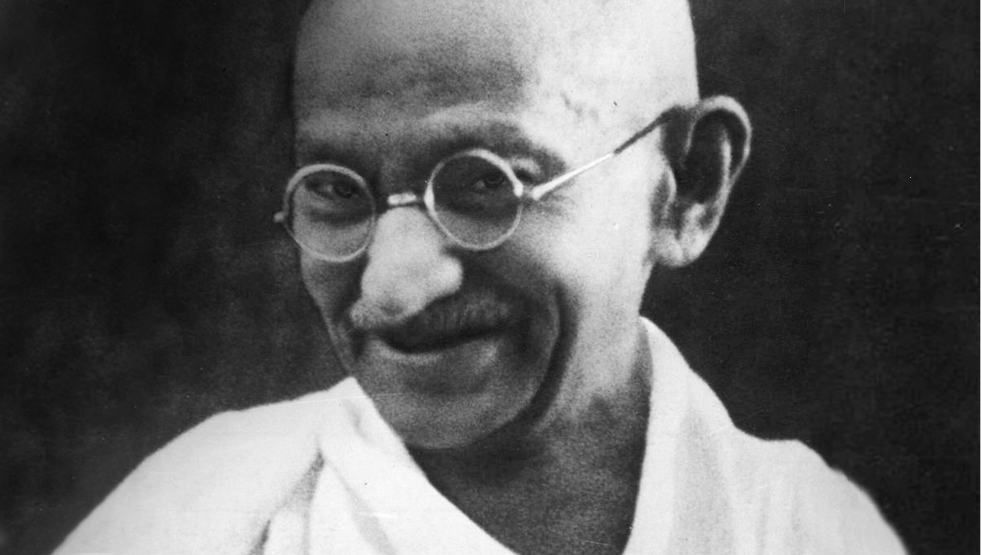
On the anniversary of the assassination of Mahatma Gandhi, January 30, we still try to find peaceful ways to resolve conflicts.  Mahatma Gandhi was a man of dialogue and compromise.  A British-trained lawyer, he always knew the limits of the law and when not to push too far or ask for more than what could be seen as reasonable to the authorities in South Africa or British-controlled India even if the authorities were not willing to accept the demands at the time.

Yet what does one do when opponents refuse dialogue and when events move so fast that no compromise seems possible?  These questions are crucial as difficult negotiations on the armed conflict in Syria have started in Switzerland — first one day in the calm of the resort Montreux on Lake Geneva with some 40 states present, some directly involved, others to give moral support to the UN-led negotiations. The negotiations then moved to the UN’s Palais des Nations in Geneva and, no doubt, to restaurants for small groups.

To make matters more complex, some key actors are not officially there, though they are not very hidden in the shadows: Iran has a large mission to the UN in Geneva; the Kurds from Syria-Iraq-Turkey- and Iran have a permanently strong presence in Geneva and gather from outside when events merit; there is a large community of people from Lebanon — some bankers but also, no doubt, representative from Hezbollah as well.  The foothills of the Alps above Montreux have long been the home of international arms merchants — though the arms are stocked elsewhere. If they were unable to make sales on the sideline of the Montreux meeting, they can afford to drive to Geneva to see what factions may want to buy arms which they cannot receive supplied by governments.

Among the dangerous aspects of the armed conflict in Syria is the extent to which all factions use images of the “eternal enemy” — Arabs and Iranians, Kurds and Arab, Christian, Alawit and Muslim, Sunni and Shia.  These enemy images make compromise all the more difficult.  It is sad to see the writing of history deformed, intellectual short cuts taken, the media used to strengthen prejudice rather than to inform.

Thus for the anniversary of Gandhi’s assassination, carried out by a narrow Hindu to cut short Gandhi’s efforts at Hindu-Muslim reconciliation in the middle of the Partition Riots, it is useful to recall the appeal of Romain Rolland, biographer of Tolstoy, Gandhi, Ramakrishna and Vivekananda, who Gandhi visited on his journey to Europe.  In 1919, shortly after the end of the First World War which had divided the intellectual community, Romain Rolland wrote to a wide range of intellectuals to raise the Arch of the Free Spirit.

When asked once by his fellow Hindus to allow retaliatory action against India's Muslims after sectarian violence struck the Hindu community, Mohandas Karamchand Gandhi, the Mahatma, had this to say about revenge: "An eye for an eye only ends up making the whole world blind."

When asked once by his fellow Hindus to allow retaliatory action against India’s Muslims after sectarian violence had struck the Hindu community, Mohandas Karamchand Gandhi, the Mahatma, had this to say about revenge: “An eye for an eye only ends up making the whole world blind.”

“To the pestilence which is corroding in body and spirit, thinkers and artists have added an incalculable amount of poisoned hate; they have searched in the arsenal of their knowledge, their memory and their imagination for old and new reasons, historical, scientific, logical and poetic reasons, for hating; they have laboured to destroy love and understanding. And in so doing they have disfigured, dishonoured, debased and degraded Thought, whose ambassadors they were. They have made it an instrument of passions and (perhaps without knowing it) of the egotistic interests of a social or political clan, of a state, of a country or a class…

“Let us extricate the spirit from these humiliating alliances, this secret slavery!… We serve Truth alone, which is free, with no frontiers, with no limits, with no prejudices of race or caste.  Of course, we shall not dissociate ourselves from the interests of Humanity!  We shall work for it, but for it as a whole. We do not recognise nations.  We recognise the People — one and universal — the People who suffer, who struggle, who fall and rise again and who ever march forward on the rough road, drenched with their sweat and their blood — the People comprising all men, all equally our brothers.  And it is in order to make them, like ourselves, aware of this fraternity, that we raise above their blind battles the Arch of Alliance, of the Free Spirit, one and manifold, eternal.”[i]

* * *

Prof. René Wadlow is President and Chief Representative to the United Nations in Geneva of the Association of World Citizens.


[i] Quoted from Rolland and Tagore (Calcutta: Visva-Bharati, 1945, pp 20-24)

Citizens of the World Call for a UN-led Korean Peace Settlement Conference

In Asia, Conflict Resolution, The Search for Peace, United Nations on March 13, 2013 at 8:35 PM

CITIZENS OF THE WORLD CALL FOR A UN-LED KOREAN PEACE SETTLEMENT CONFERENCE

By René Wadlow

Tensions on the Korean Peninsula have recently increased, highlighted by the nuclear weapon test of North Korea and the subsequent reactions. In a message to the United Nations (UN) Secretary-General Ban Ki-moon, Prof. René Wadlow, President of the Association of World Citizens (AWC), stressed that a crisis also can be an opportunity for strong initiatives and action and that the UN with historic responsibilities for Korea should take the lead.

The 1950-1953 Korean War was undertaken by UN Security Council Resolutions 82, 83, and 84. Subsequently, 21 UN Member States (16 combatants and 5 humanitarian) joined to support the UN Command.

The July 27, 1953 Armistice was signed by the UN Command Delegation and by Delegations of the Korean People’s Army and the Chinese People’s Volunteer Army.

The 1950-1953 Korean War set the stage for later Cold War tensions in Asia, tensions which have prevented an Asia-wide organization of security and cooperation as was possible in Europe with the Organization for Security and Cooperation in Europe (OSCE).

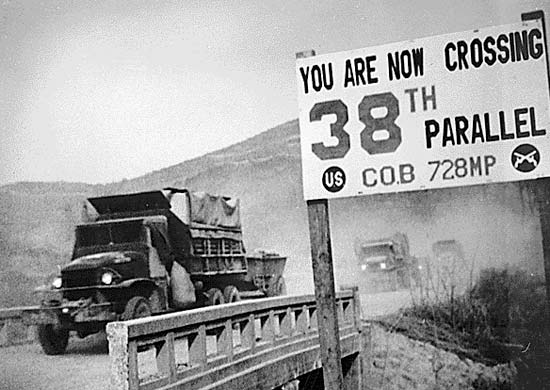
"The Americans drew the 38th parallel across the peninsula to prevent the Soviet army from invading towards South, and the barrier continues until today."(C) Mount Holyoke College

“The Americans drew the 38th parallel across the peninsula to prevent the Soviet army from invading towards South, and the barrier continues until today.”
(C) Mount Holyoke College

Today, with the entry of the two Korean States to the UN in 1991, all the States involved in the Korean War are members of the UN.

Partial measures of cooperation between the two Korean States, the 6-Party talks on nuclear issues and a number of Track II diplomatic efforts have shown the possibilities but also the limits of partial measures.

With conditions of insecurity growing and also threatening Korea’s neighbors, the Korean situation is a “matter which may threaten international peace and security.” Therefore, the Citizens of the World call for a UN-led Korean Peace Settlement Conference to be organized during 2013 — the 60th anniversary of the 1953 Armistice.

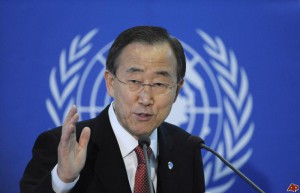
The UN which once went to war over Korea is now headed by a national of South Korea, Secretary-General Ban Ki-moon. Hopefully, his own experience of the suffering of the Korean people stuck in a never-ending Cold War will help to prevent the longtime standoff from turning into all-out war.

The UN which once went to war over Korea is now headed by a South Korean, Ban Ki-moon, who has been the World organization’s Secretary-General since 2007. Could this be a positive sign for the prompt conclusion of a UN-brokered peace settlement?

Such a UN-sponsored Korean Peace Settlement Conference can build upon past partial measures and especially meet the new challenges of security and cooperation in Asia. The Association of World Citizens also stresses that such a Peace Settlement Conference is of concern not only of Governments but is one in which the voices of civil society are legitimate and should be heard.

Prof. René Wadlow is President of the Association of World Citizens.

Does the Non-Aligned Movement Still Matter?

In Africa, Anticolonialism, Asia, Cultural Bridges, Current Events, Middle East & North Africa, United Nations, World Law on August 27, 2012 at 11:36 AM

DOES THE NON-ALIGNED MOVEMENT STILL MATTER?

by René Wadlow

With Iran taking over the three-year term of the presidency of the Non-Aligned Movement (N.A.M.) at the end of August 2012, the question arises: Does the Non-Aligned Movement still matters in world politics and how will Iran use the presidency?

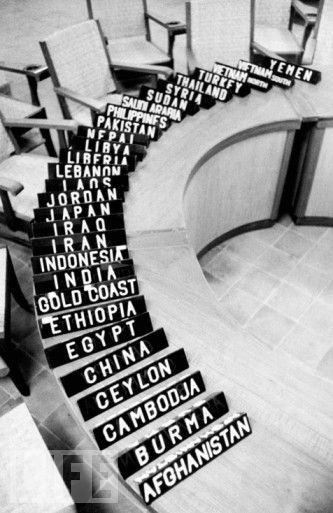
At the time of its founding at the Bandung Conference in April 1955, the major world powers were aligned in Soviet- and United States-led blocs. The war in Korea had recently ended in an armistice with the same frontiers as at the start but could have been the forerunner of a world war. The French war in Indochina had ended with independence of the three Indochina states, but a new independence conflict had just started in Algeria. Basically Bandung marked the end of formal colonialism. As Sir John Kotelawala, Premier of Ceylon (now Sri Lanka), said at the end of the conference “Bandung will be a name to reverberate in history and earn the gratitude and blessings of ages to come.”

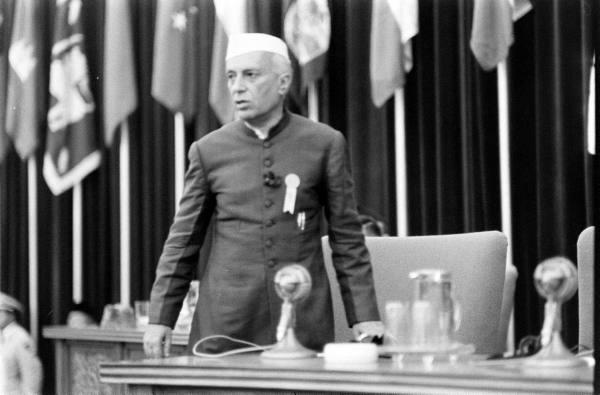
Prime Minister Jawaharlal Nehru of India delivering the closing speech at the Bandung Conference that created the Non-Aligned Movement.

For fear that the new Non-Aligned movement might supplement or weaken the United Nations (UN), no implementary organization was set up. Later, the pattern of three-year rotating presidency was developed, but without a permanent secretariat. The country holding the presidency offers its own diplomats and civil servants to carry on Non-Aligned tasks. The outgoing presidency — Egypt — was so taken up with its own political changes that it virtually played no role on behalf of the N.A.M. Will Iran be able to do more than use the prestige of the Movement to defend its own interests?

In time, the Non-Aligned Movement grew up to become a major player in international relations, providing the Third World with a voice of its own on the world stage.

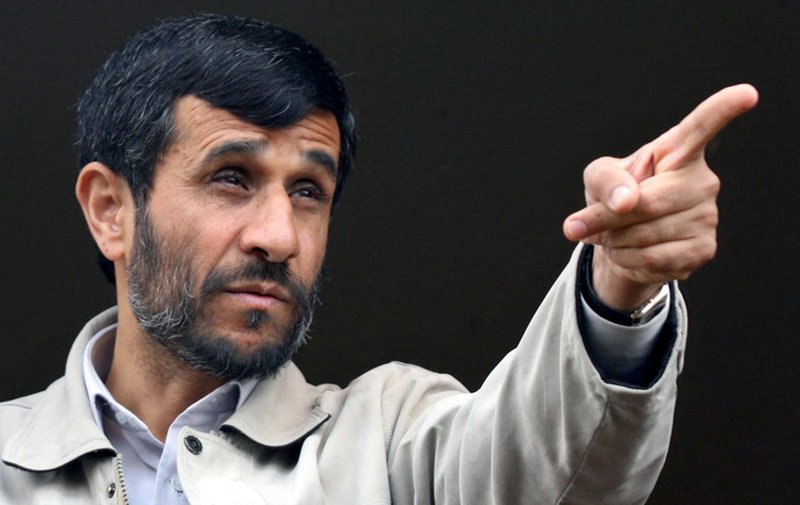
President Mahmoud Ahmadinejad will become the N.A.M. representative for its 118 members. His first presentation will be to the UN General Assembly in September. His talk should be analyzed closely to see if his presentation goes beyond the usual Iranian positions to be more inclusive of the interests of the N.A.M. members. A large conference at the end of August in Tehran will be the formal start of Iran’s presidency. Some Iranian leaders have called for the creation of a permanent secretariat. Thus it will be important to note what structural reforms are made within the N.A.M.

While in 1955, the idea of a “third camp” was a possibility — a wedge of sanity and restraint between the two atomic giants —, now there are real conflicts of interest among the N.A.M. members — the conflict in Syria being a prime example, along with differing territorial claims within the South China Sea among China and its neighbors.

The direct threats issued against the State of Israel by Iran’s President, Mahmoud Ahmadinejad, albeit in response to Israeli Prime Minister Benjamin Netanyahu’s own warmongering rhetoric against Iran, raises serious questions as to what Ahmadinejad can be expected to make of his presidency of the Non-Aligned Movement.

Iran itself is at the center of an international storm, and it is not clear if its diplomats and political leaders will have the energy to deal with the host of current conflicts among N.A.M. states as well as making proposition concerning the important economic, financial and ecological issues that the world faces. Moreover, the N.A.M. states are members of regional, intergovernmental organizations and therefore look less to N.A.M. leadership to structure economic and cultural cooperation.

Yet the N.A.M. does provide a structure for states and a large percentage of the people of the world. N.A.M. leadership has had an erratic relation with non-governmental organizations (NGOs) — sometimes encouraging their participation in meetings and programs and at other times ignoring them completely. Without a permanent secretariat, the N.A.M. has not developed the sort of consultative status that the UN has with NGOs. The Indian government at one stage had encouraged NGO-related activities within the N.A.M. Given the challenges facing the Iranian presidency of the N.A.M. it would be useful for NGOs to propose a more structured and formal relation with the N.A.M. especially if a permanent secretariat is created.

René Wadlow is President and Chief Representative to the United Nations, Geneva, of the Association of World Citizens.

Pour les avocats chinois, “Défense de défendre” …

In Asia, Democracy, Human Rights, World Law on August 14, 2011 at 3:23 PM

POUR LES AVOCATS CHINOIS, « DEFENSE DE DEFENDRE » …

Par Bernard Henry


« La première chose à faire, c’est de tuer tous les avocats ! »

C’est le conseil que donnait un sinistre personnage du nom de Dick le Boucher, dans la pièce de Shakespeare Henri VI[i] (en fait la seconde partie, supposément écrite en 1591), à un autre personnage de la pièce, Jack Cade, qui se rêvait en tyran d’Angleterre. Ayant réellement existé, Jack Cade fut en réalité le meneur d’une révolte populaire dans le Kent en 1450, alors que régnait en Angleterre le fameux roi dont le nom donne son titre à la pièce.

En tout cas, si le Jack Cade que nous dépeint le Barde reçoit ce sinistre conseil de Dick le Boucher, c’est que ce dernier entend lui indiquer la meilleure manière de tuer dans l’œuf toute tentative de contestation et, surtout, toute persistance d’idées subversives dans l’Angleterre sur laquelle Jack Cade régnerait en maître absolu. Dans certaines parties de l’Empire britannique tel qu’il a existé après la mort de Shakespeare, c’est un conseil que d’aucuns auraient peut-être aimé suivre, s’ils n’avaient pas eu tant à craindre de la réaction de leur propre peuple et, à coup sûr, d’un reste du monde indigné.

Dans l’Inde britannique des lendemains de la Seconde Guerre Mondiale, c’est ainsi un Mohandas Gandhi, avocat qui avait fait ses premières armes dans l’Afrique du Sud également britannique de l’époque, qui a conduit à la victoire le mouvement non-violent pour l’indépendance. En l’occurrence, sa mort fut le fait non des Britanniques mais d’un extrémiste hindou, qui jugeait le Mahatma, la « grande âme » en sanskrit, trop conciliant envers les Musulmans indiens qui, emmenés par Ali Jinnah, revendiquaient un Etat indépendant portant le nom de Pakistan.

Pour l’ « Union sud-africaine » britannique, lorsque les politiques d’apartheid, terme afrikaans signifiant « développement séparé », furent mises en place en 1948 sous le gouvernement du Premier Ministre Daniel Malan, l’indépendance en 1961 signifia également le départ du Commonwealth, où la politique raciste de Prétoria était réprouvée de manière unanime. Là encore, c’est un avocat qui devint le symbole international de la résistance. Il se nommait Nelson Rolihlahla Mandela.

Condamné le 12 juin 1964 à la prison à vie, Nelson Mandela fut libéré en février 1990 à l’initiative du Président Frederik Willem de Klerk. Après la légalisation de son parti, le Congrès national africain (African National Congress, ANC), il continua la lutte jusqu’à débarrasser définitivement l’Afrique du Sud de l’apartheid avec la disparition en 1992 des dernières lois de ségrégation. En 1993, Nelson Mandela et Frederik Willem de Klerk reçurent conjointement le Prix Nobel de la Paix, et le 10 mai 1994, lors des toutes premières élections démocratiques et multiraciales en Afrique du Sud, Mandela devint le premier Président noir du pays.

Si le conseil de Dick le Boucher avait été suivi par Lord Mountbatten lorsqu’il était vice-roi et gouverneur général des Indes, ou par Charles Robberts Swart, le premier Président de l’Afrique du Sud indépendante, l’histoire des deux pays, ainsi que celle du monde, en eût été bouleversée …
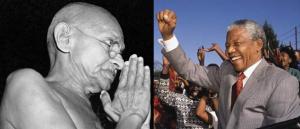
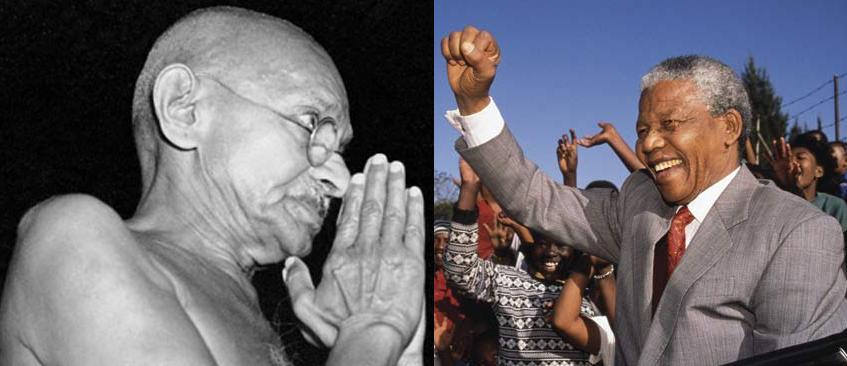
Mohandas Gandhi, le futur Mahatma, et Nelson Mandela, premier Président noir de l’Afrique du Sud. Deux avocats de profession qui se sont faits ceux de leurs peuples opprimés et qui, contre toute attente, les ont libérés.

C’est sans doute aussi l’avis des dirigeants de la République populaire de Chine, le plus grand pays au monde à conserver de nos jours une structure de gouvernement communiste, ayant dans le même temps adopté, à l’instar de ses « petits frères » cubain et vietnamien, l’économie capitaliste et le commerce avec les pays occidentaux, seule la Corée du Nord de Kim jong-il conservant un pur système stalinien digne des pires heures du vingtième siècle.

En faisant passer, de 1978 à 1989, son économie planifiée de type soviétique à un « socialisme de marché », Beijing a su éviter le piège dans lequel était tombée l’Union soviétique, son vieux rival à l’intérieur du monde communiste, en s’excluant durablement des grands contrats internationaux, même la perestroika mise en œuvre par Mikhaïl Gorbatchev à son accession au pouvoir en 1985 n’ayant pu enrayer le déclin du pays fondateur du « socialisme scientifique » et sa disparition pure et simple en 1991.

Ayant survécu en tant qu’Etat socialiste, fût-ce au prix de l’évolution de son système économique vers ce capitalisme qu’elle maudissait sous l’ère Mao, la Chine est ainsi devenue la deuxième puissance économique au monde, étant depuis 2001 membre de l’Organisation mondiale du Commerce. Pour autant, elle est loin d’être devenue le deuxième pays le plus libre du monde, le Parti communiste chinois gardant la haute main sur la société, fort de ses quatre-vingt millions de membres qui font de lui la plus grande organisation politique de toute la planète, et surtout, l’absence totale de droits liés au travail, garante des coûts de production ridiculement bas qui ont fait de la Chine la destination vedette de la délocalisation à partir des années 1990, allant de pair avec le mépris le plus complet des droits civils et politiques. Et comme l’on peut s’y attendre, les avocats chinois en savent quelque chose.

Après la victoire dans la guerre civile chinoise, à l’issue de vingt ans de combats, des communistes de Mao Zedong contre les nationalistes de Tchang Kaï-chek qui devaient ne garder, sous protection américaine, que l’île de Taiwan, la profession d’avocat fut l’une des victimes du raidissement du régime, échaudé par le soulèvement hongrois contre l’occupation soviétique en 1956. L’année suivante, le barreau fut purement et simplement supprimé, avant d’être reconstitué peu à peu dans les années qui suivirent, même si les avocats chinois durent attendre la fin de l’avènement du « socialisme de marché » pour retrouver un statut tant soit peu comparable à celui de leurs confrères du reste du monde, à travers une loi promulguée en 1989 par le Ministère de la Justice chinois en ce sens[ii].
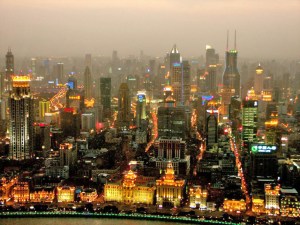
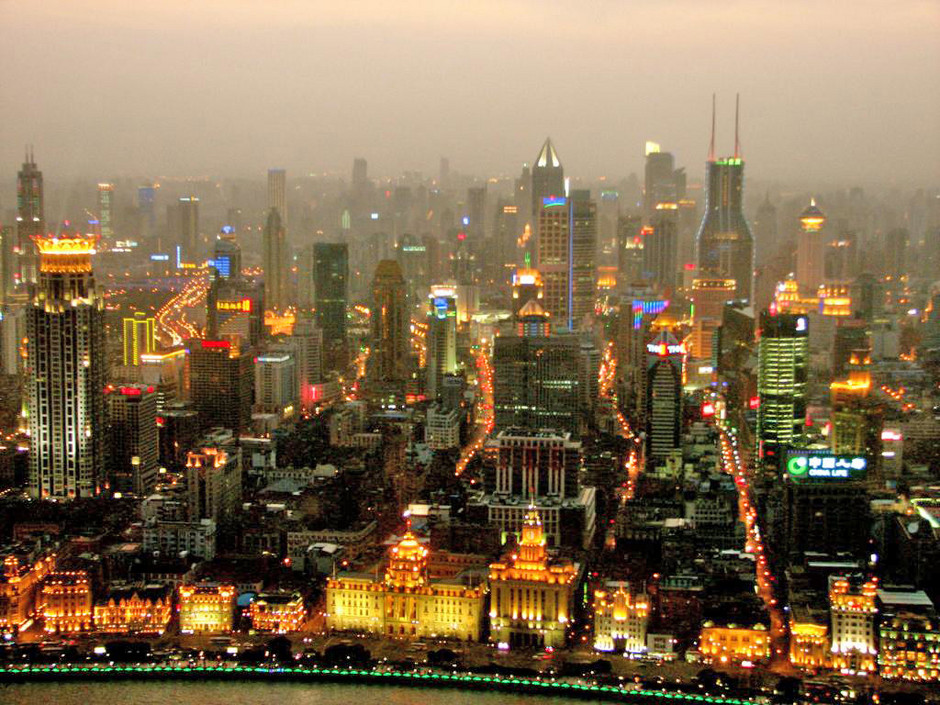
Shanghai, mégapole de plus de 23 millions d’habitants, symbole par excellence d’une Chine qui s’est ouverte au capitalisme occidental tout en conservant un système politique répressif hérité des dictatures communistes du vingtième siècle.

Aujourd’hui, un niveau d’études de droit supérieur à trois ans suffit pour être avocat en Chine. Un concours national unique a été institué en 2002, à l’issue duquel le candidat chanceux doit demander et obtenir du Ministère de la Justice, une première fois puis chaque année, une « licence d’exercice » de la profession d’avocat.

Mais attention. Quand on est avocat en Chine, l’on n’a pas seulement pour mission, aux termes de la loi, « la protection des intérêts légaux de ses clients, la protection de l’application de la loi et la protection de la justice et de l’équité sociales », aux termes mêmes d’un avocat chinois[iii]. L’on est aussi tenu, « à travers l’exercice de sa profession, de participer à la marche vers la réalisation de l’Etat de droit socialiste et de protéger la justice sociale ». Autrement dit, pour l’avocat qui entreprend de défendre une notion du droit autre que celle officielle voulue par l’Etat, gare …

Comme le rappelait Amnesty International le 30 juin dernier[iv], à l’instar du soulèvement de Budapest qui avait poussé Mao à « tuer tous les avocats » au pur plan administratif, le régime chinois d’aujourd’hui, craignant une « Révolution du Jasmin » à la manière de celle de janvier dernier en Tunisie, a bien fait comprendre à tous ceux qui contestent tant soit peu dans le pays, avocats compris, qu’il ne fallait pas y compter.

L’organisation précise ainsi, en ce qui concerne la « licence d’exercice » que tout avocat doit solliciter puis obtenir du Gouvernement chaque année, que celle-ci repose sur une « évaluation annuelle » sans véritable fondement juridique, laquelle est effectuée par les autorités locales, les avocats exerçant à titre individuel étant quant à eux « évalués » par des « associations d’avocats » se prétendant indépendantes et ayant en réalité bien peu à voir en la matière avec les barreaux des pays occidentaux. Sans surprise, les rares avocats, parmi les deux cent quatre mille que compte la Chine, qui osent prendre des affaires dites « sensibles », à savoir, défendre des Défenseurs des Droits de l’Homme (DDH) ou l’être eux-mêmes, échouent largement plus que la moyenne à cette « évaluation » et voient leur licence révoquée ou au mieux suspendue. Quand bien même un avocat passe outre et continue de défendre de tels dossiers, ce sont les autorités qui passent outre les normes internationales de Droits de l’Homme …  Et la loi chinoise proprement dite.
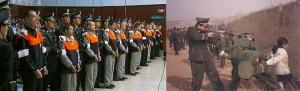
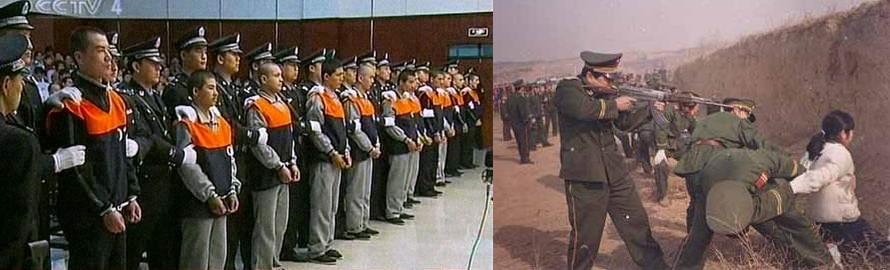
Toute l’horreur de la peine de mort en Chine, l’Etat qui exécute le plus au monde.

Avant même que l’onde de choc du départ de Zine el Abidine Ben Ali n’ait atteint Beijing, la Chine avait d’ores et déjà introduit, au cours des deux dernières années, des réglementations interdisant aux avocats d’accepter certains types de dossiers, de faire quelque commentaire que ce soit auprès des médias sur leurs dossiers en cours ou, plus impensable encore, de contester des irrégularités commises par les tribunaux. Même si de telles réglementations sont on ne peut plus contraires aux Principes de Base des Nations Unies relatifs au Rôle du Barreau, dont l’Article 18 dispose que « les avocats ne doivent pas être assimilés à leurs clients ou à la cause de leurs clients du fait de l’exercice de leurs fonctions », l’avocat chinois qui s’avise de préférer ce droit international insolent à l’ordre du « droit socialiste » est voué à le payer cher.

Pour les membres de groupes religieux non officiels, tels que le mouvement spirituel Falun Gong, ou encore les protestataires dans les régions autonomes bouddhiste du Tibet et musulmane du Xinjiang, il n’a jamais été aussi difficile d’être défendu en justice, de même que pour ceux qui se prennent à dire publiquement qu’ils trouvent insuffisante ou inadaptée la réaction des autorités aux récentes catastrophes naturelles ou aux questions liées à la sécurité alimentaire. Pour d’autres, déjà vulnérables de manière traditionnelle, la défense est devenue tout simplement un mot vide de tout sens. Ainsi des citoyens emprisonnés de manière arbitraire, voire soumis à la torture en détention, et de ceux qui, dans ce pays qui exécute à tour de bras, risquent la peine de mort, souvent sur la base d’aveux arrachés par la torture en amont.

Amnesty International cite ainsi les cas de cinq avocats DDH particulièrement visés.

Gao Zhisheng, qui défendait des membres de Falun Gong et traitait des dossiers de peine de mort, a « disparu » depuis plus d’un an. Auparavant, il avait déjà été détenu « au secret » et torturé plus d’une fois depuis 2006.

Tang Jingling, exerçant à Guangdong, province du sud frontalière de Hong Kong, a « disparu » quant à lui le 22 février dernier. Ses amis pensant qu’il se trouve dans un centre gouvernemental de formation à Panyu, l’un de ses confrères tenta de s’en assurer ; mais il fut menacé, passé à tabac et finalement contraint d’y renoncer. Tang Jingling défendait des travailleurs emprisonnés pour avoir protesté contre leurs conditions de travail déplorables, et en dépit du refus des autorités de lui renouveler sa licence, il prodiguait des conseils juridiques aux personnes vulnérables, en particulier aux travailleurs migrants.

Liu Shihui, avocat exerçant à Guangzhou, ville jadis connue sous le nom de Canton, également dans le Guangdong, et travaillant sur des dossiers de tortures et de décès en garde à vue, fut sévèrement battu le 20 février dernier alors qu’il se rendait à une manifestation de protestation inspirée par la Révolution du Jasmin en Tunisie. Le 25, il « disparut », puis il fut en fin de compte amené de force le 12 juin par les autorités à sa résidence située dans la Région autonome de Mongolie intérieure, où il demeure à ce jour assigné à résidence.

Tang Jitian est, depuis le 5 mars dernier, lui aussi assigné à résidence après avoir « disparu » le 16 février. En 2009, lui et d’autres avocats de Beijing avaient mis en cause publiquement la légalité de l’ « évaluation annuelle », et en mai 2010, après qu’il avait défendu un adepte de Falun Gong, sa licence lui avait été retirée de manière permanente.

Ni Yulan a été à plusieurs reprises arrêtée et torturée pour avoir défendu des résidents de Beijing expulsés de force de leurs maisons en vue des Jeux Olympiques de Beijing en 2008. Sa propre maison a été détruite et elle a été radiée du Barreau, elle qui déjà, en 2002, avait été torturée de manière si violente en détention qu’elle utilise désormais un fauteuil roulant.

Avant même la parution du rapport d’Amnesty, le Bureau de Représentation auprès de l’Office des Nations Unies à Genève de l’Association of World Citizens avait interpellé les autorités chinoises sur le cas d’un avocat DDH, en situation de handicap comme l’est Ni Yulan mais qui n’est pas pour autant, loin de là, privé de ses facultés d’homme de loi.

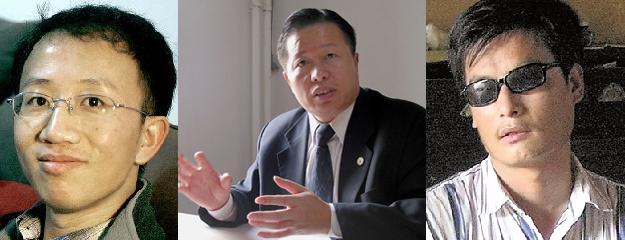
Non-voyant, Chen Guangcheng est un juriste autodidacte qui a appris le droit en braille. Persécuté de longue date par les autorités de Linyi, dans la province orientale du Shandong – pour la petite histoire, patrie de Confucius –, pour avoir défendu la cause des femmes que le Gouvernement force à avorter, que ce soit en vertu de la politique traditionnelle chinoise de l’enfant unique ou pour empêcher la naissance de filles au profit de bébés de sexe masculin, il avait été incarcéré quatre années durant avant d’être libéré le 9 septembre 2010. Mais c’était pour être placé, ainsi que sa famille, sous un strict régime d’assignation à résidence.

Une vidéo tournée clandestinement, quelques dix semaines après le début de son assignation à résidence, puis sortie de Chine et mise en ligne le 9 février dernier par l’organisation China Aid, basée aux Etats-Unis, montre Chen Guangcheng relatant en détail les mauvais traitements dont lui et sa famille sont victimes au quotidien. « Je suis sorti d’une petite prison, mais c’était pour entrer dans une encore plus grande », confie l’avocat, désormais cantonné à une maison qu’il décrit comme observée vingt-quatre heures sur vingt-quatre par trois équipes de vingt-deux personnes en tout, qui espionnent sa famille et empêchent quiconque de quitter les lieux. Seule la mère de Chen Guangcheng, qui est âgée, peut sortir pour aller faire les courses. Pas de ligne téléphonique fixe, et un brouilleur empêche tout appel entrant ou sortant sur téléphone portable. Que l’on ne tente pas pour autant d’aller voir Chen Guangcheng en personne, car sitôt que l’on entre dans le village où se trouve la maison qui lui sert désormais de geôle, l’on se voit sommé de rebrousser chemin, puis molesté si l’on s’obstine.

De même que Gao Zhisheng, Chen Guangcheng est un pilier du mouvement des « avocats aux pieds nus » qui entreprennent de défendre des victimes d’atteintes aux Droits de l’Homme en se référant à la loi chinoise même – le suprême affront à un système où un avocat est censé être, tout au contraire, un militant politique aux ordres du parti dirigeant. C’est dans ce même mouvement que s’inscrit Hu Jia, avocat converti au bouddhisme tibétain depuis les événements de Tienanmen en 1989, militant écologiste et de la lutte contre le SIDA depuis le début des années 1990 et lauréat en 2008 du Prix Sakharov pour les Droits de l’Homme décerné par le Parlement européen.
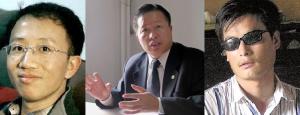
Hu Jia, Gao Zhisheng et Chen Guangcheng, les trois figures de proue du mouvement des “avocats aux pieds nus”. Bravant chaque jour la dictature, ils luttent pour que le mot “droit”, au singulier comme au pluriel, prenne en Chine tout son sens.

On n’en est pas si loin, du « tuer tous les avocats » que préconisait Dick le Boucher sous la plume de Shakespeare. De la part d’un Etat qui frappe ainsi ses avocats jusque dans leur chair, l’on pense toutefois moins, s’agissant d’une œuvre de Shakespeare, à Henri VI qu’à La Tempête, pièce dans laquelle Miranda, fille de Prospero, le duc de Milan, emploie l’expression « brave new world » dont Aldous Huxley fera au vingtième siècle le titre original anglais de son Meilleur des mondes. Dans l’« Etat mondial » que le roman d’Huxley a pour cadre, un Etat futuriste aseptisé et totalitaire, idolâtrant Henry Ford et la production industrielle, et où le bonheur quotidien se crée par la consommation d’un sorbet euphorisant, il n’y a pas de conflits, ni militaires ni juridiques, car tout simplement pas de libertés publiques au départ. Dès lors, quel besoin d’avocats ? C’est bien à cela que Hu Jintao et ses proches semblent aujourd’hui rêver pour leur pays, trop heureux qu’ils sont de voir les crises économiques successives dans les démocraties occidentales leur permettre de vanter leur modèle, car ayant racheté pour partie les dettes publiques des Etats concernés et s’offrant ainsi le luxe de faire la leçon y compris aux Etats-Unis, démocratie dépensière à bout de souffle mais qui, au moins, respecte un principe aussi fondamental pour l’état de droit que l’est l’indépendance des avocats, fondamentale à l’état de droit, et plus encore, à la démocratie.

Défendre un justiciable, c’est toujours remettre en question l’application d’une loi écrite, tout en s’appuyant soi-même, ce qui n’est pas la moindre des ironies, sur une autre loi écrite. Dans une « société démocratique » aux termes de la Déclaration universelle des Droits de l’Homme, le travail de l’avocat, par la création de la jurisprudence, nourrit le droit et l’enrichit, contribuant ainsi à son évolution dont il est indispensable qu’elle suive celle de la société. Avant que le Ministre de la Justice français Robert Badinter ne demande à l’Assemblée nationale « l’abolition de la peine de mort en France » le 17 septembre 1981, l’avocat Robert Badinter n’avait pas été sans plaider dans le procès de Claude Buffet et Roger Bontems, alors que ces deux hommes encouraient la peine de mort pour avoir effectué une prise d’otages dans une prison où ils étaient détenus. Et ils furent en effet exécutés en 1972.

En Chine, l’avocat, censé être un auxiliaire de justice, ne doit être pour les autorités qu’un auxiliaire politique et commercial, politique car il doit mettre en œuvre le « droit socialiste » voulu par Beijing, et commercial car les seuls clients honorables pour lui sont les hommes d’affaires, chinois et étrangers, qui assurent la réussite d’un système où politique et économie se contredisent en permanence.

L’avocate française Gisèle Halimi déclarait récemment : « Dans notre profession, on considère qu’il n’y a pas d’indéfendable ». Le Gouvernement chinois a pourtant instauré ce principe dans son droit interne. Tant qu’il laissera ces dispositions perdurer, aux yeux des avocats de Chine et du monde entier, il se rendra, ainsi que son système politico-économique schizophrène, indéfendable.


Bernard Henry est Officier de Presse du Bureau de Représentation auprès de l’Office des Nations Unies à Genève de l’Association of World Citizens.


[i] Acte IV, Scène 2.

[ii] « Etre avocat en Chine », Maître Mathieu Boyer, in Revue du commerce international.
[iii] « Le rôle de l’avocat chinois dans la pratique judiciaire », Maître Xia ShanSheng, Ambassade de France en Chine (http://www.ambafrance-cn.org/Le-role-de-l-avocat-dans-le-systeme-judiciaire-En-Chine.html).

World Citizens Call for a Halt to Armed Violence against the Kachin and to Facilitate the Return of Kachin Refugees from China to Burma

In Asia, Conflict Resolution, Human Rights on June 22, 2011 at 10:23 PM

WORLD CITIZENS CALL FOR A HALT TO ARMED VIOLENCE AGAINST THE KACHIN AND TO FACILITATE THE RETURN OF KACHIN REFUGEES FROM CHINA TO BURMA

On June 20, the United Nations-designated World Day for Refugees, the Association of World Citizens appealed to the Government of Myanmar (Burma) to halt the new round of violence against the Kachin national minority.  The fighting erupted on June 9, 2011 and has already led to thousands of persons being displaced and others fleeing as refugees into China. Such a halt would be in keeping with President Thein Sein’s March 2011 inaugural address to the newly elected Parliament where he said that the door for peace is open.

In a separate Appeal to the Ambassador of the People’s Republic of China, René Wadlow, Senior Vice President and Chief Representative to the United Nations (UN), Geneva of the Association of World Citizens, called upon China to help in mediating the conflict between the Myanmar military and the armed insurgency, the Kachin Independence Army.  Until calm and security is re-established in the Kachin and Northern Shan States of Myanmar, refugees should be granted refuge in China.

China, after many years of support for the communist-led Kachin insurgency, stopped its aid at some point in the 1980s, cutting off the supply lines through China.  The communist leadership of the Kachin was then replaced by less ideological and more ethnic-nationalist leaders. The Chinese government saw its interest in supporting the Myanmar government, and China has become the chief trading partner of Myanmar. Thus China is well placed to play a mediation role.

The Kachin are originally from Tibet and have migrated into Burma and the Yunnan Province of China over the last 200 years.  Thus the Kachin have fellow ethnic members who care for them when they cross the frontier into Yunnan.  However, the Chinese government does not like refugees, having less control over them.  Thus it would be in the interest of China to help restore security in Kachin State which since March has its own State Parliament.

There have been on-and-off cease-fire agreements between the Myanmar government and most of the national minority armed insurgencies.  The most recent cease-fire agreement with the Kachin dates from 1994, and thus world citizens can call for the application of the 1994 accord.

The reasons for the current outbreak of armed violence are unclear.  As Edith Mirante wrote in her account of the insurgencies in Burma “This was a terrible, filthy war.  There was nothing cool or little about it.  There was no rationale, no justification for its having gone on for so long.  Apparently wars didn’t have expiration dates like milk cartons.  Sometimes they just didn’t end.” (Edith Mirante, Burmese Looking Glass (New York: Grove Press, 1993, p116).

Myanmar faces two basic and related issues: the installation of democratic government and a constitutional system which allows autonomy to the national minorities.  Both tasks are difficult.  There is little democratic tradition or ethos upon which to structure a democratic government.  The majority of the seats in the newly-elected national Parliament is held by serving military officers or by officers who “retired” so they could run for Parliament as civilians.  Likewise there is little “national vision” or pluralistic leadership among the national minorities. What leadership exists both in the national government and among the ethnic minorities is often motivated by personal and clanic interests, and leaders recruit allies similarly motivated. Only peace will allow new leadership to emerge with broader motivations and allow all citizens to participate freely in a renewed political process.

Therefore, there needs to be an immediate cessation of hostilities and then efforts to strengthen the processes of the newly created Kachin Parliament.

The Ambassadors of Myanmar and China were assured that the Association of World Citizens will continue to follow the situation closely and was ready to help in whatever way a non-governmental organization could be of use.

World Citizens Call for a Thai-Cambodian Peace Zone: From Periodic Flair-ups to Permanent Cooperation

In Asia, Conflict Resolution, The Search for Peace on April 23, 2011 at 8:36 PM

WORLD CITIZENS CALL FOR A THAI-CAMBODIAN PEACE ZONE:

FROM PERIODIC FLAIR-UPS TO PERMANENT COOPERATION

By René Wadlow


In an April 23 Appeal to the United Nations (UN) Secretary-General, Ban Ki-moon, Prof. René Wadlow, Senior Vice President and Chief Representative to the United Nations Office at Geneva of the Association of World Citizens (AWC), called for renewed efforts to promote a zone of peace along the Thai-Cambodian frontier where fighting had broken out on Good Friday, April 22, and was continuing on Saturday, April 23. “Quick UN action is required to halt these periodic flair-ups and to create a zone of peace that would facilitate permanent cooperation” said the World Citizen Appeal.

The early morning Good Friday fighting between Thai and Cambodian troops took place near the ancient temples of Ta Krabey and Ta Moan Thom some 150 kilometers southwest of the better-known 900-year-old Preah Vihear  Temple where fighting had broken out in February. There have been repeated clashes around the Preah Vihear Temple, especially after 2008 when UNESCO enshrined Preah Vihear as a World Heritage site for Cambodia over Thai objections. The World Court had in 1962 decided that Preah Vihear was on the Cambodian side of the frontier.  However the only roads for easy access to the temple are from Thailand.

The World Citizen proposal for a Thai-Cambodian peace zone is based on a “peace park-condominium zone of peace” between Ecuador and Peru proposed by Professor Johan Galtung at a time of growing military confrontations between the two South American countries and published in his collection of peace proposals: Johan Galtung 50 Years (Transcend University Press, 2008, 263pp.)

The Preah Vihear Temple, a World Heritage Site.

The troops of the two countries would disengage and withdraw, and procedures would be established for joint security, patrolling, and early warning of military movements.  A code of conduct would be drawn up.  Thus the two countries with a history of hostility could use conflict creatively to grow together at the disputed point and at the speed national sentiments would tolerate and demand.  Such a zone of peace would be important both for conflict resolution and for protection of the ecology.

The fighting in February had been brought for mediation to a meeting of the Foreign Ministers of the Association for South East Asian Nations (ASEAN). Indonesia which currently holds the rotating chairmanship agreed to send military observers to the frontier area.  However, they have not yet been sent, and Thai officials considered them unnecessary.

However, the new round of fighting and the evacuation of the population of villages near the frontier indicate that the situation remains volatile. Joint cooperation between the UN and ASEAN would be important to create a stable form of third-party mediation. As Prof. Wadlow pointed out in the World Citizen Appeal, “Buddhist groups in both Thailand and Cambodia have been working for reconciliation based on the common value of compassion. There is a growing role for citizen diplomacy and mediation efforts. The Thai-Cambodian conflict is one in which such citizen diplomacy can play an important role, especially in building up the institutions of a zone of peace with joint centers for Buddhist study and practice as well as increased protection of the fragile environment. However, in light of the increased dangers of renewed fighting, swift action by governments is needed. The UN Security Council is best structured for deciding on the swift action needed”.

René Wadlow is Senior Vice President and Chief Representative to  the United Nations Office in Geneva of the Association of World Citizens.