The Official Blog of the

Archive for August, 2025|Monthly archive page

BOOK REVIEW: Peter L. Wilson, “Peacock Angel: The Esoteric Tradition of the Yezidis”

In Being a World Citizen, Book Review, Conflict Resolution, Cultural Bridges, Human Rights, Humanitarian Law, International Justice, Middle East & North Africa, Modern slavery, Peacebuilding, Refugees, Religious Freedom, Solidarity, Spirituality, Syria, The Search for Peace, United Nations, War Crimes, Women's Rights, World Law on August 4, 2025 at 5:55 PM

By René Wadlow

Peter L. Wilson, Peacock Angel: The Esoteric Tradition of the Yezidis.

Rochester, VT, Inner Traditions, 2022, 272pp.
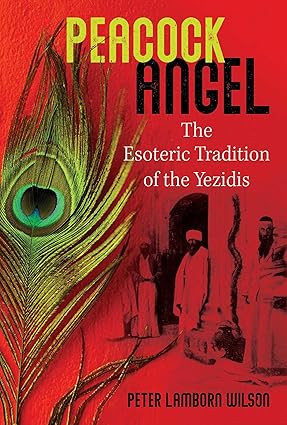
Peter Wilson, a specialist on the Middle East, has written a useful book on the religious framework of the Yezidis as seen by someone outside the Yezidi faith. A Yezidi website has been established by Yezidis living in Nebraska, USA: https://yeziditruth.org.

The yearly Sakharov Prize for Freedom of Thought awarded by the European Parliament was given on October 27, 2016 to Nadia Murad who is also the co-laureate of the 2018 Nobel Peace Prize. She had been taken captive by the forces of the Islamic State in Iraq and Syria (ISIS) in August 2014 and then sold into sexual slavery and forced marriage. She was able to escape with the help of a compassionate Muslim family and went to Germany as a refugee. She has become a spokesperson for the Yezidi, especially Yezidi women.

There are some 500,000 Yezidis, a Kurdish-speaking religious community living in northern Iraq. There were also some 200,000 Yezidis among the Kurds of Türkiye, but nearly all have migrated to Western Europe, primarily Germany as well as to Australia, Canada, and the USA.

There are also some Yezidi among Kurds living in Syria, Iran and Armenia. The Yezidis do not convert people. Thus, the religion continues only through birth into the community.

The structure of the Yezidi religious system is Zoroastrian, a faith born in Persia proclaiming that two great cosmic forces, that of light and good and that of darkness and evil are in constant battle. Humans are called upon to help light overcome darkness.

However, the strict dualistic thinking of Zoroastrianism was modified by another Persian prophet, Mani of Ctesiphon in the third century of the Common Era. Mani tried to create a synthesis of religious teachings that were increasingly coming into contact through travel and trade: Buddhism and Hinduism from India, Jewish and Christian thought, Hellenistic Gnostic philosophy from Egypt and Greece as well as many small belief systems.

Mani kept the Zoroastrian dualism as the most easily understood intellectual framework, though giving it a somewhat more Taoist (yin/yang) flexibility, Mani having traveled to China. He developed the idea of the progression of the soul by individual effort through reincarnation. Unfortunately, only the dualistic Zoroastrian framework is still attached to Mani’s name – Manichaeism. This is somewhat ironic as it was the Zoroastrian Magi who had him put to death as a dangerous rival.

Within the Mani-Zoroastrian framework, the Yezidi added the presence of angels who are to help humans in the constant battle for light and good, in particular Melek Tawsi, the peacock angel. Although there are angels in Islam, angels that one does not know could well be demons. Thus, the Yezidis are regularly accused of being “demon worshipers”.

The Yezidis have always been looked down upon by both their Muslim and Christian neighbors as “pagans”. The government of Saddam Hussein was opposed to the Yezidis not so much for their religious beliefs but rather because some Yezidis played important roles in the Kurdish community, seen as largely opposed to the government. The Yezidi community is still in socio-economic difficulty given the instability of the situation in Iraq.

Peter Wilson has written a useful introduction to this little-known faith.

Prof. René Wadlow is President of the Association of World Citizens.
BOOK REVIEW: Jean Boulton, “The Dao of Complexity: Making Sense and Making Waves in Turbulent Times”

In Asia, Being a World Citizen, Book Review, Cultural Bridges, Peacebuilding, Spirituality, The Search for Peace on August 4, 2025 at 6:40 AM

By Vasileios Basios, Ph.D.

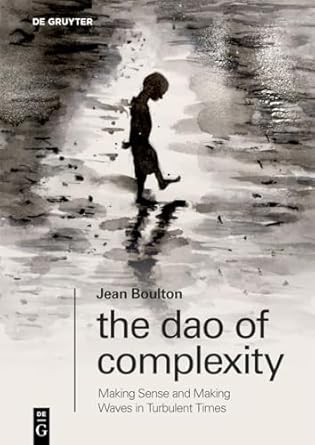
Jean Boulton, The Dao of Complexity: Making Sense and Making Waves in Turbulent Times.

Berlin: De Gruyter Brill, 2024, 400 pp.

This remarkable book is distinguished by its illuminating exploration of the contemporary complex world, which is characterised by unpredictability, interconnectedness, and constantly changing flows.

Boulton’s book is intellectually invigorating and profoundly nourishing for the heart and spirit. This can be attributed to the author’s infectious enthusiasm and unique ability to translate sophisticated concepts into practical wisdom.

From the very first pages, the reader is immediately struck by a sense of illumination and inspiration. ‘The Dao of Complexity’ represents a distinctive synthesis of a treatise on systems theory and a philosophical musing on ancient wisdom. Furthermore, Boulton’s writing can be considered a form of activism. It is evident that the author employs a persuasive discourse, unique for its meticulous crafting and intimate style, to instigate a shift in perspective among the readership. This discourse serves as a catalyst, prompting novel interpretations of the intricacies and multifaceted nature of the world.

The book’s structure is so appealing, it invites you to just dip in and out, and to enjoy the thought-provoking reflections each time. Her text design is amazing. It is inspired by Daoist texts and, like these, it encourages serendipitous discovery and deep contemplation. This allows the reader to discover meaning and insights.

Here Complexity Daoism meet in a “remarkable resonance”, as she puts it, and in a vibrant resonant synthesis.

The author confidently masters two powerful traditions: the scientific study of complexity and the ancient philosophy of Daoism. Boulton masterfully unveils the deep connections between these worldviews, demonstrating that both emphasise process, emergence, and the interconnectedness of all things.

In these troubled times, with so many challenges to face – turbulence, pandemics, climate change, political unrest and wars – it’s easy to feel overwhelmed. But Boulton’s message is one of hope. She suggests that traditional, mechanistic ways of thinking are not the way to find solutions. Instead, she gently invites us to see the world as a dynamic, ever-evolving process, where outcomes are not always predictable and where our actions ripple outward in unexpected and hopeful ways.

The first part of the book, “Making Sense”, establishes this novel –but ancient– worldview. Drawing on the frontiers of quantum physics, neuroscience and political theory, Boulton confidently demonstrates that both our brains and minds as well as the world around us operate as complex, adaptive, innovating systems, constantly shaped by experience, interaction and feedback. She employs the Daoist concept of “the way that is made by walking” to demonstrate that the future is not a predetermined destination, but rather an attractor shaped by our choices and intentions.

Her perspective is liberating and challenging: it frees us from the illusion of total control and encourages humility and openness. She invites us to stay alert and attuned to subtle shifts for effective leadership and meaningful change.

The second part, “Making Waves”, is where the book really shines as a guide for action. In this, Boulton thoughtfully explores what it means to lead, innovate and create change in a world where outcomes are uncertain and linear planning often fails. She has so many stories and examples to share, covering everything from leadership and education to governance and personal growth. She shows us how to embrace complexity to create responses that are stronger, more caring and better able to adapt.

The book’s most powerful message is clear: we must learn to “make waves” without expecting to control the tide. Our actions matter, but their effects will always be shaped by the broader system in which they occur. This insight is vital for anyone engaged in social change, digital transformation or organisational leadership. Rather than clinging to rigid plans or over-relying on rules, Boulton shows us how to trust, foster creativity, and build cultures of loving, learning and adaptation.

The Dao of Complexity is the indispensable guide to the “big and pressing questions” of our time, including climate change, inequality and polarisation. It combines intellectual rigour and practical relevance with thoughtful guidance on how individuals and societies can respond with hope and determination. Her writing is characterised by a deep compassion and profound respect for the intricacies of human experience. She challenges readers to move beyond simplistic, quantitative measures of success and to value qualities like empathy, trust, and the capacity to hold paradox.

However, what made this book a really joyful and refreshing read is the fact that it is so accessible. I absolutely love how she makes even the trickiest concepts feel so welcoming and relatable. She has this remarkable ability to take these complex ideas and explain them in a way that’s so easy and deeply satisfying for everyone to understand, no matter what their background is.

In a world where control, measurement and certainty can sometimes feel like the only things we know and care about, Jean Boulton’s ‘The Dao of Complexity’ is like a warm breeze on a hot summer’s day. It’s a caring reminder to let go of the daily grind and embrace the beauty and wonder of life. I absolutely love this book. It’s one of those that will really get your creative juices flowing, fill your heart with joy and give you the courage to go out there and “make waves” in your own unique way.

I wholeheartedly recommend it! Read it again and again, for each time you will earn new insights and inspiration for our shared journey ahead.

Vasileios Basios is a Senior Researcher at the University of Brussels.

BOOK REVIEW: Samuel Zipp, “The Idealist: Wendell Willkie’s Wartime Quest to Build One World”

In Being a World Citizen, Book Review, Conflict Resolution, Democracy, Peacebuilding, Solidarity, The Search for Peace, United States, World Law on August 4, 2025 at 6:40 AM

By Lawrence Wittner

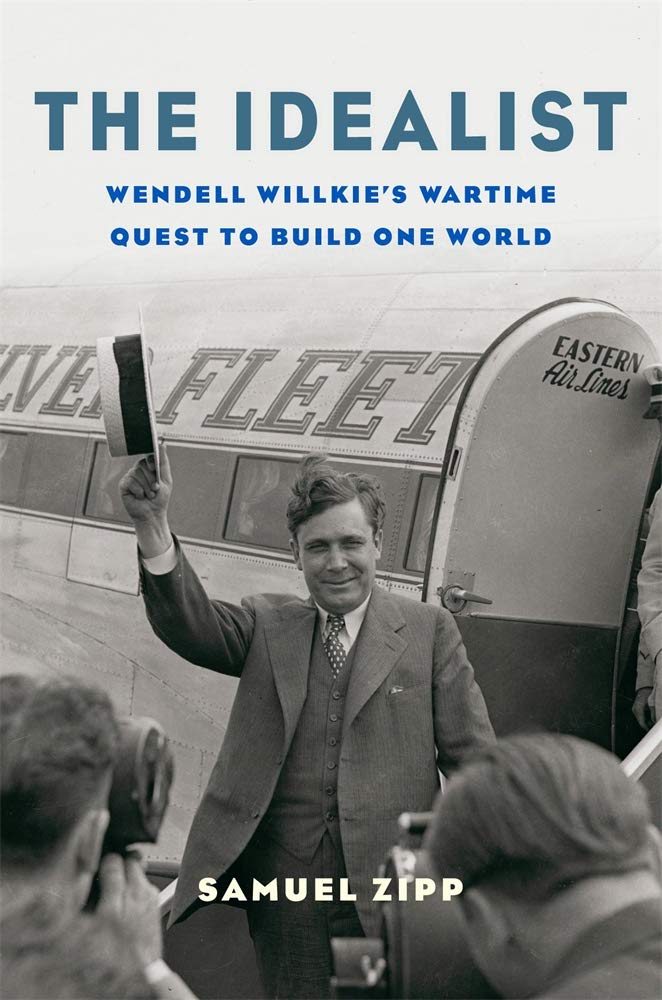
Samuel Zipp, The Idealist: Wendell Willkie’s Wartime Quest to Build One World.

Cambridge, MA: Belknap Press of Harvard University Press, 2020

Wendell Willkie – successful lawyer and businessman, as well as a defeated candidate for U.S. President on the Republican Party ticket in 1940 – is a largely forgotten figure today. But, as Samuel Zipp reminds us, Willkie was extremely influential during World War II, when he launched a popular campaign for “global interdependence” or, as it became known, “One World.”

In this beautifully written and well researched book, Zipp, Professor of American Studies at Brown University, points out that, unlike the conservatives and isolationists in his party, Willkie was a liberal who had backed Woodrow Wilson’s call for a League of Nations, advocated racial equality, and usually supported President Franklin D. Roosevelt’s policy of collective security.

Indeed, with World War II well underway, he and Roosevelt hatched a plan to have Willkie embark on a worldwide goodwill tour, by aircraft, from August to October 1942. This well-publicized venture was designed to demonstrate America’s political unity in wartime, foster support for the Allied powers, and provide a source of information on governmental and public opinion abroad.

Willkie – an informal, garrulous, likeable individual with a common touch – not only had great success along these lines, but was powerfully influenced by what he saw. Appalled by imperialism and racism and impressed by the demand for freedom of colonized or subordinate people in Africa, the Middle East and Asia, Willkie returned, as Zipp notes, convinced of the need to get Americans “to see the wider world through the lens of fraternity and cooperation.” He hoped to convince them that their independence “would require a new form of interdependence with the world,” one in harmony with “global desires for an end to empire and a guarantee of self-determination.”

Back in the United States, Willkie embarked on a round of interviews, speeches, and articles along these lines, capped off by the publication of an immensely popular book, One World. With sales topping 1.6 million copies by July, some observers called it the best-selling book in U.S. history. Furthermore, that June over 100 newspapers in the United States and abroad, with a combined circulation of over seven million readers, ran an abridged version in their pages. Using his celebrity status to assail both “narrow nationalism” and “imperialism,” Willkie produced what Zipp calls “a fleeting moment,” when he “showed the country an alternative possible future.”

But the moment passed. Nationalists and imperialists began to criticize this vision, the Republican Party repudiated his leadership, and, in October 1944, Willkie – only 52 years of age – died of a heart attack. Although, after the atomic bombing of Japan, world federalist and nuclear disarmament groups adopted “One World or None” as their slogan, the idea of egalitarian global interdependence gradually lost favor, despite its occasional revival by environmentalists and others.

Even so, Zipp concludes, Willkie’s “diagnosis of the value of global interdependence has never been more prescient,” while “his warnings about the perils of racially charged ‘narrow nationalism’ have never been more indispensable.”

Lawrence Wittner (http://lawrenceswittner.com) is Professor of History Emeritus at SUNY/Albany.