The Official Blog of the

Archive for the ‘United Nations’ Category

Iraq: What does one do with the broken pieces?

In Anticolonialism, Conflict Resolution, Cultural Bridges, Current Events, Democracy, Human Rights, Middle East & North Africa, The Search for Peace, United Nations, War Crimes, World Law on June 23, 2014 at 9:31 PM

IRAQ: WHAT DOES ONE DO WITH THE BROKEN PIECES?

By René Wadlow


There is the legendary sign in shops selling china and porcelain “Do not touch; If you break it, you buy it”. The same sign should have been hung at the entry to Baghdad rather than portraits of Saddam Hussein. With Iraq in armed confusion as sectors of the country change side, and the Iraqi government seems incapable of an adequate response other than to call for military help, as concerned world citizens we must ask ourselves “What can we do?”

The forces of the Islamic State of Iraq and Syria (ISIS) have broken down a wall on the frontier between Iraq and Syria as a symbol of abolishing national frontiers to be replaced by a community of the Islamic faithful − the umma. In some ways, we are back to the early days of the post-World War One period when France and England tried to re-structure that part of the Ottoman Empire that is now Iraq, Syria, Lebanon, Israel-Palestine, Jordan, Turkey and an ill-defined Kurdistan.
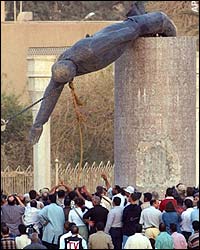
 

In March 2003 an international "coalition" led by the United States attacked Iraq in violation of international law and overthrew the country's dictator, Saddam Hussein. The problem is that, having acted without prior permission from the Security Council, the "coalition" was never able to garner support from the international community and build a real, stable democracy in Iraq. As a result, a significant part of the country is now in the hands of radical Islamist fighters.

In March 2003 an international “coalition” led by the United States attacked Iraq in violation of international law and overthrew the country’s dictator, Saddam Hussein. The problem is that, having acted without prior permission from the Security Council, the “coalition” was never able to garner support from the international community and build a real, stable democracy in Iraq. As a result, a significant part of the country is now in the hands of radical Islamist fighters.


During 1915, Sir Mark Sykes, a Tory Member of Parliament and a specialist on  Turkish affairs and Francois Georges-Picot, a French political figure with strong links to colonial factions in the French Senate negotiated how to re-structure the Ottoman Empire to the benefit of England and France. Although these were considered “secret negotiations” Sykes reported to Lord Kitchener, the War Minister, and Picot had joined the French Foreign Ministry as war service. However, both operated largely as “free agents”. Today Sykes and Picot are recalled for no other achievement than their talent in dividing. The agreement between them was signed in January 1916 but kept in a draw until the war was over. In April 1920 at San Remo, France and England made the divisions official.

History has moved on, but dividing and re-structuring remains the order of the day. The political structures of Israel-Palestine as one state, two states, or one state and occupied territories have confronted the best of mediators − and less talented mediators as well. With the war in Syria continuing, there have been suggestions to divide − or federate − the state into three parts: an Alawite-Shi’ite area, a Sunni area, and a Kurdish area. The same divisions had been suggested for Iraq earlier and are again being discussed in the light of the ISIS advances: a Shi’ite area in the south, Kurds in the north − already largely independent − and Sunnis in the Middle. Lebanon, although not a federal state, is largely structured on sectarian-geographic divisions.
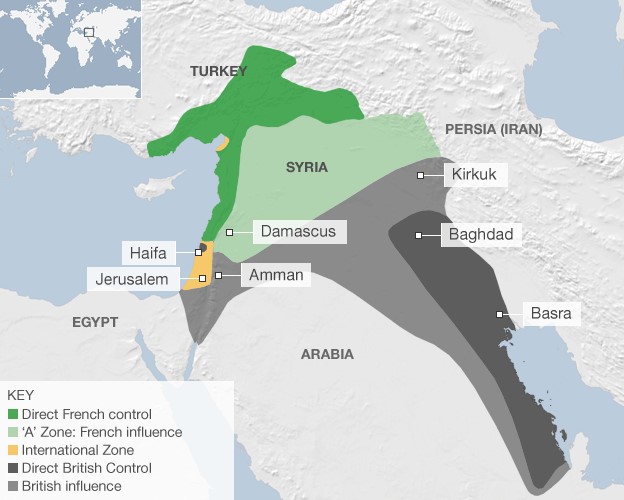
 

In 1916 the Sykes-Picot agreement carved the Middle East into two "spheres of influence", one British, the other French, plus two zones of direct control by either of the colonial powers.

In 1916 the Sykes-Picot agreement carved the Middle East into two “spheres of influence”, one British, the other French, plus two zones of direct control by either of the colonial powers.


Constitution-making under duress is not the best way of doing things. Forced federalism presents even more difficulties than creating a federal state when people are not fighting each other. We have seen the difficulties of proposing federal structures for Ukraine, federalism seen by some as a prelude to the disintegration of the state. The difficulties in the wider Middle East are even greater, as we have three states directly involved: Iraq, Syria, Turkey with a well-organized and armed Kurdish community in Iraq and parts of Syria.

The Kurds had expected that a Kurdistan would be recognized after World War One. The issue was raised at a conference to set Middle East frontiers held in June 1923 in Lausanne. The failure of the Kurds to achieve their goal for independence and the forced inclusion of their mountainous homeland within the then newly created states of Iraq, Syria and Turkey caused resentment and unrest. All the Kurds received in 1923 was a pledge to respect minority rights. By 1924, the Turkish government had banned all Kurdish schools, organizations, publications, and religious Sufi brotherhoods. In 1925, there was the first of the Kurdish revolts in Turkey, which, on-and-off, continue to today.
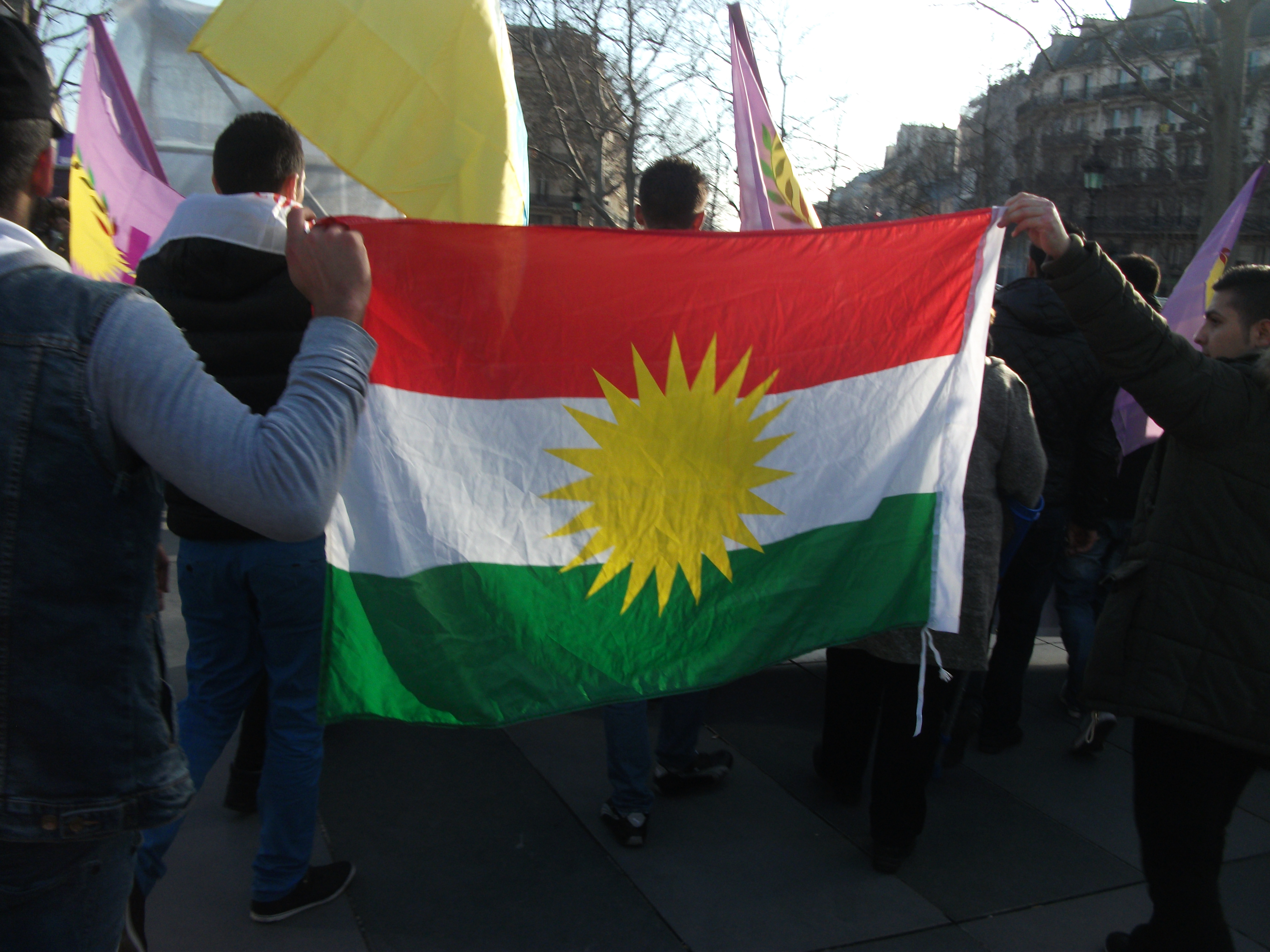
 

The flag of the Kurdish people, a people without a nation, a people without a land, to whom the promises of history ring hollow today more than they ever have. (C) Bernard J. Henry/AWC

The flag of the Kurdish people, a people without a nation, a people without a land, to whom the promises of history ring hollow today more than they ever have. (C) Bernard J. Henry/AWC


As outsiders but as specialists in federal forms of government, is there anything which we can do to be helpful? Maps are deceptive, and what is drawn as Shi’ite, Sunni and Kurdish area in Iraq and Syria have, in fact, mixed populations. Nor are religious-sectarian divisions the only lines of fracture.

Nevertheless, discussions among Syrians, Iraqis, Turks, Iranians and outside specialists on forms of government may be of greater use than sending Special Forces as ‘intelligence’ specialists. Such discussions will not be easy to organize or to facilitate but in a period of constitutional disorder and flux, such efforts are necessary.


Prof. René Wadlow is President of the Association of World Citizens.
The Law of the Seize

In Being a World Citizen, Conflict Resolution, Environmental protection, International Justice, The Search for Peace, United Nations, World Law on June 15, 2014 at 10:03 PM

THE LAW OF THE SEIZE

By René Wadlow


June 8 of each year has been proclaimed by the UN General Assembly as the Day of the Law of the Sea. However, according to my friend John Logue, who had participated with me as non-governmental organization representative in the long negotiations in New York and Geneva, it should be called “the Law of the Seize.”

What started out in November 1967 with a General Assembly presentation by Ambassador Arivid Pardo of Malta as a call to establish a new political and legal regime for the ocean space ended in August 1980 with a draft convention. It was a mixed bag of successes and disappointments, but that convention has now been ratified by 162 States.

For world citizens, the quality of the Law of the Sea Convention was of particular significance. The greater part of the oceans has been considered res communis, a global common beyond national ownership. Furthermore, the physical nature of the oceans suggests world rather than national solutions to the increasing need for management of marine resources and the marine environment.

World Citizen Thor Heyerdahl was one of those who called attention to the dangers of ocean pollution coming to Geneva to speak for world citizens during the Law of the Sea negotiations. The oceans and the seas remind us that the planet and not the State should be our focus. A holistic view of life arises from our interdependence as a species and our dependence on the life system of nature. World citizens have stressed that a balanced, sustainable eco-system will only emerge if our political, economic and ethical policies coincide in building a more stable and more peaceful—in short, a more human—planet.

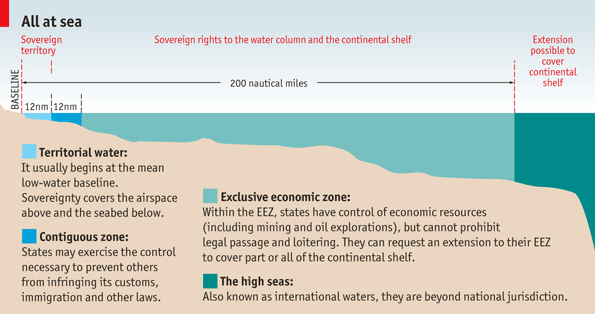
(C) The Economist

(C) The Economist

Establishing rules for the management of the oceans was a real possibility in bringing about an increase in the awareness of the earth as our common home. However, the UN Law of the Sea Conference was first and foremost a political conference with over 160 States participating. From the outset of the conference, it was agreed that the convention had to be drafted by consensus in order to create a political and legal system for the oceans accepted to all — to manage what Arivid Pardo had called “the common heritage of mankind.”

During the negotiations, there were groupings that cut across the Cold War divisions of the times, especially within a group called “the landlocked and geographically disadvantaged countries.” There were also informal groups of persons who acted in a private capacity, a mixture of nongovernmental organization (NGO) representatives, legal scholars, and diplomats who prepared suggestions on many of the issues of the conference. These issues included the economic zones, the continental shelf, scientific research, marine pollution, and dispute settlement. Such propositions were taken seriously by the government negotiators, in part because few diplomats had the technical knowledge needed for making decisions as well as the creation of a new international organization, the Seabed Authority.

However, in practice, government negotiators are more used to working for the “national interest” and in defending the idea of “territory,” both on land and on the sea. Boundary-making is a primordial activity. Various theories have been advanced to explain why, many of them derived from our animal ancestors. However, ocean boundary problems are more difficult than building a wall on land. As Douglas Johnston and Mark Valencia write,

The forces of nationalism were too strong to be swayed by Pardo’s appeals to international cooperation and technocratic rationality. Instead the coastal states, developed and developing alike, saw in the newly available ocean areas an unexpected windfall, offering the prospect of a previously unimagined extension of their natural resource base. The economic goal of national autonomy had prevailed over the interest in global cooperation, setting in motion the processes of establishing vast national enclosures of offshore areas, especially those enclosures consonant with the new exclusive economic zone (EEZ) regime. International cooperation had yielded to national autonomy.1

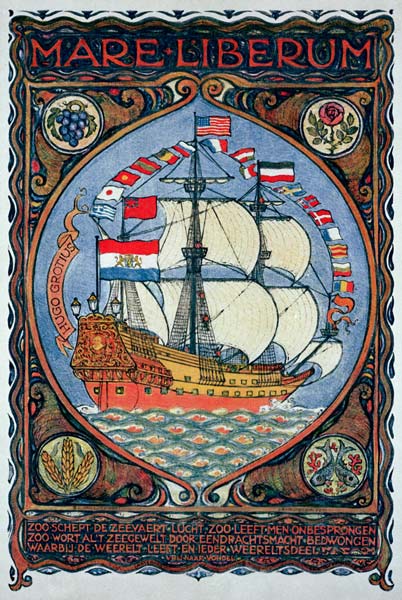
An outstanding first attempt at codification of the law of the sea was the work of Hugo Grotius, the Dutch jurist widely regarded as the forefather of international law as we know it today. In 1609 Grotius published Mare Liberum (A Free Sea), a book in which claimed that the sea was international territory and thus free for all nations to use in their usual conduct of trade with one another.

An outstanding first attempt at codification of the law of the sea was the work of Hugo Grotius, the Dutch jurist widely regarded as the forefather of international law as we know it today. In 1609 Grotius published Mare Liberum (A Free Sea), a book in which claimed that the sea was international territory and thus free for all nations to use in their usual conduct of trade with one another.

Conflicts over national sea boundaries are particularly strong in the Pacific Ocean among China, Vietnam, the Philippines, Japan, Taiwan, and Cambodia, with India and Indonesia watching closely. The disputes arise largely because of the claims of waters around small islands as national territory. Most of these islands are not inhabited, but are claimed as the starting point of “territorial waters.”

Originally, the disputes concerned exclusive fishing rights within national territorial zones. Now the issues have become stronger, as it is believed that there are oil and natural gas reserves in these areas.

Concerning China’s dispute with Japan (which is also largely true of China’s policy with other Asian countries), Krista Wiegand writes,

China’s current strategy to negotiate with Japan over joint development of natural gas and oil resources outside the disputed zone seems to be the most rational strategy it can take in the disputes. Rather than dropping its territorial claim, China continues to maintain its claim for sovereignty, while at the same time benefiting from joint development of natural gas resources. By maintaining the territorial claim, China also sustains its ability to confront Japan through diplomatic and militarized conflict when other disputed issues arise.2

Territorial sea disputes can be heated up or cooled off at will or when other political issues require attention. We are currently in a “heating up” stage. Thus for June 8, in honor of the Law of the Sea, we can consider how best to resolve territorial disputes by having a broader view of the common heritage of humanity.


Prof. René Wadlow is President of the Association of World Citizens.
 

Notes

1)   Douglas M. Johnston and Mark J. Valencia. Pacific Ocean Boundary Problems (Dordrecht: Martinus Nighoff Publishers, 1991, 214pp.)

2)   Krista E. Wiegand. Enduring Territorial Disputes (Athens, GA: University of Georgia Press, 2011, 340pp.)

Ukraine: The Dogs of the Cold War are Awakened

In Being a World Citizen, Conflict Resolution, Current Events, Democracy, Europe, Human Rights, International Justice, The former Soviet Union, The Search for Peace, United Nations, World Law on June 12, 2014 at 9:11 PM

UKRAINE: THE DOGS OF THE COLD WAR ARE AWAKENED

By René Wadlow


“Cry Havoc! And let slip the dogs of war!”

William Shakespeare, Julius Caesar


The dogs of the Cold War (1945-1990) had largely fallen asleep after the 1990 Summit Conference of the Organization for Security and Cooperation in Europe (OSCE) in Paris had put a formal end to the European aspects of the Cold War. A New Europe was the slogan of both governments and non-governmental currents that had been working for a Europe without its East-West divisions symbolized by the Berlin Wall.

Many of us had been involved in the April 1980 European Nuclear Disarmament Appeal, often shortened to END, of which the English historian E.P. Thompson was a leading spokesman. Mient Jan Faber of the Dutch Inter-Church Peace Council was the link to those working within church/religious groups on the same lines. Obviously, the level of arms − and thus disarmament − was not the only aspect of the moves necessary to move beyond the Cold War embodied in bureaucratic, and military-industrial forms.

There was a necessary ‘healing process’ − a need to remove the barbed wire in people’s minds and hearts.

The hope was that moving beyond the Cold War would become a citizens’ search for common projects, bringing together widening constituencies in a direct discourse beyond Cold War agendas and the media’s framing of the debates.

Many of us met in Prague in what was still Czechoslovakia in October 1990 for the creation of the Helsinki Citizens’ Assembly with an aim of a democratic integration of Europe. Vaclav Havel who had become Head of State spoke to the opening session on the power of acting from principle guided by our consciences to build a thoroughly new Europe undivided into blocs.

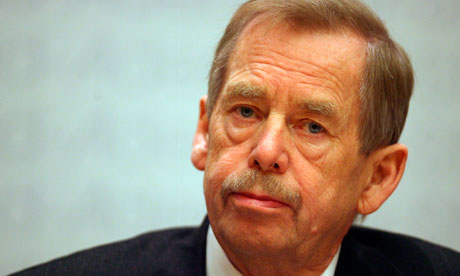
Vaclav Havel (1936-2011), the Czechoslovakian dissident playwright who in 1989 led the country's 'Velvet Revolution', eventually becoming President of Czechoslovakia. From 1992 to 2003 Havel was President of the Czech Republic after Czechoslovakia was eventually dissolved.

Vaclav Havel (1936-2011), the Czechoslovakian dissident playwright who in 1989 led the country’s ‘Velvet Revolution’, eventually becoming President of Czechoslovakia. From 1992 to 2003 Havel was President of the Czech Republic after Czechoslovakia was dissolved. (C) John Macdougall/AFP/Getty Images

“Helsinki Citizens” had been chosen by the organizers as the name because Helsinki had been the city which saw the formal start of the governmental process in 1975 leading first to a certain stabilization of the European Cold War structure and progressively to tension-reduction under the title of “détente”. Since much of the governmental detente seemed to be aimed only at making a more stable status quo, citizen activists spoke of “detente from below”, as going beyond the current structures.

The visions of a better world differed among peace, green, and human rights groups. However all agreed that the future forms of Europe was beyond the current status quo.

I had gone to Prague already concerned with ethnic-nationalities tensions. These tensions were colored by the Cold War but also had non-Cold War roots as seen in the Nagorno-Karabakh conflict within the then USSR. Through contacts in Geneva, I had become concerned by Nagorno-Karabakh and thought that good faith negotiations could lead to a resolution of the conflict. I was also concerned with the growing tensions in Yugoslavia. My paper read at the Prague conference “Future of Europe” was published in the Belgrade Review of International Affairs in December 1990.

Since 1990, the conflicts linked to the breakup of Yugoslavia, and the conflicts of Abkhazia-South Ossetia-Georgia, and Transnistra-Moldova all confirm my analysis that the key problem of our time is the manifestation of narrow nationalism. This narrow nationalist ideology must be countered by a strong cosmopolitan-world citizen ideology and practice.

The hope at Prague in 1990 was to build a pan-European movement participating in public debates, offering opinions and discussing alternatives in each country but also able to come together and act in a conflict resolution way in times of strong tensions and armed conflicts. There were a few efforts of the Helsinki groups during the Yugoslav conflicts, but they were not coordinated nor of massive size. I had participated in some of these undertakings at the UN in Geneva when the conference on Yugoslavia was in session there.

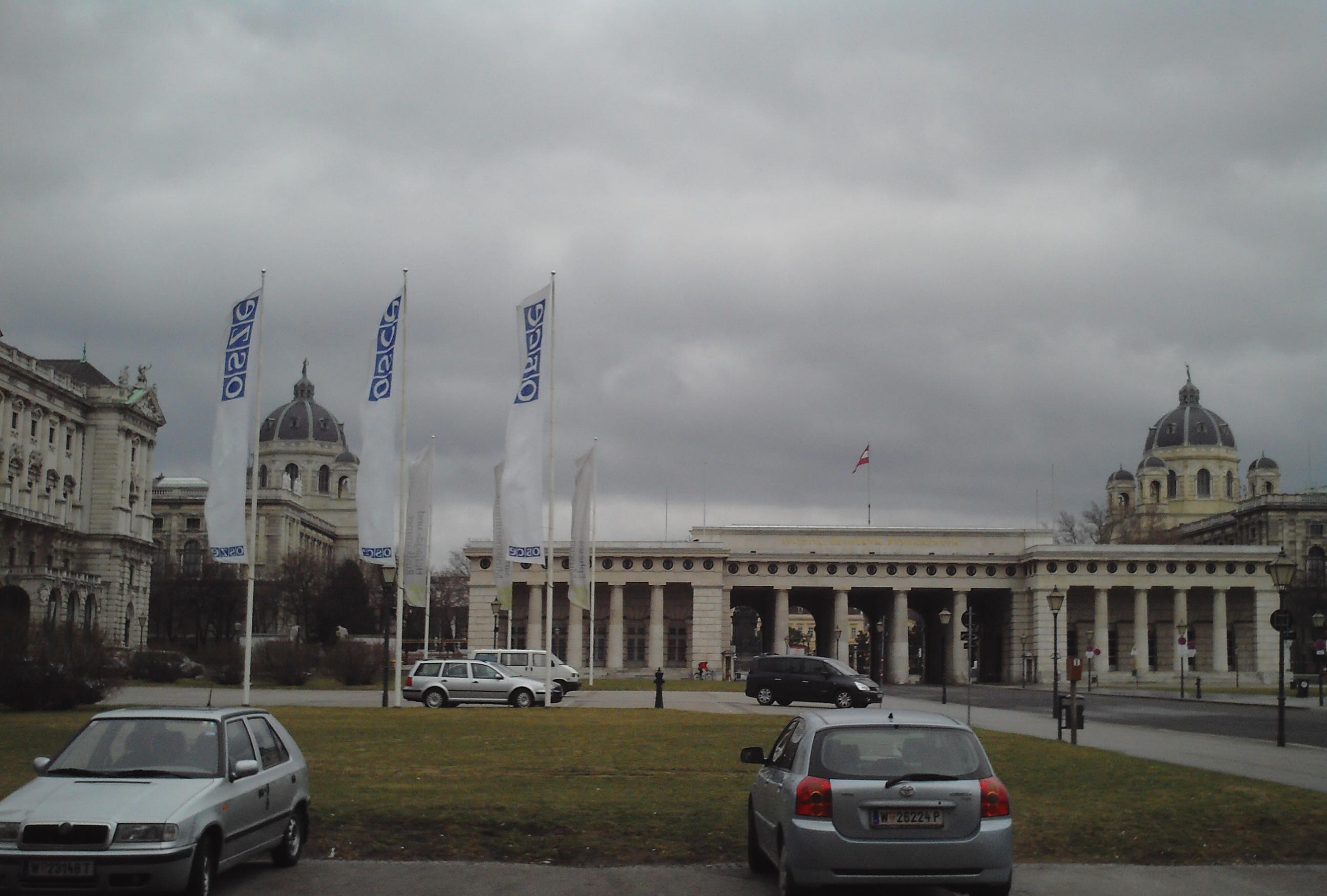
The Hofburg Palace in Vienna, Austria, which houses the Headquarters of the Organization for Security and Cooperation in Europe. (C) Bernard Henry

The Hofburg Palace in Vienna, Austria, which houses the Headquarters of the Organization for Security and Cooperation in Europe. (C) Bernard Henry/AWC

Since 1990, we have seen the rise in some European countries of hard line nationalist groups − often Right wing and some with Neo-Fascist aspects. This rise was illustrated by the May 25, 2014 elections to the European Parliament. The entry of an additional number of narrow nationalists will not have much impact on the way the European Parliament operates, but it will give the nationalists a media platform and a degree of legitimacy in their home country. There has not been a significant rise in cosmopolitan-world citizen movements, although cosmopolitanism as an intellectual framework has become increasingly common.

Without a well-organized movement of pan-European peace-green-human rights movements, “Europe from Below” has been unable to act in the Ukraine crisis. Individual governments, in particular Russia and the USA, have taken a highly visible role. The media in both countries dusted off the Cold War vocabulary and political analysis.

Talk of a “New Cold War” has been common. The OSCE − with Switzerland as President for 2014 − has called for restraint and negotiations. There has been no equivalent “high profile” efforts on the part of non-governmental groups. Today, there is no Vaclav Havel to serve as a bridge of respect among both governments and non-governmental movements. Certainly, the dogs of the Cold War have awakened to remind us that they are still there. In addition, new nationalist, and authoritarian tendencies are emerging. Although these nationalist movements are sometimes led by comic figures, they need to be taken seriously.

Counter voices also need to awaken, and the ability for nongovernmental conflict resolution groups to act must be strengthened.


Prof. René Wadlow is President of the Association of World Citizens.
Hugh Joseph Schonfield, the World Citizen Pioneer who Tried to Unite the Holy Land

In Being a World Citizen, Conflict Resolution, Cultural Bridges, Current Events, Middle East & North Africa, Solidarity, The Search for Peace, United Nations, World Law on May 24, 2014 at 8:50 PM

HUGH JOSEPH SCHONFIELD, THE WORLD CITIZEN PIONEER WHO TRIED TO UNITE THE HOLY LAND

By René Wadlow


Hugh Joseph Schonfield (1901-1988) was the first to incorporate the term “world citizen” into the name of a nongovernmental organization: the Commonwealth of World Citizens in 1938. The Commonwealth of World Citizens was to have an emphasis on service to humanity and a potential role as impartial mediator in international disputes. The founding was what he called a “revolt into sanity” from a mentally-deranged world in which Fascism, Nazism, Communism and militarized Shintoism flourished. From 1941 to 1948, Schonfield published a magazine called The World Citizen. As he said in a speech to the Constructive World Peace Conference in April 1940 “External forces, the agents of God, have caused the emergence in the world itself of ideas of World Community and World Citizenship. It is seen by serious political thinkers that if peace and justice are to reign here there must be a loyalty above that which is due from subjects to their own nation state. Much is being done, and rightly, to encourage such ideas. What we have to concern ourselves with is the bridge that will bring us safely to that farther shore. The bridge must be one that will carry us eventually to the New Jerusalem, not to a new Babylon.”

He wrote, “So many of the grave problems of our time are due to the fact that we are living in a radical transition, having to relate to the rapid advances of science which are requiring us to move forward into a wholeness and interdependence for which we are not sufficiently prepared. There are inevitable consequences, which chiefly affect our self-consciousness. The problems of the transition period affect individuals just as much as nations. Multitudes find themselves incapable of adjusting to the new demands and fear loss of identity.”

In his Mondcivitan Writings ('mondcivitan" coming from "mondcivitano" which is the Esperanto for "World Citizen"), Schonfield developed a comprehensive World Citizen thought, long before the Association of World Citizen was created.

In his Mondcivitan Writings (‘mondcivitan” coming from “mondcivitano” which is the Esperanto for “World Citizen”), Schonfield developed a comprehensive World Citizen thought and ideology, long before the Association of World Citizens itself was created.

Hugh Schonfield drew parallels between the current period of transition with the Jewish society at the time of Jesus, a period which was the focus of most of his writings. He wrote in 1936 History of Jewish Christianity and in 1939 Jesus: A Biography. During the Second World War while working on Middle East issues for the British government, he published in 1943 Judaism and World Order. Shortly afterwards he published Jesus: Man and Messiah, Readings from the Aprocryphal Gospels. A major work was published in 1955, a translation of the New Testament with notes relating the work to the thoughts of the period in which it was written and linking it to Jewish writings of the same period. As a Jew, he did not want his translation to become known as the “Schonfield New Testament” so it was published in 1955 as The Authentic New Testament. He continued his research on Jesus and messianic expectations and in 1965 published The Passover Plot which became a ‘best seller’ selling over two million copies. He became very interested in the Dead Sea scrolls and one of his last books in 1984 was The Essene Odyssey.

With his interest in the Holy Land, he was particularly concerned with Arab-Jewish relations and became an active champion for the idea of an Israel-Palestine Confederation, setting out proposals in 1944 which also concerned what is now Jordan, the pre-Independence Mandate area.

As Dr. Schonfield wrote in Transnational Perspectives in 1982, “What is clearly called for is a Confederation, possibly on the Swiss model, composed of the states of Palestine and Israel, with Jerusalem as the federal capital. The city would not have to be divided or fought over as to who should possess it. Palestine could have a state capital in the eastern part and Israel in the western sector, if they so desired, but the city as a whole would represent the Confederation.

Jerusalem is the cradle of the world's two major religions, Islam and Christianity, as well as of Judaism. Therefore, why should it have to be a place of hatred and division, and not a place of brotherhood and unity?

Jerusalem is the cradle of the world’s two major religions, Islam and Christianity, as well as of Judaism. Therefore, why should it have to be a place of hatred and division, and not a place of brotherhood and unity instead?

“The advantage of this plan should be obvious. The frontiers between the two states would be internal and unfortified, and would therefore not create a risk of future war. As citizens of the Confederation, both Palestinians and Israelis would enjoy rights of access to all parts for purposes of travel and commerce, and questions of settlement would be covered by federal laws. There should be freedom of conscience for all citizens of the Confederation, but if so desired the religious laws of Islam and Judaism could be operative in the respective component states. The important thing would be that the Confederation would be the common homeland of both Palestinians and Israelis, who would yet have their own states.

“This is not a dream and could readily become a practical reality. What has been provided here is no more than a plan in outline, but it does keep the Holy Land as a unity, a common homeland for both Israelis and Palestinians, and satisfies their aspirations for self-governing statehood. With imagination and goodwill, it would inaugurate a new era in the Near East, and become an inspiration to mankind.” He saw that forms of regional integration are increasingly considered as the principal methodology for general security, development and the safeguard of human rights. Individual, national and regional security should be accompanied by a spirit of mutual acceptance – with economic cooperation and development as a by-product for a future Israel-Jordan-Palestine grouping.

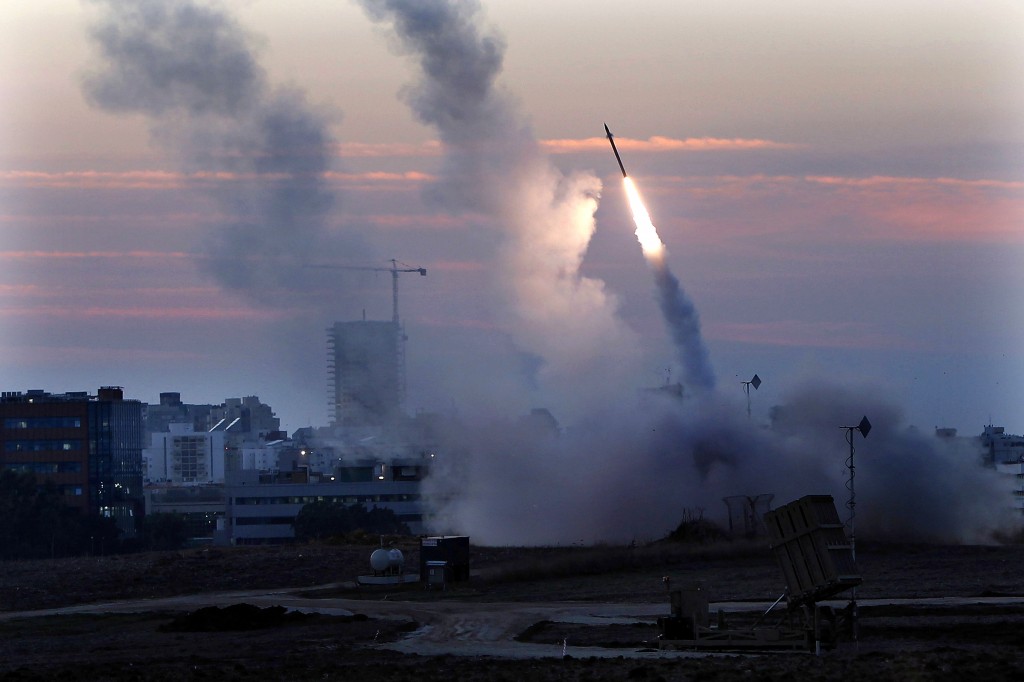
A rocket being fired by the Israeli Defense Force (IDF) to counter an incoming rocket attack from Gaza. (AP Photo/Tsafrir Abayov)

As the Middle East remains hopelessly plagued by violence, a rocket is being fired by the Israeli Defense Force (IDF) to counter an incoming rocket attack on Israel coming from Gaza. (AP Photo/Tsafrir Abayov)

However, the World Citizen proposals have not been followed by the strong national political leadership needed to bring them to the fore of real political negotiations. The quality of government leadership in the Middle East has been uneven at best. But even the Israeli-Palestinian problems are more complex than the quality of leadership. A new spirit of mutual acceptance will only flourish in the region when individual security and dignity for all will become rooted in law – everywhere in the region. This can happen with a general process of democratization and respect for human rights, with safeguards for ethnic and religious minorities. Such democratic values and practices must become the natural bedrock of society in all the countries of the Middle East.

World Citizens can take inspiration from Hugh Schonfield and in their Middle East efforts put an emphasis on unity rather than division.


Prof. René Wadlow is President and Chief Representative to the United Nations in Geneva of the Association of World Citizens.
Libérez Razan Zaïtouneh !

In Current Events, Human Rights, International Justice, Middle East & North Africa, United Nations, War Crimes, World Law on December 19, 2013 at 1:44 PM

-- AWC-UN Geneva Logo --

LES CITOYENS DU MONDE APPELLENT A LA LIBÉRATION IMMÉDIATE DE MAÎTRE RAZAN ZAITOUNEH ET TROIS AUTRES DÉFENSEURS DES DROITS DE L’HOMME CAPTURÉS AVEC ELLE DANS LA SYRIE EN GUERRE

Paris & Genève, le 19 décembre 2013

L’Association of World Citizens (AWC) appelle à la libération immédiate de Madame Razan Zaïtouneh, avocate syrienne des Droits de l’Homme, et de trois autres Défenseurs des Droits de l’Homme (DDH) – Monsieur Wael Hamada, Monsieur Nazem Hamadi et Madame Samira Khalil – qui ont été enlevés avec elle par des inconnus voici dix jours.

Le 9 décembre 2013, ces quatre DDH ont été capturés par des hommes masqués et armés puis conduits en un endroit inconnu, depuis les locaux du Centre pour la Documentation des Violations des Droits de l’Homme en Syrie situé à Douma.

Madame Razan Zaïtouneh défend sans relâche les droits des prisonniers politiques en Syrie. Quand la révolution, qui était au départ non-violente, a éclaté en 2011, elle a fondé les « comités locaux de coordination ». Cette même année, elle a été la lauréate du Prix Anna Politkovskaïa « RAW (Reach of Women) in WAR ».

Active également en tant que journaliste, Madame Razan Zaitouneh observe et informe sur les crimes de guerre et les atteintes aux Droits de l’Homme en Syrie. Dans le courant de cette année, le Prix « International Women of Courage » lui a été décerné pour son travail et ses efforts remarquables.

Depuis le 9 décembre, personne n’a revendiqué l’enlèvement, qui a eu lieu dans une zone où toutes les parties au conflit sont représentées et il est donc impossible de savoir avec certitude pour le compte de qui œuvraient les ravisseurs.

La seule certitude en la matière est que, qui qu’ils soient, les kidnappeurs ont commis un crime de guerre par l’enlèvement délibéré de civils dans un contexte de conflit armé, particulièrement s’agissant de DDH qui sont protégés de manière spéciale par le droit international des Droits de l’Homme.

En conséquence, l’AWC exige la libération immédiate de ces quatre DDH syriens.

Release Razan Zaitouneh!

In Current Events, Human Rights, International Justice, Middle East & North Africa, Uncategorized, United Nations, War Crimes, World Law on December 19, 2013 at 1:37 PM

-- AWC-UN Geneva Logo --

CITIZENS OF THE WORLD CALL FOR THE RELEASE OF ATTORNEY RAZAN ZAITOUNEH AND OTHER HUMAN RIGHTS DEFENDERS CAPTURED IN WAR-TORN SYRIA

Paris & Geneva, December 19, 2013

The Association of World Citizens (AWC) calls for the immediate release of Ms. Razan Zaitouneh, a Syrian human rights lawyer, and three other Human Rights Defenders (HRDs) – Mr. Wael Hamada, Mr. Nazem Hamadi, and Ms. Samira Khalil, who were kidnapped by unknown assailants ten days ago.

On December 9, 2013, the four HRDs were abducted by masked armed men and taken to unknown whereabouts from the premises of the Center for Documenting Human Rights Violations in Syria, located in Douma.

Ms. Razan Zaitouneh has tirelessly defended the rights of political prisoners in Syria. When the revolution, initially a nonviolent one, started in 2011 she founded the “local coordination committees”. That year she received the Anna Politkovskaya award “RAW (Reach All Women) in WAR”.

Also active as a journalist, Ms. Razan Zaitouneh has been monitoring and reporting war crimes and human rights violations in Syria. Earlier this year she received the International Women of Courage Award for her outstanding work and efforts.

Since December 9 no one has claimed responsibility for the abduction, which took place in a zone where all parties to the conflict are represented, making it impossible to know for sure who the kidnappers were working for.

The one thing we know for sure is that, whoever they are, the kidnappers committed a war crime by deliberately abducting civilians in a context of armed conflict, especially HRDs who are specially protected under international human rights law.

Consequently, the AWC demands the immediate release of the four Syrian HRDs.

World Citizenship: Forerunners of a Great Political Era

In Being a World Citizen, Human Rights, Introductory, United Nations on December 15, 2013 at 8:12 PM

WORLD CITIZENSHIP: FORERUNNERS OF A GREAT POLITICAL ERA

By René Wadlow

As the German sociologist Max Weber wrote just after the First World War, “We shall not succeed in banishing that which besets us — the sorrow of being born too late for a great political era — unless we understand how to become the forerunner of an even greater one”.

Our generation, which came after the events leading to the Second World War, followed by the creation of the United Nations (UN), and then by the ending of Western European colonialism in Asia and Africa, has only been able to make alive the institutions of the earlier generation, but never to the extent that the earlier generation hoped.

This is particularly true within the UN. The generation of the founders in 1945 hoped to modify in depth inter-State relations and the balance-of-power mechanisms which had led to the Second World War.

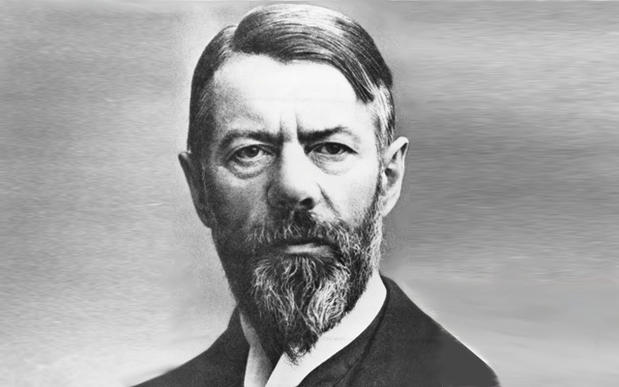
Max Weber (1964-1920) is recognized as one of the founders of sociology as we know it today.

Max Weber (1964-1920) is recognized as one of the founders of sociology as we know it today.

Yet the balance-of-power was the framework for the 1945-1990 Cold War. While the balance-of-power has now been modified with the disintegration of the USSR, the balance-of-power as a method of international policy-setting has not changed. The United Nations has not been able to modify in depth the balance-of-power framework.

The crisis we face today is not about the administration of the UN but about how to deal with the emerging world society in which there is still poverty and violence with often a lack of willingness to help those in need.

Citizens of the World stress the need for certain common values among all the States and peoples of the world, such as the values set out in the Universal Declaration of Human Rights. Such values must be based on a sense of common responsibility for both present and future generations.

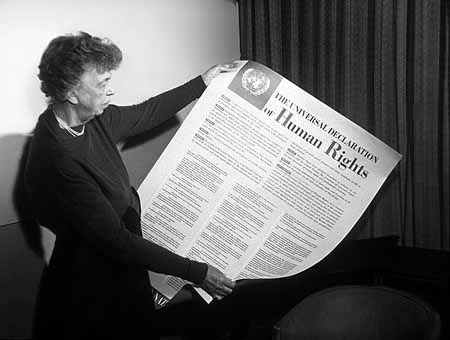
In December 1948 Eleanor Roosevelt, widow of U. S. President Franklin Delano Roosevelt, was truly the driving force behind the adoption by the UN General Assembly of the Universal Declaration of Human Rights.

In December 1948 Eleanor Roosevelt, widow of U. S. President Franklin Delano Roosevelt, was truly the driving force behind the adoption by the UN General Assembly of the Universal Declaration of Human Rights.

Through dialogue among world citizens, the foundations for the values of the emerging world society are being set. Dialogue has to do with trust. To have true dialogue, people have to trust each other enough to reveal the deeply held beliefs that lie behind their surface opinions. Then, they can question each other’s assumptions and begin to establish a context for shared thinking and action.

The forerunners of a true world society are at work, setting the foundations of the new era. This leadership will come ever more into the public light.

Prof. René Wadlow is President and Chief Representative to the United Nations Office at Geneva of the Association of World Citizens.

Can Persistent Racism be a Prelude to Genocide?

In Being a World Citizen, Fighting Racism, Human Rights, International Justice, The Search for Peace, United Nations, War Crimes, Women's Rights, World Law on December 9, 2013 at 1:31 PM

CAN PERSISTENT RACISM BE A PRELUDE TO GENOCIDE?

An Interrogation to Mark the Anniversary of the Genocide Convention

By René Wadlow

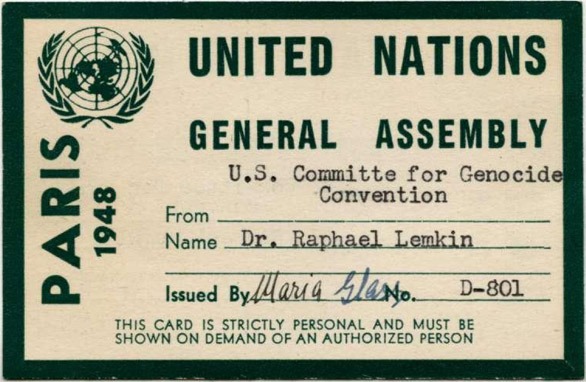
December 9 is the anniversary of the 1948 Convention on Genocide, signed at the UN General Assembly held in 1948 in Paris. The Genocide Convention was signed the day before the proclamation on December 10, 1948 of the Universal Declaration of Human Rights. The two texts were much influenced by the Second World War. The crimes of Nazi Germany were uppermost in the minds of those who drafted the Convention in order to deal with a new aspect of international law and the laws of war.

The protection of civilians from deliberate mass murder was already in The Hague and Geneva Conventions of international humanitarian law. However, genocide is different from mass murder. Genocide is the most extreme consequences of racial discrimination and ethnic hatred. Genocide has as its aim the destruction, wholly or in part, of national, ethnic, racial or religious group as such. The term was proposed by the legal scholar Raphael Lemkin, drawing on the Greek genos (people or tribe) and the Latin cide (to kill)[i].

Mass deaths are not genocide. The largest number of deaths since the end of the Second World War was the failure of Chinese agricultural policies between 1958 and 1962 with over 20 million deaths, but the aim was not to destroy the Chinese as a people. Likewise, the destructive famine in Ukraine 1932-1933 with its seven million dead had a political motivation to reduce opposition but not to destroy the Ukrainians as a people. The United States-led war in Vietnam killed some two million Vietnamese, but the aim was not to destroy the Vietnamese as a people.

Genocide in the sense of a desire to eliminate a people has nearly always a metaphysical aspect as well as deep-seated racism. This was clear in the Nazi desire to eliminate Jews, first by forced emigration from Europe and, when emigration was not possible, by physical destruction.

With the horrendous Jewish Holocaust committed by Nazi Germany in mind, on December 9, 1948 the UN General Assembly made genocide the subject matter of the very first human rights instrument created by the World organization, one day before even the Universal Declaration of Human Rights was adopted by the Assembly in Paris.

With the horrendous Jewish Holocaust committed by Nazi Germany during World War II in mind, on December 9, 1948 the UN General Assembly made genocide the subject matter of the very first human rights instrument created by the World organization, one day before even the Universal Declaration of Human Rights was adopted by the Assembly in Paris.

We see a desire to destroy totally certain tribes in the Darfur conflict in Sudan that did not exist in the much longer and more deadly North-South Sudan Civil War (1956-1972, 1982-2005). Darfur tribes are usually defined by “blood lines” — marriage and thus procreation is limited to a certain population, either within the tribe or with certain other groups with which marriage relations have been created over a period of time. Thus children born of rape — considered ‘Janjaweed babies ‘— after the government-sponsored Janjaweed militias— are left to die or are abandoned. The raped women are often banished or ostracized. By attacking both the aged, holders of traditional knowledge, and the young of child-bearing age, the aim of the destruction of the continuity of a tribal group is clear.

We find the same pattern in some of the fighting in the eastern provinces of the Democratic Republic of Congo where not only are women raped but their sexual organs are destroyed so that they will not be able to reproduce.

Thanks to the efforts of Raphael Lemkin, the international community does have a legal instrument to deal with genocide and punish perpetrators whenever necessary. The only trouble is that in this day and age, "genocide" has still not become an anachronism in global affairs.

Thanks to the efforts of Raphael Lemkin, the international community does have a legal instrument to deal with genocide and punish the perpetrators thereof. It is a shame, though, that in this day and age, “genocide” has still not become an anachronism in global affairs.

Article VIII of the Genocide Conventions provides that “Any Contracting Party may call upon the Competent Organs of the United Nations to take such action under the Charter of the UN as they consider appropriate for the prevention and suppression of acts of genocide or any of the other acts enumerated in article III”. Unfortunately no State has ever done so.

Thus we need to look more closely at the ways in which deep-set racism and constant and repeated accusations against a religious, ethnic or social category can be a prelude to genocide.


Prof. René Wadlow is President and Chief Representative to the United Nations Office at Geneva of the Association of World Citizens.


[i] Raphael Lemkin, Axis Rule in Occupied Europe (Washington: Carnegie Endowment for World Peace, 1944)

For good overviews see:

Walliman and Dobkowski (Eds), Genocide and the Modern Age (New York: Greenwood Press, 1987)

F. Chalk, K. Jonassohn, The History and Sociology of Genocide (New Haven: Yale University Press, 1990)

G.J. Andreopoulos (Ed), Genocide Conceptual and Historical Dimensions Philadelphia (University of Pennsylvania Press, 1994)

Samantha Power, A Problem from Hell: America and the Age of Genocide (New York: Basic Books, 2002)

John Tirman, The Death of Others (New York: Oxford University Press, 2011)

Violences contre les femmes : Des murs qui emprisonnent

In Human Rights, International Justice, Solidarity, United Nations, Women's Rights, World Law on November 25, 2013 at 10:57 PM

VIOLENCES CONTRE LES FEMMES : DES MURS QUI EMPRISONNENT

Par René Wadlow


Lorsque, dans son discours de lauréat du Prix Nobel de la Paix (1974), Sean McBride (1904-1988) a cité, aux côtés du développement et de l’acceptation des armes nucléaires sans discernement, l’utilisation d’armes chimiques et d’assassinats politiques comme les signes d’un « écroulement presque total de la moralité publique et privée dans pratiquement tous les secteurs des relations entre les êtres humains », il a mis l’accent sur le thème qui lui était le plus cher : la nécessité d’actions non-gouvernementales visant à assurer la survie.

Même si McBride avait servi en qualité de Ministre irlandais des Affaires Etrangères entre 1948 et 1951 et joué en cela un rôle important dans la création du Conseil de l’Europe, c’est bien en tant que dirigeant d’une organisation non-gouvernementale (ONG) qu’il a apposé sa marque dans l’histoire – en tant que premier président du Comité Exécutif d’Amnesty International (1961-1974), Secrétaire Général de la Commission international des Juristes (1963-1970) et Président du Bureau international de la Paix. C’est dans le cadre de ses efforts pour mettre en lumière l’usage répandu de la torture que nous avions commencé à travailler ensemble à Genève. Il dénonçait des techniques de torture « qui faisaient passer la poucette et le rack du Moyen Age pour des jouets d’enfants ».

Sean McBride, un authentique héros de la défense des Droits de l'Homme.

Sean McBride, un authentique héros de la défense des Droits de l’Homme.

Il critiquait particulièrement la torture et la violence à l’encontre des femmes. Il avait été élevé en grande partie par sa mère, l’actrice et militante nationaliste irlandaise Maud Gonne. Son père, John McBride, avait été pendu par les Britanniques pour sa participation à l’insurrection de Pâques en 1916, quand Sean avait douze ans. La violence contre les femmes était donc doublement injuste – parce qu’il s’agissait de violence et parce que les femmes devaient être respectées.

Quand Sean McBride, au travers d’Amnesty International, a soulevé pour la première fois la question de la torture à la Commission des Droits de l’Homme de l’ONU, les représentants des divers gouvernements ont répondu que la torture pouvait arriver occasionnellement – il y a toujours bien des policiers ou des gardiens de prison à la main lourde – mais que la torture était rare et jamais employée en tout cas au titre de politique gouvernementale officielle. Cependant, une fois que la question a été soulevée et reprise par les représentants d’autres ONG, il est devenu clair que la torture était généralisée, à travers les différentes cultures et les différents systèmes politiques eux-mêmes. En fin de compte, la Commission des Droits de l’Homme des Nations Unies a nommé un Rapporteur spécial pour la Torture et mis en place un moyen systématique d’examiner les plaintes de torture.

Pareillement, c’est pour beaucoup cette façon de faire qui a été utilisée pour faire naître une prise une conscience au sujet des violences contre les femmes. Quand la question a été soulevée pour la première fois par les représentants d’ONG, les gouvernements ont répondu là encore que la violence contre les femmes existait en effet, mais qu’elle était rare ou n’était en tout et pour tout qu’une « violence conjugale », ce qui faisait que les gouvernements ne pouvaient intervenir si la police n’agissait pas la première.

Toutefois, des preuves émanant du monde entier furent présentées par les ONG qui établissaient que la violence contre les femmes atteignait un niveau alarmant. La violence contre les femmes est une agression contre leur intégrité physique, et aussi contre leur dignité. Comme l’ont souligné les représentants des ONG, nous devons mettre l’accent sur l’universalité de la violence contre les femmes, sur la multiplicité des formes qu’elle prend et sur les façons dont la violence, ainsi que la discrimination, que subissent les femmes, et de manière plus large le système de domination basé sur l’asservissement et l’inégalité, fonctionnent en lien direct les uns avec les autres.

‘La violence contre les femmes’, de Gaetano Salerno, 80x60cm, 2013.

‘La violence contre les femmes’, de Gaetano Salerno, 80x60cm, 2013.

En réponse à cette abondance de preuves, l’Assemblée générale de l’ONU a proclamé le 25 novembre Journée internationale pour l’Elimination de la Violence contre les Femmes. La valeur d’une telle « Journée » spéciale est qu’elle offre un moment pour analyser une question donnée puis de remobilisation pour prendre des mesures tout à la fois à court terme et sur une durée plus longue.

Tout à la fois au niveau international de l’ONU et au niveau national, des programmes ont été créés en vue d’assurer l’égalité pour les femmes et la promotion des femmes dans tous les domaines. La violence physique envers les femmes a fait l’objet d’une attention de plus en plus importante, des centres pour les femmes battues ont été créés et l’on s’est aussi penché sur la question de trafic de femmes. Il a été souvent redit qu’il était nécessaire d’assurer l’éducation, la formation, la santé, la promotion de l’emploi, et l’insertion des femmes afin que celles-ci puissent participer de manière pleine et effective au processus du développement dans la société.

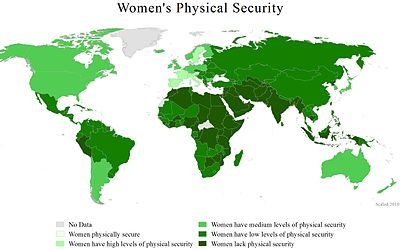
Les violences envers les femmes, encore et toujours un fléau mondial.  (c) Wikipédia

Les violences envers les femmes, encore et toujours un fléau mondial. (c) Wikipédia

Mais l’inégalité perdure, et les murs qui emprisonnent les femmes sont toujours debout. En ce 25 novembre, cette journée pour l’élimination de la violence contre les femmes, il nous faut regarder de près les différentes formes de violences qui font que de telles murailles, à travers le temps, demeurent en place.

Le Professeur René Wadlow est Président et Représentant en Chef  auprès de l’Office des Nations Unies à Genève de l’Association of World Citizens.
Violence Against Women: Walls That Imprison

In Human Rights, International Justice, Solidarity, United Nations, Women's Rights, World Law on November 24, 2013 at 6:32 PM

VIOLENCE AGAINST WOMEN: WALLS THAT IMPRISON

By René Wadlow

When in his Nobel Peace Prize address (1974), Sean MacBride (1904-1988) cited torture along with the development and acceptance of indiscriminate nuclear weapons, the use of chemical weapons, and political assassination as signs of a “near total collapse of public and private morality in practically every sector of human relationship”, he stressed his central theme: the necessity of nongovernmental actions to ensure survival.

Although MacBride had served as the Irish Foreign Minister from 1948 to 1951 and played an important role in the creation of the Council of Europe, it was as a non-governmental organization leader that he made his full mark: as an early chair of the Amnesty International Executive Committee (1961-1974), as Secretary General of the International Commission of Jurists (1963-1970) and as chair of the International Peace Bureau.  It was in his efforts to highlight the wide use of torture that we started to work together in Geneva.  He denounced torture techniques “that make the medieval thumb screw and rack look like children’s toys”.

Sean McBride, a true hero of the defense of human rights.

Sean McBride, a true hero of the defense of human rights.

He was particularly critical of torture and violence against women.  He had been largely raised by his mother, the actress and Irish nationalist Maud Gonne. His father, John MacBride, was hanged by the British for his participation in the 1916 Easter uprising when Sean was 12.  Violence against women was doubly unjust: because it was violence and because women were to be respected.

When Sean MacBride through Amnesty International first raised the issue of torture in the United Nations (UN) Commission on Human Rights, the government representatives replied that torture might happen occasionally — there are always some brutal policemen or prison guards — but torture is rare and never a government policy. However, once the issue was raised and taken up by other NGO representatives, it became clear that torture is widespread, in different cultures and in different political systems.  Finally, the UN Commission on Human Rights named a Special Rapporteur on Torture and developed a systematic way of looking at torture complaints.

Likewise, it has largely been the same pattern for raising awareness of violence against women. When the issue was first raised by representatives of nongovernmental organizations (NGOs), governments replied that violence against women exists but is rare or that it is “domestic violence” and governments cannot act unless there are actions taken by the police.

However, worldwide evidence was presented by NGOs that violence against women exists to an alarming degree. Violence against women is an attack upon their bodily integrity and their dignity.  As NGO representatives stressed, we need to place an emphasis on the universality of violence against women, the multiplicity of its forms and the ways in which violence, discrimination against women, and the broader system of domination based on subordination and inequality are inter-related.

"Violence against women", by Gaetano Salerno, 80x60cm, 2013.

‘Violence against women’, by Gaetano Salerno, 80x60cm, 2013.

In a response to the evidence, the UN General Assembly has set 25 November as the UN-proclaimed International Day for the Elimination of Violence against Women. The value of a special “Day” is that it serves as a time of analysis of an issue and then of rededication to take both short-term and longer-range measures.

Both at the international UN level and at the national level, there have been programs devoted to the equality of women and to the promotion of women in all fields.  There has been growing attention to physical violence against women, the creation of centers for battered women and attention given to the trafficking of women.  It has often been repeated that it is necessary to ensure the education, training, good health, employment promotion, and integration of women so that they can participate fully and effectively in the development process.

Violence against women, a global scourge. (c) Wikipedia

Violence against women, an enduring global scourge. (c) Wikipedia

Yet inequality continues, and walls still exist that imprison women. On November 25, this day for the elimination of violence against women, we need to look at the different forms of violence which keep such wall in place.

Prof. René Wadlow is President and Chief Representative to the United Nations Office at Geneva of the Association of World Citizens.