The Official Blog of the

NGO Cooperation for a Stronger United Nations

In Being a World Citizen, Conflict Resolution, Current Events, NGOs, Peacebuilding, Solidarity, The Search for Peace, Track II, United Nations, World Law on September 20, 2025 at 12:00 PM

By René Wadlow

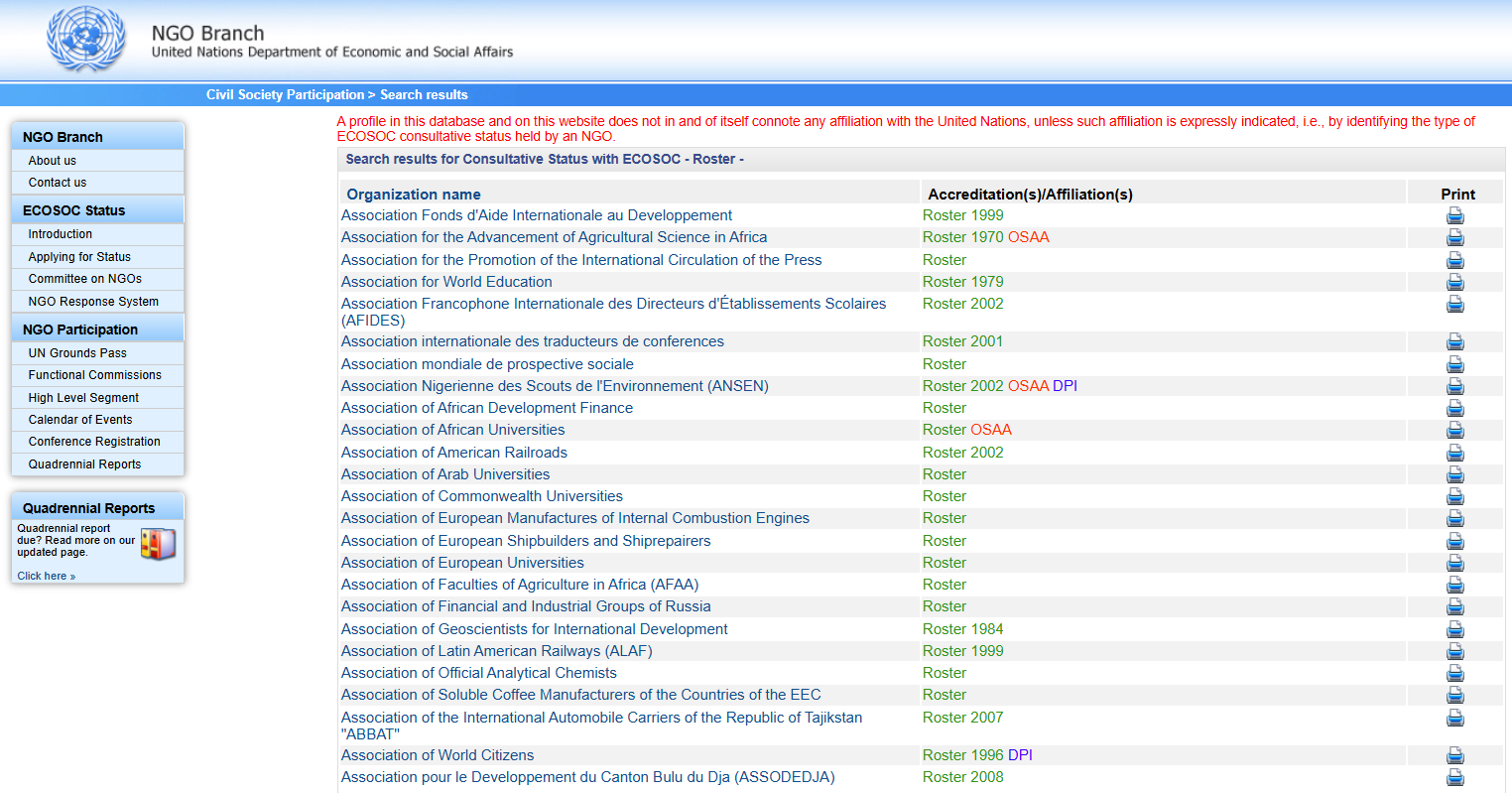
As the 2025 United Nations (UN) General Assembly continues, there is a need for a greater input of Nongovernmental Organizations (NGOs). There are some 6,400 NGOs in consultative status with the UN. Many, however, have consultative status with the UN only to strengthen their standing at the national level. The number of NGOs which engage actively in the UN procedures is much smaller. Some deal with specific UN Specialized Agencies such as UNESCO, the ILO, and the FAO.

Others, such as the Association of World Citizens (AWC), are active on a wider range of issues, especially those with representatives active at the UN in New York and Geneva. It is among this smaller number of NGOs that active measures for cooperation need to be undertaken.

A leading role of the UN since its establishment has been to lay the foundations for a culture of peace with respect for human rights, and economic and social development. There needs to be innovation, responses to new challenges, and a role for intellectual leadership to give a sense of direction. There should be forged from the varied, often contradictory views of governments, a sense of common purpose.

NGOs can help to provide a sense of direction and ways for the pursuit of common interests. The UN must look outward and work with renewed vigor. This is also true for NGOs. Cooperation among NGOs has been growing. Now, faced with strong challenges in the world society, efforts for NGO cooperation are a vital need.

Prof. René Wadlow is President of the Association of World Citizens.
Albert Schweitzer: Respect for Life Against Nuclear Death

In Africa, Being a World Citizen, Conflict Resolution, Human Rights, Nonviolence, Nuclear weapons, Peacebuilding, The Search for Peace, World Law on September 8, 2025 at 7:00 PM

By René Wadlow

Civilization is made up of four ideals: the ideal of the individual; the ideal of social and political organization; the ideal of spiritual and religious organization; the ideal of humanity as a whole. On the basis of these four ideals, thought tries conclusions with progress.

Albert Schweitzer, The Philosophy of Civilization

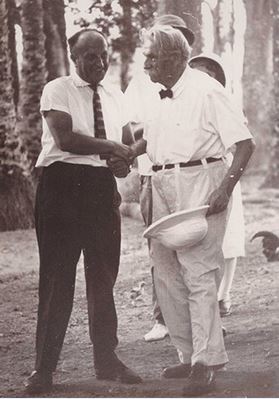
Albert Schweitzer was concerned with the ways that these four ideals of civilization are developed into a harmonious whole. Late in his life, when I knew him in the early 1960s, he was most concerned with the ideal of humanity as a whole.

He had come out strongly against nuclear weapons, weapons which were the opposite of respect for life which was the foundation of his ethical values. (1) “Man can hardly recognize the devils of his creation. Let me give you a definition of ethics. It is good to maintain and further life. It is bad to damage and destroy life. By having reverence for life, we enter into a spiritual relation with the world. By practicing respect for life, we become of the human family and our good, deep and alive.”

For Schweitzer, our sense of unity of the human family and our obligation to future generations was threatened as never before in the two World Wars that he had seen. I had been active since the mid-1950s in efforts to ban testing of nuclear weapons in the atmosphere – a focus of anti-nuclear efforts at the time. I had also worked with the world citizen Norman Cousins who had visited Lambaréné and had written a lively book on his exchanges with Schweitzer. (2) Thus I was well received by Schweitzer at his hospital in Lambaréné; and we had useful discussions. I was working for the Ministry of Education at the time and was at the Protestant Secondary School which was a mile down the Ogowe River from the hospital.

René Wadlow and Albert Schweitzer (C) René Wadlow (personal archives)

It was Norman Cousins, active in disarmament efforts in the USA, who urged Schweitzer to speak out against nuclear weapons. Schweitzer had been awarded the Nobel Peace Prize for his humanitarian efforts in Africa. Thus, he came into ever greater contact with people working for peace. However, he was reluctant to make statements on issues on which he was not expert. As he said to Cousins, “All my life, I have carefully stayed away from making pronouncements on public matters. Groups would come to me for statements or I would be asked to sign joint letters or the press would ask me for my views on certain political questions. And always I would feel forced to say no.” However, he went on “The world needs a system of enforceable law to prevent aggression and deal with the threats to the peace, but the important thing to do is to make a start somewhere…I think maybe the place to take hold is with the matter of nuclear testing…If a ban on nuclear testing can be put into effect then perhaps the stage can be set for other and broader measures related to peace.

Schweitzer’s 1958 appeal Peace or Atomic War was an important contribution to the growing protests against nuclear testing and their fallout of radiation. On October 16, 1963, the Treaty Banning Nuclear Weapons Tests in the Atmosphere, in Outer Space and Under Water (more commonly called the Partial Test Ban) came into force.

Today, we still need those other and broader measures related to peace and for a constant affirmation of respect for life.

Prof. René Wadlow is President of the Association of World Citizens.
Notes

1) See Albert Schweitzer, Peace or Atomic War (New York: Henry Holt, 1958)

2) See Norman Cousins, Dr Schweitzer of Lambaréné (New York: Harper and Brothers, 1960)

BOOK REVIEW: Thomas Nordström, “A World Government in Action”

In Being a World Citizen, Book Review, Conflict Resolution, Cultural Bridges, Democracy, Human Development, Human Rights, International Justice, NGOs, Nonviolence, Peacebuilding, Solidarity, The Search for Peace, Track II, United Nations, Women's Rights, World Law on September 8, 2025 at 7:00 PM

By René Wadlow

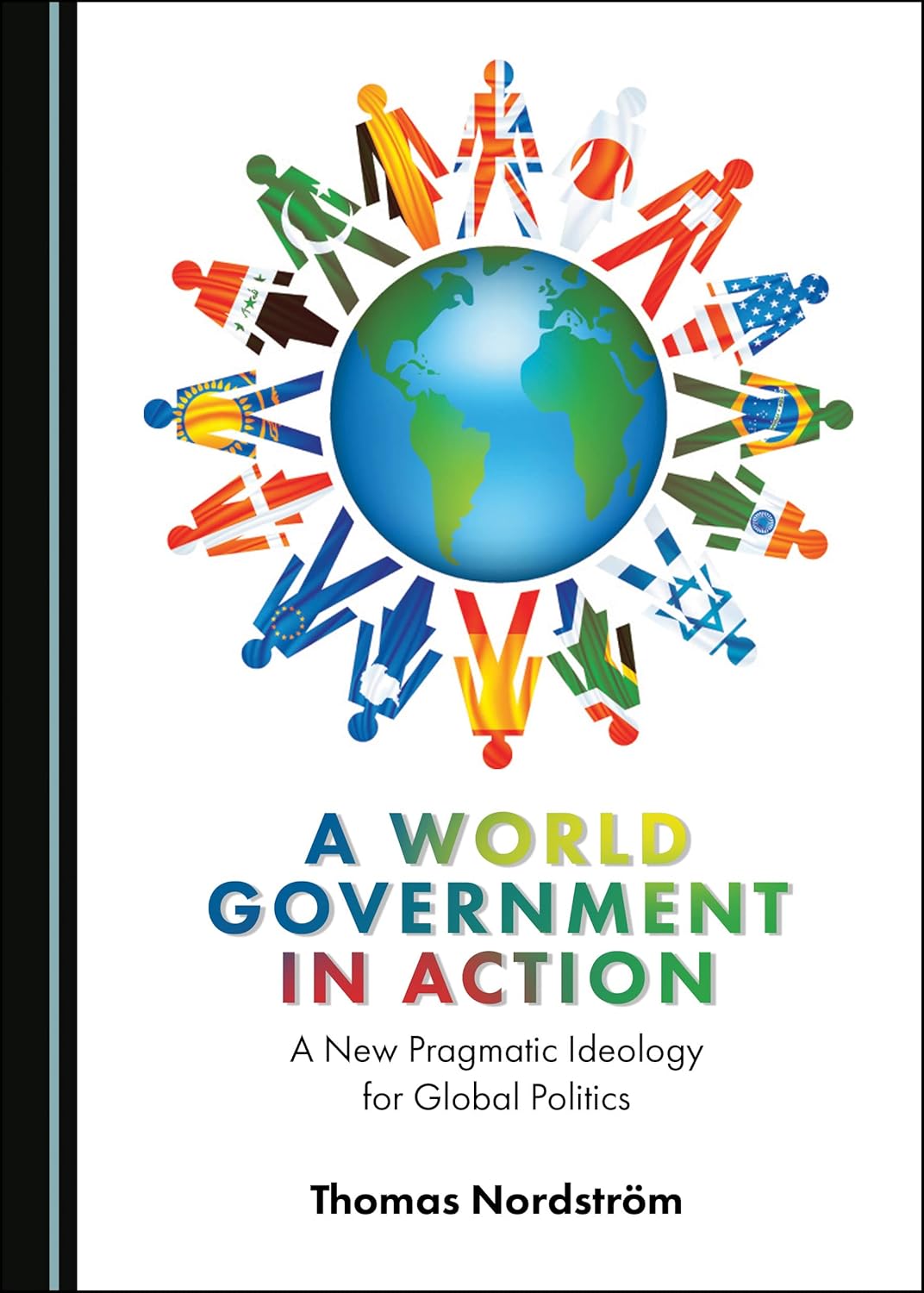
Thomas Nordström, A World Government in Action.

Newcastle upon Tyne: Cambridge Scholars Publishing, 2020, 147pp.

Thomas Nordström has written a useful book which more accurately should have been called “The Need for a World Government in Action”. He outlines many of the challenges facing the world society and stresses that the United Nations (UN) does not have the authority or the power to deal with these challenges adequately. The challenges are interrelated and thus must be faced in an interrelated way. Thus, climate change has an impact on land use which has an impact on food production. To improve food production, there must be better education on food issues as well as greater equality among women and men, as, in many countries, women play a major role in food production, food preparation, and food conservation.

As governments and UN Secretariat members become aware of an issue, the issue is taken up in one or another of the UN Specialized Agencies – FAO, WHO, ILO, UNESCO, or a new program is created: the Environment Program, or different programs on the issue of women. Today, within the halls of the UN there are negotiations for a Global Pact on the Environment and for the creation of a World Environment Organization which would be stronger than the existing UN Environment Program. Such a Global Pact for the Environment would clarify important environmental principles and relations between the existing treaties on the environment which have been negotiated separately.

In the UN, the international agenda reflects the growing influence of nongovernmental organizations (NGOs) and the scientific community in shaping policy. We see this vividly in the discussions on the impact of climate change. The distinction that used to be made between national and international questions has almost entirely vanished. NGOs must be able to provide possible avenues of action based on an effective theoretical analysis that acknowledges the complexity of the international environment.

Governments cannot at the same time boost expenditure on armaments and deal effectively with ecological deterioration and the consequences of climate change. Militarization has contributed to the neglect of other pressing issues, such as shrinking forests, erosion of soils and falling water tables. Militarization draws energy and efforts away from constructive action to deal with common problems. Militarization creates rigidity at the center of world politics as well as brittleness which leads to regional conflicts and civil wars. This political paralysis is both a cause and a result of the rigidity and the brittleness of current international politics. Opportunities are missed for building upon the more positive elements of a particular situation.

What is often called “complex emergencies” – a combination of political and social disintegration that includes armed conflicts, ethnic violence, state collapse, warlordism, refugee flows and famine – have become one of the most pressing humanitarian issues of our time. Today’s violent conflicts are often rooted in a mix of exclusion, inequality, mismanagement of natural resources, corruption, and the frustrations that accompany a lack of jobs and opportunities. Lack of opportunities sows the seeds of instability and violence.

As Nordström points out, behind all the current armed conflicts, there is the presence in a small number of countries of nuclear weapons. If they were used, the level of destruction would be great. Although nuclear disarmament was on the agenda of the UN General Assembly from its start, there has been little progress on nuclear disarmament issues.

As World Citizen and former President of India S. Radhakrishnan has written, “To survive we need a revolution in our thoughts and outlook. From the alter of the past we should take the living fire and not the dead ashes. Let us remember the past, be alive to the present and create the future with courage in our hearts and faith in ourselves.” The great challenge which humanity faces today is to leave behind the culture of violence in which we find ourselves and move rapidly to a culture of peace and solidarity. We can achieve this historic task by casting aside our ancient nationalistic and social prejudices and begin to think and act as responsible Citizens of the World. Nordström sets out some of the guideposts.

Prof. René Wadlow is President of the Association of World Citizens.