The Official Blog of the

Archive for the ‘World Law’ Category

Violence Against Women: Walls That Imprison

In Human Rights, International Justice, Solidarity, United Nations, Women's Rights, World Law on November 24, 2013 at 6:32 PM

VIOLENCE AGAINST WOMEN: WALLS THAT IMPRISON

By René Wadlow

When in his Nobel Peace Prize address (1974), Sean MacBride (1904-1988) cited torture along with the development and acceptance of indiscriminate nuclear weapons, the use of chemical weapons, and political assassination as signs of a “near total collapse of public and private morality in practically every sector of human relationship”, he stressed his central theme: the necessity of nongovernmental actions to ensure survival.

Although MacBride had served as the Irish Foreign Minister from 1948 to 1951 and played an important role in the creation of the Council of Europe, it was as a non-governmental organization leader that he made his full mark: as an early chair of the Amnesty International Executive Committee (1961-1974), as Secretary General of the International Commission of Jurists (1963-1970) and as chair of the International Peace Bureau.  It was in his efforts to highlight the wide use of torture that we started to work together in Geneva.  He denounced torture techniques “that make the medieval thumb screw and rack look like children’s toys”.

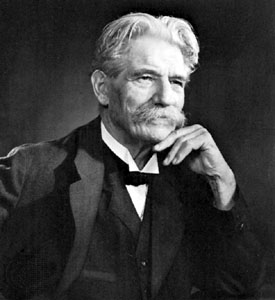
Sean McBride, a true hero of the defense of human rights.

Sean McBride, a true hero of the defense of human rights.

He was particularly critical of torture and violence against women.  He had been largely raised by his mother, the actress and Irish nationalist Maud Gonne. His father, John MacBride, was hanged by the British for his participation in the 1916 Easter uprising when Sean was 12.  Violence against women was doubly unjust: because it was violence and because women were to be respected.

When Sean MacBride through Amnesty International first raised the issue of torture in the United Nations (UN) Commission on Human Rights, the government representatives replied that torture might happen occasionally — there are always some brutal policemen or prison guards — but torture is rare and never a government policy. However, once the issue was raised and taken up by other NGO representatives, it became clear that torture is widespread, in different cultures and in different political systems.  Finally, the UN Commission on Human Rights named a Special Rapporteur on Torture and developed a systematic way of looking at torture complaints.

Likewise, it has largely been the same pattern for raising awareness of violence against women. When the issue was first raised by representatives of nongovernmental organizations (NGOs), governments replied that violence against women exists but is rare or that it is “domestic violence” and governments cannot act unless there are actions taken by the police.

However, worldwide evidence was presented by NGOs that violence against women exists to an alarming degree. Violence against women is an attack upon their bodily integrity and their dignity.  As NGO representatives stressed, we need to place an emphasis on the universality of violence against women, the multiplicity of its forms and the ways in which violence, discrimination against women, and the broader system of domination based on subordination and inequality are inter-related.

"Violence against women", by Gaetano Salerno, 80x60cm, 2013.

‘Violence against women’, by Gaetano Salerno, 80x60cm, 2013.

In a response to the evidence, the UN General Assembly has set 25 November as the UN-proclaimed International Day for the Elimination of Violence against Women. The value of a special “Day” is that it serves as a time of analysis of an issue and then of rededication to take both short-term and longer-range measures.

Both at the international UN level and at the national level, there have been programs devoted to the equality of women and to the promotion of women in all fields.  There has been growing attention to physical violence against women, the creation of centers for battered women and attention given to the trafficking of women.  It has often been repeated that it is necessary to ensure the education, training, good health, employment promotion, and integration of women so that they can participate fully and effectively in the development process.

Violence against women, a global scourge. (c) Wikipedia

Violence against women, an enduring global scourge. (c) Wikipedia

Yet inequality continues, and walls still exist that imprison women. On November 25, this day for the elimination of violence against women, we need to look at the different forms of violence which keep such wall in place.

Prof. René Wadlow is President and Chief Representative to the United Nations Office at Geneva of the Association of World Citizens.

The UN and the Disappearing State of the Central African Republic

In Africa, Anticolonialism, Conflict Resolution, Current Events, Democracy, Human Rights, International Justice, The Search for Peace, United Nations, War Crimes, World Law on November 22, 2013 at 10:36 AM

THE UN AND THE DISAPPEARING STATE OF THE CENTRAL AFRICAN REPUBLIC

By René Wadlow

In a November 19, 2013 statement to the United Nations (UN) Security Council, the Secretary General, Mr. Ban Ki-moon, warned that communal violence in the Central African Republic (CAR) was spiraling out of control and backed the possibility of an armed UN peacekeeping force to complement the civilian UN staff, the Integrated Peacebuilding Office in the Central African Republic (BINUCA).

The UN faces a double task in the CAR. There is the immediate problem of violence among tribal-based militias in the absence of a national army or central government security forces. The militias basically pit the north of the country against the south. In addition, there are other militias from the Democratic Republic of the Congo which use the CAR as a “safe haven” and live off the land by looting villages. There are also segments of the Lord’s Resistance Army, largely from the Acholi tribes of northern Uganda who also use the CAR as a safe area looting as they move about.

In the absence of a standing UN peacekeeping force, UN peacekeepers would have to be redeployed from the eastern areas of the Democratic Republic of Congo, an area also torn apart by fighting among different militias and an incompetent Congolese national army. Although the UN forces have been in the Congo for a number of years, it is only in the last couple of months that they have had a mandate to be active in a military way and have started to make an impact on the security situation. By deploying UN troops away from the Congo, there is a danger that the security progress made will fade away.

The longer range task of the UN, the peacebuilding effort, is to create a national administration which provides services beyond the capital city, Bangui. This is the aim of the BINUCA, but its work is largely impossible in the light of the ongoing violence. The challenge is “State-building” which was not done during the colonial period by France.

The area covered by the current State had no pre-colonial common history, but was incorporated into French Equatorial Africa when it could have been as easily part of the Belgium Congo or added to Uganda as part of British East Africa.

Oubangui-Chari as it was then known was the poor cousin of French Equatorial Africa (AEF) whose administrative center was Brazzaville, Congo, with Gabon as the natural resource base. The Cameroon, although legally a League of Nations Mandate, was basically part of AEF. Oubangui-Chari was used as an “exile post” for African civil servants considered “trouble makers”. French colonial administrators also considered Oubangui-Chari as a posting in exile, a place to get away from as soon as possible. Schools were few, and secondary school students were sent away to Brazzaville.

There was only one political figure of standing who emerged from Oubangui-Chari, Barthelemy Boganda (1910-1959). He was the first Roman Catholic priest ordained in 1938. After the Second World War, he was elected to serve in the French Parliament as a member of the Catholic-influenced MRP Party, although he was stripped of his priesthood for going into politics and also for marrying his legislative assistant.

Boganda advocated keeping the AEF together as a federation of independent States knowing that Oubangui-Chari was the poorest of the AEF States and most in need of help from its neighbours. Unfortunately, he was killed in a plane crash on the eve of independence, and with him disappeared all enlightened leadership.

However, his stature in the political life of Oubangui-Chari was such that political power passed on to two cousins, David Dacko, first President of the independent Central African Republic and then Jean-Bedel Bokassa in 1965 who changed the name of the country to Central African Empire and ruled (or misruled) as Bokassa 1er. His dreams of being a new Napoleon was ended in 1979 by a French military intervention after Bokassa had too visibly killed young school children who were protesting.

Jean-Bedel Bokassa aka Bokassa the First, the man who would be emperor – even if it meant reigning over scorched earth.

Jean-Bedel Bokassa aka Bokassa the First, the man who would be emperor – even if it meant reigning over scorched earth.

Since Bokassa, all pretext of a unified administration has disappeared. General Kolingba, Ange-Felix Patassé, followed by Francois Bozizé were considered “Head of State”, but the State had no visible administration. Bozizé was overthrown in March 2013 by Michel Djotodia and his Seleka (alliance in the Sango language) militia. The Alliance has now been dissolved by Djotodia but replaced by nothing. A fact-finding mission sent by the UN Human Rights Council concluded that “both the forces of the former government of President Bozizé and the non-State armed group Seleka committed serious violations of international humanitarian law and international human rights law during the conflict”.

Creating order from disorder is a difficult task, especially as the pre-colonial tribal structures no longer function. There were very few inter-tribal mechanisms to settle disputes in any case. The State-building process merits close attention. Somalia remains a good example of the difficulties. The UN faces real challenges in the Central African Republic and requires help from national governments and NGOs.

Politically, Africa has always been a continent of many dramas. Hopefully, if the international community finally decides to take quick, decisive action at last, the Central African Republic will not be just another name on the list.

Politically, Africa has always been a continent of many dramas. Hopefully, if the international community finally decides to take quick, decisive action, the Central African Republic will not be just another name on the list.

René Wadlow is the President and Chief Representative to the United Nations Office at Geneva of the Association of World Citizens.

November 15, 1920 : First Meeting of the Assembly of the League of Nations in Geneva

In Conflict Resolution, The Search for Peace, World Law on November 15, 2013 at 1:38 PM

NOVEMBER 15, 1920: FIRST MEETING OF THE ASSEMBLY OF THE LEAGUE OF NATIONS IN GENEVA
By René Wadlow

The real contributions made by the League of Nations to the development of a sense of world community have been widely disregarded. The League is too often disparaged because of the failure of its Members to carry out their obligations, especially in the face of armed aggression.

Yet it has been said that when a star breaks, it gives birth to a thousand suns. That is just what happened with the League, for the League prepared the way for the United Nations and the further development of world law. Let us look at some of its achievements.

The official emblem of the League of Nations.

The official emblem of the League of Nations.

1)An essential precondition to any solid world organization is an impartial civil service responsible only to the head of the organization, under obligation not to accept instructions from any government or outside authority, and committed to the promotion of the aims and principles of the Organization. This the League of Nations provided for the first time under the leadership of the first Secretary-General, Sir Eric Drummond. He took bold, if discrete, initiatives in drawing the attention of the League Council to conflicts and suggested conflict resolution measures.

2)The League also dealt with the economic and monetary reconstruction of Austria, Hungary and some other countries, with the issues of minorities, with the administration of former German and Ottoman territories under the mandates system. The League provided the starting point for future work on refugees and drug control. The International Labor Organization was created alongside the League, its budget being voted by the League Assembly.

3)With the League, for the first time, it became possible to develop a world review of production, trade, health and other economic and social data. No doubt, the studies produced by the League were embryonic — the basic information in the hands of governments being nowhere near what it is today. However, without this start, the kind of world economic planning — or at least overview — which we have today would not have been conceivable.

The League of Nations, inspired by Immanuel Kant and created by Woodrow Wilson, was supposed to put an end to all wars. Due to its lack of resolve, it allowed the opposite to happen as World War II put a brutal end to its existence.

The League of Nations, inspired by Immanuel Kant and created by Woodrow Wilson, was supposed to put an end to all wars. Unfortunately, though, it allowed the exact opposite to happen, as World War II eventually put a brutal end to its existence.

Unfortunately, the League of Nations ran into difficulties from the start. The United States refused to join; too long a time elapsed before Germany and the Soviet Union were admitted. The legacy of the First World War — not primarily a matter for the League — upset both the political and economic climate: huge reparations due by Germany, the payment of large debts by the Allies to the United States, monetary collapse in several countries with general economic protectionism rampant. All this contributed to the Great Depression of the 1930s, and in turn accentuated the structural weaknesses of the world economy.

Then came the aggression committed by Japan, Italy and Germany, which found the resolve of the Western European countries and the USA weakened. The national foreign offices and the war offices were still thinking in terms of balance of power and could not bring themselves to think outside a narrow nationalistic framework.

Fortunately, today, a sense of global citizenship, of world loyalty, has been growing. By looking back to the first meeting of the League Assembly, we can mark the progress not only of institutions but also in the spirit of the women and men who shape them. Today, we see more and more people whose chosen vocation is to make this earth a true home for humanity. They have dedicated themselves to the same tasks that the League began but left unfinished.

René Wadlow is President and Chief Representative to the United Nations in Geneva of the Association of World Citizens.

Is the UN Trying to Legalize Prostitution Worldwide?

In Current Events, Human Rights, International Justice, United Nations, Women's Rights, World Law on October 15, 2013 at 7:13 PM

IS THE UN TRYING TO LEGALIZE PROSTITUTION WORLDWIDE?

By Bernard Henry

In February 2012 Claude Guéant, the then Minister of Interior of France, caused a stir in the country by stating that “Not all civilizations are equal”, adding that one of the yardsticks against which a society could be viewed as “civilized” was “the subservience of women”[i].

For months, Guéant had spoken out almost obsessively against Islam, even branding all of France’s Muslim population “a problem” once. That latest statement was thus just another attack on a community heavily targeted by Guéant’s party, the Union for a Popular Movement (UMP), to attract voters from the anti-Muslim extreme right National Front. Eventually, President Nicolas Sarkozy and the UMP were defeated at the polls in May 2012 by Socialist Party candidate François Hollande. As for the National Front, it scored a historic 17% and was able to deprive Sarkozy of its much-needed support for the second round.

Guéant’s statement was nonsensical in many ways, not least because the subservience of women is anything but a matter of allegedly unequal civilizations. As the Charter of the United Nations has provided from the very start, and as was recalled by the Beijing Conference in 1995, women’s rights are by essence a global issue, never to be rescinded because of cultural or other differences between societies.

Then, just what is to be deducted from the proposal by two United Nations (UN) agencies to simply legalize, throughout the world, prostitution and everything that goes with it?

This is not a joke. In a September 20 appeal to the UN leadership[ii], the New York-based women’s rights organization Equality Now expressed concern about the recommendations contained in the Global Commission on HIV and the Law’s report HIV and the Law: Risks, Rights and Health (2012), published by the United Nations Development Program (UNDP), and the report Sex Work and the Law in Asia and the Pacific (2012), backed by the UNDP, the United Nations Population Fund (UNFPA) and the Joint United Nations Program on HIV/AIDS (UNAIDS).

In these two reports, Equality Now wrote, the UN agencies tell Member States that “in order to support efforts to reduce HIV/AIDS and to promote the human rights of people in prostitution, all aspects of the commercial sex industry should be decriminalized, including pimping, brothel-keeping and the purchase of sex”. The organization denounces these recommendations as being “in direct opposition to international human rights standards,” adding that these “also largely ignore the experiences and views of survivors of prostitution and sex trafficking.”

Direct opposition to human rights standards is right. When it comes to women’s rights, the international legal instrument of reference is the UN’s own Convention on the Elimination of all Forms of Discrimination against Women (CEDAW). And CEDAW’s Article 6 provides, “States Parties shall take all appropriate measures, including legislation, to suppress all forms of traffic in women and exploitation of prostitution of women.” Not quite what the two reports suggest, indeed.

Besides the letter of the law, evidence on the ground, too, does not seem to support the UN agencies’ claims. As Equality Now further recalls, “[I]n 2000 Nongovernmental Organizations and sex trafficking survivors worked to ensure that the UN Protocol to Prevent, Suppress and Punish Trafficking in Persons, Especially Women and Children (the “UN Trafficking Protocol”) defined trafficking to reflect the wide variety of sex trafficking survivors’ experiences”.

The UN Trafficking Protocol’s definition, Equality Now stresses, was the result of years of discussion and negotiation by countries and reflects a carefully drawn political consensus that should not be challenged by UN agencies. Yet the two reports disturbingly recommend revising and narrowing the definition. Should this recommendation be adopted, many victims would lose all chances of being recognized as victims of sex trafficking and their traffickers would now enjoy legal impunity for their crimes.

Sex trafficking and prostitution – two scourges that would soon be gone if there were no buyers in the first place. So why is the United Nations calling for the removal of domestic laws that make them illegal?

Sex trafficking and prostitution – two scourges that would soon be gone if there were no buyers in the first place. So why is the United Nations calling for the removal of domestic laws against them?

Ironically, in a report issued in September, UNDP, UNFPA, UN Women and UN Volunteers actually established a direct link between rape perpetration and the purchase of commercial sex, noting that both stem from gender inequality. So why are UNDP and UNFPA now advocating the decriminalization of prostitution – and accordingly the inherent decriminalization of rape?

When it comes to protecting the rights of people in prostitution, including the right to health – especially to protection from HIV – safety and freedom from violence and exploitation, throwing in the towel and letting both pimps and customers walk away with their dirty business is obviously not the way.

On September 30 the AWC issued an appeal to the UN, in line with Equality Now’s own recommendations, urging the World organization to clarify its position on the decriminalization of prostitution in all its aspects and ensure that the future development of policies and programs affecting people in the commercial sex industry includes the views of survivors and groups working on the issue.

In the Preamble to the UN Charter, “[T]he peoples of the United Nations have in the Charter reaffirmed their faith in fundamental human rights, in the dignity and worth of the human person and in the equal rights of men and women”. There can be no equality between human beings when a man can officially buy another man as a slave, all right. Now what kind of equality can there be between a man and a woman when the latter can officially be rented for sex? We would very much like an answer.

Bernard Henry is the External Relations Officer of the Representative Office to the United Nations in Geneva of the Association of World Citizens.


[i] Al Jazeera, « Sarkozy ally says all civilisations not equal », February 5, 2012.

World Citizens Call for a Ceasefire and Renewed Good-faith Negotiations by All Parties in Syria

In Conflict Resolution, Current Events, Middle East & North Africa, The Search for Peace, United Nations, World Law on September 9, 2013 at 10:55 PM

WORLD CITIZENS CALL FOR A CEASEFIRE AND RENEWED GOOD-FAITH NEGOTIATIONS BY ALL PARTIES IN SYRIA

By René Wadlow

World Citizens have called for good-faith negotiations among all the parties from the start of the demonstrations in March 2011 which had begun in a spirit of non-violence. Neither the Government nor the oppositions were willing to set an agenda or a timetable for such good-faith negotiations. The Government held out vague promises for reform but without details and without open discussion among those concerned. As the fighting has escalated, the possibility of good-faith negotiations has increasingly faded, despite efforts by the United Nations (UN) mediators to facilitate such negotiations.

Discussion of specific issues for reform or setting an overall agenda seems impossible for the moment.  However, there is a growing awareness that there is a dangerous stalemate and that there is no military “solution”. It is often at this “stalemate” stage of a conflict that the parties turn to a negotiated compromise.[i]  The dangers of a wider conflict with more States involved are real. Thus the situation requires careful concerted action.

The use of chemical weapons in violation of the 1925 Geneva Protocol (by government forces or by the armed opposition) has added an additional element of danger but not modified the stalemated structure of the conflict.

awc-un-geneva-logo

Therefore, the Association of World Citizens (AWC) calls upon the Syrian Government, armed opposition, and representative associations of Syrians to initiate a ceasefire followed quickly by good-faith negotiations.

The AWC calls upon all other States to refrain from arming or in other ways strengthening the military capacities of the Government’s armed forces and the armed forces of the armed oppositions.  Other States should, through the UN and through other institutions, encourage good-faith negotiations.

The AWC calls upon Nongovernmental Organizations, both Syrian and international, to facilitate the transition from the ongoing violence to a situation conducive to creative dialogue.

René Wadlow is President and Chief Representative to the United Nations Office at Geneva of the Association of World Citizens.


[i] See: Louis Kriesberg and Stuart Thorson (Eds), Timing the De-Escalation of International Conflicts (Syracuse University Press, 1991)

Syria: Chemical Weapons and Restraints in War

In Current Events, International Justice, Middle East & North Africa, United Nations, War Crimes, World Law on August 31, 2013 at 3:21 PM

SYRIA: CHEMICAL WEAPONS AND RESTRAINTS IN WAR

By René Wadlow

There was a recent political drawing in the International Herald Tribune which showed high piles of skulls with signs on them which said “Killed by Assad’s Machine Guns”, “Killed by Assad’s Tanks” and two men with the two letters “UN” on their coats saying “If they really were killed by chemical weapons we’ll have to stop Assad.”

The accusations of the recent use of chemical weapons (CWs) in the Syrian conflict has led to a United Nations (UN) investigation as well as discussions at the UN and in national capitals as to the appropriate response to what has been called “a clear violation of international norms.” Yet there has been little discussion of why chemical weapons are prohibited and not tanks, and machine guns which in practice have killed many more people in Syria. To be more accurate, the drawing should have also shown piles of skulls with signs saying “Killed by armed opposition machine guns, snipers etc”.

A short review of the prohibitions on the use of chemical weapons, the UN response, and the use of chemical weapons in conflicts in the Middle East may be useful as background to a discussion of appropriate responses.

I had been active in 1975 with some other Geneva-based representatives of Nongovernmental Organizations (NGOs) in highlighting the fiftieth anniversary of the 1925 Geneva Protocol for the Prohibition of the Use in War of Asphyxiating, Poisonous or other Gases, and of Bacteriological Methods of Warfare which is the core treaty on the prohibition on the use of chemical weapons. We were encouraging states to ratify the Protocol, in particular the French-speaking African states which were not covered by the original signature of the Protocol by France even though France was the Depository Power for the treaty. The Protocol is, in fact, an international treaty. It is called a protocol because it was to have been a protocol — an attachment — to a disarmament treaty never completed within the League of Nations. We were also proposing that there be some sort of investigation – dispute settlement mechanism integrated into the Protocol along the lines then being discussed in Geneva concerning what was to become the Convention on the Prohibition of Military or any Other Hostile Use of Environmental Modification Techniques (Enmod Convention) which came into force in 1978 and has an innovative mechanism for a Committee of Experts to investigate complaints.

However, in 1968, governments had begun discussing a more comprehensive ban on chemical weapons in what was then the main UN arms control body — the Eighteen-Nation Disarmament Conference. In the UN, when negotiations are not fruitful, the practice is to add more states to the body and to change the name. Thus the Eighteen-Nation Conference became the Conference of the Committee on Disarmament (1969-1979), the Committee on Disarmament (1979-1984) and the Conference on Disarmament from 1984 until today. After nearly 30 years of negotiations a far-reaching Convention on the Prohibition of the Development, Production, Stockpiling and Use of Chemical Weapons and on their Destruction (Chemical Weapons Convention) came into force in 1997, and an Organization for the Prohibition on Chemical Weapons with a sizeable Secretariat was created in The Hague. Syria is not a party to the Convention, but it is to the 1925 Geneva Protocol.

Thus, in 1975, few governments were interested in strengthening the 1925 Geneva Protocol, hoping for a speedy conclusion of the broader CW treaty. However when in the late 1970s there were serious accusations of the use of chemical agents in the on-going conflict against the Hmong in Laos — the Yellow Rain accusations — I presented a paper distributed to the members of the Commission on Disarmament (the only ways NGOs could participate directly in the disarmament discussions) “The Strengthening of the 1925 Geneva Protocol Against Poison Gas as an Interim Step Toward a Broader Chemical Weapons Ban” (April 22, 1980). The text led to a number of private discussions with the diplomats but to no specific action.

My text did, however, build a “profile” for my concern with investigating chemical weapon use and thus for my early efforts for a UN investigation of chemical weapon use in the 1980-1988 Iraq-Iran War.

CWs had been used by the Egyptian forces in their support of the republican forces in the Yemen Civil War (1962-1967). Although Egypt had signed the 1925 Geneva Protocol in 1928, its forces used them widely in Yemen. Investigations were carried out by the International Committee of the Red Cross (ICRC) who said that it was “extremely disturbed and concerned by these methods of warfare which are absolutely forbidden by codified international and customary law.” However, the ICRC is extremely cautious in commenting publicly on abuses in conflict situations fearing that publicity would hinder its main task of care of the wounded and visits to war prisoners. Government responses to the report of Egyptian CW use were weak. The US response was muted, presumably because of its own use at the time of chemical agents in the form of herbicides and harassing agents in Vietnam. On the Geneva front, it was not until the early 1970s that NGO representatives became visibly active in UN disarmament negotiations. So there was little NGO activity over the conflict in Yemen — not a high priority area in any case.

However, the Egyptian experience was not lost on everyone. Soon after the 1967 end of fighting in Yemen, Syria requested Egyptian technical assistance in developing its own chemical weapons capabilities. Iraq was also interested in the Egyptian experience; it began its own CW program in the late 1960s turning to the US for help. In 1967, Saddam Hussein and some 15 Iraqi officials participated in a fact-finding trip to the USA to familiarize themselves with chemical warfare and defensive techniques including observation of CW tests at US proving grounds.

On March 16, 1988, the Iraqi regime, then led by Saddam Hussein, used chemical weapons in a genocidal attack on the town of Halabja, in Iraqi Kurdistan. The attack on Iraq’s own Kurdish population killed 5,000 civilians and injured at least 10,000 more. Generally dubbed “Bloody Friday”, the Halabja attack also remains in the memory of the Kurdish people of Iraq and beyond as the "Kurdish Hiroshima”. (Photo by Sayeed Janbozorgi)

On March 16, 1988, the Iraqi regime, then led by Saddam Hussein, used chemical weapons in a genocidal attack on the town of Halabja, in Iraqi Kurdistan. The attack on Iraq’s own Kurdish population killed 5,000 civilians and injured at least 10,000 more. Generally dubbed “Bloody Friday”, the Halabja attack also remains in the memory of the Kurdish people of Iraq and beyond as the “Kurdish Hiroshima”. (Photo by Sayeed Janbozorgi)

I had thought from the start that an Iraq-Iran war was not a good thing and that if frontier delimitation issues were the real reason for the war as Iraq claimed, then there were better ways of dealing with the conflicting claims. I had started seeing if mediation were possible. Saddam Hussein’s half-brother was the Iraqi Ambassador to the UN in Geneva, and I think that my proposals were sent on. The formal UN-led mediation efforts had to wait until late 1985 to be carried out in Geneva and leading to the UN-brokered ceasefire of August 1988.

The first official Iranian complaint on CW use to the UN was in November 1983. The complaint ran into the same structural difficulties I had set out in my text: the 1925 Geneva Protocol has no investigative measures and no dispute settlement provisions. Thus there was a long discussion among governments about what steps to take. Finally, there was a UN Security Council resolution authorizing an investigation. The UN investigations were largely based on examination of victims in medical facilities but which took place some days after the occurrence. The highly-regarded Stockholm International Peace Research Institute (SIPRI) carried out independently interviews with victims as part of its extensive work on chemical weapons arms control possibilities.

The UN investigations led to the conclusion that the Iraq military had used CWs in violation of the 1925 Geneva Protocol, but no further action was taken. The military effectiveness of chemical weapons in the Iraq-Iran War is a matter of debate among military specialists. According to figures released by the Iranian authorities, CWs accounted for only three per cent of their one million war casualties. However, CW impact on military morale and creating fears in the civilian population is difficult to measure. In March 1988, when Iraq publicly threatened to use CWs against Iranian cities, many persons momentarily left Teheran. In the same month, the Iraq army used chemical weapons against unprotected civilians in the Iraqi-Kurdish city of Halabja.

There is also a Red Cross convention that was invoked at the time of the mass killing at Halabja and is relevant to the Syrian case as well. In the light of the experiences of the war in Vietnam which was not an “international war” in the sense that the original Red Cross conventions cover, there was a conference in Geneva so that protection could be provided in cases of “civil” or internal conflicts. The conference led to the Geneva Additional Protocols of 1977 which states in article 51.2 “The civilian population as such, as well as individual civilians, shall not be the object of attack. Acts or threats of violence, the primary purpose of which is to spread terror among the civilian population are prohibited” Further article 51.6 stipulates that “Attacks against the civilian population or civilians by way of reprisals are prohibited.”

It is now an established fact that chemical weapons have been used this month in the Syrian conflict; but just who used them? It is the Assad regime, or did armed groups with the Free Syrian Army do it? Hopefully, the report of the UN investigation mission that was sent in to investigate will yield the much-awaited answer to this question. (C) UPI

It is now an established fact that chemical weapons have been used this month in the Syrian conflict; but just who used them? It is the Assad regime, or did armed groups with the Free Syrian Army do it? Hopefully, the report of the UN mission that was sent in to investigate will yield the much-awaited answer to this question. (C) UPI

There is as yet no agreed upon international sanctions concerning the violation of humanitarian (Red Cross) law. Humanitarian law can be cited in national court trials as was the use of CWs against the Kurds in some of the Iraq trials but not the use against the Iranians. Moreover, the post-Saddam trials resemble too much “victors’ justice” to be used as a basis of world law. The International Criminal Court can also use humanitarian law as a basis for judgments, but its justice grinds slowly.

The use of poison gas strikes a deep, partly subconscious, reaction not provoked in the same way as being shot by a machine gun. The classic Greeks and Romans had a prohibition against the use of poison in war, especially poisoning water wells because everyone needs to drink. Likewise poison gas is abhorred because everyone needs to breath to live.

The UN investigations and the appropriate responses are yet to be made. More shelling of military installations in Syria is unlikely to bring about the negotiations in good faith needed in the Syrian conflict. Thus there is a short-term need to stop beating the drums of war while at the same time stressing the condemnation of the use of chemical weapons. There is a need for longer-term efforts to start serious negotiations with as many factions of the opposition as possible and the Syrian government to create government structures more fully representative of the multi-cultural Syrian society.

René Wadlow is President and Chief Representative to the United Nations Office at Geneva of the Association of World Citizens.

New Fires Relight in Eastern Congo

In Africa, Conflict Resolution, Current Events, Human Rights, International Justice, The Search for Peace, United Nations, World Law on August 25, 2013 at 4:25 PM

NEW FIRES RELIGHT IN EASTERN CONGO

By René Wadlow

In a message of August 24, 2013 addressed to United Nations (UN) Secretary-General Ban Ki-moon, the Association of World Citizens (AWC) highlighted that the Democratic Republic of Congo’s eastern capital of North Kivu Province, Goma, had been shelled for the past three days, including Saturday 24.

The shelling seems to be a continuation of the struggle for power and wealth between heavily-armed rebels, called the March 23 Movement (M23) and the Congolese central government’s army – the Democratic Republic of Congo Armed Forces (FARDC).

This struggle with ever-changing groups began in 1996, two years after the genocide in Rwanda which led to a refugee influx into eastern Congo.  From 1998 to 2003, the area was the scene of fighting between forces of at least six countries – Congo, Rwanda, Burundi, Uganda, Kenya, and Tanzania.

A fighter with the M23 Movement.

A fighter with the M23 Movement.

Since the end of the international fighting, the area has been divided into what can be called “mafia clans” running protection rackets and trying to make a profit from minerals, timber, food supplies for the UN forces and humanitarian nongovernmental organizations present. A deep and deadly struggle for influence is being played out in the shadows with an ever-changing cast of characters.

The UN has a large and expensive peacekeeping group in the area, the MONUC, but with uneven results.  UN forces are seen by the local population as favorable to the far-away incompetent central government.  The M23 is widely considered to be favored by the government of Rwanda.

UN peacekeeping troops are generally effective when there is peace to keep. However what is required today in eastern Congo is not so much more soldiers under UN command as reconciliation bridge-builders, persons who are able to restore relations among the ethnic groups of the area.  The UN, national governments, and non-governmental organizations need to develop bridge-building teams who can help to strengthen local efforts at conflict resolution and re-establishing community relations.

World Citizens were among those in the early 1950s who stressed the need to create UN peacekeeping forces with soldiers especially trained for such a task.  Today a new type of world civil servant is needed – those who in areas of tension and conflict can undertake the slow but important task of restoring confidence among peoples in conflict, establishing contacts and looking for ways to build upon common interests.

There is only so much the MONUC mission can do to keep the peace and assist the civilian population in the Democratic Republic of Congo.

There is only so much the MONUC mission can do to keep the peace and assist the civilian population in the Democratic Republic of Congo.

As the militias and “mafia clans” have proliferated, rivalries, particularly over land tenure and use have become a key source of conflict.  With the breakdown of society, there was a parallel breakdown of local, traditional conflict reduction mechanisms.  The precolonial tribal society had been too weakened during the colonial period to return to precolonial forms of governance.  Post-colonial administration had never been put into place, and so the result was a void of social rules and mechanisms for dispute settlement.

In particular, disputes over land became critical.  Land tenure issues have always been complex.  Land is often thought of as belonging to the ethnic community and is given to clans or to individuals for their use, sometimes for a given period, sometimes for several lifetimes if the land is continually cultivated.  The rules of land tenure often differ from one ethnic group to another, even a small distance apart. Traditionally, clan chiefs would be called upon to settle land disputes, often by compromises, so win-win solutions were often found. With the large displacement of people, land disputes have become frequent, and clan chiefs have often disappeared or lost their function as judges.

Many people have left villages near main roads to live in relative safety far from roads. They have had to move several times and to re-clear land for planting.  Local markets have been destroyed.  Social organizations such as churches have been disbanded, and family links, which provide the African “safety net” have been destroyed by death and displacement.  What trust existed between groups has been largely replaced by fear.  A few people are making money from the disorder by plundering natural resources, but economic injustice and deprivation remain the order of the day.

There is a short-term need to bring the current fighting to a negotiated end, but future security is closely linked to the ways in which land tenure and land use issues are settled.

René Wadlow is President and Chief Representative to the United Nations Office at Geneva of the Association of World Citizens.

Sergio Vieira de Mello, un héros des Droits de l’Homme

In Being a World Citizen, Human Rights, Middle East & North Africa, The Search for Peace, United Nations, World Law on August 18, 2013 at 10:01 PM

SERGIO VIEIRA DE MELLO, UN HEROS DES DROITS DE L’HOMME

Par Bernard Henry

Il y a dix ans jour pour jour, le 19 août 2003, Sergio Vieira de Mello trouvait la mort dans l’attentat contre l’Hôtel Canal à Bagdad.

Citoyen brésilien, francophone de culture, Sergio Vieira de Mello s’était imposé au plus haut du système de l’ONU comme un incontournable des missions de maintien de la paix et de nation-building, dans ces années 1990 qui avaient vu la redistribution des cartes au niveau mondial et l’émergence de nouvelles urgences dans des pays où les conflits gelés par la Guerre Froide avaient repris leurs droits.

Après s’être illustré aux côtés de Bernard Kouchner au Kosovo, Sergio Vieira de Mello avait pris la suite de l’ancienne Présidente irlandaise Mary Robinson au poste de Haut Commissaire des Nations Unies pour les Droits de l’Homme, couronnement d’une carrière consacrée exclusivement à ce domaine dans diverses instances onusiennes, en particulier au sein du Haut Commissariat des Nations Unies pour les Réfugiés.

Devenu Haut Commissaire, Sergio Vieira de Mello n’a pas ménagé ses efforts pour renforcer un Haut Commissariat encore jeune et mal armé pour réagir rapidement aux atteintes aux Droits de l’Homme qui lui étaient signalées. Il aimait le contact et la coopération étroite avec les représentants d’organisations non-gouvernementales, dont l’AWC.

Après que la « coalition » menée par les Etats-Unis a envahi l’Irak en mars 2003, court-circuitant le Conseil de Sécurité de l’ONU et prétendant rechercher des armes de destruction massives qu’aurait détenu le régime de Saddam Hussein, il a bien fallu que Washington et ses alliés admettent deux évidences. D’une part, les fameuses armes de destruction massive qu’une entrée en force en Irak permettrait à coup sûr de trouver, là où les experts internationaux affirmaient pourtant dès 2002 qu’elles n’existaient pas, n’avaient plus été fabriquées en Irak depuis au moins dix ans et n’existaient effectivement pas. D’autre part, malgré sa victoire militaire, la « coalition » sans existence légale qui occupait l’Irak avait balayé l’ONU d’un revers de main un peu rapide et avait maintenant besoin, comble de l’ironie, de l’assistance de l’Organisation mondiale pour rétablir une légitimité de droit dans le pays.

C’est Sergio Vieira de Mello, lauréat de fraîche date du Prix des Droits de l’Homme des Nations Unies, qui fut choisi comme Représentant spécial du Secrétaire Général – à l’époque Kofi Annan – en Irak, tout en conservant, fait exceptionnel, sa charge de Haut Commissaire aux Droits de l’Homme.

Le mardi 19 août 2003, en début d’après-midi, un camion chargé d’explosifs détruit l’Hôtel Canal à Bagdad, devenu siège de la mission des Nations Unies dans le pays. Sergio Vieira de Mello est grièvement touché, et faute par les secours de pouvoir le sortir à temps des débris, il succombe à ses blessures. L’attaque est revendiquée par Abou Moussab al-Zarqaoui, chef d’Al-Qaïda en Irak, dont l’un des lieutenants, Abou Omar al-Kurdi, directement impliqué dans l’attentat, sera arrêté en 2005.

Inhumé le 28 août 2003, Sergio Vieira de Mello repose au Cimetière des Rois à Genève, ville abritant les Hauts Commissariats de l’ONU pour les Réfugiés et aux Droits de l’Homme.

Aucun Défenseur des Droits de l’Homme ne cherche à être un héros, et s’il le fait, il a tort. Certains le deviennent, contre leur gré, sans s’y attendre. Et le premier héros des Droits de l’Homme de ce siècle encore jeune, c’est Sergio Vieira de Mello.

Après la mort de Sergio Vieira de Mello, l'ONU lui a dédié un mémorial, en l'occurrence un buste qui orne l'entrée du siège du Haut Commissariat des Nations Unies pour les Droits de l'Homme.

Après la mort de Sergio Vieira de Mello, l’ONU lui a dédié un mémorial, en l’occurrence un buste qui orne l’entrée du siège du Haut Commissariat des Nations Unies pour les Droits de l’Homme à Genève. Un hommage mérité à ce grand serviteur des Droits de l’Homme et de la paix.

Bernard Henry est Officier des Relations Extérieures du Bureau de Représentation auprès de l’Office des Nations Unies à Genève de l’Association of World Citizens.

World Citizens Call for the Unconditional Respect of the Right to Life, Liberty and Security of Person in Egypt

In Conflict Resolution, Current Events, Democracy, Human Rights, Middle East & North Africa, United Nations, World Law on August 16, 2013 at 1:58 PM

-- AWC-UN Geneva Logo --

WORLD CITIZENS CALL FOR THE UNCONDITIONAL RESPECT OF THE RIGHT TO LIFE, LIBERTY AND SECURITY OF PERSON IN EGYPT

Paris & Geneva, August 16, 2013


The Association of World Citizens (AWC) is gravely concerned at the serious human rights violations which have been committed in recent weeks by both the security and armed forces and the Muslim Brotherhood movement in Egypt.

Thus, the AWC welcomes the August 15 Appeal of the United Nations Security Council urging both the Egyptian Government and the Muslim Brotherhood to exercise “maximum restraint” with a view to ending the violence which has spread across the country.  The military-police-security forces confronted the predictable resistance of pro-Morsi forces with a brutal show of force designed to instill fear and submission but gave rise instead to a collective display of resolve-until-death and a readiness for martyrdom.

However, the AWC stresses that more than “maximum restraint” is needed. The majority of Egyptians desire a more representative government based on respect for human rights which will provide the basis for a much-needed economic recovery.

The AWC underlines the need for strong civil society institutions and Nongovernmental Organizations (NGOs). Both domestic and international NGOs working for freedom of expression, religious freedom and women’s rights have been under unwarranted pressure.

The AWC has protested the recurrent violent attacks carried out by Muslim Brotherhood supporters against the Coptic Christians of Egypt, a community that has been for two and a half years the target of outrageous sectarian violence, including the August 14-15 burning of some 14 Coptic churches in reprisal attacks to the police violence against pro-Morsi sit-in protesters.

Article 3 of the Universal Declaration of Human Rights clearly provides that “Everyone has the right to life, liberty and security of person ». This right belongs to everyone, not just to people who think as we do. Democracy and the rule of law should never be a one-way flow.

The AWC therefore calls on the Egyptian Government, including the police and armed forces, to ensure at all times full respect for human rights in the maintenance of public order, and on the Muslim Brotherhood party to refrain from any actions that are not strictly related to the right to peaceful demonstration, and unequivocally condemn any such actions committed by its members.

The AWC further urges that immediate, special protection be given to the Coptic Christian community and any other national, religious or other minorities that may find themselves in harm’s way due to the current unrest in Egypt.

Finally, the AWC is concerned with the consequences of the proclamation of the one-month State of Emergency across the country.  Past States-of-Emergency periods have always opened the door to human rights abuses and to military authoritarianism. Therefore, the AWC calls for a speedy return to civilian rule, new democratic elections, and a new constitution which places human rights as a core value.

The Violation of the Human Rights of Persons Considered as “Non-Citizens”

In Current Events, Democracy, Europe, Human Rights, World Law on August 8, 2013 at 11:39 AM

THE VIOLATION OF THE HUMAN RIGHTS OF PERSONS CONSIDERED AS “NON-CITIZENS”

By René Wadlow

The Association of World Citizens (AWC) is particularly concerned with the violation by some States of the human rights of ethnic, linguistic or religious minorities by depriving them of citizenship and considering them as “non-citizens”.  This measure deprives such persons of the ability to use avenues of redress open to citizens such as voting, holding public office and often public employment.  Other avenues may also be closed off and forms of discrimination and marginalization can take place.

The AWC has raised with government officials and other non-governmental organizations the issue of non-citizenship of many Kurds in Syria.  Recently some 250,000 Kurds have been granted Syrian citizenship, largely as a measure to gain support by the government in the civil war there.  However, the status and degree of autonomy of the Kurdish population remains an issue in the war.

The AWC has also raised the issue of the non-citizenship status of the Rohingya, a Muslim minority, largely of Bengali origin, in Myanmar (Burma). There has been violence against the Rohingya causing many to flee to Bangladesh and elsewhere.  The violence against the Rohingya is an obstacle on the path to greater democracy and the rule of law within Myanmar.

The flag of the Kurdish people, whose rights are largely unrecognized in all four countries of the Middle East where native Kurds can be found, alongside that of the Syrian opposition movement during a March 2013 demonstration in Paris, France.

The flag of the Kurdish people, whose rights are largely ignored in all four countries of the Middle East where native Kurds can be found, alongside that of the Syrian opposition movement during a March 2013 demonstration in Paris, France.

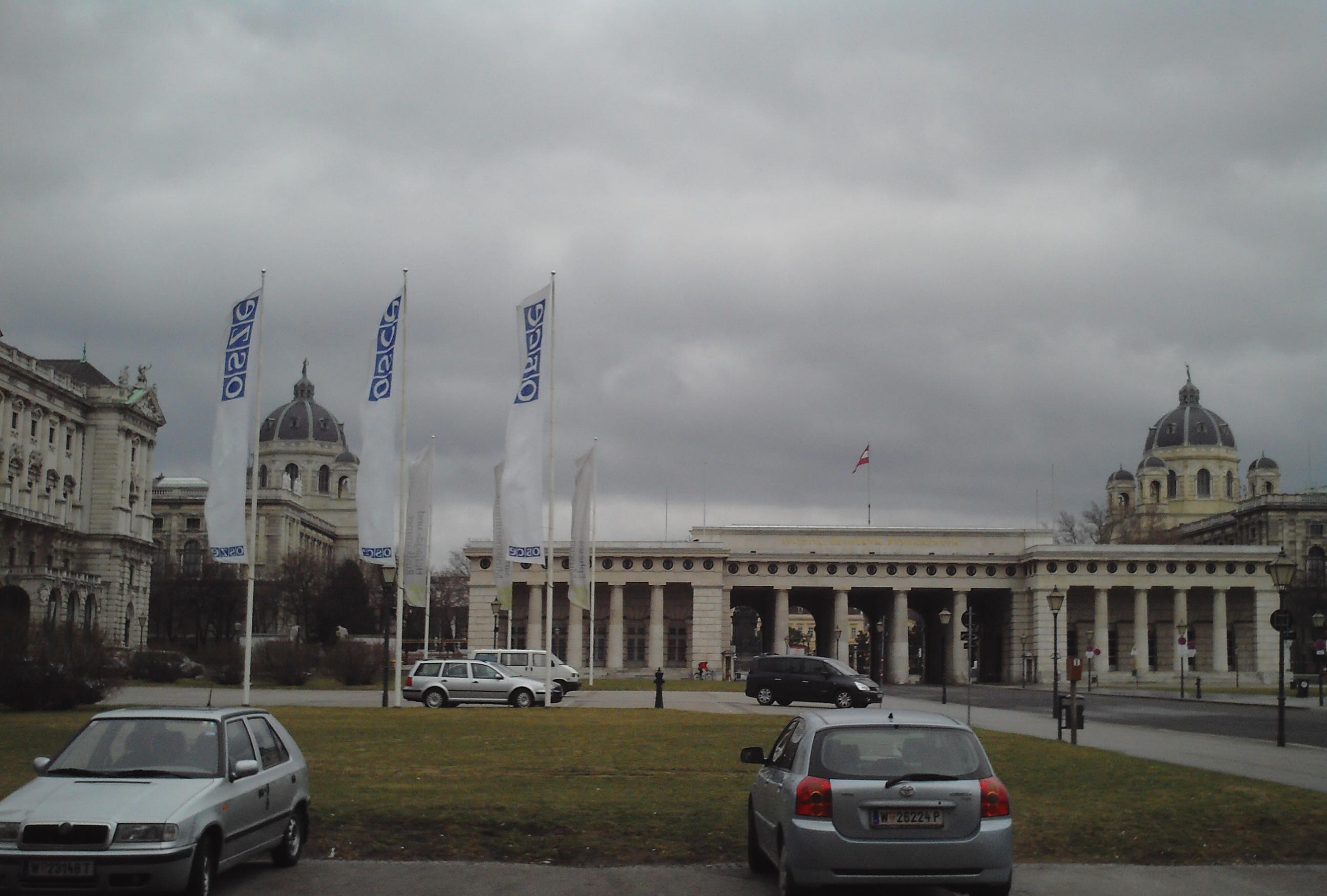
The AWC now wishes to highlight the non-citizen status of persons usually referred to as “Russians” within Latvia. This issue has been addressed previously by European institutions such as the Organization for Security and Cooperation in Europe (OSCE) and the Council of Europe.

However, the AWC believes that the human rights and rule-of-law principles are of a universal character and so deserve a response from world citizens including those outside Europe.  A petition has been created by the Non-Citizen Association of Latvia.  Signing the petition can be a measure of support, and the AWC will study other avenues of action, especially through the United Nations.

During the period when Latvia was incorporated into the USSR, a large number of ethnic Russians as well as Belarusians, Ukrainians, Roma and others migrated to work and live in the Baltic States, including Latvia.

With the Latvia Declaration of independence in May 1990, the Latvian Parliament passed a resolution “On the Renewal of the Rights of Citizens of the Republic of Latvia and Fundamental Principles of Naturalization” which in practice divided the residents of Latvia into two major categories: Latvian citizens, approximately two thirds and Latvian non-citizens, approximately one third.

While a certain amount of resentment against non-Latvians in 1990 could be expected, the resentment has, over 20 years later, hardened into structural discrimination.

The "Non-Citizen Passport" the Republic of Latvia issues to those Latvians whose citizenship rights it arbitrarily refuses to recognize.

The “Non-Citizen Passport” issued by the Republic of Latvia to those Latvians whose citizenship rights it keeps arbitrarily refusing to recognize.

Therefore, Citizens of the World structured in the AWC call upon the Parliament of Latvia to reform its citizenship laws to allow presently “stateless citizens” to participate fully in civic and social society. The petition open for signatures is found on www.noncitizens.eu. I am among the early signers.

René Wadlow is President and Chief Representative to the United Nations Office at Geneva of the Association of World Citizens.