The Official Blog of the

Archive for the ‘Current Events’ Category

World Citizens Call for a Ceasefire and Renewed Good-faith Negotiations by All Parties in Syria

In Conflict Resolution, Current Events, Middle East & North Africa, The Search for Peace, United Nations, World Law on September 9, 2013 at 10:55 PM

WORLD CITIZENS CALL FOR A CEASEFIRE AND RENEWED GOOD-FAITH NEGOTIATIONS BY ALL PARTIES IN SYRIA

By René Wadlow

World Citizens have called for good-faith negotiations among all the parties from the start of the demonstrations in March 2011 which had begun in a spirit of non-violence. Neither the Government nor the oppositions were willing to set an agenda or a timetable for such good-faith negotiations. The Government held out vague promises for reform but without details and without open discussion among those concerned. As the fighting has escalated, the possibility of good-faith negotiations has increasingly faded, despite efforts by the United Nations (UN) mediators to facilitate such negotiations.

Discussion of specific issues for reform or setting an overall agenda seems impossible for the moment.  However, there is a growing awareness that there is a dangerous stalemate and that there is no military “solution”. It is often at this “stalemate” stage of a conflict that the parties turn to a negotiated compromise.[i]  The dangers of a wider conflict with more States involved are real. Thus the situation requires careful concerted action.

The use of chemical weapons in violation of the 1925 Geneva Protocol (by government forces or by the armed opposition) has added an additional element of danger but not modified the stalemated structure of the conflict.

awc-un-geneva-logo

Therefore, the Association of World Citizens (AWC) calls upon the Syrian Government, armed opposition, and representative associations of Syrians to initiate a ceasefire followed quickly by good-faith negotiations.

The AWC calls upon all other States to refrain from arming or in other ways strengthening the military capacities of the Government’s armed forces and the armed forces of the armed oppositions.  Other States should, through the UN and through other institutions, encourage good-faith negotiations.

The AWC calls upon Nongovernmental Organizations, both Syrian and international, to facilitate the transition from the ongoing violence to a situation conducive to creative dialogue.

René Wadlow is President and Chief Representative to the United Nations Office at Geneva of the Association of World Citizens.

[i] See: Louis Kriesberg and Stuart Thorson (Eds), Timing the De-Escalation of International Conflicts (Syracuse University Press, 1991)

Syria: Chemical Weapons and Restraints in War

In Current Events, International Justice, Middle East & North Africa, United Nations, War Crimes, World Law on August 31, 2013 at 3:21 PM

SYRIA: CHEMICAL WEAPONS AND RESTRAINTS IN WAR

By René Wadlow

There was a recent political drawing in the International Herald Tribune which showed high piles of skulls with signs on them which said “Killed by Assad’s Machine Guns”, “Killed by Assad’s Tanks” and two men with the two letters “UN” on their coats saying “If they really were killed by chemical weapons we’ll have to stop Assad.”

The accusations of the recent use of chemical weapons (CWs) in the Syrian conflict has led to a United Nations (UN) investigation as well as discussions at the UN and in national capitals as to the appropriate response to what has been called “a clear violation of international norms.” Yet there has been little discussion of why chemical weapons are prohibited and not tanks, and machine guns which in practice have killed many more people in Syria. To be more accurate, the drawing should have also shown piles of skulls with signs saying “Killed by armed opposition machine guns, snipers etc”.

A short review of the prohibitions on the use of chemical weapons, the UN response, and the use of chemical weapons in conflicts in the Middle East may be useful as background to a discussion of appropriate responses.

I had been active in 1975 with some other Geneva-based representatives of Nongovernmental Organizations (NGOs) in highlighting the fiftieth anniversary of the 1925 Geneva Protocol for the Prohibition of the Use in War of Asphyxiating, Poisonous or other Gases, and of Bacteriological Methods of Warfare which is the core treaty on the prohibition on the use of chemical weapons. We were encouraging states to ratify the Protocol, in particular the French-speaking African states which were not covered by the original signature of the Protocol by France even though France was the Depository Power for the treaty. The Protocol is, in fact, an international treaty. It is called a protocol because it was to have been a protocol — an attachment — to a disarmament treaty never completed within the League of Nations. We were also proposing that there be some sort of investigation – dispute settlement mechanism integrated into the Protocol along the lines then being discussed in Geneva concerning what was to become the Convention on the Prohibition of Military or any Other Hostile Use of Environmental Modification Techniques (Enmod Convention) which came into force in 1978 and has an innovative mechanism for a Committee of Experts to investigate complaints.

However, in 1968, governments had begun discussing a more comprehensive ban on chemical weapons in what was then the main UN arms control body — the Eighteen-Nation Disarmament Conference. In the UN, when negotiations are not fruitful, the practice is to add more states to the body and to change the name. Thus the Eighteen-Nation Conference became the Conference of the Committee on Disarmament (1969-1979), the Committee on Disarmament (1979-1984) and the Conference on Disarmament from 1984 until today. After nearly 30 years of negotiations a far-reaching Convention on the Prohibition of the Development, Production, Stockpiling and Use of Chemical Weapons and on their Destruction (Chemical Weapons Convention) came into force in 1997, and an Organization for the Prohibition on Chemical Weapons with a sizeable Secretariat was created in The Hague. Syria is not a party to the Convention, but it is to the 1925 Geneva Protocol.

Thus, in 1975, few governments were interested in strengthening the 1925 Geneva Protocol, hoping for a speedy conclusion of the broader CW treaty. However when in the late 1970s there were serious accusations of the use of chemical agents in the on-going conflict against the Hmong in Laos — the Yellow Rain accusations — I presented a paper distributed to the members of the Commission on Disarmament (the only ways NGOs could participate directly in the disarmament discussions) “The Strengthening of the 1925 Geneva Protocol Against Poison Gas as an Interim Step Toward a Broader Chemical Weapons Ban” (April 22, 1980). The text led to a number of private discussions with the diplomats but to no specific action.

My text did, however, build a “profile” for my concern with investigating chemical weapon use and thus for my early efforts for a UN investigation of chemical weapon use in the 1980-1988 Iraq-Iran War.

CWs had been used by the Egyptian forces in their support of the republican forces in the Yemen Civil War (1962-1967). Although Egypt had signed the 1925 Geneva Protocol in 1928, its forces used them widely in Yemen. Investigations were carried out by the International Committee of the Red Cross (ICRC) who said that it was “extremely disturbed and concerned by these methods of warfare which are absolutely forbidden by codified international and customary law.” However, the ICRC is extremely cautious in commenting publicly on abuses in conflict situations fearing that publicity would hinder its main task of care of the wounded and visits to war prisoners. Government responses to the report of Egyptian CW use were weak. The US response was muted, presumably because of its own use at the time of chemical agents in the form of herbicides and harassing agents in Vietnam. On the Geneva front, it was not until the early 1970s that NGO representatives became visibly active in UN disarmament negotiations. So there was little NGO activity over the conflict in Yemen — not a high priority area in any case.

However, the Egyptian experience was not lost on everyone. Soon after the 1967 end of fighting in Yemen, Syria requested Egyptian technical assistance in developing its own chemical weapons capabilities. Iraq was also interested in the Egyptian experience; it began its own CW program in the late 1960s turning to the US for help. In 1967, Saddam Hussein and some 15 Iraqi officials participated in a fact-finding trip to the USA to familiarize themselves with chemical warfare and defensive techniques including observation of CW tests at US proving grounds.

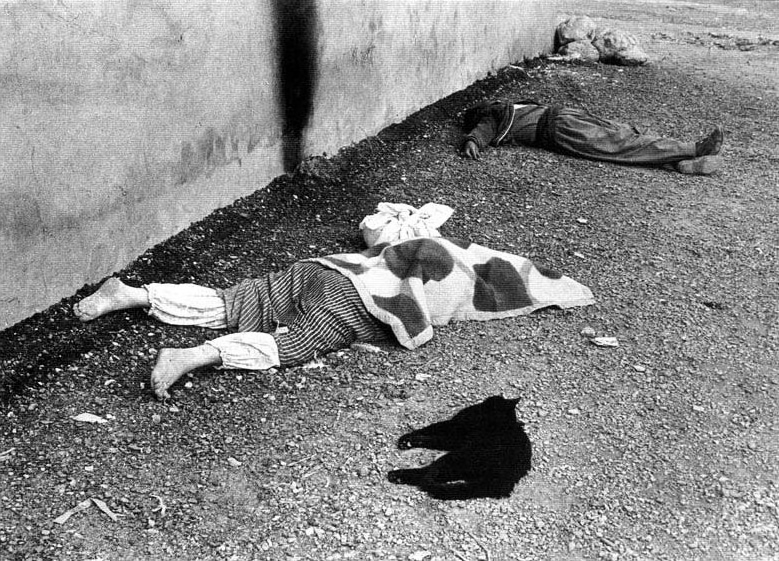
On March 16, 1988, the Iraqi regime, then led by Saddam Hussein, used chemical weapons in a genocidal attack on the town of Halabja, in Iraqi Kurdistan. The attack on Iraq’s own Kurdish population killed 5,000 civilians and injured at least 10,000 more. Generally dubbed “Bloody Friday”, the Halabja attack also remains in the memory of the Kurdish people of Iraq and beyond as the "Kurdish Hiroshima”. (Photo by Sayeed Janbozorgi)

On March 16, 1988, the Iraqi regime, then led by Saddam Hussein, used chemical weapons in a genocidal attack on the town of Halabja, in Iraqi Kurdistan. The attack on Iraq’s own Kurdish population killed 5,000 civilians and injured at least 10,000 more. Generally dubbed “Bloody Friday”, the Halabja attack also remains in the memory of the Kurdish people of Iraq and beyond as the “Kurdish Hiroshima”. (Photo by Sayeed Janbozorgi)

I had thought from the start that an Iraq-Iran war was not a good thing and that if frontier delimitation issues were the real reason for the war as Iraq claimed, then there were better ways of dealing with the conflicting claims. I had started seeing if mediation were possible. Saddam Hussein’s half-brother was the Iraqi Ambassador to the UN in Geneva, and I think that my proposals were sent on. The formal UN-led mediation efforts had to wait until late 1985 to be carried out in Geneva and leading to the UN-brokered ceasefire of August 1988.

The first official Iranian complaint on CW use to the UN was in November 1983. The complaint ran into the same structural difficulties I had set out in my text: the 1925 Geneva Protocol has no investigative measures and no dispute settlement provisions. Thus there was a long discussion among governments about what steps to take. Finally, there was a UN Security Council resolution authorizing an investigation. The UN investigations were largely based on examination of victims in medical facilities but which took place some days after the occurrence. The highly-regarded Stockholm International Peace Research Institute (SIPRI) carried out independently interviews with victims as part of its extensive work on chemical weapons arms control possibilities.

The UN investigations led to the conclusion that the Iraq military had used CWs in violation of the 1925 Geneva Protocol, but no further action was taken. The military effectiveness of chemical weapons in the Iraq-Iran War is a matter of debate among military specialists. According to figures released by the Iranian authorities, CWs accounted for only three per cent of their one million war casualties. However, CW impact on military morale and creating fears in the civilian population is difficult to measure. In March 1988, when Iraq publicly threatened to use CWs against Iranian cities, many persons momentarily left Teheran. In the same month, the Iraq army used chemical weapons against unprotected civilians in the Iraqi-Kurdish city of Halabja.

There is also a Red Cross convention that was invoked at the time of the mass killing at Halabja and is relevant to the Syrian case as well. In the light of the experiences of the war in Vietnam which was not an “international war” in the sense that the original Red Cross conventions cover, there was a conference in Geneva so that protection could be provided in cases of “civil” or internal conflicts. The conference led to the Geneva Additional Protocols of 1977 which states in article 51.2 “The civilian population as such, as well as individual civilians, shall not be the object of attack. Acts or threats of violence, the primary purpose of which is to spread terror among the civilian population are prohibited” Further article 51.6 stipulates that “Attacks against the civilian population or civilians by way of reprisals are prohibited.”

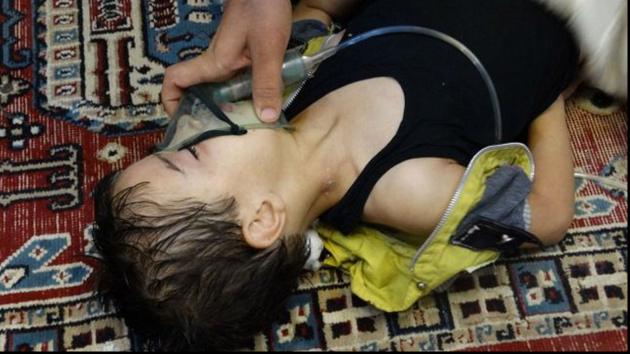
It is now an established fact that chemical weapons have been used this month in the Syrian conflict; but just who used them? It is the Assad regime, or did armed groups with the Free Syrian Army do it? Hopefully, the report of the UN investigation mission that was sent in to investigate will yield the much-awaited answer to this question. (C) UPI

It is now an established fact that chemical weapons have been used this month in the Syrian conflict; but just who used them? It is the Assad regime, or did armed groups with the Free Syrian Army do it? Hopefully, the report of the UN mission that was sent in to investigate will yield the much-awaited answer to this question. (C) UPI

There is as yet no agreed upon international sanctions concerning the violation of humanitarian (Red Cross) law. Humanitarian law can be cited in national court trials as was the use of CWs against the Kurds in some of the Iraq trials but not the use against the Iranians. Moreover, the post-Saddam trials resemble too much “victors’ justice” to be used as a basis of world law. The International Criminal Court can also use humanitarian law as a basis for judgments, but its justice grinds slowly.

The use of poison gas strikes a deep, partly subconscious, reaction not provoked in the same way as being shot by a machine gun. The classic Greeks and Romans had a prohibition against the use of poison in war, especially poisoning water wells because everyone needs to drink. Likewise poison gas is abhorred because everyone needs to breath to live.

The UN investigations and the appropriate responses are yet to be made. More shelling of military installations in Syria is unlikely to bring about the negotiations in good faith needed in the Syrian conflict. Thus there is a short-term need to stop beating the drums of war while at the same time stressing the condemnation of the use of chemical weapons. There is a need for longer-term efforts to start serious negotiations with as many factions of the opposition as possible and the Syrian government to create government structures more fully representative of the multi-cultural Syrian society.

René Wadlow is President and Chief Representative to the United Nations Office at Geneva of the Association of World Citizens.
New Fires Relight in Eastern Congo

In Africa, Conflict Resolution, Current Events, Human Rights, International Justice, The Search for Peace, United Nations, World Law on August 25, 2013 at 4:25 PM

NEW FIRES RELIGHT IN EASTERN CONGO

By René Wadlow

In a message of August 24, 2013 addressed to United Nations (UN) Secretary-General Ban Ki-moon, the Association of World Citizens (AWC) highlighted that the Democratic Republic of Congo’s eastern capital of North Kivu Province, Goma, had been shelled for the past three days, including Saturday 24.

The shelling seems to be a continuation of the struggle for power and wealth between heavily-armed rebels, called the March 23 Movement (M23) and the Congolese central government’s army – the Democratic Republic of Congo Armed Forces (FARDC).

This struggle with ever-changing groups began in 1996, two years after the genocide in Rwanda which led to a refugee influx into eastern Congo.  From 1998 to 2003, the area was the scene of fighting between forces of at least six countries – Congo, Rwanda, Burundi, Uganda, Kenya, and Tanzania.

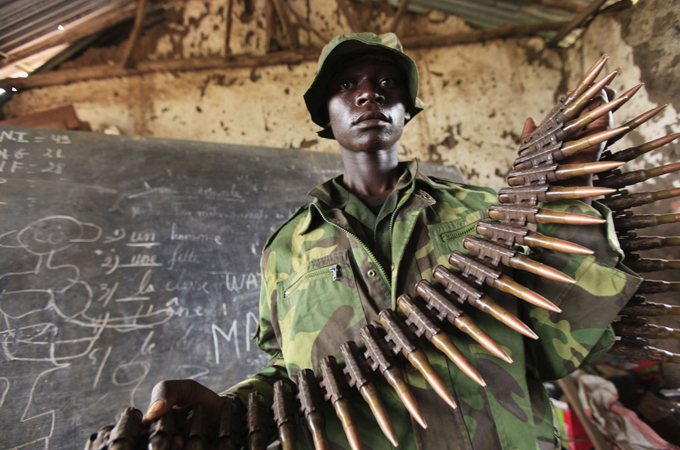
A fighter with the M23 Movement.

A fighter with the M23 Movement.

Since the end of the international fighting, the area has been divided into what can be called “mafia clans” running protection rackets and trying to make a profit from minerals, timber, food supplies for the UN forces and humanitarian nongovernmental organizations present. A deep and deadly struggle for influence is being played out in the shadows with an ever-changing cast of characters.

The UN has a large and expensive peacekeeping group in the area, the MONUC, but with uneven results.  UN forces are seen by the local population as favorable to the far-away incompetent central government.  The M23 is widely considered to be favored by the government of Rwanda.

UN peacekeeping troops are generally effective when there is peace to keep. However what is required today in eastern Congo is not so much more soldiers under UN command as reconciliation bridge-builders, persons who are able to restore relations among the ethnic groups of the area.  The UN, national governments, and non-governmental organizations need to develop bridge-building teams who can help to strengthen local efforts at conflict resolution and re-establishing community relations.

World Citizens were among those in the early 1950s who stressed the need to create UN peacekeeping forces with soldiers especially trained for such a task.  Today a new type of world civil servant is needed – those who in areas of tension and conflict can undertake the slow but important task of restoring confidence among peoples in conflict, establishing contacts and looking for ways to build upon common interests.

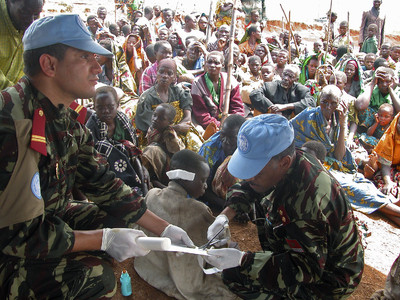
There is only so much the MONUC mission can do to keep the peace and assist the civilian population in the Democratic Republic of Congo.

There is only so much the MONUC mission can do to keep the peace and assist the civilian population in the Democratic Republic of Congo.

As the militias and “mafia clans” have proliferated, rivalries, particularly over land tenure and use have become a key source of conflict.  With the breakdown of society, there was a parallel breakdown of local, traditional conflict reduction mechanisms.  The precolonial tribal society had been too weakened during the colonial period to return to precolonial forms of governance.  Post-colonial administration had never been put into place, and so the result was a void of social rules and mechanisms for dispute settlement.

In particular, disputes over land became critical.  Land tenure issues have always been complex.  Land is often thought of as belonging to the ethnic community and is given to clans or to individuals for their use, sometimes for a given period, sometimes for several lifetimes if the land is continually cultivated.  The rules of land tenure often differ from one ethnic group to another, even a small distance apart. Traditionally, clan chiefs would be called upon to settle land disputes, often by compromises, so win-win solutions were often found. With the large displacement of people, land disputes have become frequent, and clan chiefs have often disappeared or lost their function as judges.

Many people have left villages near main roads to live in relative safety far from roads. They have had to move several times and to re-clear land for planting.  Local markets have been destroyed.  Social organizations such as churches have been disbanded, and family links, which provide the African “safety net” have been destroyed by death and displacement.  What trust existed between groups has been largely replaced by fear.  A few people are making money from the disorder by plundering natural resources, but economic injustice and deprivation remain the order of the day.

There is a short-term need to bring the current fighting to a negotiated end, but future security is closely linked to the ways in which land tenure and land use issues are settled.

René Wadlow is President and Chief Representative to the United Nations Office at Geneva of the Association of World Citizens.
World Citizens Call for the Unconditional Respect of the Right to Life, Liberty and Security of Person in Egypt

In Conflict Resolution, Current Events, Democracy, Human Rights, Middle East & North Africa, United Nations, World Law on August 16, 2013 at 1:58 PM

-- AWC-UN Geneva Logo --

WORLD CITIZENS CALL FOR THE UNCONDITIONAL RESPECT OF THE RIGHT TO LIFE, LIBERTY AND SECURITY OF PERSON IN EGYPT

Paris & Geneva, August 16, 2013


The Association of World Citizens (AWC) is gravely concerned at the serious human rights violations which have been committed in recent weeks by both the security and armed forces and the Muslim Brotherhood movement in Egypt.

Thus, the AWC welcomes the August 15 Appeal of the United Nations Security Council urging both the Egyptian Government and the Muslim Brotherhood to exercise “maximum restraint” with a view to ending the violence which has spread across the country.  The military-police-security forces confronted the predictable resistance of pro-Morsi forces with a brutal show of force designed to instill fear and submission but gave rise instead to a collective display of resolve-until-death and a readiness for martyrdom.

However, the AWC stresses that more than “maximum restraint” is needed. The majority of Egyptians desire a more representative government based on respect for human rights which will provide the basis for a much-needed economic recovery.

The AWC underlines the need for strong civil society institutions and Nongovernmental Organizations (NGOs). Both domestic and international NGOs working for freedom of expression, religious freedom and women’s rights have been under unwarranted pressure.

The AWC has protested the recurrent violent attacks carried out by Muslim Brotherhood supporters against the Coptic Christians of Egypt, a community that has been for two and a half years the target of outrageous sectarian violence, including the August 14-15 burning of some 14 Coptic churches in reprisal attacks to the police violence against pro-Morsi sit-in protesters.

Article 3 of the Universal Declaration of Human Rights clearly provides that “Everyone has the right to life, liberty and security of person ». This right belongs to everyone, not just to people who think as we do. Democracy and the rule of law should never be a one-way flow.

The AWC therefore calls on the Egyptian Government, including the police and armed forces, to ensure at all times full respect for human rights in the maintenance of public order, and on the Muslim Brotherhood party to refrain from any actions that are not strictly related to the right to peaceful demonstration, and unequivocally condemn any such actions committed by its members.

The AWC further urges that immediate, special protection be given to the Coptic Christian community and any other national, religious or other minorities that may find themselves in harm’s way due to the current unrest in Egypt.

Finally, the AWC is concerned with the consequences of the proclamation of the one-month State of Emergency across the country.  Past States-of-Emergency periods have always opened the door to human rights abuses and to military authoritarianism. Therefore, the AWC calls for a speedy return to civilian rule, new democratic elections, and a new constitution which places human rights as a core value.

Orages d’été sur le printemps arabe

In Current Events, Democracy, Human Rights, Middle East & North Africa on August 14, 2013 at 11:28 PM

ORAGES D’ETE SUR LE PRINTEMPS ARABE

Par Bernard Henry

La lutte pour la liberté n’est pas une suite logique. Elle ne l’a jamais été.

Au début de l’année 2011, le monde entier a été pris de cours par le « printemps arabe », quand les révoltes populaires ont chassé les dictateurs en place de longue date en Tunisie puis en Egypte, celle de Libye ayant en revanche été déviée de sa trajectoire et celle de Syrie s’étant perdue depuis dans les méandres de l’islamisme.

Puis ce fut, quelques mois plus tard, l’ « automne islamiste », avec la victoire de l’Islam politique lors des scrutins démocratiques tunisien et égyptien. Lentement mais sûrement, les anciens persécutés ont pris à leur tour le chemin de l’autoritarisme en y injectant leur idéologie réactionnaire.

Deux ans plus tard, le mois d’août apporte ses « orages d’été » aux révolutions arabes, lorsqu’une violence largement absente des soulèvements populaires du départ s’invite à l’ultime stade de l’exaspération pour venir réclamer son tribut.

L’Egypte, premier pays du printemps arabe à avoir destitué son gouvernement islamiste post-révolutionnaire, entre aujourd’hui dans un état d’urgence né d’affrontements entre forces armées et Frères musulmans, non sans que les partisans du Président déchu Mohamed Morsi se soient livrés entre temps à des actes de barbarie contre les Coptes du pays.

En Tunisie, une population poussée à bout par un pouvoir provisoire entièrement rendu à la volonté d’Ennahda, le parti islamiste qui dirige le gouvernement, et dont les assassinats successifs des dirigeants politiques d’opposition Chokri Belaïd et Mohamed Brahmi ont eu raison de ce qu’il pouvait encore lui rester de patience, paie le prix fort pour son choix de la protestation non-violente, sous les coups des milices islamistes tolérées voire encouragées par les pouvoirs publics.

En Tunisie comme en Egypte, le peuple n'avait qu'un seul mot à dire à ses dictateurs respectifs : "Dégage". Aujourd'hui, tant les islamistes vainqueurs des élections libres ont trahi les espoirs des révolutions dans les deux pays, c'est à eux que ce court et simple slogan révolutionnaire est désormais destiné.

En Tunisie comme en Egypte, le peuple n’avait qu’un seul mot à dire à ses dictateurs respectifs : “Dégage”. Aujourd’hui, tant les islamistes vainqueurs des élections libres ont trahi les espoirs des révolutions dans les deux pays, c’est à eux que ce court et simple slogan révolutionnaire est désormais destiné.

L’iconographie de la lutte victorieuse d’un peuple armé de sa seule détermination pour faire chuter la dictature, contre toute attente et contre les certitudes de politologues vouant le monde arabe à la tyrannie ou à l’islamisme, a vécu. Mais le mythe de l’ « islamo-démocratie », vantée par Moncef Marzouki lors d’une visite à l’Assemblée nationale française et symbolisée aux yeux de certains par l’AKP au pouvoir en Turquie, a vécu lui aussi.

Les partis islamistes ne doivent jamais oublier que, même pris pour cibles sous les régimes Ben Ali et Moubarak, ils ne sont en rien, comme ils le prétendent, les auteurs des révolutions arabes. Ils n’ont fait que récolter a posteriori les fruits des luttes menées par d’autres. Quant aux gouvernants, aujourd’hui égyptiens et peut-être demain tunisiens, issus du rejet de l’islamisme, leur volonté de condamner les atteintes aux Droits de l’Homme même commises à l’encontre de leurs adversaires islamistes montrera (ou non) leur aptitude à se réclamer de cet Etat de droit qu’ils invoquaient hier contre l’islamisme au pouvoir.

Une pétition nationale avait recueilli plus de 22 millions de signatures d’Égyptiens pour le départ du Président élu islamiste Mohamed Morsi, d'où le refus du terme "coup d'Etat" par les militants démocrates égyptiens. Mais aujourd'hui, les forces armées du pays qui avaient dans un premier temps soutenu le mouvement semblent voir les choses tout autrement ...

Une pétition nationale avait recueilli plus de 22 millions de signatures d’Égyptiens pour le départ du Président élu islamiste Mohamed Morsi, d’où le refus du terme “coup d’Etat” par les démocrates égyptiens. Mais aujourd’hui, hélas, les forces armées du pays qui avaient dans un premier temps soutenu le mouvement semblent voir les choses tout autrement …

Etre élu ne donne pas tous les droits et renverser une dictature n’autorise pas à en créer une autre. Quand les uns et les autres accepteront chacun de ces deux principes, et seulement à ce moment-là, cesseront les « orages d’été » du printemps arabe.

Bernard Henry est Officier des Relations Extérieures du Bureau de Représentation auprès de l’Office des Nations Unies à Genève de l’Association of World Citizens.

The Violation of the Human Rights of Persons Considered as “Non-Citizens”

In Current Events, Democracy, Europe, Human Rights, World Law on August 8, 2013 at 11:39 AM

THE VIOLATION OF THE HUMAN RIGHTS OF PERSONS CONSIDERED AS “NON-CITIZENS”

By René Wadlow

The Association of World Citizens (AWC) is particularly concerned with the violation by some States of the human rights of ethnic, linguistic or religious minorities by depriving them of citizenship and considering them as “non-citizens”.  This measure deprives such persons of the ability to use avenues of redress open to citizens such as voting, holding public office and often public employment.  Other avenues may also be closed off and forms of discrimination and marginalization can take place.

The AWC has raised with government officials and other non-governmental organizations the issue of non-citizenship of many Kurds in Syria.  Recently some 250,000 Kurds have been granted Syrian citizenship, largely as a measure to gain support by the government in the civil war there.  However, the status and degree of autonomy of the Kurdish population remains an issue in the war.

The AWC has also raised the issue of the non-citizenship status of the Rohingya, a Muslim minority, largely of Bengali origin, in Myanmar (Burma). There has been violence against the Rohingya causing many to flee to Bangladesh and elsewhere.  The violence against the Rohingya is an obstacle on the path to greater democracy and the rule of law within Myanmar.

The flag of the Kurdish people, whose rights are largely unrecognized in all four countries of the Middle East where native Kurds can be found, alongside that of the Syrian opposition movement during a March 2013 demonstration in Paris, France.

The flag of the Kurdish people, whose rights are largely ignored in all four countries of the Middle East where native Kurds can be found, alongside that of the Syrian opposition movement during a March 2013 demonstration in Paris, France.

The AWC now wishes to highlight the non-citizen status of persons usually referred to as “Russians” within Latvia. This issue has been addressed previously by European institutions such as the Organization for Security and Cooperation in Europe (OSCE) and the Council of Europe.

However, the AWC believes that the human rights and rule-of-law principles are of a universal character and so deserve a response from world citizens including those outside Europe.  A petition has been created by the Non-Citizen Association of Latvia.  Signing the petition can be a measure of support, and the AWC will study other avenues of action, especially through the United Nations.

During the period when Latvia was incorporated into the USSR, a large number of ethnic Russians as well as Belarusians, Ukrainians, Roma and others migrated to work and live in the Baltic States, including Latvia.

With the Latvia Declaration of independence in May 1990, the Latvian Parliament passed a resolution “On the Renewal of the Rights of Citizens of the Republic of Latvia and Fundamental Principles of Naturalization” which in practice divided the residents of Latvia into two major categories: Latvian citizens, approximately two thirds and Latvian non-citizens, approximately one third.

While a certain amount of resentment against non-Latvians in 1990 could be expected, the resentment has, over 20 years later, hardened into structural discrimination.

The "Non-Citizen Passport" the Republic of Latvia issues to those Latvians whose citizenship rights it arbitrarily refuses to recognize.

The “Non-Citizen Passport” issued by the Republic of Latvia to those Latvians whose citizenship rights it keeps arbitrarily refusing to recognize.

Therefore, Citizens of the World structured in the AWC call upon the Parliament of Latvia to reform its citizenship laws to allow presently “stateless citizens” to participate fully in civic and social society. The petition open for signatures is found on www.noncitizens.eu. I am among the early signers.

René Wadlow is President and Chief Representative to the United Nations Office at Geneva of the Association of World Citizens.
A World Citizen Passport and Snowden’s Catch 22

In Being a World Citizen, Current Events, Democracy, Human Rights, World Law on July 16, 2013 at 6:58 PM

A WORLD CITIZEN PASSPORT AND SNOWDEN’S CATCH 22

By René Wadlow

The fate of Edward J. Snowden still held, as of this writing, in the transit area of Moscow’s airport has nearly overshadowed the debate on the methods and extent of the National Security Agency’s surveillance and collection of information which Snowden made public. Each day brings more information about the degree of cooperation among the Silicon Valley firms and United States (U. S.) intelligence services and between the U. S. intelligence services and those of other countries such as Germany and England.

Living in the transit area at the airport for several weeks and potentially longer was not Snowden’s plan when he left Hong Kong. As I had been blocked in the same transit area for three days in 1977 under the mistaken impression that I would be given a Soviet visa at the airport, unless things have improved greatly since the end of the USSR, it is not the sort of place where one wants to stay for a long time: a third class motel with an armed guard at each floor.

He thought that he could travel to Moscow and then Havana and on to Ecuador, Nicaragua or Venezuela. However, before Snowden could make a Havana connection, the U. S. Government revoked his passport, and Ecuador withdrew the safe-conduct pass he had used to leave Hong Kong saying it had been issued by a consular official in contravention of Ecuadorean law. Without a travel document or a Russian visa, Snowden has no way to travel outside the transit area even to the Embassies of Ecuador or Nicaragua or Venezuela which are considered by diplomatic convention as being the territory of that particular state.

Edward Snowden, a man whom his country is trying to punish only for telling the truth. © The Guardian/Reuters

Edward Snowden, a man whom his country is trying to punish only for telling the truth. © The Guardian/Reuters

The degree of U. S. pressure was evident when France, Italy, Portugal and Spain refused to allow Bolivian President Evo Morales’ official jet to overfly their territory on its way from Moscow to La Paz after a rumour, no doubt planted by U. S. agents, that Snowden might be aboard. Morales’ plane ultimately landed in Vienna, Austria for 13 hours until Spanish officials were satisfied that Snowden was not aboard. Why it took 13 hours to check all the hiding places on a small jet has not been explained, but the move no doubt discourages any commercial lines no matter what over-flight agreements they have.

Snowden’s presence in the Moscow airport transit area has attracted too much attention for the Russian police to look the other way while Snowden was taken to a Latin American embassy. It is not clear that anyone wants to repeat the experience of Ecuador which has allowed WikiLeaks’ Julien Assange to live in its London Embassy for over a year.

To break out of Snowden’s “Catch 22” situation of no passport-to travel-no travel- no asylum – a world citizen passport has been issued to Snowden by Garry Davis — “World Citizen N° 1” — as he was called in January 1949 when the Registry of World Citizens was created. One of the ironies of the world citizen movement is that it has always used the symbols of a nation-state — a flag, an identity card, a passport — to symbolize a loyalty to the welfare of the Planet. The philosophy behind the identity cards and passports is that of world law — that is, international law as applied to the individual. “All human beings are entitled to the enjoyment of political, civil, economic, and social rights as set forth in the Universal Declaration of Human Rights and various treaties and covenants adopted in furtherance of that declaration.”

In practice, some people have crossed frontiers with world citizen passports and world citizen identity cards and often had the passport stamped with an official stamp. It is not sure that the frontier officials knew what they were stamping or were very aware of cosmopolitan ideals. It is likely that most officials don’t want long lines of people waiting at frontier posts or filling transit areas at airports. Article 13(2) of the Universal Declaration sets out the right to leave and return to one’s country, though it does not speak of the right to travel to other countries.

The World Service Authority (WSA), based in Washington, is the organization that issues World Citizen Passports to applicants. Unlike the name may suggest, the WSA is NOT affiliated with the Association of World Citizens.

The World Service Authority (WSA), based in Washington, is the organization that issues World Citizen Passports to applicants. Unlike the name may suggest, the WSA is NOT affiliated with the Association of World Citizens.
It may be that Vladimir Putin would be happy to have the whole Snowden story go away. While I have never thought of Mr. Putin as a “world citizen” type, let us hope that he allows the airport officials to stamp the world citizen passport as a recognition of the growing cosmopolitan spirit.

The world passport and the pulling by Ecuador of its safe-conduct pass brings to mind an event I knew but had not thought about until a recent New York Times article highlighted the efforts of Aristides de Sousa Mendes who was consul of Portugal in Bordeaux when Germany invaded France in 1940. France already had a good number of refugees from Germany, Central Europe, Republican Spain as well as French, particularly Jews who feared what Nazi policy in France might bring. De Sousa Mendes and his staff working day and night issued 30,000 visas so people could go to Portugal and then beyond.

It took a couple of months before the Fascist government in Lisbon realized what was going on, recalled de Sousa Mendes, fired him and informed the Spanish government of Franco not to recognize the visas issued in France. De Sousa Mendes died in poverty, but his travel documents had saved many lives.

One cannot help but be reminded of the fate met by the character played by Tom Hanks in The Terminal, Steven Spielberg’s 2004 movie. A citizen of the fictional country of Krakozhia, Viktor Navorski finds himself trapped at a terminal in New York’s John F. Kennedy Airport after a civil war breaks out in his home country.

One cannot help but be reminded of the fate met by the character played by Tom Hanks in The Terminal, Steven Spielberg’s 2004 movie. A citizen of the fictional country of Krakozhia, Viktor Navorski finds himself trapped at a terminal in New York’s John F. Kennedy Airport after a civil war breaks out in his home country.

The world citizen passport is not a governmental document the way de Sousa Mendes’ were, but world citizen passports and identity cards are a symbol of a “higher law” than that of States. Let us hope that some Russian officials are in tune with the higher law.

René Wadlow is President and Chief Representative to the United Nations Office at Geneva of the Association of World Citizens.
Les Citoyens du Monde en appellent au Gouvernement de la Turquie pour le respect du droit des citoyens à manifester pacifiquement

In Conflict Resolution, Current Events, Democracy, Human Rights, Middle East & North Africa on June 4, 2013 at 11:12 PM

awc-un-geneva-logo

LES CITOYENS DU MONDE EN APPELLENT

AU GOUVERNEMENT DE LA TURQUIE

POUR LE RESPECT DU DROIT DES CITOYENS

A MANIFESTER PACIFIQUEMENT

Paris & Genève, le 4 juin 2013

L’Association of World Citizens (AWC) est gravement préoccupée par les très sérieuses atteintes aux Droits de l’Homme commises ces derniers jours par les forces de sécurité contre les manifestants pacifiques rassemblés au Parc de Taksim Gezi à Istanbul (Turquie), dans un mouvement de protestation dont l’impact s’est entre temps étendu à d’autres parties du pays.

L’AWC est dévouée aux valeurs de respect, de reconnaissance et d’inclusion de toutes les composantes de la société. C’est pourquoi l’AWC appelle le Gouvernement de la Turquie à se montrer attentif aux inquiétudes de celles et ceux qui s’expriment aujourd’hui ainsi qu’à rechercher des solutions permettant d’ouvrir des négociations de bonne foi.

Le droit international des Droits de l’Homme interdit formellement l’utilisation du gaz lacrymogène contre des protestataires pacifiques ainsi que dans des espaces clos où il peut s’avérer extrêmement dangereux, de même que l’usage excessif de la force contre des manifestations non-violentes, l’un et l’autre ayant pourtant été présents dans l’intégralité de la réaction de la police turque aux dernières protestations en date.

Même si le maintien de l’ordre public est une fonction naturelle de tout gouvernement dans une société démocratique, toute décision de disperser un rassemblement doit être prise seulement en ultime recours et toujours en conformité avec les principes de nécessité et de proportionnalité.

Le Code de Conduite des Nations Unies pour les Responsables de l’Application des Lois adopté par l’Assemblée générale de l’ONU en sa Résolution 34/169 du 17 décembre 1979 stipule clairement que « Les responsables de l’application des lois peuvent recourir à la force seulement lorsque cela est strictement nécessaire et dans la mesure exigée par l’accomplissement de leurs fonctions ».

L’AWC appelle donc le Premier Ministre Reçep Tayyip Erdogan à ordonner promptement une enquête indépendante et impartiale sur tout signalement d’utilisation excessive et non nécessaire de la force, à s’assurer que tout responsable de l’application des lois reconnu responsable d’usage arbitraire ou abusif de la force soit promptement traduit en justice et, bien sûr, à garantir pleinement les légitimes droits à la réunion pacifique et à la liberté d’expression pour tous les citoyens de la Turquie.

World Citizens Call on the Government of Turkey to Respect the Right of Citizens to Peaceful Demonstration

In Conflict Resolution, Current Events, Democracy, Human Rights, Middle East & North Africa on June 4, 2013 at 3:36 PM

awc-un-geneva-logo

WORLD CITIZENS CALL

ON THE GOVERNMENT OF TURKEY

TO RESPECT THE RIGHT OF CITIZENS

TO PEACEFUL DEMONSTRATION

Paris & Geneva, June 4, 2013

The Association of World Citizens (AWC) is gravely concerned at the serious human rights violations which have been committed in recent days by the security forces against peaceful demonstrators gathered at Taksim Gezi Park in Istanbul, Turkey, in a movement of protest which has had impact on other parts of the country.

The AWC is devoted to the values of respect, recognition and inclusion of all segments of societies. Thus, the AWC calls upon the Government of Turkey to be attentive to the concerns of those now expressing themselves and to find ways of starting good faith negotiations.

International human rights law strictly prohibits the use of tear gas against peaceful protestors and in confined spaces where it may constitute a serious danger, as well as excessive force against nonviolent demonstrations, as has been seen in both cases throughout the Turkish police’s response to the latest protests.

Even though maintaining public order is a natural function of government in a democratic society, any decision to disperse an assembly should be taken only as a last resort and in line with the principles of necessity and proportionality.

The United Nations Code of Conduct for Law Enforcement Officials adopted by the UN General Assembly in its Resolution 34/169 of December 17, 1979 clearly provides that “Law enforcement officials may use force only when strictly necessary and to the extent required for the performance of their duty.”

The AWC thus calls upon Prime Minister Reçep Tayyip Erdogan to order a prompt, independent and impartial investigation into all reports of excessive and unnecessary use of force, ensure that any law enforcement officials responsible for arbitrary or abusive use of force are promptly prosecuted and, of course, fully guarantee the legitimate rights to peaceful assembly and freedom of expression of all citizens of Turkey.

Les Citoyens du Monde condamnent le terrorisme et l’intolérance basés sur la religion

In Cultural Bridges, Current Events, Human Rights, International Justice, World Law on May 30, 2013 at 2:26 PM

awc-un-geneva-logo


ATTAQUES TERRORISTES A LONDRES ET PARIS :

LES CITOYENS DU MONDE CONDAMNENT LE TERRORISME

ET L’INTOLERANCE BASES SUR LA RELIGION

L’Association of World Citizens (AWC) est totalement consternée par les récentes attaques terroristes commises contre des militaires à Londres et Paris par des jeunes gens qui étaient chrétiens au départ et se sont convertis à l’Islam.

Même si elle n’est pas une organisation religieuse, l’AWC estime que la religion est précieuse en ce qu’elle remplit, selon sa définition étymologique, un rôle important de création de liens entre les êtres humains. Invoquer la religion pour justifier des actes terroristes délibérés n’est donc jamais excusable ni a fortiori acceptable.

En conséquence, les convertis d’une religion à une autre qui s’avèrent commettre des actes terroristes au nom de leur nouvelle religion ne peuvent en aucun cas être considérés comme représentatifs de quelque foi religieuse que ce soit.

L’AWC appelle les citoyens tant du Royaume-Uni que de la France à avoir pleinement conscience de ces faits cruciaux et à ne pas céder, en conséquence, à quelque parallèle hâtif et infondé que ce soit entre de tels individus et l’entière population musulmane de l’un ou l’autre des deux pays concernés.