The Official Blog of the

Archive for the ‘Conflict Resolution’ Category

November 15, 1920 : First Meeting of the Assembly of the League of Nations in Geneva

In Conflict Resolution, The Search for Peace, World Law on November 15, 2013 at 1:38 PM

NOVEMBER 15, 1920: FIRST MEETING OF THE ASSEMBLY OF THE LEAGUE OF NATIONS IN GENEVA
By René Wadlow

The real contributions made by the League of Nations to the development of a sense of world community have been widely disregarded. The League is too often disparaged because of the failure of its Members to carry out their obligations, especially in the face of armed aggression.

Yet it has been said that when a star breaks, it gives birth to a thousand suns. That is just what happened with the League, for the League prepared the way for the United Nations and the further development of world law. Let us look at some of its achievements.

The official emblem of the League of Nations.

The official emblem of the League of Nations.

1)An essential precondition to any solid world organization is an impartial civil service responsible only to the head of the organization, under obligation not to accept instructions from any government or outside authority, and committed to the promotion of the aims and principles of the Organization. This the League of Nations provided for the first time under the leadership of the first Secretary-General, Sir Eric Drummond. He took bold, if discrete, initiatives in drawing the attention of the League Council to conflicts and suggested conflict resolution measures.

2)The League also dealt with the economic and monetary reconstruction of Austria, Hungary and some other countries, with the issues of minorities, with the administration of former German and Ottoman territories under the mandates system. The League provided the starting point for future work on refugees and drug control. The International Labor Organization was created alongside the League, its budget being voted by the League Assembly.

3)With the League, for the first time, it became possible to develop a world review of production, trade, health and other economic and social data. No doubt, the studies produced by the League were embryonic — the basic information in the hands of governments being nowhere near what it is today. However, without this start, the kind of world economic planning — or at least overview — which we have today would not have been conceivable.

The League of Nations, inspired by Immanuel Kant and created by Woodrow Wilson, was supposed to put an end to all wars. Due to its lack of resolve, it allowed the opposite to happen as World War II put a brutal end to its existence.

The League of Nations, inspired by Immanuel Kant and created by Woodrow Wilson, was supposed to put an end to all wars. Unfortunately, though, it allowed the exact opposite to happen, as World War II eventually put a brutal end to its existence.

Unfortunately, the League of Nations ran into difficulties from the start. The United States refused to join; too long a time elapsed before Germany and the Soviet Union were admitted. The legacy of the First World War — not primarily a matter for the League — upset both the political and economic climate: huge reparations due by Germany, the payment of large debts by the Allies to the United States, monetary collapse in several countries with general economic protectionism rampant. All this contributed to the Great Depression of the 1930s, and in turn accentuated the structural weaknesses of the world economy.

Then came the aggression committed by Japan, Italy and Germany, which found the resolve of the Western European countries and the USA weakened. The national foreign offices and the war offices were still thinking in terms of balance of power and could not bring themselves to think outside a narrow nationalistic framework.

Fortunately, today, a sense of global citizenship, of world loyalty, has been growing. By looking back to the first meeting of the League Assembly, we can mark the progress not only of institutions but also in the spirit of the women and men who shape them. Today, we see more and more people whose chosen vocation is to make this earth a true home for humanity. They have dedicated themselves to the same tasks that the League began but left unfinished.

René Wadlow is President and Chief Representative to the United Nations in Geneva of the Association of World Citizens.

World Citizens Call for a Ceasefire and Renewed Good-faith Negotiations by All Parties in Syria

In Conflict Resolution, Current Events, Middle East & North Africa, The Search for Peace, United Nations, World Law on September 9, 2013 at 10:55 PM

WORLD CITIZENS CALL FOR A CEASEFIRE AND RENEWED GOOD-FAITH NEGOTIATIONS BY ALL PARTIES IN SYRIA

By René Wadlow

World Citizens have called for good-faith negotiations among all the parties from the start of the demonstrations in March 2011 which had begun in a spirit of non-violence. Neither the Government nor the oppositions were willing to set an agenda or a timetable for such good-faith negotiations. The Government held out vague promises for reform but without details and without open discussion among those concerned. As the fighting has escalated, the possibility of good-faith negotiations has increasingly faded, despite efforts by the United Nations (UN) mediators to facilitate such negotiations.

Discussion of specific issues for reform or setting an overall agenda seems impossible for the moment.  However, there is a growing awareness that there is a dangerous stalemate and that there is no military “solution”. It is often at this “stalemate” stage of a conflict that the parties turn to a negotiated compromise.[i]  The dangers of a wider conflict with more States involved are real. Thus the situation requires careful concerted action.

The use of chemical weapons in violation of the 1925 Geneva Protocol (by government forces or by the armed opposition) has added an additional element of danger but not modified the stalemated structure of the conflict.

awc-un-geneva-logo

Therefore, the Association of World Citizens (AWC) calls upon the Syrian Government, armed opposition, and representative associations of Syrians to initiate a ceasefire followed quickly by good-faith negotiations.

The AWC calls upon all other States to refrain from arming or in other ways strengthening the military capacities of the Government’s armed forces and the armed forces of the armed oppositions.  Other States should, through the UN and through other institutions, encourage good-faith negotiations.

The AWC calls upon Nongovernmental Organizations, both Syrian and international, to facilitate the transition from the ongoing violence to a situation conducive to creative dialogue.

René Wadlow is President and Chief Representative to the United Nations Office at Geneva of the Association of World Citizens.


[i] See: Louis Kriesberg and Stuart Thorson (Eds), Timing the De-Escalation of International Conflicts (Syracuse University Press, 1991)

New Fires Relight in Eastern Congo

In Africa, Conflict Resolution, Current Events, Human Rights, International Justice, The Search for Peace, United Nations, World Law on August 25, 2013 at 4:25 PM

NEW FIRES RELIGHT IN EASTERN CONGO

By René Wadlow

In a message of August 24, 2013 addressed to United Nations (UN) Secretary-General Ban Ki-moon, the Association of World Citizens (AWC) highlighted that the Democratic Republic of Congo’s eastern capital of North Kivu Province, Goma, had been shelled for the past three days, including Saturday 24.

The shelling seems to be a continuation of the struggle for power and wealth between heavily-armed rebels, called the March 23 Movement (M23) and the Congolese central government’s army – the Democratic Republic of Congo Armed Forces (FARDC).

This struggle with ever-changing groups began in 1996, two years after the genocide in Rwanda which led to a refugee influx into eastern Congo.  From 1998 to 2003, the area was the scene of fighting between forces of at least six countries – Congo, Rwanda, Burundi, Uganda, Kenya, and Tanzania.

A fighter with the M23 Movement.

A fighter with the M23 Movement.

Since the end of the international fighting, the area has been divided into what can be called “mafia clans” running protection rackets and trying to make a profit from minerals, timber, food supplies for the UN forces and humanitarian nongovernmental organizations present. A deep and deadly struggle for influence is being played out in the shadows with an ever-changing cast of characters.

The UN has a large and expensive peacekeeping group in the area, the MONUC, but with uneven results.  UN forces are seen by the local population as favorable to the far-away incompetent central government.  The M23 is widely considered to be favored by the government of Rwanda.

UN peacekeeping troops are generally effective when there is peace to keep. However what is required today in eastern Congo is not so much more soldiers under UN command as reconciliation bridge-builders, persons who are able to restore relations among the ethnic groups of the area.  The UN, national governments, and non-governmental organizations need to develop bridge-building teams who can help to strengthen local efforts at conflict resolution and re-establishing community relations.

World Citizens were among those in the early 1950s who stressed the need to create UN peacekeeping forces with soldiers especially trained for such a task.  Today a new type of world civil servant is needed – those who in areas of tension and conflict can undertake the slow but important task of restoring confidence among peoples in conflict, establishing contacts and looking for ways to build upon common interests.

There is only so much the MONUC mission can do to keep the peace and assist the civilian population in the Democratic Republic of Congo.

There is only so much the MONUC mission can do to keep the peace and assist the civilian population in the Democratic Republic of Congo.

As the militias and “mafia clans” have proliferated, rivalries, particularly over land tenure and use have become a key source of conflict.  With the breakdown of society, there was a parallel breakdown of local, traditional conflict reduction mechanisms.  The precolonial tribal society had been too weakened during the colonial period to return to precolonial forms of governance.  Post-colonial administration had never been put into place, and so the result was a void of social rules and mechanisms for dispute settlement.

In particular, disputes over land became critical.  Land tenure issues have always been complex.  Land is often thought of as belonging to the ethnic community and is given to clans or to individuals for their use, sometimes for a given period, sometimes for several lifetimes if the land is continually cultivated.  The rules of land tenure often differ from one ethnic group to another, even a small distance apart. Traditionally, clan chiefs would be called upon to settle land disputes, often by compromises, so win-win solutions were often found. With the large displacement of people, land disputes have become frequent, and clan chiefs have often disappeared or lost their function as judges.

Many people have left villages near main roads to live in relative safety far from roads. They have had to move several times and to re-clear land for planting.  Local markets have been destroyed.  Social organizations such as churches have been disbanded, and family links, which provide the African “safety net” have been destroyed by death and displacement.  What trust existed between groups has been largely replaced by fear.  A few people are making money from the disorder by plundering natural resources, but economic injustice and deprivation remain the order of the day.

There is a short-term need to bring the current fighting to a negotiated end, but future security is closely linked to the ways in which land tenure and land use issues are settled.

René Wadlow is President and Chief Representative to the United Nations Office at Geneva of the Association of World Citizens.
World Citizens Call for the Unconditional Respect of the Right to Life, Liberty and Security of Person in Egypt

In Conflict Resolution, Current Events, Democracy, Human Rights, Middle East & North Africa, United Nations, World Law on August 16, 2013 at 1:58 PM

-- AWC-UN Geneva Logo --

WORLD CITIZENS CALL FOR THE UNCONDITIONAL RESPECT OF THE RIGHT TO LIFE, LIBERTY AND SECURITY OF PERSON IN EGYPT

Paris & Geneva, August 16, 2013


The Association of World Citizens (AWC) is gravely concerned at the serious human rights violations which have been committed in recent weeks by both the security and armed forces and the Muslim Brotherhood movement in Egypt.

Thus, the AWC welcomes the August 15 Appeal of the United Nations Security Council urging both the Egyptian Government and the Muslim Brotherhood to exercise “maximum restraint” with a view to ending the violence which has spread across the country.  The military-police-security forces confronted the predictable resistance of pro-Morsi forces with a brutal show of force designed to instill fear and submission but gave rise instead to a collective display of resolve-until-death and a readiness for martyrdom.

However, the AWC stresses that more than “maximum restraint” is needed. The majority of Egyptians desire a more representative government based on respect for human rights which will provide the basis for a much-needed economic recovery.

The AWC underlines the need for strong civil society institutions and Nongovernmental Organizations (NGOs). Both domestic and international NGOs working for freedom of expression, religious freedom and women’s rights have been under unwarranted pressure.

The AWC has protested the recurrent violent attacks carried out by Muslim Brotherhood supporters against the Coptic Christians of Egypt, a community that has been for two and a half years the target of outrageous sectarian violence, including the August 14-15 burning of some 14 Coptic churches in reprisal attacks to the police violence against pro-Morsi sit-in protesters.

Article 3 of the Universal Declaration of Human Rights clearly provides that “Everyone has the right to life, liberty and security of person ». This right belongs to everyone, not just to people who think as we do. Democracy and the rule of law should never be a one-way flow.

The AWC therefore calls on the Egyptian Government, including the police and armed forces, to ensure at all times full respect for human rights in the maintenance of public order, and on the Muslim Brotherhood party to refrain from any actions that are not strictly related to the right to peaceful demonstration, and unequivocally condemn any such actions committed by its members.

The AWC further urges that immediate, special protection be given to the Coptic Christian community and any other national, religious or other minorities that may find themselves in harm’s way due to the current unrest in Egypt.

Finally, the AWC is concerned with the consequences of the proclamation of the one-month State of Emergency across the country.  Past States-of-Emergency periods have always opened the door to human rights abuses and to military authoritarianism. Therefore, the AWC calls for a speedy return to civilian rule, new democratic elections, and a new constitution which places human rights as a core value.

Les Citoyens du Monde en appellent au Gouvernement de la Turquie pour le respect du droit des citoyens à manifester pacifiquement

In Conflict Resolution, Current Events, Democracy, Human Rights, Middle East & North Africa on June 4, 2013 at 11:12 PM

awc-un-geneva-logo

LES CITOYENS DU MONDE EN APPELLENT

AU GOUVERNEMENT DE LA TURQUIE

POUR LE RESPECT DU DROIT DES CITOYENS

A MANIFESTER PACIFIQUEMENT

Paris & Genève, le 4 juin 2013

L’Association of World Citizens (AWC) est gravement préoccupée par les très sérieuses atteintes aux Droits de l’Homme commises ces derniers jours par les forces de sécurité contre les manifestants pacifiques rassemblés au Parc de Taksim Gezi à Istanbul (Turquie), dans un mouvement de protestation dont l’impact s’est entre temps étendu à d’autres parties du pays.

L’AWC est dévouée aux valeurs de respect, de reconnaissance et d’inclusion de toutes les composantes de la société. C’est pourquoi l’AWC appelle le Gouvernement de la Turquie à se montrer attentif aux inquiétudes de celles et ceux qui s’expriment aujourd’hui ainsi qu’à rechercher des solutions permettant d’ouvrir des négociations de bonne foi.

Le droit international des Droits de l’Homme interdit formellement l’utilisation du gaz lacrymogène contre des protestataires pacifiques ainsi que dans des espaces clos où il peut s’avérer extrêmement dangereux, de même que l’usage excessif de la force contre des manifestations non-violentes, l’un et l’autre ayant pourtant été présents dans l’intégralité de la réaction de la police turque aux dernières protestations en date.

Même si le maintien de l’ordre public est une fonction naturelle de tout gouvernement dans une société démocratique, toute décision de disperser un rassemblement doit être prise seulement en ultime recours et toujours en conformité avec les principes de nécessité et de proportionnalité.

Le Code de Conduite des Nations Unies pour les Responsables de l’Application des Lois adopté par l’Assemblée générale de l’ONU en sa Résolution 34/169 du 17 décembre 1979 stipule clairement que « Les responsables de l’application des lois peuvent recourir à la force seulement lorsque cela est strictement nécessaire et dans la mesure exigée par l’accomplissement de leurs fonctions ».

L’AWC appelle donc le Premier Ministre Reçep Tayyip Erdogan à ordonner promptement une enquête indépendante et impartiale sur tout signalement d’utilisation excessive et non nécessaire de la force, à s’assurer que tout responsable de l’application des lois reconnu responsable d’usage arbitraire ou abusif de la force soit promptement traduit en justice et, bien sûr, à garantir pleinement les légitimes droits à la réunion pacifique et à la liberté d’expression pour tous les citoyens de la Turquie.

World Citizens Call on the Government of Turkey to Respect the Right of Citizens to Peaceful Demonstration

In Conflict Resolution, Current Events, Democracy, Human Rights, Middle East & North Africa on June 4, 2013 at 3:36 PM

awc-un-geneva-logo

WORLD CITIZENS CALL

ON THE GOVERNMENT OF TURKEY

TO RESPECT THE RIGHT OF CITIZENS

TO PEACEFUL DEMONSTRATION

Paris & Geneva, June 4, 2013

The Association of World Citizens (AWC) is gravely concerned at the serious human rights violations which have been committed in recent days by the security forces against peaceful demonstrators gathered at Taksim Gezi Park in Istanbul, Turkey, in a movement of protest which has had impact on other parts of the country.

The AWC is devoted to the values of respect, recognition and inclusion of all segments of societies. Thus, the AWC calls upon the Government of Turkey to be attentive to the concerns of those now expressing themselves and to find ways of starting good faith negotiations.

International human rights law strictly prohibits the use of tear gas against peaceful protestors and in confined spaces where it may constitute a serious danger, as well as excessive force against nonviolent demonstrations, as has been seen in both cases throughout the Turkish police’s response to the latest protests.

Even though maintaining public order is a natural function of government in a democratic society, any decision to disperse an assembly should be taken only as a last resort and in line with the principles of necessity and proportionality.

The United Nations Code of Conduct for Law Enforcement Officials adopted by the UN General Assembly in its Resolution 34/169 of December 17, 1979 clearly provides that “Law enforcement officials may use force only when strictly necessary and to the extent required for the performance of their duty.”

The AWC thus calls upon Prime Minister Reçep Tayyip Erdogan to order a prompt, independent and impartial investigation into all reports of excessive and unnecessary use of force, ensure that any law enforcement officials responsible for arbitrary or abusive use of force are promptly prosecuted and, of course, fully guarantee the legitimate rights to peaceful assembly and freedom of expression of all citizens of Turkey.

Citizens of the World Call for a UN-led Korean Peace Settlement Conference

In Asia, Conflict Resolution, The Search for Peace, United Nations on March 13, 2013 at 8:35 PM

CITIZENS OF THE WORLD CALL FOR A UN-LED KOREAN PEACE SETTLEMENT CONFERENCE

By René Wadlow

Tensions on the Korean Peninsula have recently increased, highlighted by the nuclear weapon test of North Korea and the subsequent reactions. In a message to the United Nations (UN) Secretary-General Ban Ki-moon, Prof. René Wadlow, President of the Association of World Citizens (AWC), stressed that a crisis also can be an opportunity for strong initiatives and action and that the UN with historic responsibilities for Korea should take the lead.

The 1950-1953 Korean War was undertaken by UN Security Council Resolutions 82, 83, and 84. Subsequently, 21 UN Member States (16 combatants and 5 humanitarian) joined to support the UN Command.

The July 27, 1953 Armistice was signed by the UN Command Delegation and by Delegations of the Korean People’s Army and the Chinese People’s Volunteer Army.

The 1950-1953 Korean War set the stage for later Cold War tensions in Asia, tensions which have prevented an Asia-wide organization of security and cooperation as was possible in Europe with the Organization for Security and Cooperation in Europe (OSCE).

"The Americans drew the 38th parallel across the peninsula to prevent the Soviet army from invading towards South, and the barrier continues until today."(C) Mount Holyoke College

“The Americans drew the 38th parallel across the peninsula to prevent the Soviet army from invading towards South, and the barrier continues until today.”
(C) Mount Holyoke College

Today, with the entry of the two Korean States to the UN in 1991, all the States involved in the Korean War are members of the UN.

Partial measures of cooperation between the two Korean States, the 6-Party talks on nuclear issues and a number of Track II diplomatic efforts have shown the possibilities but also the limits of partial measures.

With conditions of insecurity growing and also threatening Korea’s neighbors, the Korean situation is a “matter which may threaten international peace and security.” Therefore, the Citizens of the World call for a UN-led Korean Peace Settlement Conference to be organized during 2013 — the 60th anniversary of the 1953 Armistice.

The UN which once went to war over Korea is now headed by a national of South Korea, Secretary-General Ban Ki-moon. Hopefully, his own experience of the suffering of the Korean people stuck in a never-ending Cold War will help to prevent the longtime standoff from turning into all-out war.

The UN which once went to war over Korea is now headed by a South Korean, Ban Ki-moon, who has been the World organization’s Secretary-General since 2007. Could this be a positive sign for the prompt conclusion of a UN-brokered peace settlement?

Such a UN-sponsored Korean Peace Settlement Conference can build upon past partial measures and especially meet the new challenges of security and cooperation in Asia. The Association of World Citizens also stresses that such a Peace Settlement Conference is of concern not only of Governments but is one in which the voices of civil society are legitimate and should be heard.

Prof. René Wadlow is President of the Association of World Citizens.

L’AWC DEMANDE VÉRITÉ ET JUSTICE POUR CHOKRI BELAÏD

In Conflict Resolution, Current Events, Democracy, Human Rights, Middle East & North Africa, The Search for Peace, World Law on February 6, 2013 at 3:39 PM

awc-un-geneva-logo

COMMUNIQUE


Genève, Mercredi 6 Février 2013


L’AWC DEMANDE VERITE ET JUSTICE APRES L’ASSASSINAT

DU DIRIGEANT POLITIQUE CHOKRI BELAÏD EN TUNISIE

L’Association of World Citizens (AWC), organisation non-gouvernementale internationale œuvrant pour le respect de l’Etat de droit et le dialogue politique dans les Etats en crise ou en conflit armé, s’indigne de l’assassinat de Maître Chokri Belaïd, avocat tunisien, Secrétaire général du Mouvement des Patriotes démocrates et ancien membre de la Haute instance pour la Réalisation des Objectifs de la Révolution, de la Réforme politique et de la Transition démocratique en Tunisie.

Qui que l’on prenne pour cible, l’assassinat n’est jamais admissible dans une démocratie. Négation ultime de l’état de droit en politique, il est l’arme exclusive de ceux qui voudraient faire prévaloir l’ordre de la terreur et la loi du plus fort.

L’AWC appelle instamment les autorités tunisiennes à diligenter une enquête indépendante, impartiale et exhaustive sur le meurtre de Maître Chokri Belaïd, enquête dont les résultats devront être sans faute rendus publics et qui devra aboutir sans faiblesse à la comparution des responsables devant la justice, selon toutes les normes de droit international en la matière.

La violence vient de frapper en Tunisie. Il faut maintenant l’empêcher de triompher.

* * *

Supporting Young Syrians who Say “Stop the Killing!”

In Conflict Resolution, Current Events, Human Rights, Middle East & North Africa, Solidarity, The Search for Peace, United Nations, World Law on May 26, 2012 at 3:07 PM

SUPPORTING YOUNG SYRIANS WHO SAY “STOP THE KILLING!”

By René Wadlow

 Image

In early May 2012, there were particularly deadly explosions in Damascus, the capital of Syria, an escalation of a conflict which began over a year ago with nonviolent protests but which spilled over into violence, refugee displacements, and ever deeper division among the people of Syria.

For the moment, the efforts of the League of Arab States and the United Nations have not been able to establish good-faith negotiations or even a permanent ceasefire. Therefore a group of young nonviolent Syrians have created a movement “Stop the Killing,” not related to a political party or a confessional religious group, but which wishes to unite those of good will to stop the violence and to develop a society in which all can contribute.

Therefore, we who are outside Syria, send our support and willingness to cooperate.

I believe in you, and I believe in your destiny.

I believe that you have inherited from your forefathers an ancient dream, a song, a prophecy which you can proudly lay as a gift of gratitude to  those working for a just resolution of the current conflicts.

I believe that it is in you to be good citizens.

And what is it to be a good citizen?

It is to acknowledge the other person’s rights before asserting your own, but always to be conscious of your own.

It is to be free in word and deed but it is to know that your freedom is subject to the other person’s freedom.

It is to know that killing will never bring a society of justice and harmony. A just and nonviolent society is the fruit of wisdom and love. Therefore let love, human and frail, command the coming day.


Rene Wadlow, a member of the Fellowship of Reconciliation and of its Task Force on the Middle East, is President and Chief Representative to the United Nations Office at Geneva of the Association of World Citizens.
World Citizens Call for Renewed Efforts for a Mali Federation

In Africa, Conflict Resolution, Current Events, The Search for Peace, United Nations, World Law on April 29, 2012 at 10:10 PM

STATEMENT BY THE REPRESENTATIVE OFFICE

TO THE UNITED NATIONS OFFICE AT GENEVA

OF THE ASSOCIATION OF WORLD CITIZENS

WORLD CITIZENS CALL FOR RENEWED EFFORTS

FOR A MALI FEDERATION


In an April 29, 2012 message to H. E. Mr. Ramtane Lamamra, Commissioner for Peace and Security of the African Union, Prof. René Wadlow, President of the Association of World Citizens, called upon the African Union to facilitate the creation of a federation of north and south Mali rather than having the country split into two independent states with unresolved frontier issues.

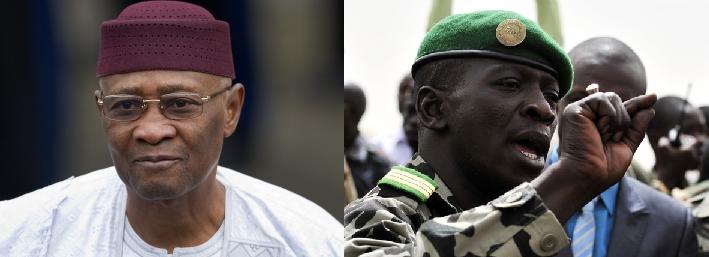
President Wadlow highlighted the recent meeting of representatives of the 15-member Economic Organization of West African States (ECOWAS) on April 26-27 in Abidjan which set a 12-month deadline for a transition period in Mali after the March 22coup of military officers led by Captain Amadou Sanogo. In response to strong, negative reactions by the international community, on April 7 there was a return to a civilian transitional government. However, the northern half of the country is now controlled by two rival Tuareg groups, the Mouvement national de libération de l’Azawad (MNLA) and the Ansar Dine. The MNLA has declared the northern half to be the independent state of Azawad.

“12 months should be long enough to work out a new constitution which maintains the unity of the country while at the same time providing the needed autonomy to the north and a preservation of the Tuareg way of life.” World Citizens believe in cooperation and in finding solutions based on respect for the positions and values of all the parties in the conflict.

“The Association of World Citizens believes that the Commission for Peace and Security of the African Union is well placed to help in drafting such a new federal constitution, especially as the Commissioner is a former Ambassador of Algeria to the United Nations. In the past, Algeria has played a mediation role between the Tuareg who also inhabit south Algeria and the governments of Mali and Niger where there are larger Tuareg communities.”

The declaration of the independence of north Mali by the MNLA is the first time such a formal proclamation has been made, although the independence of Azawad has always been among the Tuareg demands. Thus, it may be difficult for the Tuareg leadership, now in a position of force, to return simply to promises of greater autonomy within a unified Mali. A federation with clear divisions of authority could be a measure acceptable to both the MNLA and the government in Bamako.

“A crisis is a time for creative efforts. The Association of World Citizens is prepared to be of help with expertise in federal-confederal forms of government in this process.

“A transition period of 12 months may seem like a long time, but given the deep divisions of attitudes among leaders of north and south Mali, the sooner such efforts get underway the better. Support for the goal of a Mali federation on the part of the African Union’s Commission for Peace and Security could be an important part of creating a positive atmosphere in which such constitution drafting could be carried out.”

–   30   –