The Official Blog of the

Archive for the ‘Asia’ Category

Thailand-Cambodia: Urgent Ceasefire Needed

In Asia, Being a World Citizen, Conflict Resolution, Cultural Bridges, Current Events, International Justice, NGOs, Nonviolence, Peacebuilding, Solidarity, Spirituality, The Search for Peace, Track II, United Nations, United States, World Law on December 10, 2025 at 7:00 PM

By René Wadlow

The Association of World Citizens (AWC) calls for an urgent ceasefire in the renewed armed conflict between Thailand and Cambodia which flared up again on December 8, 2025 with the Thai military launching airstrikes on Cambodia.

A ceasefire had been agreed to in July 2025 in negotiations led by U.S. mediators. There is a 500-mile frontier between the two countries. The frontier was drawn when Cambodia was under French rule. Thailand contests the frontier lines.

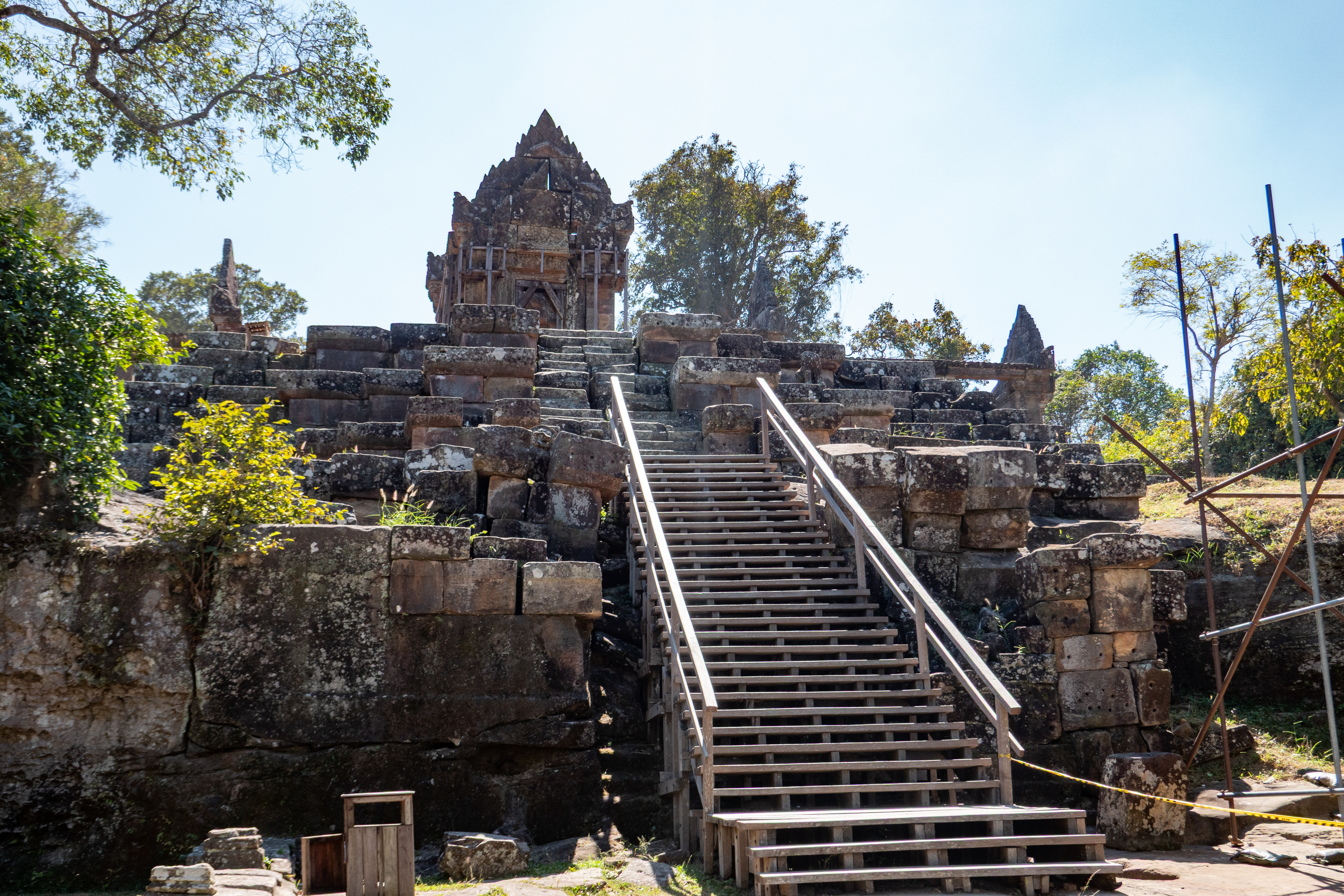
Prasat Preah Vihear, the temple claimed by both Thailand and Cambodia (C) PsamatheM

The decades-long dispute has already displaced many persons on both sides of the frontier. The frontier area on both sides has a large number of landmines planted making the whole area unsafe. The disputed area contains a Buddhist temple which should be a symbol of peace and harmony but is now a factor in the dispute.

The AWC stresses that urgent measures of conflict resolution should be undertaken. Nongovernmental Organizations may be able to play a positive role in such efforts. Contacts should be undertaken now.

Prof. René Wadlow is President of the Association of World Citizens.

BOOK REVIEW: Karine Martin, “Monastic Daoism Transformed: The Fate of the Thunder Drum Lineage”

In Asia, Book Review, Cultural Bridges, Human Rights, Religious Freedom, Spirituality on August 14, 2025 at 6:20 AM

By René Wadlow

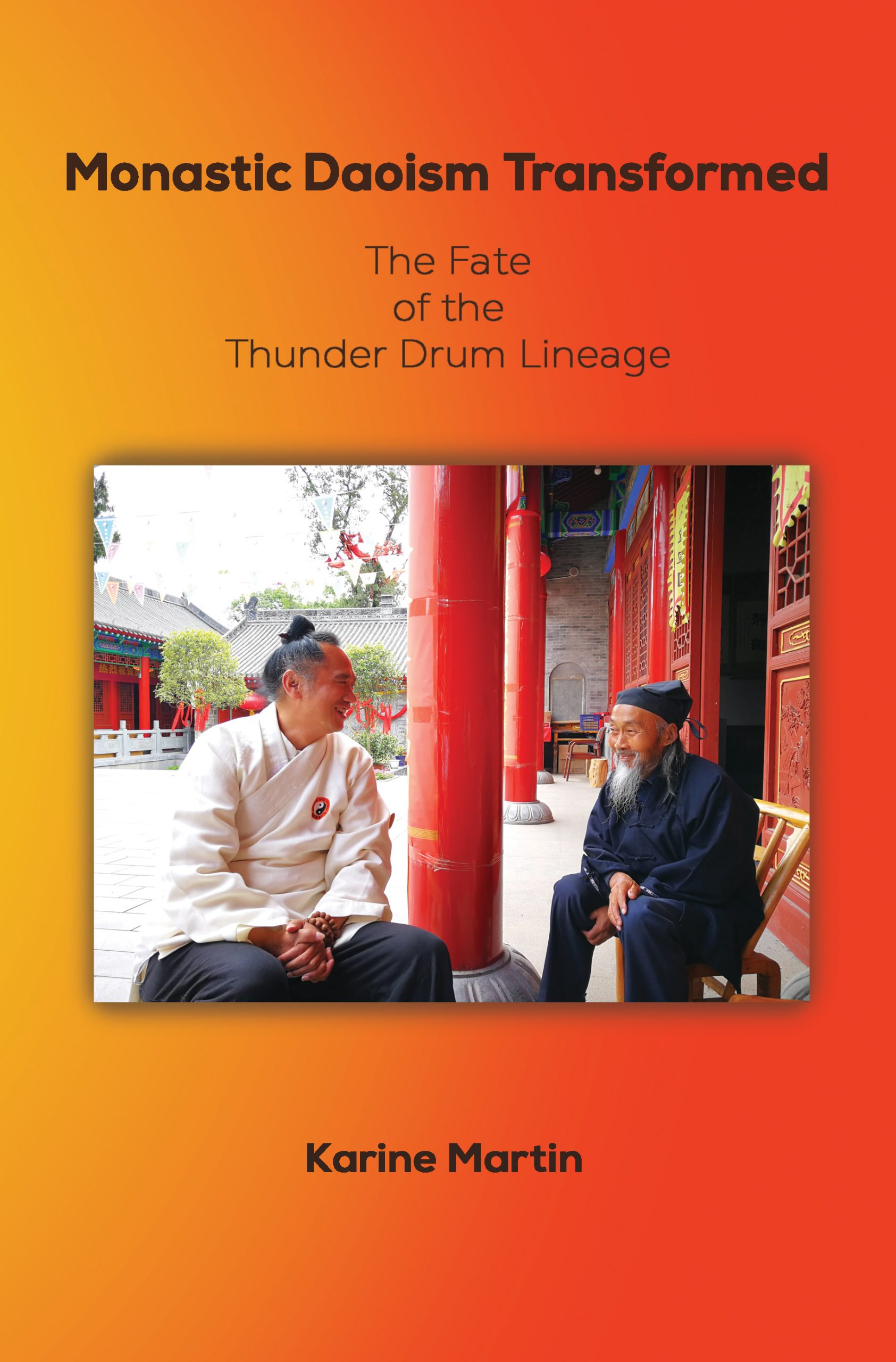
Karine Martin, Monastic Daoism Transformed: The Fate of the Thunder Drum Lineage.

Three Pines Press, 2025, 177pp.

Karine Martin, author of this useful overview of the Chinese Government’s attitude toward Daoist clergy, was able to travel widely in China, visiting more than 100 Daoist temples, especially those of the Thunder Drum lineage to which she belongs.

Since 2017, there has been a Chinese government policy called “Sinicization” in keeping with Xi Jinping’s Thought on Socialism with Chinese Characteristics for a New Era.

Sinicization requires all religious organizations to modify their doctrines and activities so that they match what is considered Han Chinese culture. Authorities have removed crosses from Christian churches and demolished minarets from Islamic mosques. Clergy from all religions are required to attend indoctrination courses on a regular basis. Chinese governments, both Nationalist and Communist, officially recognized five religions: Daoism, Buddhism, Islam, Catholicism and Protestantism.

Some religious groups are considered subversive and are outlawed and their members persecuted such as Falun Gong. During the “Cultural Revolution” (1966 to 1976, ending with the death of Chairman Mao Zedong), religion as such was considered to be one of the “four olds” to be destroyed. Churches and temples were closed. In Tibet, there was widespread destruction of temples. Monks were forced into civilian life. Today, the current policy is to keep religious organizations but to make sure that they do not slip out of control.

As Karine Martin writes,

“Everywhere I went, I found temples in a state of decline and disarray. There were no devotees, much fewer clergy, and minimal activities. Buildings were in disrepair, and there was very little renovation and construction. The overall atmosphere was one of desolation and despair… Temple websites – so strongly developed just a decade ago – now only speak about Xi Jinping Thought and ways of complying with government guidelines… Since all clergy were forced to rejoin secular society during the Cultural Revolution, many got married and had children yet later returned to their monasteries. The marriages often continued, if at long distance, allowing priests to fulfill their spiritual calling while yet having families. Now this is no longer possible, and monks either have to leave the monastery or produce a document that they have obtained a divorce and are properly celebrate.”

Karine Martin has written a very complete picture of monastic Daoism, a development of her Ph.D. thesis based on field observations. However, there is a cultural Daoism which colors Chinese life, its folk religious practices with village shrines – all difficult to control. Daoism places much emphasis on dreams during which the dreamer encounters immortals and advanced masters. Dreams are by their nature difficult to control from outside. The interpretation of the dream is also individual. Dreams can also lead to forms of deep personal meditation in order to understand the significance of the dreams.

Daoism also stresses good health and long life. Deep breathing, massages, herbal remedies and yoga-style movements such as Taijjiquan and Qigong can be carried out without belonging to a Daoist organization.

Daoism also places an emphasis on the appreciation of nature, especially mountains, rivers, forests and well-structured gardens. An ecological concern is growing in China without a specific link to organized Daoism.

While the government may try to control organized Daoist organizations, its cultural manifestations are ever slipping out of control and may one day be manifested in political terms.

Prof. René Wadlow is President of the Association of World Citizens.

BOOK REVIEW: Jean Boulton, “The Dao of Complexity: Making Sense and Making Waves in Turbulent Times”

In Asia, Being a World Citizen, Book Review, Cultural Bridges, Peacebuilding, Spirituality, The Search for Peace on August 4, 2025 at 6:40 AM

By Vasileios Basios, Ph.D.

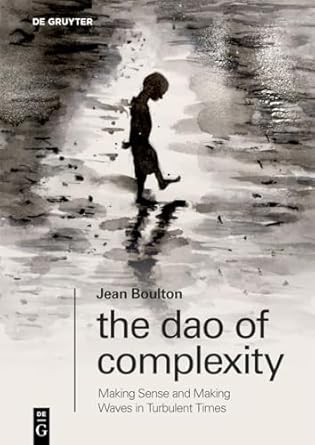
Jean Boulton, The Dao of Complexity: Making Sense and Making Waves in Turbulent Times.

Berlin: De Gruyter Brill, 2024, 400 pp.

This remarkable book is distinguished by its illuminating exploration of the contemporary complex world, which is characterised by unpredictability, interconnectedness, and constantly changing flows.

Boulton’s book is intellectually invigorating and profoundly nourishing for the heart and spirit. This can be attributed to the author’s infectious enthusiasm and unique ability to translate sophisticated concepts into practical wisdom.

From the very first pages, the reader is immediately struck by a sense of illumination and inspiration. ‘The Dao of Complexity’ represents a distinctive synthesis of a treatise on systems theory and a philosophical musing on ancient wisdom. Furthermore, Boulton’s writing can be considered a form of activism. It is evident that the author employs a persuasive discourse, unique for its meticulous crafting and intimate style, to instigate a shift in perspective among the readership. This discourse serves as a catalyst, prompting novel interpretations of the intricacies and multifaceted nature of the world.

The book’s structure is so appealing, it invites you to just dip in and out, and to enjoy the thought-provoking reflections each time. Her text design is amazing. It is inspired by Daoist texts and, like these, it encourages serendipitous discovery and deep contemplation. This allows the reader to discover meaning and insights.

Here Complexity Daoism meet in a “remarkable resonance”, as she puts it, and in a vibrant resonant synthesis.

The author confidently masters two powerful traditions: the scientific study of complexity and the ancient philosophy of Daoism. Boulton masterfully unveils the deep connections between these worldviews, demonstrating that both emphasise process, emergence, and the interconnectedness of all things.

In these troubled times, with so many challenges to face – turbulence, pandemics, climate change, political unrest and wars – it’s easy to feel overwhelmed. But Boulton’s message is one of hope. She suggests that traditional, mechanistic ways of thinking are not the way to find solutions. Instead, she gently invites us to see the world as a dynamic, ever-evolving process, where outcomes are not always predictable and where our actions ripple outward in unexpected and hopeful ways.

The first part of the book, “Making Sense”, establishes this novel –but ancient– worldview. Drawing on the frontiers of quantum physics, neuroscience and political theory, Boulton confidently demonstrates that both our brains and minds as well as the world around us operate as complex, adaptive, innovating systems, constantly shaped by experience, interaction and feedback. She employs the Daoist concept of “the way that is made by walking” to demonstrate that the future is not a predetermined destination, but rather an attractor shaped by our choices and intentions.

Her perspective is liberating and challenging: it frees us from the illusion of total control and encourages humility and openness. She invites us to stay alert and attuned to subtle shifts for effective leadership and meaningful change.

The second part, “Making Waves”, is where the book really shines as a guide for action. In this, Boulton thoughtfully explores what it means to lead, innovate and create change in a world where outcomes are uncertain and linear planning often fails. She has so many stories and examples to share, covering everything from leadership and education to governance and personal growth. She shows us how to embrace complexity to create responses that are stronger, more caring and better able to adapt.

The book’s most powerful message is clear: we must learn to “make waves” without expecting to control the tide. Our actions matter, but their effects will always be shaped by the broader system in which they occur. This insight is vital for anyone engaged in social change, digital transformation or organisational leadership. Rather than clinging to rigid plans or over-relying on rules, Boulton shows us how to trust, foster creativity, and build cultures of loving, learning and adaptation.

The Dao of Complexity is the indispensable guide to the “big and pressing questions” of our time, including climate change, inequality and polarisation. It combines intellectual rigour and practical relevance with thoughtful guidance on how individuals and societies can respond with hope and determination. Her writing is characterised by a deep compassion and profound respect for the intricacies of human experience. She challenges readers to move beyond simplistic, quantitative measures of success and to value qualities like empathy, trust, and the capacity to hold paradox.

However, what made this book a really joyful and refreshing read is the fact that it is so accessible. I absolutely love how she makes even the trickiest concepts feel so welcoming and relatable. She has this remarkable ability to take these complex ideas and explain them in a way that’s so easy and deeply satisfying for everyone to understand, no matter what their background is.

In a world where control, measurement and certainty can sometimes feel like the only things we know and care about, Jean Boulton’s ‘The Dao of Complexity’ is like a warm breeze on a hot summer’s day. It’s a caring reminder to let go of the daily grind and embrace the beauty and wonder of life. I absolutely love this book. It’s one of those that will really get your creative juices flowing, fill your heart with joy and give you the courage to go out there and “make waves” in your own unique way.

I wholeheartedly recommend it! Read it again and again, for each time you will earn new insights and inspiration for our shared journey ahead.

Vasileios Basios is a Senior Researcher at the University of Brussels.
Thailand-Cambodia: Good Faith Negotiations Needed

In Asia, Being a World Citizen, Conflict Resolution, Current Events, NGOs, Nonviolence, Peacebuilding, Solidarity, The Search for Peace, Track II, United Nations, World Law on July 26, 2025 at 9:50 AM

THAILAND-CAMBODIA: GOOD FAITH NEGOTIATIONS NEEDED

The Association of World Citizens (AWC) expresses deep concern over the rising political tensions and military clashes between Thailand and Cambodia which has led to a large displacement of civilians from the border areas.

On July 24, 2025, Cambodian forces launched artillery attacks on civilian targets in Thai territory, and Thailand responded with airstrikes on Cambodia. Landmines have been set in the contested border areas. The AWC has long been active against the use of landmines. This escalation of Thai-Cambodian tensions risks a destabilization of both governments and societies.

Therefore, the AWC calls for an immediate ceasefire and the start of negotiations in good faith.

Prof. René Wadlow, President of the Association of World Citizens

India-Pakistan Ceasefire: Negotiations Now Needed

In Asia, Being a World Citizen, Conflict Resolution, Current Events, NGOs, Nonviolence, Nuclear weapons, Peacebuilding, Solidarity, The Search for Peace, Track II, United Nations, World Law on May 13, 2025 at 7:30 AM

By René Wadlow

After the April 22 attack and death of 26 Indian tourists at Pahalgam in the Indian-administered area of Kashmir, tensions between India and Pakistan grew quickly. Pakistan was accused by India of backing the terrorists who had carried out the attack – a charge which Pakistan denied. Prime Minister Narendra Modi gave the Indian military “complete operational freedom”. A combination of bellicose rhetoric, domestic pressures, and political agitation led to daily exchanges of armed fire, and the shooting down of Indian jet fighters. The frontiers between the two countries were closed and diplomats withdrawn. The dangers of escalation between the two nuclear-armed countries were obvious to many.

Fortunately, outside voices called for an immediate ceasefire: U.S. President Donald Trump and his Secretary of State Marco Rubio, Antonio Guterres, Secretary-General of the United Nations (UN), and some member governments of the UN Security Council which met in closed session, as well as a good number of Nongovernmental Organizations (NGOs) involved in conflict resolution efforts such as the International Peace Bureau and the Association of World Citizens (AWC). One must now strive so that the ceasefire will hold.

The next step is to facilitate negotiations between the Indian and Pakistani governments. A first step is to create a number of confidence-building measures so that the ceasefire holds. Then there is a need to develop longer-range negotiations. There are a good number of outstanding issues, such as Kashmir, which go back to the founding of the two countries.

It may be that the current steps back from the nuclear brink will drive home the need for serious negotiations. NGOs in both India and Pakistan may help to see on what issues progress may be made. Those of us on the outside must do all we can to facilitate creative dialogue between Indians and Pakistanis.

Prof. René Wadlow is President of the Association of World Citizens.

Kashmir Attack Creates Increased India-Pakistan Tensions: Track Two Measures Needed

In Asia, Being a World Citizen, Conflict Resolution, Current Events, NGOs, Nonviolence, Peacebuilding, Solidarity, The Search for Peace, Track II, United Nations, World Law on April 29, 2025 at 7:00 AM

By René Wadlow

On April 22, 2025, four gunmen killed 26 people and injured others in the Kashmir tourist center of Pahalgam, Kashmir, India. The Resistance Front claimed responsibility for the Pahalgam attack, but the group is little known. Indian officials have blamed Pakistan as being behind the attackers saying that Pakistan has a fundamentally criminal disposition in its deep state membership. Pakistan is host to Islamic militants that carry out terrorist raids in India but does not necessarily control them.

As a result of the Pahalgam attack, India has closed its border crossings into Pakistan and suspended India’s 1960 Water Treaty with Pakistan. Anti-Pakistan protests have erupted in India’s capital New Delhi and in several other cities raising fears that anti-Muslim sentiment will grow in India. Pakistan responded by closing its border crossings with India and closed its air space to Indian aircraft.

In 2019, India modified the special self-governing status of Jammu and Kashmir, and security measures have been very tight since. Nevertheless, Kashmir is an important location for tourism within India. Within 48 hours, 90 percent of the tourists in Kashmir left – a blow to farmers who sold their food to tourists and to handicraft makers. The image of a young bride sitting beside her husband’s lifeless body has been viewed multiple times and is fixed into the Indian national consciousness as the symbol of the drama.

As tensions within Jammu and Kashmir have led to armed conflicts between India and Pakistan in the past, the governments of Russia, China, Saudi Arabia and Iran have offered their good offices as mediators. On April 25, Abbas Araghchi, the Iranian Foreign Minister, said that both India and Pakistan are “brother nations” and that Iran was prepared to play a mediation role.

A ‘Beating of Retreat’ ceremony in Wagha, Pakistan, just next to India, on December 5, 2010. (C) Koshy Koshy

It may be that the governments of Russia, China, Saudi Arabia, and Iran are all too involved with advancing their own political interests in world politics to be taken as neutral mediators. Nevertheless, the India-Pakistan tensions are very dangerous and may easily grow worse if steps to reduce tensions are not taken very soon.

As Citizens of the World, we are particularly called to help create a climate for negotiations in good faith and to reduce tensions. Therefore, we need to use our worldwide links in a creative way to reduce tensions. We devote ourselves to the safeguard, restoration, and construction of peace through dialogue, cooperation and reconciliation.

One approach in which World Citizens participate is called Track Two. Track One is official government-to-government diplomacy among instructed representatives of the State although there can be “back channels” and informal contacts among the representatives of governments. Track Two consists of discussions held among non-officials of conflicting parties in an effort to clarify outstanding disputes and to explore the options for resolving them in settings that are less sensitive and often less structured and with less media attention than those associated with official negotiations. Those involved in Track Two talks usually include scholars, senior journalists, former government officials and businesspeople. Depending on the aims and styles of these meetings, the profile of Track Two participants will differ.

The specific purposes of Track Two talks vary, but they are all related to reducing tensions. By informing their respective publics, participants, may indirectly contribute to the formation of new priorities and policies.

Track Two is not the end of the story for insights gained must be incorporated into the positions of government negotiators. There is a little verse by the Quaker economist Kenneth Boulding who participated in many Track Two efforts,

When Track One will not do,
We have to travel on Track Two.
But for results to be abiding,
The Tracks must meet upon some siding.

Today, discussions among Nongovernmental Organizations with avenues of communication to Indian and Pakistani officials should begin now. Time may be in short supply.

Prof. René Wadlow is President of the Association of World Citizens.

Kuan Yin: She Who Hears the Cries of the World

In Asia, Cultural Bridges, Solidarity, Spirituality, The Search for Peace on February 19, 2025 at 8:10 AM

By René Wadlow

February 19, in countries influenced by Chinese culture, is a day devoted to honoring Kuan Yin, a feminine symbol, the Goddess of Compassion, “She who hears the cries of the world and restores harmony.” In Chinese culture, on February 19, offerings of incense are made to Kuan Yin, along with tea for wisdom and fruit for prosperity.

Today, at a time when humanity is increasingly working together to meet ecological challenges and to overcome ideological-led strife, the spirit of Kuan Yin presents us with an important call for a cultural renaissance based on the concept of harmony with visions of a better future. First, we must look carefully at the present. As the Taoist philosopher Huai Nan Tsu wrote, “The sage responds to everything with an unbiased mind, with a mind free from suppositions. He approaches all events and investigates the laws which govern them.”

At Ông Temple, Can Tho, Vietnam (C) Jean-Pierre Dalbéra

For Kuan Yin, her spirit leads to harmony which includes tolerance and forgiveness of past pains and conflicts. Kuan Yin embodies the virtues of karuna (compassion) and metta (loving kindness). In this way she strengthens the broad currents moving toward gentleness, kindness and inner peace. Kuan Yin, aware of the suffering caused by hateful speech, encourages loving speech and deep listening in order to bring joy and happiness to others and relieve them of their suffering.

Thus, on this February 19, we rededicate ourselves to the spirit of Kuan Yin. We strive to listen to the cries of the world and find ways to develop harmony.

Prof. René Wadlow is President of the Association of World Citizens.

China’s Taoists: Slipping Out of Control?

In Asia, Cultural Bridges, Human Rights, Literature, Religious Freedom, Solidarity, Spirituality on February 17, 2025 at 8:00 AM

By René Wadlow

A review of Monastic Daoism Transformed: The Fate of the Thunder Drum Lineage by Karine Martin (Three Pines Press, 2025, 177 pages)

Since 2017 there has been a Chinese government policy called “Sinicization” in keeping with Xi Jinping’s Thought on Socialism with Chinese Characteristics for a New Era.

Sinicization requires all religious organizations to modify their doctrines and activities so that they match what is considered Han Chinese culture. Authorities have removed crosses from Christian churches and demolished minarets from Islamic mosques. Clergy from all religions are required to attend indoctrination courses on a regular basis. Chinese governments, both Nationalist and Communist, officially recognized five religions: Daoism, Buddhism, Islam, Catholicism and Protestantism.

Some religious groups are considered subversive and are outlawed and their members persecuted such as Falun Gong. During the “Cultural Revolution” (1966 to 1976, ending with the death of Chairman Mao Zedong), religion as such was considered to be one of the “four olds” to be destroyed. Churches and temples were closed. In Tibet, there was widespread destruction of temples. Monks were forced into civilian life. Today, the current policy is to keep religious organizations but to make sure that they do not slip out if control.

Karine Martin is a Western member of the Daoist monastic clergy (Taoism is now more often written as Daoism). In 2023, she was able to travel widely in China visiting more than 100 Daoist temples, especially those of the Thunder Drum lineage to which she belongs. As she writes,

“Everywhere I went, I found temples in a state of decline and disarray. There were no devotees, much fewer clergy, and minimal activities. Buildings were in disrepair, and there was very little renovation and construction. The overall atmosphere was one of desolation and despair… Temple websites – so strongly developed just a decade ago – now only speak about Xi Jinping Thought and ways of complying with government guidelines… Since all clergy were forced to rejoin secular society during the Cultural Revolution, many got married and had children yet later returned to their monasteries. The marriages often continued, if at long distance, allowing priests to fulfill their spiritual calling while yet having families. Now this is no longer possible, and monks either have to leave the monastery or produce a document that they have obtained a divorce and are properly celebrate.”

Karine Martin has written a very complete picture of monastic Daoism, a development of her Ph.D. thesis based on field observations. However, there is a cultural Daoism which colors Chinese life, its folk religious practices with village shrines – all difficult to control. Daoism places much emphasis on dreams during which the dreamer encounters immortals and advanced masters. Dreams are by their nature difficult to control from outside. The interpretation of the dream is also individual. Dreams can also lead to forms of deep personal meditation in order to understand the significance of the dreams.

Daoism also stresses good health and long life. Deep breathing, massages, herbal remedies and yoga-style movements such as Taijjiquan and Qigong can be carried out without belonging to a Daoist organization.

Daoism also places an emphasis on the appreciation of nature, especially mountains, rivers, forests and well-structured gardens. An ecological concern is growing in China without a specific link to organized Daoism.

While the government may try to control organized Daoist organizations, its cultural manifestations are ever slipping out of control and may one day be manifested in political terms.

Prof. René Wadlow is President of the Association of World Citizens.

Tension Reduction on the India-China Himalaya Frontier

In Asia, Being a World Citizen, Conflict Resolution, Cultural Bridges, Current Events, NGOs, Solidarity, The Search for Peace, Track II, United Nations on October 28, 2024 at 7:30 AM

By René Wadlow

On October 21, 2024, prior to the meeting of the Indian leader, Narendra Modi, and the Chinese leader, Xi Jinping, the Indian Minister of Foreign Affairs, Subrahmanyam Juishankar, announced that an accord had been reached between Indian and Chinese authorities for a reduction of tensions along the 3,500-kilometer frontier between the two countries.

In 2020, there had been exchanges of fire between Indian and Chinese forces in the Tibet-Ladakh frontier area. There then seemed to be real possibilities that the violence would escalate. Thus, the Association of World Citizens (AWC) had made an Urgent Appeal, posted in July 2020 on its website and sent widely to contacts that might be helpful in reducing tensions. Today, the AWC is pleased with the new agreement and re-publishes its original 2020 Appeal.

* * *

Can Track II Efforts Reduce China-India Frontier Tensions?

July 3, 2020 at 7:52 AM

By René Wadlow

In a June 24, 2020 message to the Secretary General of the Shanghai Cooperation Organization, Mr. Vladimir Novov, the Association of World Citizens (AWC) expressed its active concern with the June 15 death of Indian and Chinese military in the Galwan River Valley in Ladakh on the India-China frontier and the possibility that the tensions will increase. While there have been brief discussions among Indian and Chinese authorities to prevent escalation, there have been no real negotiations. Negotiation is a basic political decision-making process, to facilitate compromise without loss of essential objectives.

33465091301_7d4f34b432_o

The Indian Ministry of External Affairs said on June 25 that since early May, the Chinese have been amassing a large contingent of troops and arms along the Line of Actual Control (LAC). Also, within India, there has been a good deal of media attention, highly critical of China, given to the events. In addition, there have been calls for a boycott of Chinese goods, and some Chinese products have been removed from Indian shops. Both Indian and Chinese spokespersons have made references to the 1962 war during which some 2,000 persons were killed.

The AWC believes that there is a need for prompt measures as the India-China tensions add to existing tensions between the USA and China as well as boundary issues with Asian States in the South China Sea.

There may be a role for “Track II” nongovernmental efforts and exchanges. Track I is official government to government diplomacy among instructed representative of States, usually diplomats from the Foreign Ministry. However, governments have a range of officials on whom to call: intelligence agencies, the military, and “friends of the President” – trusted individuals within the executive entourage.

Nathu_La_-_Indo_China_Border

Track II efforts are organized through nongovernmental organizations and sometimes by academic institutions. Such efforts can entail informal, behind the scene communications that take place in the absence of formal communication channels. The term “Track II” was coined by the U. S. diplomat Joseph Montville in The Arrow and the Olive Branch: A Case for Track II Diplomacy.

Track II efforts have grown as there is increasing recognition that there is a tragic disjunction between the United Nations tension-reduction mandate and its ability to intervene in conflicts when called upon. As Adam Curle, experienced in Quaker mediation efforts has written “In general governments achieve their results because they have power to influence events, including the ability to reward or to punish. Paradoxically, the strength of civilian peacemakers resides specifically in their lack of power. They are neither feared nor courted for what they can do. Instead, they are trusted and so may sometimes be enabled to play a part in peacemaking denied to most official diplomats.”

Those involved in Track II efforts must, nevertheless, have ready access to governmental decision-makers and Track I diplomats. As the World Citizen and Quaker economist Kenneth Boulding in a little verse writes,

“When Track One will not do,
We have to travel on Track Two
But for results to be abiding,
The Tracks must meet upon some siding”.

OLYMPUS DIGITAL CAMERA

In the China-India frontier tensions, both sides must be convinced that there is a considerable sentiment for peace among their own supporters. In this conflict, which could slip into greater violence, there is an understandable tendency to look for short term answers. Yet there is also a need for some involved in Track II efforts to have an over-all integrated perspective for both short as well as long-term transformation. Thus, there needs to be a “pool” of people with experience, skills and the ability to move fast when the need or the opportunity is there?

We are sure that there are groups in India and China which can rise to meet this challenge.

Prof. René Wadlow is President of the Association of World Citizens.

Village Bank Founder Becomes Interim Leader of Bangladesh

In Asia, Being a World Citizen, Current Events, Democracy, Human Rights, NGOs, Social Rights, Solidarity, The Search for Peace, Women's Rights on August 12, 2024 at 1:00 PM

By René Wadlow

Muhammad Yunus, the founder of the microcredit banking system in Bangladesh, the Grameen Bank (which translates as “Village Bank”), was sworn in as the interim leader of the Bangladesh government on August 8, 2024. The former leader, Sheikh Hasina, resigned and then fled to India, driven out by the protests first of students and then by other sectors of the population during which some 400 persons were killed by the military and the police. Muhammed Yunus has called for calm and an end to uncontrolled violence often directed against the minority Hindu population.

Muhammad Yunus is an economist. Now 84 years old, he is retired from teaching, originally at the University of Chittagong, the port city of Bangladesh. As an economist, he was quickly aware of rural poverty in many parts of the country and the unrest of the tribal minorities in the Chittagong Hill Tracks. He developed the concept of the Grameen Bank, small loans, especially to women, in order to improve their trading efforts. Much of what is called “the informal sector” – marginal to the more developed economy – are the efforts of market women and women small producers. With small loans which must be repaid before a new loan is possible, women are able to have more security and can expand their business.

Prof. Muhammad Yunus at the University of Salford, UK, on May 18, 2013
(C) University of Salford Press Service

The Grameen Bank approach spread to nearly all areas of Bangladesh and then to other countries, especially in Africa. The success of the Grameen Bank approach has lifted many from the cycle of poverty and instability. In recognition of the impact of the Grameen Banks, Muhammad Yunus was awarded the Nobel Prize for Peace in 2006.

Muhammad Yunus has formed an interim government of 16 persons, mostly drawn from civil society organizations, including two, Nahid Islam and Asif Mahmud, both 26 years old, who were leaders of the student movements which overthrew Sheikh Hasina who had been in power for 15 years – whose government had become increasingly authoritarian. Muhammad Yunus has promised that elections will be held shortly but that calm must be restored first. He faces difficult tasks, but he is a fresh mind outside the narrow political milieu. We must wish him well in his vital efforts.

Prof. René Wadlow is President of the Association of World Citizens.