By René Wadlow
Recent violence and growing tensions along religious, ethnic and social class lines in Syria have highlighted the need to create a framework for cooperation among civil society groups. The Peacebuilding Section of the United Nations (UN) Secretariat was created because of the difficulties of creating a peaceful and just society after a period of armed conflict. It has been noted that violence often starts up again if strong measures of reconciliation and cooperative action are not undertaken as soon as the armed conflict ends. A spirit of revenge is often present, especially among those who consider themselves as victims. Thus, there needs to an interweaving of economic improvement with social reconciliation and the creation of trust among factions.
The long, multi-layered conflict in Syria from 2011 to the departure of Bashar al-Assad in December 2024 had increased tensions among groups, but the tensions were already there, clashing over values and interests. “Pity the nation divided into fragments, each fragment deeming itself a nation” wrote Khalil Gibran in The Garden of the Prophet thinking about his home country Lebanon, but it can also be said of neighboring Syria.
External countries had quickly stepped into the armed conflict after 2011 projecting their rivalries onto Syria and jockeying for regional preeminence. Syrian civil society members had cooperated during the efforts of mediation during the early years of the conflict. The first mediator was Mr. Kofi Annan as the joint envoy of the UN and the League of Arab States in February 2012.
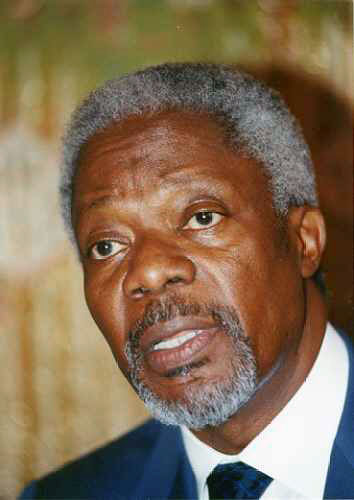
Kofi Annan, a former UN Secretary General, had spent his entire career in the UN system and was a seasoned mediator. From his discussions and observations, he proposed first steps based on a ceasefire with effective UN supervision, a release of arbitrarily detained persons, increased humanitarian aid, and freedom of association within Syria. The implementation of his proposals did not follow, and he resigned his mandate on August 2, 2012.
I knew somewhat Kofi Annan and knew better some members of his staff. I also knew fairly well the Secretary General of the League of Arab States Nabil al-Araby, a longtime Ambassador of Egypt to the UN in Geneva. Thus, on behalf of the Association of World Citizens (AWC), I became involved with the armed conflict in Syria.
I had discussions with Dr. Faysal Khabbaz Hamouri, the Ambassador of Syria to the UN in Geneva, to see what issues might be negotiable and if an agenda could be fixed. I also had discussions with Syrian Nongovernmental Organization (NGO) members who had come to Geneva because of the negotiations. NGO representatives, such as I for the AWC, have no standing as official mediators but can play some role through their contacts with diplomats and UN Secretariat members. From these discussions, I came to realize how deeply divided was the Syrian community involved in the political aspects of the armed conflict. There were no public negotiations in Geneva after 2015. In September 2015, Russian military troops started their heavy support of the al-Assad government.
Today, it is difficult to know what those of us who are not Syrians and who are outside of Syria can do to help build a society of social cohesion in Syria. The wider Middle East is filled with violence and tensions among Israelis and Palestinians, in Lebanon, Yemen and Iran. We have to keep our spirits open for new possibilities of positive action.
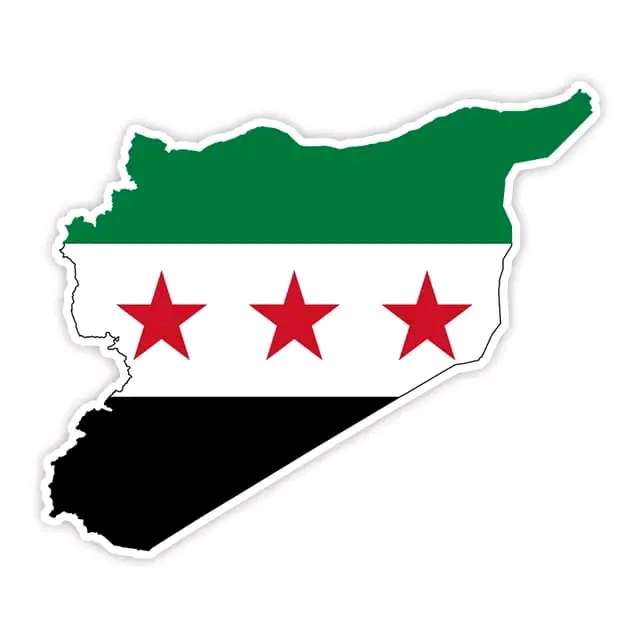
(C) Khaled Fozan
Prof. René Wadlow is President of the Association of World Citizens.
 Association of World Citizens