By René Wadlow
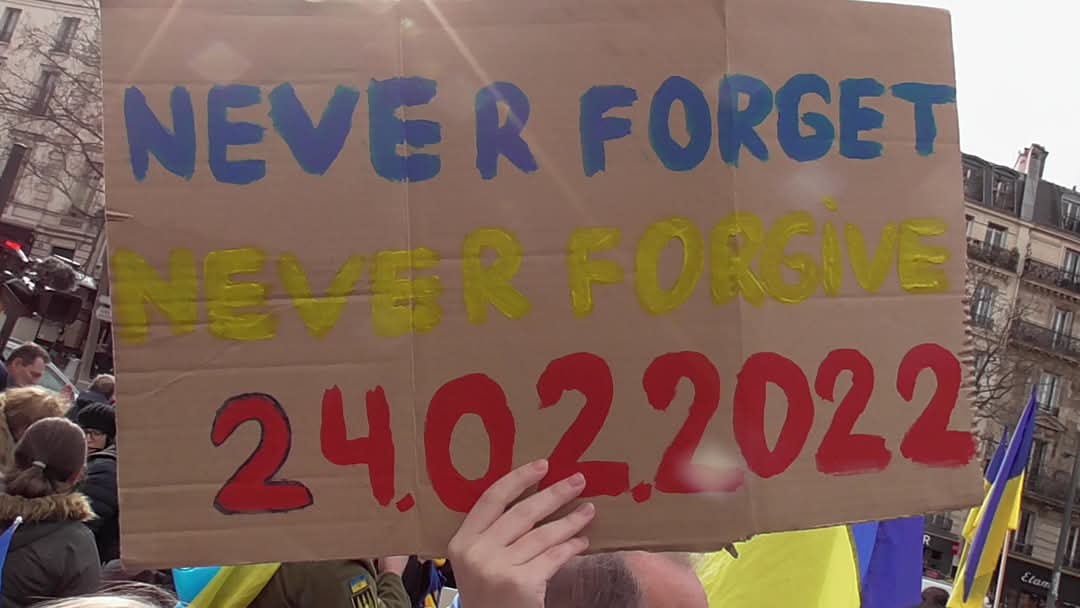
February 24 marks the anniversary of the start of the Russian “Special Military Operation” in Ukraine in 2022 which very quickly became a war with the large loss of life both military and civil, with the displacement of population, and a crackdown on opposition to the war. For three years, the war has continued, lap after lap. Although there were fears that the war might spread to neighboring countries, the fighting has been focused on Ukraine, and more recently on a small part of Russian territory attacked by Ukrainian forces. Can there be a realistic end to the armed conflict in sight?
On February 18, 2025, the United States (U.S.) Secretary of State, Marco Rubio, and the Russian Foreign Minister, Sergei Lavrov, met and discussed in part ending the armed conflict in Ukraine. They discussed a possible Putin-Trump summit that could be held in Saudi Arabia. Earlier, U.S. Army General Mark Milley had said, “There has to be a mutual recognition that military victory is probably, in the true sense of the word, not achievable through military means, and therefore, when there is an opportunity to negotiate, when peace can be achieved, seize it.”
However, the conflict is not one only between the USA and the Russian Federation; it also involves directly Ukraine. The Ukrainian President, Volodymyr Zelenskyy, has stressed strongly that the Ukraine government leadership wants to play a key role in any negotiations. Certain European countries such as France, Germany, Poland and Turkey have been involved in different ways in the conflict as well as in proposing possible avenues of negotiation to bring the conflict to an end. The bargaining process could be lengthy, but also it could be short as there is “handwriting on the wall.”
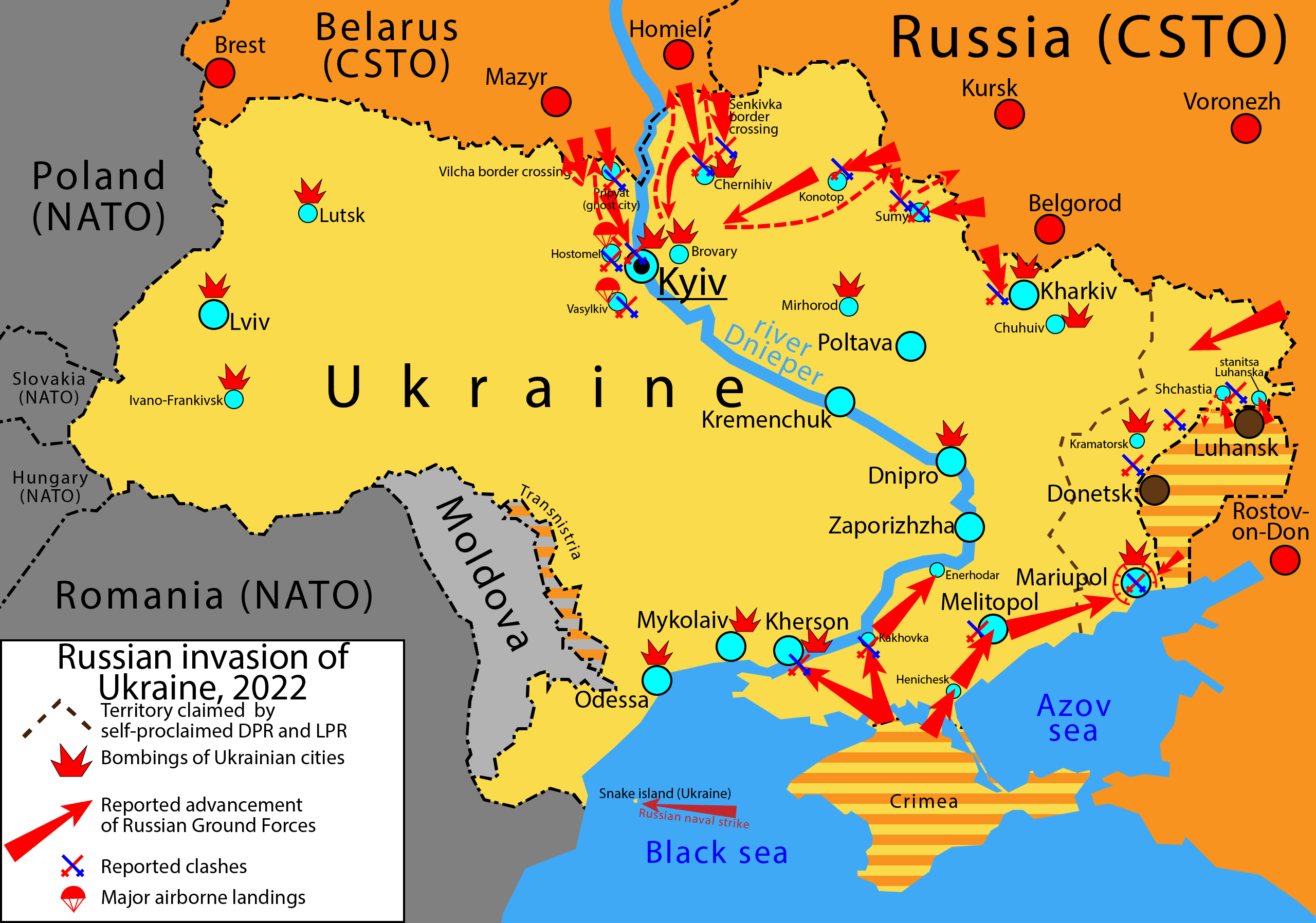
One key aspect concerns the fate of four Ukrainian areas “annexed” by Russia, Donetsk, Luhansk, Kherson, and Zaporizhzhia largely controlled by Russian troops. President Putin has said, “These regions had been incorporated by the will of the people into the Russian Federation. This matter is closed forever and is no longer a matter of discussion.” However, the status of Crimea and the Donetsk and Luhansk People’s Republics is at the core of what President Zelenskyy wants discussed.
“Made in War” is the mark of origin stamped upon nearly all States. Their size, their shape, their ethnic makeup is the result of wars. There are virtually no frontiers today that are not the results of wars: world wars, colonial struggles, annexations by victors, wars against indigenous populations. States were not created by reasonable negotiations based on ethnic or geographic characteristics. If frontiers can be modified only by the victors in wars, then there must be new imaginative transnational forms of cooperation. What is needed are not new frontiers but new states of mind.
From April 5 to 7, 2023, the President of France, Emmanuel Macron, was in China and urged that China could play a key role in bringing peace to the Russia-Ukraine conflict. President Xi Jinping had made a very general 12-point peace plan to resolve the Russia-Ukraine conflict – an indication that China is willing to play a peace-making role. China is probably the only country with the ability to influence Russian policymakers in a peaceful direction.
However, there are long historic and strategic aspects to the current armed conflict. Security crises are deeply influenced both by a sense of history and current perceptions. Thus, the Association of World Citizens (AWC) encourages the development of a renewed security architecture as was envisaged by the Helsinki Final Act and the creation of the Organization for Security and Cooperation in Europe (OSCE). There will be much to do to re-create an environment of trust and confidence that has been weakened by this conflict. Nongovernmental Organizations should play an active and positive role.
Prof. René Wadlow is President of the Association of World Citizens.
 Association of World Citizens