The Official Blog of the

Archive for the ‘World Law’ Category

World Citizens Call for Renewed Efforts for a Mali Federation

In Africa, Conflict Resolution, Current Events, The Search for Peace, United Nations, World Law on April 29, 2012 at 10:10 PM

STATEMENT BY THE REPRESENTATIVE OFFICE

TO THE UNITED NATIONS OFFICE AT GENEVA

OF THE ASSOCIATION OF WORLD CITIZENS

WORLD CITIZENS CALL FOR RENEWED EFFORTS

FOR A MALI FEDERATION


In an April 29, 2012 message to H. E. Mr. Ramtane Lamamra, Commissioner for Peace and Security of the African Union, Prof. René Wadlow, President of the Association of World Citizens, called upon the African Union to facilitate the creation of a federation of north and south Mali rather than having the country split into two independent states with unresolved frontier issues.

President Wadlow highlighted the recent meeting of representatives of the 15-member Economic Organization of West African States (ECOWAS) on April 26-27 in Abidjan which set a 12-month deadline for a transition period in Mali after the March 22coup of military officers led by Captain Amadou Sanogo. In response to strong, negative reactions by the international community, on April 7 there was a return to a civilian transitional government. However, the northern half of the country is now controlled by two rival Tuareg groups, the Mouvement national de libération de l’Azawad (MNLA) and the Ansar Dine. The MNLA has declared the northern half to be the independent state of Azawad.

“12 months should be long enough to work out a new constitution which maintains the unity of the country while at the same time providing the needed autonomy to the north and a preservation of the Tuareg way of life.” World Citizens believe in cooperation and in finding solutions based on respect for the positions and values of all the parties in the conflict.

“The Association of World Citizens believes that the Commission for Peace and Security of the African Union is well placed to help in drafting such a new federal constitution, especially as the Commissioner is a former Ambassador of Algeria to the United Nations. In the past, Algeria has played a mediation role between the Tuareg who also inhabit south Algeria and the governments of Mali and Niger where there are larger Tuareg communities.”

The declaration of the independence of north Mali by the MNLA is the first time such a formal proclamation has been made, although the independence of Azawad has always been among the Tuareg demands. Thus, it may be difficult for the Tuareg leadership, now in a position of force, to return simply to promises of greater autonomy within a unified Mali. A federation with clear divisions of authority could be a measure acceptable to both the MNLA and the government in Bamako.

“A crisis is a time for creative efforts. The Association of World Citizens is prepared to be of help with expertise in federal-confederal forms of government in this process.

“A transition period of 12 months may seem like a long time, but given the deep divisions of attitudes among leaders of north and south Mali, the sooner such efforts get underway the better. Support for the goal of a Mali federation on the part of the African Union’s Commission for Peace and Security could be an important part of creating a positive atmosphere in which such constitution drafting could be carried out.”

–   30   –

A New Mali Federation?

In Africa, Anticolonialism, Conflict Resolution, Current Events, The Search for Peace, United Nations, World Law on April 21, 2012 at 9:55 PM

A NEW MALI FEDERATION?

By René Wadlow


Since the fall of northern Mali to the forces of the Tuareg at the end of March 2012, the situation has grown in complexity. The group of young officers, more or less led by Captain Amadou Sanogo, had taken control of the government buildings of the Central Government in Bamako on March 23, but they had little idea of what else to do.

There was an immediate counter-reaction on the part of Western States such as France and the USA who provide most of the financial and technical assistance to Mali. Both France and the USA cut their aid to Mali—a country currently facing a severe drought and food shortages.  Likewise, the 15 states of the Economic Organization of West African States (ECOWAS) called for a speedy return to the civilian government. Captain Sanogo saw the “handwriting on the wall” and agreed to turn over the government to the President of the National Assembly who is the constitutional replacement when the President is absent.

In the meantime, the country is divided into two roughly equal areas—a north with the Tuareg holding the two major cities of Timbuktu and Gao, and the more populated south whose population provides most of the civil service, the army and the agricultural wealth of the country.

The Tuareg along with various armed groups probably from Mauritania, south Algeria and fighters who had been recruited for Libya are divided on what strategy to follow. There are two broad options. The largest group, Mouvement national de libération de l’Azawad (MNLA) wants an independent state of northern Mali (and probably part of the Tuareg-inhabited Niger) to be called Azawad. The second faction, called Ansar Dine, is smaller but is more heavily armed and contains the bulk of armed foreigners. Their stated aim is to take control of all of Mali and to install Islamic law.

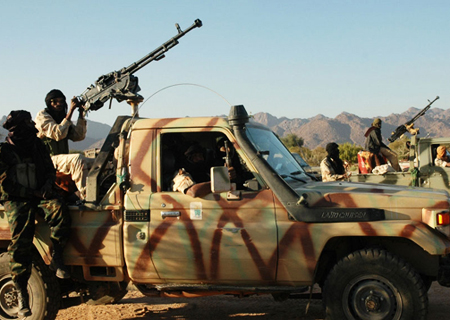
Tuareg rebels near the Sahara desert

Both options have difficulties. Northern Mali as an independent state of Azawad has no natural resources, a small population and few educated people to administer a state or to develop any economy beyond that of camel nomadism. In addition, most African states are opposed to carving up existing states or changing frontiers—a Pandora’s box as many states could be redrawn on ethnic lines and frontiers changed. Thus “territorial integrity” is an article of faith.

Ansar Dine’s option of an Islamist Mali is also difficult to realize. The Bambara and the Malinké are the largest groups in the country and hold economic, military, and political power. Ideologically, they are opposed to the Islamic vision of Ansar Dine, being more Sufi-influenced with a large measure of traditional African beliefs and practices mixed in.(1) Thus the possibility of Ansar Dine gaining support in the south of Mali is slight.  However, they may be able with force of arms to impose their views on Timbuktu and Gao but not on the northern countryside.  The Tuareg are not Islamist by tradition.  Yet in the two cities, the Ansar Dine may be able to force women to cover their hair, prevent the sale of wine and cut the hands of robbers—these three practices being the extent of their knowledge of Islamic law.

Faced with the difficulties of having a northern Malian state—Azawad—accepted by the power-holders of Mali and the neighboring states, there have been some discussions among Tuareg leaders and a former Malian government leader in Nouahchott, Mauritania. There have been no official statements coming from these talks, in part because both north and south Mali are in administrative disorder.  No one knows how much authority the persons involved have.  For the moment, it is probably at best “Track II” diplomacy, trying to see what are the aspirations, the limits of the acceptable, and the degree of the willingness to compromise. In the past France and Algeria have mediated disputes between the Tuareg and the central government of Mali. There have been past agreements on autonomy for the Tuareg.  However, these agreements have rarely held and more centralized government was slowly restored. I believe that this is due more to the incapacity of the Tuareg to provide trained people to run a decentralized administration than ill will or a desire of control on the part of the central government.

Yet, in the past, a “declaration of independence” for northern Mali was never proclaimed. Now that a powerful segment has declared the independence of Azawad, can they go “backward” and accept greater autonomy within a unified Mali?

Echoes from the current Nouachott talks have spoken of a “Federation of Mali”. The name has already been used. The Mali Federation with Senegal was achieved briefly on the eve of independence and lasted for 506 days from April 1, 1959 until August 19, 1960 when it fell apart during the conflict between the President of Senegal, L. S. Senghor and his Prime Minister Mamadou Dia, largely over the division of authority between the two posts.

Because of the way these events occurred, Mali was deprived of its principle outlet to the sea —Dakar, for three years.  Attempts to revive federalism between Mali, Guinea, and Ghana, two other states which had also chosen an anti-colonial “socialist” policy, proved futile.(2) Mali, which had been known as Soudan during the French colonial period, took the name Mali on the suggestion of President Senghor of Senegal from the 14th century empire which covered much of what is today Senegal, Mali and part of Niger.(3)

Can a new Mali Federation of the two sections of the current Mali work better than the earlier Federation of Mali?  With good will and imagination, federalist structures should be able to be worked out. Yet there are times when good will and imagination are in short supply.


Rene Wadlow is the President and Chief Representative to the United Nations, Geneva of the Association of World Citizens.

Notes:

1) See the classic study: Germaine Dieterlen, Essai sur le religion Bambara (Paris,:Presses Universitaires de France,1951)

2) See: Ruth Schachter Morgenthau, Political Parties in French-speaking West Africa (Oxford: Clarendon Press, 1964)

William J. Foltz, From French West Africa to the Mali Federation (New Haven: Yale University Press, 1965)

3) Raymond Mauny, Tableau géographique de l’Ouest africain au Moyen Age (Dakar: IFAN, 1961)

World Citizens Call for Protection of Timbuktu, UNESCO Cultural Heritage Site and Center of Trans-Saharan Cultural History

In Africa, Conflict Resolution, Current Events, Human Development, The Search for Peace, World Law on April 8, 2012 at 8:47 PM

WORLD CITIZENS CALL FOR PROTECTION OF TIMBUKTU,

UNESCO CULTURAL HERITAGE SITE

AND CENTER OF TRANS-SAHARAN CULTURAL HISTORY


By René Wadlow


In an April 8, 2012 Appeal to Irina Bokova, Director-General of the United Nations Educational, Scientific and Cultural Organization (UNESCO), René Wadlow, President of the Association of World Citizens (AWC), welcomed UNESCO’s speedy effort to prevent damage to Timbuktu and called for negotiations between the Mouvement national de libération de l’Azawad (MNLA) and the Ansar Dine, a rival Tuareg group currently holding separate parts of the historic city.  The MNLA, led by its Secretary-General Bilal Ag Cherif, is the larger group and focuses on the creation of an independent state, Azawad, comprising northern Mali and possibly part of the Tuareg-inhabited area of northern Niger.

Ansar Dine, a smaller faction, is led by Ag Ghaley. It claims to want to create an Islamic state within all of Mali. Within or alongside Ansar Dine are Islamists from Algeria and Mauritania and probably other countries.  Some had been fighting in Libya and are heavily armed.  The aim of moving south toward non-Tuareg areas is, no doubt, unrealistic as Ansar Dine has no support in the more densely-populated south, inhabited by Bambara and Malenke ethnic groups. However, there could be an armed struggle for power between the MNLA and Ansar Dine in which the fragile, backed mud building of Timbuktu could be destroyed or badly damaged.

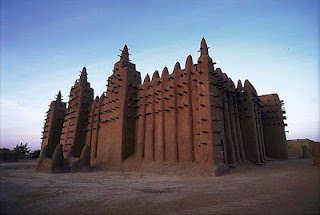
Timbuktu, a jewel of African culture and history, stands proud and tall in the desert sands of Mali.

While Timbuktu was once a metaphor for the middle of nowhere, it was an important city for the trans-Sahara trade from about 800 until 1591 when Moroccan troops destroyed the then Songhai Empire of Mali and Portugal and others developed a sea-going trade that largely replaced the trans-Sahara trade. (1). During the time that trade flourished, scholars and religious preachers were attracted to Timbuktu and Gao, the other trans-Sahara “port” and learning was highly developed.

The protection of Timbuktu’s cultural wealth may depend a good deal on the role of non-governmental organizations to facilitate negotiations between the MNLA the Ansar Dine and possible other armed groups. For the moment, the political situation in Mali is confused, and the protection of cultural sites in Timbuktu must not rank very high on the list of priorities.

From March 22 until April 6, 2012, a military group of young officers had taken control of government buildings in Bamako claiming that the government of President Amadou Touré was incompetent in the struggle against the Tuareg.  The coup was more or less led by Captain Amadou Sanogo, who had been trained by the United States (U. S.) Marine Corps, but Sanogo was probably acting on his own and not on behalf of the U. S. Marines.  The negative reaction to the coup was speedy.  Led by France, the former colonial power, the United Nations Security Council decided on April 4 to issue a President’s Statement (less strong than a resolution but on which all states must be in agreement) calling for a restoration of the civilian government.  It is not likely that the civilian-led government of President Touré will be restored.  Touré was himself a former general who had come to power in a coup, then governed in a fairly democratic way but without making many socio-economic advances.  The country now faces a food crisis due in part to drought and in part to the lack of improvements in the agricultural production and distribution system.

While the UN Security Council was meeting, the 15-member Economic Organization of West African States (ECOWAS) also met, calling for a return to a civilian government and closing the frontiers.  During the ECOWAS meeting, it was decided to activate the Anti-Terrorism Centre which is located at Tamanarasset in south Algeria and to place some 2000 soldiers on alert. Captain Amadou Sanogo saw the “handwriting on the wall” and agreed to turn over the government to the President of the National Assembly who is the constitutional replacement when the President is absent.

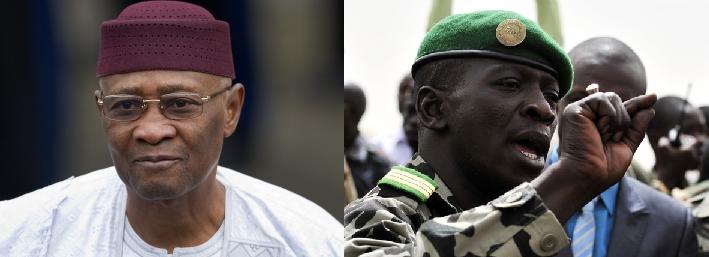
President Amadou Touré of Mali (left) and his rival, Captain Amadou Sanogo of the Mali military (right).

The states in the UN Security Council and in ECOWAS refused to recognize the creation of the Tuareg state of Azawad, so it is unlikely that they will provide any mediators to negotiate between MNLA and Ansar Dime or to facilitate the protection of historic sites. There is on the part of many governments a dislike of carving up existing countries in order to create new states. It took fighting from 1982 to 2005 for there to be an agreement to create the new state of South Sudan and for other African states to agree to the division.

The military in Bamako do not seem organized or willing to die to retake northern Mali, especially since most of the Mali military are from the Bambara ethnic group with little attachment to northern Mali in any case.

Much of the initiative for the protection of educational and cultural institutions has come from the NGO world and world-mined artists. Early efforts were undertaken by Nicholas Roerich (1874-1947) a Russian and world citizen.  Nicholas Roerich had lived through the First World War and the Russian Revolution and saw how armed conflict can destroy works of art and cultural institutions.  For Roerich, such institutions were irreplaceable and their destruction was a loss for all humanity.  Thus, he worked for the protection of works of art and institutions of culture in times of armed conflict. He envisaged a universally-accepted symbol that could be placed on educational institutions in the way that a red cross had become a widely-recognized symbol to protect medical institutions and medical workers.  Roerich proposed a “Banner of Peace” — three red circles representing the past, present, and future — that could be placed upon institutions and sites of culture and education to protect them in times of conflict.

Roerich mobilized artists and intellectuals in the 1920s for the establishment of this Banner of Peace.  Henry A. Wallace, the US Secretary of Agriculture and later Vice-President was an admirer of Roerich and helped to have an official treaty introducing the Banner of Peace — the Roerich Peace Pact — signed at the White House on April 15, 1935 by 21 States in a Pan-American Union ceremony. At the signing, Henry Wallace on behalf of the USA said “At no time has such an ideal been more needed. It is high time for the idealists who make the reality of tomorrow, to rally around such a symbol of beauty, science, education which runs across all national boundaries to strengthen all that we hold dear in our particular governments and customs. Its acceptance signifies the approach of a time when those who truly love their own nation will appreciate in addition the unique contribution of other nations and also do reverence to that common spiritual enterprise which draws together in one fellowship all artists, scientists, educators and truly religious of whatever faith.”

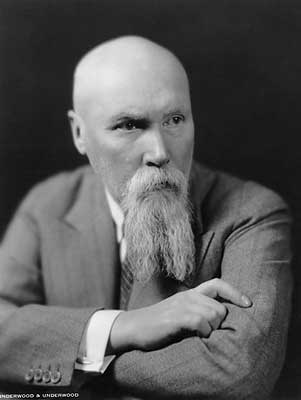
Nicolas Roerich (1874-1947), the man who opened the drive to make protection of works of art a full-fledged part of the law of armed conflict.

After the Second World War, UNESCO has continued the effort, and there have been additional conventions on the protection of cultural and educational bodies in times of conflict.  The most important is the 1954 Hague Convention for the Protection of Cultural Property in the Event of Armed Conflict. The spirit of the Hague Convention is clear and the protection of cultural and educational institutions should be a priority in conflicts among States or in civil wars even if no State recognizes Azawad.

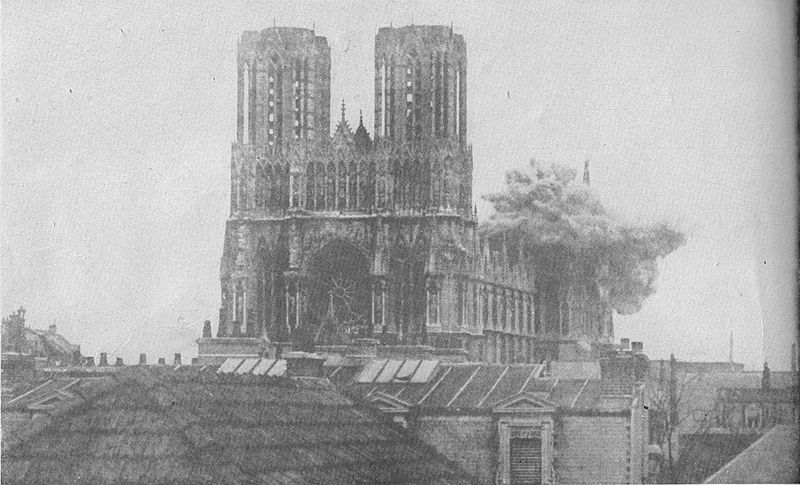
Therefore we, as World Citizens, all have a duty to articulate more clearly the crucial link among human rights standards, humanitarian law, and world law to protect educational and cultural institutions in times of conflict.  As Nicholas Roerich said in a presentation of his Pact “The world is striving toward peace in many ways, and everyone realizes in his heart that this constructive work is a true prophesy of the New Era.  We deplore the loss of libraries of Louvain and Oviedo and the irreplaceable beauty of the Cathedral of Rheims.  We remember the beautiful treasures of private collections which were lost during world calamities.  But we do not want to inscribe on these deeds any words of hatred. Let us simply say: Destroyed by human ignorance — rebuilt by human hope.

In 1914, a shell explosion at the Cathedral of Rheims in the early times of World War I.
Almost a century later, can the world possibly let Timbuktu become a "casualty of war" too?


René Wadlow is President and Chief Representative to the United Nations Office at Geneva of the Association of World Citizens.


(1)   See  Raymond Mauny Tableau géographique de l’Ouest africain au Moyen Age (Dakar, IFAN, 1961, 587 pp.)

In English : Horace Miner, The primitive city of Timbuctoo (Princeton: Princeton University Press, 1953, 297pp.)

March 8 – International Day of Women: Women as Peacemakers

In Conflict Resolution, Human Rights, The Search for Peace, United Nations, Women's Rights, World Law on March 7, 2012 at 10:37 PM

MARCH 8 – INTERNATIONAL DAY OF WOMEN:

WOMEN AS PEACEMAKERS

By René Wadlow


It is only when women start to organize in large numbers that we become a political force, and begin to move towards the possibility of a truly democratic society in which every human being can be brave, responsible, thinking and diligent in the struggle to live at once freely and unselfishly.


March 8 is the International Day of Women first proposed by Clara Zetkin (1857-1933) at the Second International Conference of Socialist Women in Copenhagen in 1911.  Zetkin, who had lived some years in Paris and active in women’s movements there was building on the 1889 International Congress for Feminine Works and Institutions held in Paris under the leadership of Ana de Walska. De Walska was part of the circle of young Russian and Polish intellectuals in Paris around Gerard Encausse, a spiritual writer who wrote under the pen name of Papus. For this turn-of-the-century spiritual milieu influenced by Indian and Chinese thought, ‘feminine’ and ‘masculine’ were related to the Chinese terms of Yin and Yang. Men and women alike have these psychological characteristics. ‘Feminine’ characteristics or values include intuitive, nurturing, caring, sensitive, relational traits, while ‘masculine’ are rational, dominant, assertive, analytical and hierarchical.

Clara Zetkin (1857-1933), a woman who changed the world.

As individual persons, men and women alike can achieve a state of wholeness, of balance between the Yin and Yang.  However, in practice ‘masculine’ refers to men and ‘feminine’ to women.  Thus, some feminists identify the male psyche as the prime cause of the subordination of women around the world.  Men are seen as having nearly a genetic coding that leads them to ‘seize’ power, to institutionalize that power through patriarchal societal structures and to buttress the power with masculine values and culture.

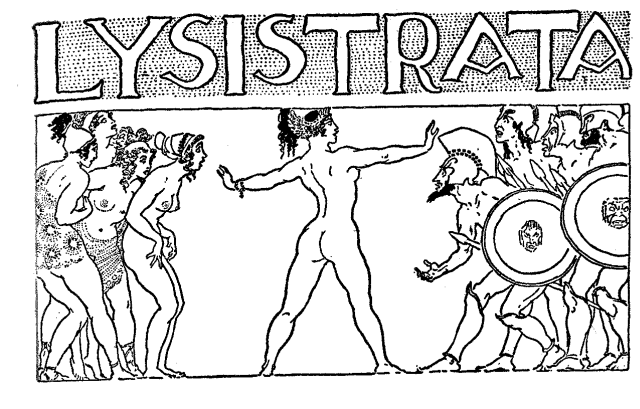
One of the best-known symbols of a woman as peacemaker is Lysistrata, immortalized by Aristophanes, who mobilized women on both sides of the Athenian-Spartan War for a sexual strike in order to force men to end hostilities and avert mutual annihilation.  In this, Lysistrata and her co-strikers were forerunners of the American humanistic psychologist Abraham Maslow who proposed a hierarchy of needs: water, food, shelter, and sexual relations being the foundation. (See Abraham Maslow The Farther Reaches of Human Nature) Maslow is important for conflict resolution work because he stresses dealing directly with identifiable needs in ways that are clearly understood by all parties and with which they are willing to deal at the same time.

Addressing each person’s underlying needs means you move toward solutions that acknowledge and value those needs rather than denying them.  To probe below the surface requires redirecting the energy towards asking ‘what are your real needs here? What interests need to be serviced in this situation?’ The answers to such questions significantly alter the agenda and provide a real point of entry into the negotiation process.

It is always difficult to find a point of entry into a conflict, that is, a subject on which people are willing to discuss because they sense the importance of the subject and all sides feel that ‘the time is ripe’ to deal with the issue.  The art of conflict resolution is highly dependent on the ability to get to the right depth of understanding and intervention into the conflict.  All conflicts have many layers.  If one starts off too deeply, one can get bogged down in philosophical discussions about the meaning of life. However, one can also get thrown off track by focusing on too superficial an issue on which there is relatively quick agreement.  When such relatively quick agreement is followed by blockage on more essential questions, there can be a feeling of betrayal.

Lysistrata's message to the "men at war" from Athens and Sparta was clear as could be: No peace, no sex!

Since Lysistrata, women, individually and in groups, have played a critical role in the struggle for justice and peace in all societies. However, when real negotiations begin, women are often relegated to the sidelines.  However a gender perspective on peace, disarmament, and conflict resolution entails a conscious and open process of examining how women and men participate in and are affected by conflict differently.  It requires ensuring that the perspectives, experiences and needs of both women and men are addressed and met in peace-building activities.  Today, conflicts reach everywhere.  How do these conflicts affect people in the society — women and men, girls and boys, the elderly and the young, the rich and poor, the urban and the rural?

I would stress three elements which seem to me to be the ‘gender’ contribution to conflict transformation efforts:

1) The first is in the domain of analysis, the contribution of the knowledge of gender relations as indicators of power. Uncovering gender differences in a given society will lead to an understanding of power relations in general in that society, and to the illumination of contradictions and injustices inherent in those relations.

2) The second contribution is to make us more fully aware of the role of women in specific conflict situations.  Women should not only be seen as victims of war: they are often significantly involved in taking initiatives to promote peace.  Some writers have stressed that there is an essential link between women, motherhood and non-violence, arguing that those engaged in mothering work have distinct motives for rejecting war which run in tandem with their ability to resolve conflicts non-violently. Others reject this position of a gender bias toward peace and stress rather that the same continuum of non-violence to violence is found among women as among men.  In practice, it is never all women or all men who are involved in peace-making efforts.  Sometimes, it is only a few, especially at the start of peace-making efforts.  The basic question is how best to use the talents, energies, and networks of both women and men for efforts at conflict resolution.

3) The third contribution of a gender approach with its emphasis on the social construction of roles is to draw our attention to a detailed analysis of the   socialization process in a given society.  Transforming gender relations requires an understanding of the socialization process of boys and girls, of the constraints and motivations which create gender relations. Thus, there is a need to look at patterns of socialization, potential incitements to violence in childhood training patterns, and socially-approved ways of dealing with violence.

Former Chilean President Michelle Bachelet, now the Executive Director of UN Women, addressing a meeting of the UN Security Council marking the 10th anniversary of landmark resolution 1325 on women, peace and security (October 26, 2010).

Awareness that there can be ‘blind spots’ in men’s visions is slowly dawning in high government circles.  The U.N. Security Council, at the strong urging of non-governmental organizations (NGOs), on October 31, 2000 issued Resolution 1325 which calls for full and equal participation of women in conflict prevention, peace processes, and peace-building, thus creating opportunities for women to become fully involved in governance and leadership.  This historic Security Council resolution 1325 provides a mandate to incorporate gender perspectives in all areas of peace support.  Its adoption is part of a process within the UN system through its World Conferences on Women in Mexico City (1975), in Copenhagen (1980), in Nairobi (1985), in Beijing (1995), and at a special session of the U.N. General Assembly to study progress five years after Beijing (2000).

There is growing recognition that it is important to have women in politics, in decision-making processes and in leadership positions. The strategies women have adapted to get to the negotiating table are testimony to their ingenuity, patience and determination. Solidarity and organization are crucial elements.   March 8: International Day of Women is a reminder of the steps taken and the distance yet to be covered.


René Wadlow is President and Chief Representative to the United Nations Office at Geneva of the Association of World Citizens.

Kunlabora Spirito kaj Ĝiaj Multaj Elmontriĝoj

In AWC Esperanto Division, Environmental protection, Human Development, Solidarity, The Search for Peace, United Nations, World Law on January 25, 2012 at 10:20 PM

KUNLABORA SPIRITO KAJ ĜIAJ MULTAJ ELMONTRIĜOJ

de René Wadlow

esperantigite de Bernard Henry


La Ĝenerala Asembleo de Unuiĝintaj Nacioj (UN), en ĝia Rezolucio A/RES/64/136, konsekris 2012 kiel Internacia Jaro por Kooperativoj, celante antaŭenmeti la larĝan rolon kiun kooperativoj ludas en ekologiema disvolvo kaj malapliigo de malriĉeco. Kiel diris UN-Ĝeneralsekretario Ban Ki-moon, “Kooperativoj estas rememorigilo al la internacia komunumo, ke eblas ja celi al kaj ekonomia kaj sociala respondeco”. La kooperativa movado ludas larĝan rolon en ambaŭ la produkado kaj la disdono de komercaĵoj kaj servoj tra la mondo. Kvankam malpli videblaj ol private posedataj, transnaciaj korporacioj (kiuj havas larĝajn reklambuĝetojn kaj tiel igas siajn komercaĵojn neĉirkaŭpaseblaj), kooperativoj estas grava parto de la monda ekonomio kaj meritas la atenton kiun la UN-jaro kapablas alporti (1).

Tamen, malantaŭ kooperativoj de produkado kaj disdono, loĝas unuavice “Kunlabora Spirito” kiu elmontriĝas laŭ multegaj manieroj, kiuj estas ĉiuj bazitaj sur kunlaboro sed ne ĉiuj nomiĝas “kooperativo”. Kunlabora Spirito substrekas renoviĝon, kunlaboron, mutualan helpon, kaj komunecon kiel “tagordo” je la surloka, nacia, kaj monda niveloj. Kunlaboro estas nepra neceso por la venontaj paŝoj en homa evoluo.

Kunlabora Spirito aperas en multaj formoj. Homoj tra la mondo pli kaj pli ekkonscias, ke ĉiuj el ni estas interligitaj kun aliaj personoj, per la aero kiujn ni spiras kaj akvosistemoj, la grundo kaj ĉiuj vivoformoj. Ju pli ni povas plipovigi unu la alian por ekflori sen noci al aliaj, des pli ni kreas mondan kunlaboran socion. Tial ĉiu ago de la individuo – aŭ neago – povas havi forserĉajn konsekvencojn ambaŭ por ĉiuj homoj en la mondo kaj por la naturmedio je kiu ni ĉiuj dependas.

Kunlabora Spirito evidentiĝas en la kreskaj zorgoj de Verda – ekologiema – Ekonomio. Eŭropo subtenas komercan kaj kunlaboran disvolvon de karbonmalpliigaj teknologioj kun miksaĵo de registara investado, impostosenpezoj, pruntedonoj kaj leĝoj. Ekzistas agnoskata neceso ŝirmi la naturmedion, investi en puran energion kaj krei daŭripovajn laborpostenojn, sed multo restas por fari en la tuta mondo.

Tra la mondo, ni ĉiuj estas enirantaj periodon de ŝanĝiĝo por kiu estas neniaj antaŭplanoj. Tial nepras ke ni scipovu kunan laboron. La formoj de kunlabora agado fontas el historiaj cirkonstancoj, surloka kulturo, kaj ekologiaj kondiĉoj. Tamen ekzistas komuna zorgo pri kunlabora uzo de naturvivrimedoj, komercaĵoj kaj servoj. Kunlabora agado loĝas en la koro de la ekonomia kaj politika alturno al mondnivela disvolvo de vivrimedoj kaj pli bona vivokvalito.

Ekzistas multaj formoj tradiciaj de kunlaboro, de mutuala helpo en periodoj de manko. 2012 devas utili kiel ŝanco alrigardi la multajn manierojn laŭ kiuj Kunlabora Spirito elmontriĝas en la mondo. Tial 2012 devas esti nia ĉefa interesocentro koncerne al la plifortigo de la konvinkoforto de Kunlabora Spirito.


(1)  Bv vidi la UN-retejon pri la Jaro: http://social.un.org/coopyear


Prof. René Wadlow estas Prezidanto kaj Ĉefreprezentanto ĉe UN en Ĝenevo de la Asocio de la Mondcivitanoj.

Bernard Henry estas la Oficisto pri Eksteraj Rilatoj de la Oficejo ĉe UN en Ĝenevo kaj la Ĝenerala Direktoro de la Esperanto-sekcio de la Asocio de la Mondcivitanoj.

The Cooperative Spirit and its Many Manifestations

In Human Development, Solidarity, The Search for Peace, United Nations, World Law on January 25, 2012 at 10:07 PM

THE COOPERATIVE SPIRIT AND ITS MANY MANIFESTATIONS

By René Wadlow


The United Nations (UN) General Assembly in Resolution A/RES/64/136 has designated 2012 as the International Year of Cooperatives in order to highlight the large role that cooperatives can play in ecologically-sound development and poverty reduction.  As Secretary-General Ban Ki-moon said “Cooperatives are a reminder to the international community that it is possible to pursue both economic viability and social responsibility.”  The cooperative movement plays a large role in both the production and the distribution of goods and services worldwide.  Although less visible than privately-owned trans-national corporations (which have large advertising budgets so their products become household names) cooperatives are an important part of the world economy and merit the attention that the UN Year may provide (1)

However, behind production and distribution cooperatives, there is first a “Cooperative Spirit”, and it manifests itself in a multitude of ways, all of which are based on cooperation but not all are called “cooperatives”. The Cooperative Spirit stresses renewal, cooperation, mutual help, and community as the ‘order of the day’ at the local, national, and world levels.  Cooperation is an absolute necessity for the next steps in human evolution.

The Cooperative Spirit takes many forms. People throughout the world are increasingly realizing that each of us is interconnected with every other person through the air we breathe and the systems of water, soils and life in all its forms.  The more we can empower one another to flourish without harming others, the more we create a cooperative world society. Therefore every action taken by an individual — or not taken — can have far-reaching consequences both for all the people of the world and upon the environment on which we all depend.

This Cooperative Spirit manifests itself in the growing concerns with a Green — ecologically-sound — Economy.  Europe has encouraged commercial and cooperative development of carbon-reducing technologies with a mix of government investment, tax facilities, loans and laws.  There is a recognized need to protect the environment, to invest in clean energy and to create lasting jobs, but much more needs to be done worldwide.

Throughout the world, we are all entering a period of change for which there is no blueprint.  Therefore it is essential that we learn to work together cooperatively.  Cooperative action takes its forms due to historical circumstances, local culture, and ecological conditions.  However, there is a common concern with the cooperative use of resources, goods and services.  Cooperative action is at the heart of an economic and political shift toward a worldwide development of livelihoods and greater quality of life.

There are many traditional forms of cooperation, of mutual help in times of need. 2012 should serve as an opportunity to look at the many ways in which the Cooperative Spirit manifests itself in the world. Thus 2012 can be our focus to strengthen the impact of the Cooperative Spirit.

(1)   See the UN website for the Year: http://social.un.org/coopyear


René Wadlow is President and Chief Representative to the United Nations, Geneva, of the Association of World Citizens.

World Citizens Call for Urgent Action to End Human Trafficking — a Modern-Day Slave Trade

In Human Rights, Women's Rights, World Law on January 11, 2012 at 9:05 PM

WORLD CITIZENS CALL FOR URGENT ACTION TO END HUMAN TRAFFICKING — A MODERN-DAY SLAVE TRADE

 By René Wadlow

January 11 was in some countries a “National Day of Awareness on Human Trafficking”. While ‘awareness’ is always a first step, it is action that is needed as was underlined by the Association of World Citizens in a message to the Chairman of the United Nations (UN) Human Rights Council. The recent increase in the scope, intensity and sophistication of trafficking of human beings around the world threatens the safety of citizens everywhere and hinders countries in their social, economic, and cultural development.

The smuggling of migrants and the trafficking of human beings for prostitution and slave labor have become two of the fastest growing worldwide problems of recent years.  From Himalayan villages to Eastern European cities — especially women and girls — are attracted by the prospects of a well-paid job as a domestic servant, waitress or factory worker. Traffickers recruit victims through fake advertisements, mail-order bride catalogues, casual acquaintances, and even family members.

However, trafficking in human beings is not confined to the “sex industry”.  Children are trafficked to work in sweatshops and men to work in the “three Ds jobs” — dirty, difficult, and dangerous.  The lack of economic, political and social structures providing women with equal job opportunities has also contributed to the feminization of poverty, which in turn has given rise to the feminization of migration, as women leave their homes to look for viable economic solutions. In addition, political instability, militarism, civil unrest, internal armed conflicts and natural catastrophes increase women’s vulnerability and can contribute to the development of trafficking.

Trafficking impacts the lives of millions of people — those trafficked and their family members — especially from poorer countries or the poor sections of countries.  Trafficking of persons has become a multi-billion dollar business and ranks right after the trade in drugs and guns. Trafficking is often an activity of organized crime.  In some cases, it is the same organization which deals in drugs, guns and people.  In other cases, there is a “division of labor”, but the groups are usually in contact.

Thus drugs, guns, illegal immigration — these form a nightmare vision of the dark side of globalization with untold human costs. Human trafficking affects women, men and children in their deepest being. It strikes at what is most precious in them: their dignity and their value as individuals.  Trafficked persons experience painful and traumatizing situations which can be with them for the rest of their lives. From recruitment to exploitation, they lose their identity and desperately struggle against a situation that reduces them to objects.

The Association of World Citizens stresses that the fight against human trafficking must be waged in a global and multidimensional way by the UN, regional intergovernmental organizations, by national governments and by non-governmental organizations so that countries of origin, transit and destination develop cooperative strategies and practical action against trade in human beings.  One of the foundations of cooperation is mutual trust. When mutual trust is established, cooperation becomes a natural way to act.

As trafficking in people is more often tolerated by the law enforcement agencies than drugs or guns, there has been a shift of criminal organizations toward trafficking in people.  116 governments have signed a UN-promoted 2000 Protocol to Prevent, Suppress and Punish Trafficking, Especially Women and Children which entered into force in December 2003. However, trafficking in persons is often not a priority for national governments.  Some countries which are important links in the trade of persons such as India, Pakistan, and Japan have not yet signed.

For many governments, trafficking is considered a question of illegal migration, and there is relatively little (in some cases no) consideration of the problems of the individual being trafficked.  Human concern for those caught in the web is a prime contribution of non-governmental organizations.  Concern for physical and mental health is crucial.  There is also an obvious need to deal with the issues which have created these pools of people from which traffickers can draw.  The large number of refugees from Iraq — over two million in Jordan and Syria — await better political and economic conditions in Iraq so they can return home.

Thus, one of the aspects of trafficking in which non-governmental organizations can play a crucial role is the psychological healing of the victims. Unfortunately, the victim’s psychological health is often ignored by governments.  Victims often suffer a strong psychological shock that disrupts their psychological integrity.  The result is a lack of self-esteem after having experienced such traumatizing events.

Within the Association of World Citizens we must not underestimate the difficulties and dangers which exist in the struggle against trafficking in persons nor the hard efforts which are needed for the psychological healing of victims.  However, as World Citizens, we have the opportunity of dealing with a crucial world issue.


René Wadlow is President and Chief Representative to the United Nations Office at Geneva of the Association of World Citizens.

Pour les avocats chinois, “Défense de défendre” …

In Asia, Democracy, Human Rights, World Law on August 14, 2011 at 3:23 PM

POUR LES AVOCATS CHINOIS, « DEFENSE DE DEFENDRE » …

Par Bernard Henry


« La première chose à faire, c’est de tuer tous les avocats ! »

C’est le conseil que donnait un sinistre personnage du nom de Dick le Boucher, dans la pièce de Shakespeare Henri VI[i] (en fait la seconde partie, supposément écrite en 1591), à un autre personnage de la pièce, Jack Cade, qui se rêvait en tyran d’Angleterre. Ayant réellement existé, Jack Cade fut en réalité le meneur d’une révolte populaire dans le Kent en 1450, alors que régnait en Angleterre le fameux roi dont le nom donne son titre à la pièce.

En tout cas, si le Jack Cade que nous dépeint le Barde reçoit ce sinistre conseil de Dick le Boucher, c’est que ce dernier entend lui indiquer la meilleure manière de tuer dans l’œuf toute tentative de contestation et, surtout, toute persistance d’idées subversives dans l’Angleterre sur laquelle Jack Cade régnerait en maître absolu. Dans certaines parties de l’Empire britannique tel qu’il a existé après la mort de Shakespeare, c’est un conseil que d’aucuns auraient peut-être aimé suivre, s’ils n’avaient pas eu tant à craindre de la réaction de leur propre peuple et, à coup sûr, d’un reste du monde indigné.

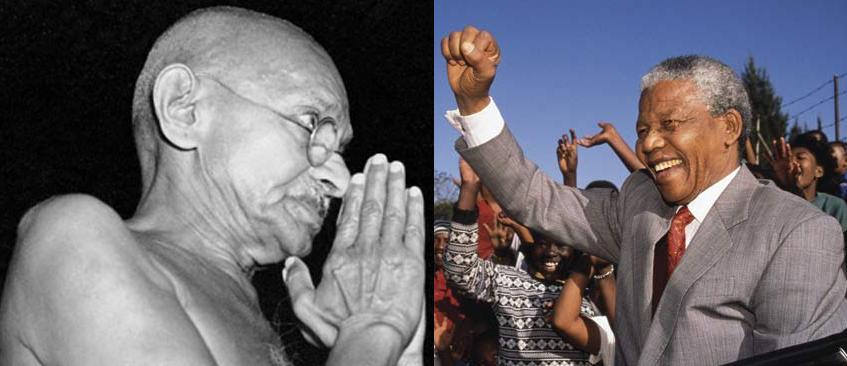
Dans l’Inde britannique des lendemains de la Seconde Guerre Mondiale, c’est ainsi un Mohandas Gandhi, avocat qui avait fait ses premières armes dans l’Afrique du Sud également britannique de l’époque, qui a conduit à la victoire le mouvement non-violent pour l’indépendance. En l’occurrence, sa mort fut le fait non des Britanniques mais d’un extrémiste hindou, qui jugeait le Mahatma, la « grande âme » en sanskrit, trop conciliant envers les Musulmans indiens qui, emmenés par Ali Jinnah, revendiquaient un Etat indépendant portant le nom de Pakistan.

Pour l’ « Union sud-africaine » britannique, lorsque les politiques d’apartheid, terme afrikaans signifiant « développement séparé », furent mises en place en 1948 sous le gouvernement du Premier Ministre Daniel Malan, l’indépendance en 1961 signifia également le départ du Commonwealth, où la politique raciste de Prétoria était réprouvée de manière unanime. Là encore, c’est un avocat qui devint le symbole international de la résistance. Il se nommait Nelson Rolihlahla Mandela.

Condamné le 12 juin 1964 à la prison à vie, Nelson Mandela fut libéré en février 1990 à l’initiative du Président Frederik Willem de Klerk. Après la légalisation de son parti, le Congrès national africain (African National Congress, ANC), il continua la lutte jusqu’à débarrasser définitivement l’Afrique du Sud de l’apartheid avec la disparition en 1992 des dernières lois de ségrégation. En 1993, Nelson Mandela et Frederik Willem de Klerk reçurent conjointement le Prix Nobel de la Paix, et le 10 mai 1994, lors des toutes premières élections démocratiques et multiraciales en Afrique du Sud, Mandela devint le premier Président noir du pays.

Si le conseil de Dick le Boucher avait été suivi par Lord Mountbatten lorsqu’il était vice-roi et gouverneur général des Indes, ou par Charles Robberts Swart, le premier Président de l’Afrique du Sud indépendante, l’histoire des deux pays, ainsi que celle du monde, en eût été bouleversée …
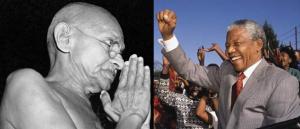
Mohandas Gandhi, le futur Mahatma, et Nelson Mandela, premier Président noir de l’Afrique du Sud. Deux avocats de profession qui se sont faits ceux de leurs peuples opprimés et qui, contre toute attente, les ont libérés.

C’est sans doute aussi l’avis des dirigeants de la République populaire de Chine, le plus grand pays au monde à conserver de nos jours une structure de gouvernement communiste, ayant dans le même temps adopté, à l’instar de ses « petits frères » cubain et vietnamien, l’économie capitaliste et le commerce avec les pays occidentaux, seule la Corée du Nord de Kim jong-il conservant un pur système stalinien digne des pires heures du vingtième siècle.

En faisant passer, de 1978 à 1989, son économie planifiée de type soviétique à un « socialisme de marché », Beijing a su éviter le piège dans lequel était tombée l’Union soviétique, son vieux rival à l’intérieur du monde communiste, en s’excluant durablement des grands contrats internationaux, même la perestroika mise en œuvre par Mikhaïl Gorbatchev à son accession au pouvoir en 1985 n’ayant pu enrayer le déclin du pays fondateur du « socialisme scientifique » et sa disparition pure et simple en 1991.

Ayant survécu en tant qu’Etat socialiste, fût-ce au prix de l’évolution de son système économique vers ce capitalisme qu’elle maudissait sous l’ère Mao, la Chine est ainsi devenue la deuxième puissance économique au monde, étant depuis 2001 membre de l’Organisation mondiale du Commerce. Pour autant, elle est loin d’être devenue le deuxième pays le plus libre du monde, le Parti communiste chinois gardant la haute main sur la société, fort de ses quatre-vingt millions de membres qui font de lui la plus grande organisation politique de toute la planète, et surtout, l’absence totale de droits liés au travail, garante des coûts de production ridiculement bas qui ont fait de la Chine la destination vedette de la délocalisation à partir des années 1990, allant de pair avec le mépris le plus complet des droits civils et politiques. Et comme l’on peut s’y attendre, les avocats chinois en savent quelque chose.

Après la victoire dans la guerre civile chinoise, à l’issue de vingt ans de combats, des communistes de Mao Zedong contre les nationalistes de Tchang Kaï-chek qui devaient ne garder, sous protection américaine, que l’île de Taiwan, la profession d’avocat fut l’une des victimes du raidissement du régime, échaudé par le soulèvement hongrois contre l’occupation soviétique en 1956. L’année suivante, le barreau fut purement et simplement supprimé, avant d’être reconstitué peu à peu dans les années qui suivirent, même si les avocats chinois durent attendre la fin de l’avènement du « socialisme de marché » pour retrouver un statut tant soit peu comparable à celui de leurs confrères du reste du monde, à travers une loi promulguée en 1989 par le Ministère de la Justice chinois en ce sens[ii].
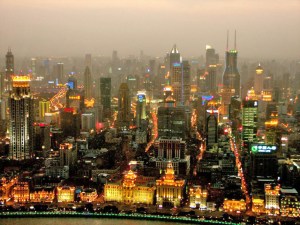
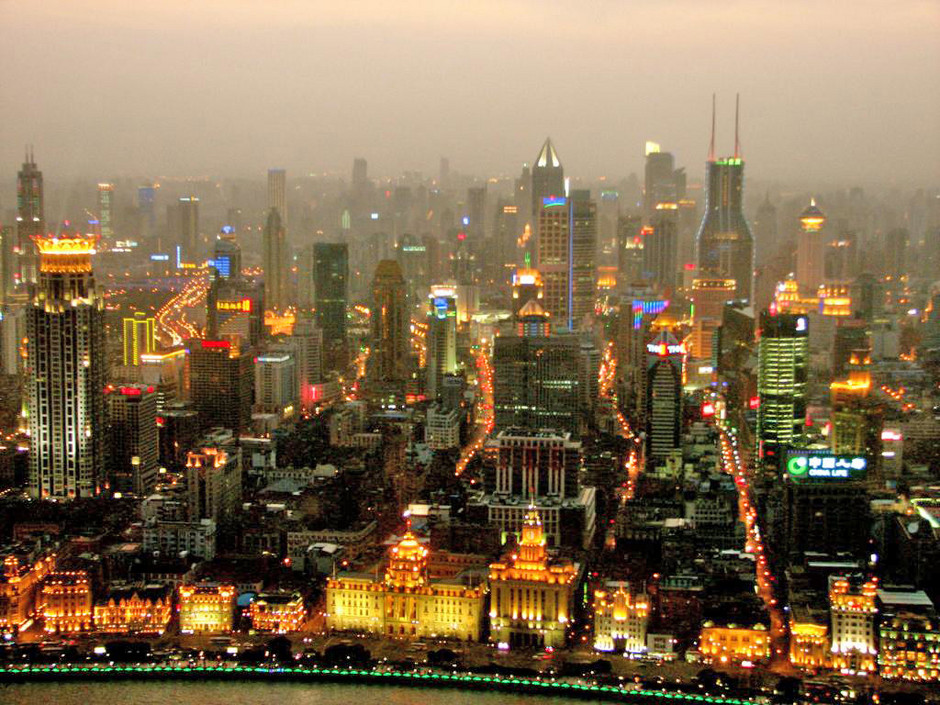
Shanghai, mégapole de plus de 23 millions d’habitants, symbole par excellence d’une Chine qui s’est ouverte au capitalisme occidental tout en conservant un système politique répressif hérité des dictatures communistes du vingtième siècle.

Aujourd’hui, un niveau d’études de droit supérieur à trois ans suffit pour être avocat en Chine. Un concours national unique a été institué en 2002, à l’issue duquel le candidat chanceux doit demander et obtenir du Ministère de la Justice, une première fois puis chaque année, une « licence d’exercice » de la profession d’avocat.

Mais attention. Quand on est avocat en Chine, l’on n’a pas seulement pour mission, aux termes de la loi, « la protection des intérêts légaux de ses clients, la protection de l’application de la loi et la protection de la justice et de l’équité sociales », aux termes mêmes d’un avocat chinois[iii]. L’on est aussi tenu, « à travers l’exercice de sa profession, de participer à la marche vers la réalisation de l’Etat de droit socialiste et de protéger la justice sociale ». Autrement dit, pour l’avocat qui entreprend de défendre une notion du droit autre que celle officielle voulue par l’Etat, gare …

Comme le rappelait Amnesty International le 30 juin dernier[iv], à l’instar du soulèvement de Budapest qui avait poussé Mao à « tuer tous les avocats » au pur plan administratif, le régime chinois d’aujourd’hui, craignant une « Révolution du Jasmin » à la manière de celle de janvier dernier en Tunisie, a bien fait comprendre à tous ceux qui contestent tant soit peu dans le pays, avocats compris, qu’il ne fallait pas y compter.

L’organisation précise ainsi, en ce qui concerne la « licence d’exercice » que tout avocat doit solliciter puis obtenir du Gouvernement chaque année, que celle-ci repose sur une « évaluation annuelle » sans véritable fondement juridique, laquelle est effectuée par les autorités locales, les avocats exerçant à titre individuel étant quant à eux « évalués » par des « associations d’avocats » se prétendant indépendantes et ayant en réalité bien peu à voir en la matière avec les barreaux des pays occidentaux. Sans surprise, les rares avocats, parmi les deux cent quatre mille que compte la Chine, qui osent prendre des affaires dites « sensibles », à savoir, défendre des Défenseurs des Droits de l’Homme (DDH) ou l’être eux-mêmes, échouent largement plus que la moyenne à cette « évaluation » et voient leur licence révoquée ou au mieux suspendue. Quand bien même un avocat passe outre et continue de défendre de tels dossiers, ce sont les autorités qui passent outre les normes internationales de Droits de l’Homme …  Et la loi chinoise proprement dite.
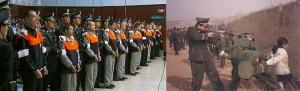
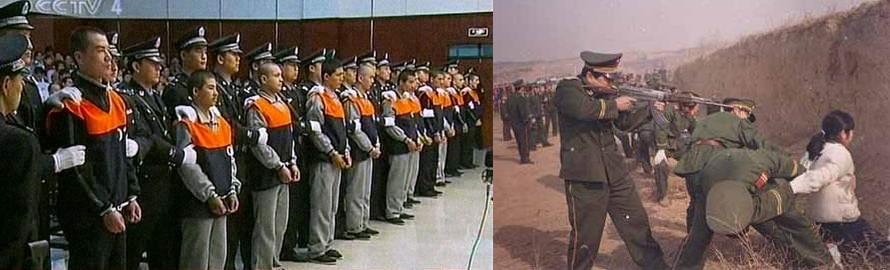
Toute l’horreur de la peine de mort en Chine, l’Etat qui exécute le plus au monde.

Avant même que l’onde de choc du départ de Zine el Abidine Ben Ali n’ait atteint Beijing, la Chine avait d’ores et déjà introduit, au cours des deux dernières années, des réglementations interdisant aux avocats d’accepter certains types de dossiers, de faire quelque commentaire que ce soit auprès des médias sur leurs dossiers en cours ou, plus impensable encore, de contester des irrégularités commises par les tribunaux. Même si de telles réglementations sont on ne peut plus contraires aux Principes de Base des Nations Unies relatifs au Rôle du Barreau, dont l’Article 18 dispose que « les avocats ne doivent pas être assimilés à leurs clients ou à la cause de leurs clients du fait de l’exercice de leurs fonctions », l’avocat chinois qui s’avise de préférer ce droit international insolent à l’ordre du « droit socialiste » est voué à le payer cher.

Pour les membres de groupes religieux non officiels, tels que le mouvement spirituel Falun Gong, ou encore les protestataires dans les régions autonomes bouddhiste du Tibet et musulmane du Xinjiang, il n’a jamais été aussi difficile d’être défendu en justice, de même que pour ceux qui se prennent à dire publiquement qu’ils trouvent insuffisante ou inadaptée la réaction des autorités aux récentes catastrophes naturelles ou aux questions liées à la sécurité alimentaire. Pour d’autres, déjà vulnérables de manière traditionnelle, la défense est devenue tout simplement un mot vide de tout sens. Ainsi des citoyens emprisonnés de manière arbitraire, voire soumis à la torture en détention, et de ceux qui, dans ce pays qui exécute à tour de bras, risquent la peine de mort, souvent sur la base d’aveux arrachés par la torture en amont.

Amnesty International cite ainsi les cas de cinq avocats DDH particulièrement visés.

Gao Zhisheng, qui défendait des membres de Falun Gong et traitait des dossiers de peine de mort, a « disparu » depuis plus d’un an. Auparavant, il avait déjà été détenu « au secret » et torturé plus d’une fois depuis 2006.

Tang Jingling, exerçant à Guangdong, province du sud frontalière de Hong Kong, a « disparu » quant à lui le 22 février dernier. Ses amis pensant qu’il se trouve dans un centre gouvernemental de formation à Panyu, l’un de ses confrères tenta de s’en assurer ; mais il fut menacé, passé à tabac et finalement contraint d’y renoncer. Tang Jingling défendait des travailleurs emprisonnés pour avoir protesté contre leurs conditions de travail déplorables, et en dépit du refus des autorités de lui renouveler sa licence, il prodiguait des conseils juridiques aux personnes vulnérables, en particulier aux travailleurs migrants.

Liu Shihui, avocat exerçant à Guangzhou, ville jadis connue sous le nom de Canton, également dans le Guangdong, et travaillant sur des dossiers de tortures et de décès en garde à vue, fut sévèrement battu le 20 février dernier alors qu’il se rendait à une manifestation de protestation inspirée par la Révolution du Jasmin en Tunisie. Le 25, il « disparut », puis il fut en fin de compte amené de force le 12 juin par les autorités à sa résidence située dans la Région autonome de Mongolie intérieure, où il demeure à ce jour assigné à résidence.

Tang Jitian est, depuis le 5 mars dernier, lui aussi assigné à résidence après avoir « disparu » le 16 février. En 2009, lui et d’autres avocats de Beijing avaient mis en cause publiquement la légalité de l’ « évaluation annuelle », et en mai 2010, après qu’il avait défendu un adepte de Falun Gong, sa licence lui avait été retirée de manière permanente.

Ni Yulan a été à plusieurs reprises arrêtée et torturée pour avoir défendu des résidents de Beijing expulsés de force de leurs maisons en vue des Jeux Olympiques de Beijing en 2008. Sa propre maison a été détruite et elle a été radiée du Barreau, elle qui déjà, en 2002, avait été torturée de manière si violente en détention qu’elle utilise désormais un fauteuil roulant.

Avant même la parution du rapport d’Amnesty, le Bureau de Représentation auprès de l’Office des Nations Unies à Genève de l’Association of World Citizens avait interpellé les autorités chinoises sur le cas d’un avocat DDH, en situation de handicap comme l’est Ni Yulan mais qui n’est pas pour autant, loin de là, privé de ses facultés d’homme de loi.

Non-voyant, Chen Guangcheng est un juriste autodidacte qui a appris le droit en braille. Persécuté de longue date par les autorités de Linyi, dans la province orientale du Shandong – pour la petite histoire, patrie de Confucius –, pour avoir défendu la cause des femmes que le Gouvernement force à avorter, que ce soit en vertu de la politique traditionnelle chinoise de l’enfant unique ou pour empêcher la naissance de filles au profit de bébés de sexe masculin, il avait été incarcéré quatre années durant avant d’être libéré le 9 septembre 2010. Mais c’était pour être placé, ainsi que sa famille, sous un strict régime d’assignation à résidence.

Une vidéo tournée clandestinement, quelques dix semaines après le début de son assignation à résidence, puis sortie de Chine et mise en ligne le 9 février dernier par l’organisation China Aid, basée aux Etats-Unis, montre Chen Guangcheng relatant en détail les mauvais traitements dont lui et sa famille sont victimes au quotidien. « Je suis sorti d’une petite prison, mais c’était pour entrer dans une encore plus grande », confie l’avocat, désormais cantonné à une maison qu’il décrit comme observée vingt-quatre heures sur vingt-quatre par trois équipes de vingt-deux personnes en tout, qui espionnent sa famille et empêchent quiconque de quitter les lieux. Seule la mère de Chen Guangcheng, qui est âgée, peut sortir pour aller faire les courses. Pas de ligne téléphonique fixe, et un brouilleur empêche tout appel entrant ou sortant sur téléphone portable. Que l’on ne tente pas pour autant d’aller voir Chen Guangcheng en personne, car sitôt que l’on entre dans le village où se trouve la maison qui lui sert désormais de geôle, l’on se voit sommé de rebrousser chemin, puis molesté si l’on s’obstine.

De même que Gao Zhisheng, Chen Guangcheng est un pilier du mouvement des « avocats aux pieds nus » qui entreprennent de défendre des victimes d’atteintes aux Droits de l’Homme en se référant à la loi chinoise même – le suprême affront à un système où un avocat est censé être, tout au contraire, un militant politique aux ordres du parti dirigeant. C’est dans ce même mouvement que s’inscrit Hu Jia, avocat converti au bouddhisme tibétain depuis les événements de Tienanmen en 1989, militant écologiste et de la lutte contre le SIDA depuis le début des années 1990 et lauréat en 2008 du Prix Sakharov pour les Droits de l’Homme décerné par le Parlement européen.

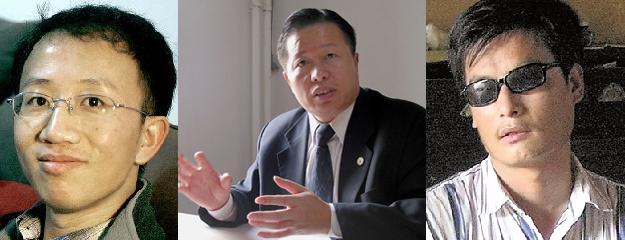
Hu Jia, Gao Zhisheng et Chen Guangcheng, les trois figures de proue du mouvement des “avocats aux pieds nus”. Bravant chaque jour la dictature, ils luttent pour que le mot “droit”, au singulier comme au pluriel, prenne en Chine tout son sens.

On n’en est pas si loin, du « tuer tous les avocats » que préconisait Dick le Boucher sous la plume de Shakespeare. De la part d’un Etat qui frappe ainsi ses avocats jusque dans leur chair, l’on pense toutefois moins, s’agissant d’une œuvre de Shakespeare, à Henri VI qu’à La Tempête, pièce dans laquelle Miranda, fille de Prospero, le duc de Milan, emploie l’expression « brave new world » dont Aldous Huxley fera au vingtième siècle le titre original anglais de son Meilleur des mondes. Dans l’« Etat mondial » que le roman d’Huxley a pour cadre, un Etat futuriste aseptisé et totalitaire, idolâtrant Henry Ford et la production industrielle, et où le bonheur quotidien se crée par la consommation d’un sorbet euphorisant, il n’y a pas de conflits, ni militaires ni juridiques, car tout simplement pas de libertés publiques au départ. Dès lors, quel besoin d’avocats ? C’est bien à cela que Hu Jintao et ses proches semblent aujourd’hui rêver pour leur pays, trop heureux qu’ils sont de voir les crises économiques successives dans les démocraties occidentales leur permettre de vanter leur modèle, car ayant racheté pour partie les dettes publiques des Etats concernés et s’offrant ainsi le luxe de faire la leçon y compris aux Etats-Unis, démocratie dépensière à bout de souffle mais qui, au moins, respecte un principe aussi fondamental pour l’état de droit que l’est l’indépendance des avocats, fondamentale à l’état de droit, et plus encore, à la démocratie.

Défendre un justiciable, c’est toujours remettre en question l’application d’une loi écrite, tout en s’appuyant soi-même, ce qui n’est pas la moindre des ironies, sur une autre loi écrite. Dans une « société démocratique » aux termes de la Déclaration universelle des Droits de l’Homme, le travail de l’avocat, par la création de la jurisprudence, nourrit le droit et l’enrichit, contribuant ainsi à son évolution dont il est indispensable qu’elle suive celle de la société. Avant que le Ministre de la Justice français Robert Badinter ne demande à l’Assemblée nationale « l’abolition de la peine de mort en France » le 17 septembre 1981, l’avocat Robert Badinter n’avait pas été sans plaider dans le procès de Claude Buffet et Roger Bontems, alors que ces deux hommes encouraient la peine de mort pour avoir effectué une prise d’otages dans une prison où ils étaient détenus. Et ils furent en effet exécutés en 1972.

En Chine, l’avocat, censé être un auxiliaire de justice, ne doit être pour les autorités qu’un auxiliaire politique et commercial, politique car il doit mettre en œuvre le « droit socialiste » voulu par Beijing, et commercial car les seuls clients honorables pour lui sont les hommes d’affaires, chinois et étrangers, qui assurent la réussite d’un système où politique et économie se contredisent en permanence.

L’avocate française Gisèle Halimi déclarait récemment : « Dans notre profession, on considère qu’il n’y a pas d’indéfendable ». Le Gouvernement chinois a pourtant instauré ce principe dans son droit interne. Tant qu’il laissera ces dispositions perdurer, aux yeux des avocats de Chine et du monde entier, il se rendra, ainsi que son système politico-économique schizophrène, indéfendable.


Bernard Henry est Officier de Presse du Bureau de Représentation auprès de l’Office des Nations Unies à Genève de l’Association of World Citizens.


[i] Acte IV, Scène 2.

[ii] « Etre avocat en Chine », Maître Mathieu Boyer, in Revue du commerce international.
[iii] « Le rôle de l’avocat chinois dans la pratique judiciaire », Maître Xia ShanSheng, Ambassade de France en Chine (http://www.ambafrance-cn.org/Le-role-de-l-avocat-dans-le-systeme-judiciaire-En-Chine.html).

The Horn of Africa: Refugees, Famine, Conflicts

In Africa, Conflict Resolution, Current Events, Solidarity, The Search for Peace, United Nations, World Law on July 31, 2011 at 11:24 PM

THE HORN OF AFRICA: REFUGEES, FAMINE, CONFLICTS

By René Wadlow


Only a crisis — actual or perceived — produces real change.  When the crisis occurs, the actions that are taken depend on the ideas that are lying around.  That, I believe, is our basic function: to develop alternatives to existing policies, and to keep them alive and available until the politically impossible becomes politically inevitable.

– Milton Friedman


Heavy fighting started again on July 28, 2011 in Mogadishu, the capital of what was once Somalia, in a battle between the African Union peacekeeping force (Amisom) and the Islamic insurgency al-Shahab. The fighting prevents aid from reaching the tens of thousands of refugees who have arrived in Mogadishu fleeing famine. The United Nations (UN) World Food Program says it cannot reach some two million people in need in areas controlled by al-Shahab which had expelled Western nongovernmental organizations (NGOs) who were providing relief.

The Horn of Africa, in particular Ethiopia, Somalia and Kenya, faces a deep crisis, a combination of refugee flows, famine in part linked to drought, and persistent conflicts.  There is a broad consensus in the UN system that radical measures are needed to deal with the Horn of Africa crisis and that these measures will have to be taken in a holistic way with actions going from the local level of the individual farmer to the national level with new government policies, to measures to be undertaken by the African Union and the UN system, in particular the Food and Agriculture Organization (FAO) in Rome.

Combatants with Somalia's al-Shabab Islamist militia.

Today, cooperation is needed among the UN family of agencies, national governments, NGOs, and the millions of food producers. There is a need for swift, short-term measures to help people now suffering from lack of food, inadequate distribution and situations of violence. Such short-term action requires additional funding for the UN World Food Program and the release of national food stocks. However, it is the longer-range and structural issues on which world citizens have focused their attention. The world requires a World Food Policy and a clear Plan of Action.

While constant improvements in technology, mechanization, plant breeding and farm chemicals have steadily increased food production per acre in much of the world, African food production per acre has stagnated, and in some areas has gone down. Likewise, the portion of development assistance in Africa dedicated to agriculture has declined from 15 per cent in the 1980s to 4 per cent in 2006.

As a July 11, 2011 UNCTAD study Economic Development in Africa stresses “One of the major challenges which African countries currently face is to generate productive jobs and livelihoods for the 7-10 million young people entering the labor force each year. This is difficult to achieve simply through commodity exports but rather requires a complementary process of agricultural productivity growth and development of non-agricultural employment opportunities in both industry and services.”

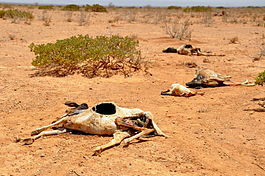
Carcasses of dead sheep and goats in the drought-stricken region of Waridaad, Somaliland.

Thus, the first need in Africa is to develop the local economies: currently, poverty, lack of adapted technology, population pressure on ecologically fragile areas, a growth of urban slums due to rapid rural to urban migration is the lot of many Sub-Saharan African countries.

Increased action to improve rural life needs to be taken quickly.  As the recent UN-sponsored Millennium Ecosystem Assessment warns “Human activity is putting such strains on the natural function of Earth that the ability of the planet’s ecosystem to sustain future generations can no longer be taken for granted. It is becoming ever more apparent that human society has a rapidly shrinking window of opportunity to alter its path.”

The Horn of Africa is an extreme case. The Horn possesses all the resources needed to make it one of Africa’s major economic centers, and yet there seems to be no halting the environmental decay and political insecurity it engenders. In fact, when one looks at the Horn’s problems, one must conclude that urgent and well-directed international action is needed to prevent a mega-disaster. Due to an often unenlightened management of the environment, its willful mismanagement to extract short-term economic gain, and confrontational rather than conciliatory policies, the squandering of the region’s resources has gathered speed.

A map of the ongoing famine in the Horn of Africa. The facts speak for themselves.

Environmental degradation is part of a cycle that upsets the traditional balance between people, their habitat and the socio-economic systems by which they live. Insecurity leads to strife; strife results in inter-clan feuding, civil war, cross-border raiding and military confrontation. Environmental degradation and insecurity continue to interact, swinging back and forth like a pendulum of destruction. A shrinking resource base breeds insecurity; insecurity spreads conflict, and conflict causes environmental destruction.

It is hard to know how to improve the situation. There is a long-term need for people to modify their living patterns to bring about a better quality of life, with increased security.  There is a need to break the cycle of chaos so that people can transform insecurity into confidence. Yet social change is slow, and the necessary limiting of the birth rate can take generations. Agricultural patterns also change slowly. There is no political leadership within the area, and there is no cooperation among the states of the Horn. The African Union’s conflict management structures do not function, and the UN has hoped that the African Union could take the lead in the area’s conflict resolution. This was a hope based on an unwillingness to get involved rather than a realistic evaluation of the situation.

The cycle of chaos is likely to speed up, and more refugees will be on the move.  However, as Milton Friedman noted only a crisis produces real change. Just as the “Arab Spring” brought a new generation of leadership into action — though not yet into power — the Horn of Africa might see a new generation of non-governmental leadership coming to the fore. The older political and clanic leadership has failed and is discredited. However, they have guns and plan to stay in control. Yet what is politically impossible today in the Horn may become politically inevitable.


René Wadlow is Senior Vice President and Chief Representative to the United Nations Office at Geneva of the Association of World Citizens.

See also Somalia: Signs of Danger (https://awcungeneva.wordpress.com/2011/05/17/somalia-signs-of-danger/)

Will the UN be a Fairy Godmother for the Birth of South Sudan?

In Africa, Current Events, United Nations, World Law on July 9, 2011 at 9:46 PM

WILL THE UN BE A FAIRY GODMOTHER FOR THE BIRTH OF SOUTH SUDAN?

By René Wadlow

On July 9, 2011, South Sudan became an independent State, six months after the January referendum in which the south Sudan population voted overwhelmingly for independence. However, Sudan is not really structured to be divided in two. There are no natural dividing lines, neither physical nor social. During much of the English colonial period, southern Sudan was administered from Uganda as road communications were easier than from Khartoum, the capital in the north of the country. In fact, ‘administered’ is too strong a term. South Sudan had no real crops for export or minerals to mine, and so there was very little administration. In place of any government development activities, the Colonial Office encouraged Christian missionaries, mostly Church of England and Roman Catholic to set up schools and clinics. Thus south Sudan was ‘Christianized’ in that the educated had gone to church schools and been treated in Christian clinics. However, most people continued also to practice traditional rituals as these were considered as part of tribal life and not as the rituals of a particular religion. Thus when considering Sudan, the often-used terms of ‘Muslim’, ‘Christian’, and ‘Animist’ cover a more complex reality.

In December 2010, no less than 98.83% of South Sudanese voters chose independence at the polls.

Complexity is a term which is true for all Sudanese life — political, economic, and geographic. The failure to deal creatively with complexity has led to fighting for nearly all of its history as an independent State since 1956. On the eve of Independence, with the makeup of a new national army being the spark which set the fire, civil war broke out, basically on a North-South basis. There have been two phases to the Sudan Civil War. The first phase (1954-1972) had ended with negotiations facilitated by the All-African Conference of Churches with back up help from the World Council of Churches in Geneva.

The 1972-1982 decade was one of relative peace, but it was not used to heal the divisions or to work out forms of government, administration, and legal systems that would be acceptable to all segments of Sudanese society. International attention on Sudan had diminished once the 1972 peace agreement was signed. The warning signals that all was not well were ignored internationally. Thus in 1982, southern soldiers who had been integrated into the national army revolted, and the second phase of the civil war continued from 1983 until the end of 2004.

As a North-South peace agreement was nearly set, groups in Darfur, western Sudan, who had not been part of the North-South conflict decided that violence was the only way to get attention and to get a ‘piece of the pie’ of the natural resources, especially the oil revenue. They hoped for a short war after which they would be invited to participate in the North-South negotiations. In practice, the Darfur conflict has not been short — starting in 2003 and continuing still today, and the Darfur factions have not been invited to the North-South negotiations.

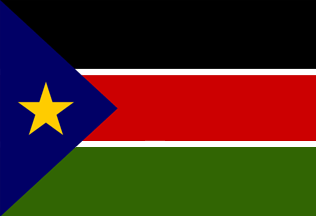
The flag of the Republic of South Sudan, originally the flag of the Sudanese People's Army/Movement (SPLAM).

Darfur (the home of the Fur) was always marginal to the politics of modern Sudan. In the 19th century, Darfur, about the size of France, was an independent Sultanate loosely related to the Ottoman Empire. It was on a major trade route from West Africa to Egypt and so populations from what is now northern Nigeria, Niger, Mali and Chad joined the older ethnic groups of the area: the Fur, Masalit, Zaghawa and the Birgit. Nomads from Libya also moved south into Darfur. As the population density was low, a style of life with mutual interaction between pastoral herdsmen and settled agriculturalists with some livestock developed. Increasingly, however, there was ever-greater competition for water and forage made scarce by environmental degradation and the spread of the desert.

France and England left Darfur as a buffer zone between the French colonial holdings — what is now Chad — and the Anglo-Egyptian controlled Sudan. French-English rivalry in West Africa had nearly led earlier to a war — the Fashoda crisis of 1898. Thus a desert buffer was of more use than its low agricultural and livestock production would provide to either European colonial power. It was only in 1916 during the First World War when French-English colonial rivalry in Africa paled in front of the common German enemy that the English annexed Darfur to the Sudan without asking anyone in Darfur or the Sudan if such a ‘marriage’ was desirable.

Darfur continued its existence as an environmentally fragile area of Sudan. It was marginal in economics but largely self-sufficient. Once Sudan was granted its independence in 1956, Darfur became politically as well as economically marginal. Darfur’s people have received less education, less health care, less development assistance and fewer government posts than any other region.

The seal of the government of the new sovereign nation.

In 2000, Darfur’s political leadership had met and wrote the Black Book which detailed the region’s systematic under-representation in national government since independence. However, at the level of the central government, the Black Book led to no steps to increase the political and economic position of Darfur. This lack of reaction convinced some in Darfur that only violent action would bring recognition and compromise as the war with the South had done.

An armed insurgency began in 2003 led by the more secular but tribal Sudan Liberation Army (SLA) and the Islamist-leaning Justice and Equality Movement (JEM). Since then, there have been splits in the JEM and the SLA largely along tribal lines. These splits make negotiations with the government of Sudan all the more difficult. The interests of many people in Darfur are not represented by either the government or the insurgencies, but it is nearly impossible for other voices to be heard.

In Darfur, there is a joint African Union-UN peacekeeping mission (UNAMID), but there is no peace to keep. Although the peacekeeping force has a mission to protect populations, it is unable to do so. As Mohammed Otham noted in his UN report (A/HRC/14/41) “In Darfur, notwithstanding the general improvement in the security situation, banditry, criminal activities and intermittent military activities by the parties to the conflict have continued. In some areas, aerial bombardment and troop mobilization by the Sudanese Armed Forces have been reported. In the context of this ongoing violence, United Nations and humanitarian personnel face significant risks to their lives. A significant number of UNAMID and humanitarian staff were deliberately attacked; some were abducted and held in captivity for long periods.” The level of suffering in Darfur — people killed and displaced, the agricultural infrastructure destroyed — has been very high. The reconciliation and reconstruction of Darfur will be difficult. We must be on the lookout for possibilities to help.

This is what the new country will look like in political and administrative terms. The AWC wishes South Sudan well and looks forward to working with its government toward the protection and promotion of world law.

The UN has had Special Representatives in Darfur responsible for facilitating negotiations, but they have made little progress. Darfur will continue as part of North Sudan and should be a priority of concern.

As there are no sharp natural or cultural dividing lines between North and South Sudan, there will be non-Muslim populations left in the North and Muslim populations in the South. We must hope that there will not be the massive transfer of populations as at the independence of India and Pakistan. There are possibilities of continued conflict in the northern non-Muslim areas such as the Blue Nile and Southern Kordofan provinces. There is also a mixed population on the frontier between North and South in Abyei. It is less the fact that the population is mixed than that the area is oil-rich that has attracted international attention. The UN Security Council in resolution 1990 of 29 June 2011 decided to establish the UN Interim Security Force for Abyei (UNISFA).

Thus, the United Nations is present as the Fairy Godmother at the birth of South Sudan. As in the folk tales, the Fairy Godmother has some presents for the newly born as well as certain conditions and demands. The UN brings few material goods, and peacekeeping forces have been largely unable to bring peace. However, the UN has brought the present of world attention, a willingness to help and high international standards to meet. We will have to watch closely as the newborn grows.

René Wadlow is Senior Vice President and Chief Representative to the United Nations Office at Geneva of the Association of World Citizens.