The Official Blog of the

Archive for the ‘Solidarity’ Category

International Day of Migrants: Need for a UN-led World Conference on Migration and Refugee Flows

In Being a World Citizen, Conflict Resolution, Current Events, Europe, Fighting Racism, Human Rights, Solidarity, The Search for Peace, United Nations, World Law on December 18, 2015 at 9:52 AM

INTERNATIONAL DAY OF MIGRANTS: NEED FOR A UN-LED WORLD CONFERENCE ON MIGRATION AND REFUGEE FLOWS

By René Wadlow

I am a migrant.jpg

December 18 was set by the United Nations (UN) General Assembly to call attention to the role of migrants in the world society. The date was chosen to mark the creation of the UN-negotiated International Convention on the Rights of All Migrant Workers and Members of their Families. The aim of the Convention was to insure that migrants and their families would continue to be covered by the human rights standards set out in the Universal Declaration of Human Rights, the Covenants, and other human rights treaties. In practice, migrants are often “between two chairs” − no longer of concern to the State they have left and not yet covered by the human rights laws of the State to which they have gone.

Ratifications of the Convention have been slow with a good number of governments making reservations that generally weaken the impact of the Convention. In 2004, a commission of independent experts was set up to study the reports to the UN of governments on the application of the Convention − a commission that is part of the Human Rights Treaty Body System. Reports from each government party to the Convention are to be filed once every four years. However, the discussions within the Migration Treaty Body and its subsequent report attract the attention of only a small number of people. However, the discussion deals with the report of only one government at a time while migration is always a multi-State issue and can have worldwide implications.

Moreover, many States consider that earlier International Labor Organization conventions deal adequately with migrant rights and see no need to sign a new convention.

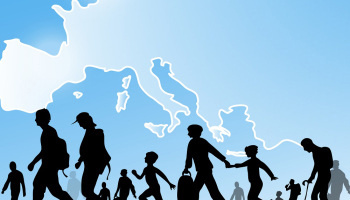
Citizens of the world have stressed that the global aspects of migration flows have an impact on all countries. The changing nature of the world’s economies modify migration patterns, and there is a need to plan for migration as the result of possible environmental-climate changes.

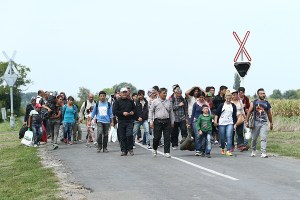
The refugees.jpeg

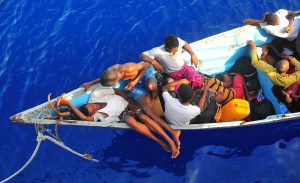
The current flow of migrants and refugees to Europe has become a high profile political issue. Many migrants come from areas caught up in armed conflict: Syria, Iraq, Yemen, Afghanistan, Somalia. The leaders of the European Union (EU) have been divided and unsure in their responses. Local solidarity networks that offer food, shelter, and medical care are overwhelmed. Political debates over how to deal with the refugees have become heated, usually with more heat than light. The immediacy of the refugee exodus requires our attention, our compassion, and our sense of organization.

EU officials have met frequently to discuss how to deal with the migrant-refugee flow, but a common policy has so far been impossible to establish. At a popular level, there have been expressions of fear of migrants, of possible terrorists among them, and a rejection of their cultures. These popular currents, often increased by right-wing political parties make decisions all the more difficult to take. An exaggerated sense of threat fuels anti-immigration sentiments and creases a climate of intolerance and xenophobia.

Je suis un migrant.jpg

Therefore, the Association of World Citizens, which is in consultative status with the UN, is calling for a UN-led world conference on migration and refugee issues, following earlier UN world conferences on the environment, food, housing, women, population, youth, human rights and other world issues. The pattern of such UN-led world conferences usually follows a common pattern: encouragement of research and data collection by UN agencies, national governments, nongovernmental organizations (NGOs), and academic institutions. Then regional meetings are held to study the regional dimensions of the issue. The regional conferences are followed by the world conference of government representatives with the participation of NGO delegates of organizations which hold consultative status. Usually there is also a parallel NGO conference with a wider range of NGOs present, especially those active at the local or national level. From such a world conference a plan of action is set to influence action by UN agencies, national governments, and NGOs.

Only a UN-led conference with adequate research and prior discussions can meet the challenges of worldwide migration and continuing refugee flows. There is a need to look at both short-term emergency humanitarian measures and at longer-range migration patterns, especially at potential climate modification impact. A UN-led world conference on migration can highlight possible trends and especially start to build networks of cooperation to meet this world challenge.

Prof. René Wadlow is President and a representative to the United Nations Office at Geneva of the Association of World Citizens.

Crossing Cultural and Linguistic Boundaries: International Volunteer Day

In Being a World Citizen, Current Events, Environmental protection, Human Development, Solidarity, The Search for Peace, United Nations, World Law on December 5, 2015 at 5:45 PM

CROSSING CULTURAL AND LINGUISTIC BOUNDARIES: INTERNATIONAL VOLUNTEER DAY
By René Wadlow

Founded on the values of solidarity and mutual trust, volunteerism transcends all cultural, linguistic and geographic boundaries. By giving their time and skills without expectations of material reward, volunteers themselves are uplifted by a singular sense of purpose.
-Ban Ki-moon, Secretary-General of the United Nations.

Volunteer Day 1.jpg

December 5 was selected as the International Volunteer Day by a 1985 UN General Assembly resolution. This year, December 5 comes as government representatives and volunteers of nongovernmental organizations (NGOs) are meeting in Paris to develop a new international climate agreement, COP 21. The NGO representatives are fewer in number than originally planned due to the November 13 shootings in Paris and thus tightened security conditions. However, those that are present are doubly active as world media attention is focused on the conference and its outcome.

In practice, as with all major UN conferences, negotiations among governments have been going on for two years with a good deal of input from NGO representatives. At the Paris stage, there is a preliminary “Final Document and Action Plan” of some 30 pages with a good number of square brackets around words or sentences on which there is no agreement. Negotiations concern making the document shorter so that the main ideas will stand out better and to remove square brackets. If a suitable word is not found, often the whole sentence will be dropped.

Both government representatives and NGOs are discussing post-Paris action and coalition building. There is also a concerted effort to bring the business community, especially transnational corporations into the action. While the UN system has a structure of consultative status for NGOs through the Economic and Social Council, the world of business is largely not represented. Only the International Labor Organization with its headquarters in Geneva has a three-party membership: governments, trade unions and business associations from each of the member States. The business world is not really a “voluntary association” in the sense of NGOs. Material reward is an important element in business.

Volunteer Day 2.jpg

COP 21 is a prime example of the need for cooperative action at the local, national and world level. As has been often said, the climate does not recognize national frontiers. The relations among ecologically-sound development, security, conflict resolution and respect for human rights have now assumed a more dynamic form than at any other time since the creation of the United Nations in 1945. To meet these strong challenges, NGOs, academic institutions, business and professional associations and the media must work together cooperatively. International Volunteer Day can serve as a time of reflection on capacity building and improved networking.

Prof. René Wadlow is President and a representative to the United Nations Office at Geneva of the Association of World Citizens.

Women as Peacemakers: An October 31 Anniversary

In Being a World Citizen, Conflict Resolution, Human Development, Human Rights, Solidarity, United Nations, World Law on October 31, 2015 at 12:22 PM

WOMEN AS PEACEMAKERS: AN OCTOBER 31 ANNIVERSARY

By René Wadlow

“Seeing with eyes that are gender aware, women tend to make connections between the oppression that is the ostensible cause of conflict (ethnic or national oppression) in the light of another crosscutting one: that of gender regime. Feminist work tends to represent war as a continuum of violence from the bedroom to the battlefield, traversing our bodies and our sense of self. We glimpse this more readily because as women we have seen that ‘the home’ itself is not the haven it is cracked up to be. Why, if it is a refuge, do so many women have to escape it to ‘refuges’? And we recognize, with Virginia Woolf, that ‘the public and private worlds are inseparably connected: that the tyrannies and servilities of one are the tyrannies and servilities of the other.

Cynthia Cockburn, Negotiating Gender and National Identities.


October 31 is the anniversary of the United Nations (UN) Security Council Resolution 1325 which calls for full and equal participation of women in conflict prevention, peace processes, and peace-building, thus creating opportunities for women to become fully involved in governance and leadership. This historic Security Council Resolution 1325 of October 31, 2000 provides a mandate to incorporate gender perspectives in all areas of peace support. Its adoption is part of a process within the UN system through its World Conferences on Women in Mexico City (1975), in Copenhagen (1980), in Nairobi (1985), in Beijing (1995), and at a special session of the U.N. General Assembly to study progress five years after Beijing (2000).

Since 2000, there have been no radical changes as a result of Resolution 1325, but the goal has been articulated and accepted. Now women must learn to take hold of and generate political power if they are to gain an equal role in peace-making. They must be willing to try new avenues and new approaches as symbolized by the actions of Lysistrata.

Lysistrata, immortalized by Aristophanes, mobilized women on both sides of the Athenian-Spartan War for a sexual strike in order to force men to end hostilities and avert mutual annihilation. In this, Lysistrata and her co-strikers were forerunners of the American humanistic psychologist Abraham Maslow who proposed a hierarchy of needs: water, food, shelter, and sexual relations being the foundation. (See Abraham Maslow, The Farther Reaches of Human Nature) Maslow is important for conflict resolution work because he stresses dealing directly with identifiable needs in ways that are clearly understood by all parties and with which they are willing to deal at the same time.

Addressing each person’s underlying needs means you move toward solutions that acknowledge and value those needs rather than denying them. To probe below the surface requires redirecting the energy towards asking ‘what are your real needs here? What interests need to be serviced in this situation?’ The answers to such questions significantly alter the agenda and provide a real point of entry into the negotiation process.

It is always difficult to find a point of entry into a conflict, that is, a subject on which people are willing to discuss because they sense the importance of the subject and all sides feel that ‘the time is ripe’ to deal with the issue. The art of conflict resolution is highly dependent on the ability to get to the right depth of understanding and intervention into the conflict. All conflicts have many layers. If one starts off too deeply, one can get bogged down in philosophical discussions about the meaning of life.

However, one can also get thrown off track by focusing on too superficial an issue on which there is relatively quick agreement. When such relatively quick agreement is followed by blockage on more essential questions, there can be a feeling of betrayal.

Since Lysistrata, women, individually and in groups, have played a critical role in the struggle for justice and peace in all societies. However, when real negotiations begin, women are often relegated to the sidelines. However, a gender perspective on peace, disarmament, and conflict resolution entails a conscious and open process of examining how women and men participate in and are affected by conflict differently. It requires ensuring that the perspectives, experiences and needs of both women and men are addressed and met in peace-building activities. Today, conflicts reach everywhere. How do these conflicts affect people in the society — women and men, girls and boys, the elderly and the young, the rich and poor, the urban and the rural?

In the 1990s a young French singer, Olivier Villa, son of the famous French comic impersonator and TV show host Patrick Sébastien, released a first single entitled “Debout les Femmes” (Stand Up Women) in which, along the lines of Aristophanes’ Lysistrata, he called on women worldwide to deny any sexual intercourse until men have renounced war and violence for good.

“Only you, mothers, only you, women, can stop war.

Close your hearts until all men have laid down their weapons.”

There has been a growing awareness that women and children are not just victims of violent conflict and wars −’collateral damage’ − but they are chosen targets. Conflicts such as those in Rwanda and the former Yugoslavia have served to bring the issue of rape and other sexual atrocities as deliberate tools of war to the forefront of international attention. Such violations must be properly documented, the perpetrators brought to justice, and victims provided with criminal and civil redress.

I would stress three elements which seem to me to be the ‘gender’ contribution to conflict transformation efforts:

  1. The first is in the domain of analysis, the contribution of the knowledge of gender relations as indicators of power. Uncovering gender differences in a given society will lead to an understanding of power relations in general in that society, and to the illumination of contradictions and injustices inherent in those relations.
  2. The second contribution is to make us more fully aware of the role of women in specific conflict situations. Women should not only be seen as victims of war: they are often significantly involved in taking initiatives to promote peace. Some writers have stressed that there is an essential link between women, motherhood and non-violence, arguing that those engaged in mothering work have distinct motives for rejecting war which run in tandem with their ability to resolve conflicts non-violently. Others reject this position of a gender bias toward peace and stress rather that the same continuum of non-violence to violence is found among women as among men. In practice, it is never all women nor all men who are involved in peace-making efforts. Sometimes, it is only a few, especially at the start of peace-making efforts. The basic question is how best to use the talents, energies, and networks of both women and men for efforts at conflict resolution.
  3. The third contribution of a gender approach with its emphasis on the social construction of roles is to draw our attention to a detailed analysis of the socialization process in a given society. Transforming gender relations requires an understanding of the socialization process of boys and girls, of the constraints and motivations which create gender relations. Thus, there is a need to look at patterns of socialization, potential incitements to violence in childhood training patterns, and socially-approved ways of dealing with violence.

There is growing recognition that it is important to have women in politics, in decision-making processes and in leadership positions. The strategies women have adapted to get to the negotiating table are testimony to their ingenuity, patience and determination. Solidarity and organization are crucial elements. The path may yet be long but the direction is set.

Prof. René Wadlow is President of the Association of World Citizens.
World Food Day: A Renewal of Collective Action

In Being a World Citizen, Foundations for the New Humanism, Human Development, Human Rights, International Justice, Social Rights, Solidarity, The Search for Peace, Uncategorized, United Nations, World Law on October 16, 2015 at 8:30 AM

WORLD FOOD DAY: A RENEWAL OF COLLECTIVE ACTION

By René Wadlow


[…] determined to promote the common welfare by furthering separate and collective action for the purpose of raising levels of nutrition and standards of living […]” 

-Preamble of the Food and Agriculture Organization Constitution.


October 16 is the UN-designated World Food Day, the date chosen being the anniversary of the creation of the FAO in 1945 with the aim, as stated in its Constitution of “contributing towards an expanding world economy and ensuring humanity’s freedom from hunger.” Freedom from hunger is not simply a technical matter to be solved with better seeds, fertilizers, cultivation practices and marketing. To achieve freedom from hunger for mankind, there is a need to eliminate poverty. The elimination of poverty must draw upon the ideas, skills and energies of whole societies and requires the cooperation of all countries. 

World Citizens have played an important role in efforts to improve agricultural production worldwide and especially to better the conditions of life of rural workers. Lord Boyd-Orr was the first director of the FAO; Josue de Castro was the independent President of the FAO Council in the 1950s when the FAO had an independent Council President. (The independent presidents have now been replaced by a national diplomat, rotating each year. Governments are never happy with independent experts who are often too independent.) The World Citizen, René Dumont, an agricultural specialist, is largely the “father” of political ecology in France, having been the first Green Party candidate for the French Presidency in 1974.

As Lester Brown, the American agricultural specialist says “We are cutting trees faster than they can be regenerated, overgrazing rangelands and converting them into deserts, overpumping aquifers, and draining rivers dry. On our croplands, soil erosion exceeds new soil formation, slowly depriving the soil of its inherent fertility. We are taking fish from the ocean faster than they can reproduce.”

To counter these trends, we need awareness and vision, an ethical standard which has the preservation of nature at its heart, and the political leadership to bring about the socio-economic changes needed. For the moment, awareness and vision are unequally spread. In some countries, ecological awareness has led to beneficial changes and innovative technologies. In others, the governmental and social structures are disintegrating due to disease, population pressure upon limited resources, and a lack of social leadership. Worldwide, military spending, led by the USA, dwarfs spending on ecologically-sound development and the necessary expansion of education and health services.

World Food Day

Some 795 million people in the world do not have enough food to lead a healthy active life. That’s about one in nine people on earth. (World Food Program)

As Lester Brown has written “The sector of the economy that seems likely to unravel first is food. Eroding soils, deteriorating rangelands, collapsing fisheries, falling water tables, and rising temperatures are converging to make it more difficult to expand food production fast enough to keep up with demand…food is fast becoming a national security issue as growth in the world harvest slows and falling water tables and rising temperatures hint at future shortages.”

Yet there are agricultural techniques which can raise protein efficiency, raise land productivity, improve livestock use and produce second harvests on the same land. However, unless we quickly reverse the damaging trends that we have set in motion, we will see vast numbers of environmental refugees — people abandoning depleted aquifers and exhausted soils and those fleeing advancing deserts and rising seas.

David Seckler of the International Water Management Institute writes “Many of the most populous countries of the world — China, India, Pakistan, Mexico, and nearly all the countries of the Middle East and North Africa — have literally been having a free ride over the past two or three decades by depleting their groundwater resources. The penalty of mismanagement of this valuable resource is now coming due, and it is no exaggeration to say that the results could be catastrophic for these countries, and given their importance, for the world as a whole.” Unfortunately, the International Water Management Institute does not manage the world’s use of water but can only study water use. While there are some planners who would like to be able to tax or make people pay for water, most water use is uncontrolled. Payment for water is a way that governments or private companies have to get more revenue, but the welfare of farmers is usually not a very high priority for them.

Yet as Citizens of the World have stressed, ecologically-sound development cannot be the result only of a plan, but rather of millions of individual actions to protect soil, conserve water, plant trees, use locally grown crops, reduce meat from our diets, protect biological diversity in forest areas, cut down the use of cars by increasing public transportation and living closer to one’s work. We need to stabilize and then reduce world population and to encourage better distribution of the world’s population through planned migration and the creation of secondary cities to reduce the current growth of megacities. We need to encourage wise use of rural areas by diversifying employment in rural areas. We also need to develop ecological awareness through education so that these millions of wise individual decisions can be taken.

In 1989 The Christians sang, “When will there be a harvest for the world?” Well … We wish we knew.

Lester Brown underlines the necessary link between knowledge and action. “Environmentally responsible behaviour also depends to a great extent on a capacity to understand basic scientific issues, such as the greenhouse effect or the ecological role of forests. Lacking this, it is harder to grasp the link between fossil fuel burning and climate change or between tree cutting and the incidence of flooding or the loss of biological diversity…The deteriorating relationship between the global economy and the earth’s ecosystem requires an all-out effort to bring literacy to all adults in order to break the poverty cycle and stabilize population.”

Education and vision require leadership, and it is ecologically-sound political leadership that is badly lacking today. Thus Citizens of the World and all of good will are called upon to provide wise leadership to work for a redirection of financial resources to protect the planet, and to encourage ecologically-sound individual and collective action. 

Prof. René Wadlow is President of the Association of World Citizens.
Syria: ISIS Iconoclasts Leave a Bloody Trail of Destruction

In Cultural Bridges, Current Events, International Justice, Middle East & North Africa, Religious Freedom, Solidarity, The Search for Peace, United Nations, War Crimes, World Law on August 25, 2015 at 11:31 AM

SYRIA: ISIS ICONOCLASTS LEAVE A BLOODY TRAIL OF DESTRUCTION

By René Wadlow

On August 18, 2015 Dr Khaled al-Assad, retired director of the Palmyra museum and an officer of the Directorate General of Antiquities and Museums, had his neck cut and his body hung from a traffic light pole. The 83 year-old archaeologist had been held in seclusion (and probably tortured) for three weeks. In the public square of Palmyra an accusation was read out that he was “the director of pagan idols”. Khaled al-Assad had been born in Palmyra and had spent most of his career there, writing numerous articles as well as directing archaeological sites. He had few rivals in his knowledge of the ancient crossroad city of Palmyra, an important link on the trade routes between Asia, North Africa, and Europe.

The public killing of Khaled al-Assad renewed concern for the historic sites. It was widely believed that many of the sites had had explosives placed in them to provoke their destruction. Sites in Palmyra had already been damaged during the fighting in the spring as the soldiers of the Islamic State in Iraq and Syria (ISIS or Daesh in Arabic) took control of the city and the surrounding area. Then on August 23, some of the explosives were set off, damaging the important Temple of Baal, one of the most visited sites in Palmyra. Baal – the Lord of the Heavens – was represented by an eagle. He was also a storm god shown holding a lightning bolt in his hand.

From a distance, it is hard to know what elements within ISIS are responsible for the destruction and what are the motivations. ISIS has attracted fighters from a good number of countries, and it is impossible to know the chains of command or the motivations. Many Syrians are proud of the vestiges of pre−Islamic civilizations, proof that the area was an important actor and in some ways a rival of Rome. The Directorate General of Antiquities has some 2,500 employees with a record of preserving Syria’s cultural heritage. In addition, some Syrian citizens, risking their lives, have tried to defend heritage sites or to hide away cultural objects. Moreover, ISIS agents as well as persons belonging to other armed factions have been looting objects to sell outside the country, either for personal gain or to finance their political faction, rather than destroying them.

When ISIS/Daesh took Palmyra last May, many people feared they might blow up the ancient city at once. They didn't, but now the vestiges of the ancient civilization there were soon turned into a stage for ISIS/Daesh to use toward propaganda purposes.

When ISIS/Daesh took Palmyra last May, many people feared they might blow up the ancient city at once. They didn’t, but now the vestiges of the ancient civilization most inappropriately serve as a stage for ISIS/Daesh to use toward propaganda purposes.

Thus, it is not clear who wants to destroy works of art and cultural heritage. Are there sincere iconoclasts for whom any object that recalls pre-Islamic worship is an insult to the Islamic faith? Are there people who just want to destroy and will blow up most anything? Are there people who believe that public killings and destruction of heritage will facilitate military expansion and control of the population? Is there any possibility of rational discussion and good-faith negotiations with ISIS authorities to preserve cultural sites in Syria and Iraq?

Conserving a cultural heritage even in times of peace is always difficult. Weak institutional capabilities, lack of appropriate resources and isolation of many culturally essential sites are compounded by a lack of awareness of the value of cultural heritage conservation. On the other hand, the dynamism of local initiatives and community solidarity are impressive assets. These forces should be enlisted, enlarged and empowered to preserve and protect a heritage.

ISIS/Daesh members enthusiastically destroying a historical ancient site. They may bring down every reminder of the past they come by, but try as they might, they cannot change history.

Are there ways that those of us on the “outside” can reach those in Syria and Iraq who wish to preserve cultural heritage and to defend the lives of those who work to preserve protect and inform?

My belief is that the current military action against ISIS, either with ground troops or bombing from the air, will have little positive impact. Armed force may lead some of the ISIS forces to a “burned earth” policy, destroying as much as they can before retreating. I think that there needs to be initiatives taken by those currently living under ISIS rule but who do not share ISIS values. They need to take actions to show ISIS leaders that their policies are an error and will lead to greater divisions within the population.

There is always a certain irony for someone in a safe area to encourage others to take actions which can put their lives in danger. Therefore, the least that we can do is to have a loud outcry from cultural workers throughout the world so that those in Syria and Iraq who will act positively know that they are not alone.


Prof. René Wadlow is President and Chief Representative to the United Nations Office at Geneva of the Association of World Citizens.
The Continuing Humanitarian Crisis and Violations of Human Rights in ISIS-held Areas in Iraq and Syria

In Current Events, Human Rights, International Justice, Middle East & North Africa, Solidarity, The Search for Peace, United Nations, War Crimes, World Law on August 25, 2015 at 9:00 AM

THE CONTINUING HUMANITARIAN CRISIS AND VIOLATIONS OF HUMAN RIGHTS IN ISIS-HELD AREAS IN IRAQ AND SYRIA

By René Wadlow

In an August 25, 2014 statement, the United Nations (UN) High Commissioner for Human Rights condemned the “appalling, widespread, and systematic violations of human rights” by the Islamic State in Iraq and Syria (ISIS). The violations mentioned included targeted killings, forced conversions, abductions, trafficking of women, slavery, sexual abuse, destruction of religious and cultural sites of significance and the besieging of entire communities because of ethnic, religious and sectarian affiliation.

Among those directly targeted have been the religious communities of Christians, Yezidi (also written Yazidi) and Sabeans (also called Sabean-Mandaeans). In addition to the violation of human rights, the High Commissioner cited other UN reports stressing the humanitarian crisis and the severe shortages of food, water and the lack of medical services.

This sign, here painted in red on a wall with a circle around it, is the letter N in Arabic. When the IS started seizing predominantly Christian-inhabited areas of Iraq by force, its militiamen immediately painted this on houses they knew or thought were owned by Christians, N being for “Nasrani” which is itself the Arabic for “Christian”. A long echo of the Nazis’ practices in pre-World War II Germany, when Hitler’s own militiamen would paint a Star of David on the front door of each Jewish-owned business. That was just before the “Final Solution” which claimed over 6 million lives.

This sign, here painted in red on a wall with a circle around it, is the letter N in Arabic.
When ISIS started seizing predominantly Christian-inhabited areas of Iraq by force, its militiamen immediately painted this on houses they knew or thought were owned by Christians, N being for “Nasrani” which is itself the Arabic for “Christian”.
A long echo of the Nazis’ practices in pre-World War II Germany, when Hitler’s own militiamen would paint a Star of David on the front door of each Jewish-owned business. That was just before the “Final Solution” which claimed over 6 million lives.

One year later, the situation remains much the same, but with an increased number of people uprooted as internally displaced persons and refugees. The political situation has grown more complex, with Turkey playing an increasing if unclear role. Efforts at mediation by the UN of the Syrian aspects of the conflict have not given visible results. Russian diplomats have been meeting with some Syrian factions as well as with the Syrian government, but there seem to be no advances toward broader negotiations. The political and military actions of ISIS have effectively linked Iraq and Syria so that each conflict is linked to the other. A global approach for conflict resolution is needed.

The conflict has increased religious sectarian attitudes. It is hard for an outsider to know to what extent religious differences are deeply felt or if religion is used as a “cover” for ethnic, tribal, and economic interests. It is certain that ISIS has tried to give a religious coloring to its policies, with forced conversions and destruction of non-Islamic communities which refused conversion. Therefore, there needs to be an emphasis on freedom of religion or belief as set out by the United Nations.

An image grab taken from a propaganda video released on November 16, 2014 by al-Furqan Media allegedly shows members of the Islamic State jihadist group preparing the simultaneous beheadings of at least 15 men described as Syrian military personnel. In the highly choreographed sequence, jihadists march the prisoners by a wooden box of long military knives, each taking one as they pass, before forcing their victims to kneel in a line and decapitating them. (C) AFP PHOTO

An image grab taken from a propaganda video released on November 16, 2014 by al-Furqan Media allegedly shows members of the Islamic State jihadist group preparing the simultaneous beheadings of at least 15 men described as Syrian military personnel. In the highly choreographed sequence, jihadists march the prisoners by a wooden box of long military knives, each taking one as they pass, before forcing their victims to kneel in a line and decapitating them. (C) AFP PHOTO

One of the major UN declarations confirming a deep sense of inherent dignity is the Declaration on the Elimination of All Forms of Intolerance and of Discrimination Based on Religion or Belief, adopted by the General Assembly on November 25, 1981 after a number of years of study and discussion in which the Association of World Citizens (AWC) took an active part. The Declaration states “that it is essential to promote understanding, tolerance and respect in matters relating to freedom of religion and belief and to ensure that the use of religion or belief for ends inconsistent with the Charter, other relevant instruments of the United Nations and the purposes and principles of the present Declaration is inadmissible.”

Article One states clearly that “No one shall be subject to coercion which would impair his freedom to have a religion or belief of his choice.”

World law as developed by the UN applies not only to the governments of Member States but also to individuals and non-governmental organizations. The ISIS has not been recognized as a State and is not a member of the UN. Nevertheless, the AWC is convinced that the terms of the Declaration on the Elimination of All Forms of Intolerance and Discrimination Based on Religion or Belief applies to the ISIS and that the actions of the ISIS are, in the terms of the Declaration, “inadmissible”.

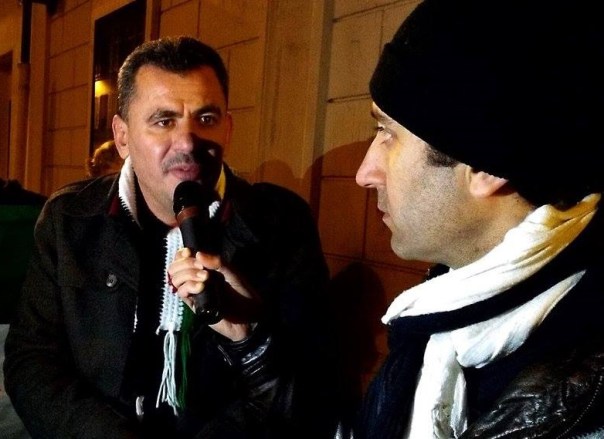
Syrian demonstrators in Paris, France, vowing for "a democratic future" in Syria "without [Syrian President] Bashar [al-Assad] and without Daesh [ISIS]". (C) AWC/Bernard J. Henry

Syrian demonstrators in Paris, France, vowing for “a democratic future” in Syria “without [Syrian President] Bashar [al-Assad] and without Daesh [ISIS]”. (C) AWC/Bernard J. Henry

Life in the emerging world society requires world law and certain common values among all the States and peoples of the world.  The challenges which face us all require inclusive ethical values based on a sense of responsibility for both present and future generations.  Such values are, I am sure, in the heart of many individuals who are now living in areas under the control of ISIS in Iraq and Syria. We must find ways to reach such people with the message that the policies of the ISIS leaders are deliberate violations of world law and ethical standards.  The majority of the world society is not hostile to the people living under ISIS rule and we look forward to the time when human rights standards will be the law of the land. In the meantime, they need to work as best they can for a tolerant and open society.

Prof. René Wadlow is President and Chief Representative to the United Nations, Geneva, of the Association of World Citizens.
July 4, 2015: World Citizen Declaration of Inter-Dependence

In Being a World Citizen, Foundations for the New Humanism, Human Development, Solidarity, The Search for Peace, World Law on July 4, 2015 at 8:20 PM

JULY 4, 2015: WORLD CITIZEN DECLARATION OF INTER-DEPENDENCE

By René Wadlow

In 1776, progress for humanity required the first act of decolonization as leaders in the English colonies of North America consciously broke the bonds with the colonial English government. In 1776, the Declaration of Independence was a positive act to affirm human dignity in opposition to an English government dominated by a small aristocratic class and a King who represented these narrow economic and class interests.

In 2015, as Citizens of the World, we affirm the unity of humanity, the impossibility of cutting bonds with others.  Thus we re-affirm the inter-dependence of humanity.

Today, world progress moves from affirming U. S. citizenship as separate from England in 1776 to affirming world citizenship in 2015.

Next stop: Inter-dependence!

A milestone in world history. Next stop: Inter-dependence!

Prof. René Wadlow is President of the Association of World Citizens.
Le 20 juin, Journée Mondiale des Réfugiés

In Being a World Citizen, Current Events, Human Rights, International Justice, Solidarity on June 19, 2015 at 10:07 PM

LE 20 JUIN, JOURNEE MONDIALE DES REFUGIES

Par René Wadlow

Dans un rapport en date du 18 juin 2015 du Haut Commissariat des Nations Unies pour les Réfugiés (HCNUR), il est écrit qu’il existe aujourd’hui dans le monde quelques soixante millions de personnes déplacées par la guerre, la violence et la persécution. Un réfugié est forcé de le devenir, il ne l’est pas à la naissance. Ce sont les régimes politiques répressifs et les conflits qui fabriquent des réfugiés.

Le rapport de l’HCNUR cite la Syrie, l’Afghanistan et la Somalie comme des situations de première importance, ainsi que les réfugiés du Myanmar. Cependant que les événements qui déclenchent des fuites massives de réfugiés sont spécifiques à chaque contexte particulier où ils se produisent, certaines caractéristiques communes à tous n’en demeurent pas moins apparentes. La cause la plus immédiate de la fuite des réfugiés est dans la majorité des cas une menace imminente sur leur vie, leur liberté et leur sécurité. L’expulsion délibérée d’un groupe ethnique peut également être en soi l’objet du conflit qui les amène à fuir.

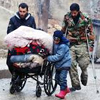
Des déplacés syriens marchent dans le camp d'Atme, le long de la frontière turque dans la province d'Idib, au nord-ouest de la Syrie, le 19 mars 2013. (C) BULENT KILIC/AFP/Getty Images

Des déplacés syriens marchant dans le camp d’Atme, le long de la frontière turque dans la province d’Idib, au nord-ouest de la Syrie, le 19 mars 2013. (C) BULENT KILIC/AFP/Getty Images

Le nombre ahurissant des personnes déplacées de chez elles représente un défi majeur pour la société mondiale émergente. Les Nations Unies et leurs Etats membres ne sont pas en mesure de faire face de manière appropriée à ce flux sans cesse croissant et se tournent donc de plus en plus vers les organisations non-gouvernementales en demandant leur implication pleine et entière.

En tant que Citoyens du Monde, nous savons que nous devons travailler sur les causes premières des déplacements forcés, ainsi que sur l’intégration des réfugiés dans les sociétés qui les accueillent. Personne ne peut faire comme s’il s’agissait là d’une tâche facile. Celle-ci appelle la bonne volonté et l’engagement sur tous les plans de toutes et tous.

Le Professeur René Wadlow est Président et Représentant en Chef auprès de l’Office des Nations Unies à Genève de l’Association of World Citizens.

June 20: World Refugee Day

In Being a World Citizen, Current Events, Human Rights, International Justice, Solidarity on June 19, 2015 at 9:51 PM

JUNE 20: WORLD REFUGEE DAY

By René Wadlow

In a June 18, 2015 report of the office of the United Nations High Commissioner for Refugees (UNHCR), it is stated that there are some 60 million people who have been displaced by war, violence, and persecution.  Refugees are made, not born. They are made by repressive political regimes and conflicts.

The UNHCR report cites Syria, Afghanistan and Somalia as crucial situations as well as the refugees from Myanmar.  While the events that trigger refugee outflows are specific to each particular setting, certain common characteristics are apparent.  The immediate cause of flight is in most cases an imminent threat to life, liberty and security.  The deliberate expulsion of an ethnic group may be the object of the conflict itself.

Syrian internally displaced people walk in the Atme camp, along the Turkish border in the northwestern Syrian province of Idlib, on March 19, 2013. The conflict in Syria between rebel forces and pro-government troops has killed at least 70,000 people, and forced more than one million Syrians to seek refuge abroad. (C) BULENT KILIC/AFP/Getty Images

Syrian internally displaced people walk in the Atme camp, along the Turkish border in the northwestern Syrian province of Idlib, on March 19, 2013. (C) BULENT KILIC/AFP/Getty Images

The staggering number of people displaced from their homes represents a major challenge to the emerging world society. The United Nations and its member governments are not able to deal adequately with this ever-increasing flow and so are turning more and more to non-governmental organizations to participate fully.

As citizens of the world, we know that we must work on the root causes of displacement as well as the integration of refugees into their new society.  No-one can pretend that these efforts are easy.  They require the good will and the comprehensive engagement of us all.

Prof. René Wadlow is President and Chief Representative to the United Nations Office at Geneva of the Association of World Citizens.
UN Fact-finding Report: The Yazidis of Iraq

In Children's Rights, Conflict Resolution, Current Events, Democracy, Human Rights, International Justice, Middle East & North Africa, Religious Freedom, Solidarity on March 21, 2015 at 9:17 PM

UN FACT-FINDING REPORT: THE YAZIDIS OF IRAQ

By René Wadlow

On Thursday, March 19, 2015, the United Nations (UN) investigative team on human rights violations in Iraq led by Ms. Suki Nagra raised accusations of genocide and war crimes against the Islamic State (ISIS) citing evidence that ISIS sought to “destroy the Yazidi as a group” − the definition of genocide in the 1948 Genocide Convention which has become a core element of World Law. The fact-finding group of members of the Secretariat of the Office of the UN High Commissioner for Human Rights had been established by a Special Session of the Human Rights Council in September 2014. (See article ‘World Law Advanced by UN Special Session of the Human Rights Council on Human Rights Violations in Iraq’)

The report to the current session of the Human Rights Council included testimony from Yazidi men who had survived massacres by shielding themselves behind the bodies of men who had already been killed. “It was quite clear that attacks against them were not just spontaneous or happened out of the blue; they were clearly orchestrated. Witnesses consistently reported that orders were coming through, by telephone in many cases, about what to do with them. There was a clear chain of command”.  Ms. Nagra reported to the Human Rights Council. (On the Yazidis as a religious community, see the article ‘Iraq: Yazidis’ Genocide?’)

The report also detailed evidence that Yazidi women and girls were abducted and sold into slavery as spoils of war in violation of some of the oldest standards of world law against slavery developed by the League of Nations and continued by the UN. There were also repeated cases of rape. The use of rape as a weapon of war has become of increasing concern to both the UN human rights bodies and to NGOs.

As the Association of World Citizens’ (AWC) written Statement to the Iraq Special Session stressed, “The Association of World Citizens believes that world law as developed by the United Nations applies not only to the governments of Member States but also to individuals and non-governmental organizations. The ISIS has not been recognized as a State and is not a member of the UN. Nevertheless, the Association of World Citizens is convinced that the terms of the Declaration on the Elimination of All Forms of Intolerance and Discrimination Based on Religion or Belief adopted by the General Assembly on 25 November 1981 applies to the ISIS.”

Citizens of the World stress the need for world law and certain common values among all the States and peoples of the world. We are one humanity with a shared destiny. The challenge before us requires inclusive ethical values. Such values must be based on a sense of common responsibility for both present and future generations.

Prof. René Wadlow is President and Chief Representative to the United Nations Office at Geneva of the Association of World Citizens.