The Official Blog of the

Archive for the ‘Human Development’ Category

Attack on Gaza: Letter to the President of the UN Security Council

In Anticolonialism, Conflict Resolution, Cultural Bridges, Current Events, Human Development, Human Rights, International Justice, Middle East & North Africa, Solidarity, The Search for Peace, United Nations, War Crimes, World Law on July 15, 2014 at 7:24 PM

-- AWC-UN Geneva Logo --

ASSOCIATION OF WORLD CITIZENS

THE EXTERNAL RELATIONS DESK


July 14, 2014


H. E. Mr. Eugène-Richard Gasana

Ambassador, Permanent Representative

of the Republic of Rwanda

to the United Nations

President of the United Nations Security Council


Excellency:

The Association of World Citizens (AWC), a Nongovernmental Organization in Consultative Status with the United Nations Economic and Social Council (ECOSOC), has been concerned with the status of Gaza as well as the broader Israel-Palestine context.

The current manifestations of violence are part of a recurrent cycle of violence and counter-violence with which You are familiar.

The AWC believes that there must be a sharp break in this pattern of violence by creating institutions of security, development, and cooperation. Such a break requires more than the ceasefire proposed by the Security Council. The Association believes that longer-lasting measures must be undertaken that will allow new patterns of understanding and cooperation to be established.

In an earlier United Nations (UN) discussion of Gaza tensions, the AWC had proposed in a written statement to the Human Rights Council, “Human Rights in Gaza: Need for a Special Focus and Specific Policy Recommendations” (A/HRC/S-12/NGO-1, October 14, 2009; see attached copy) that a Gaza Development Authority be created – a transnational economic effort that would bring together the skills, knowledge and finance from Gaza, Israel, the Palestinian Authority on the West Bank, and Egypt to create conditions which would facilitate the entry of other partners.

Our proposal was obviously inspired by the Tennessee Valley Authority (TVA) of the “New Deal” in the USA. The TVA was a path-making measure to overcome the deep economic depression of the 1930s in the USA and the difficulties of cooperative action across state frontiers in the federal structure of the USA.

Today, the deep divisions in the Israel-Palestine area require more than economic measures – although economy and raising the standards of living remain important elements. Today, there should be a structure that provides security as well as economic advancement.

Therefore, the AWC would like to propose the creation of an International Temporary Transition Administration for Gaza that would promote security, stabilization, economic development, and institution building. Such a Transitional Administration would be limited in time from the start, perhaps five years.

Unlike the earlier UN Trusteeship agreements which followed upon the League of Nations mandate pattern, the Gaza Transitional Authority would welcome civil society cooperation from outside the area.

Such a Transitional Administration cannot be imposed. We believe that the Members of the Security Council can raise the possibility publicly, request a UN Secretariat study on what such a Transitional Administration would require, and encourage’ discussion among those most directly involved.

As Jean Monnet, one of the fathers of the European Common Market, had said, “Men take great decisions only when crisis stares them in the face.” We believe that the current violence is such a time of crisis. Our hope is that the Members of the Security Council are prepared to take great decisions.

Please accept, Excellency, the assurance of our highest consideration.


Prof. René Wadlow

President


Bernard Henry

External Relations Officer


World Citizens Highlight 2013 as the International Year of Water Cooperation

In Environmental protection, Human Development, Solidarity, United Nations, World Law on January 6, 2013 at 11:32 PM

WORLD CITIZENS HIGHLIGHT 2013 AS THE INTERNATIONAL YEAR OF WATER COOPERATION

By René Wadlow


The United Nations (UN) General Assembly by Resolution A/RES/65/154 has declared 2013 as the UN International Year of Water Cooperation with UNESCO as the lead agency for the Year. The objective of this International Year is to raise awareness both on the potential for increased cooperation and on the challenges facing water management in the light of the increase in demand for water access, allocation and services. The Year should build on the momentum created at the UN Conference on Sustainable Development (Rio plus 20) in which the Association of World Citizens played an active role.

The Association of World Citizens (AWC) has in the past stressed the important role of trans-boundary lake and river basins, including reservoirs of fresh water that move silently below the borders in underground aquifers. While there is much trans-frontier cooperation among States to which we can justly point as “Best Practices”, there are also trans-frontier tensions related to access to fresh water.

There are conflicts at the national level concerning the use of water in urban areas and water for irrigation within rural areas. The main causes of urban water conflicts are characterized by complex socio-economic and institutional issues related to urban water management. The debates about public water services versus private water suppliers are frequently associated with conflicts over water price and affordability. Likewise, the issue of centralization verses decentralization of water utilities is also discussed in the framework of institutional aspects of urban water management. A critical and interdisciplinary examination of the socio-economic and institutional aspects of national water management is important and one in which both government and civil society needs to be involved.


A Jewish proverb says, "No water, no life". Who wants to live a dried-up planet?

As the Jewish proverb goes, “No water, no life”. Who wants to live on a dried-up planet?


However, it is on trans-frontier cooperation that the AWC will put its emphasis as the dangers of trans-boundary conflicts over water use, the creation of dams, and modification of river courses are real world issues in which world citizens have a role to play.

In one of the early presentations of world citizen proposals on economic issues, Stringfellow Barr called attention to the multi-purpose efforts of the Tennessee Valley Authority (TVA) for water management, farming and industrial development. Citizens of the World (New York: Doubleday, 1952, 285pp.) Barr cited Herman Finer’s analysis The TVA: Lessons for International Application published by the ILO then displaced from Geneva by the Second World War (Montreal: International Labor Office, 1944). The TVA was proposed as a possible model for an Indus River Valley Authority and a Jordan Valley Authority. Both the Middle East and Asia continue to present real challenges for trans-frontier water management. The Association of World Citizens will propose during 2013 new avenues for action and multi-State cooperation.


Prof. René Wadlow is President of the Association of World Citizens.
World Citizens Call for Protection of Timbuktu, UNESCO Cultural Heritage Site and Center of Trans-Saharan Cultural History

In Africa, Conflict Resolution, Current Events, Human Development, The Search for Peace, World Law on April 8, 2012 at 8:47 PM

WORLD CITIZENS CALL FOR PROTECTION OF TIMBUKTU,

UNESCO CULTURAL HERITAGE SITE

AND CENTER OF TRANS-SAHARAN CULTURAL HISTORY


By René Wadlow


In an April 8, 2012 Appeal to Irina Bokova, Director-General of the United Nations Educational, Scientific and Cultural Organization (UNESCO), René Wadlow, President of the Association of World Citizens (AWC), welcomed UNESCO’s speedy effort to prevent damage to Timbuktu and called for negotiations between the Mouvement national de libération de l’Azawad (MNLA) and the Ansar Dine, a rival Tuareg group currently holding separate parts of the historic city.  The MNLA, led by its Secretary-General Bilal Ag Cherif, is the larger group and focuses on the creation of an independent state, Azawad, comprising northern Mali and possibly part of the Tuareg-inhabited area of northern Niger.

Ansar Dine, a smaller faction, is led by Ag Ghaley. It claims to want to create an Islamic state within all of Mali. Within or alongside Ansar Dine are Islamists from Algeria and Mauritania and probably other countries.  Some had been fighting in Libya and are heavily armed.  The aim of moving south toward non-Tuareg areas is, no doubt, unrealistic as Ansar Dine has no support in the more densely-populated south, inhabited by Bambara and Malenke ethnic groups. However, there could be an armed struggle for power between the MNLA and Ansar Dine in which the fragile, backed mud building of Timbuktu could be destroyed or badly damaged.

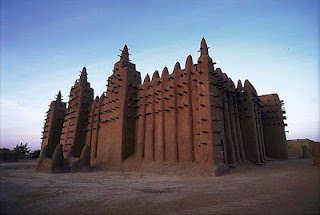
Timbuktu, a jewel of African culture and history, stands proud and tall in the desert sands of Mali.

While Timbuktu was once a metaphor for the middle of nowhere, it was an important city for the trans-Sahara trade from about 800 until 1591 when Moroccan troops destroyed the then Songhai Empire of Mali and Portugal and others developed a sea-going trade that largely replaced the trans-Sahara trade. (1). During the time that trade flourished, scholars and religious preachers were attracted to Timbuktu and Gao, the other trans-Sahara “port” and learning was highly developed.

The protection of Timbuktu’s cultural wealth may depend a good deal on the role of non-governmental organizations to facilitate negotiations between the MNLA the Ansar Dine and possible other armed groups. For the moment, the political situation in Mali is confused, and the protection of cultural sites in Timbuktu must not rank very high on the list of priorities.

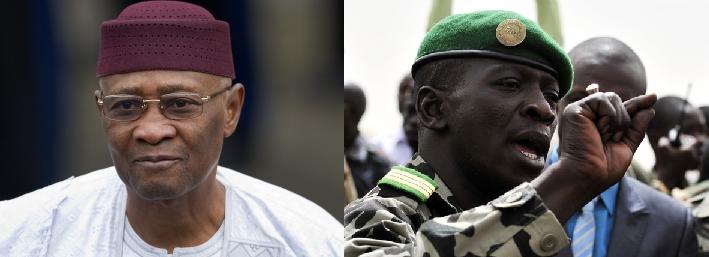
From March 22 until April 6, 2012, a military group of young officers had taken control of government buildings in Bamako claiming that the government of President Amadou Touré was incompetent in the struggle against the Tuareg.  The coup was more or less led by Captain Amadou Sanogo, who had been trained by the United States (U. S.) Marine Corps, but Sanogo was probably acting on his own and not on behalf of the U. S. Marines.  The negative reaction to the coup was speedy.  Led by France, the former colonial power, the United Nations Security Council decided on April 4 to issue a President’s Statement (less strong than a resolution but on which all states must be in agreement) calling for a restoration of the civilian government.  It is not likely that the civilian-led government of President Touré will be restored.  Touré was himself a former general who had come to power in a coup, then governed in a fairly democratic way but without making many socio-economic advances.  The country now faces a food crisis due in part to drought and in part to the lack of improvements in the agricultural production and distribution system.

While the UN Security Council was meeting, the 15-member Economic Organization of West African States (ECOWAS) also met, calling for a return to a civilian government and closing the frontiers.  During the ECOWAS meeting, it was decided to activate the Anti-Terrorism Centre which is located at Tamanarasset in south Algeria and to place some 2000 soldiers on alert. Captain Amadou Sanogo saw the “handwriting on the wall” and agreed to turn over the government to the President of the National Assembly who is the constitutional replacement when the President is absent.

President Amadou Touré of Mali (left) and his rival, Captain Amadou Sanogo of the Mali military (right).

The states in the UN Security Council and in ECOWAS refused to recognize the creation of the Tuareg state of Azawad, so it is unlikely that they will provide any mediators to negotiate between MNLA and Ansar Dime or to facilitate the protection of historic sites. There is on the part of many governments a dislike of carving up existing countries in order to create new states. It took fighting from 1982 to 2005 for there to be an agreement to create the new state of South Sudan and for other African states to agree to the division.

The military in Bamako do not seem organized or willing to die to retake northern Mali, especially since most of the Mali military are from the Bambara ethnic group with little attachment to northern Mali in any case.

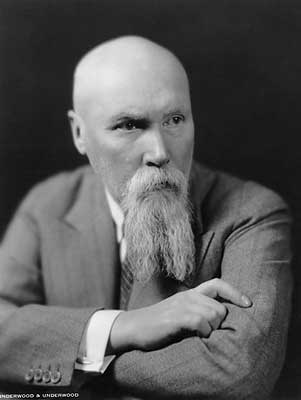
Much of the initiative for the protection of educational and cultural institutions has come from the NGO world and world-mined artists. Early efforts were undertaken by Nicholas Roerich (1874-1947) a Russian and world citizen.  Nicholas Roerich had lived through the First World War and the Russian Revolution and saw how armed conflict can destroy works of art and cultural institutions.  For Roerich, such institutions were irreplaceable and their destruction was a loss for all humanity.  Thus, he worked for the protection of works of art and institutions of culture in times of armed conflict. He envisaged a universally-accepted symbol that could be placed on educational institutions in the way that a red cross had become a widely-recognized symbol to protect medical institutions and medical workers.  Roerich proposed a “Banner of Peace” — three red circles representing the past, present, and future — that could be placed upon institutions and sites of culture and education to protect them in times of conflict.

Roerich mobilized artists and intellectuals in the 1920s for the establishment of this Banner of Peace.  Henry A. Wallace, the US Secretary of Agriculture and later Vice-President was an admirer of Roerich and helped to have an official treaty introducing the Banner of Peace — the Roerich Peace Pact — signed at the White House on April 15, 1935 by 21 States in a Pan-American Union ceremony. At the signing, Henry Wallace on behalf of the USA said “At no time has such an ideal been more needed. It is high time for the idealists who make the reality of tomorrow, to rally around such a symbol of beauty, science, education which runs across all national boundaries to strengthen all that we hold dear in our particular governments and customs. Its acceptance signifies the approach of a time when those who truly love their own nation will appreciate in addition the unique contribution of other nations and also do reverence to that common spiritual enterprise which draws together in one fellowship all artists, scientists, educators and truly religious of whatever faith.”

Nicolas Roerich (1874-1947), the man who opened the drive to make protection of works of art a full-fledged part of the law of armed conflict.

After the Second World War, UNESCO has continued the effort, and there have been additional conventions on the protection of cultural and educational bodies in times of conflict.  The most important is the 1954 Hague Convention for the Protection of Cultural Property in the Event of Armed Conflict. The spirit of the Hague Convention is clear and the protection of cultural and educational institutions should be a priority in conflicts among States or in civil wars even if no State recognizes Azawad.

Therefore we, as World Citizens, all have a duty to articulate more clearly the crucial link among human rights standards, humanitarian law, and world law to protect educational and cultural institutions in times of conflict.  As Nicholas Roerich said in a presentation of his Pact “The world is striving toward peace in many ways, and everyone realizes in his heart that this constructive work is a true prophesy of the New Era.  We deplore the loss of libraries of Louvain and Oviedo and the irreplaceable beauty of the Cathedral of Rheims.  We remember the beautiful treasures of private collections which were lost during world calamities.  But we do not want to inscribe on these deeds any words of hatred. Let us simply say: Destroyed by human ignorance — rebuilt by human hope.

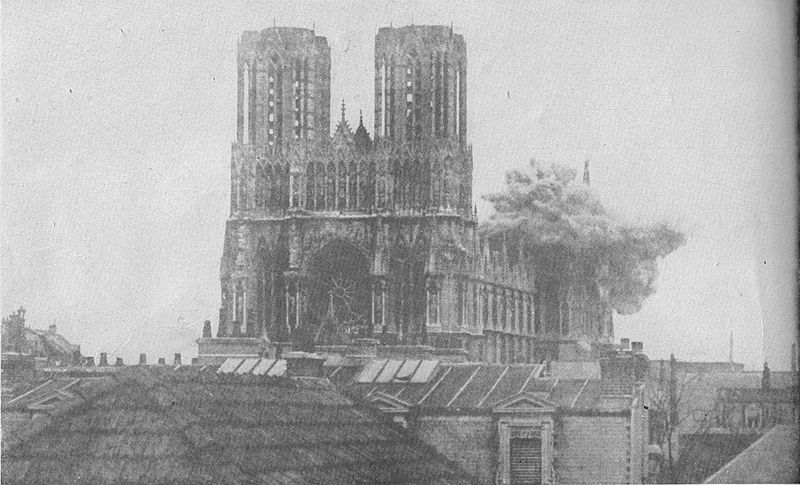
In 1914, a shell explosion at the Cathedral of Rheims in the early times of World War I.
Almost a century later, can the world possibly let Timbuktu become a "casualty of war" too?


René Wadlow is President and Chief Representative to the United Nations Office at Geneva of the Association of World Citizens.
 

(1)   See  Raymond Mauny Tableau géographique de l’Ouest africain au Moyen Age (Dakar, IFAN, 1961, 587 pp.)

In English : Horace Miner, The primitive city of Timbuctoo (Princeton: Princeton University Press, 1953, 297pp.)

Kunlabora Spirito kaj Ĝiaj Multaj Elmontriĝoj

In AWC Esperanto Division, Environmental protection, Human Development, Solidarity, The Search for Peace, United Nations, World Law on January 25, 2012 at 10:20 PM

KUNLABORA SPIRITO KAJ ĜIAJ MULTAJ ELMONTRIĜOJ

de René Wadlow

esperantigite de Bernard Henry


La Ĝenerala Asembleo de Unuiĝintaj Nacioj (UN), en ĝia Rezolucio A/RES/64/136, konsekris 2012 kiel Internacia Jaro por Kooperativoj, celante antaŭenmeti la larĝan rolon kiun kooperativoj ludas en ekologiema disvolvo kaj malapliigo de malriĉeco. Kiel diris UN-Ĝeneralsekretario Ban Ki-moon, “Kooperativoj estas rememorigilo al la internacia komunumo, ke eblas ja celi al kaj ekonomia kaj sociala respondeco”. La kooperativa movado ludas larĝan rolon en ambaŭ la produkado kaj la disdono de komercaĵoj kaj servoj tra la mondo. Kvankam malpli videblaj ol private posedataj, transnaciaj korporacioj (kiuj havas larĝajn reklambuĝetojn kaj tiel igas siajn komercaĵojn neĉirkaŭpaseblaj), kooperativoj estas grava parto de la monda ekonomio kaj meritas la atenton kiun la UN-jaro kapablas alporti (1).

Tamen, malantaŭ kooperativoj de produkado kaj disdono, loĝas unuavice “Kunlabora Spirito” kiu elmontriĝas laŭ multegaj manieroj, kiuj estas ĉiuj bazitaj sur kunlaboro sed ne ĉiuj nomiĝas “kooperativo”. Kunlabora Spirito substrekas renoviĝon, kunlaboron, mutualan helpon, kaj komunecon kiel “tagordo” je la surloka, nacia, kaj monda niveloj. Kunlaboro estas nepra neceso por la venontaj paŝoj en homa evoluo.

Kunlabora Spirito aperas en multaj formoj. Homoj tra la mondo pli kaj pli ekkonscias, ke ĉiuj el ni estas interligitaj kun aliaj personoj, per la aero kiujn ni spiras kaj akvosistemoj, la grundo kaj ĉiuj vivoformoj. Ju pli ni povas plipovigi unu la alian por ekflori sen noci al aliaj, des pli ni kreas mondan kunlaboran socion. Tial ĉiu ago de la individuo – aŭ neago – povas havi forserĉajn konsekvencojn ambaŭ por ĉiuj homoj en la mondo kaj por la naturmedio je kiu ni ĉiuj dependas.

Kunlabora Spirito evidentiĝas en la kreskaj zorgoj de Verda – ekologiema – Ekonomio. Eŭropo subtenas komercan kaj kunlaboran disvolvon de karbonmalpliigaj teknologioj kun miksaĵo de registara investado, impostosenpezoj, pruntedonoj kaj leĝoj. Ekzistas agnoskata neceso ŝirmi la naturmedion, investi en puran energion kaj krei daŭripovajn laborpostenojn, sed multo restas por fari en la tuta mondo.

Tra la mondo, ni ĉiuj estas enirantaj periodon de ŝanĝiĝo por kiu estas neniaj antaŭplanoj. Tial nepras ke ni scipovu kunan laboron. La formoj de kunlabora agado fontas el historiaj cirkonstancoj, surloka kulturo, kaj ekologiaj kondiĉoj. Tamen ekzistas komuna zorgo pri kunlabora uzo de naturvivrimedoj, komercaĵoj kaj servoj. Kunlabora agado loĝas en la koro de la ekonomia kaj politika alturno al mondnivela disvolvo de vivrimedoj kaj pli bona vivokvalito.

Ekzistas multaj formoj tradiciaj de kunlaboro, de mutuala helpo en periodoj de manko. 2012 devas utili kiel ŝanco alrigardi la multajn manierojn laŭ kiuj Kunlabora Spirito elmontriĝas en la mondo. Tial 2012 devas esti nia ĉefa interesocentro koncerne al la plifortigo de la konvinkoforto de Kunlabora Spirito.


(1)  Bv vidi la UN-retejon pri la Jaro: http://social.un.org/coopyear


Prof. René Wadlow estas Prezidanto kaj Ĉefreprezentanto ĉe UN en Ĝenevo de la Asocio de la Mondcivitanoj.

Bernard Henry estas la Oficisto pri Eksteraj Rilatoj de la Oficejo ĉe UN en Ĝenevo kaj la Ĝenerala Direktoro de la Esperanto-sekcio de la Asocio de la Mondcivitanoj.

The Cooperative Spirit and its Many Manifestations

In Human Development, Solidarity, The Search for Peace, United Nations, World Law on January 25, 2012 at 10:07 PM

THE COOPERATIVE SPIRIT AND ITS MANY MANIFESTATIONS

By René Wadlow


The United Nations (UN) General Assembly in Resolution A/RES/64/136 has designated 2012 as the International Year of Cooperatives in order to highlight the large role that cooperatives can play in ecologically-sound development and poverty reduction.  As Secretary-General Ban Ki-moon said “Cooperatives are a reminder to the international community that it is possible to pursue both economic viability and social responsibility.”  The cooperative movement plays a large role in both the production and the distribution of goods and services worldwide.  Although less visible than privately-owned trans-national corporations (which have large advertising budgets so their products become household names) cooperatives are an important part of the world economy and merit the attention that the UN Year may provide (1)

However, behind production and distribution cooperatives, there is first a “Cooperative Spirit”, and it manifests itself in a multitude of ways, all of which are based on cooperation but not all are called “cooperatives”. The Cooperative Spirit stresses renewal, cooperation, mutual help, and community as the ‘order of the day’ at the local, national, and world levels.  Cooperation is an absolute necessity for the next steps in human evolution.

The Cooperative Spirit takes many forms. People throughout the world are increasingly realizing that each of us is interconnected with every other person through the air we breathe and the systems of water, soils and life in all its forms.  The more we can empower one another to flourish without harming others, the more we create a cooperative world society. Therefore every action taken by an individual — or not taken — can have far-reaching consequences both for all the people of the world and upon the environment on which we all depend.

This Cooperative Spirit manifests itself in the growing concerns with a Green — ecologically-sound — Economy.  Europe has encouraged commercial and cooperative development of carbon-reducing technologies with a mix of government investment, tax facilities, loans and laws.  There is a recognized need to protect the environment, to invest in clean energy and to create lasting jobs, but much more needs to be done worldwide.

Throughout the world, we are all entering a period of change for which there is no blueprint.  Therefore it is essential that we learn to work together cooperatively.  Cooperative action takes its forms due to historical circumstances, local culture, and ecological conditions.  However, there is a common concern with the cooperative use of resources, goods and services.  Cooperative action is at the heart of an economic and political shift toward a worldwide development of livelihoods and greater quality of life.

There are many traditional forms of cooperation, of mutual help in times of need. 2012 should serve as an opportunity to look at the many ways in which the Cooperative Spirit manifests itself in the world. Thus 2012 can be our focus to strengthen the impact of the Cooperative Spirit.

(1)   See the UN website for the Year: http://social.un.org/coopyear


René Wadlow is President and Chief Representative to the United Nations, Geneva, of the Association of World Citizens.
June 17: A UN Emphasis on the Wise Use of Dry Lands

In Africa, Environmental protection, Human Development, Solidarity on June 17, 2011 at 7:30 PM

JUNE 17 : A UN EMPHASIS ON THE WISE USE OF DRY LANDS

By René Wadlow

 
The World Day to Combat Desertification, June 17 each year, was proclaimed by the United Nations (UN) General Assembly in resolution A/RES/49/1995. The day has been observed since 1995. However United Nations efforts on Desertification began in 1977 with the UN Conference on Desertification held in Nairobi. The desertification conference was convened by the UN General Assembly in the midst of a series of catastrophic droughts in the Sudano-Sahelian region of Africa. The conference was designed to be the centerpiece of a massive worldwide attack to arrest the spread of deserts or desert-like conditions not only in Africa south of the Sahara but wherever such conditions encroached on the livelihood of those who lived in the desert or in their destructive path. The history of the conference is vividly recalled by James Walls in his book Land, Men and Sand (New York: Macmillan, 1980).

At the conference, there was a call for the mobilization of human and financial resources to hold and then push back the advancing desert. “Attack” may have been the wrong word and “mobilization” too military a metaphor for the very inadequate measures taken later in the Sudano-Sahelian area. Today, in 2011, there are real possibilities of famine in West and East Africa on the edges of the desert. Niger and Mali and parts of Senegal and Chad in the Sahel belt are facing the consequences of serious drought as are parts of northern Kenya and Somalia.

The most dramatic case is that of Darfur, Sudan which partakes of the Sahel drought but which also faces a war in which the conflicts between pastoralists and settled agriculturalists have become politicized. It is estimated that 300,000 have been killed since the start of the war late in 2003. Some two and a half million people have been uprooted. The agricultural infrastructure of homes, barns and wells has been deliberately destroyed. It will be difficult and costly to repair this destruction. The Darfur conflict highlights the need for a broader approach to the analysis and interpretation of active and potential armed conflicts in the Sahel region. This analysis needs to take into consideration the impact of environmental scarcity and climate variation in complex situations.

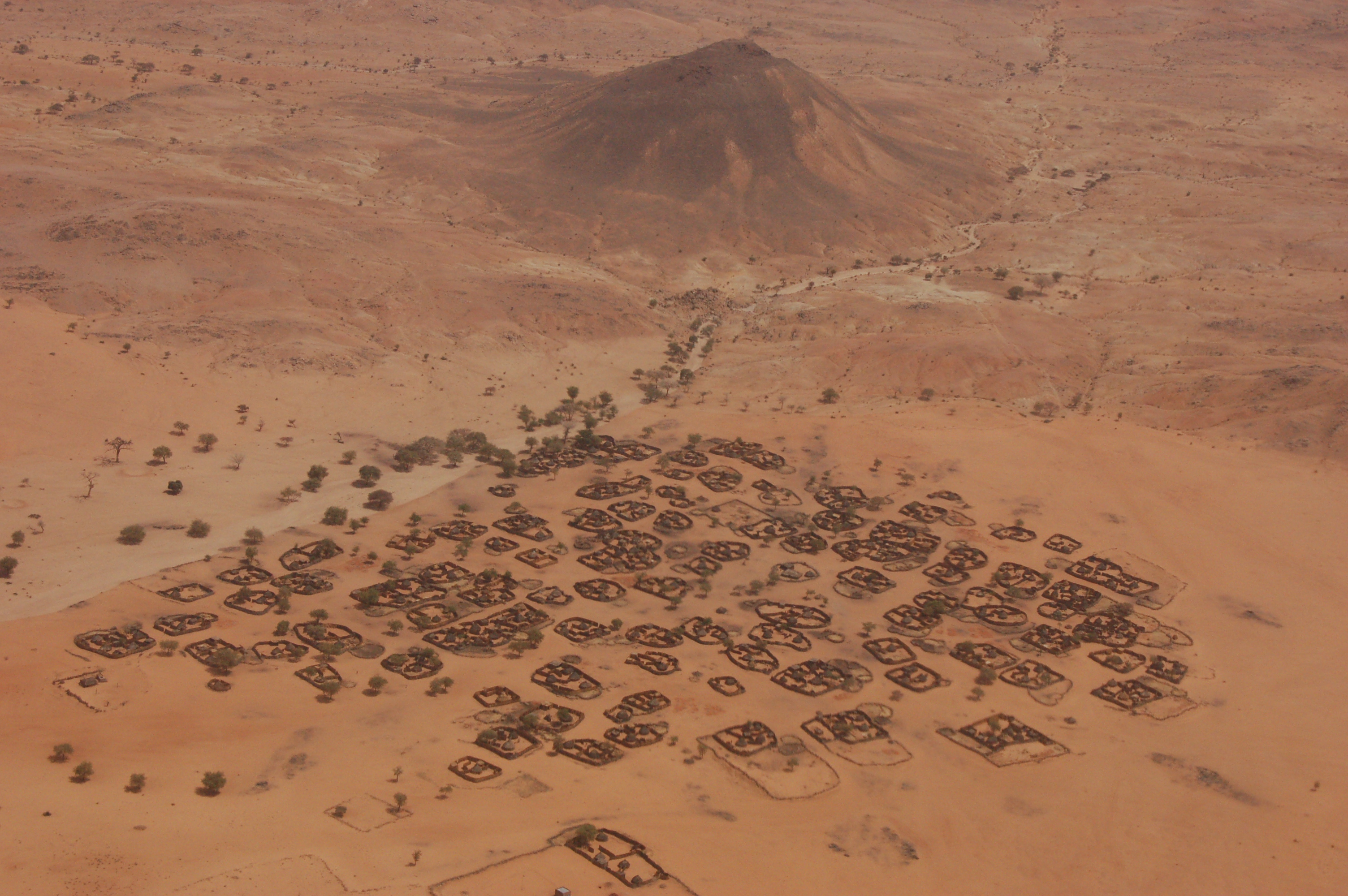
A settlement in the semi-desert north of El Fasher, Northern Darfur.

Earth is our common home, and therefore all, as world citizens, must organize to protect it. It is up to all of us concerned with ecologically-sound development to draw awareness to both the dangers and the promises of deserts. What is the core of the desertification process? The destruction of land that was once productive does not stem from mysterious and remorseless forces of nature but from the actions of humans. Desertification is a social phenomenon. The causes of dry land degradation include overgrazing, deforestation, agricultural mismanagement, fuel wood over-consumption, and industry and urbanization. Thus, by preventing land degradation and improving agricultural practices, action to combat desertification can lead to increased agricultural productivity and alleviate poverty. Humans are both the despoiler and the victim of the process. Increasingly, populations are eking out a livelihood on a dwindling resource, hemmed in by encroaching plantations and sedentary agriculturalists, by towns and roads. Pressure of population upon resources leads to tensions which can burst into violence as we see in Darfur and which spilled over into eastern Chad.

Desertification needs to be seen in a holistic way. If we see desertification only as aridity, we may miss areas of impact such as the humid tropics. We need to consider the special problems of water-logging, salinity or alkalinity of irrigation systems that destroy land each year. The value of UN-designated Days is the creation of a process of identifying major clusters of problems, bringing the best minds to bear on them so as to have a scientific and social substratum on which common political will can be found and from which action will follow.

Desertification is a plague that upsets the traditional balance between people, their habitat, and the socio-economic systems by which they live. Because desertification disturbs a region’s natural resource base, it promotes insecurity. Insecurity leads to strife. If allowed to degenerate, strife results in inter-clan feuding, civil war, cross-border raiding and military confrontation. Yet dry land communities have great resources that can be put to fighting poverty and desertification, provided they are properly empowered and supported.

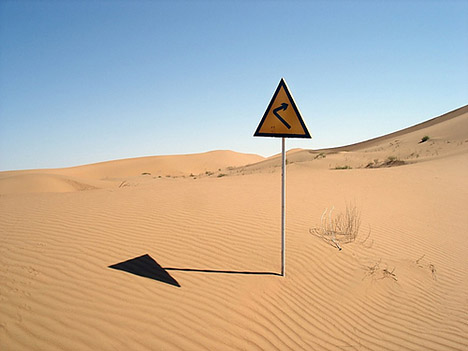
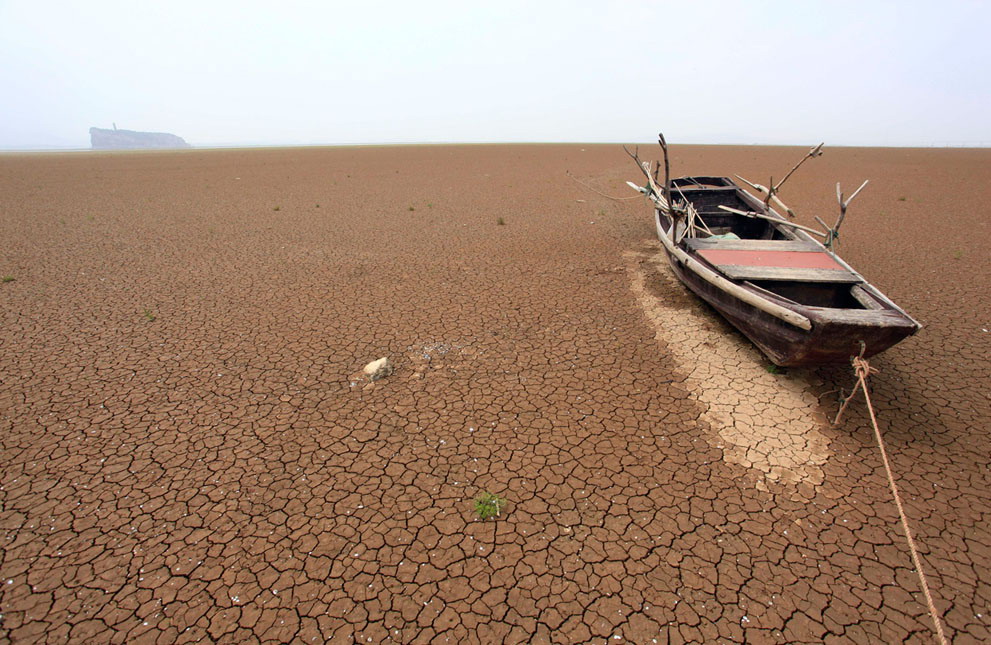
In China, desertification spreads 1,300 square miles per year.

Only with a lessening of insecurity can cultivators and pastoralists living in or near deserts turn their attention to adapting traditional systems. There can be no reversion to purely traditional systems. But for insecurity to abate, a lengthy process of conciliation must begin and forms of conflict resolution strengthened. People must be encouraged to understand that diversity is a crucial element of ecologically-sound development. Judicious resource management breeds security and an improved quality of life for everyone. We can see what efforts can be made to encourage reforestation and to slow the unwanted advances of deserts.

The contrast between widespread rural poverty and environmental degradation, on the one land, and the opportunities which can be created on a small scale through community empowerment, access to groundwater and sustainable land management, defines the ideals of the Day. The Day is not about fighting deserts, it is about reversing land degradation trends, improving living conditions and alleviating poverty in rural dry lands. Thus, the World Day to Combat Desertification can be a Day during which we can learn more of the lives of the people in and on the edge of the deserts.

Even trees can grow in the desert ... A sign of hope indeed. Now let's act on it.

Deserts can also have a positive image. There is a significant role in the literature and mythology of spirituality — the 40 years in the desert before entering the “Promised Land” of Israel, the 40 days in the desert before starting his mission for Jesus, the life in the desert of the early Christian church fathers. Today, there are an increasing number of spiritual retreats in the desert chosen for its silence and for the essential nature of the landscape. Thus, during this Day our emphasis must not be on “combat” but on wise and ecologically-sound use of dry lands.

René Wadlow is Senior Vice President and Chief Representative to the United Nations Office at Geneva of the Association of World Citizens.
Let My Children Go: World Efforts to Eliminate the Worst Forms of Child Labor

In Children's Rights, Human Development, Human Rights, Solidarity, World Law on June 11, 2011 at 11:52 PM

LET MY CHILDREN GO:

WORLD EFFORTS TO ELIMINATE THE WORST FORMS OF CHILD LABOR

By René Wadlow


June 12 is a red letter day on the United Nations (UN) agenda of events as the World Day against Child Labor. It marks the June arrival in 1998 of hundreds of children in Geneva, part of the Global March against Child Labor that had crossed 100 countries to present their plight to the International Labor Organization (ILO).

“We are hurting, and you can help us” was their message to the assembled International Labor Conference which meets each year in Geneva in June. One year later, in June, the ILO had drafted ILO Convention N° 182 on child labor which 165 States have now ratified — the fastest ratification rate in the ILO’s 89-year history.

The ILO is the only UN organization with a tripartite structure, governments, trade unions and employer associations are all full and equal members. All the other UN bodies are governments-only with non-governmental organizations (NGOs) playing a “fifth wheel” role. Yet NGOs within the UN system as a whole played an important role in highlighting children working in circumstances that put their physical, mental and social development at risk, children working in situations where they are exploited, mistreated and denied the basic rights of a human being. Today, millions of children, especially those living in extreme poverty, have no choice but to accept exploitive employment to ensure their own and their family’s survival. However, the ILO is the UN agency most directly related to conditions of work. Thus the ILO has often been an avenue for ‘unheard voices’ to be heard, usually through the trade union representatives; more rarely the employer representatives have played a progressive role.

The flag of the International Labor Organization.

Child labor and the increasing cross-frontier flow of child labor did not have a high profile on the long agenda of pressing labor issues until the end of the 1990s. At the start of the 1990s, there was only one full-time ILO staff member assigned to child labor issues; now there are 450, 90 percent in the field.

Child labor was often hidden behind the real and non-exploitive help that children bring to family farms. However, such help often keeps children out of school and thus outside the possibility of joining the modern sector of the economy. The ILO estimates that of the some 200 million child laborers in the world, some 70 percent are in agriculture, 10 percent in industry/mines and the others in trade and services — often as domestics or street vendors in urban areas. Globally, Asia accounts for the largest number of child workers — 122 million, Sub-Saharan Africa, 50 million, and Latin America and the Caribbean, 6 million. Young people under 18 make up almost half of humanity, a half which is virtually powerless in relation to the other half. To ensure the well-being of children and adolescents in light of this imbalance of power, we must identify attitudes and practices which cause invisibility.

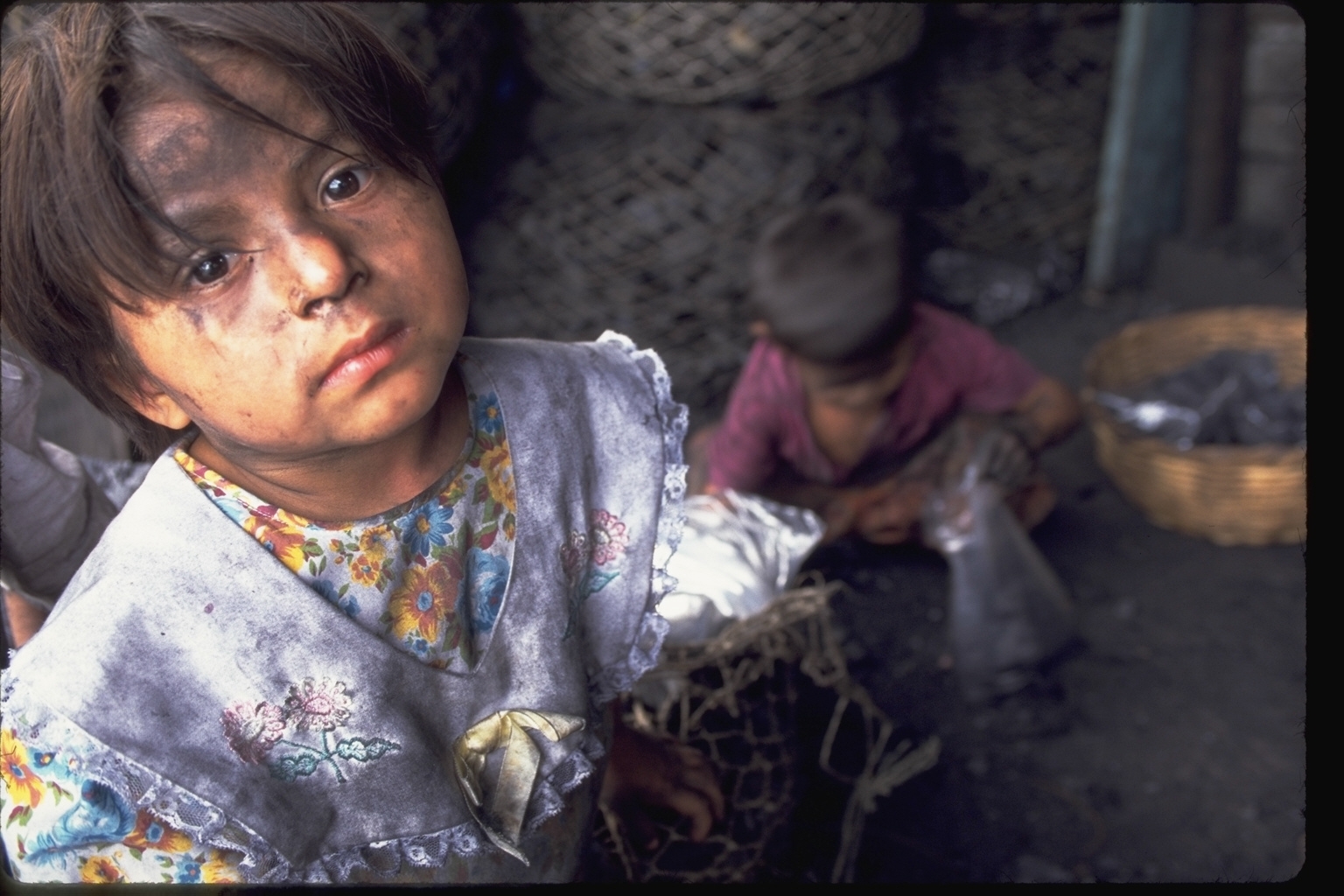
The grim faces of child labor: In El Salvador, a 4-year-old girl and her 6-year-old brother working to fill coal bags.

But statistics are only one aspect of the story. It is important to look at what type of work is done and for whom. The image of the child helping his parents on the farm can hide wide-spread bonded labor in Asia. Children are ‘farmed out’ to others for repayment of a debt with interest. As the interest rates are too high, the debt is never paid off and ‘bonded labour’ is another term for a form of slavery.

In Africa, children can live at great distances from their home, working for others with no family ties and thus no restraints on the demands for work. Girls are particularly disadvantaged as they often undertake household chores following work in the fields. Schooling for such children can be non-existent or uneven at best. There is often a lack of rural schools and teachers. Rural school attendance is variable even where children are not forced to work. Thus, there is a need for better coordination between resources and initiatives for rural education and the elimination of exploitive child labor.

There is still a long way to go to eliminate exploitive child labor. Much child labor is in what is commonly called the non-formal sector of the economy where there are no trade unions. Child labor is often related to conditions of extreme poverty and to sectors of the society where both adults and children are marginalized such as many tribal societies in Asia, or the Roma in Europe or migrant workers in general.

Thus, the task of both governments and NGOs is to understand better the scope of exploitive child labor, its causes, the possibility of short-term protection of children and the longer-range efforts to overcome exclusion and poverty.


René Wadlow is Senior Vice President and Chief Representative to the United Nations Office at Geneva of the Association of World Citizens.
Le Kef, Tunisie: Il suffit d’une ville pour soutenir une révolution

In Current Events, Democracy, Human Development, Middle East & North Africa, Solidarity on March 4, 2011 at 1:19 PM

LE KEF, TUNISIE: IL SUFFIT D’UNE VILLE POUR SOUTENIR UNE REVOLUTION

Par Cherifa Maaoui

Je suis une Citoyenne du Monde, membre de l’AWC depuis 2007, mais je suis aussi, au départ, une Tunisienne.

Pendant la révolution, une partie de ma famille était en visite chez moi, dans la banlieue de Paris, pour les Fêtes de Fin d’Année, et le matin même de la chute de Zine el Abidine ben Ali, ils étaient là, avant de prendre quelques heures plus tard le vol du retour …  C’est du moins ce qu’ils pensaient, que nous pensions tous. Après la réouverture de l’espace aérien tunisien, quand ils sont revenus là-bas, ce n’était plus le même pays, du moins sur le plan politique. Car chez nous, dans la ville de nos racines, malgré la révolution, rien n’avait vraiment changé.

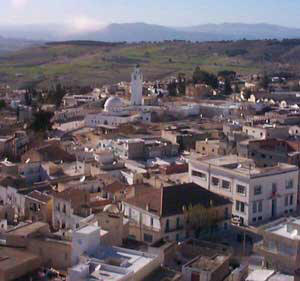
Je suis née dans une ville du nord-ouest de la Tunisie, El-Kef, ou plutôt, pour les Français, « Le Kef ». L’Algérie n’est pas loin, à quarante kilomètres seulement, plus proche que Tunis qui se trouve à 175 kilomètres de chez nous. C’est une ville de montagne, perchée à 780 mètres d’altitude, une ville qui conserve les traces de la colonisation romaine entre les anciens remparts qui l’enserrent. Là-bas, les trois religions abrahamiques ont bâti chacune un ou plusieurs lieux de culte, entre le mausolée Sidi ben Makhlouf et la mosquée El Qadriya pour l’Islam, la synagogue de Ghriba pour le judaïsme et l’ancienne basilique romaine pour le christianisme. Nous avons des écoles supérieures et la ville est aussi, excusez du peu, un chef-lieu de gouvernorat, ce qu’on appellerait en France une préfecture. Bref, il y a tout chez nous pour faire penser que nous avons de la chance par rapport au reste de la Tunisie.

Et pourtant, c’est loin d’être le cas. Le Kef est une ville où règne la pauvreté, une de ces villes où, sous Ben Ali, les uns et les autres ont été forcés de partir vers les villes plus grandes ou les zones côtières pour trouver un travail, souvent avec peu de succès. Tous les gens qui ont eu entre leurs mains le destin de la Tunisie nous ont oubliés, tant le protectorat français qu’Habib Bourguiba puis Ben Ali, comme si notre sort n’intéressait personne.

A l’hôpital du Kef, il existe une salle de jeux où les enfants peuvent s’amuser, mais ce n’est que depuis trois ans tout au plus, parce que, grâce à l’aide de mes amis ici en France, j’ai pu y faire installer une climatisation. Avant, la salle était trop froide l’hiver, cet hiver montagnard rigoureux que, depuis l’étranger, l’on n’imagine pas possible en Tunisie, et trop chaude l’été. Mais derrière ce problème résolu, il en reste bien d’autres en souffrance. Nous avons beau avoir des écoles supérieures, cela ne nous empêche pas d’avoir aussi chez nous des quantités de jeunes gens diplômés qui, parfois jusqu’à l’âge de quarante ans, restent sans travail malgré leurs hautes qualifications, ce qui est particulièrement vrai des diplômés du supérieur en langue et littérature arabe.

Le Kef, ville oubliée de l'histoire.

Déjà sans aller jusqu’à ce niveau, dans le lycée local, il n’y a pas de salle informatique, le seul cybercafé de la ville étant privé et facturant des sommes exorbitantes aux usagers. Il en faudrait peu pour trouver sur place de quoi équiper chaque écolier d’un cartable et le lycée d’une salle informatique digne de ce nom, la seconde opération pouvant être réalisée pour moins de 300€. Mais je ne peux pas le financer toute seule, d’où ma frustration et ce sentiment d’impuissance qui sont les miens.

En comparaison de l’avenir d’un pays tout entier – le premier pays arabe à avoir évincé son dictateur dans une révolution populaire – le sort d’une seule ville, une ville perdue dans la montagne, peut paraître insignifiant. Mais c’est justement là, dans ce genre d’endroits oubliés de l’histoire, que se jouent les destins des révolutions. C’est lorsque des villes comme Le Kef se sentent soutenues, incluses dans le changement et non exclues de celui-ci, que ce changement qui affecte donc tout un pays est vraiment possible. Sinon, cela donne des violences comme celles qui ont frappé Le Kef début février dernier, des morts, des immeubles brûlés, et la peur, celle qui, s’ajoutant au désespoir, vous tue.

L’ancienne Première Dame américaine Hillary Clinton, aujourd’hui Secrétaire d’Etat, a écrit en 1996 un livre qui s’intitulait Il faut tout un village pour élever un enfant. Moi, je suis convaincue qu’il suffit d’une ville pour soutenir une révolution, et cette ville, je suis bien persuadée que c’est Le Kef.

Cherifa Maaoui (maaoui.cherifa@yahoo.fr) est Officier de Liaison pour le Maghreb du Bureau de Représentation auprès de l’Office des Nations Unies à Genève de l’Association of World Citizens.