The Official Blog of the

Archive for the ‘Democracy’ Category

Jammeh: Here’s Your Hat, The Plane is Waiting

In Africa, Conflict Resolution, Current Events, Democracy, Human Rights, The Search for Peace, World Law on January 23, 2017 at 10:59 AM

JAMMEH: HERE’S YOUR HAT, THE PLANE IS WAITING

By René Wadlow

An update to the article “Gambia: The Cry of the Imburi” by René Wadlow, published on January 21, 2017.

Yahya Jammeh, the former President of Gambia, chose the wiser course of action and left Gambia on Saturday, on January 20, 2017 at 9.15 PM local time with his wife Zineb and the President of Guinea, Alpha Condé, who had been negotiating the departure on behalf of the Economic Community of West African States (ECOWAS). He was wearing his trademark white cap and said that only God would judge him.

Senegal troops, mandated by ECOWAS, had already crossed the frontier of Gambia, although they said that their aim was to protect the people and not to bring about political change. There was, nevertheless, a potential for violence either in opposition to the Senegalese troops or among supporters and opponents to Jammeh.

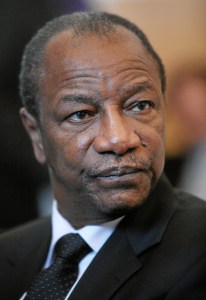
Managing Resource Wealth: Alpha Conde

Alpha Condé, President of Guinea, who helped broker a peaceful solution to the political crisis in Gambia.

It is likely that the situation will remain relatively calm as people await the return to Gambia of Adama Barrow, who had taken the oath of office of President in the Gambian Embassy in Dakar on Friday, January 19, 2017. Barrow had left Gambia fearing for his life as Jammeh has a reputation of “disappearing” his opponents during his 22 years of rule. With Barrow’s return, the real work of socio-economic development can start.

As noted in my earlier article, Gambia is a creation of colonial history, the English came up the Gambia River first for the slave trade. After 1807 when the slave trade was banned north of the equator, there was a shift to other forms of trade. In the late 1860s the English started to set up an administration while the French were doing the same thing in what is now Senegal. Thus Gambia is bounded on both sides by Senegal and the Gambian population of about one and a half million have ethnic links with groups in Senegal.

Gambia is heavily dependent on the Senegal, and a good number of Gambians work in Senegal. As Gambia has few resources beyond a subsistence agriculture and some export of peanuts, the country has become a transit area for drugs coming from Latin America destined for Europe. Gangs involved in the drug trade have also been involved in the arms trade. Since nothing in the small country escaped the eyes of Jammeh, it is most likely that he took his cut of the drug profits and placed his money outside of Gambia.

Press reports indicate that Jammeh and his wife quickly left Guinea for Equatorial Guinea, set between Cameroon and Gabon, also ruled by long-time and brutal dictator Obiang Nguema. Jammeh is in no danger of a trial.

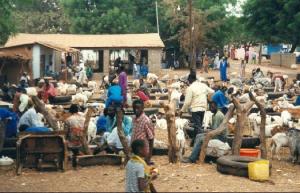
1014050-market_in_abuko-the_gambia

In looking at the statistical tables of the UN Conference on Trade and Development’s Least Developed Countries Reports, the Gambian economy has been flat since Jammeh took power – the drug and arms trade are not part of the figures. In addition, the education and health sectors have been “weak” at best.

There have been since the independence of Senegal in 1960 proposals for the integration perhaps in the form of a confederation. For lack of a political will, such a con-federation has never been created. Rather we have a week integration of the Gambian economy into that of Senegal with no corresponding government structures.

It is too early to know what the future will hold. Armed violence is most probably avoided. But we must still keep an eye open to see if the new government is able to meet the new economic challenges.

Prof. René Wadlow is President of the Association of World Citizens.

Gambia: The Cry of the Imburi

In Africa, Being a World Citizen, Conflict Resolution, Current Events, Democracy, Human Rights, International Justice, The Search for Peace, World Law on January 22, 2017 at 10:25 AM

GAMBIA: THE CRY OF THE IMBURI
By René Wadlow

The Imburi are spirits that are said to inhabit the forests of Gabon in Equatorial Africa and who cry out for those who can hear them at times of impending violence or danger. Today, the Imburi are crying so that we will focus on the Gambia. The United Nations (UN) Security Council has heard the cry and has called for a transfer of authority to a new president, duly elected, Adama Barrow.

Adama Barrow took the oath of office of President on January 19, 2017 at the Embassy of Gambia in Dakar, Senegal as he is in exile for his safety in neighboring Senegal. The long-time President, Yahya Jammeh, who took power in 1994 in a military coup has been in office so long that he refuses to leave.

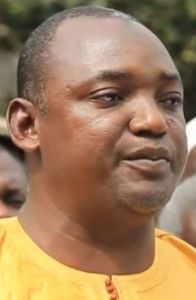
adama_barrow_2016

Adama Barrow, the new, democratically-elected President of Gambia.

Many have suggested that Jammeh could leave, especially to avoid local violence or foreign intervention. In his 22 years of service in a country where the trade of arms and drugs is the chief economic activity, he must have put his share of profits in foreign banks. There are suggestions that with funds collected to offer him a “golden parachute” he could leave peacefully. Nigeria has offered him a nice retirement home. But Jammeh insists that he will stay on and that the one December vote was somehow fixed against him and his alliance for Patriotic Reorientation and Construction Party.

The 15-nation Economic Community of West African States (ECOWAS) has strongly suggested that Jammeh leave power and has sent a number of high-level missions to the capital Banjul to urge a departure. To drive home their point, ECOWAS has stationed troops in Senegal on the frontier with Gambia. Some Senegalese troops, members of ECOWAS, have crossed the frontier into Gambia to prevent violence but said that they did not have a political mission. The current chair of ECOWAS is the Liberian President, Ellen Johnson Sirleaf, who knows first-hand what armed conflict and civil war can bring to a country.

There are those in Gambia who expect the worst. Some 45,000 have left the country for Senegal in the last few days. Many shops have closed, and food prices have climbed. There are real possibilities for violence. President Jammeh had a long-term policy of hate speech against minorities, especially the Mandinka whose traditional home is Senegal and against gays. Jammeh’s current supporters are stressing that “gays and their foreign supporters” are those who are creating instability.

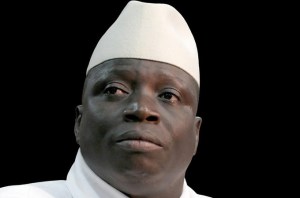
yaya_jammeh

Yahya Jammeh, the former President of Gambia.

There is real danger that violence based on ethnicity, sexual orientation, and political allegiance will break out.

Ministers in Jammeh’s government have resigned including the key ministries of Foreign Affairs, Finance and Trade. Some ministers have left the country for Senegal fearing revenge violence. Certainly a quiet retirement in Nigeria would be a welcome end to Jammeh’s brutal and corrupt years of service. But the situation merits watching closely. The Imburi are worried.

Prof. René Wadlow is President of the Association of World Citizens.

Many Forms of Violence against Women

In Being a World Citizen, Democracy, Human Development, Human Rights, International Justice, Social Rights, Solidarity, United Nations, Women's Rights, World Law on November 25, 2016 at 11:47 AM

MANY FORMS OF VIOLENCE AGAINST WOMEN

By René Wadlow

November 25 is the day designated by the United Nations (UN) General Assembly as the “International Day for the Elimination of Violence against Women.” Violence against women is a year-round occurrence and continues at an alarming rate. Violence against women can take many different forms. There can be an attack upon their bodily integrity and their dignity. As citizens of the world, we need to place an emphasis on the universality of violence against women but also on the multiplicity of the forms of violence. We need to look at the broader system of domination based on subordination and inequality. The value of a special Day for the Elimination of Violence against Women is that the day serves as a time of analysis of the issues and a time for a re-dedication to take both short-term measures – such as the creation of a larger number of homes for battered women – and longer range programs.

Both at the international UN level and at the national and local level, there have been programs devoted to the equality of women and to the promotion of women in all fields. Thus, it is important to stress that women are not only victims in need of special protection but also that women should participate fully and effectively in all aspects of society.

Nevertheless, women have largely remained invisible and inaudible by being allowed to have a key role in the “informal sector” – those sectors of the economy that are the least organized and are often left out of the statistics of the formal economy as if the informal sector did not count. Women have turned to the informal sector – or have been pushed into it – as a way of sustaining a livelihood for their families.

8214743009_edc61758d5_b

(C) Anna Sapphire

In the informal sector, women survive and often have a major responsibility for the economy of the whole family. Fathers are often absent by need or by choice. Some women do well in the informal sector and serve as a model – or a hope – as to what others can accomplish. Self-employed women are increasingly helped by micro-credit programs. Micro-credit loans are useful but rarely do such loans allow a person to move outside the informal economy.

Women’s work in the informal sector accounts for a large proportion of total female employment in most developing countries of Africa, Latin America and Asia. Women work as food producers, traders, home-based workers, domestic workers, prostitutes and increasingly are engaged in drug trafficking – anything to earn an income to feed their children. The informal sector is their last hope for economic and social survival for themselves and their families.

Violence against women

“Violence against women”, by Gaetano Salerno, 80x60cm, 2013.

Gender inequality and the walls built around the informal sector are the marks of the “silent violence” against women. Amartya Sen defined the major challenge of human development as “broadening the limited lives into which the majority of human beings are willy-nilly imprisoned by the forces of circumstances”.  On November 25, this day for the elimination of violence against women, we need to look closely at the many social, cultural and economic wall which imprison.

Prof. René Wadlow is President of the Association of World Citizens.

World Citizens Demand an End to All Hostile Maneuvers Toward Amnesty International in Russia

In Being a World Citizen, Current Events, Democracy, Europe, Human Rights, International Justice, Solidarity, The former Soviet Union, United Nations, World Law on November 4, 2016 at 9:20 AM

-- AWC-UN Geneva Logo --

WORLD CITIZENS DEMAND AN END TO ALL HOSTILE MANEUVERS
TOWARD AMNESTY INTERNATIONAL IN RUSSIA

The Association of World Citizens (AWC) is concerned that the headquarters of the Russian Section of Amnesty International, based in Moscow, have been sealed off by the local authorities and the staff have been barred from accessing the premises.

Although the Russian authorities have contended that the rent for the Amnesty headquarters was overdue, the organization has proved that this contention was unfounded, thus demonstrating that the sealing is an unwarranted move and a violation of Amnesty International’s rights as an organization of Human Rights Defenders in line with the provisions of Resolution 53/144 of the United Nations (UN) General Assembly.

Compliance with international human rights standards can never harm the stability – political, administrative or other, of a given society, only improve it by establishing firm legal, political, and moral norms that every citizen can both claim in defense of their own rights and use to defend the rights of others when necessary.

The AWC calls on the authorities of the Russian Federation and the City of Moscow to restore free access to the headquarters of Amnesty International Russia for its staff, volunteers, members and anyone else who may wish to visit with the consent of the Amnesty leadership there.

World Policy for Migrants and Refugees

In Africa, Being a World Citizen, Conflict Resolution, Current Events, Democracy, Europe, Fighting Racism, Human Rights, Middle East & North Africa, Solidarity, The Search for Peace, United Nations, World Law on October 4, 2016 at 7:26 PM

WORLD POLICY FOR MIGRANTS AND REFUGEES
By René Wadlow

«There is no doubt that Mankind is once more on the move. The very foundations have been shaken and loosened, and things are again fluid. The tents have been struck, and the great caravan of Humanity is once more on the march.»

Jan Christian Smuts at the end of the 1914-1918 World War.

On September 19, 2016, the United Nations (UN) General Assembly held a one-day Summit on “Addressing Large Movements of Refugees and Migrants”, a complex of issues which have become important and emotional issues in many countries. The UN Department of Economic and Social Affairs (DESA) published a report on international migration indicating that there are some 244 million migrants, some 76 million live in Europe, 75 million in Asia, 54 million in North America and others in the Middle East, Latin America and the Pacific, especially Australia and New Zealand. In addition, there are some 24 million refugees – people who have crossed State frontiers fleeing armed conflict and repression as well as some 40 million internally-displaced persons within their own country. Acute poverty, armed conflicts, population growth and high unemployment levels provide the incentives for people to move, while easier communications and transport are the means.

However, as we have seen with the many who have died in the Mediterranean Sea, people will take great risks to migrate. Thus, there is an urgent need to take away the monopoly of the life and death of refugees from the hands of mafias and traffickers and to create an effective world policy for migrants and refugees.

UNGA

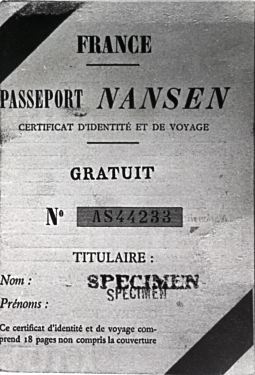
This is the third time that the major governments of the world have tried to deal in an organized way with migration and refugees. The first was within the League of Nations in the 1920s. The 1914-1918 World War and the 1917 Russian Revolution had created a large number of refugees and “stateless” persons – citizens of the former Russian, Ottoman, and Austro-Hungarian Empires. These people had no passports or valid identity documents. The League of Nations created a League identity document – the Nansen Passport – which gave some relief to the “stateless” and brought international attention to their conditions. The Nansen Passport, however, became overshadowed in the mid-1930 when people – in particular Jews – fled from Germany-Austria and were refused resettlement.

nansenpassport

The second international effort was as a result of the experiences of the 1939-1945 Second World War and the large number of refugees and displaced. Under UN leadership was created the 1951 Geneva Convention on the Status of Refugees. In addition, the UN Office of the High Commissioner for Refugees, originally created as a temporary body, was made a permanent UN agency in recognition of the continuing nature of refugee issues.

The current third international effort is largely a result of the flow of refugees and migrants toward Europe during 2015-2016. The disorganized and very uneven response of European governments and the European Union to this flow has indicated that governments are unprepared to deal with such massive movements of people. Nongovernmental organizations (NGOs) have not been able to deal adequately with this large number of persons despite many good-will efforts. Moreover, certain European political movements and political parties have used the refugee issue to promote narrow nationalist and sometimes racist policies. Even a much smaller flow of refugees to the USA has provoked very mixed reactions – few of them welcoming.

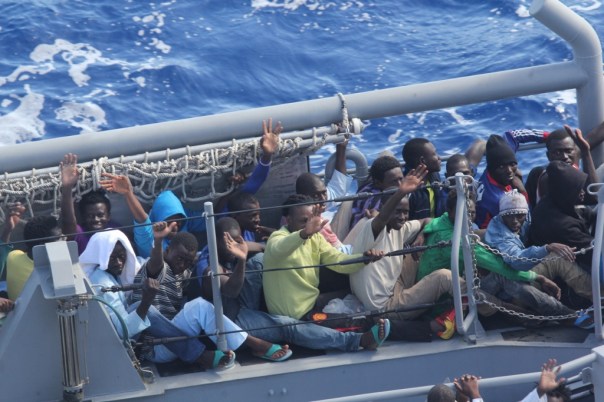
Distressed persons wave after being transferred to a Maltese patrol vessel.

The September 19 Summit is a first step toward creating a functioning world policy for migrants and refugees. The Summit is not an end in itself but follows a pattern of UN awareness-building conferences on the environment, population, food, urbanization and other world issues. The impact of UN conferences has been greatest when there are preexisting popular movements led by NGOs which have in part sensitized people to the issue. The two UN conferences which have had the most lasting consequences were the 1972 Stockholm conference on the environment and the 1975 International Year of Women and its Mexico conference. The environment conference was held at a time of growing popular concern with the harm to the environment symbolized by the widely-read book of Rachel Carson Silent Spring. The 1975 women’s conference came at a time when in Western Europe and the USA there was a strong “women’s lib” movement and active discussion on questions of equality and gender.

Migration and refugee issues do not have a well-organized NGO structure highlighting these issues. However human rights NGOs have stressed the fate of refugees and migrants as well as human rights violations in the countries from which they fled. There is also some cooperation among relief NGOs which provide direct help to refugees and migrants such as those from Syria and Iraq living in Turkey, Jordan, Lebanon and those going to Greece and Italy.

The Summit’s Declaration is very general, and some observers have been disappointed with the lack of specific measures. However, we can welcome the spirit of the Summit Declaration with its emphasis on cooperative action, a humane sense of sharing the responsibilities for refugees and migrants and on seeking root causes of migration and refugee flows. What is needed now are strong NGO efforts to remind constantly government authorities of the seriousness of the issues and the need for collective action. Refugees and migrants are not a temporary “emergency” but part of a continuing aspect of the emerging world society. Thus there is a need to develop a world policy and strong institutions for migrants and refugees.

Prof. René Wadlow is President of the Association of World Citizens.

Building on the UN Summit to Address Large Movements of Refugees and Migrants

In Being a World Citizen, Children's Rights, Conflict Resolution, Current Events, Democracy, Europe, Fighting Racism, Human Rights, Social Rights, Solidarity, The Search for Peace, United Nations, Women's Rights, World Law on September 20, 2016 at 6:58 PM

BUILDING ON THE UN SUMMIT TO ADDRESS LARGE MOVEMENTS OF REFUGEES AND MIGRANTS

By René Wadlow

awc-un-geneva-logo

On September 19, 2016, the United Nations (UN) General Assembly held a one-day Summit on “Addressing Large Movements of Refugees and Migrants”, a complex of issues which have become important and emotional issues in many countries. Restrictive migration policies deny many migrants the possibility of acquiring a regular migrant status, and as a result, the migrants end up being in an irregular or undocumented situation in the receiving country and can be exposed to exploitation and serious violations of human rights.

Citizens of the world have been actively concerned with the issues of migrants, refugees, the “stateless” and those displaced by armed conflicts within their own country. Thus we welcome the spirit of the Summit Declaration with its emphasis on cooperative action, a humane sense of sharing the responsibilities for refugees and migrants and on seeking root causes of migration and refugee flows. There are three issues mentioned in the Summit Declaration which merit follow up action among the UN Secretariat, world citizens and other non-governmental organizations:

1) The migration of youth;

2) The strong link between migration, refugee flows, and improving the structures for the resolution of armed conflicts;

3) Developing further cooperation among non-governmental organizations for the protection and integration of refugees and migrants.

The Migration of Youth

Youth leave their country of birth to seek a better life and also to escape war, poverty, and misfortune. We should add to an analysis of trans-frontier youth migration a very large number of youth who leave their home villages to migrate toward cities within their own country. Without accurate information and analysis of both internal and trans-frontier migration of youth, it is difficult to develop appropriate policies for employment, housing, education and health care of young migrants and refugees. It is estimated that there are some 10 million refugee children, and most are not in school.

Studies have noted an increasing feminization of trans-frontier migration in which the female migrant moves abroad as a wage earner, especially as a domestic worker rather than as an accompanying family member. Migrant domestic workers are often exposed to abuse, exploitation and discrimination based on gender, ethnicity and occupation. Domestic workers are often underpaid, their working conditions poor and sometimes dangerous. Their bargaining power is severely limited. Thus, there is a need to develop legally enforceable contracts of employment, setting out minimum wages, maximum hours of work and responsibilities.

The Association of World Citizens recommends that there be in the follow ups to the Summit, a special focus on youth, their needs as well as possibilities for positive actions by youth.

The strong link between migration, refugee flows, and improving the structures for the resolution of armed conflicts

The UN General Assembly which follows immediately the Migration-Refugee Summit is facing the need for action on a large number of armed conflicts in which Member States are involved. In some of these conflicts the UN has provided mediators; in others, UN peacekeepers are present. In nearly all these armed conflicts, there have been internally-displaced persons as well as trans-frontier refugees. Therefore, there is an urgent need to review the linkages between armed conflict and refugee flows. There needs to be a realistic examination as to why some of these armed conflicts have lasted as long as they have and why negotiations in good faith have not been undertaken or have not led to the resolution of these armed conflicts. Such reflections must aim at improvements of structures and procedures.

Developing further cooperation among nongovernmental organizations for the protection and integration of refugees and migrants

We welcome the emphasis in the Summit Declaration on the important role that nongovernmental organizations (NGOs) play in providing direct services to refugees and migrants. NGOs also lobby government authorities on migration legislation and develop public awareness campaigns. The Summit has stressed the need to focus on future policies taking into account climate change and the growing globalization of trade, finance, and economic activities. Thus, there needs to be strong cooperation among the UN and its Agencies, national governments, and NGOs to deal more adequately with current challenges and to plan for the future. Inclusive structures for such cooperation are needed.

Prof. René Wadlow is President of the Association of World Citizens.

Turkey, the Death Penalty, and Human Dignity

In Being a World Citizen, Current Events, Democracy, Europe, Human Rights, International Justice, Middle East & North Africa, Solidarity, United Nations, World Law on July 19, 2016 at 4:07 PM

TURKEY, THE DEATH PENALTY, AND HUMAN DIGNITY

By René Wadlow

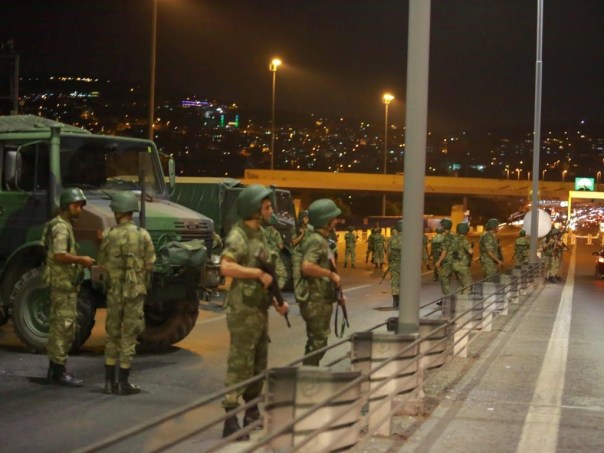
In the aftermath of the failed military coup of July 15-16, 2016 in Turkey, there have been calls at the highest levels of political authority to restore the death penalty.

The Association of World Citizens (AWC) has a consistent policy of opposition to the death penalty, in statements to the United Nations (UN) human rights bodies as well as in direct appeals to governments.

Turkey

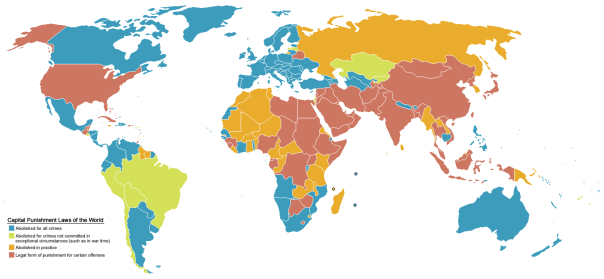
Since the end of World War II, there has been a gradual abolition of the death penalty due to the rather obvious recognition that putting a person to death is not justice. Moreover, on practical grounds, the death penalty has little impact on the rate of crime in a country. A number of States have a death penalty for those involved in the drug trade. To the extent that the drug trade can be estimated statistically, the death penalty has no measurable impact on the trade − a trade usually linked to economic or geopolitical factors.

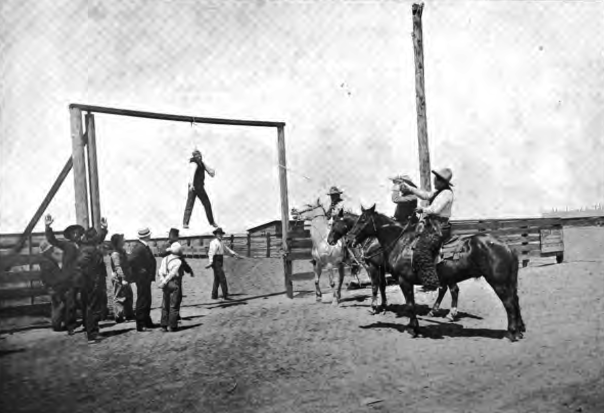
Horse_thief_hanging

The AWC is opposed to all organized killings by State agents. In addition to State-sponsored official executions, usually carried out publicly or at least with official observers, a good number of countries have State-sponsored “death squads” − persons affiliated to the police or to intelligence agencies who kill “in the dark of the night” − unofficially. These deaths avoid a trial which might attract attention or even a “not guilty” decision. A shot in the back of the head is faster. The number of “targeted killings” has grown. In many cases, the bodies of those killed are destroyed and so death is supposed but not proved, as has been the case of students protesting in Mexico. USA assassinations with drones has also been highlighted both in the UN human rights bodies and domestically. However, the drone “strikes” continue, and there is very little legislative opposition.

Death_Penalty_World_Map

A good deal of recent concern had been expressed on the death sentence in Saudi Arabia pronounced against Ali al−Nimr found guilty “of going out to a number of marches, demonstrations, and gatherings against the state and repeating some chants against the state” when he was 15 years old. He was to die by crucifixion. There is perhaps some chance of a change of penalty due to more historically-minded Saudis. The most widely known person crucified is Jesus. As the Roman count records have been lost, we have only the account written by his friends who stressed that he was innocent of the crimes for which he was condemned. His crucifixion has taken on cosmic dimensions. “Are you washed in the blood of the Lamb?” The Saudis try to avoid some of the Jesus parallel by beheading the person before putting the rest of the body on the cross, but the image of the crucified as innocent is wide spread.

Taliban_execute_Zarmeena_in_Kabul_in1999_RAWA

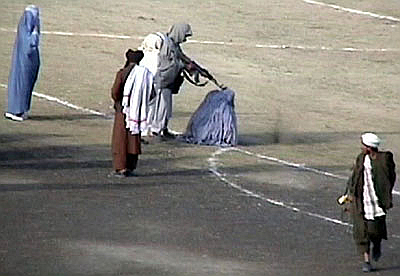
Thus, the AWC stresses the importance of human dignity. Our efforts against executions need to be addressed both to governments and to those state-like non-governmental armed groups such as ISIS in Syria and Iraq. The abolition of executions and the corresponding valuation of human life are necessary steps in developing a just world society.

Prof. René Wadlow is President of the Association of World Citizens.

A report on the UN Commission on the Status of Women, New York City, March 14-24, 2016

In Being a World Citizen, Conflict Resolution, Democracy, Environmental protection, Human Development, Human Rights, International Justice, Social Rights, Solidarity, The Search for Peace, Uncategorized, United Nations, Women's Rights, World Law on March 26, 2016 at 9:27 AM

Received from Sue Zipp, Vice-President of the Association of World Citizens:

*  *  *

UN COMMISSION ON THE STATUS OF WOMEN URGES GENDER-RESPONSIVE IMPLEMENTATION OF AGENDA 2030

Meeting concludes with agreement on foundations to accelerate action for all women and girls.

Date: 24 March 2016
Media Contacts:
Oisika Chakrabarti, +1 646 781-4522, oisika.chakrabarti@unwomen.org
Sharon Grobeisen, +1 646 781-4753, sharon.grobeisen@unwomen.org

* * *

New York — The 60th session of the UN Commission on the Status of Women concluded today with UN Member States committing to the gender-responsive implementation of Agenda 2030. A set of agreed conclusions called for enhancing the basis for rapid progress, including stronger laws, policies and institutions, better data and scaled-up financing.

The Commission recognized women’s vital role as agents of development. It acknowledged that progress on the Sustainable Development Goals at the heart of Agenda 2030 will not be possible without gender equality and the empowerment of all women and girls.

UN Women Executive Director Phumzile Mlambo-Ngcuka welcomed the agreement and the commitment of UN Member States to make the 2030 Agenda, adopted last September, a reality in countries around the world. She said: “Countries gave gender inequality an expiry date: 2030. Now it is time to get to work. These agreed conclusions entrench and start the implementation of a gender-responsive agenda 2030 with which we have the best possibility to leave no one behind.”

UN Women 1

Photo: UN Women/Ryan Brown

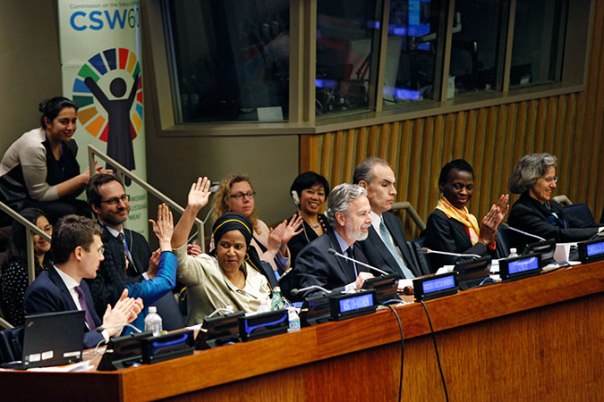
UN Women Executive Director Phumzile Mlambo-Ngcuka high-fives UN Women Deputy Executive Director Lakshmi Puri as the CSW Chair Antonio de Aguilar Patriota of Brazil announces the adoption of the agreement. Photo: UN Women/Ryan Brown.

Growing global commitment was already in evidence with a record number of more than 80 government ministers from around the world attending the Commission. Around 4,100 non-governmental representatives from more than 540 organizations participated as well, the highest number ever for one of the Commission’s regular annual meetings.

The agreed conclusions urge a comprehensive approach to implementing all 17 Sustainable Development Goals through thorough integration of gender perspectives across all government policies and programmes. Eliminating all forms of gender-based discrimination depends on effective laws and policies and the removal of any statutes still permitting discrimination. Temporary special measures may be required to guarantee that women and girls can obtain justice for human rights violations.

The Commission endorsed significantly increased investment to close resource gaps for achieving gender equality and the empowerment of all women and girls. Funds should be mobilized from all sources, domestic and international, ranging from fulfilling official development assistance commitments to combatting illicit financial flows that shortchange public resources for gender equality.

With humanitarian crises and other emergencies disproportionately affecting women and girls, the Commission underlined the imperative of empowering women in leadership and decision-making in all aspects of responding to and recovering from crisis. On the eve of the World Humanitarian Summit, it stressed prioritizing women’s and girls’ needs in humanitarian action and upholding their rights in all emergency situations. Every humanitarian response should take measures to address sexual and gender-based violence.

UN Women 2

Photo: UN Women/Ryan Brown

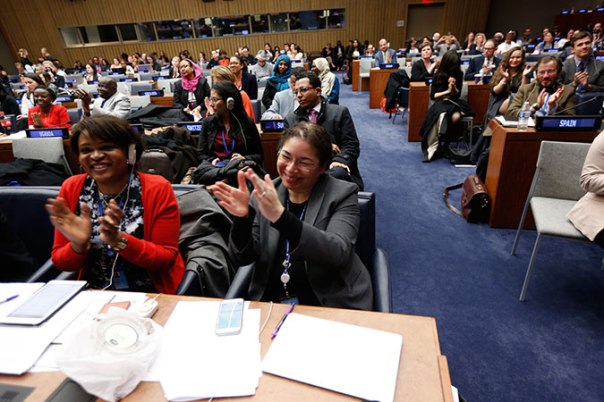
CSW60 delgates applaud as an agreement is announced during the closing plenary. Photo: UN Women/Ryan Brown.

Members of the Commission united behind ensuring women’s equal participation in leadership at all levels of decision-making in the public and private spheres, encompassing governments, businesses and other institutions, and across all areas of sustainable development. Depending on different circumstances, this may involve establishing temporary special measures, setting and achieving concrete benchmarks and removing barriers to women’s participation.

Given the major contributions to Agenda 2030 of civil society, including women’s and community-based organizations, feminist groups, human rights defenders and girls’ and youth-led organizations, the Commission welcomed open engagement and cooperation with them in gender-responsive implementation. It emphasized fully engaging with men and boys as agents of change and allies in the elimination of all forms of discrimination and violence against women and girls.

To guide systematic progress towards gender equality and women’s empowerment throughout the 2030 Agenda, the Commission stressed enhanced national statistical capacity and the systematic design, collection and sharing of high-quality, reliable and timely data disaggregated by sex, age and income. Members also agreed to bolster the role of national mechanisms for women and girls in championing their equality and empowerment.

UN Women 3

Photo: UN Women/Ryan Brown

A wide view of the room during the closing plenary meeting of the 60th Session of the UN Commission on the Status of Women. Photo: UN Women/Ryan Brown.

– See more at: http://www.unwomen.org/en/news/stories/2016/3/press-release-csw60-urges-gender-responsive-implementation-of-agenda-2030#sthash.ci0a4sJ9.dpuf

Robert M. Hutchins: Building on Earlier Foundations

In Being a World Citizen, Conflict Resolution, Democracy, Human Development, Human Rights, Social Rights, The Search for Peace, United Nations, World Law on January 17, 2016 at 5:16 PM

ROBERT M. HUTCHINS: BUILDING ON EARLIER FOUNDATIONS
By René Wadlow

Much of our current work for a more just and peaceful world builds on the thinking and efforts of earlier foundations. An important foundation is the leading role of Robert M. Hutchins, long-time President of the University of Chicago (1929-1951) whose birth anniversary we mark on January 17.

Hutchins’ father, William, was President of Berea, a small but important liberal arts college, so Robert Hutchins (1899-1977) was set to follow the family pattern. He went to Yale Law School and stayed on to teach. He quickly became the Dean of the Law School and was spotted as a rising star of United States (US) education. When he was 30 years old, he was asked to become President of the University of Chicago, a leading institution. Hutchins was then the youngest president of a US university.

In the first decade of his tenure, the 1930s, his ideas concerning undergraduate education − compulsory survey courses, early admission after two years of secondary school for bright and motivated students, a concentration on “Great Books” – an examination of seminal works of philosophy in particular Plato and Aristotle − divided the University of Chicago faculty. There were strong and outspoken pro- and anti-Hutchins faculty groups. Moreover, Hutchins’ abolition of varsity football and ending the University’s participation in the “Big Ten” university football league distressed some alumni whose link to the university was largely limited to attending football games. For Hutchins, a university was for learning and discussion, not for playing sports. As he famously said, “When I feel like exercising, I sit down until the feeling goes away.”

It is Hutchins’ creation and leadership of the Committee to Frame a World Constitution in 1945 which makes him one of the intellectual founders of the movement for world federation and world citizenship. After the coming to power of Hitler in Germany in 1933 and his quick decision to ban Jewish professors from teaching in German universities, many Jewish scientists and professors left Germany and came to the USA. Some of the leading natural scientists joined the University of Chicago. Thus began the “Metallurgy Project” as the work on atomic research was officially called. The University of Chicago team did much of the theoretical research which led to the Atom Bomb. While Hutchins was not directly involved in the atomic project, he understood quickly the nature of atomic energy and its military uses. He saw that the world would never return to a “pre-atomic” condition and that new forms of world organization were needed.
 

hutchins_0.jpg

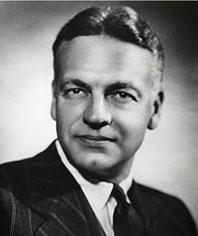
Robert M. Hutchins

“The death of democracy is not likely to be an assassination from ambush. It will be a slow extinction from apathy, indifference, and undernourishment.”

-Robert Maynard Hutchins.


On August 12, 1945, a few days after the use of the atom bombs, Hutchins made a radio address “Atomic Force: Its Meaning for Mankind” in which he outlined the need for strong world institutions, stronger than the United Nations (UN) Charter, whose drafters earlier in the year did not know of the destructive power of atomic energy.

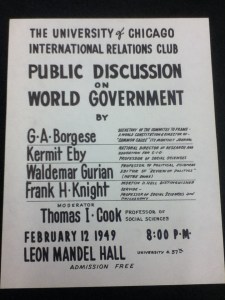
Several professors of the University of Chicago were already active in peace work such as Mortimer Adler, G. A. Borgese, and Richard McKeon, Dean of the undergraduate college. The three approached Hutchins saying that as the University of Chicago had taken a lead in the development of atomic research, so likewise, the university should take the lead in research on adequate world institutions. By November 1945, a 12-person Committee to Frame a World Constitution was created under Hutchins’ chairmanship. The Committee drew largely on existing faculty of the University of Chicago − Wilber Katz, Dean of the Law School and Rexford Tugwell who taught political science but who had been a leading administrator of the Roosevelt New Deal and Governor of Puerto Rico. Two retired professors from outside Chicago were added − Charles McIlwain of Harvard, a specialist on constitutions, and Albert Guerard of Stanford, a French refugee who was concerned about the structure of post-war Europe.

From 1947 to 1951, the Committee published a monthly journal Common Cause many of whose articles still merit reading today as fundamental questions concerning the philosophical basis of government, human rights, distribution of power, and the role of regions are discussed. The Preliminary Draft of a World Constitution was published in 1948 and reprinted in the Saturday Review of Literature edited by Norman Cousins and in the Bulletin of the Atomic Scientists some of whom were in the original “Metallurgy Project”. The Preliminary Draft raised a good deal of discussion, reflected in the issues of Common Cause. There was no second draft. The Preliminary Draft was as G.A. Borgese said, quoting Dante “…of the True City at least the Tower.”
 

WorldConstposter-e1401485123703


In 1951, Hutchins retired from the presidency of the University of Chicago for the Ford Foundation and then created the Ford Foundation-funded Center for the Study of Democratic Institutions where he gathered together some of his co-workers from the University of Chicago.

Two ideas from The Preliminary Draft are still part of intellectual and political life for those concerned with a stronger UN. The first is the strong role of regional organizations. When The Preliminary Draft was written the European Union was still just an idea and most of the States now part of the African Union were European colonies. The Preliminary Draft saw that regional groups were institutions of the future and should be integrated as such in the world institution. Today, the representatives of States belonging to regional groupings meet together at the UN to try to reach a common position, but regional groups are not part of the official UN structure. However, they may be in the future.

The other lasting aspect of The Preliminary Draft is the crucial role that nongovernmental organizations (NGOs) should play. The then recently drafted UN Charter had created a “consultative status” for NGOs, but few of the UN Charter drafters foresaw the important role that NGOs would play as the UN developed. The Preliminary Draft had envisaged a Syndical Senate to represent occupational associations on the lines of the International Labor Organization where trade unions and employer associations have equal standing with government delegates. In 1946, few people saw the important role that the NGOs would later play in UN activities. While there is no “Syndical Senate”, today NGOs represent an important part of the UN process.

Hutchins, however, was also a reflection of his time. There were no women as members of the Committee to Frame a World Constitution, and when he created the Center for the Study of Democratic Institutions with a large number of “fellows”, consultants, and staff, women were also largely absent.

The effort to envisage the structures and processes among the different structures was an innovative contribution to global institution building at the time, and many of the debates and reflections are still crucial for today.

For an understanding of the thinking of those involved in writing The Preliminary Draft see:
Mortimor Adler, How to think about War and Peace (New York: Simon and Schuster, 1944)
Rexford Tugwell, Chronicle of Jeopardy (Chicago: University of Chicago Press, 1955)
G. A. Borgese, Foundations of the World Republic (Chicago: University of Chicago Press,1953)
Scott Buchanan, Essay in Politics (New York: Philosophical Library, 1953)
For a life of Hutchins written by a co-worker in the Center for the Study of Democratic Institutions:
Harry Ashmore, Unreasonable Truths: The Life of Robert Maynard Hutchins (Boston: Little, Brown and Co, 1989)

Prof. René Wadlow is President of the Association of World Citizens.
The World, Its Protection, Its Citizens

In Being a World Citizen, Conflict Resolution, Cultural Bridges, Democracy, Environmental protection, Human Development, Human Rights, International Justice, Solidarity, The Search for Peace, United Nations, World Law on December 30, 2015 at 12:13 PM

THE WORLD, ITS PROTECTION, ITS CITIZENS

By René Wadlow

-- AWC-UN Geneva Logo --
On behalf of the Association of World Citizens, I would like to send you our best wishes for 2016.

May it be a year that brings peace and harmony closer to our world. Progress in the world is based on the emergence of ideas, their acceptance, their transformation into ideals, and then into programs of action.

2015 has seen within the United Nations (UN) system two major frameworks of ideas and suggested plans of action. The first was the post-2015 Sustainable Development Goals, and the second was the Paris COP 21 goals and treaty to deal with climate change.  These guidelines require close cooperation among national governments, the UN and other multilateral government institutions such as the European Union, and the wide range of non-governmental organizations including business and agriculture associations.  We need to move from fragmented efforts to strong partnerships.

However, these positive goals need to be seen against the background of current armed conflicts and violent extremism often rooted in a deadly mix of exclusion and marginalization, mismanagement of natural resources, oppression and the alienation arising from a lack of jobs and opportunities. The World is in need of protection, both of people and Nature.  As Citizens of the World, we have a sense of responsibility to participate fully in the emerging world society where disputes among States are settled within the framework of world law and through negotiations in good faith so that common interests may be found and developed.

As Citizens of the World, we have a sense of compassion for Nature, and thus we unite to safeguard the delicate balance of the natural environment and to develop the world’s resources for the common good.

Today, we all face a choice between those forces that would drive us apart, forces and attitudes such as racism, narrow nationalism and the aggressive pursuit of self-interest on the one hand, and on the other hand, those forces which promote an emerging world society that is equitable and harmonious. I am sure that you also will choose to work for wholeness, harmony and creativity.

Prof. René Wadlow is President of the Association of World Citizens.