By René Wadlow
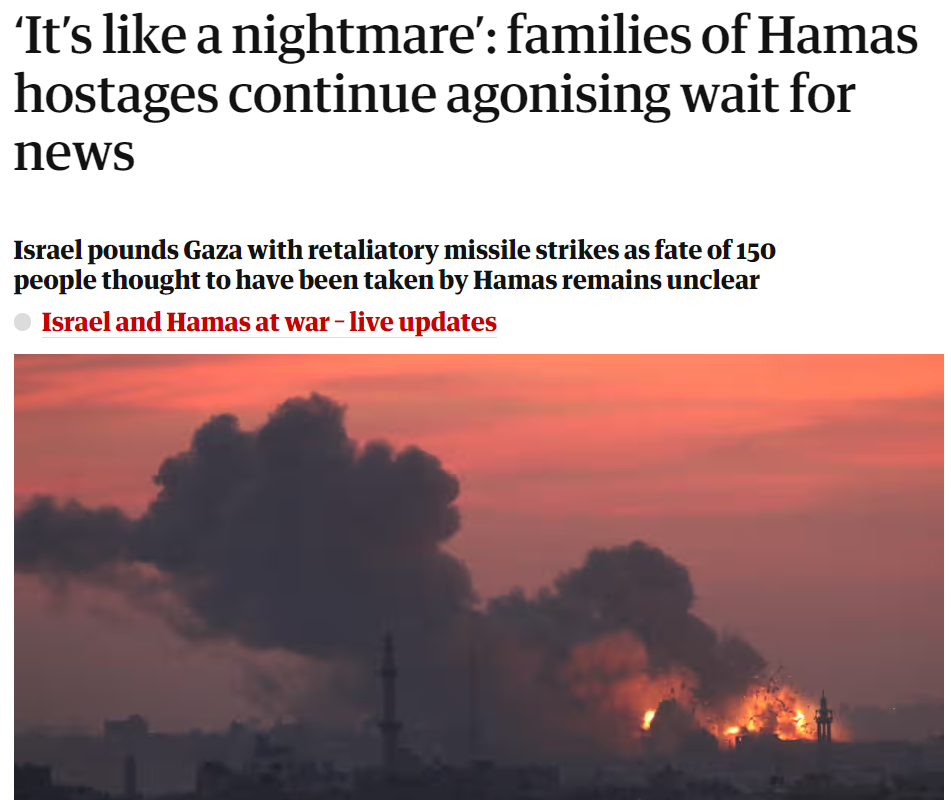
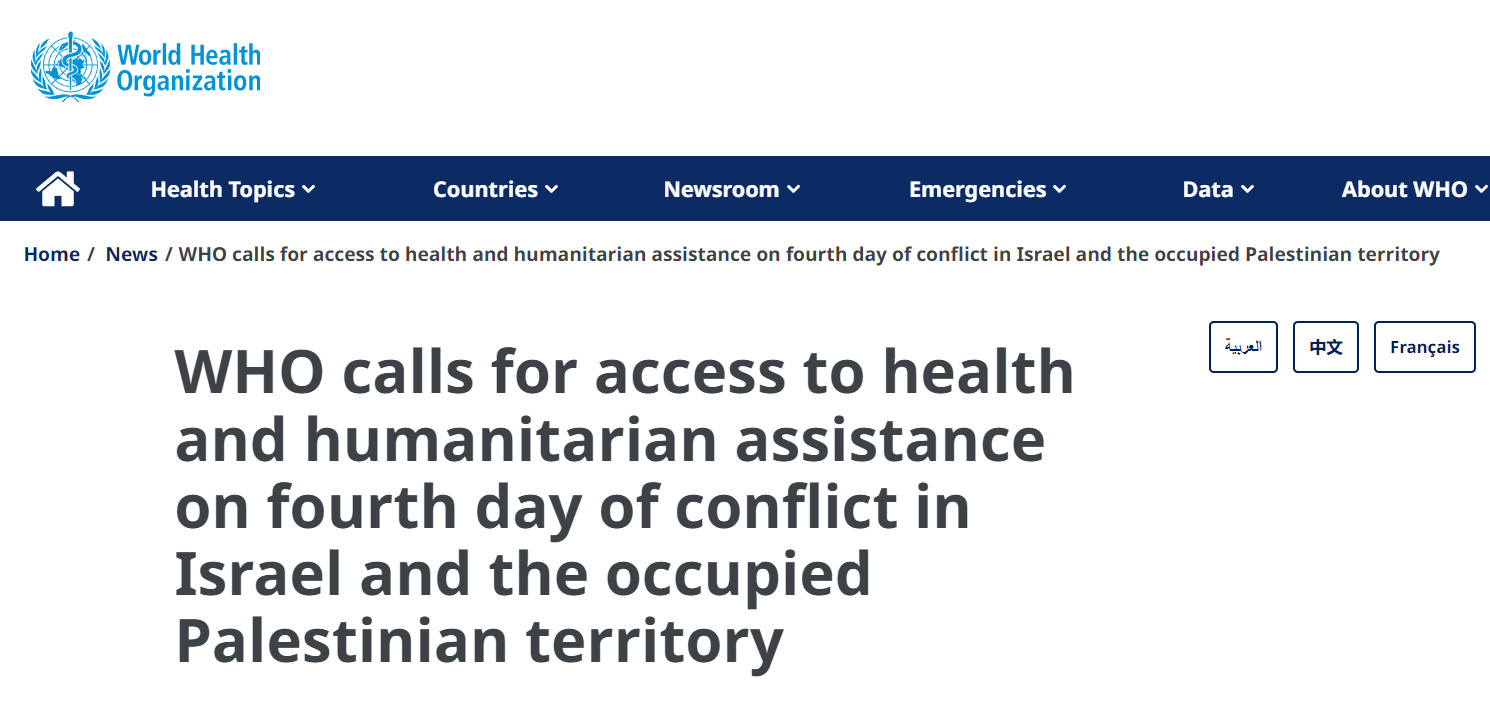
The Association of World Citizens (AWC), devoted to the resolution of armed conflicts through negotiations in good faith, is deeply concerned with the October 7 outbreak of violence between Hamas and Israel and the possible extension of the conflict to Hezbollah and Lebanon. The AWC stresses the need in the world society for systems of world law such as those standards expressed in International Humanitarian Law. Thus, we call for resolute action on the violations of humanitarian law in the Hamas-Israel conflict with the indiscriminate killing of civilians, the holding of hostages, and the destruction of medical and educational infrastructure.
Regular military personnel of all countries are theoretically informed of the rules of the Geneva Conventions of August 12, 1949, and the Protocol Additional adopted in 1977.
When the 1949 Geneva Conventions were drafted and adopted, it was possible to spell out in considerable detail rules regarding prisoners of war and the protection of civilians, in particular Common Article 3 (so called because it is found in all four Conventions) provides that “each Party to the conflict shall be bound to apply, as a minimum, the following provisions: Persons taking no active part in the hostilities…shall in all circumstances be treated humanely without any adverse distinction founded on race, color, religion or faith, sex, birth or wealth, or any other similar criteria.”
The importance of Common Article 3 should not be underestimated. It sets out in straightforward terms important protections that all parties to a conflict must respect. In order to meet the need for additional protection, international humanitarian law has evolved to cover not only international armed conflict but also internal armed conflict. Today, international human rights standards are also considered part of international humanitarian law, thus providing additional protection for vulnerable population groups such as women, children, and minorities.
As situations of internal violence and strife proliferate, abuses committed by non-State actors, such as armed militias, are increasing concerns. Fundamental standards of international humanitarian law are intended to ensure the effective protection of human beings in all situations. The standards are clear. (1)
There are two major weaknesses in the effectiveness of international humanitarian law. The first is that many people do not know that it exists and that they are bound by its norms. Thus, there is an important role for greater promotional activities, the dissemination of information through general education, specific training of the military, outreach to armed militias, and cooperation with a wide range of nongovernmental organizations.
The second weakness is that violations of international humanitarian law are rarely punished. Governments too often tolerate these violations. Few soldiers are tried, or courtmartialed, for the violations of international humanitarian law. This weakness is even more true of nongovernmental militias and armed groups.
In fact, most violations of international humanitarian law are not actions of individual soldiers or militia members carried away by a sudden rush of anger, fear, a desire of revenge or a sudden sexual urge to rape a woman. Soldiers and militia members violating the norms of international humanitarian law are acting on orders of their commanders.
Thus, the only sold response is an act of conscience to refuse an order of a military or militia higher up and refuse to torture, to bomb a medical facility, to shoot a prisoner, to harm a child, and to rape a woman. Conscience, that inner voice which discerns what is right from wrong and encourages right action is the value on which we can build the defense of international humanitarian law. The defense of conscience to refuse unjust orders is a large task but a crucial action for moving toward a law-based world society.
Notes
(1) For useful guides to international humanitarian law see:
D. Schindler and J. Toman, The Laws of Armed Conflicts (Martinus Nihjoff Publishers, 1988)
H. McCoubrey and N.D. White, International Law and Armed Conflicts (Dartmouth Publishing Co., 1992)
Prof. René Wadlow is President of the Association of World Citizens.
 Association of World Citizens
[…] Association of World Citizens has stressed that all elements of international humanitarian law must be safeguarded and charges of war crimes […]
[…] of Foreign Affairs. Thus, as the AWC has urged, most recently through its appeals of March 2022, October 2023 and October 2024, there is a real possibility for NGOs to take the […]