The Official Blog of the

Archive for the ‘Refugees’ Category

Syrie : Résoudre le Conflit Armé et Reconstruire une Société Qui Soit Inclusive et Juste

In Being a World Citizen, Conflict Resolution, Current Events, Human Rights, Humanitarian Law, International Justice, Middle East & North Africa, NGOs, Refugees, Solidarity, The Search for Peace, United Nations, War Crimes, World Law on April 3, 2017 at 10:56 PM

SYRIE : RÉSOUDRE LE CONFLIT ARME ET RECONSTRUIRE UNE SOCIÉTÉ QUI SOIT INCLUSIVE ET JUSTE

Par René Wadlow et Bernard J. Henry

Le 5 avril 2017, l’Union européenne (UE) et l’ONU tiendront une conférence commune sur l’avenir de la Syrie et de sa région. La « société civile » est invitée à y participer, mais il est impossible de savoir par avance si la rencontre de Bruxelles sera un événement de « récolte de fonds », auquel cas les Organisations Non-Gouvernementales (ONG) dotées du statut consultatif auprès de l’ONU ne pourront apporter qu’une contribution limitée, ou si les buts fixés seront plus ambitieux.

La rencontre organisée par l’UE et l’ONU est la troisième sur la Syrie en un laps de temps très court, démontrant l’ampleur des inquiétudes quant au flot des réfugiés ainsi que devant la violence et la souffrance qui ne semblent pas connaître de fin en Syrie et en Irak. Le texte suivant a été écrit au nom de l’Association of World Citizens (AWC) qui le transmet en amont aux gouvernements concernés par la conférence du 5 avril.

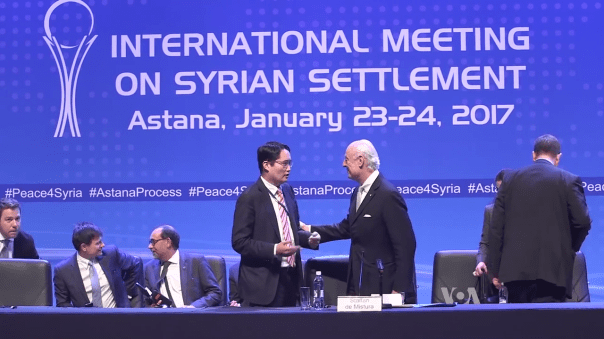
A la suite des pourparlers qui se sont tenus du 23 au 25 janvier 2017 à Astana (Kazakhstan) sous le parrainage de la Fédération de Russie, de la Turquie et de la République islamique d’Iran, un nouveau tour de pourparlers parrainé par l’ONU a eu lieu du 23 au 31 mars à Genève, sous l’appellation non-officielle de « Genève IV ». L’Émissaire spécial de l’ONU pour la Syrie, M. Staffan de Mistura, a dirigé ces pourparlers conviés par l’ONU à Genève et Lausanne.

Toutes les parties en présence au conflit en Syrie et en Irak n’y ont pas participé. Ni Daesh ni les Kurdes n’y étaient présents et toutes les composantes de l’opposition au Gouvernement du Président syrien Bachar al-Assad n’y ont pas été représentées. S’il existe des pourparlers non-officiels dans des hôtels ou des restaurants de Genève parallèlement aux négociations, en tout cas, personne n’en parle. Il existe une vaste et active communauté kurde à Genève et dans sa région, où certains agissent peut-être comme porte-paroles des efforts actuels de création du Rojava, zone autonome kurde au nord de la Syrie dont il est envisageable qu’elle s’associe un jour avec la région autonome kurde d’Irak.
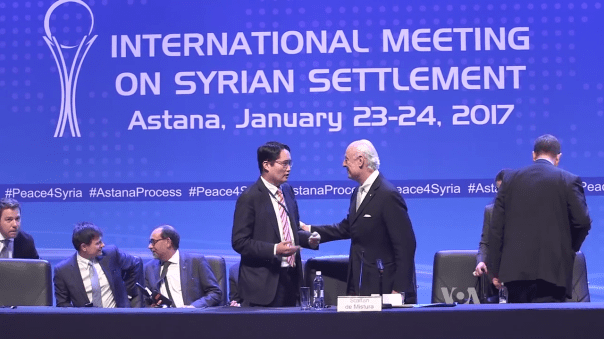
International_Meeting_on_Syrian_Settlement_in_Astana.png

Les pourparlers de Genève ont porté sur des questions à court terme, parmi lesquelles un cessez-le-feu, la sécurité des civils syriens et l’accès aux humanitaires des zones en besoin d’aide. D’autres questions ont été abordées sur un plus long terme, s’agissant de processus politiques tels une administration transitoire, des changements constitutionnels, et des élections en vue d’un nouveau gouvernement dont les fondements soient plus larges.

En parallèle aux pourparlers intra-syriens lors desquels M. de Mistura a officié en tant que médiateur, l’ONU s’est saisie des préoccupations liées aux Droits Humains en Syrie, ayant créé une Commission d’enquête internationale indépendante sur la République arabe syrienne ainsi qu’un mécanisme commun d’enquête ONU-Organisation pour l’Interdiction des Armes Chimiques.
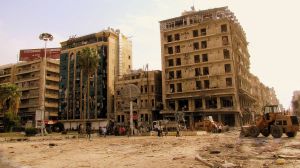
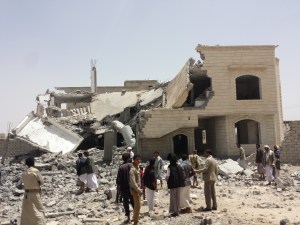
Saadallah_after_the_explosion

L’Association of World Citizens (AWC), Organisation Non-Gouvernementale (ONG) dotée du statut consultatif auprès de l’ONU, active dans la résolution des conflits armés et la promotion des Droits Humains, avait salué l’appel lancé le 20 juillet 2011 par le Secrétaire Général de l’ONU de l’époque, Ban Ki-moon, pour un dialogue inclusif sur les griefs du peuple syrien et ses préoccupations pour l’avenir. A travers un message au Secrétaire Général, l’AWC avait encouragé une participation aussi large que possible de la société civile syrienne à un tel dialogue, ajoutant que l’AWC, consciente de l’utilité qui peut être celle des ONG internationales dans la résolution des conflits, aiderait à faciliter de telles discussions de toute manière jugée appropriée.

En décembre 2011 commença une Mission d’Observation de la Ligue des Etats Arabes qui allait s’avérer de courte durée. Dans un message du 9 février 2012 au Secrétaire Général de la Ligue des Etats Arabes, l’Ambassadeur Nabil el-Araby, l’AWC a proposé un renouvellement de la Mission d’Observation de la Ligue Arabe, avec l’inclusion d’un nombre plus important d’observateurs issus d’ONG et un mandat élargi dépassant la simple mission d’exploration, et ainsi jouer un rôle actif de résolution des conflits au niveau local dans l’espoir d’arrêter la spirale qui engloutit le peuple syrien dans la violence et le carnage.

A bien des reprises depuis lors, l’AWC a rappelé à l’ONU, au Gouvernement syrien et aux mouvements d’opposition le rôle important que peuvent remplir les ONG, tant syriennes qu’internationales, pour faciliter la résolution des conflits.
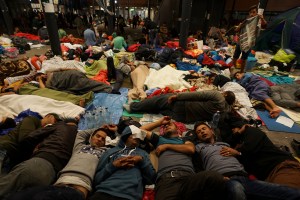
Syrian_refugees_having_rest_at_the_floor_of_Keleti_railway_station._Refugee_crisis._Budapest,_Hungary,_Central_Europe,_5_September_2015

Les combats en Syrie, en Irak et dans certaines régions de la Turquie ont généré un grand nombre de personnes déplacées et de réfugiés. La réaction des gouvernements au flot de réfugiés s’est montrée pour le moins inégale, quelques-uns s’étant montrés accueillants et d’autres ayant ouvertement fermé leur porte. Très tôt, l’AWC avait appelé de ses vœux une conférence de l’ONU sur les réfugiés et personnes déplacées. L’AWC a salué la convocation par l’ONU de conférences sur les réfugiés et l’aide humanitaire, au sein desquelles elle a pris toute sa part.

Les conflits armés en Syrie, en Irak, au Yémen et en Afghanistan ont causé des violations graves du droit humanitaire international : attaques contre des installations médicales et du personnel de santé, exécutions de prisonniers de guerre, tortures, destructions délibérées du patrimoine culturel, attaques délibérées contre des populations civiles, usage d’armes que les traités internationaux interdisent. En conséquence, l’AWC a souligné la nécessité d’une conférence de l’ONU pour la réaffirmation du droit humanitaire international. S’il ne se manifeste pas maintenant un soutien fort au droit humanitaire international, il existera un danger réel de voir les violations désormais considérées comme « normales », ce qui les rendra hors de contrôle. Des mesures fortes de soutien au droit humanitaire international doivent être prises sans délai.

8211986588_54c6f4f542_b

Les structures de gouvernement, l’autorité, les limites géographiques des régions administratives et les droits des minorités de prendre part à la vie de la nation posent problème en Irak, en Syrie au Liban depuis l’époque de la désintégration de l’Empire ottoman après la fin de la Première Guerre Mondiale. Il est essentiel de développer des formes de gouvernement adaptées rendant possibles à la fois l’autonomie locale et la coopération régionale.

La recherche d’une structure adaptée à ceux qui s’identifient comme Kurdes s’est avérée être une question particulièrement difficile qui a donné lieu à des violences. L’AWC, fidèle à la tradition de décentralisation et de fédéralisme d’Alexandre Marc et de Denis de Rougemont, tient que le fédéralisme et la décentralisation ne sont pas des chemins vers la désintégration d’un Etat, mais tendent au contraire à créer des structures plus justes d’organisation de l’Etat et de coopération régionale.

L’AWC salue la conférence organisée le 5 avril par l’UE et l’ONU sur la Syrie et la région du monde à laquelle elle appartient.

L’AWC affirme une nouvelle fois son souhait de coopérer pleinement à la vaste et indispensable tâche de mettre fin au conflit armé et de développer une société qui soit inclusive et juste.

Le Professeur René Wadlow est Président de l’Association of World Citizens.

Bernard J. Henry est Officier des Relations Extérieures de l’Association of World Citizens.

Syria: Armed Conflict Resolution and the Reconstruction of an Inclusive and Just Society

In Being a World Citizen, Conflict Resolution, Current Events, Human Rights, Humanitarian Law, International Justice, Middle East & North Africa, NGOs, Refugees, Solidarity, The Search for Peace, United Nations, War Crimes, World Law on April 3, 2017 at 10:45 PM

SYRIA: ARMED CONFLICT RESOLUTION AND THE RECONSTRUCTION OF AN INCLUSIVE AND JUST SOCIETY

By René Wadlow

On April 5, 2017, the European Union (EU) and the United Nations (UN) will hold a joint conference on the future of Syria and its region. “Civil Society” is invited to participate, but it is not clear in advance if the Brussels meeting will be a “fundraising” one, in which case most Nongovernmental Organizations (NGO) in consultative status with the UN will have little to contribute or if there will be wider aims.

The EU-UN meeting is the third in a short space of time concerning Syria, a reflection of concern with the refugee flow and the continued violence and suffering in Syria and Iraq. The following is a text written on behalf of the Association of World Citizens (AWC) that is being sent to governments in advance of the April 5 conference. The text notes earlier appeals and efforts of the AWC in the Syria-Iraq-Turkey conflicts.

Following the January 23-25, 2017 talks in Astana, Kazakhstan sponsored by the Russian Federation, Turkey, and the Islamic Republic of Iran, a new round of United Nations (UN)-sponsored talks, March 23-31 was held in Geneva (informally called Geneva 4). The UN Special Envoy for Syria, Mr. Staffan de Mistura, has led the UN, Geneva and Lausanne-based talks. Not all the parties involved in the Syria-Iraq conflicts are participants in the talks. ISIS and the Kurds were not present, nor have all segments of the opposition to the Government of President Bashar al-Assad been formally present. What informal talks are held in Geneva hotels and restaurants during the negotiations are not officially reported. There is a large and active Kurdish community in the Geneva area and some may be spokespersons for the effort to create Rojava, a Kurdish autonomous zone in Northern Syria that might form some sort of association with the Kurdish autonomous area of Iraq.

International_Meeting_on_Syrian_Settlement_in_Astana.png

The Geneva-based talks have concerned short-term issues such as a ceasefire, safety of Syrian civilians and humanitarian access. There have also been longer-range issues concerning political processes such as a transition administration, constitutional changes, and elections for a new, more broadly based government.

Parallel to the intra-Syrian talks mediated by Mr. de Mistura, the UN has been concerned with the human rights issues having created an Independent International Commission of Inquiry on the Syrian Arab Republic as well as a joint UN-Organization for the Prohibition of Chemical Weapons investigative mechanism.

Saadallah_after_the_explosion

The Association of World Citizens (AWC), a Nongovernmental Organization in consultative status with the UN, active on issues of the resolution of armed conflicts and the promotion of human rights, had welcome a July 20, 2011 call of then UN Secretary-General Ban Ki-moon for an inclusive dialogue to respond to pressing grievances and longer-term concerns of the Syrian people. The AWC, in a message to the Secretary-General, encouraged broad participation of Syrian civil society in such a dialogue and indicated that the AWC, knowing the possible usefulness of international NGOs in conflict resolution, would help facilitate such discussions in any way considered appropriate.

In December 2011, there was the start of a short-lived Observer Mission of the League of Arab States. In a February 9, 2012 message to the Secretary General of the League of Arab States, Ambassador Nabil el-Araby, the AWC proposed a renewal of the Arab League Observer Mission with the inclusion of a greater number of NGO observers and a broadened mandate to go beyond fact-finding and thus to play an active conflict resolution role at the local level in the hope to halt the downward spiral of violence and killing.

On many occasions since, the AWC has indicated to the UN, the Government of Syria, and opposition movements the potentially important role of NGOs, both Syrian and international, in facilitating armed conflict resolution measures.

Syrian_refugees_having_rest_at_the_floor_of_Keleti_railway_station._Refugee_crisis._Budapest,_Hungary,_Central_Europe,_5_September_2015

The fighting in Syria, Iraq and parts of Turkey has led to a large number of displaced persons and refugees. The response of governments to the refugee flow has been very uneven, welcoming in a few cases, outright rejection in other cases. The AWC early on called for a UN-led conference on refugees and internally displaced persons. The AWC welcomed and participated in the UN conferences on refugees and humanitarian aid.

The armed conflicts in Syria, Iraq, Yemen and Afghanistan have led to serious violations of humanitarian international law: attacks of medical facilities and personnel, the execution of prisoners of war, the use of torture, the deliberate destruction of cultural heritage, the deliberate attacks on civilian populations, the use of weapons banned by international treaties. Therefore, the AWC has stressed the need for a UN-led conference to reaffirm humanitarian international law. If strong support for international law is not manifested now, there is a danger that violations will become considered as “normal”, and thus will increase. Strong measures of support for humanitarian international law are needed to be undertaken now.

8211986588_54c6f4f542_b

The structures of government, the authority, and the geographic limits of administrative regions, the rights and participation in national life of minorities have been issues in Iraq, Syria and Lebanon since the disintegration of the Ottoman Empire at the end of the First World War. Appropriate forms of government which allow both for local autonomy and regional cooperation need to be developed. The search for an appropriate structure for those considering themselves to be Kurds has been a particularly difficult issue often leading to violence. The AWC which has a decentralization, federalist tradition in the spirit of Alexandre Marc and Denis de Rougemont, has highlighted that federalism and decentralization are not steps toward the disintegration of a State but rather are efforts to find a more just structure of State organization and regional cooperation.

The AWC welcomes the April 5, 2017 EU-UN conference on Syria and the region. The AWC reconfirms its willingness to cooperate fully in the vast and critical effort for an end to the armed conflict and a development of an inclusive and just society.

Prof. René Wadlow is President of the Association of World Citizens.
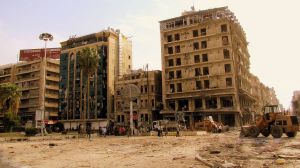
Aleppo: Short-term action followed by reaffirmation of humanitarian law

In Being a World Citizen, Conflict Resolution, Current Events, Human Rights, Humanitarian Law, International Justice, Middle East & North Africa, Refugees, Solidarity, The Search for Peace, United Nations, War Crimes, World Law on December 20, 2016 at 10:34 PM

ALEPPO: SHORT-TERM ACTION FOLLOWED BY REAFFIRMATION OF HUMANITARIAN LAW

By René Wadlow


Stephen O’Brien, the United Nations (UN) Under Secretary-General for Humanitarian Affairs describing the ever-more destructive situation in and around Aleppo, Syria, said, “The parties to the conflict have shown time and again they are willing to take any action to secure military advantage even if it means killing, maiming or starving children into submission in the process.”

aleppo-1

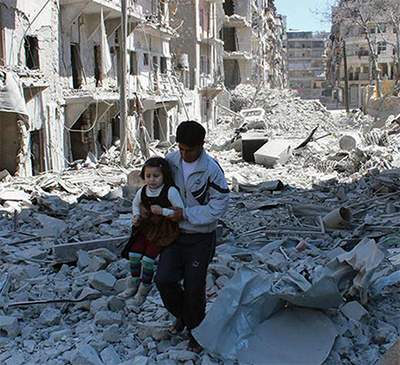
A large number of persons are trapped within the city, victims of blind bombardments, shelling, landmines and gunfire. Some persons are used as “human shields” and are unable to protect themselves. Medical facilities have been destroyed, and medical supplies are lacking. Food is unable to reach much of the population, and relief efforts are unable to reach persons in real need.

For the moment, there seems to be no willingness to negotiate a broad ceasefire. The UN Security Council is blocked. Thus, the only short-term action possible is to create “safe routes” so that those who wish to leave the besieged areas can do so. Mr. Brita Hagi Hasan, an elected official of a committee administering parts of Aleppo, has made a moving appeal for such humanitarian corridors. Some persons, an estimated 16,000 as of the first of December, have already been able to leave the city, but many more would do so if true safe routes were put into place.

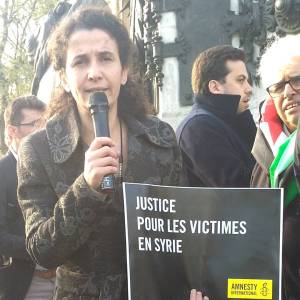
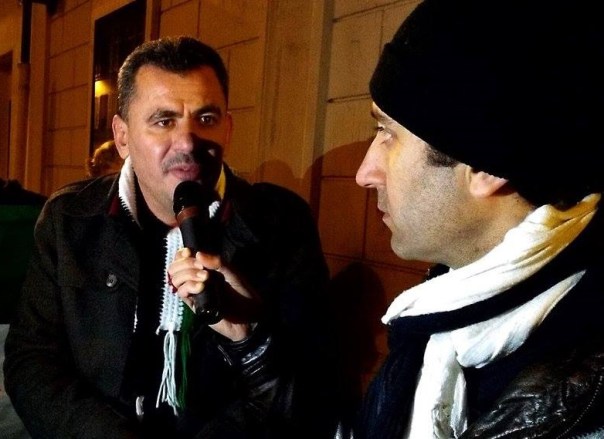
Brita_Hagi_Hasan.jpg

Brita Hagi Hasan (left), Chairman of the Local Council of the City of Aleppo, the (now defunct) local administration committee created by the leaders of the Syrian revolution there, addressing supporters in Paris, France on December 1, 2016. (C) Bernard J. Henry/AWC

However, there are two immediate obstacles. Many persons feel that such “safe routes” would, in fact, not be safe. There is a fear that they would be trapped, and once outside of their houses in the open, they would be shot at or bombed. The second fear is that they would not be safe when they reach government-held areas but could become victims of government-led repression.

aleppo-2

Thus, there is a double, short-term need: the first is accompaniment of citizens leaving the area either by UN or other international troops or by unarmed nongovernmental observers. With such accompaniment, there would be some reluctance to attack persons on foot or in buses. The second need is for credible guarantees by the government that there would be no reprisals against civilians, most of whom have been living in opposition-administered parts of the city, often for several years. There needs to be some sort of international follow-up to make sure that such government guarantees are honored.

Beyond these short-term but vital efforts, there is a longer-term need for the reaffirmation of the validity of humanitarian law and especially a reaffirmation of respect for humanitarian law.

The current armed conflicts in Afghanistan, Yemen, Libya, and the Syria-Iraq-ISIS-Kurds-Turkey conflict have seen a dangerous erosion of respect for the laws of war concerning medical facilities and personnel, concerning prisoners of war, of hostages, and of civilians, in particular women and children. There have been repeated cries of alarm from leaders of the International Committee of the Red Cross, of the UN, and nongovernmental organizations such as the Association of World Citizens (AWC). However, violations of these fundamental prohibitions of the laws of war continue. There have been relatively few calls for creative responses in the face of these continuing violations.

Thus, the AWC stresses the need to create immediately internationally-guaranteed safe routes for the evacuation of civilians from the besieged areas of Aleppo. Such guaranteed safe routes can also serve as a model for civilians in other besieged cities.

The AWC also calls for a serious investigation of the reasons for the erosion of the respect for humanitarian law to be followed by a UN-led conference on the reaffirmation of humanitarian law.

Prof. René Wadlow is President of the Association of World Citizens.

Immigration, Detention, Control

In Being a World Citizen, Conflict Resolution, Current Events, Europe, Human Rights, Middle East & North Africa, Migration, Refugees, Solidarity, The Search for Peace, United Nations, World Law on December 18, 2016 at 9:56 AM

IMMIGRATION, DETENTION, CONTROL

By René Wadlow

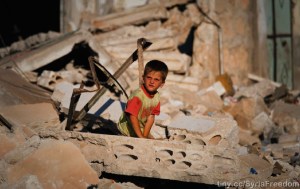
Migrants_1.jpg

If I were another on the road, I wouldn’t have looked back. I’d have said what one traveler says to another: Hello stranger, wake up your guitar! Let’s postpone our tomorrow to lengthen our road and widen our space, so that we may be rescued from our story together.


– Mahmoud Darwish, Palestinian poet.


By creating special observance days, the United Nations (UN) tries to promote international awareness and action on specific issues. Thus February 6 is International Day of Zero Tolerance to Female Genital Mutilation and March 20 is International Day of Happiness. May 2 highlights an issue we do not think about often: World Tuna Day. December 18 has been designated as the International Migrants Day, but even without a special day, migrants and refugees have become worldwide issues leading to political debate, especially in Europe and the USA.

Asylum seekers and immigrants with low level of education are often seen as a “burden”, not only for “Fortress Europe” but also for first reception countries. Thus, today’s borders function as a filter, separating the “wanted” – that is, migrants who can be used – from the “unwanted”. The filter serves to separate those that get in from those who are pushed back.

migrants_3

The filter serves to distort refugee flows. Because unaccompanied minors are more protected by law or policy and are often not deported, there are an increasing number of unaccompanied minors separated from the rest of the family and facing very uncertain futures, especially as concerns education.

There have been some efforts to provide for educational facilities, but most often for students already at the university level. In September 2014, the German Foreign Minister, Frank-Walter Steinmeier, announced the establishment of a special scholarship program for refugees from Syria saying “We cannot allow the Syrian conflict to engender a lost generation. It is particularly young Syrians who will play a crucial role in rebuilding their country and deciding the future as soon as this terrible conflict is over. We want to help give this young generation a future perspective.” Since then there are many signs of a lost Syrian generation, especially for those in the neighboring countries of Jordan, Turkey and Lebanon.

The filter also increases the trafficking of people by organized bands who quickly learn the ways of going around a filter. The trafficking of women and children for the sexual industries occurs in all parts of the world, but increases in areas with armed conflicts. Women in war zones are forced into sex slavery by combatant forces or sold to international gangs. Even without commercial trafficking, there has been a sharp increase in early marriage among Syrian refugee girls in Jordan, marriage being one of the few ways to cope economically and socially.

Migrants_2.jpg

The systemic failures and bureaucratic delays that characterize government reception systems have left many migrants and refugees in a legal “limbo” in which migrants remain trapped, contributing to processes of alienation. There is obviously a need for cooperation and some coordination among States of origin, transit and destination – more easily said than done.

Fortunately, nongovernmental organizations (NGOs) have tried to meet the challenges of migrant and refugee flows, often being able to draw upon the spontaneous goodwill of people. However, there are real limits to what NGOs can do, especially on longer-term issues. There is an obvious need to resolve the different armed conflicts through negotiations in good faith. There is also an obvious need to increase development efforts in those countries from which economic migration is a strong motivation. There is also a need to reverse environmental damage with ecologically-sound development programs.

090525-N-4774B-032

December 18 should serve as a time when we look with compassion at the fate of migrants, refugees and the internally displaced. It is especially a time when we must plan and increase resources for creative action.

Prof. René Wadlow is the President of the Association of World Citizens.