The Official Blog of the

Archive for the ‘Being a World Citizen’ Category

The Cultural Heritage of Iraq and Syria: “Destroyed by Human Ignorance – Rebuilt by Human Hope”

In Being a World Citizen, Cultural Bridges, Current Events, Human Rights, International Justice, Middle East & North Africa, Religious Freedom, The Search for Peace on March 3, 2015 at 9:25 PM

THE CULTURAL HERITAGE OF IRAQ AND SYRIA: DESTROYED BY HUMAN IGNORANCE – REBUILT BY HUMAN HOPE”

By René Wadlow

On Friday, February 27, 2015, the United Nations (UN) Security Council condemned “the deliberate destruction of irreplaceable religious and cultural artifacts housed in the Mosul Museum and burning of thousands of books and rare manuscripts from the Mosul Library” and having burned a few days earlier thousands of books from the Mosul, Iraq, University Library. The Mosul Museum which was not yet open to the public had a large number of statues from the pre-Islamic Mesopotamian civilizations as well as statues from the Greek Hellenistic period. The spokesman for the Islamic State (ISIS) faction which carried out the destruction − filmed and posted on the internet by them − maintained that the statues represented gods which had been worshipped while only the true god should receive worship.

This approach to pre-Islamic faiths and their material culture is the same as had led to the destruction of the large Buddha statues in Afghanistan − monuments that attested to the rich culture along the Silk Road.

There have been iconoclastic movements in the past, especially among Muslims and early Protestants holding that the spiritual world cannot (and thus should not) be represented in forms. All forms lead to confusing the specific form with the spiritual formless energy behind it. The iconoclastic reasoning can be defended, but not the destruction of objects which represented other philosophies, cultures and levels of understanding. (1)

As if to drive home to the least philosophical in the area, the ISIS also attacked Assyrian Christian villages in the area; villages were emptied, persons taken as hostages and younger women forced into slavery. The Assyrian Christians are among the oldest of the Christian communities; some speak Aramaic, the language spoken at the time of Jesus.

The shameless destruction by ISIS members of historical treasures Iraq will never be able to get back.

The shameless destruction by ISIS members of historical treasures Iraq will never be able to get back.

There are world laws against slavery going back to the abolitionist movements of the 1800s and made universal by conventions of the League of Nations and the UN. These conventions are rarely cited except in discussions of the current trafficking of persons as a “modern form of slavery”. Now ISIS has given us examples of slavery in its old forms, nearly to the point of caricature. We need to dust off these conventions and see that they are applied.

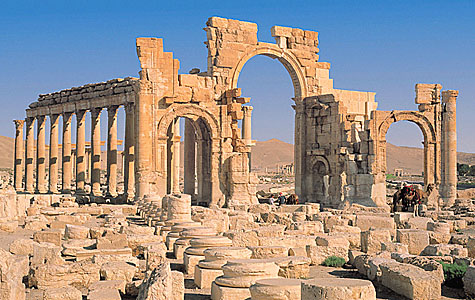
Syria and Iraq are home to some of the world’s first cities, a complex and unique meeting of states, empires and faiths. The protection of works of art and cultural heritage is a newer aspect of world law in which UNESCO is playing a leading role. Until the filming and posting of the destruction in Mosul, the looting of museums in Apamea, Aleppo and Raqqa as well as numerous archaeological sites had been known to specialists but had not gained wide public attention. Most of the looted objects were not destroyed but sold on a parallel international art market to fill the ISIS coffers. There is a need to develop global awareness and to campaign against this illicit trade in looted Syrian and Iraqi artifacts which first pass through the neighboring countries of Lebanon, Turkey and Jordan before ending in the hands of dealers and small auction houses who also profit from the theft.

The protection of cultural heritage owes much to the vision and energy of the Russian artist Nicholas Roerich (1874-1947). Roerich’s desire to make known the artistic achievements of the past through archaeology, coupled with the need to preserve the landmarks of the past from destruction, led to his work for the Banner of Peace to preserve art and architecture in time of war. Roerich had seen the destruction brought by the First World War and the civil war which followed the 1917 Russian Revolution. He worked with French international lawyers to draft a treaty by which museums, churches and buildings of value would be preserved in time of war through the use of a symbol − three red circles representing past, present and future − a practice inspired by the red cross to protect medical personnel in times of conflict.

In the areas it has conquered, ISIS has established formal slavery, including for girls as sex slaves.

In the areas it has conquered, ISIS has established formal slavery, including for girls as sex slaves. (C) CNN

Roerich mobilized artists and intellectuals in the 1920s for the establishment of this Banner of Peace. Henry A. Wallace, the United States Secretary of Agriculture and later Vice-President, was an admirer of Roerich and helped to have an official treaty introducing the Banner of Peace − the Roerich Peace Pact − signed at the White House on April 15, 1935 by 21 States in a Pan-American Union ceremony. At the signing, Henry Wallace on behalf of the USA said “At no time has such an ideal been more needed. It is high time for the idealists who make the reality of tomorrow, to rally around such a symbol of international cultural unity. It is time that we appeal to that appreciation of beauty, science, education which runs across all national boundaries to strengthen all that we hold dear in our particular governments and customs. Its acceptance signifies the approach of a time when those who truly love their own nation will appreciate in addition the unique contribution of other nations and also do reverence to that common spiritual enterprise which draws together in one fellowship all artists, scientists, educators and truly religious of whatever faith.”

As Nicholas Roerich said in a presentation of his Pact “The world is striving toward peace in many ways and everyone realizes in his heart that this constructive work is a true prophesy of the New Era. We deplore the loss of the libraries of Louvain and Oviedo and the irreplaceable beauty of the Cathedral of Reims. We remember the beautiful treasures of private collections which were lost during world calamities. But we do not want to inscribe on these deeds any words of hatred. Let us simply say: Destroyed by human ignorance − rebuilt by human hope.”

After the Second World War, UNESCO has continued these efforts, and there have been additional conventions on the protection of cultural and educational bodies in times of conflict, in particular the Hague Convention of May 1954, though no universal symbol as proposed by Nicholas Roerich has been developed.

In 2001 Afghanistan's Taleban militia, an "early version" of ISIS, blew up the magnificent Buddha statues of Bamiyan, thinking this would help them strengthen their implacable grip on the country. This most unwise move only hastened their downfall.

In 2001 Afghanistan’s Taleban militia, an “early version” of ISIS, blew up the magnificent Buddha statues of Bamiyan, thinking this would help them strengthen their implacable grip on the country. This most unwise move only hastened their downfall. (C) RAWA

As too often, governments and people react after events rather than affirm from a deeper level of consciousness. Now, we have seen mindless but deliberate destruction of both art and people. Let us not inscribe on these deeds any words of hatred, but let us work unitedly and creatively to establish a just peace.

Prof. René Wadlow is President and Chief Representative to the United Nations Office at Geneva of the Association of World Citizens.

(1) A good overview of iconoclastic movements in the non-Muslim world see: Alain Besancon, L’Image interdite. Une histoire intellectuelle de l’iconoclasme (Paris: Gallimard, 1994, 722pp.)

Celebrating Social Justice: The People’s Revolution is On the March

In Being a World Citizen, Democracy, Human Development, Human Rights, Middle East & North Africa, Social Rights, Solidarity on February 22, 2015 at 4:45 PM

CELEBRATING SOCIAL JUSTICE: THE PEOPLE’S REVOLUTION IS ON THE MARCH

By René Wadlow

Social Justice

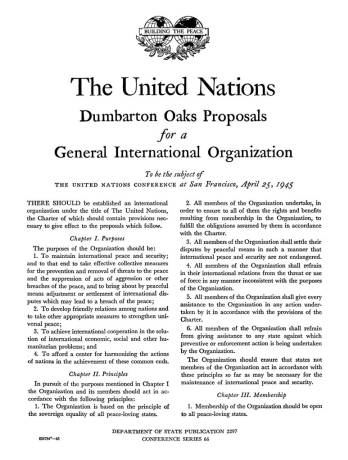
The United Nations (UN) General Assembly, on the initiative of Nurbch Jeenbrev, the Ambassador of Kyrgyzstan to the UN in New York, has proclaimed February as the “World Day of Social Justice”.

The World Day of Social Justice gives us an opportunity to take stock of how we can work together – the whole year round – at the local, national and global level on policy and action to achieve the goals set out in the resolution of “solidarity, harmony and equality within and among states.”

As the resolution states, “Social development and social justice are indispensable for the achievement and maintenance of peace and security within and among nations, and that in turn, social development and social justice cannot be attained in the absence of peace and security or in the absence of respect for all human rights and fundamental freedoms.”

The Preamble to the UN Charter makes social justice one of the chief aims of the organization using the more common expression of that time “social progress”. The Preamble calls for efforts to “promote social progress and better standards of life in larger freedom.”

The United States (U. S.) representatives who worked on the draft of the UN Charter were strongly influenced in their views of social progress by the “New Deal” legislation of President Roosevelt and its philosophy as it had been set out by his Vice-President Henry A. Wallace in 1942 when he set out the U. S. war aims. Wallace’s speech was the first time that the war aims of a country were not stated in terms of “national interest” and limited to the demands that had produced the start of the war.

Wallace, who had first been the Secretary of Agriculture and who had to deal with the severe depression facing U. S. agriculture, was proposing a world-wide New Deal based on the cooperative action of all of humanity. Wallace said “The people’s revolution is on the march. When the freedom-loving people march — when the farmers have an opportunity to buy land at reasonable prices and to see the produce of their land through their own organizations, when workers have the opportunity to form unions and bargain through them collectively, and when the children of all the people have an opportunity to attend schools which teach them truths of the real world in which they live — when these opportunities are open to everyone, then the world moves straight ahead…The people are on the march toward ever fuller freedom, toward manifesting here on earth the dignity that is in every human soul.”

Henry A. Wallace (left), Vice-President of the United States from 1941 to 1945. After the third and final reelection of Franklin Delano Roosevelt (right) to the presidency in 1944, Wallace was succeeded by Harry S. Truman, who himself succeeded Roosevelt as President of the United States after Roosevelt died on April 12, 1945.

Henry A. Wallace (left), Vice-President of the United States from 1941 to 1945. After the third and final reelection of Franklin Delano Roosevelt (right) to the presidency in 1944, Wallace was succeeded by Harry S. Truman, who himself succeeded Roosevelt as President of the United States after Roosevelt died on April 12, 1945.

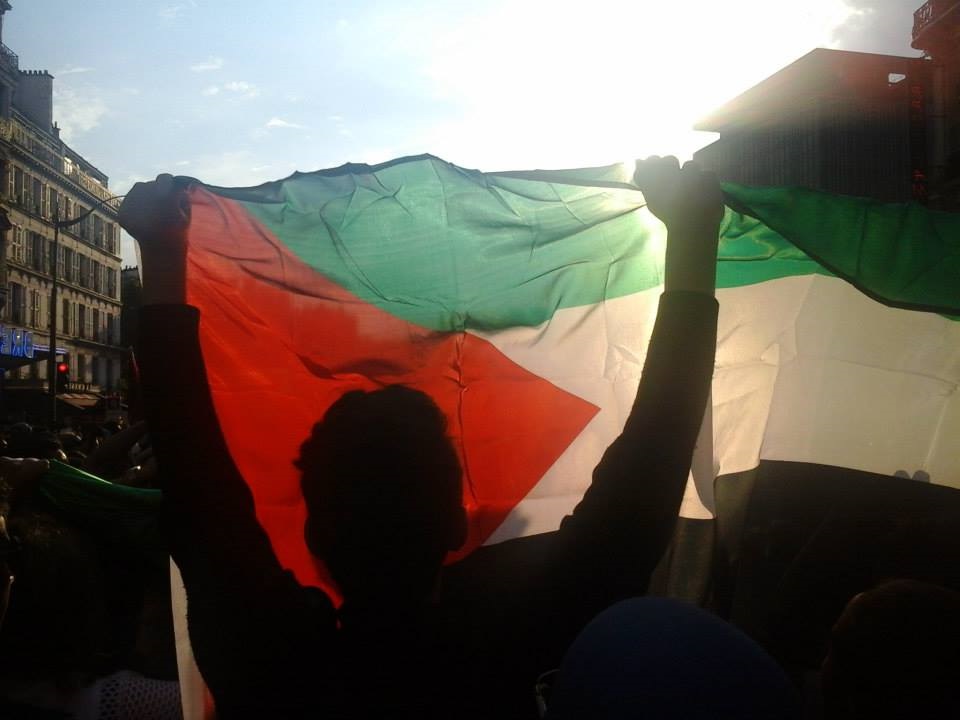
The People’s Revolution found its expression in the cry of the Tunisian uprising — Work-Liberty-Dignity. Today in the demands of “Work-Liberty-Dignity” we hear the demands of farmers to own land under sure conditions, to receive a fair price for their crops as well as the right to organize to protect their interests. We hear the crises of industrial and urban workers to be able to organize and to have their work appreciated for its full value. We hear the demands of students and the young for an education that opens minds and prepares for meaningful work.

A Tunisian demonstrator in Paris, France, as the Tunisian community there celebrated the first anniversary of the revolution on January 14, 2012. (C) Bernard J. Henry/AWC

A Tunisian demonstrator in Paris, France as Tunisians living there were celebrating the first anniversary of their revolution on January 14, 2012. (C) Bernard J. Henry/AWC

The people’s revolution is on the march. While the forces of the status quo are still strong and often heavily armed, the energy has shifted from the rulers to the people. The concept of Social Justice has articulated and focused deep demands for liberty, jobs, and dignity. The people’s revolution is not that of an elite willing to replace the existing ruling elite. The people’s revolution is a wave of all moving together, with deep currents below the surface. The tide moves with only a few visible waves but the collective demands for social justice and dignity is what makes the difference between the people’s revolution and a military coup. This is the true meaning of the World Day of Social Justice.

“For the wretched of the earth,
There is a flame that never dies,
Even the darkest night will end
And the sun will rise.”

Les Miserables, “Do You Hear the People Sing – Epilogue”.

In 2011, as the Tunisian and Egyptian revolutions were underway, the AWC adopted this song as its unofficial anthem.

* * *

Prof. René Wadlow is President and Chief Representative to the United Nations in Geneva of the Association of World Citizens.

Boko Haram: The Long Shadow of Usman dan Fodio

In Africa, Being a World Citizen, Current Events, Democracy, Human Rights, Middle East & North Africa, Religious Freedom on February 13, 2015 at 9:58 PM

BOKO HARAM: THE LONG SHADOW OF USMAN DAN FODIO

By René Wadlow

There has been growing concern with the activities of Boko Haram in northeast Nigeria and its spillover into northern Cameroon, Niger, and in the Lake Chad area. There has been a recent conference of the African Union on the issue, and military units from Chad, Cameroon and Niger are linking up with the Nigerian army to counter the growing power of the organization and its possible links with the Islamic State (ISIS) in Iraq-Syria. The practice of forced marriage, the slavery of women and girls, and arbitrary killing – including beheading – has led many to flee the area. This has resulted in a large number of displaced people, often living in difficult situations.

Boko Haram is not the first militant, anti-establishment Islamic movement in northern Nigeria and northern Cameroon. In the early 1980s, an Islamic sect, the Yan Tatsine unleashed an armed insurrection against the Nigerian security forces, especially in the Kano area. The revolts were led (or at least influenced by) a wandering preacher, Mohammed Marwa Maitatsine. Maitatsine was a nickname added to the family name of Marwa. The nickname originated from the Hausa word “tsini” meaning “to damn”. While preaching, he would name his enemies and their lifestyle and end with the phrase ‘Allah ta tsini” (May God damn you), thus the name “the one who damns”. Maitatsine, like Boko Haram, damned all those who enjoyed Western consumer goods, automobiles, radio, watches, and especially Western education, which was an avenue to these goods.

As with Boko Haram, there were ideological, economic and social aspects to the movement as well as reactions to the brutality of the Nigerian army’s efforts to weaken or destroy the movement. In the case of Mohammed Marwa, his control of territory was largely limited to the city of Kano, and he was killed by Nigerian security forces relatively quickly after the start of the armed attacks of his movement. However, the socio-economic conditions which led to the rise of his movement have continued and have produced smaller and less violent currents until the creation around 2002 of Boko Haram, first as a sect closed in on itself in an isolated area of Borno State in northeast Nigeria, and then for the last four years as an armed insurgency holding an ever-larger territory − or at least creating insecurity in ever larger areas.

For the current leader of Boko Haram, Abubaka Shekau, as well as for others in the movement, Usman dan Fodio (also written as Usuman) and his 1804-1808 jihad is the model to be followed. Although radically different in many ways, Boko Haram is part of the long shadow of Usman dan Fodio and the creation of the Sokoto Caliphate, the largest state in West Africa in the nineteenth century. Toyin Falola describes the background to the jihad:

“The background to the jihad was a crisis in the Hausa states and Islamic leaders’ resort to Islam to reform society. During the eighteenth century, Hausa society witnessed conflicts between one state and another, between Muslims and non-Muslims, between rich and poor. The states were heterogeneous and highly developed with established kingships, talented Islamic scholars and jurists. Succession disputes were endemic while ambition for political domination was common. Gofir state in the northwest emerged as a dominant power, but not without costly and ruthless wars. Merchants and kings grew wealthy, and their ostentatious living displeased the poor and devout Muslims. Methods of wealth accumulation involved corruption and unjust treatment of the poor. Taxes and levies could be excessive, demand for free labor ruinous, enslavement was common and conscription for military service was indiscriminate. The practice of Islam was not always strict: many were Muslims only in name, traditional religion was synthesized with Islam in a way that displeased devout preachers and only a small minority committed itself to spreading the religion”. (1)

Dan Fodio (1754-1817) was a Peul (plu. Fulani) and thus a member of a minority within the largely Hausa area. However, the Fulani are found throughout West Africa. Prior to 1800, there had been a gradual influx of Fulani into northern Nigeria, a migration which had spread over several centuries and which involved people who were ethnically and linguistically distinct from the Hausa. During the earlier migratory phases, they were largely pastoral herdsmen but increasingly they settled in Hausa towns.

As an educated Peul, dan Fodio felt excluded from political power as did other Fulani. The jihad and the distribution of power that followed led to the Sokoto Caliphate − a sort of unified theocracy. Old Hausa dynasties were replaced by new local leaders, mainly Fulani emirs. The caliphate was headed by a sultan, based in Sokoto, while local emirates were governed by an emir. The appointment of each emir had to be ratified by the sultan. Thus was created a Fulani-Hausa political area with elements still in place today.

Dan Fodio, often referred to as Shehu, was an educated preacher who gathered around him students who became the core of his jihad army. Dan Fodio knew the history of Islam and wanted to recreate the Muslim community of the time of the first four Caliphs, thought of as the ‘Golden Age of Islam’. He thus broke down the existing Hausa state system of some 15 separate states into a loosely organized Fulani-Hausa confederation of some 30 emirates with loyalty beyond the clan and the traditional ruler within the embrace of a common religion.

The Sokoto Caliphate, which spanned much of the northern halves of today's nations of Nigeria and Cameroon.

The Sokoto Caliphate, which spanned much of the northern halves of today’s nations of Nigeria and Cameroon.

Two features tended to characterize the emirate system. First, there was virtually no distinction between religious and political authority. The emir possessed both. Second, politics was conducted in an essentially despotic fashion. The common man was subservient to the emir and was dependent on his benevolence. The Fulani jihad fell short of establishing the just Islamic theocracy it had purported to create. Many saw the jihad as a road to power rather than to the purity of religious practice.

Boko Haram has kept the use of flags and flag bearers from Dan Fodio’s jihad as well as the arbitrary killing and indiscriminate marauding. In Boko Haram, there seem to be few Islamic scholars in their ranks, but there do seem to be some who have been to Islamic schools. The future from today is very uncertain. It is unlikely that there is a “military answer.”

Neither Boko Haram nor ISIS/Daesh should be confused with the Islamic faith. These two militant groups give Islam a bad name and do not speak for the world's Muslims.

Neither Boko Haram nor ISIS/Daesh should be confused with the Islamic faith in any way. These two militant groups do not speak for the world’s Muslims and only give Islam a bad name.

Changes in socio-economic conditions are likely to take a long time. From a distance, it is difficult to see how good faith negotiations can be carried out between governments and Boko Haram. Long shadows can last for centuries, but we must keep trying to see how negotiations can be carried out and if non-governmental organizations can play an intermediary role.

Prof. René Wadlow is President and Chief Representative to the United Nations, Geneva of the Association of World Citizens.

(1) Toyin Falola.The History of Nigeria (Westport, CT: Greenwood Press, 1999, p. 35)

POUR UN NOUVEL ANTI-ESCLAVAGISME

In Africa, Being a World Citizen, Children's Rights, Current Events, Human Rights, International Justice, Middle East & North Africa, Religious Freedom, United Nations, War Crimes, Women's Rights on February 10, 2015 at 12:10 AM

-- AWC-UN Geneva Logo --

L’Association of World Citizens

dit

L’ESCLAVAGE,

PLUS JAMAIS CA !

  1. L’esclavage est IMMORAL,
  2. L’esclavage est CONTRAIRE AU DROIT MONDIAL,
  3. L’esclavage doit être VAINCU SANS RECOURIR A LA GUERRE.

L’asservissement, la vente tel du bétail, et le mariage forcé de femmes et de jeunes filles par l’ « Etat islamique » (Daesh) dans les zones de l’Irak et de la Syrie qu’il a soumises par la barbarie, ainsi que par Boko Haram dans le nord-est du Nigéria, appellent une réaction concertée, notamment dans la mesure où cette pratique risque de s’étendre à d’autres zones telles que le nord du Cameroun et du Niger si l’influence de Boko Haram continue de croître.

C’est pourquoi l’Association of World Citizens appelle à un effort aussi vaste que possible en direction d’un Nouveau Mouvement Anti-Esclavagiste, rappelant à cette fin la devise du Libérateur (1831-1865) de William Lloyd Garrison, «Notre pays, c’est le Monde, et tous les êtres humains sont nos compatriotes».

Aux Etats-Unis, l’abolition de l’esclavage ne fut qu’un aspect de la sanglante Guerre de Sécession qui n’a produit que de l’amertume et n’a eu d’influence sur les relations interraciales que négative. En France, une première abolition de l’esclavage dans la fureur guerrière de la Révolution n’a abouti qu’à son rétablissement sous un Premier Empire qui s’est montré tout aussi guerrier, l’abolition définitive n’étant venue, avec Victor Schoelcher, que lorsque les canons se furent enfin tus. C’est pourquoi nous croyons fermement que l’esclavage tel que le pratiquent Daesh et Boko Haram doit être vaincu sans qu’il y ait pour cela recours à une guerre.

A travers les frappes aériennes en cours contre Daesh et l’action militaire kurde pour enrayer les atrocités de ce dernier, les tambours de la guerre se font pourtant d’ores et déjà entendre. Les troupes tchadiennes et camerounaises se sont jointes aux forces armées nigérianes pour empêcher Boko Haram de nuire plus avant, ce qui ne fera toutefois qu’ajouter encore au conflit armé déjà violent dans la région. Des armées peuvent vaincre d’autres armées, mais comme le rappelle l’Acte constitutif de l’UNESCO, «Les guerres prenant naissance dans l’esprit des hommes, c’est dans l’esprit des hommes que doivent être élevées les défenses de la paix».

Nous croyons donc que la réponse au problème doit venir d’un mouvement social et populaire issu des sociétés irakienne, syrienne et nigériane, qui reconnaissent toutes que l’esclavage est immoral et constitue une violation du droit mondial. La prohibition de l’esclavage est un élément crucial du droit mondial, au sein duquel elle s’est manifestée historiquement tant par les interdictions du trafic d’esclaves au dix-neuvième siècle, obtenues grâce au combat du Mouvement Anti-Esclavagiste de l’époque, que par celles édictées plus tard par la Société des Nations et enfin par l’action des Nations Unies depuis leur création en 1945.

Aujourd’hui, c’est d’un Nouveau Mouvement Anti-Esclavagiste que nous avons besoin, afin d’en appeler à toutes celles et tous ceux qui, au Moyen-Orient et en Afrique, peuvent et veulent nous rejoindre pour réaffirmer et renforcer le respect de la dignité humaine, en particulier des femmes et des jeunes filles, ainsi que le respect des droits des minorités religieuses quelles qu’elles soient.

REJOIGNEZ-NOUS DANS CE COMBAT!

THE NEW ABOLITIONISTS

In Africa, Being a World Citizen, Children's Rights, Current Events, Human Rights, International Justice, Middle East & North Africa, Religious Freedom, United Nations, War Crimes, Women's Rights, World Law on February 9, 2015 at 11:19 PM

-- AWC-UN Geneva Logo --

The Association of World Citizens

says

 NO TO SLAVERY!

  1. Slavery is IMMORAL,
  2. Slavery is BANNED BY WORLD LAW,
  3. Slavery must be OVERCOME WITHOUT RESORT TO WAR.

The enslavement, sale, and forced marriage of women and girls by the Islamic State (ISIS) in parts of Iraq-Syria and by Boko Haram in northeast Nigeria calls for concerted action, especially as the practice may spread to other areas such as northern Cameroon and Niger if the influence of Boko Haram grows.

Therefore, the Association of World Citizens calls for a broad effort of a New Abolitionist Movement, recalling the motto of The Liberator (1831-1865) of William Lloyd Garrison “Our country is the world; our countrymen are all mankind.”

As slavery was abolished in the United States only as an aspect of a bloody civil war which left long bitterness and influenced race relations negatively, we believe that slavery in ISIS and Boko Haram-held areas must be overcome without recourse to a war. The signs of war are already present in air strikes on ISIS positions and Kurdish military action. The joining of troops from Chad and Cameroon to Nigerian forces to combat Boko Haram can also lead to increased armed conflict.

Rather, we believe that reform must come from within Iraqi, Syrian and Nigerian society which recognizes that slavery is immoral and a violation of world law. The banning of slavery is a core element of world law: the unilateral bans on the slave trade of the nineteenth century in response to the efforts of the Abolitionist Movements, the League of Nations bans, and the continuing efforts of the United Nations.

Today, a New Abolitionist Movement is needed to reach out to those in the wider Middle East and Africa to join in strengthening respect for human dignity, respect of women and girls and respect of religious minorities.

JOIN US IN THIS COMMON CAUSE!

Religious Liberty: Challenges and Tasks Ahead for Nongovernmental Organization Action

In Being a World Citizen, Conflict Resolution, Cultural Bridges, Current Events, Human Rights, International Justice, Religious Freedom, Solidarity, The Search for Peace, United Nations on February 2, 2015 at 4:21 PM

RELIGIOUS LIBERTY:

CHALLENGES AND TASKS AHEAD FOR NONGOVERNMENTAL ORGANIZATION ACTION

By René Wadlow

Every year, January 30 is a most appropriate day on which to reflect on issues of religious liberty and to the challenges facing us as members of nongovernmental organizations (NGOs) such as the Association of World Citizens (AWC). January 30 is the anniversary of the assassination of Mahatma Gandhi by Nathuram Godse, an agent of the semi-military militant Hindu organization RSS (Rashtriya Swayam-sevah Sangh). In the eyes of Godse, Gandhi was too tolerant of Muslims in the riots then going on at the time of independence and partition between India and Pakistan. Currently, the RSS is still very active trying to force with its militias Indian Christians to become Hindus. The RSS is backed by some factions within the Indian government. The RSS is a good example of the fact that efforts to destroy or limit strongly freedom of thought and religious liberty come from both governments and from religious organizations.

As the AWC has been very active on religious liberty issues within the United Nations (UN) human rights committees in Geneva, I will list briefly the types of challenges which we face and then mention UN standards which we can use in our efforts to promote religious liberty.

  • The first situation is when a State has a State Religion and persecutes minority religions within the country. An example is the Islamic Republic of Iran which has banned the Baha’i religion (which began in Iran) and persecutes its members.
  • The second situation is when a State has a State Religion and persecutes branches of that religion with which it disagrees: the Pakistan government persecution of the Ahmadi branch of Islam (which began in what is now Pakistan) is an example.
  • The third situation is when a State has a State Religion and persecutes those who wish to bring about reforms within that religion. A recent example is in Saudi Arabia where a young man posted on his Internet blog a plea to limit the powers of the “moral police” who try to enforce what the government considers “moral behavior” such as women not driving an auto. For his blog statement, Ralf Badawi was sentenced to 10 years in prison and 1,000 lashes of a whip (50 lashes in public each week during 20 weeks). The AWC’s External Relations Officer, Bernard Henry, was among those protesting this decision in front of the Saudi Embassy in Paris a few days ago in a demonstration led by Amnesty International.
  • The fourth situation is when a State has not State Religion and is against all religious movements and institutions in general. The Soviet Union from 1922 to 1942. In 1942, Stalin changed his policy to encourage religious people to fight the German invaders. Mainland China during the Cultural Revolution years and the Pol Pot government of Cambodia are examples of governments hostile to all religious movements.
  • The fifth situation: Armed movements which control some territory and who wish to create a State with a State Religion and who are hostile to religious minorities. The Islamic State in Iraq and Syria (ISIS) is a dramatic example of an armed movement which controls an area as large as France, partly in Iraq, partly in Syria. There are forced conversions to Islam and girls and women from minority religions are sold as slaves. The Boko Haram movement, active in nearly as large an area as France in northeast Nigeria, northern Cameroon, and part of Niger acts in the same way. Boko Haram and ISIS follow the same policy and ideology and cooperate when possible. We have very similar patterns, but on a smaller scale, in the Central African Republic where Christian militias have attacked Muslim communities so that the majority of Muslims have fled to neighboring countries. However, the Christian militias have not said that they wish to set up a State with Christianity as a State religion.
  • The sixth situation are States which have no State Religion but where there are popular, nongovernmental currents or movements against specific religions. France, Germany and Myanmar can be good examples. France, most recently after attacks against journalists of a satiric journal by two brothers of Muslim religion, has seen a relatively large number of people attacking Islamic institutions largely at night. In Germany, there is a movement which is holding large demonstrations against Muslims. The German government has been against these demonstrations but is limited in what sort of police actions it can take to prevent them. In Myanmar (Burma) although Buddhism was never officially proclaimed a State Religion, the military-led government favored Buddhist groups to such an extent that Buddhism could nearly be considered a State Religion. Currently there are Buddhist monk-led attacks against the Rohingyas − a Muslim minority − and the government has done nothing to prevent such attacks.
On January 23 Amnesty International France and Reporters Without Borders held a protest before the Saudi Arabian Embassy in Paris in support of blogger Raif Badawi. (C) Bernard J. Henry/AWC

On January 23 Amnesty International France and Reporters Without Borders held a protest before the Saudi Arabian Embassy in Paris in support of blogger Raif Badawi. (C) Bernard J. Henry/AWC

These six situations highlight violent situations in which religions are banned, followers killed, imprisoned, sold into slavery and living in fear of being attacked.

There are, of course, many examples of more subtle forms of discrimination, the use of tax policies, the non-recognition of a group as a religion, the banning of healing practices, images making fun of a religion etc. It is important to be aware of these more subtle forms. They need to be prevented, but they are less visible than the imprisonment of a person so they lead to fewer protests.

The front door of a mosque in France in 2009, covered by racist and neo-Nazi graffiti. Over the last five years anti-Islam acts have soared in the country, hitting an all-time high in the wake of the terror attack against the weekly satirical newspaper Charlie Hebdo of January 7, 2015. (C) Thierry Antoine/AFP

The front door of a mosque in France in 2009, covered by racist and neo-Nazi graffiti. Over the last five years anti-Islam acts have soared in the country, hitting an all-time high in the wake of the terror attack against the weekly satirical newspaper Charlie Hebdo of January 7, 2015. (C) Thierry Antoine/AFP

Universal Standards for Religious Liberty

The universal standard is set out in the Universal Declaration of Human Rights (Article 18) “Everyone has the right to freedom of thought, conscience and religion; this right includes freedom to change his religion or belief and freedom, either alone or in community with others and in public or private to manifest his religion or belief in teaching, practice, worship and observance.” Article 18 of the Universal Declaration is reaffirmed in Article 18 of the International Covenant on Civil and Political Rights but made stronger by adding “no one shall be subject to coercion which would impair his freedom to have or to adopt a religion or belief of his choice.” The Covenant was followed, after many years of discussion and debate in which the Association of World Citizens played an important role, with a UN General Assembly “Declaration on the Elimination of All Forms of Intolerance and of Discrimination Based on Religion or Belief” of November 25, 1981. This is a strong Declaration. I believe that such a strong and comprehensive statement would not be possible today given the coordinated strength of the Islamic States in opposition to the idea in the Declaration of being able to change one’s religion. Unlike the Covenant, the Declaration is not a treaty and so there is no institution to study the action of governments in the light of the Declaration. Nevertheless, the Declaration, relatively little known, should be widely quoted by NGOs working on religious liberty issues.

What Can Be Done Today?

Governments are relatively inactive − or not active at all − when it comes to States restricting religious liberty. We have seen these recent days government leaders going to Saudi Arabia to wish the new king well, as Saudi Arabia sells oil and buys arms from Western governments. Saudi Arabia is one of the most violent oppressors of religious liberty. Thus I would expect no action on the part of governments toward other governments.

However, we do see governmental action against nongovernmental militias who violate religious liberty. There is a coalition of States, led by the United States, England and France to bomb from the air positions of the ISIS in Iraq-Syria. That such bombing will transform the ISIS into liberal advocates of human rights seems to me unlikely.

Likewise the army of Chad has joined the army of Nigeria to fight Boko Haram. As the Nigerian and Chadian armies are best known for their practice of burning villages and raping women, their contribution to a society of respect and tolerance is to be doubted.

Thus, to sum up: the possibilities for the defense of religious liberty are few. There are norms and standards set by the United Nations: Article 18 of the Universal Declaration and the Covenant, and especially the Declaration on the Elimination of All Forms of Intolerance and Discrimination Based on Religion or Belief. Governments are basically unwilling to do anything in the UN even against the worst offenders. On the one hand governments need resources from the country − oil from Saudi Arabia − or they are more concerned with security issues of the country than with religious liberty issues − the case with Iran and North Korea.

If, as I believe, governmental action is useless and will make situations worse, what can NGOs do? One must not be discouraged. The challenges are great; the resources of NGOs are few. A worldwide erosion of religious freedom is causing large-scale human suffering, grave injustice and serious threats to world peace and security. Yet I believe that NGOs have through UN standards a clear set of international principles and standards to maintain. We must find ways for common action today.

Prof. René Wadlow is President of the Association of World Citizens.
December 18: International Migrants Day

In Africa, Asia, Being a World Citizen, Current Events, Environmental protection, Europe, Fighting Racism, Human Development, Human Rights, Middle East & North Africa, Solidarity, United Nations, World Law on December 17, 2014 at 11:33 PM

DECEMBER 18: INTERNATIONAL MIGRANTS DAY
By René Wadlow


“Let us make migration work for the benefit of migrants and countries alike. We owe this to the millions of migrants who, through their courage, vitality and dreams, help make our societies more prosperous, resilient and diverse.”

Ban Ki-moon, Secretary-General of the United Nations.


In December 2000, the United Nations (UN) General Assembly proclaimed December 18 as the International Migrants Day. The day was chosen to highlight that on a December 18, the UN had adopted the International Convention on the Protection of the Rights of All Migrants Workers and Members of Their Families. Although migration to and from countries is a worldwide flow of people, only 42 countries, basically Latin American, North and West African, Indonesia and the Philippines, have ratified the Convention. The Convention created a Committee on Migrant Workers which meets in Geneva to review once every four years a report of the Convention members on their application of the Convention. The Convention also created a mechanism by which the Committee could receive individual complaints. Only three States have ratified this individual complaints mechanism: Mexico, Guatemala and Uruguay.

Today, there are some 232 million persons who reside and work outside their country of birth. The reasons for migration are diverse − most often economic, but also refugees from armed conflicts and oppression, and increasingly what are called “ecological refugees” − persons who leave their home area due to changing environmental conditions: drought, floods, rising sea levels etc. Global warming may increase the number of these ecological refugees.

After war, persecution, and poverty, a new danger is now driving people away from their homes in their millions – climate change. (C) Tck Tck Tck

After war, persecution, and poverty, a new danger is now driving people away from their homes in their millions – climate change. (C) Tck Tck Tck

Although migration is an important issue with a multitude of consequences in both countries of origin and destination, the Committee on Migrant Workers, a group of experts who function in their individual capacity and not as representatives of the State of which they are citizens, has a low profile among what are called “UN Treaty Bodies” – the committees which review the reports of States which have ratified UN human rights conventions such as the International Covenant on Civil and Political Rights or the International Covenant on Economic, Social and Cultural Rights.

Since the great majority of States receiving migrants − Western Europe and North America – have not ratified the Convention on Migrant Workers, other ways have to be found within the UN system to look at migration issues. Thus has been created outside the UN system but in close cooperation with the UN, the Global Forum on Migration and Development and the Global Migration Group to address the opportunities and challenges of international migration. Within the UN, there was the recent, October 2013 “High-level Dialogue on International Migration and Development”.

In 2013 the Conservative-led Government of the United Kingdom publicly called on undocumented migrants to “go home or face arrest”, a move that was basically inhumane and completely out of place. ( (C) Socialist Party of Great Britain)

In 2013 the Conservative-led Government of the United Kingdom publicly called on undocumented migrants to “go home or face arrest”, a move that was basically inhumane and completely out of place. (C) Socialist Party of Great Britain)

The Governments at the Dialogue unanimously adopted a Declaration (A/68/L.5) calling for greater cooperation to address the challenges of irregular migration and to facilitate safe, orderly and regular migration. The Declaration also emphasized the need to respect the human rights of migrants and to promote international labor standards. The Declaration strongly condemns manifestations of racism and intolerance and stresses the need to improve public perceptions of migrants.

UN conferences and such dialogues or forums serve as a magnet, pulling Governments to agree to higher ideals and standards collectively than they would proclaim individually. This is not only hypocrisy − though there is certainly an element of hypocrisy as Governments have no plans to put these aims into practice. Rather it is a sort of “collective unconscious” of Government representatives who have a vision of an emerging world society based on justice and peace.


In 2010 two French singers, Stanislas and Mike Ibrahim, released a song entitled “Tu verras en France” (“You’ll see in France”). In this song, the two young men call for attention to the situation of migrants who leave their home countries hoping to find a better life in France but end up undocumented and living in extreme poverty, constantly having to run from the police if they don’t want to end up in jail or sent back to their country of origin.


The role of nongovernmental organizations is to remind constantly Government representatives that it is they who have written the text and voted for it without voicing reservations. Numerous States which ratified the International Convention on Migrant Workers made reservations limiting the application of the Convention on their territory. Thus, the Declaration of the High-level Dialogue was not written by the Association of World Citizens but by Government diplomats.

The Declaration is a strong text and covers most of the important issues, including human mobility as a key factor for sustainable development, the role of women and girls who represent nearly half of all migrants, the need to protect the rights of migrant children and the role of remittances to families.

The Declaration merits to be better known and widely quoted in the on-going discussions and debates on migration policies and practices.

Prof. René Wadlow is President of the Association of World Citizens.
“A Living Thing is Born”

In Being a World Citizen, Conflict Resolution, Human Development, International Justice, The Search for Peace, United Nations, World Law on November 15, 2014 at 4:18 PM

“A LIVING THING IS BORN”
by René Wadlow


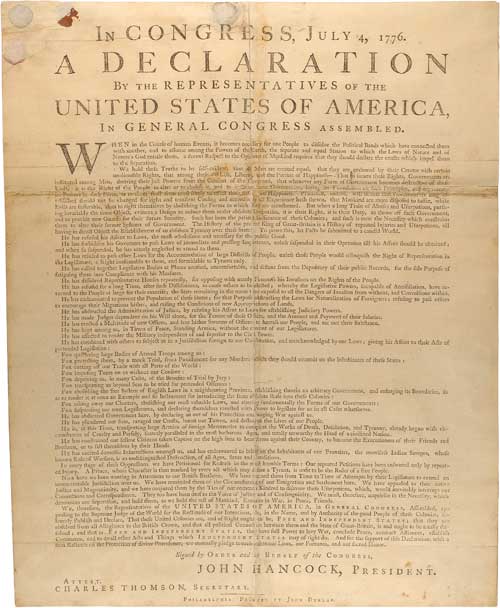
November 15, 1920 – The First Assembly of the League of Nations, Geneva


“A general association of nations must be formed under specific covenants for the purpose of affording mutual guarantees of political independence and territorial integrity to great and small States alike.” President Woodrow Wilson. The last of the fourteen points in which he set out in January 1918 the Allied war aims.

November 15 marks the anniversary of the first session of the Assembly of the League of Nations. Representatives of 44 States entered La Salle de la Réformation in central Geneva. The Salle had been built originally as a meeting place for Protestant refugees from France and Italy who needed a place of worship and a place for discussions and welfare. In the large hall, there was Léon Bourgeois, the oldest delegate and a long-time French worker for peace. Ignace Paderewski headed the Polish delegation in a room where he had given piano concerts. There was Lord Robert Cecil, who with Jan Christian Smuts of South Africa was a principle author of the League Covenant. There were delegates from South Africa and India which had “dominion status” but were not yet fully independent.

Significant were the countries not represented: the USA, the USSR, Germany, Austria and Hungary − all of whom had participated in parts of the First World War. Woodrow Wilson had welcomed the birth of the League of Nations: “A living thing is born.” Unfortunately, the League ran into difficulties from the start. The United States refused to join; too long a time elapsed before Germany was admitted or the USSR asked to join. The legacy of the First World War, codified in the Versailles Treaty, upset both the political and economic climate: huge reparations due by Germany, the payment of large debts by the Allies to the US, monetary collapse in several countries and economic protectionism rampant. All this contributed to the Great Depression of the 1930s.

The greatest trouble, however, was the mentality of the officials in national foreign ministries and war offices who were thinking in terms of the balance of power and who could not bring themselves to face new challenges. Nor was there among the general public a sense of global citizenship, of world loyalty which might have influenced government leaders in a more positive direction. Even today, as Brian Urquhart has said of the United Nations (UN), “There has yet to emerge, on the international scene, a great combined popular constituency to insist on the necessity of a respected central order and an orderly process of law and the keeping of peace.” However, there were real contributions of the League to the development of world institutions. The UN’s structure is that of the League − only the names have been changed: The League Assembly became the General Assembly, the League Council became the Security Council, the Mandates Commission became the Trusteeship Council.

A crucial contribution was the creation of an impartial civil service responsible only to the head of the organization under the obligation not to accept instructions from any government or outside authority. The League created a high quality staff under the direction of the first Secretary-General, Sir Eric Drummond, who served from the start until 1933.

The League also provided the starting point for future work on refugees, drug control, health and agriculture through its close cooperation with the International Institute of Agriculture set up in Rome. The International Labor Organization functioned alongside the League, its budget being voted by the League Assembly.

Looking back, we can mark the progress not only of the institutions but also the persons who shape them. A new breed of international civil servants are evolving within world organizations and non-governmental organizations active within the UN system to make this earth a true home for humanity. They have dedicated themselves to the same tasks that the League began but left unfinished.

Prof. René Wadlow is President of the Association of World Citizens.

UN Progress on Sexual Orientation Issues: A Long Road Still Ahead

In Being a World Citizen, Current Events, Democracy, Human Rights, International Justice, Solidarity, World Law on September 28, 2014 at 12:35 AM

UN PROGRESS ON SEXUAL ORIENTATION ISSUES: A LONG ROAD STILL AHEAD

By René Wadlow


On the last day of the current session of the United Nations (UN) Human Rights Council in Geneva, September 26, 2014, the Council approved a resolution condemning discrimination based on sexual orientation and gender identity stating:

Expressing grave concern at acts of violence and discrimination, in all regions of the world, committed against individuals because of their sexual orientation and gender identity.

Welcoming positive developments at the international, regional and national levels in the fight against violence and discrimination based on sexual orientation and gender equality.”

This is, for the Human Rights Council, a strong resolution on which to build a wave of support for respect of gender equality and the rights of lesbian, gay, bisexual and transgender (LGBT) in the current UN terminology. There had been an earlier resolution of the Council in June 2011, but it was weaker and with fewer countries voting in favor.

The resolution was hotly discussed by the government representatives in private − the reason why the vote came up only on the last day. The opponents made great efforts, offering complicated procedural moves and proposing seven meaningless amendments each of which required a vote, in the hope that time would run out and the session would close on time so the members could have a last drink together in the restaurant on the top floor of the Palais des Nations. However, the resolution moved forward.

In a most welcome move to amend its penal code, the African nation of Chad announced but it was abolishing the death penalty. Unfortunately, the same move to amend the penal code also includes a disappointing penalization of homosexuality. (C) Stop Homophobie

In a most welcome move to amend its penal code, the African nation of Chad recently announced that it was abolishing the death penalty.
Unfortunately, the same move to amend the penal code also includes a disappointing penalization of homosexuality.
(C) Stop Homophobie

There are 47 Member States in the Council elected within regional groups. Many more States attend the session as Observer States, with the right to speak but not vote. Some Observer States are there because they are interested in human rights; most are there to reply, if they are attacked, especially by representatives of nongovernmental organizations in consultative status, such as the Association of World Citizens.

The vote was 25 in favor, 14 against, 7 abstentions, and the representative of the African State of Benin left the room so he would not have to vote at all. It is important to analyze the composition of the vote to see allies to strengthen, opponents to change, and abstentions to act.

Interestingly, the lead on the resolution was taken by South American countries which have a large Roman Catholic population. In the past Latin American countries were hostile or uninterested, a reflection of Catholic sexual policy. Now with a new Pope from Latin America and his less condemning attitude, Latin American countries could play an active, positive role. Brazil, Chile, Colombia and Uruguay took the lead, and the other Latin American members voted for: Argentina, Costa Rica, Cuba, Mexico, Peru and Venezuela. Western Europe voted for, and more surprisingly, four Asian States: Japan, Philippines, South Korea, and Vietnam.

Opposition came from African States: Botswana, Cote d’Ivoire, Ethiopia, Gabon, Kenya, joined by North African and Middle East States: Algeria, Kuwait, Morocco, Saudi Arabia, United Arab Emirates, and Asian States with a large Muslim population: Indonesia, Maldives, and Pakistan. The Russian Federation also voted no, a reflection of the current policy there, especially voiced by its President.

Among the States which abstained are two key Asian States where efforts must be made systematically for change: China and India. Four African States also abstained, not giving into strong pressure to have a unified African bloc: Burkina Faso, Congo, Namibia, and Sierra Leone, and as mentioned, Benin left the room so as not to vote at all. Since individual African States have little influence, they try to vote together as a bloc which gives them some power. That four African States were willing to leave the negative bloc is an important sign of progress, but they are hardly in the “yes” group as yet.

The resolution also calls for an update on a 2012 study on discrimination based on sexual orientation. The updated study means that the issue will be automatically on the 2015 Human Rights Council agenda.

On April 7, 2013 Wilfred de Bruijn and Olivier Couderc, a young homosexual couple living in Paris, were savagely attacked on the street on homophobic grounds as they were going home late at night. Since the newly-elected Socialist Party parliamentary majority had begun examining a bill on same-sex marriage in late 2012, French President François Hollande and his government had faced demonstrations, sometimes violent, by opponents to gay rights who wanted them to drop the bill. The attack on Wilfred and Olivier resulted in national outrage and the opponents to the government-proposed bill were widely blamed for it.  Eventually, on May 17, 2013 the French Parliament went ahead and did pass the law extending the right to marriage to same-sex couples.

On April 7, 2013 Wilfred de Bruijn and Olivier Couderc, a young homosexual couple living in Paris, were savagely attacked on the street on homophobic grounds as they were going home late at night.
Since the newly-elected Socialist Party parliamentary majority had begun examining a bill on same-sex marriage in late 2012, French President François Hollande and his government had faced demonstrations, sometimes violent, by opponents to gay rights who wanted them to drop the bill.
The attack on Wilfred and Olivier resulted in national outrage and the opponents to the government-proposed bill were widely blamed for it.
Eventually, on May 17, 2013 the French Parliament went ahead and did pass the law extending the right to marriage to same-sex couples.

Nongovernmental work must start now to influence governments for the 2015 sessions. To the extent possible, articles in the press in India and China would be useful. China, India and Russia have influence in the Human Rights Council, both because of the size of the States but also the good quality of their representatives who are often very skillful in tactical techniques to delay action. The African States have prejudices but no real ideological position, and so some progress may be made there. The Islamic States will be the most difficult to swing given the power of conservative religious leaders in many Muslim countries. Latin American governments should be thanked or their efforts, especially as there could be a conservative Catholic backlash in some countries once people learn of their governments’ initiatives. It must be said that the media in most countries do not focus on the resolutions of the UN Human Rights Council. Thus when a conservative, activist minority learns about the resolution, they may mobilize to change the policy of the Latin American States.

There is still a long road ahead for real respect for sexual orientation efforts. As most UN human rights resolutions, the emphasis is put on non-discrimination and anti-violence. I think that the policy of the Association of World Citizens must stress a positive approach of respect for each individual and creating a society in which each person can fulfill potentials.


Prof. René Wadlow is President of the Association of World Citizens.
The Open Conspiracy for Peace

In Being a World Citizen, Conflict Resolution, Human Development, Introductory, The Search for Peace on September 21, 2014 at 2:26 AM

THE OPEN CONSPIRACY FOR PEACE

By René Wadlow

Behind the short-sighted governments that divide and mismanage human affairs, a real force for world unity and order exists and grows.”

H. G. Wells, A Short History of the World, 1943.

September 21 is the United Nations (UN)-designated World Day of Peace. It is also the anniversary of the birth of Herbert George Wells, usually known as just H. G. Wells.[i]

From the publication of The Time Machine in 1895 to his death in 1946, Wells ‘bestrode his world like a colossus’. He was a creator of modern science fiction, a pioneer of women’s rights (though he treated some badly in his many love affairs), a journalist, historian and novelist. Above all, he was a social thinker devoted to peace and a stable world order. It is this last aspect of his writing that makes his birth anniversary and the World Day of Peace appropriate.[ii]

Wells first studied biology under Thomas H. Huxley, the leading Darwinian of Victorian times, and came to see the ethical principles underlying humanity’s social systems as being rooted in the evolutionary process and therefore having the potential for onward development. Just as there was one major factor in biological progress − natural selection − so in social progress, there was one major factor − the quality of enlightened thought.

As he wrote, “However urgent things may seem, a great mental renascence must precede any effectual reorganization of the world. A systematic development and a systematic application of the sciences of human relationship, of personal and group psychology, of financial and economic sciences, and of education − sciences still in their infancy − is required. Narrow and obsolete, dead and dying moral and political ideas have to be replaced by a clearer and simpler conception of the common origins and destinies of our kind.”

"If we don't end war, war will end us." H. G. Wells.

“If we don’t end war, war will end us.”
H. G. Wells.

Wells was critical of democracy as being too slow and always tending toward the middle of the road on important issues. In 1928, he tried to alert to new dangers and possibilities by proposing an “open conspiracy” − an elite group of pioneer world citizens who would organize to move humanity forward[iii]The Open Conspiracy was his organizing manual for the diverse constituencies of globally-minded citizens to bring sanity to the organizing of human affairs.

Wells clearly foresaw the need for a re-organization of the economic affairs of humanity. “Certain things, the ocean, the air, rare wild animals must be the collective property of all humankind and cannot be altogether safe until they are so regarded and until some concrete body exists to exercise these proprietary rights … the raw material of the earth should be for all.”

Some progress has been made in the identification of endangered species, and a variety of international conventions have at least slowed the despoliation of an amount of our natural heritage. Yet the ongoing destruction of forests, over-exploitation of the oceans as well as other signs of the environmental crisis are constant reminders of how much distance is left to travel.

Wells was harshly critical of Marxist theory and of the Communist rule of Stalin in the USSR. Thus he contrasts his “open conspiracy” with the closed conspiracies and vanguard approach of Lenin whom he had met in 1920. He was also highly opposed to Fascism and its closed conspiracies. The “open conspiracy” is a project for every manner of person once an individual has developed a ‘world consciousness’, though Wells was himself very Eurocentric in his world outlook.

He summed up his views as a race between education for world citizenship and catastrophe − a task or bold and creative minds.

Prof. René Wadlow is President of the Association of World Citizens.
[i] For a detailed biography see: David Lodge, A Man of Parts (New York, Viking, 436pp.)

[ii] For an overview of his political thinking see: John S. Partington. Building Cosmopolis: The Political thought of H.G. Wells Aldershot: Ashgate, 2003)

[iii] The Open Conspiracy was first published in 1928 and slightly revised published in 1933. The 1933 edition is republished much more recently with a strong introduction and notes in W. Warren Wagar. The Open Conspiracy/H.G. Wells on World Revolution (Westport, CT: Praeger Publishers, 151pp.).