The Official Blog of the

Archive for September, 2024|Monthly archive page

Strong Measures Needed to Prevent Escalation of Israeli-Hezbollah Conflict

In Being a World Citizen, Conflict Resolution, Current Events, Human Rights, Humanitarian Law, Middle East & North Africa, NGOs, Solidarity, The Search for Peace, Track II, United Nations, World Law on September 26, 2024 at 7:05 AM

By René Wadlow

Antonio Guterres, the United Nations (UN) Secretary General, said in his opening remarks to the UN General Assembly on September 24, 2024, “Gaza is a nonstop nightmare that threatens to take the entire region with it. Look no further than Lebanon. We should all be alarmed by the escalation. Lebanon is on the brink. The people of Lebanon – the people of Israel – and the people of the world – cannot afford Lebanon to become another Gaza.”

Lebanon may have already moved over the brink. Israeli strikes on Lebanon on September 23 killed at least 356 people and injured more than 1,200 others. Hezbollah deputy chief Naim Qassem has just said, “We have entered a new phase – an open-ended battle of reckoning.” Until now, Hezbollah has designed its attacks to stay below the threshold of a full-scale conflagration, but these deadly exchanges of fire carry a high risk of miscalculation, spiraling violence upward.

A rapid escalation in recent days, starting with the attack on Hezbollah members via booby-trapped pagers and walkie-talkies followed by Israeli bombardments, has raised the specter of a new phase in the conflict with a possible ground invasion by Israeli troops as in 1982 and 2006. There are fears that Iran could be drawn into the fighting. The new Iranian President, Masoud Pezeshkian, speaking at the UN General Assembly also on September 24, demanded a global response to the Lebanon situation, “not to allow Lebanon to become another Gaza.”
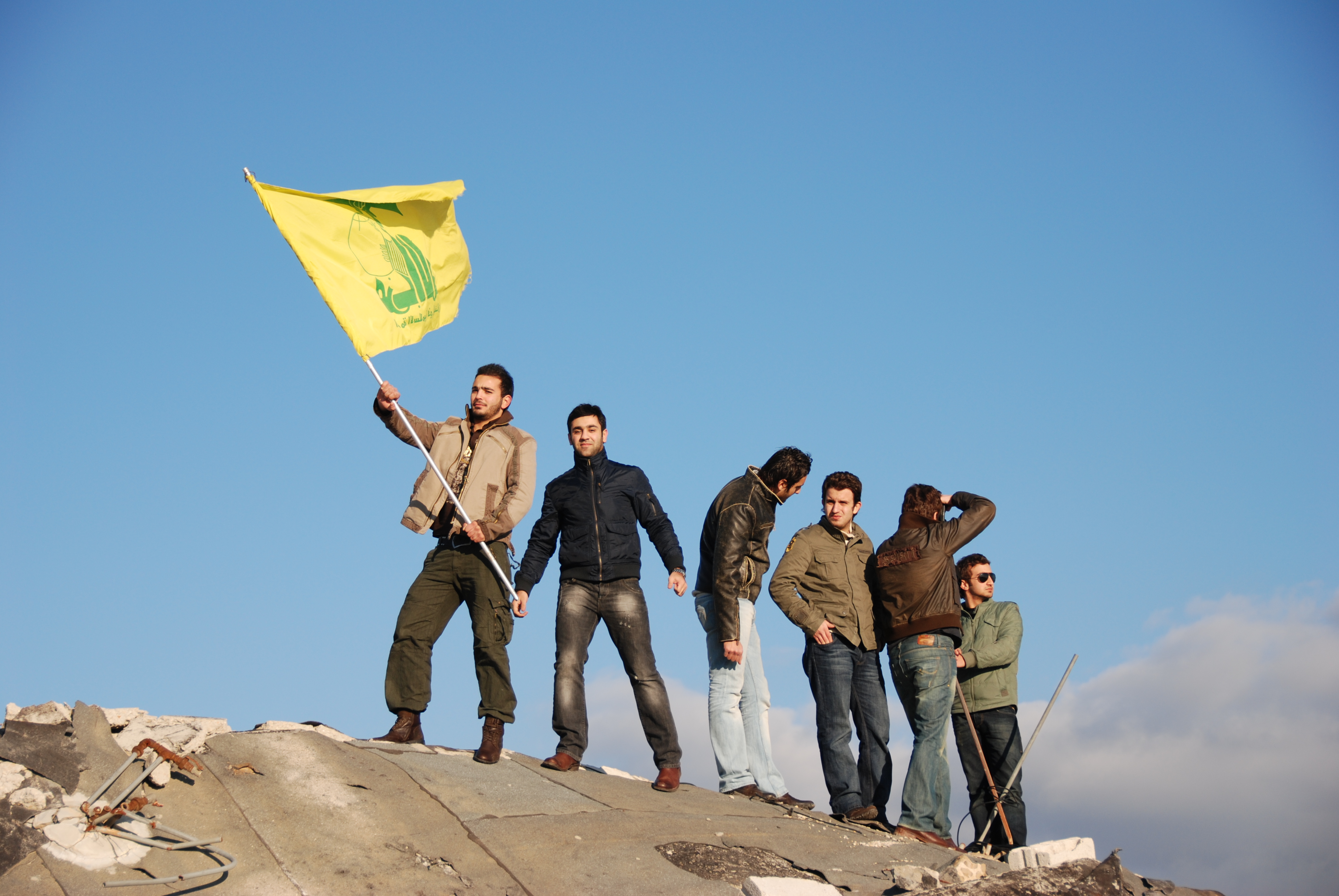
In 2007, young people from Beirut posing with a Hezbollah flag on the ruins of the Khiam prison formerly run by the pro-Israeli South Lebanon Army (C) Paul Keller

Hezbollah is supported by Iran but not fully under Iranian control. Hassan Nasrallah, the Secretary-General of Hezbollah, has in recent days made widely watched television talks attacking Israeli politics and indicating continuing Hezbollah support for the Palestinians in Gaza, saying that a ceasefire in Gaza was necessary before any negotiations with Hezbollah could take place. Since negotiations for a ceasefire in Gaza seem unlikely for the moment, Hezbollah’s current campaign is likely to continue. In addition, recent tensions in the West Bank between Israeli settlers, Israeli soldiers and Palestinians in settled villages have added more heat to the general tensions in the area.

The issue is what can be done now to prevent escalation and reduce tensions. A first step is to stress respect for international humanitarian law – often cited by the Association of World Citizens (AWC). Hospitals, medical facilities, educational institutions have been destroyed in the exchanges of fire. There is a need for resolute action on the violations of humanitarian law. Regular military personnel of all countries are theoretically informed of the Geneva Conventions of August 12, 1949 and the Protocol Additional adopted in 1977 in light of the experiences of the war in Vietnam. Today, international human rights standards are also considered part of international humanitarian law, thus providing additional protection for vulnerable population groups such as women, children and minorities.

A possible second phase is the “good offices” function of the UN Secretary-General. It is certain that the UN Secretariat is concerned, but their ability for action may be very limited.
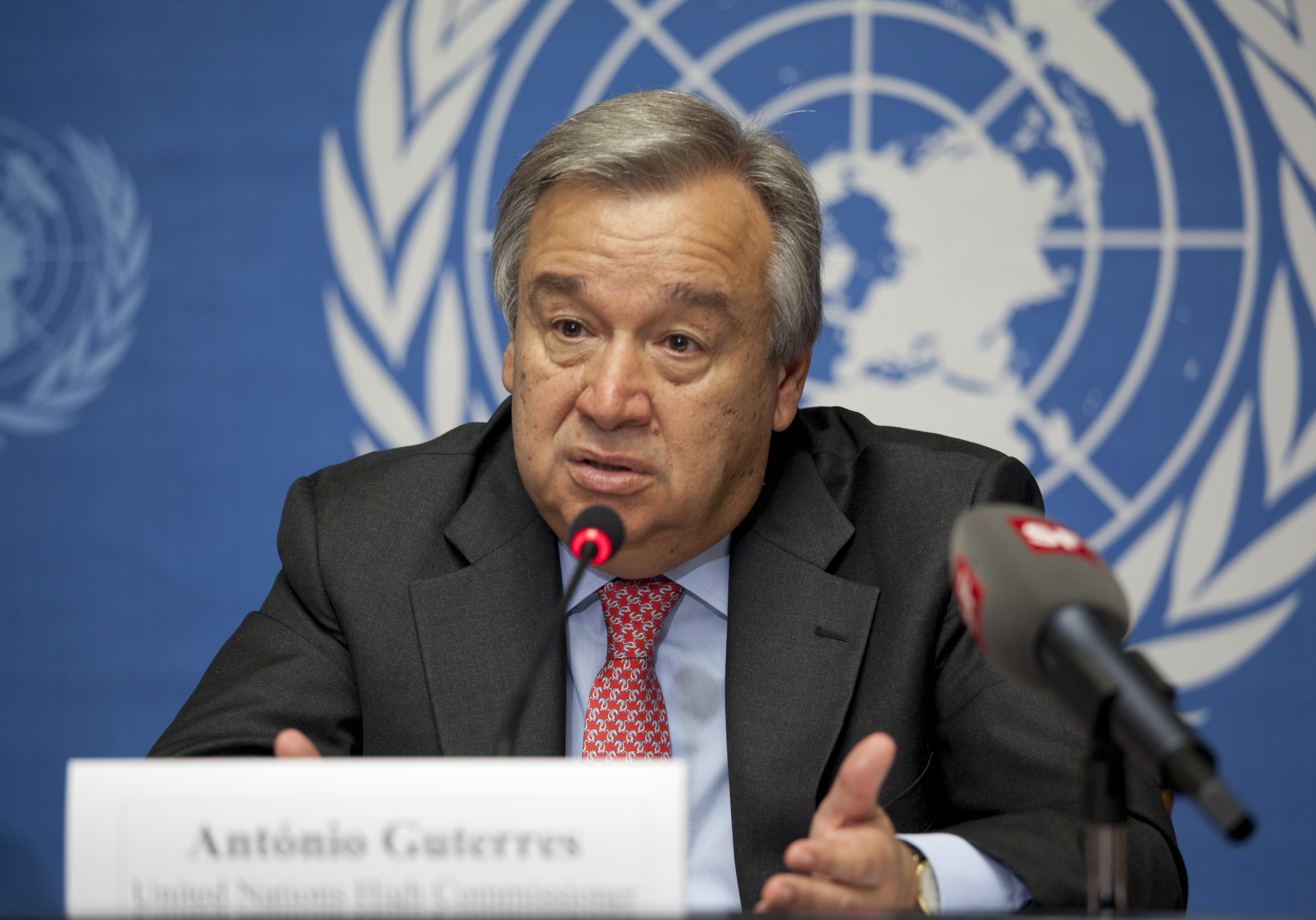
UN Secretary-General Antonio Guterres

It is not clear what governments at the UN can do. The Security Council has been blocked on many issues by the veto. The resolutions of the General Assembly are “recommendations” with little follow up in practice.

A 21-day ceasefire proposal has just been set out at the UN by France and the USA but rejected by Israel.

There may be some role for non-official mediation carried out by groups representing religious, academic, or charitable organizations. One advantage of non-official mediation is that all concerned are aware that such mediation is genuinely impartial seeking only a reduction of suffering caused by the conflicts. The disadvantage is that non-official mediators lack the resources, political, economic or military on which governmental mediators can draw.

It is certain that strong measures are needed to prevent escalation. Vision and creativity are important factors. The role of nongovernmental organizations in consultative status with the UN such as the AWC may be able to play a role in these dangerous times.

Prof. René Wadlow is President of the Association of World Citizens.
September 21, Day of Peace: Action Needed!

In Being a World Citizen, Conflict Resolution, Current Events, NGOs, Nonviolence, Solidarity, The Search for Peace, Track II, United Nations on September 21, 2024 at 7:17 PM

By René Wadlow

September 21 is the United Nations (UN) designated International Peace Day, set out in 1981 by a UN General Assembly resolution as being a day close to the start of the General Assembly. The Day is devoted to creating a culture of peace through dialogue in a spirit of mutual understanding and a consciousness of the unity of humanity. As the psychoanalyst Erick Fromm wrote, “I believe that the One World which is emerging can come into existence only if a new man comes into being – a man who has emerged from the archaic ties of blood and soil, who feels himself to be a Citizen of the World, whose loyalty is to the human race and to life.”

This year, September 21 is one of the two Action Days of the Summit for the Future being held at the UN in New York. We are all aware that in many parts of the world there is armed conflict, political rivalries and growing tensions. The current heavily State-centered approaches to world politics hampers the effectiveness of the UN and its Specialized Agencies. In these times of insecurity when many people feel uncertain about the future, when anxieties and fears are promoted and then exploited by political populists, old-fashioned nationalists and religious fundamentalists, we need to present a positive vision and to build bridges of understanding over the current divides of nationalism, ethnicity and social classes.

Today, the revolutionary character of our times is recognized by many observers. Those who live in the midst of swift social change confront the upheaval of their way of life. We are entering a period of change for which there are no blueprints. Therefore, it is essential that we learn to work together. We celebrate our similarities rather than our differences. Thus, on this Day of Peace, we are called to new levels of creativity and constructive action.

Prof. René Wadlow is President of the Association of World Citizens.
United Nations Calls for Action on Sudan Crisis

In Africa, Being a World Citizen, Conflict Resolution, Current Events, Human Rights, Humanitarian Law, International Justice, Solidarity, Sudan, The Search for Peace, United Nations, War Crimes, World Law on September 9, 2024 at 6:00 AM

By René Wadlow

The United Nations (UN) Independent International Fact-Finding Mission for the Sudan chaired by Mohamed Chande Othman of Tanzania said, in its first Report of September 6, 2024, that Sudan’s warring parties, the Sudanese Armed Forces and the Rapid Support Forces as well as their respective militia allies, have committed an appalling range of human rights and international humanitarian law violations including indiscriminate airstrikes and shelling against civilians, schools, hospitals, and vital water services.

The current armed conflict which began on April 15, 2023 between two former allies is led, on the one side, by General Abdel Fattah Al Burham of the Sudanese Armed Forces and, on the other, by General Mohamed Hamdan Dagulo, known by his battle name of Hemedhi, of the Rapid Support Forces. The conflict, which has spread to 14 of the 18 provinces of Sudan, has killed and wounded tens of thousands of civilians, displaced nearly 8 million people and forced two million to flee to neighboring countries and beyond.

Mohamed Chamde Othman (C) U.S. Government

As the Fact-Finding Mission Report highlights, the warring parties targeted civilians through rape, sexual slavery and other forms of sexual violence, arbitrary arrest as well as torture and ill-treatment. Assaults have been carried out against ethnic minorities, in particular the Masalit in West Darfur.

The Fact-Finding Mission, mandated by the Human Rights Council in October 2023, carried out a wide range of discussions and interviews. As the Expert Member of the Mission Mona Rishmawi said, “These findings should serve as a wakeup call to the international community to take decisive action to support survivors, their families and affected communities and hold perpetrators accountable. A comprehensive approach to transitional justice is vital for addressing the root causes of the conflict and ensuring accountability.”

Mona Rishmawi

Efforts for a ceasefire and the start of negotiations by the Personal Envoy for the Sudan of the UN Secretary-General have led to no advances. Thus, wider action is needed. Mohamed Othman has said, “The international community must support the Sudanese aspiration for an inclusive and representative civilian government that respects the rights of all citizens, fostering a path toward equality, justice and sustainable peace in Sudan.” In light of the many difficulties, he has called for sending UN peacekeeping forces to Sudan. “Given the failure of the warring parties to spare civilians, it is imperative that an independent and impartial force with a mandate to safeguard civilians be deployed without delay. The protection of the civilian population is paramount, and all parties must comply with their obligations under international law and immediately and unconditionally cease all attacks on the civilian population.”

As the deployment of an independent and impartial force depends on the UN Security Council the focus for action shifts from the Human Rights Council to the Security Council. We appeal for vitally needed action now.

Prof. René Wadlow is President of the Association of World Citizens.