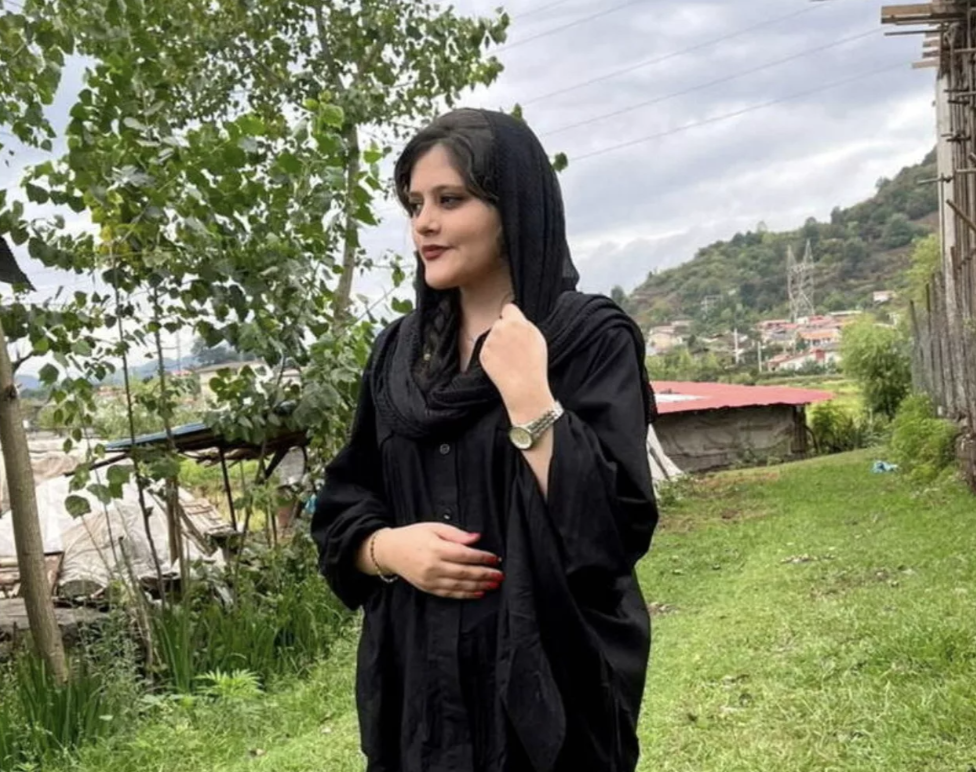
Repression of protests in Iran continues. A wave of protests swept across the country in the wake of the September 2022 death in custody of 22-year-old Mahsa Jina Animi, an ethnic Kurd and Sunni Muslim. It is estimated that the Iranian security forces have killed over 500 protesters and arrested some 20,000 persons of all ethnic and religious backgrounds.
In response to the State-led violence, on November 24, 2022, the United Nations (UN) Human Rights Council created the International Independent Fact-Finding Mission on the Islamic Republic of Iran with the chairmanship of Sera Hossain of Bangladesh.
Mahsa Amini
One aspect of the repression of protests is that religious leaders of the Sunni Muslim communities, especially in Iran’s Sistan and Baluchistan province and in the Kurdish provinces, are being increasingly targeted by the Islamic Republic’s authorities for arrest and imprisonment because of their peaceful criticism of the repression of protests. Iran is a majority Shia Muslim country, and Shiism is the official religion of the State.
Religious minorities include Sunni Muslims, Christians, Baha’is, Zoroastrians, Jews, and the Gonabadi Sufi community. Religious and ethnic identities in Iran often overlap. The Association of World Citizens (AWC) has repeatedly appealed to UN human rights bodies concerning the discrimination and repression of persons of the Baha’i faith.
Another aspect of the repression of protests has been the public hanging of some protesters. The AWC has repeatedly called upon governments for a moratorium on executions with a view of abolishing the death penalty – a penalty that extensive research has shown has little or no impact on the level of crime and too often opens doors to judicial errors and injustices.
The UN International Independent Fact-Finding Mission on the Islamic Republic of Iran has called on Nongovernmental Organizations for direct information. The broader community of NGOs needs to keep public attention focused on events in Iran.
Prof. René Wadlow is President of the Association of World Citizens.
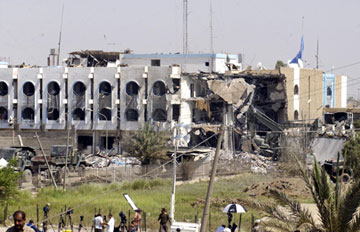
The United Nations (UN) General Assembly has designated August 19 as “World Humanitarian Day” to pay tribute to aid workers in humanitarian service in difficult and often dangerous conditions. August 19 was designated in memory of the August 19, 2003 bombing of the UN office building in Baghdad, Iraq in which Sergio Vieira de Mello, United Nations (UN) High Commissioner for Human Rights and, at the time, Special Representative of the UN Secretary General was killed along with 21 UN staff members. Over 200 UN employees were injured. The exact circumstances of the attack are not known, and why USA and UN security around the building was not tighter is still not clear. A truck with explosives was able to dive next to the building and then blew itself up.
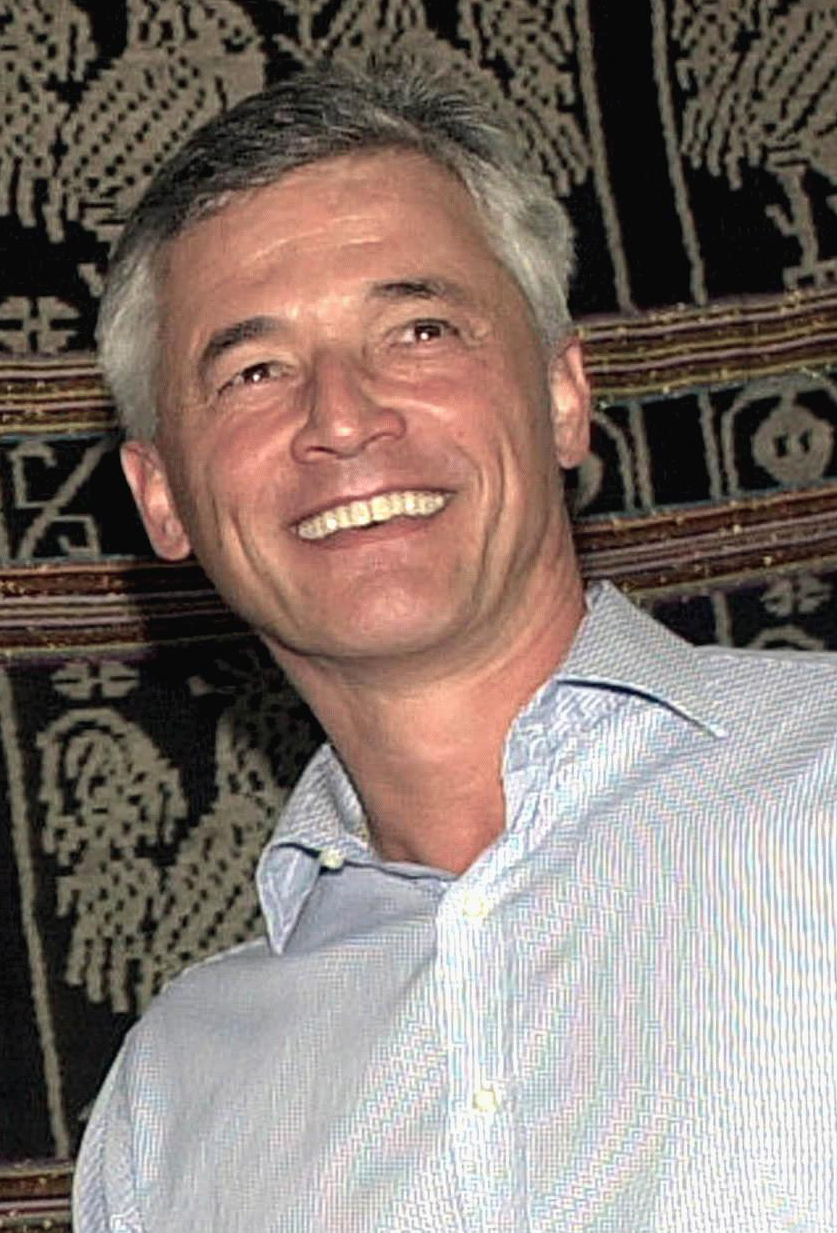
Sergio Vieira de Mello had spent his UN career in humanitarian efforts, often with the Office of the High Commissioner for Refugees and at other times as Special Representative of the UN Secretary General. As a Nongovernmental Organization’s (NGO’s) representative to the UN in Geneva and active on human rights issues, I knew him during his short 2002-2003 tenure as High Commissioner for Human Rights. Many of us had high hopes that his dynamism, relative youth – he was 54 – and wide experience in conflict resolution efforts would provide new possibilities for human rights efforts. His death along with the death of others who had been Geneva-based was a stark reminder of the risks that exist for all engaged in humanitarian and conflict resolution work.
This year, the risks and dangers are not just memories but are daily news. On May 3, 2016, the UN Security Council unanimously adopted Resolution 2286 calling for greater protection for health care institutions and personnel considering recent attacks against hospitals and clinics in Syria, Iraq, Yemen, South Sudan, Democratic Republic of Congo, and Afghanistan. These attacks on medical facilities are too frequent to be considered “collateral damage.” The attacks indicate a dangerous trend of non-compliance with world law by both State and non- State agents. The protection of medical personnel and the treatment of all the wounded − both allies and enemies − goes back to the start of humanitarian law.
The Association of World Citizens (AWC) has stressed the need for accountability, including by investigation of alleged violations of the laws of war. The grave violations by the Islamic State in Iraq and al-Sham (ISIS) must be countered by as wide a coalition of concerned voices as possible. There is a real danger that as ISIS disintegrates and no longer controls as much territory, it will increase terrorist actions.
The laws of war, now more often called humanitarian law, have two wings, one dealing with the treatment of medical personnel in armed conflict situations, the military wounded, prisoners of war, and the protection of civilians. This wing is represented by the Geneva (Red Cross) Conventions. The second wing, often called The Hague Conventions limit or ban outright the use of certain categories of weapons. These efforts began at The Hague with the 1900 peace conferences and have continued even if the more recent limitations on land mines, cluster weapons and chemical weapons have been negotiated elsewhere.
Sergio Vieira de Mello (C) Wilson Dias/ABr
The ban on the use of weapons is binding only on States which have ratified the convention. Thus, the current use of United States (U.S.)-made cluster weapons in Yemen by the Saudi Arabia-led coalition is, in a narrow sense, legal as the USA, Saudi Arabia and Yemen have not signed the cluster weapon ban. The AWC was one of the NGOs leading the campaign against cluster weapons. My position is that when a large number of States ratify a convention, as is the case with the cluster-weapons ban, then the convention becomes world law and so must be followed by all States and non-State actors even if they have not signed or ratified the convention. The same holds true for the use of land mines currently being widely used by ISIS in Syria and Iraq.
The current situation concerning refugees and internally displaced persons can also be considered as part of humanitarian law. Therefore, those working with refugees and the displaced within their country are also to be honored by the World Humanitarian Day. To prevent and alleviate human suffering, to protect life and health and to ensure respect for the human person − these are the core values of humanitarian law.
There needs to be a wide public outcry in the defense of humanitarian law so that violations can be reduced. The time for action is now.
Prof. René Wadlow is President of the Association of World Citizens.
 Association of World Citizens