The Official Blog of the

Archive for June, 2023|Monthly archive page

Track Two Efforts Needed to Reduce China-India Frontier Tensions

In Asia, Conflict Resolution, Current Events, NGOs, The Search for Peace, Track II on June 23, 2023 at 7:00 AM

By René Wadlow

There has been a constant buildup of military forces by the governments of both India and China along their common frontiers. The Indian province of Arunachal Pradesh (called Zangman by the Chinese) with Itanagar as its capital is claimed by the Chinese. The frontier was drawn in 1914 and is called the McMahon Line. The frontier dispute led to the October-November 1962 India-China armed conflict with important consequences especially for Indian foreign-policy making.

In recent years there have been flashes of tension along the Line of Actual Control (LAC) as the military of both China and India have built new roads and observation posts along the LAC. Such tensions could grow as the relative political power of India and China grows and takes the form of a struggle for power. Currently there are no public negotiations between the Chinese and Indian governments. India, this year, is the chair of the G20 grouping of states. The Indian government has organized a number of G20 seminars on different issues in a number of Indian cities. However, for the moment, China has not sent representatives to these seminars.
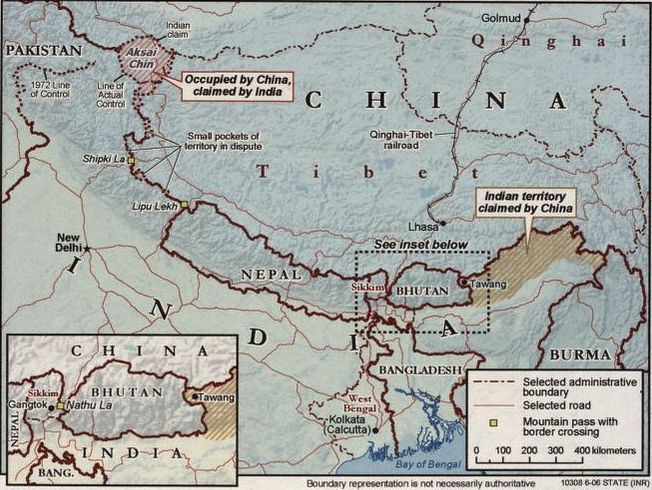
The Association of World Citizens (AWC) has expressed its active concern with these tensions on the India-China frontier and the possibility that the tensions will increase. With the lack of formal India-China negotiations, the AWC raises the possibility of strong Track Two discussions.

The term Track Two was coined by the U.S. diplomat Joseph Montville in his book The Arrow and the Olive Branch. Track Two discussions are organized by nongovernmental organizations often with the help of academic institutions. Track Two discussions among non-officials of conflicting parties aim to clarify outstanding disputes and see on what issues negotiations might progress.

As Adam Curle, experienced in Quaker mediation efforts, has written, “In general, governments achieve their results because they have power to influence events, including the ability to reward or to punish. Paradoxically, the strength of civilian peacemaking resides specifically in their lack of power. They are neither feared nor courted for what they can do. Instead, they are trusted and so may sometimes be enabled to play a part in peacemaking denied to more official diplomats.”
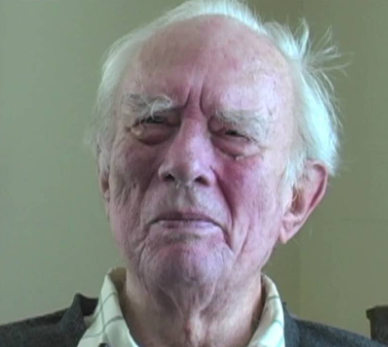
Adam Curle

Thus, it will be important to follow as closely as possible the results of the G20 seminars in India and then build upon them in a Track Two pattern. Concerning the China-India frontier issues, both governments must be convinced that there is a considerable desire for peace among their citizens. There is also a need for some involved in Track Two efforts to have an integrated perspective of peacebuilding techniques and a long-term view of possibilities for transforming political relations.

Prof. René Wadlow is President of the Association of World Citizens.
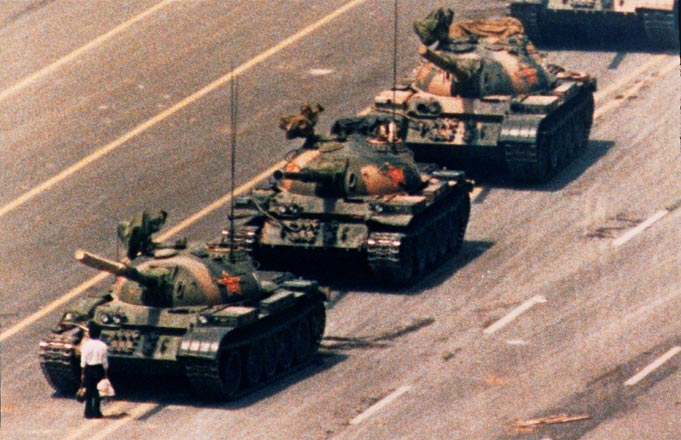
June 4: Memories of Tiananmen Square

In Asia, Being a World Citizen, Democracy, Europe, Human Rights, NGOs, Nonviolence, Solidarity, The former Soviet Union, Track II on June 4, 2023 at 4:55 PM

By René Wadlow

June 4 makes the security forces in China somewhat uneasy, especially in Hong Kong where, in the past, there were large memorial meetings to remind people of June 4, 1989, when the military and police moved against those who had been protesting publicly for over a month. Students from colleges and universities in China’s capital initiated protests after the death of the former General Secretary of the Communist Party, Hu Yaobang, on April 15, 1989 who was considered a liberal reformer. The movement then spread over a number of weeks to most of the major cities. Students made numerous demands, among them were calls for an end to government corruption, increased funding for education, and freedom of the press. As the movement went on, students were increasingly joined by industrial workers.

There were differences of opinion within the ruling government circle as to how to deal with the protests. As the protests continued, there was more and more international media attention, especially as there were an increasing number of journalists in Beijing in advance of the visit of the Soviet leader, Mikhail Gorbachev, with a large delegation of Soviet officials.

(C) Jeff Widener/Associated Press

Students and intellectuals started writing petitions setting out demands that were signed by more and more people. The decentralized structure of power and decision-making among groups in Tienanmen Square allowed for tactical innovation as each group was free to act as it desired and stress the symbols it wanted. Thus, art school students created the Goddess of Democracy, largely based on the Statue of Liberty in New York harbor. The growth in support for the student-led protests led the more anti-reformist faction in the government to order a crackdown by the military and the police. The tanks started to move into Tiananmen Square.

Since June 1989 there have been reforms within China – what we might call “democratization from below” but without large scale, highly visible public protests. ‘Stability’ and ‘harmony’ have been the stated government policy aims, colored by the breakup of the Soviet Union and fundamental changes in Eastern Europe. So, democratization needs to proceed quietly and gradually. Such democratization requires long-term vision and skillful leadership. Democratization is basically linked to individualization, to an ever-larger number of people thinking for themselves, creating their own lifestyles and ‘thinking outside the box’. It can be a slow process and repressive forces within the government watch events closely. However, it is likely that the direction of individualism is set and cannot be reversed.

Prof. René Wadlow is President of the Association of World Citizens.