Association of World Citizens

Supporting Young Syrians who Say “Stop the Killing!”

In Conflict Resolution, Current Events, Human Rights, Middle East & North Africa, Solidarity, The Search for Peace, United Nations, World Law on May 26, 2012 at 3:07 PM

SUPPORTING YOUNG SYRIANS WHO SAY “STOP THE KILLING!”

By René Wadlow

 Image

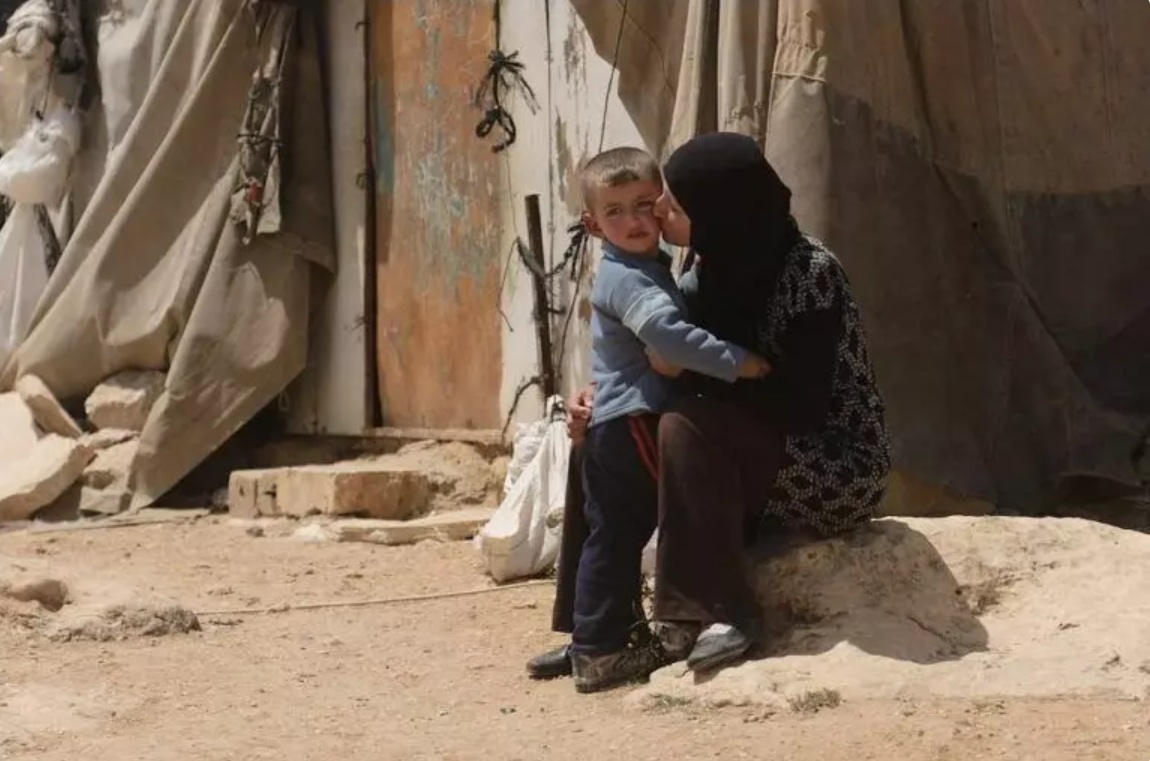
In early May 2012, there were particularly deadly explosions in Damascus, the capital of Syria, an escalation of a conflict which began over a year ago with nonviolent protests but which spilled over into violence, refugee displacements, and ever deeper division among the people of Syria.

For the moment, the efforts of the League of Arab States and the United Nations have not been able to establish good-faith negotiations or even a permanent ceasefire. Therefore a group of young nonviolent Syrians have created a movement “Stop the Killing,” not related to a political party or a confessional religious group, but which wishes to unite those of good will to stop the violence and to develop a society in which all can contribute.

Therefore, we who are outside Syria, send our support and willingness to cooperate.

I believe in you, and I believe in your destiny.

I believe that you have inherited from your forefathers an ancient dream, a song, a prophecy which you can proudly lay as a gift of gratitude to  those working for a just resolution of the current conflicts.

I believe that it is in you to be good citizens.

And what is it to be a good citizen?

It is to acknowledge the other person’s rights before asserting your own, but always to be conscious of your own.

It is to be free in word and deed but it is to know that your freedom is subject to the other person’s freedom.

It is to know that killing will never bring a society of justice and harmony. A just and nonviolent society is the fruit of wisdom and love. Therefore let love, human and frail, command the coming day.


Rene Wadlow, a member of the Fellowship of Reconciliation and of its Task Force on the Middle East, is President and Chief Representative to the United Nations Office at Geneva of the Association of World Citizens.
World Citizens Call for Renewed Efforts for a Mali Federation

In Africa, Conflict Resolution, Current Events, The Search for Peace, United Nations, World Law on April 29, 2012 at 10:10 PM

STATEMENT BY THE REPRESENTATIVE OFFICE

TO THE UNITED NATIONS OFFICE AT GENEVA

OF THE ASSOCIATION OF WORLD CITIZENS

WORLD CITIZENS CALL FOR RENEWED EFFORTS

FOR A MALI FEDERATION


In an April 29, 2012 message to H. E. Mr. Ramtane Lamamra, Commissioner for Peace and Security of the African Union, Prof. René Wadlow, President of the Association of World Citizens, called upon the African Union to facilitate the creation of a federation of north and south Mali rather than having the country split into two independent states with unresolved frontier issues.

President Wadlow highlighted the recent meeting of representatives of the 15-member Economic Organization of West African States (ECOWAS) on April 26-27 in Abidjan which set a 12-month deadline for a transition period in Mali after the March 22coup of military officers led by Captain Amadou Sanogo. In response to strong, negative reactions by the international community, on April 7 there was a return to a civilian transitional government. However, the northern half of the country is now controlled by two rival Tuareg groups, the Mouvement national de libération de l’Azawad (MNLA) and the Ansar Dine. The MNLA has declared the northern half to be the independent state of Azawad.

“12 months should be long enough to work out a new constitution which maintains the unity of the country while at the same time providing the needed autonomy to the north and a preservation of the Tuareg way of life.” World Citizens believe in cooperation and in finding solutions based on respect for the positions and values of all the parties in the conflict.

“The Association of World Citizens believes that the Commission for Peace and Security of the African Union is well placed to help in drafting such a new federal constitution, especially as the Commissioner is a former Ambassador of Algeria to the United Nations. In the past, Algeria has played a mediation role between the Tuareg who also inhabit south Algeria and the governments of Mali and Niger where there are larger Tuareg communities.”

The declaration of the independence of north Mali by the MNLA is the first time such a formal proclamation has been made, although the independence of Azawad has always been among the Tuareg demands. Thus, it may be difficult for the Tuareg leadership, now in a position of force, to return simply to promises of greater autonomy within a unified Mali. A federation with clear divisions of authority could be a measure acceptable to both the MNLA and the government in Bamako.

“A crisis is a time for creative efforts. The Association of World Citizens is prepared to be of help with expertise in federal-confederal forms of government in this process.

“A transition period of 12 months may seem like a long time, but given the deep divisions of attitudes among leaders of north and south Mali, the sooner such efforts get underway the better. Support for the goal of a Mali federation on the part of the African Union’s Commission for Peace and Security could be an important part of creating a positive atmosphere in which such constitution drafting could be carried out.”

–   30   –

A New Mali Federation?

In Africa, Anticolonialism, Conflict Resolution, Current Events, The Search for Peace, United Nations, World Law on April 21, 2012 at 9:55 PM

A NEW MALI FEDERATION?

By René Wadlow


Since the fall of northern Mali to the forces of the Tuareg at the end of March 2012, the situation has grown in complexity. The group of young officers, more or less led by Captain Amadou Sanogo, had taken control of the government buildings of the Central Government in Bamako on March 23, but they had little idea of what else to do.

There was an immediate counter-reaction on the part of Western States such as France and the USA who provide most of the financial and technical assistance to Mali. Both France and the USA cut their aid to Mali—a country currently facing a severe drought and food shortages.  Likewise, the 15 states of the Economic Organization of West African States (ECOWAS) called for a speedy return to the civilian government. Captain Sanogo saw the “handwriting on the wall” and agreed to turn over the government to the President of the National Assembly who is the constitutional replacement when the President is absent.

In the meantime, the country is divided into two roughly equal areas—a north with the Tuareg holding the two major cities of Timbuktu and Gao, and the more populated south whose population provides most of the civil service, the army and the agricultural wealth of the country.

The Tuareg along with various armed groups probably from Mauritania, south Algeria and fighters who had been recruited for Libya are divided on what strategy to follow. There are two broad options. The largest group, Mouvement national de libération de l’Azawad (MNLA) wants an independent state of northern Mali (and probably part of the Tuareg-inhabited Niger) to be called Azawad. The second faction, called Ansar Dine, is smaller but is more heavily armed and contains the bulk of armed foreigners. Their stated aim is to take control of all of Mali and to install Islamic law.

Tuareg rebels near the Sahara desert

Both options have difficulties. Northern Mali as an independent state of Azawad has no natural resources, a small population and few educated people to administer a state or to develop any economy beyond that of camel nomadism. In addition, most African states are opposed to carving up existing states or changing frontiers—a Pandora’s box as many states could be redrawn on ethnic lines and frontiers changed. Thus “territorial integrity” is an article of faith.

Ansar Dine’s option of an Islamist Mali is also difficult to realize. The Bambara and the Malinké are the largest groups in the country and hold economic, military, and political power. Ideologically, they are opposed to the Islamic vision of Ansar Dine, being more Sufi-influenced with a large measure of traditional African beliefs and practices mixed in.(1) Thus the possibility of Ansar Dine gaining support in the south of Mali is slight.  However, they may be able with force of arms to impose their views on Timbuktu and Gao but not on the northern countryside.  The Tuareg are not Islamist by tradition.  Yet in the two cities, the Ansar Dine may be able to force women to cover their hair, prevent the sale of wine and cut the hands of robbers—these three practices being the extent of their knowledge of Islamic law.

Faced with the difficulties of having a northern Malian state—Azawad—accepted by the power-holders of Mali and the neighboring states, there have been some discussions among Tuareg leaders and a former Malian government leader in Nouahchott, Mauritania. There have been no official statements coming from these talks, in part because both north and south Mali are in administrative disorder.  No one knows how much authority the persons involved have.  For the moment, it is probably at best “Track II” diplomacy, trying to see what are the aspirations, the limits of the acceptable, and the degree of the willingness to compromise. In the past France and Algeria have mediated disputes between the Tuareg and the central government of Mali. There have been past agreements on autonomy for the Tuareg.  However, these agreements have rarely held and more centralized government was slowly restored. I believe that this is due more to the incapacity of the Tuareg to provide trained people to run a decentralized administration than ill will or a desire of control on the part of the central government.

Yet, in the past, a “declaration of independence” for northern Mali was never proclaimed. Now that a powerful segment has declared the independence of Azawad, can they go “backward” and accept greater autonomy within a unified Mali?

Echoes from the current Nouachott talks have spoken of a “Federation of Mali”. The name has already been used. The Mali Federation with Senegal was achieved briefly on the eve of independence and lasted for 506 days from April 1, 1959 until August 19, 1960 when it fell apart during the conflict between the President of Senegal, L. S. Senghor and his Prime Minister Mamadou Dia, largely over the division of authority between the two posts.

Because of the way these events occurred, Mali was deprived of its principle outlet to the sea —Dakar, for three years.  Attempts to revive federalism between Mali, Guinea, and Ghana, two other states which had also chosen an anti-colonial “socialist” policy, proved futile.(2) Mali, which had been known as Soudan during the French colonial period, took the name Mali on the suggestion of President Senghor of Senegal from the 14th century empire which covered much of what is today Senegal, Mali and part of Niger.(3)

Can a new Mali Federation of the two sections of the current Mali work better than the earlier Federation of Mali?  With good will and imagination, federalist structures should be able to be worked out. Yet there are times when good will and imagination are in short supply.


Rene Wadlow is the President and Chief Representative to the United Nations, Geneva of the Association of World Citizens.
Notes:

1) See the classic study: Germaine Dieterlen, Essai sur le religion Bambara (Paris,:Presses Universitaires de France,1951)

2) See: Ruth Schachter Morgenthau, Political Parties in French-speaking West Africa (Oxford: Clarendon Press, 1964)

William J. Foltz, From French West Africa to the Mali Federation (New Haven: Yale University Press, 1965)

3) Raymond Mauny, Tableau géographique de l’Ouest africain au Moyen Age (Dakar: IFAN, 1961)

Follow

Get every new post delivered to your Inbox.