By René Wadlow
Third-party nonviolent intervention is the physical presence of a third party into an area of conflict in such a way as to reduce the level of violence. Accompaniment of persons in danger was developed as a technique in the early 1980s by Peace Brigades International (PBI), which I represented in Geneva, especially in contacts with persons at the United Nations. PBI sent volunteers, mostly from the USA, to El Salvador and Guatemala.
Later, in 1989, during a wave of killing of lawyers in Sri Lanka, the Sri Lankan bar association invited PBI to send a team there to accompany lawyers. The protective accompaniment worked so well that PBI was asked to extend its work to labor organizers and journalists, also under danger.
Similar forms of protective accompaniment have been organized by two largely Christian organizations to work with Palestinians. One is the World Council of Churches, based in Geneva, which began a program in 2002. Since then, some 2,000 volunteers from 21 countries have spent three months in Israel to accompany children going to school or persons passing through multiple check points.
The second organization is the Christian Peacemaker Teams (CPT), closely related to the Mennonite church in Canada and the USA, working in the Hebron area since 1995, a mixed Palestinian and Israeli community. When active, they have a red hat which is a clear identification.
CPT have also worked in other parts of Israel with mixed communities. Allies from other countries send messages and emails to Israeli officials in support of the Teams’ efforts. The team uses videos to highlight tense situations, often associated with house demolitions. The Peacemaker Teams have developed good working relations with Israeli human rights organizations such as Rabbis for Human Rights. The team members are often arrested by the Israeli police and spend time in Israeli jails with prisoners who are not used to nonviolent activists.
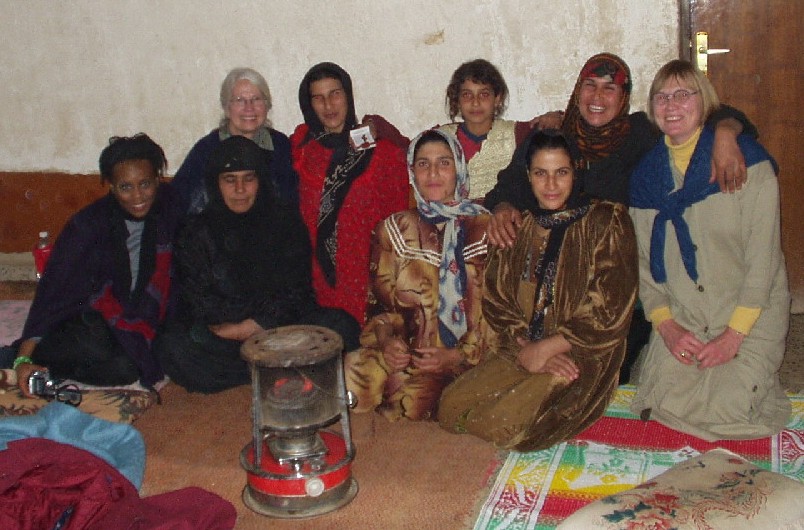
As one Christian Peacemaker, Wendy Lehman, wrote, “Intellectually, I knew there were good reasons to risk arrest when doing nonviolent direct action. Many activists view it as an effective way to draw attention to injustice. Others argue that if you are doing what you believe is right – defending someone from being beaten by soldiers, participating in a public vigil, or standing up for a rightful landowner – arrest may occur ‘organically’ out of the situation.”
Developing the skills needed for nonviolent accompaniment is crucial. Volunteers need awareness and skills to be able to act judiciously and have an impact. They must be able to observe, evaluate and make decisions. They can be facilitators – one who helps a group reach a common decision, often with consensus decision-making and participatory management.
To keep a clear focused attention in the middle of violence, hate and confusion requires inner calm. There are techniques, often developed in spiritual training, to be able to stay calm and focused in times of confusion. There are also ways of developing an inner vitality so that one’s vital energy is not drained away by the presence of hostile persons. Such techniques are usually related to increasing the flow of subtle energies within the body, techniques taught in yoga, in certain breathing exercises, and in meditation. In a more secular spirit, the International Committee of the Red Cross has been working on stress reduction techniques for Red Cross workers in tension situations.
The current situation in Israel, while there are positive currents, is one of continuing tensions. Thus, there will be a need for nonviolent accompaniment.
Prof. René Wadlow is President of the Association of World Citizens.
 Association of World Citizens