By René Wadlow
Early April 2025, Finland’s Prime Minister announced the state’s intention to withdraw from the 1997 Convention on the Prohibition of Anti-Personnel Mines, called for short the Ottawa Convention – reflecting the vital role that Canada played in its creation.
The Convention, which came into force on March 1, 1999, prohibits the use, production, stockpiling, and transfer of anti-personnel landmines. Over the decades, such anti-personnel mines have caused civilian harm, often of children, long after the hostilities have ended as they can be set off many years after they have been placed. The Convention has also advanced mine clearing operations, thus significantly reducing landmine-related harm and bolstered assistance for survivors.
As of March 2025, 165 states have ratified or acceded to the Convention. However, some major military powers including the USA, China, the Russian Federation, India, and Pakistan are still outside the treaty. Given the armed conflict in Ukraine, some states which have a land frontier with the Russian Federation have also indicated that they have started a withdrawal process: Finland with 1,340 km of frontier with the Russian Federation, Estonia with 294 km, Latvia with 284 km, Lithuania with 297 and Poland with 232 km.
In the same spirit as the Landmine Convention, a combination of progressive states such as Norway and Ireland and a combination of Nongovernmental Organizations (NGOs) including the Association of World Citizens (AWC) worked for the creation of the Convention on Cluster Munitions which came into force in August 2010. This Convention bans the use, production, and transfer of cluster munitions and sets deadlines for stockpile destruction and clearance of contaminated land.
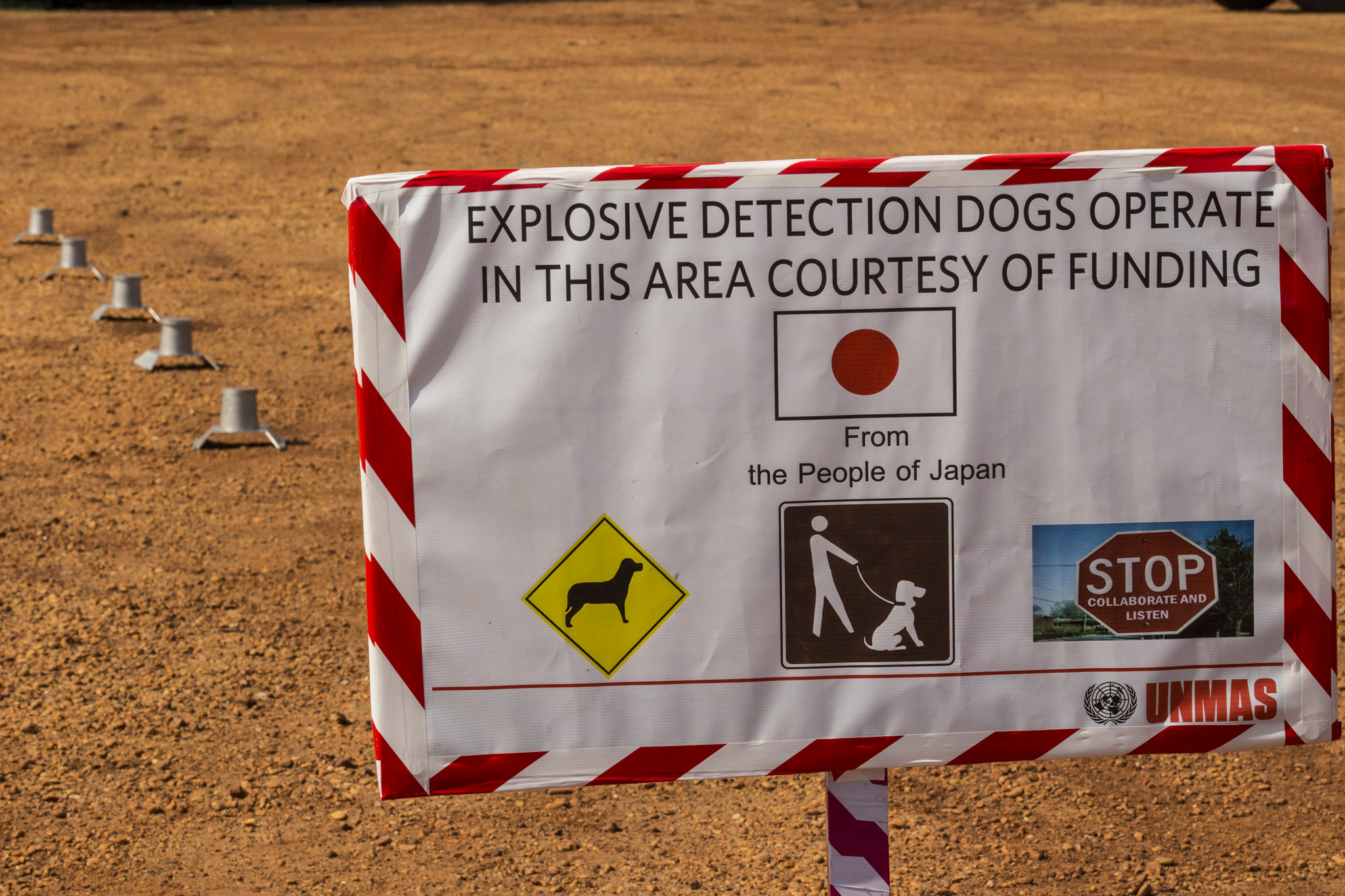
Cluster munitions are warheads that scatter scores of smaller bombs. Many of these sub-munitions fail to detonate on impact, leaving them scattered on the ground ready to kill or maim when disturbed or handled. Reports from humanitarian organizations and mine-clearing groups have shown that civilians make up the vast majority of the victims of cluster bombs, especially children attracted by their small size and often bright colors.
The issue of the indiscriminate impact of cluster bombs was raised by the representative of the Quaker United Nations (UN) Office in Geneva and by me for the Association of World Citizens, starting in 1979. (1) Many of the same NGOs active on anti-personnel mines were also active on the cluster bomb issue – a combination of disarmament and humanitarian groups.
The withdrawal of states from the Landmine Convention is a dangerous weakening of an important arms control effort. Thus, as Citizens of the World, we ask states tempted to withdraw from the Convention on Landmines to reconsider their position. We call upon the government of Canada to reaffirm its support for the Ottawa Convention.
Note
(1) See René Wadlow, “Banning Cluster Bombs: Light in the Darkness of Conflicts”, Journal of Humanitarian Medicine, Palermo, Italy, July-September 2010.
Prof. René Wadlow is President of the Association of World Citizens.
 Association of World Citizens