The Official Blog of the

Archive for the ‘Women’s Rights’ Category

Violence Against Women: Walls That Imprison

In Human Rights, International Justice, Solidarity, United Nations, Women's Rights, World Law on November 24, 2013 at 6:32 PM

VIOLENCE AGAINST WOMEN: WALLS THAT IMPRISON

By René Wadlow

When in his Nobel Peace Prize address (1974), Sean MacBride (1904-1988) cited torture along with the development and acceptance of indiscriminate nuclear weapons, the use of chemical weapons, and political assassination as signs of a “near total collapse of public and private morality in practically every sector of human relationship”, he stressed his central theme: the necessity of nongovernmental actions to ensure survival.

Although MacBride had served as the Irish Foreign Minister from 1948 to 1951 and played an important role in the creation of the Council of Europe, it was as a non-governmental organization leader that he made his full mark: as an early chair of the Amnesty International Executive Committee (1961-1974), as Secretary General of the International Commission of Jurists (1963-1970) and as chair of the International Peace Bureau.  It was in his efforts to highlight the wide use of torture that we started to work together in Geneva.  He denounced torture techniques “that make the medieval thumb screw and rack look like children’s toys”.

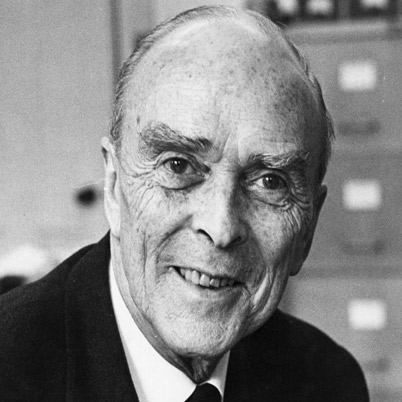
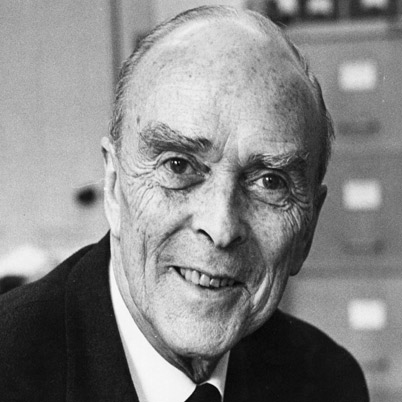
Sean McBride, a true hero of the defense of human rights.

Sean McBride, a true hero of the defense of human rights.

He was particularly critical of torture and violence against women.  He had been largely raised by his mother, the actress and Irish nationalist Maud Gonne. His father, John MacBride, was hanged by the British for his participation in the 1916 Easter uprising when Sean was 12.  Violence against women was doubly unjust: because it was violence and because women were to be respected.

When Sean MacBride through Amnesty International first raised the issue of torture in the United Nations (UN) Commission on Human Rights, the government representatives replied that torture might happen occasionally — there are always some brutal policemen or prison guards — but torture is rare and never a government policy. However, once the issue was raised and taken up by other NGO representatives, it became clear that torture is widespread, in different cultures and in different political systems.  Finally, the UN Commission on Human Rights named a Special Rapporteur on Torture and developed a systematic way of looking at torture complaints.

Likewise, it has largely been the same pattern for raising awareness of violence against women. When the issue was first raised by representatives of nongovernmental organizations (NGOs), governments replied that violence against women exists but is rare or that it is “domestic violence” and governments cannot act unless there are actions taken by the police.

However, worldwide evidence was presented by NGOs that violence against women exists to an alarming degree. Violence against women is an attack upon their bodily integrity and their dignity.  As NGO representatives stressed, we need to place an emphasis on the universality of violence against women, the multiplicity of its forms and the ways in which violence, discrimination against women, and the broader system of domination based on subordination and inequality are inter-related.

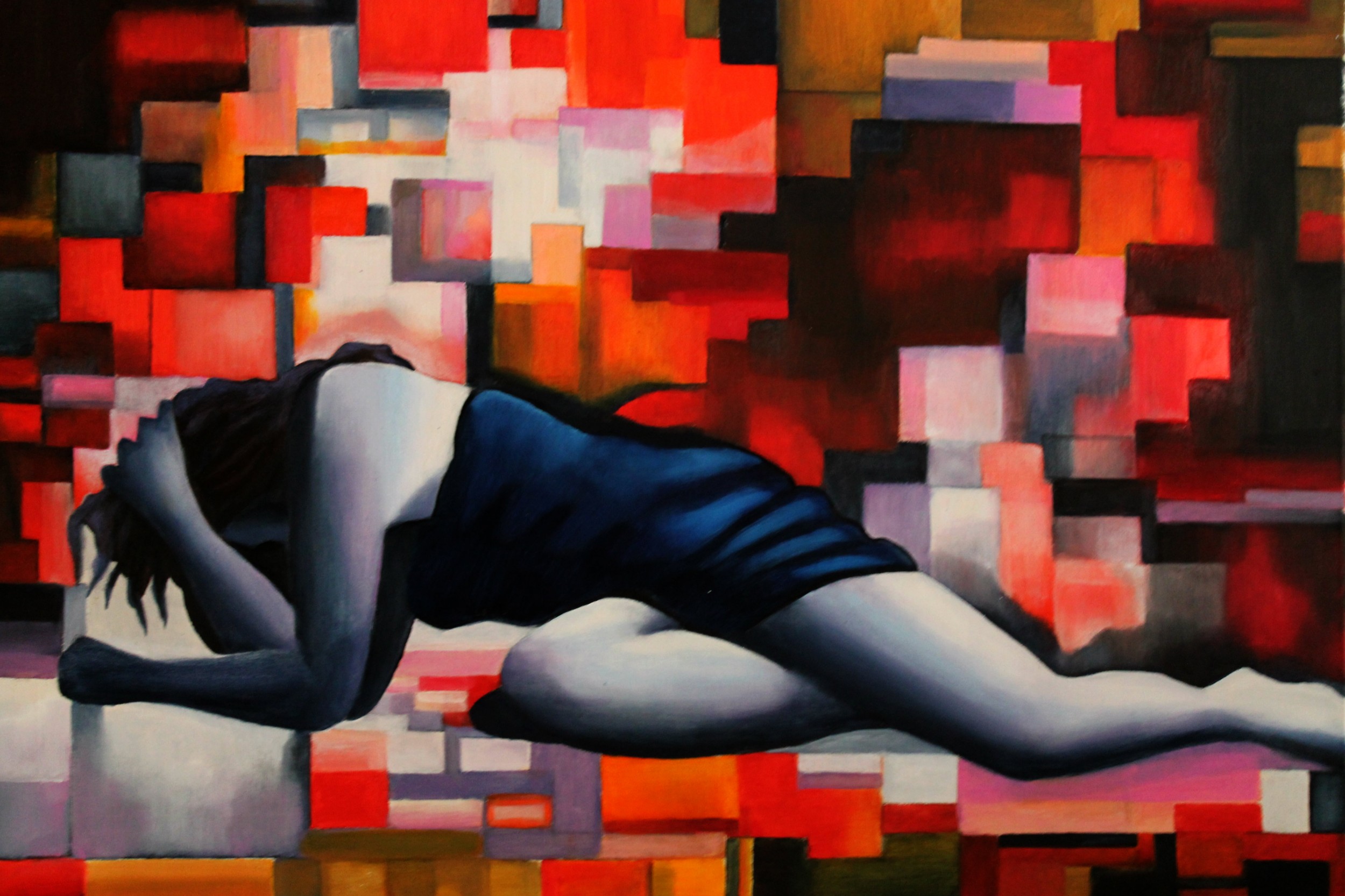
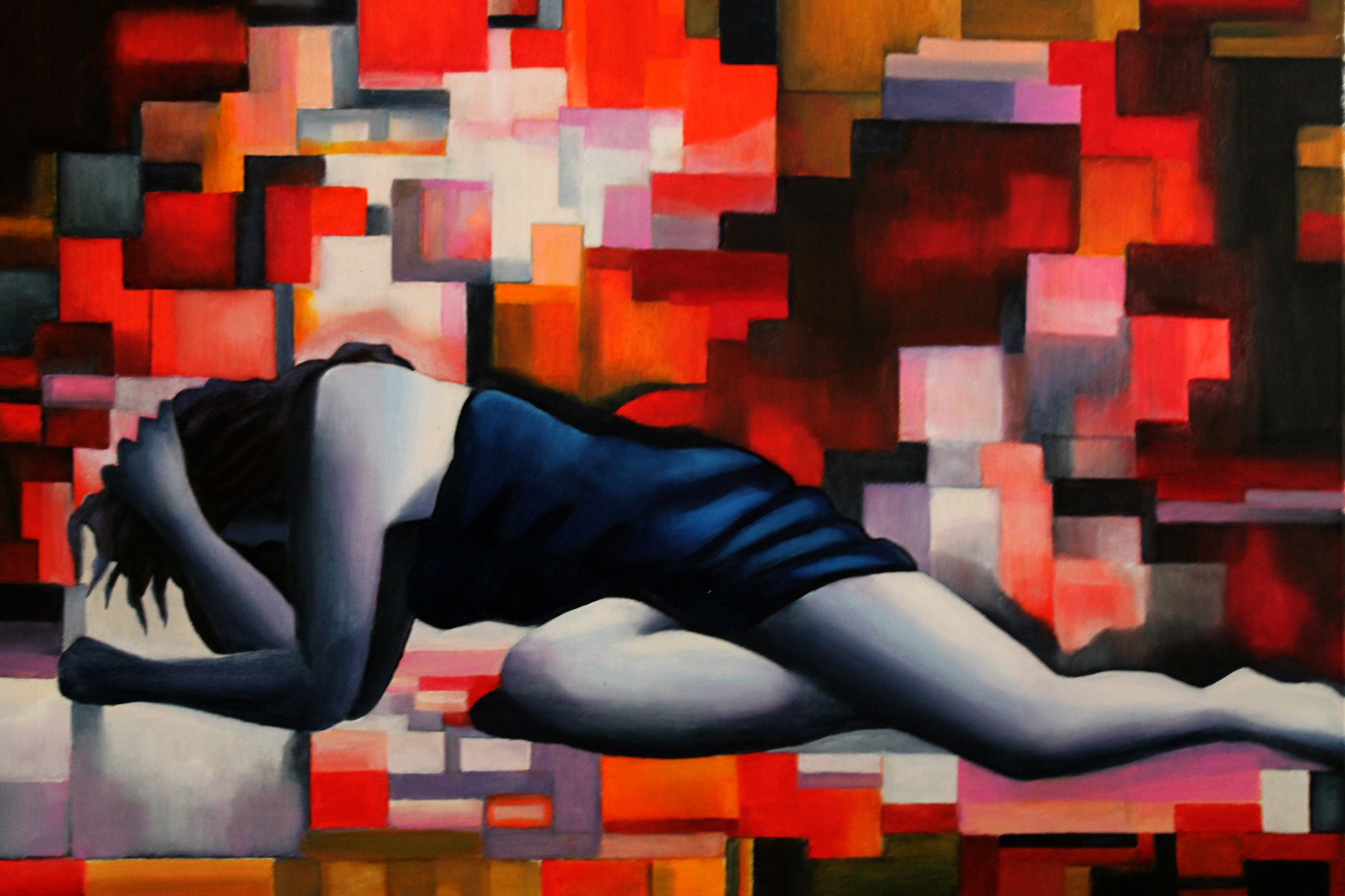
"Violence against women", by Gaetano Salerno, 80x60cm, 2013.

‘Violence against women’, by Gaetano Salerno, 80x60cm, 2013.

In a response to the evidence, the UN General Assembly has set 25 November as the UN-proclaimed International Day for the Elimination of Violence against Women. The value of a special “Day” is that it serves as a time of analysis of an issue and then of rededication to take both short-term and longer-range measures.

Both at the international UN level and at the national level, there have been programs devoted to the equality of women and to the promotion of women in all fields.  There has been growing attention to physical violence against women, the creation of centers for battered women and attention given to the trafficking of women.  It has often been repeated that it is necessary to ensure the education, training, good health, employment promotion, and integration of women so that they can participate fully and effectively in the development process.

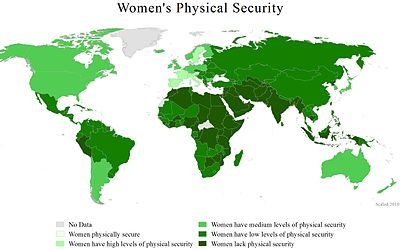
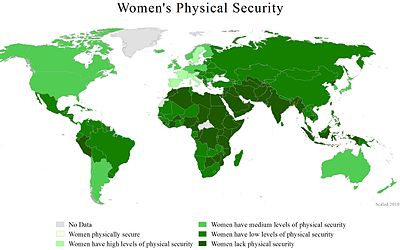
Violence against women, a global scourge. (c) Wikipedia

Violence against women, an enduring global scourge. (c) Wikipedia

Yet inequality continues, and walls still exist that imprison women. On November 25, this day for the elimination of violence against women, we need to look at the different forms of violence which keep such wall in place.

Prof. René Wadlow is President and Chief Representative to the United Nations Office at Geneva of the Association of World Citizens.

Is the UN Trying to Legalize Prostitution Worldwide?

In Current Events, Human Rights, International Justice, United Nations, Women's Rights, World Law on October 15, 2013 at 7:13 PM

IS THE UN TRYING TO LEGALIZE PROSTITUTION WORLDWIDE?

By Bernard Henry

In February 2012 Claude Guéant, the then Minister of Interior of France, caused a stir in the country by stating that “Not all civilizations are equal”, adding that one of the yardsticks against which a society could be viewed as “civilized” was “the subservience of women”[i].

For months, Guéant had spoken out almost obsessively against Islam, even branding all of France’s Muslim population “a problem” once. That latest statement was thus just another attack on a community heavily targeted by Guéant’s party, the Union for a Popular Movement (UMP), to attract voters from the anti-Muslim extreme right National Front. Eventually, President Nicolas Sarkozy and the UMP were defeated at the polls in May 2012 by Socialist Party candidate François Hollande. As for the National Front, it scored a historic 17% and was able to deprive Sarkozy of its much-needed support for the second round.

Guéant’s statement was nonsensical in many ways, not least because the subservience of women is anything but a matter of allegedly unequal civilizations. As the Charter of the United Nations has provided from the very start, and as was recalled by the Beijing Conference in 1995, women’s rights are by essence a global issue, never to be rescinded because of cultural or other differences between societies.

Then, just what is to be deducted from the proposal by two United Nations (UN) agencies to simply legalize, throughout the world, prostitution and everything that goes with it?

This is not a joke. In a September 20 appeal to the UN leadership[ii], the New York-based women’s rights organization Equality Now expressed concern about the recommendations contained in the Global Commission on HIV and the Law’s report HIV and the Law: Risks, Rights and Health (2012), published by the United Nations Development Program (UNDP), and the report Sex Work and the Law in Asia and the Pacific (2012), backed by the UNDP, the United Nations Population Fund (UNFPA) and the Joint United Nations Program on HIV/AIDS (UNAIDS).

In these two reports, Equality Now wrote, the UN agencies tell Member States that “in order to support efforts to reduce HIV/AIDS and to promote the human rights of people in prostitution, all aspects of the commercial sex industry should be decriminalized, including pimping, brothel-keeping and the purchase of sex”. The organization denounces these recommendations as being “in direct opposition to international human rights standards,” adding that these “also largely ignore the experiences and views of survivors of prostitution and sex trafficking.”

Direct opposition to human rights standards is right. When it comes to women’s rights, the international legal instrument of reference is the UN’s own Convention on the Elimination of all Forms of Discrimination against Women (CEDAW). And CEDAW’s Article 6 provides, “States Parties shall take all appropriate measures, including legislation, to suppress all forms of traffic in women and exploitation of prostitution of women.” Not quite what the two reports suggest, indeed.

Besides the letter of the law, evidence on the ground, too, does not seem to support the UN agencies’ claims. As Equality Now further recalls, “[I]n 2000 Nongovernmental Organizations and sex trafficking survivors worked to ensure that the UN Protocol to Prevent, Suppress and Punish Trafficking in Persons, Especially Women and Children (the “UN Trafficking Protocol”) defined trafficking to reflect the wide variety of sex trafficking survivors’ experiences”.

The UN Trafficking Protocol’s definition, Equality Now stresses, was the result of years of discussion and negotiation by countries and reflects a carefully drawn political consensus that should not be challenged by UN agencies. Yet the two reports disturbingly recommend revising and narrowing the definition. Should this recommendation be adopted, many victims would lose all chances of being recognized as victims of sex trafficking and their traffickers would now enjoy legal impunity for their crimes.

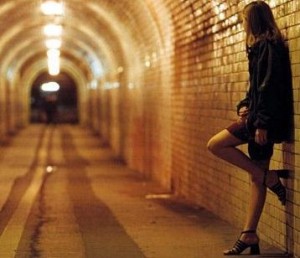
Sex trafficking and prostitution – two scourges that would soon be gone if there were no buyers in the first place. So why is the United Nations calling for the removal of domestic laws that make them illegal?

Sex trafficking and prostitution – two scourges that would soon be gone if there were no buyers in the first place. So why is the United Nations calling for the removal of domestic laws against them?

Ironically, in a report issued in September, UNDP, UNFPA, UN Women and UN Volunteers actually established a direct link between rape perpetration and the purchase of commercial sex, noting that both stem from gender inequality. So why are UNDP and UNFPA now advocating the decriminalization of prostitution – and accordingly the inherent decriminalization of rape?

When it comes to protecting the rights of people in prostitution, including the right to health – especially to protection from HIV – safety and freedom from violence and exploitation, throwing in the towel and letting both pimps and customers walk away with their dirty business is obviously not the way.

On September 30 the AWC issued an appeal to the UN, in line with Equality Now’s own recommendations, urging the World organization to clarify its position on the decriminalization of prostitution in all its aspects and ensure that the future development of policies and programs affecting people in the commercial sex industry includes the views of survivors and groups working on the issue.

In the Preamble to the UN Charter, “[T]he peoples of the United Nations have in the Charter reaffirmed their faith in fundamental human rights, in the dignity and worth of the human person and in the equal rights of men and women”. There can be no equality between human beings when a man can officially buy another man as a slave, all right. Now what kind of equality can there be between a man and a woman when the latter can officially be rented for sex? We would very much like an answer.

Bernard Henry is the External Relations Officer of the Representative Office to the United Nations in Geneva of the Association of World Citizens.


[i] Al Jazeera, « Sarkozy ally says all civilisations not equal », February 5, 2012.

Don’t Give Up the Fight for Human Rights!

In Being a World Citizen, Current Events, Democracy, Human Rights, International Justice, The Search for Peace, United Nations, Women's Rights, World Law on May 3, 2013 at 1:34 PM

DON’T GIVE UP THE FIGHT FOR HUMAN RIGHTS!

By Bernard Henry

Early May is a good time to celebrate human rights. Besides May 1, International Labor Day, there is also May 3, World Press Freedom Day, first established by the United Nations (UN) General Assembly in 1993 and celebrated yearly under the auspices of the UN’s specialized institution in charge of communication, UNESCO[1].

So let’s celebrate. But during the rest of the year, human rights actually give cause to little celebration. Since the year 2000, in spite of milestone developments at the UN and other intergovernmental organizations as well as in a number of individual nation-states, international human rights, arguably the noblest part of the political inheritance of the twentieth century, seem to have lost much of their prominence in global political life.

No wonder. After the 2000 presidential election in the United States dealt a severe blow to the until then sacrosanct, universally-revered Western pattern of liberal democracy, the terror attacks on the World Trade Center and the Pentagon of the following year definitely shifted the world’s attention to the reality of a terrorist threat that could strike anyone, anywhere, anytime, creating calamity and leading to a call to arms. A “war on terror” led by the United States ensued, infamously symbolized by the government-operated lawless zone of Guantanamo Bay and the “secret renditions” of terror suspects by plane from one country to another. In the early years, holding out human rights in protest was viewed as merely being an Al Qaeda supporter.

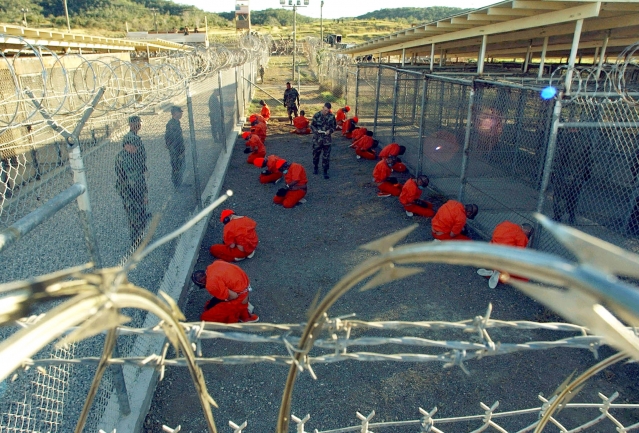
After the terror attacks of September 11, 2001 in New York and Washington, many Americans said they were willing to accept restrictions on civil liberties to fight terrorism. This allowed the Bush Administration to respond to the terrorist threat with numerous, serious human rights abuses, most notably at the U. S. detention facility of Guantanamo Bay, Cuba.

After the terror attacks of September 11, 2001 in New York and Washington, many Americans said they were willing to accept restrictions on civil liberties to fight terrorism. This allowed the Bush Administration to respond to the terrorist threat with numerous, serious human rights abuses, most notably at the U. S. detention facility of Guantanamo Bay, Cuba. (C) Reuters

Then came the hunger riots of 2008—the first symptoms of the crisis of the global trade and free-market system we are still in today. After financial speculation on basic food items had devastating effects in most developing countries, the subprime mortgage crisis in the United States brought even the world’s wealthiest country to its knees, leading a major corporation like Lehman Brothers to plain, simple bankruptcy and exposing the long-running fraud schemes of star trader Bernard Madoff. So much for basic rights such as food and housing. In many countries rich and poor, it was felt that economic globalization was at fault and national borders were now the (only) safeguards of peoples against abuse of their economic and social rights, as was seen in Hugo Chavez’s Venezuela. Populism also rose in the West, limiting the scope of political questioning to how much damage immigrants were causing to employment and purchasing power. Now perceived as elitist in the West and “Western” in the rest of the world, human rights were forced to yield under the weight of economic collapse.

As a result, by the end of the first decade of the new century, human rights as codified in Paris and New York in the wake of World War II appeared to be dead in space. In its edition of February 18, 2010, Newsweek went so far as to declare the “Death of Human Rights”[2], detailing how Western states were now disregarding the poor human rights records of their economic, political and military partners in Asia, Africa and the Middle East. As the economic crisis lingers on and armed Islamism now spawns also in the relatively spared Sub-Saharan Africa, jaded everyday citizens and world leaders have learned to leave it to a cynical game of geopolitics and like human rights as little more than a benevolent philosophy which would be politically unrealizable.

Could this be true? If so, why should anyone, anywhere in the world, continue to fight for human rights?

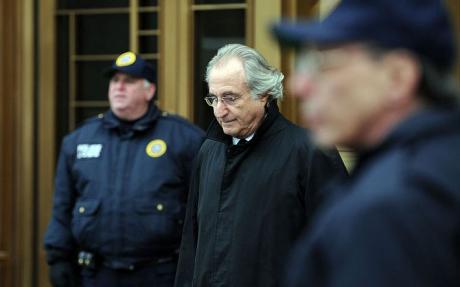
On December 11, 2008, star trader Bernard Madoff was arrested for an alleged $50 billion fraud. (C) The Telegraph - Derek Blair

On December 11, 2008, star trader Bernard Madoff was arrested in the United States for an alleged $50 billion fraud.
(C) The Telegraph – Derek Blair

Not so fast. Dismissing the previous and current decades as having been at best fruitless, at worst damaging in terms of human rights development would be quite foolish—or quite dishonest.

First, harmful as it may have been to human rights, the economic crisis is nothing to worry about, at least as far as Western countries are concerned. As the American political scientists Christian Welzel and Ronald Inglehart explained in their 2005 book Modernization, Cultural Change and Democracy[3], quoted by Stanford professor Larry Diamond in The Spirit of Democracy[4], economic hardship makes it more natural for people to affirm survival values, i. e. conservative, sectarian, inward-looking  values, rather than self-expression values allowing for freedom, autonomy and tolerance.

This is thus hardly a time of rejection of human rights per se, actually a time of anguish and doubt fueled by uncertainty about the present and future of employment, health care and taxation. Austerity policies, however, do play a role in alienating constituents who feel more is being done to save their banks than to support their ailing bank accounts.

As social discontent grows in those bankrupt or economically-fledgling countries, an increasing number of disgruntled voters come to translate their adhesion to survival values into a first-time vote for the extreme right, ranging from the would-be nice-looking National Front in France to Greece’s openly neo-Nazi Golden Dawn party. The sometimes ambiguous attitude of ruling parties toward migrants, especially the Roma, in some European countries further provides an unwelcome encouragement of intolerance, making people feel justified in their hatred of outsiders.

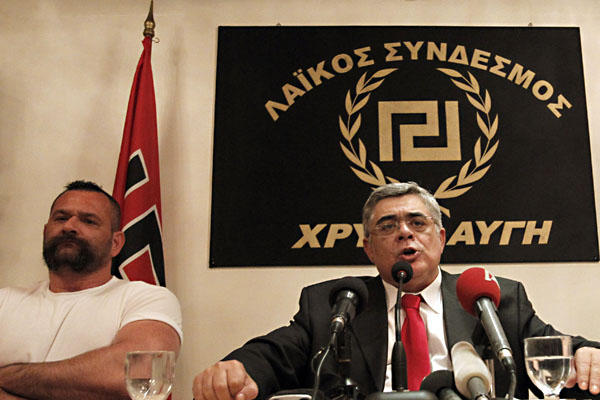
In Greece, Nikólaos Michaloliákos leads the Golden Dawn party, whose emblem resembles the Nazi swastika and whose violent, hateful rhetoric brings back memories of the darkest hours of modern European history.

In Greece, Nikólaos Michaloliákos leads the Golden Dawn party, whose emblem resembles the Nazi swastika and whose violent, hateful rhetoric brings back memories of the darkest hours of modern European history.

Second, although the 2000s were largely marred by both terrorism and America’s pushy response to it, these were years of genuine, significant progress for human rights in the world, very much in continuity with the year 1998 which saw the adoption of both the Rome Statute of the International Criminal Court (ICC) and, on December 9, the Declaration on Human Rights Defenders née Resolution 53/144 of the UN General Assembly.

Precisely, the ICC came to existence in 2002 after the threshold of ratification of the Rome Statute by 60 UN Member States was reached that year.

Four years later, another new UN body was created out of an existing one—the Human Rights Council, designed to replace the Human Rights Commission which had been for some time under heavy fire for its outdated, unassertive monitoring and sanctioning mechanisms and for allowing authoritarian, repressive regimes to participate in its activities.

In September 2007 the UN General Assembly adopted the Declaration on the Rights of Indigenous Peoples, the first ever international human rights instrument to universally define the specific rights of indigenous groups in every country, whether civil, political, economic, social or cultural. Unsurprisingly, four governments notoriously still scrambling with indigenous rights claims at home voted against—the USA, Canada, New Zealand and Australia.

The following year saw the entry into force of the Convention on the Rights of People with Disabilities, finally drafted in 2006 after years of fierce opposition from the Bush Administration which claimed the USA and all other countries should have national laws of their own about disability rights instead of a world treaty. Actually, the American reluctance turned out to be the best possible justification for the creation of a UN treaty on disability rights, as it reminded an oblivious international community that since the 1970s, disability has been a full-fledged human rights issue within the World organization[5]. Although the USA eventually joined the Convention as a signatory, the Obama Administration still hasn’t ratified it.

Along with the creation of the Convention came that of a UN agency tasked to encourage and monitor compliance by Member States with its provisions, UN Enable. Another paramount new UN agency created in the 2000s was UN Women, officially named the UN Entity for Gender Equality and the Empowerment of Women. Its founding Executive Director was the emblematic former Socialist Chilean President Michelle Bachelet.

A world gone completely obsessed with stopping terrorism could never have gone that far in making human rights progress and definitely take root after all in the twenty-first century.

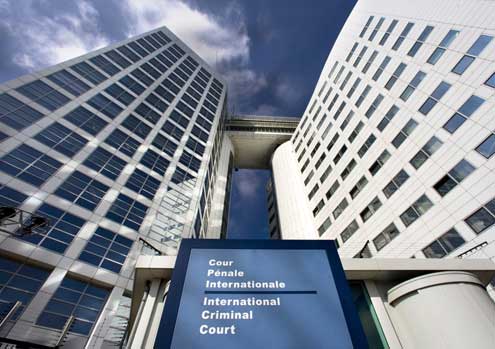
The headquarters of the International Criminal Court in The Hague, Netherlands.

The headquarters of the International Criminal Court in The Hague, Netherlands.

Q.E.D.  Human rights may be less popular nowadays but they are still just as needed as ever, needed and wanted too, although the latter will not be said publicly as easily as before.

The problem is that the “war on terror” and crisis-inspired survival values that have spread throughout the world since the beginning of the century have made it a lot more difficult for Human Rights Defenders, whether on their own or as members of nongovernmental organizations (NGOs), to carry out their usual work and activities without fear of repression or at the very least intimidation. Some governments have even begun to lash out at them as “enemies of the state”, such as Russia which is now imposing a “foreign agent” label on NGOs receiving financial support from outside the country.

On March 15, in response to such alarming developments, fifteen years after the UN General Assembly adopted the Declaration of Human Rights Defenders, the Human Rights Council adopted a resolution whose title says it all – “Protecting Human Rights Defenders”.

In its Preamble, the resolution, originally proposed by Norway, recalls “the continued validity and application of all the provisions” of the 1998 declaration, as well as other Council and General Assembly resolutions and the Program of Action of the Vienna Conference on Human Rights of 1993 which was the first post-Cold War main event dedicated to human rights on the international stage. It reaffirms that “States are under the obligation to protect all human rights and fundamental freedoms of all persons” and acknowledges that “human rights defenders play an important role at the local, national, regional and international levels in the promotion and protection of human rights”, accordingly “[s]tressing that respect and support for the activities of human rights defenders, including women human rights defenders, is essential to the overall enjoyment of human rights.”

The resolutions calls on UN Member States to avoid or stop using domestic law and administrative provisions, including “national security and counter-terrorism legislation and other measures, such as laws regulating civil society organizations”, to hinder the work of Human Rights Defenders, let alone to stigmatize them and their tireless campaigning. It also highlights the important role played by “new forms of communication, including the dissemination of information online and offline” as “tools for human rights defenders to promote and strive for the protection of human rights”.

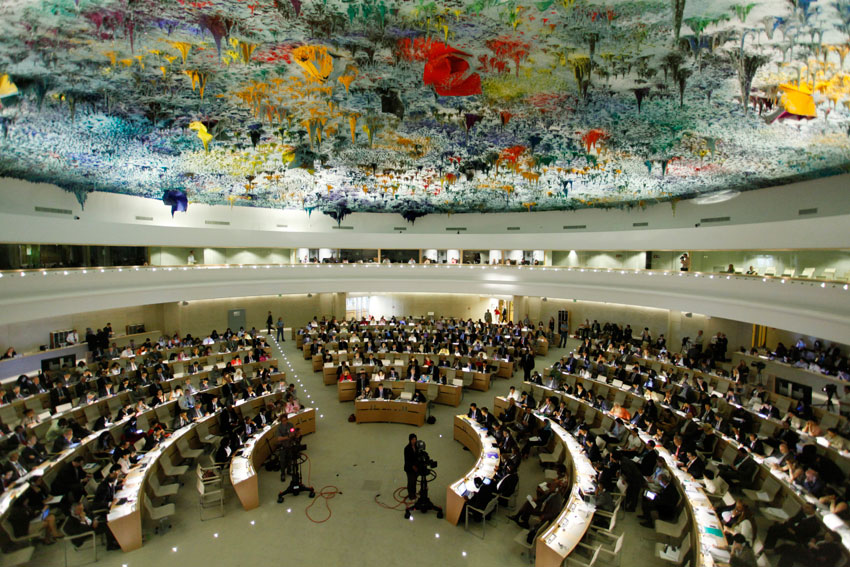
The Human Rights Council in session at the Palais des Nations in Geneva, Switzerland.

The Human Rights Council in session at the Palais des Nations in Geneva, Switzerland.

Taking stock of the “systemic and structural discrimination and violence faced by women human rights defenders”, the resolution “calls upon States to integrate a gender perspective” in their work to ensure the freedom and safety of Human Rights Defenders within their borders.

In one of the most powerful statements in the entire resolution, the Council, referring directly to such major UN human rights instruments as the Universal Declaration of Human Rights, the International Covenant on Civil and Political Rights and the International Covenant on Economic, Social and Cultural Rights, urges all countries to “create a safe and enabling environment in which human rights defenders can operate free from hindrance and insecurity, in the whole country and in all sectors of society, including by extending support to local human rights defenders”.

Adopted with the support of many non-Member States of the Council, such as France, Costa Rica, Portugal, Sweden and Uruguay but also, more surprisingly when it comes to human rights, Ivory Coast, Georgia and Turkey, the resolution came as a powerful reminder that the work of Human Rights Defenders is still relevant and important to today’s world and that it is neither an old-fashioned luxury nor a rear-guard crusade out of touch with reality but a clear and present necessity.

In one of his greatest hits, sometimes used as a “house anthem” by Amnesty International, the late Bob Marley sang,

“Get up, stand up,

Stand up for your right,

Get up, stand up,

Don’t give up the fight.”

Marley has been gone for thirty-two years but his words never ceased to resonate as a call to courage and action for Human Rights Defenders everywhere.

More than ever, we Human Rights Defenders must keep the flame alive, that very flame which symbolizes human rights at the UN, and carry on with our fight, undeterred, unabated, uncompromising. We are now humanity’s last line of defense against fear and despair.

At the United Nations, human rights are represented by a flame, the flame for a life of full self-fulfillment. The flame also symbolizes those who carry it throughout the world - Human Rights Defenders.

At the United Nations, human rights are represented by a flame, the flame for a life of full self-fulfillment. The flame also symbolizes those who carry it throughout the world – Human Rights Defenders.

Bernard Henry is the External Relations Officer of the Office to the United Nations—Geneva of the Association of World Citizens.

March 8 – International Day of Women: Women as Peacemakers

In Conflict Resolution, Human Rights, The Search for Peace, United Nations, Women's Rights, World Law on March 7, 2012 at 10:37 PM

MARCH 8 – INTERNATIONAL DAY OF WOMEN:

WOMEN AS PEACEMAKERS

By René Wadlow


It is only when women start to organize in large numbers that we become a political force, and begin to move towards the possibility of a truly democratic society in which every human being can be brave, responsible, thinking and diligent in the struggle to live at once freely and unselfishly.


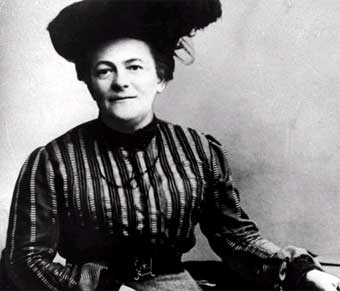
March 8 is the International Day of Women first proposed by Clara Zetkin (1857-1933) at the Second International Conference of Socialist Women in Copenhagen in 1911.  Zetkin, who had lived some years in Paris and active in women’s movements there was building on the 1889 International Congress for Feminine Works and Institutions held in Paris under the leadership of Ana de Walska. De Walska was part of the circle of young Russian and Polish intellectuals in Paris around Gerard Encausse, a spiritual writer who wrote under the pen name of Papus. For this turn-of-the-century spiritual milieu influenced by Indian and Chinese thought, ‘feminine’ and ‘masculine’ were related to the Chinese terms of Yin and Yang. Men and women alike have these psychological characteristics. ‘Feminine’ characteristics or values include intuitive, nurturing, caring, sensitive, relational traits, while ‘masculine’ are rational, dominant, assertive, analytical and hierarchical.

Clara Zetkin (1857-1933), a woman who changed the world.

As individual persons, men and women alike can achieve a state of wholeness, of balance between the Yin and Yang.  However, in practice ‘masculine’ refers to men and ‘feminine’ to women.  Thus, some feminists identify the male psyche as the prime cause of the subordination of women around the world.  Men are seen as having nearly a genetic coding that leads them to ‘seize’ power, to institutionalize that power through patriarchal societal structures and to buttress the power with masculine values and culture.

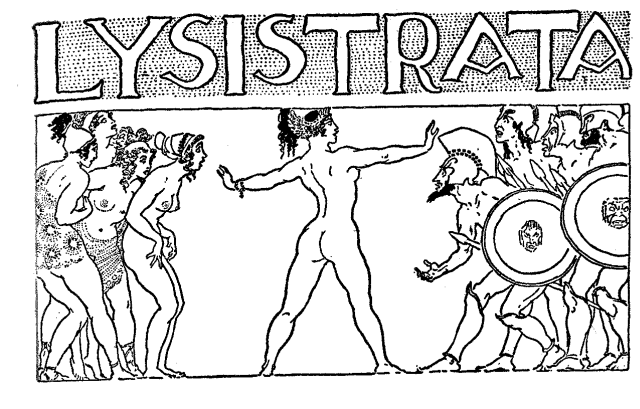
One of the best-known symbols of a woman as peacemaker is Lysistrata, immortalized by Aristophanes, who mobilized women on both sides of the Athenian-Spartan War for a sexual strike in order to force men to end hostilities and avert mutual annihilation.  In this, Lysistrata and her co-strikers were forerunners of the American humanistic psychologist Abraham Maslow who proposed a hierarchy of needs: water, food, shelter, and sexual relations being the foundation. (See Abraham Maslow The Farther Reaches of Human Nature) Maslow is important for conflict resolution work because he stresses dealing directly with identifiable needs in ways that are clearly understood by all parties and with which they are willing to deal at the same time.

Addressing each person’s underlying needs means you move toward solutions that acknowledge and value those needs rather than denying them.  To probe below the surface requires redirecting the energy towards asking ‘what are your real needs here? What interests need to be serviced in this situation?’ The answers to such questions significantly alter the agenda and provide a real point of entry into the negotiation process.

It is always difficult to find a point of entry into a conflict, that is, a subject on which people are willing to discuss because they sense the importance of the subject and all sides feel that ‘the time is ripe’ to deal with the issue.  The art of conflict resolution is highly dependent on the ability to get to the right depth of understanding and intervention into the conflict.  All conflicts have many layers.  If one starts off too deeply, one can get bogged down in philosophical discussions about the meaning of life. However, one can also get thrown off track by focusing on too superficial an issue on which there is relatively quick agreement.  When such relatively quick agreement is followed by blockage on more essential questions, there can be a feeling of betrayal.

Lysistrata's message to the "men at war" from Athens and Sparta was clear as could be: No peace, no sex!

Since Lysistrata, women, individually and in groups, have played a critical role in the struggle for justice and peace in all societies. However, when real negotiations begin, women are often relegated to the sidelines.  However a gender perspective on peace, disarmament, and conflict resolution entails a conscious and open process of examining how women and men participate in and are affected by conflict differently.  It requires ensuring that the perspectives, experiences and needs of both women and men are addressed and met in peace-building activities.  Today, conflicts reach everywhere.  How do these conflicts affect people in the society — women and men, girls and boys, the elderly and the young, the rich and poor, the urban and the rural?

I would stress three elements which seem to me to be the ‘gender’ contribution to conflict transformation efforts:

1) The first is in the domain of analysis, the contribution of the knowledge of gender relations as indicators of power. Uncovering gender differences in a given society will lead to an understanding of power relations in general in that society, and to the illumination of contradictions and injustices inherent in those relations.

2) The second contribution is to make us more fully aware of the role of women in specific conflict situations.  Women should not only be seen as victims of war: they are often significantly involved in taking initiatives to promote peace.  Some writers have stressed that there is an essential link between women, motherhood and non-violence, arguing that those engaged in mothering work have distinct motives for rejecting war which run in tandem with their ability to resolve conflicts non-violently. Others reject this position of a gender bias toward peace and stress rather that the same continuum of non-violence to violence is found among women as among men.  In practice, it is never all women or all men who are involved in peace-making efforts.  Sometimes, it is only a few, especially at the start of peace-making efforts.  The basic question is how best to use the talents, energies, and networks of both women and men for efforts at conflict resolution.

3) The third contribution of a gender approach with its emphasis on the social construction of roles is to draw our attention to a detailed analysis of the   socialization process in a given society.  Transforming gender relations requires an understanding of the socialization process of boys and girls, of the constraints and motivations which create gender relations. Thus, there is a need to look at patterns of socialization, potential incitements to violence in childhood training patterns, and socially-approved ways of dealing with violence.

Former Chilean President Michelle Bachelet, now the Executive Director of UN Women, addressing a meeting of the UN Security Council marking the 10th anniversary of landmark resolution 1325 on women, peace and security (October 26, 2010).

Awareness that there can be ‘blind spots’ in men’s visions is slowly dawning in high government circles.  The U.N. Security Council, at the strong urging of non-governmental organizations (NGOs), on October 31, 2000 issued Resolution 1325 which calls for full and equal participation of women in conflict prevention, peace processes, and peace-building, thus creating opportunities for women to become fully involved in governance and leadership.  This historic Security Council resolution 1325 provides a mandate to incorporate gender perspectives in all areas of peace support.  Its adoption is part of a process within the UN system through its World Conferences on Women in Mexico City (1975), in Copenhagen (1980), in Nairobi (1985), in Beijing (1995), and at a special session of the U.N. General Assembly to study progress five years after Beijing (2000).

There is growing recognition that it is important to have women in politics, in decision-making processes and in leadership positions. The strategies women have adapted to get to the negotiating table are testimony to their ingenuity, patience and determination. Solidarity and organization are crucial elements.   March 8: International Day of Women is a reminder of the steps taken and the distance yet to be covered.


René Wadlow is President and Chief Representative to the United Nations Office at Geneva of the Association of World Citizens.

World Citizens Call for Urgent Action to End Human Trafficking — a Modern-Day Slave Trade

In Human Rights, Women's Rights, World Law on January 11, 2012 at 9:05 PM

WORLD CITIZENS CALL FOR URGENT ACTION TO END HUMAN TRAFFICKING — A MODERN-DAY SLAVE TRADE

 By René Wadlow

January 11 was in some countries a “National Day of Awareness on Human Trafficking”. While ‘awareness’ is always a first step, it is action that is needed as was underlined by the Association of World Citizens in a message to the Chairman of the United Nations (UN) Human Rights Council. The recent increase in the scope, intensity and sophistication of trafficking of human beings around the world threatens the safety of citizens everywhere and hinders countries in their social, economic, and cultural development.

The smuggling of migrants and the trafficking of human beings for prostitution and slave labor have become two of the fastest growing worldwide problems of recent years.  From Himalayan villages to Eastern European cities — especially women and girls — are attracted by the prospects of a well-paid job as a domestic servant, waitress or factory worker. Traffickers recruit victims through fake advertisements, mail-order bride catalogues, casual acquaintances, and even family members.

However, trafficking in human beings is not confined to the “sex industry”.  Children are trafficked to work in sweatshops and men to work in the “three Ds jobs” — dirty, difficult, and dangerous.  The lack of economic, political and social structures providing women with equal job opportunities has also contributed to the feminization of poverty, which in turn has given rise to the feminization of migration, as women leave their homes to look for viable economic solutions. In addition, political instability, militarism, civil unrest, internal armed conflicts and natural catastrophes increase women’s vulnerability and can contribute to the development of trafficking.

Trafficking impacts the lives of millions of people — those trafficked and their family members — especially from poorer countries or the poor sections of countries.  Trafficking of persons has become a multi-billion dollar business and ranks right after the trade in drugs and guns. Trafficking is often an activity of organized crime.  In some cases, it is the same organization which deals in drugs, guns and people.  In other cases, there is a “division of labor”, but the groups are usually in contact.

Thus drugs, guns, illegal immigration — these form a nightmare vision of the dark side of globalization with untold human costs. Human trafficking affects women, men and children in their deepest being. It strikes at what is most precious in them: their dignity and their value as individuals.  Trafficked persons experience painful and traumatizing situations which can be with them for the rest of their lives. From recruitment to exploitation, they lose their identity and desperately struggle against a situation that reduces them to objects.

The Association of World Citizens stresses that the fight against human trafficking must be waged in a global and multidimensional way by the UN, regional intergovernmental organizations, by national governments and by non-governmental organizations so that countries of origin, transit and destination develop cooperative strategies and practical action against trade in human beings.  One of the foundations of cooperation is mutual trust. When mutual trust is established, cooperation becomes a natural way to act.

As trafficking in people is more often tolerated by the law enforcement agencies than drugs or guns, there has been a shift of criminal organizations toward trafficking in people.  116 governments have signed a UN-promoted 2000 Protocol to Prevent, Suppress and Punish Trafficking, Especially Women and Children which entered into force in December 2003. However, trafficking in persons is often not a priority for national governments.  Some countries which are important links in the trade of persons such as India, Pakistan, and Japan have not yet signed.

For many governments, trafficking is considered a question of illegal migration, and there is relatively little (in some cases no) consideration of the problems of the individual being trafficked.  Human concern for those caught in the web is a prime contribution of non-governmental organizations.  Concern for physical and mental health is crucial.  There is also an obvious need to deal with the issues which have created these pools of people from which traffickers can draw.  The large number of refugees from Iraq — over two million in Jordan and Syria — await better political and economic conditions in Iraq so they can return home.

Thus, one of the aspects of trafficking in which non-governmental organizations can play a crucial role is the psychological healing of the victims. Unfortunately, the victim’s psychological health is often ignored by governments.  Victims often suffer a strong psychological shock that disrupts their psychological integrity.  The result is a lack of self-esteem after having experienced such traumatizing events.

Within the Association of World Citizens we must not underestimate the difficulties and dangers which exist in the struggle against trafficking in persons nor the hard efforts which are needed for the psychological healing of victims.  However, as World Citizens, we have the opportunity of dealing with a crucial world issue.


René Wadlow is President and Chief Representative to the United Nations Office at Geneva of the Association of World Citizens.

Femmes en Arabie Saoudite: Quand Dieu punit la moitié du ciel

In Current Events, Human Rights, Middle East & North Africa, Women's Rights, World Law on June 9, 2011 at 7:58 PM

FEMMES EN ARABIE SAOUDITE:

QUAND DIEU PUNIT LA MOITIE DU CIEL

Par Bernard Henry


Le 31 mai et le 1er juin derniers, à travers deux appels signés par son Officier de Presse, le Bureau de Représentation auprès de l’Office des Nations Unies à Genève de l’Association of World Citizens (AWC) a interpellé le gouvernement d’Arabie Saoudite au sujet des droits des femmes, que la monarchie saoudienne n’a jamais vraiment reconnus et dont l’absence devient de plus en plus pénalisante pour les femmes du pays.

Et pour cause – contrairement à la plupart des pays du monde, du moins ceux où il existe une religion officielle, a fortiori quand il s’agit de l’Islam, le « royaume wahhabite », ainsi nommé parce qu’il consacre la doctrine de l’Islam développée au dix-huitième siècle par Mohammed ibn Abd el-Wahhâb, lequel souhaitait ramener l’Islam à sa « pureté d’origine » et rejetait du fait toute tradition extérieure au Coran, considère son territoire tout entier comme une mosquée, prohibant en conséquence tout autre culte que le culte musulman, et encore, tel que le conçoit l’Etat saoudien uniquement.

En règle générale, l’Islam sunnite se désolidarise du wahhabisme qu’il estime sectaire et extrémiste. Ainsi des Talibans d’Afghanistan, dont l’ « Emirat islamique » ne fut reconnu que par trois pays au monde – les Emirats Arabes Unis, le Pakistan et, bien sûr, l’Arabie Saoudite, qui s’était retrouvée à ce sujet en confrontation directe avec l’Iran de Mohammed Khatami, l’Iran chiite pour lequel les Talibans étaient des « fossiles » du sunnisme.
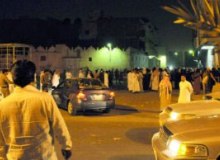
Une minorité chiite existe toutefois en Arabie Saoudite, et parfois, comme ici, des heurts ont lieu avec la majorité wahhabite qui tolère mal l'existence sur le sol saoudien d'une communauté religieuse, même musulmane, autre que la sienne.

Que l’on n’aille pas y voir pour autant une quelconque intention de l’AWC de s’acharner contre l’Arabie Saoudite en particulier. Les droits des femmes sont l’un des sujets qui sont pour nous les plus importants en matière de Droits de l’Homme, et nous avons interpellé dans ce cadre les gouvernements de pays aussi éloignés les uns des autres, tant géographiquement que culturellement, que le Canada, le Paraguay, l’Afrique du Sud, la Guinée-Conakry, la Belgique, l’Afghanistan, l’Australie et bien d’autres encore. Mais force est de constater qu’un système saoudien bien particulier, mêlant droit et religion – et encore, religion prise dans un sens outrageusement littéral et rétrograde – ne favorise guère le changement, celui que l’on doit pourtant bien entreprendre sitôt que l’on réalise le caractère essentiel du respect des droits des femmes si l’on veut que le pays que l’on dirige puisse connaître et la paix civile et le progrès social, l’un comme l’autre étant impossibles quand les femmes sont tenues en état d’infériorité, une infériorité qui atteint aujourd’hui les confins de l’absurde et devient du fait, pour les Saoudiennes, un poids de plus en plus lourd à porter.

La première question que nous avons donc soulevée auprès des autorités saoudiennes est celle de la tutelle masculine.

Celle-ci s’applique aux femmes saoudiennes quel que soit leur âge, mais les plus touchées sont indéniablement les jeunes femmes, car elles ne peuvent prétendre étudier sans l’accord préalable d’un tuteur masculin reconnu par la loi. Par ce système, une jeune femme peut être privée d’études à tous les niveaux, y compris dans le supérieur, et si elle ne l’est pas, elle ne peut choisir sa discipline universitaire sans l’accord de son tuteur. Quand bien même il lui est généreusement accordé d’aller à l’université, des restrictions de mouvement lui sont imposées lorsqu’elle s’y trouve, des restrictions qui font que, même en cas de maladie, elle ne peut quitter les lieux. Et s’il n’y avait que les étudiantes à être visées …  Même les enseignantes, pendant les heures de cours, sont soumises à la séquestration, leurs élèves (féminines) ne pouvant elles-mêmes sortir que si un tuteur masculin ou un conducteur désigné est venu les chercher.
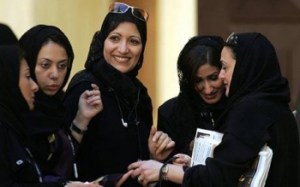
Une femme en Arabie Saoudite doit constamment porter le voile, ainsi qu'une longue robe noire couvrante dénommée l'abaya.

Et de toute façon, avant de rentrer chez elles, qu’ont-elles bien pu étudier ? Ce à quoi leur tuteur masculin a consenti, certes. Mais pas l’ingénierie, l’architecture ou les sciences politiques, car dans le système saoudien, qui n’est pas mixte, aucun programme universitaire public n’existe dans ces domaines pour les femmes, tous les autres n’étant offerts que dans une qualité, et en quantité, inférieure à celle dont profitent leurs homologues mâles. Cela touche tant les infrastructures, les cours étant proposés dans des bâtiments délabrés, que les équipements pédagogiques, les bibliothèques réservées aux femmes étant sous-équipées et les bibliothèques mixtes ne leur étant que d’un accès limité. Certaines universités saoudiennes vont jusqu’à ne pas s’embarrasser de telles contingences en n’admettant pas du tout les femmes dans leurs effectifs.

Alors, bien sûr, certaines envisageront d’aller étudier à l’étranger – mais alors, il faudra vraiment que leurs parents en aient les moyens. Pour celles qui devront d’abord obtenir une bourse gouvernementale, le Ministère de l’Education exigera qu’un tuteur masculin signe un formulaire d’autorisation puis accompagne l’intéressée sur place, après quoi celle-ci devra se soumettre à un suivi régulier par l’attaché culturel de l’ambassade saoudienne de sa tutelle masculine, et au moindre écart, c’est la révocation de la bourse et le retour direct en Arabie Saoudite.

Les instances des Nations Unies en charge des droits des femmes en ont déjà maintes fois fait grief à Riyad qui, pour l’instant, a toujours fait la sourde oreille. Nous l’avons nous-mêmes rappelé au Roi Abdullah, dont nous verrons bien ce qu’il en fait. Mais déjà, pour éviter que, comme toujours depuis l’an dernier, nos lettres ne nous reviennent non ouvertes car refusées par la Cour royale et les ministères saoudiens, cette fois, nous avons tout envoyé par fax …
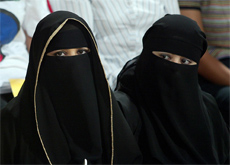
Il n'est toutefois pas rare de voir des femmes en voile intégral ...

Il en est de même pour la seconde question que nous avons abordée, celle-là étant vraiment une question d’actualité, au sens fort du terme.

Le 22 mai dernier, une Saoudienne du nom de Manal Al-Sharif a été arrêtée au volant d’une voiture à 4H du matin, puis remise en liberté sous caution avant que la police ne revienne l’arrêter à minuit le lendemain, cette fois à son domicile. De quoi Manal Al-Sharif s’était-elle rendue coupable au volant ? D’un excès de vitesse ? De conduite en état d’ivresse ? Quel délit routier grave avait-elle bien pu commettre pour se trouver à ce point dans le collimateur des autorités ? Tout simple. Manal était au volant, à savoir qu’elle conduisait une voiture, et ça, pour une femme en Arabie Saoudite, c’est un délit. Ou plus exactement, c’est contraire à la religion …

Mais comment, me direz-vous, peut-il exister des préceptes religieux musulmans concernant la conduite automobile puisque, lorsque l’Islam est apparu au 7ème siècle, l’automobile était loin d’exister ? Ca n’a pas gêné un imam saoudien, qui a cru bon de préciser en 1990 – au demeurant année de l’arrivée massive de troupes occidentales en Arabie Saoudite suite à l’invasion du Koweït par l’Irak de Saddam Hussein, et avec lesdites troupes de femmes soldats – que selon lui, Dieu considérait qu’une femme qui conduit une voiture était une pécheresse, rien que ça.

Dans sa fatwa, édit religieux qui n’a en théorie aucune valeur juridique, mais c’est sans compter sur l’omniprésence intrusive de la doctrine wahhabite dans le droit saoudien, le Cheikh Abdel Aziz Bin Abdallah Bin Baz nous explique ainsi, à peine immodeste, ce que le dieu de l’Islam aurait dit à Mahomet si les voitures avaient existé lorsque le Coran fut révélé à ce dernier:

« […] La question de la conduite des automobiles par les femmes. Il est connu que ceci constitue une source d’indéniables vices, inter alia, la khilwa [rencontre en privé entre un homme et une femme] interdite par la loi et l’abandon du hijab. Cela concerne aussi les rencontres entre des femmes et des hommes sans que les précautions nécessaires soient prises. Cela pourrait aussi conduire à des actes haraam [impies] et c’est pourquoi ce fut interdit. La pure Chari’a interdit également les moyens qui conduisent à la commission d’actes de nature impie et considère de tels actes haraam en eux-mêmes …  Ainsi, la pure Chari’a a proscrit toutes les voies menant au vice …  La conduite automobile féminine est l’un des moyens qui mènent à cela et c’est en soi une évidence. »
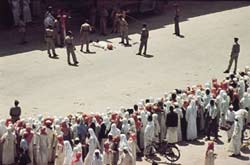
Le système judiciaire saoudien ignore totalement les Droits de l'Homme. Ici, une sentence de flagellation est exécutée en public.

Le problème, c’est que, d’une part, notre imam ne nous explique en rien le lien entre ces délires et la Chari’a qu’il invoque, ni a fortiori avec le Coran, et que, d’autre part, aucun pays musulman au monde n’a repris cette interprétation arriérée et fantasmatique des textes saints, l’Arabie Saoudite étant le seul pays au monde, toutes traditions juridiques confondues, où les femmes n’aient pas le droit de conduire une voiture.

Là encore, l’ONU a donné de la voix. Le Comité sur l’Elimination de la Discrimination contre les Femmes et le Groupe de Travail du Conseil des Droits de l’Homme pour la Revue périodique universelle ont appelé à l’unisson le royaume wahhabite à mettre fin à cette pratique, jusqu’ici à nul effet pourtant. Quant à Manal Al-Sharif, elle fut finalement libérée le 30 mai …  Mais ne peut toujours pas conduire un véhicule, ni elle ni quelque Saoudienne que ce soit.

Reste à voir maintenant si le Ministre saoudien de la Justice écoutera plus volontiers l’AWC que les instances des Nations Unies, sachant que nos fax lui sont bien parvenus et espérant qu’il n’a pas donné ordre à son personnel de jeter tout de suite tout envoi portant notre emblème, à défaut de pouvoir le refuser comme une lettre.
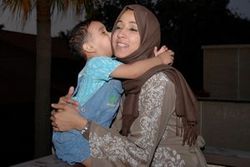
Après sa libération, Manal Al-Sharif retrouve son fils. Son acte de bravoure a suscité l'admiration de par le monde et chez de nombreuses Saoudiennes qui s'identifient à sa cause.

Dans leur bestseller de 2010, La moitié du ciel (en anglais, Half the Sky), Nicholas Kristof et Sheryl Wudunn, grands reporters au New York Times, lauréats du Prix Pulitzer, nous parlent des fléaux qui s’abattent sur les femmes de par le monde, tels que l’esclavage sexuel, les « crimes d’honneur », les mutilations génitales et les viols. « La moitié du ciel », c’est ce que représentent selon eux les femmes, qui constituent certes, ici sur la Terre, la moitié la plus importante de l’humanité, ne serait-ce qu’en termes purement numéraires.

Or, en regardant cette Arabie Saoudite où l’homme, non tant ici l’être humain que l’individu mâle, interprète la parole de Dieu comme étant de nature uniquement punitive, le fait de naître femme étant en lui-même une offense, l’on ne peut s’empêcher de se demander si l’on n’est pas sur une terre où, pour sainte que la veuille le « Gardien des Deux Saintes Mosquées » qu’est le Roi d’Arabie Saoudite, à tout instant et en tout lieu, Dieu punit la moitié du ciel …

Que c’est avoir mal, ou trop peu, lu le Coran que de faire ainsi. Lorsque l’Arabie Saoudite soutenait l’insensé régime taliban d’Afghanistan, même les Emirats Arabes Unis et le Pakistan qui faisaient de même n’en exigeaient pas tant de leurs ressortissantes. C’est dire.

Que l’Arabie Saoudite se considère tout entière comme une mosquée, cela ne concerne pas l’AWC, trop attachée pour y trouver à redire au droit des peuples à disposer d’eux-mêmes. Que l’Etat saoudien en prenne prétexte pour violer les droits fondamentaux de son peuple, là, en revanche, nous ne pouvons l’admettre. Et a fortiori, qu’il invoque la parole divine pour opprimer les femmes¸ autant le peuple saoudien ne sera jamais notre ennemi, autant, de ce seul fait, son gouvernement peut être assuré quant à lui que, tant qu’il continuera de le faire ou de le laisser faire, il ne sera jamais notre ami. Et sachant quelle bonne écoute nous est accordée au sein de l’ONU, c’est bien dommage pour lui.


Bernard Henry est Officier de Presse du Bureau de Représentation auprès de l’Office des Nations Unies à Genève de l’Association of World Citizens.
March 8: Women and the People’s Revolution

In Human Rights, Middle East & North Africa, Women's Rights on March 7, 2011 at 11:12 PM

MARCH 8: WOMEN AND THE PEOPLE’S REVOLUTION
By René Wadlow

It is only when women start to organize in large numbers that we become a political force, and begin to move towards the possibility of a truly democratic society in which every human being can be brave, responsible, thinking and diligent in the struggle to live at once freely and unselfishly.”

March 8 is the International Day of Women and thus a time to analyse the specific role of women in local, national and the world society.  2011 is the 100th anniversary of the creation of International Women’s Day first proposed by Clara Zetkin (1857-1933) at the Second International Conference of Socialist Women in Copenhagen in 1911.  Later she served as a socialist-communist member of the German Parliament during the Weimar Republic which existed from 1920 to 1933 when Hitler came to power.

Zetkin who had lived some years in Paris and was active in women’s movements there was building on the 1889 International Congress for Feminine Works and Institutions held in Paris under the leadership of Ana de Walska. De Walska was part of the circle of young Russian and Polish intellectuals in Paris around Gerard Encausse, a spiritual writer who wrote under the pen name of Papus. For this turn-of-the-century spiritual milieu influenced by Indian and Chinese thought, ‘feminine’ and ‘masculine’ were related to the Chinese terms of Yin and Yang.  Men and women alike have these psychological characteristics. ‘Feminine’ characteristics or values include intuitive, nurturing, caring, sensitive, relational traits, while ‘masculine’ are rational, dominant, assertive, analytical and hierarchical.

Clara Zetkin.

As individual persons, men and women alike can achieve a state of wholeness, of balance between the Yin and Yang.  However, in practice ‘masculine’ refers to men and ‘feminine’ to women.  Thus, some feminists identify the male psyche as the prime cause of the subordination of women around the world.  Men are seen as having nearly a genetic coding that leads them to ‘seize’ power, to institutionalize that power through patriarchal societal structures and to buttress the power with masculine values and culture.

However, when women take positions of political power, they have tended to rule according to the same ‘masculine’ values used by their male predecessors, as we saw with Golda Meir in Israel, Indira Gandhi in India and Margaret Thatcher in the United Kingdom. Thus people have asked what effects the increased entry of women into the political arena would have on public policies and priorities.  Would women assure greater equality of opportunity for all people, including their own gender, a greater emphasis in international affairs on cooperation? It may be that confronted with urgent security threats and economic instability, any prime-minister – of either gender- would govern within a ‘masculine’ framework rather than with ‘feminine’ tools of intuition, compassion, consensus-building and peacemaking.

Can the world be made safe for the ‘subversive’ feminine values?  The Italian sociologist Eleonora Masini, with whom I worked in 1977 in Hiroshima on the life histories of those who survived the atomic bombing, has  an optimistic view of the  capacity of women to be agents of change toward a more just and humane world.  “Women are capable of sensing the seeds of change which need not only rational capacities but intuitive capacities.  This intuition has not been developed by centuries of searching for better productivity, more profit, hence more consumption, which is what men do. Women instead have capacities that are of help in capturing seeds of change that are still alive such as:

a)      Capacity to grasp the wholeness of a situation other than the details, such as the feeling ill or well of a family:
b)      Capacity to act rapidly after rapidly grasping whole situations, such as stopping a child from falling out of a window;
c)      Capacity to change from one interest to others almost at the same time, ironing, reading, watching the child at play;
d)      Capacity to sacrifice herself for the good of others.  This capacity has very often been ill used.

All such capacities make a better audience for the seeds of change and better creators of vision. In the long term, the future is one of more solidarity among people, rather than hunger; one of love and understanding rather than one where the atomic bomb is present; one of peaceful living in big towns, rather than one of violence which the children experience every day.”

A test for women as agents of change toward a more just and humane world is presenting itself in the Arab-Islamic world.  The People’s Revolution which began in Tunisia followed by Egypt has now spread throughout North Africa, the Middle East and Iran.  The waves of the People’s Revolution are having an impact throughout the world.  It is being watched with hope by many and with fear by those who have interests in the status quo.

On this International Day of Women, we must ask a crucial question: How does political conflict degenerate into mass violence, generating new crises and new forms of violent conflict in the future?  How does a community pull itself out from a cycle of violence and set up sustainable ways of living in which different categories of people may be encouraged to contribute to the process?

Women, individually and in groups, have played a critical role in the struggle for justice and peace in all societies.  However, when real negotiations on the future of a society begin, women are often relegated to the sidelines. Therefore, there is a need to organize so that women are at the negotiating table to present their ingenuity, patience and determination. Solidarity and organization are crucial elements. March 8, 2011 is a reminder of the steps taken over a 100 years and the distance yet to be covered.

René Wadlow is Senior Vice President and Chief Representative to  the United Nations Office in Geneva of the Association of World  Citizens.