The Official Blog of the

Archive for the ‘Solidarity’ Category

J’étais là

In Being a World Citizen, Current Events, Fighting Racism, Human Rights, Solidarity on December 2, 2013 at 11:24 AM

J’ETAIS LA

Par Bernard Henry

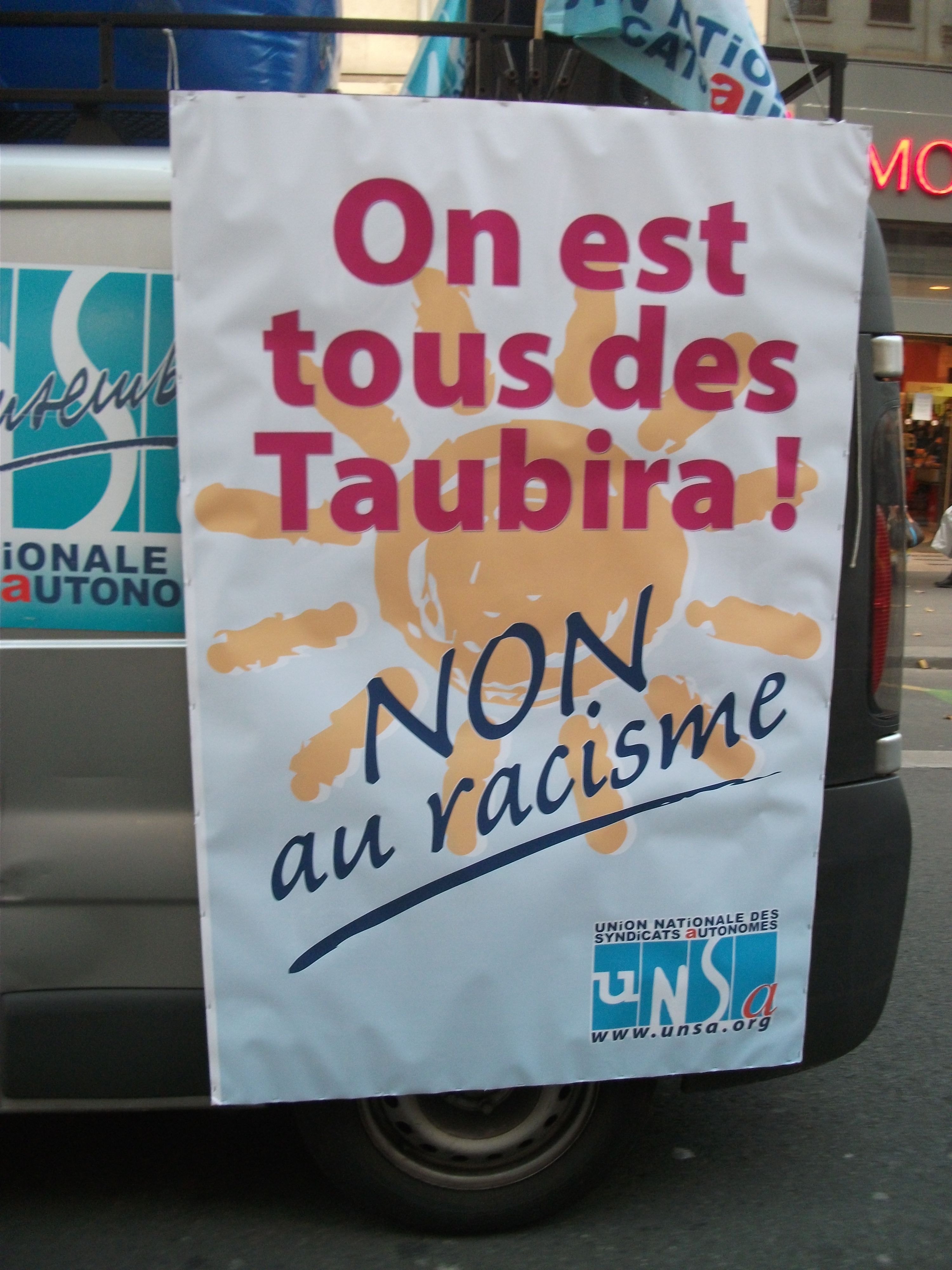
Samedi 30 novembre 2013. Me voici de retour chez moi à Suresnes. Je viens de participer à la Grande Marche contre le Racisme organisée à Paris par un certain nombre d’associations, dont Amnesty International avec laquelle j’ai moi-même marché.

On nous avait dit de ne pas aller marcher à Paris, car cette marche ne serait qu’une manœuvre de diversion du Parti Socialiste pour cacher les mauvais résultats de l’action du Gouvernement. On nous avait encore dit, du côté du Front National et des islamistes, extrêmes qui comme toujours se rejoignent, qu’il était « inutile » d’aller ainsi marcher – comme quoi il est toujours « utile », en tout état de cause, de se demander à qui profite le crime, en l’occurrence le racisme.

Moi-même, j’étais sollicité pour deux autres événements aujourd’hui, et avec la marche, cela m’en faisait trois parmi lesquels il me fallait choisir.

Je n’ai pas choisi, tout au long de mon existence, de subir des injures et des attaques sur le fait que je sois handicapé, ou que je sois juif, ou que je sois d’origine étrangère (du côté maternel, ce qui explique mon nom français car seul mon père l’était). Celle que j’aime, ses enfants d’une précédente union et nombre de mes ami(e)s n’ont pas choisi non plus de subir les mêmes choses parce que leur peau est plus mate, leur nom plus difficile à prononcer et leur appétit mis entre parenthèses en journée pendant un mois chaque été.

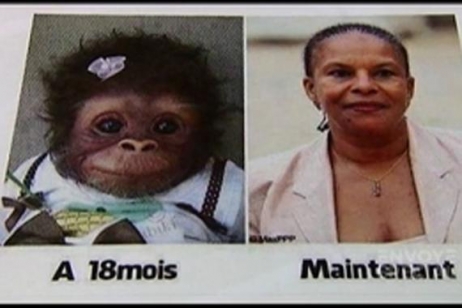
De même, Christiane Taubira, Ministre de la Justice, Garde des Sceaux, ne s’est vue laisser aucun choix lorsque d’aucuns l’ont comparée à un animal parce qu’elle a la peau noire, si courageux de leurs idées qu’ils ont parfois envoyé le faire à leur place leurs enfants dont ils ont ainsi pollué l’esprit. Même les Nations Unies ont condamné ces attaques contre elle[i].

Dans l’émission Envoyé Spécial de France 2, une candidate investie pour les prochaines municipales par le Front National, parti français d’extrême droite, a montré avec fierté un odieux montage photo de sa composition dans lequel elle compare la Ministre française de la Justice à un singe parce qu’elle est de couleur noire.

Dans l’émission Envoyé Spécial de France 2, une candidate investie pour les prochaines municipales par le Front National, parti français d’extrême droite, a montré avec fierté un odieux montage photo de sa composition dans lequel elle compare la Ministre française de la Justice à un singe parce qu’elle est de couleur noire.

Il n’était donc qu’un seul endroit où je pouvais et devais me trouver aujourd’hui, et cet endroit, c’était l’espace qui sépare la Place de la République de la Place de la Bastille à Paris, cet espace qui a accueilli la Grande Marche contre le Racisme.

Abraham Lincoln, le Président des Etats-Unis qui a aboli l’esclavage dans son pays, ayant payé de sa vie son courage politique, a dit un jour : « On peut tromper quelques personnes pendant quelques temps ; on peut tromper tout le monde pendant quelques temps ; mais on ne peut pas tromper tout le monde tout le temps ».

En matière de lutte contre le racisme, Lincoln reste une référence dans l’histoire américaine et mondiale. Si les Etats-Unis ont cessé de prendre pour acquis qu’un être humain pouvait être la propriété d’un autre en raison de sa seule couleur de peau, c’est grâce à lui.

Dans l’opinion publique française, les discours racistes ont acquis au cours des derniers mois une popularité inquiétante. Mais la résistance existe et n’a pas peur de s’afficher.

Dans l’opinion publique française, les discours racistes ont acquis au cours des derniers mois une popularité inquiétante. Mais la résistance existe et n’a pas peur de s’afficher.

Aujourd’hui, la France connaît à nouveau, comme avant la Seconde Guerre Mondiale puis dans les années 1950, une montée de l’insanité raciste et des agressions envers celles et ceux qui ne ressemblent pas à la majorité. La Grande Marche contre le Racisme de cet après-midi a démontré que la population n’était pas unanime, loin s’en faut, à suivre ce mouvement de folie.

Elle réagit. Nous réagissons, toutes et tous ensemble. Nous disons non au racisme, non à la fatalité historique qui vouerait la France à la haine de l’autre. Mais pour capital qu’il était d’y prendre part, cette marche n’est en tout et pour tout qu’un instant. Elle n’est pas une finalité.

C’est chaque jour qu’il faut agir, c’est ensemble qu’il faut agir. C’est ainsi que les tenants de la haine comme instrument politique finiront par comprendre que leurs intrigues ne seront pas couronnées de succès.

C’est ce qu’avait compris, cent ans après Lincoln aux Etats-Unis, Martin Luther King, lui aussi assassiné parce qu’il voulait mettre fin au racisme dans son pays. Le Révérend savait combien l’inaction, le renoncement, le fatalisme étaient nuisibles à la lutte contre le sectarisme et l’injustice. Parmi ses nombreuses maximes passées à la postérité, il y a celle-ci :

« A la fin, nous nous souviendrons non pas des mots de nos ennemis, mais des silences de nos amis. »

« On ne peut pas continuer comme ça », ai-je entendu Geneviève Garrigos, Présidente d’Amnesty International France, déclarer à une journaliste de BFM TV. J’étais là. Je l’ai entendue le dire à deux mètres de moi. J’étais là, quand d’autres l’auront entendue plus tard à la télévision. Si par bonheur, Geneviève les a convaincus, qu’ils passent à l’action à leur tour, sans quoi encore plus tard, peut-être, sera trop tard.

Bernard Henry est Officier des Relations Extérieures du Bureau de Représentation auprès de l’Office des Nations Unies à Genève de l’Association of World Citizens.


Violences contre les femmes : Des murs qui emprisonnent

In Human Rights, International Justice, Solidarity, United Nations, Women's Rights, World Law on November 25, 2013 at 10:57 PM

VIOLENCES CONTRE LES FEMMES : DES MURS QUI EMPRISONNENT

Par René Wadlow


Lorsque, dans son discours de lauréat du Prix Nobel de la Paix (1974), Sean McBride (1904-1988) a cité, aux côtés du développement et de l’acceptation des armes nucléaires sans discernement, l’utilisation d’armes chimiques et d’assassinats politiques comme les signes d’un « écroulement presque total de la moralité publique et privée dans pratiquement tous les secteurs des relations entre les êtres humains », il a mis l’accent sur le thème qui lui était le plus cher : la nécessité d’actions non-gouvernementales visant à assurer la survie.

Même si McBride avait servi en qualité de Ministre irlandais des Affaires Etrangères entre 1948 et 1951 et joué en cela un rôle important dans la création du Conseil de l’Europe, c’est bien en tant que dirigeant d’une organisation non-gouvernementale (ONG) qu’il a apposé sa marque dans l’histoire – en tant que premier président du Comité Exécutif d’Amnesty International (1961-1974), Secrétaire Général de la Commission international des Juristes (1963-1970) et Président du Bureau international de la Paix. C’est dans le cadre de ses efforts pour mettre en lumière l’usage répandu de la torture que nous avions commencé à travailler ensemble à Genève. Il dénonçait des techniques de torture « qui faisaient passer la poucette et le rack du Moyen Age pour des jouets d’enfants ».

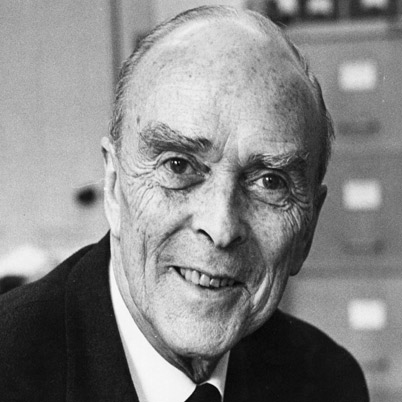
Sean McBride, un authentique héros de la défense des Droits de l'Homme.

Sean McBride, un authentique héros de la défense des Droits de l’Homme.

Il critiquait particulièrement la torture et la violence à l’encontre des femmes. Il avait été élevé en grande partie par sa mère, l’actrice et militante nationaliste irlandaise Maud Gonne. Son père, John McBride, avait été pendu par les Britanniques pour sa participation à l’insurrection de Pâques en 1916, quand Sean avait douze ans. La violence contre les femmes était donc doublement injuste – parce qu’il s’agissait de violence et parce que les femmes devaient être respectées.

Quand Sean McBride, au travers d’Amnesty International, a soulevé pour la première fois la question de la torture à la Commission des Droits de l’Homme de l’ONU, les représentants des divers gouvernements ont répondu que la torture pouvait arriver occasionnellement – il y a toujours bien des policiers ou des gardiens de prison à la main lourde – mais que la torture était rare et jamais employée en tout cas au titre de politique gouvernementale officielle. Cependant, une fois que la question a été soulevée et reprise par les représentants d’autres ONG, il est devenu clair que la torture était généralisée, à travers les différentes cultures et les différents systèmes politiques eux-mêmes. En fin de compte, la Commission des Droits de l’Homme des Nations Unies a nommé un Rapporteur spécial pour la Torture et mis en place un moyen systématique d’examiner les plaintes de torture.

Pareillement, c’est pour beaucoup cette façon de faire qui a été utilisée pour faire naître une prise une conscience au sujet des violences contre les femmes. Quand la question a été soulevée pour la première fois par les représentants d’ONG, les gouvernements ont répondu là encore que la violence contre les femmes existait en effet, mais qu’elle était rare ou n’était en tout et pour tout qu’une « violence conjugale », ce qui faisait que les gouvernements ne pouvaient intervenir si la police n’agissait pas la première.

Toutefois, des preuves émanant du monde entier furent présentées par les ONG qui établissaient que la violence contre les femmes atteignait un niveau alarmant. La violence contre les femmes est une agression contre leur intégrité physique, et aussi contre leur dignité. Comme l’ont souligné les représentants des ONG, nous devons mettre l’accent sur l’universalité de la violence contre les femmes, sur la multiplicité des formes qu’elle prend et sur les façons dont la violence, ainsi que la discrimination, que subissent les femmes, et de manière plus large le système de domination basé sur l’asservissement et l’inégalité, fonctionnent en lien direct les uns avec les autres.

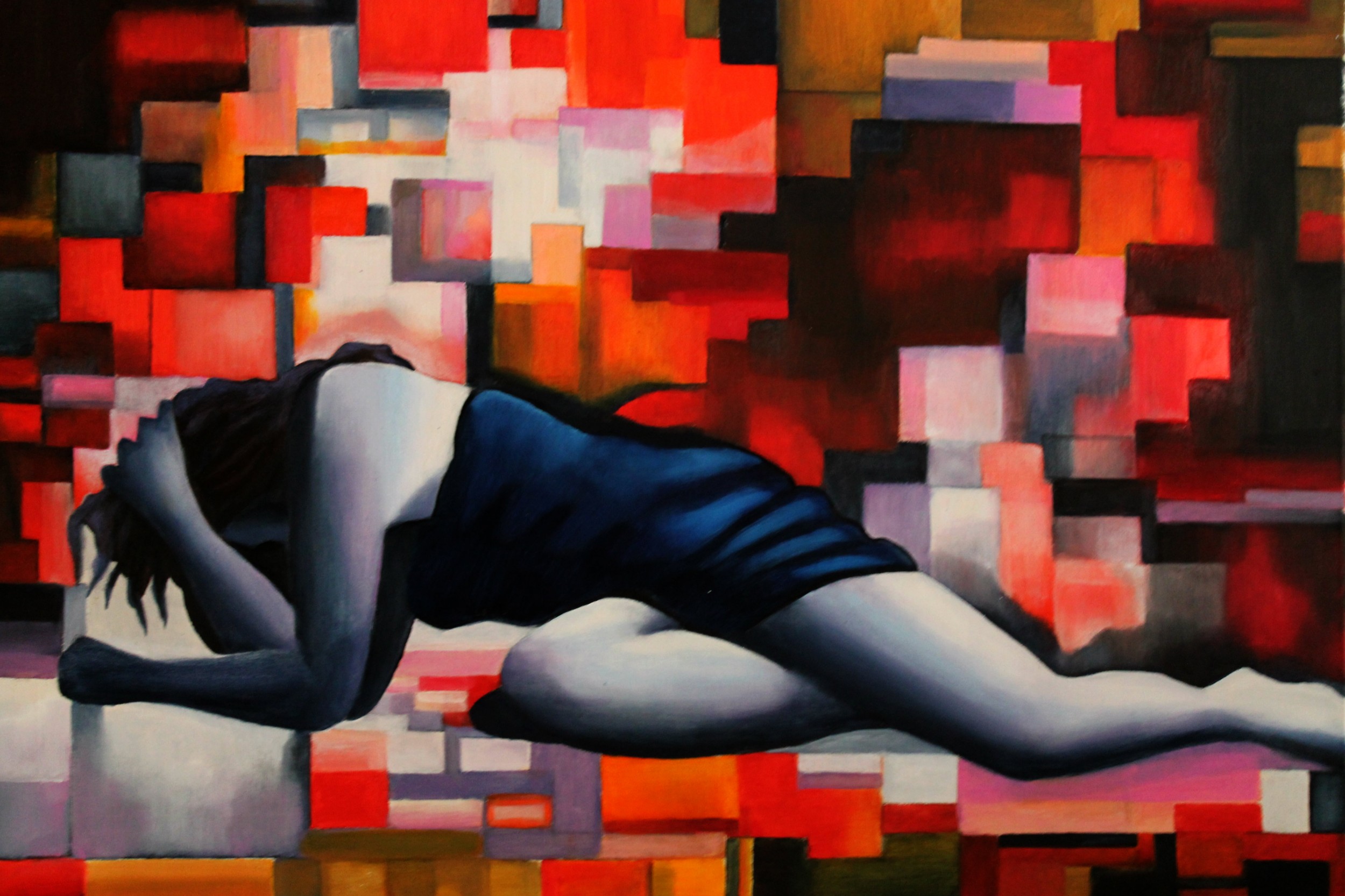
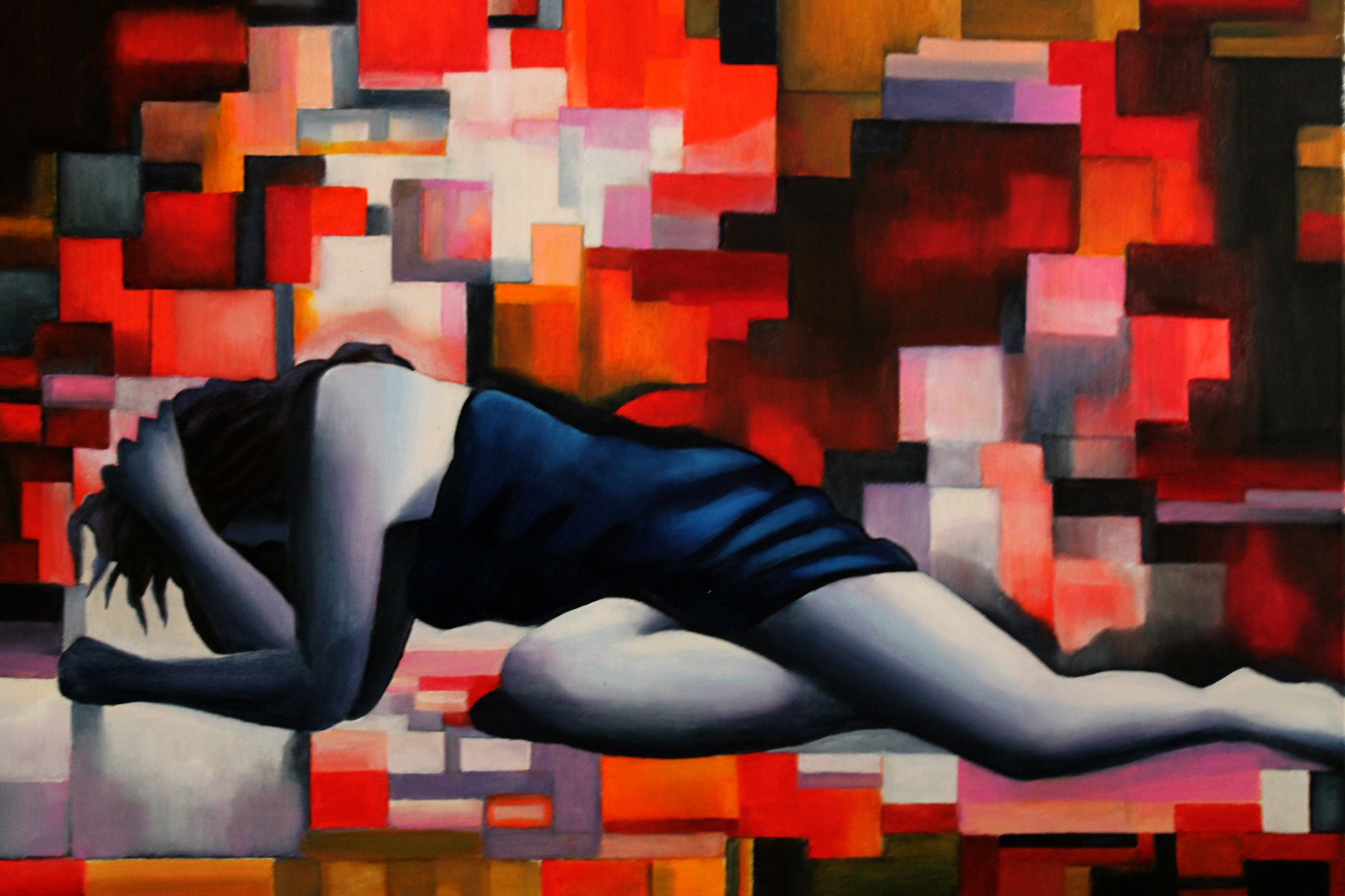
‘La violence contre les femmes’, de Gaetano Salerno, 80x60cm, 2013.

‘La violence contre les femmes’, de Gaetano Salerno, 80x60cm, 2013.

En réponse à cette abondance de preuves, l’Assemblée générale de l’ONU a proclamé le 25 novembre Journée internationale pour l’Elimination de la Violence contre les Femmes. La valeur d’une telle « Journée » spéciale est qu’elle offre un moment pour analyser une question donnée puis de remobilisation pour prendre des mesures tout à la fois à court terme et sur une durée plus longue.

Tout à la fois au niveau international de l’ONU et au niveau national, des programmes ont été créés en vue d’assurer l’égalité pour les femmes et la promotion des femmes dans tous les domaines. La violence physique envers les femmes a fait l’objet d’une attention de plus en plus importante, des centres pour les femmes battues ont été créés et l’on s’est aussi penché sur la question de trafic de femmes. Il a été souvent redit qu’il était nécessaire d’assurer l’éducation, la formation, la santé, la promotion de l’emploi, et l’insertion des femmes afin que celles-ci puissent participer de manière pleine et effective au processus du développement dans la société.

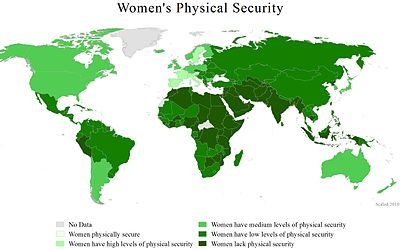
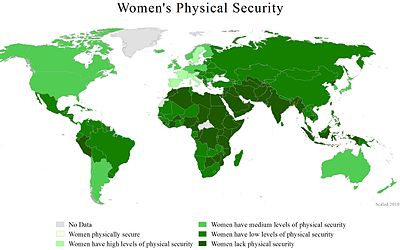
Les violences envers les femmes, encore et toujours un fléau mondial.  (c) Wikipédia

Les violences envers les femmes, encore et toujours un fléau mondial. (c) Wikipédia

Mais l’inégalité perdure, et les murs qui emprisonnent les femmes sont toujours debout. En ce 25 novembre, cette journée pour l’élimination de la violence contre les femmes, il nous faut regarder de près les différentes formes de violences qui font que de telles murailles, à travers le temps, demeurent en place.

Le Professeur René Wadlow est Président et Représentant en Chef  auprès de l’Office des Nations Unies à Genève de l’Association of World Citizens.

Violence Against Women: Walls That Imprison

In Human Rights, International Justice, Solidarity, United Nations, Women's Rights, World Law on November 24, 2013 at 6:32 PM

VIOLENCE AGAINST WOMEN: WALLS THAT IMPRISON

By René Wadlow

When in his Nobel Peace Prize address (1974), Sean MacBride (1904-1988) cited torture along with the development and acceptance of indiscriminate nuclear weapons, the use of chemical weapons, and political assassination as signs of a “near total collapse of public and private morality in practically every sector of human relationship”, he stressed his central theme: the necessity of nongovernmental actions to ensure survival.

Although MacBride had served as the Irish Foreign Minister from 1948 to 1951 and played an important role in the creation of the Council of Europe, it was as a non-governmental organization leader that he made his full mark: as an early chair of the Amnesty International Executive Committee (1961-1974), as Secretary General of the International Commission of Jurists (1963-1970) and as chair of the International Peace Bureau.  It was in his efforts to highlight the wide use of torture that we started to work together in Geneva.  He denounced torture techniques “that make the medieval thumb screw and rack look like children’s toys”.

Sean McBride, a true hero of the defense of human rights.

Sean McBride, a true hero of the defense of human rights.

He was particularly critical of torture and violence against women.  He had been largely raised by his mother, the actress and Irish nationalist Maud Gonne. His father, John MacBride, was hanged by the British for his participation in the 1916 Easter uprising when Sean was 12.  Violence against women was doubly unjust: because it was violence and because women were to be respected.

When Sean MacBride through Amnesty International first raised the issue of torture in the United Nations (UN) Commission on Human Rights, the government representatives replied that torture might happen occasionally — there are always some brutal policemen or prison guards — but torture is rare and never a government policy. However, once the issue was raised and taken up by other NGO representatives, it became clear that torture is widespread, in different cultures and in different political systems.  Finally, the UN Commission on Human Rights named a Special Rapporteur on Torture and developed a systematic way of looking at torture complaints.

Likewise, it has largely been the same pattern for raising awareness of violence against women. When the issue was first raised by representatives of nongovernmental organizations (NGOs), governments replied that violence against women exists but is rare or that it is “domestic violence” and governments cannot act unless there are actions taken by the police.

However, worldwide evidence was presented by NGOs that violence against women exists to an alarming degree. Violence against women is an attack upon their bodily integrity and their dignity.  As NGO representatives stressed, we need to place an emphasis on the universality of violence against women, the multiplicity of its forms and the ways in which violence, discrimination against women, and the broader system of domination based on subordination and inequality are inter-related.

"Violence against women", by Gaetano Salerno, 80x60cm, 2013.

‘Violence against women’, by Gaetano Salerno, 80x60cm, 2013.

In a response to the evidence, the UN General Assembly has set 25 November as the UN-proclaimed International Day for the Elimination of Violence against Women. The value of a special “Day” is that it serves as a time of analysis of an issue and then of rededication to take both short-term and longer-range measures.

Both at the international UN level and at the national level, there have been programs devoted to the equality of women and to the promotion of women in all fields.  There has been growing attention to physical violence against women, the creation of centers for battered women and attention given to the trafficking of women.  It has often been repeated that it is necessary to ensure the education, training, good health, employment promotion, and integration of women so that they can participate fully and effectively in the development process.

Violence against women, a global scourge. (c) Wikipedia

Violence against women, an enduring global scourge. (c) Wikipedia

Yet inequality continues, and walls still exist that imprison women. On November 25, this day for the elimination of violence against women, we need to look at the different forms of violence which keep such wall in place.

Prof. René Wadlow is President and Chief Representative to the United Nations Office at Geneva of the Association of World Citizens.

The Association of World Citizens Promotes Knowledge and Skills for World Citizenship

In Being a World Citizen, Human Rights, Solidarity, The Search for Peace, United Nations, World Law on February 10, 2013 at 4:16 PM

THE ASSOCIATION OF WORLD CITIZENS PROMOTES KNOWLEDGE AND SKILLS FOR WORLD CITIZENSHIP

By René Wadlow


The Association of World Citizens (AWC) stresses that our oneness with humanity and our acceptance of the whole planet as our home involves a process of change both in the attitudes of individuals and in the policies of States. Humanity is clearly moving toward participation in the emerging World Society. An awareness of the emerging World Society and preparation for full and active participation in the emerging World Society is a necessary element of education at all levels, from primary schools, through university and adult education.


The AWC stresses that a World Citizen is one:

Aware of the wider world and who:

–  has a sense of his or her role as a world citizen;

–   respects and values diversity;

–   has an understanding of how the world works economically, politically, socially, culturally, technologically and environmentally;

–   is outraged by social injustice;

–   is willing to act to make the world a more equitable and sustainable place;

–   participates in and contributes to the community at a range of levels from the local to the global.


The AWC believes that World Citizenship is based on rights, responsibility and action.


The rights and freedoms are set out by the Universal Declaration of Human Rights and related human rights conventions such as the International Covenant on Economic, Social and Cultural Rights, the International Covenant on Civil and Political Rights, the Convention on the Rights of the Child, and the Convention for the Elimination of All Forms of Discrimination Against Women. These United Nations (UN)-sponsored human rights treaties are the basis of world law which deals directly with individuals and not just with States.

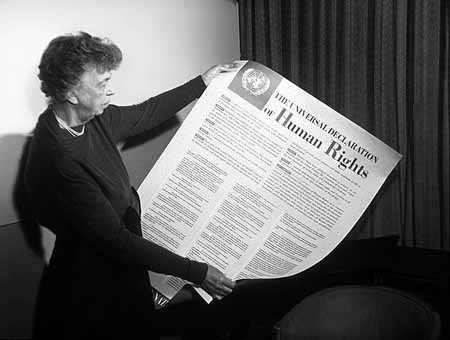
The Universal Declaration of Human Rights, adopted by the UN General Assembly in 1948, is truly the building block of World Citizenship.

The Universal Declaration of Human Rights, adopted by the UN General Assembly in 1948, is truly the most important building block of World Citizenship.

In most cases, there are procedures that exist for the redress of violations of these rights at the national, regional, and UN levels. These rights should enable all persons to participate effectively in national, regional and the world society.


The idea of responsibility has been often discussed within the UN, but it has been impossible to set out agreed-upon obligations. Rather, a sense of responsibility toward the Planet and toward others is left to the individual’s conscience and moral sense. Nevertheless, a sense of responsibility, an ethical concern for social justice, and the dignity of humanity is central to the values of a world citizen.


Action is at the heart of the attitude of a vibrant world citizen. Action must be based on three pillars: knowledge, analysis and skills.

Knowledge: Background knowledge, a sense of modern history, of world trends, and issues of ecologically-sound development is fundamental. As one can never know everything about issues that require action, one needs to know where to find information and to evaluate its quality for the actions one wants to undertake.

Analysis: It is important to be able to analyse current trends and events, to place events in their context, to understand the power relations expressed in an event. One needs to try to understand if an event is a “one-time only” occurrence or if it is part of a series, an on-going process, if it is a local event or if it is likely to happen in other parts of the world as well.

Analysis is closely related to motivation. If from one’s analysis, one sees a possibility for creative action alone or with others, one will often act. If from analysis, it seems that little can be done as an individual, then one can urge a government to act. The degree of personal involvement will usually depend on the results of the analysis of a situation.

Skills: Political skills are needed to make an effective world citizen. A wide range of skills is useful such as negotiation, lobbying, networking, campaigning, letter writing, communications technology and preparing for demonstrations. These are all essential skills to join with others for a strong world citizen voice in world politics. Some of these skills can be taught by those having more experience, for experience is the best teacher. It is by networking to new individuals and groups that one learns the potentials and limits of networking.


In our period of rapid social and political change, the past cannot provide an accurate guide to the future. Anticipation and adaptability, foresight and flexibility, innovation and intuition, become increasingly essential tools for creative political action.


Prof. René Wadlow is President of the Association of World Citizens.
World Citizens Highlight 2013 as the International Year of Water Cooperation

In Environmental protection, Human Development, Solidarity, United Nations, World Law on January 6, 2013 at 11:32 PM

WORLD CITIZENS HIGHLIGHT 2013 AS THE INTERNATIONAL YEAR OF WATER COOPERATION

By René Wadlow


The United Nations (UN) General Assembly by Resolution A/RES/65/154 has declared 2013 as the UN International Year of Water Cooperation with UNESCO as the lead agency for the Year. The objective of this International Year is to raise awareness both on the potential for increased cooperation and on the challenges facing water management in the light of the increase in demand for water access, allocation and services. The Year should build on the momentum created at the UN Conference on Sustainable Development (Rio plus 20) in which the Association of World Citizens played an active role.

The Association of World Citizens (AWC) has in the past stressed the important role of trans-boundary lake and river basins, including reservoirs of fresh water that move silently below the borders in underground aquifers. While there is much trans-frontier cooperation among States to which we can justly point as “Best Practices”, there are also trans-frontier tensions related to access to fresh water.

There are conflicts at the national level concerning the use of water in urban areas and water for irrigation within rural areas. The main causes of urban water conflicts are characterized by complex socio-economic and institutional issues related to urban water management. The debates about public water services versus private water suppliers are frequently associated with conflicts over water price and affordability. Likewise, the issue of centralization verses decentralization of water utilities is also discussed in the framework of institutional aspects of urban water management. A critical and interdisciplinary examination of the socio-economic and institutional aspects of national water management is important and one in which both government and civil society needs to be involved.


A Jewish proverb says, "No water, no life". Who wants to live a dried-up planet?

As the Jewish proverb goes, “No water, no life”. Who wants to live on a dried-up planet?


However, it is on trans-frontier cooperation that the AWC will put its emphasis as the dangers of trans-boundary conflicts over water use, the creation of dams, and modification of river courses are real world issues in which world citizens have a role to play.

In one of the early presentations of world citizen proposals on economic issues, Stringfellow Barr called attention to the multi-purpose efforts of the Tennessee Valley Authority (TVA) for water management, farming and industrial development. Citizens of the World (New York: Doubleday, 1952, 285pp.) Barr cited Herman Finer’s analysis The TVA: Lessons for International Application published by the ILO then displaced from Geneva by the Second World War (Montreal: International Labor Office, 1944). The TVA was proposed as a possible model for an Indus River Valley Authority and a Jordan Valley Authority. Both the Middle East and Asia continue to present real challenges for trans-frontier water management. The Association of World Citizens will propose during 2013 new avenues for action and multi-State cooperation.


Prof. René Wadlow is President of the Association of World Citizens.
Supporting Young Syrians who Say “Stop the Killing!”

In Conflict Resolution, Current Events, Human Rights, Middle East & North Africa, Solidarity, The Search for Peace, United Nations, World Law on May 26, 2012 at 3:07 PM

SUPPORTING YOUNG SYRIANS WHO SAY “STOP THE KILLING!”

By René Wadlow

 Image

In early May 2012, there were particularly deadly explosions in Damascus, the capital of Syria, an escalation of a conflict which began over a year ago with nonviolent protests but which spilled over into violence, refugee displacements, and ever deeper division among the people of Syria.

For the moment, the efforts of the League of Arab States and the United Nations have not been able to establish good-faith negotiations or even a permanent ceasefire. Therefore a group of young nonviolent Syrians have created a movement “Stop the Killing,” not related to a political party or a confessional religious group, but which wishes to unite those of good will to stop the violence and to develop a society in which all can contribute.

Therefore, we who are outside Syria, send our support and willingness to cooperate.

I believe in you, and I believe in your destiny.

I believe that you have inherited from your forefathers an ancient dream, a song, a prophecy which you can proudly lay as a gift of gratitude to  those working for a just resolution of the current conflicts.

I believe that it is in you to be good citizens.

And what is it to be a good citizen?

It is to acknowledge the other person’s rights before asserting your own, but always to be conscious of your own.

It is to be free in word and deed but it is to know that your freedom is subject to the other person’s freedom.

It is to know that killing will never bring a society of justice and harmony. A just and nonviolent society is the fruit of wisdom and love. Therefore let love, human and frail, command the coming day.


Rene Wadlow, a member of the Fellowship of Reconciliation and of its Task Force on the Middle East, is President and Chief Representative to the United Nations Office at Geneva of the Association of World Citizens.
Kunlabora Spirito kaj Ĝiaj Multaj Elmontriĝoj

In AWC Esperanto Division, Environmental protection, Human Development, Solidarity, The Search for Peace, United Nations, World Law on January 25, 2012 at 10:20 PM

KUNLABORA SPIRITO KAJ ĜIAJ MULTAJ ELMONTRIĜOJ

de René Wadlow

esperantigite de Bernard Henry


La Ĝenerala Asembleo de Unuiĝintaj Nacioj (UN), en ĝia Rezolucio A/RES/64/136, konsekris 2012 kiel Internacia Jaro por Kooperativoj, celante antaŭenmeti la larĝan rolon kiun kooperativoj ludas en ekologiema disvolvo kaj malapliigo de malriĉeco. Kiel diris UN-Ĝeneralsekretario Ban Ki-moon, “Kooperativoj estas rememorigilo al la internacia komunumo, ke eblas ja celi al kaj ekonomia kaj sociala respondeco”. La kooperativa movado ludas larĝan rolon en ambaŭ la produkado kaj la disdono de komercaĵoj kaj servoj tra la mondo. Kvankam malpli videblaj ol private posedataj, transnaciaj korporacioj (kiuj havas larĝajn reklambuĝetojn kaj tiel igas siajn komercaĵojn neĉirkaŭpaseblaj), kooperativoj estas grava parto de la monda ekonomio kaj meritas la atenton kiun la UN-jaro kapablas alporti (1).

Tamen, malantaŭ kooperativoj de produkado kaj disdono, loĝas unuavice “Kunlabora Spirito” kiu elmontriĝas laŭ multegaj manieroj, kiuj estas ĉiuj bazitaj sur kunlaboro sed ne ĉiuj nomiĝas “kooperativo”. Kunlabora Spirito substrekas renoviĝon, kunlaboron, mutualan helpon, kaj komunecon kiel “tagordo” je la surloka, nacia, kaj monda niveloj. Kunlaboro estas nepra neceso por la venontaj paŝoj en homa evoluo.

Kunlabora Spirito aperas en multaj formoj. Homoj tra la mondo pli kaj pli ekkonscias, ke ĉiuj el ni estas interligitaj kun aliaj personoj, per la aero kiujn ni spiras kaj akvosistemoj, la grundo kaj ĉiuj vivoformoj. Ju pli ni povas plipovigi unu la alian por ekflori sen noci al aliaj, des pli ni kreas mondan kunlaboran socion. Tial ĉiu ago de la individuo – aŭ neago – povas havi forserĉajn konsekvencojn ambaŭ por ĉiuj homoj en la mondo kaj por la naturmedio je kiu ni ĉiuj dependas.

Kunlabora Spirito evidentiĝas en la kreskaj zorgoj de Verda – ekologiema – Ekonomio. Eŭropo subtenas komercan kaj kunlaboran disvolvon de karbonmalpliigaj teknologioj kun miksaĵo de registara investado, impostosenpezoj, pruntedonoj kaj leĝoj. Ekzistas agnoskata neceso ŝirmi la naturmedion, investi en puran energion kaj krei daŭripovajn laborpostenojn, sed multo restas por fari en la tuta mondo.

Tra la mondo, ni ĉiuj estas enirantaj periodon de ŝanĝiĝo por kiu estas neniaj antaŭplanoj. Tial nepras ke ni scipovu kunan laboron. La formoj de kunlabora agado fontas el historiaj cirkonstancoj, surloka kulturo, kaj ekologiaj kondiĉoj. Tamen ekzistas komuna zorgo pri kunlabora uzo de naturvivrimedoj, komercaĵoj kaj servoj. Kunlabora agado loĝas en la koro de la ekonomia kaj politika alturno al mondnivela disvolvo de vivrimedoj kaj pli bona vivokvalito.

Ekzistas multaj formoj tradiciaj de kunlaboro, de mutuala helpo en periodoj de manko. 2012 devas utili kiel ŝanco alrigardi la multajn manierojn laŭ kiuj Kunlabora Spirito elmontriĝas en la mondo. Tial 2012 devas esti nia ĉefa interesocentro koncerne al la plifortigo de la konvinkoforto de Kunlabora Spirito.


(1)  Bv vidi la UN-retejon pri la Jaro: http://social.un.org/coopyear


Prof. René Wadlow estas Prezidanto kaj Ĉefreprezentanto ĉe UN en Ĝenevo de la Asocio de la Mondcivitanoj.

Bernard Henry estas la Oficisto pri Eksteraj Rilatoj de la Oficejo ĉe UN en Ĝenevo kaj la Ĝenerala Direktoro de la Esperanto-sekcio de la Asocio de la Mondcivitanoj.

The Cooperative Spirit and its Many Manifestations

In Human Development, Solidarity, The Search for Peace, United Nations, World Law on January 25, 2012 at 10:07 PM

THE COOPERATIVE SPIRIT AND ITS MANY MANIFESTATIONS

By René Wadlow


The United Nations (UN) General Assembly in Resolution A/RES/64/136 has designated 2012 as the International Year of Cooperatives in order to highlight the large role that cooperatives can play in ecologically-sound development and poverty reduction.  As Secretary-General Ban Ki-moon said “Cooperatives are a reminder to the international community that it is possible to pursue both economic viability and social responsibility.”  The cooperative movement plays a large role in both the production and the distribution of goods and services worldwide.  Although less visible than privately-owned trans-national corporations (which have large advertising budgets so their products become household names) cooperatives are an important part of the world economy and merit the attention that the UN Year may provide (1)

However, behind production and distribution cooperatives, there is first a “Cooperative Spirit”, and it manifests itself in a multitude of ways, all of which are based on cooperation but not all are called “cooperatives”. The Cooperative Spirit stresses renewal, cooperation, mutual help, and community as the ‘order of the day’ at the local, national, and world levels.  Cooperation is an absolute necessity for the next steps in human evolution.

The Cooperative Spirit takes many forms. People throughout the world are increasingly realizing that each of us is interconnected with every other person through the air we breathe and the systems of water, soils and life in all its forms.  The more we can empower one another to flourish without harming others, the more we create a cooperative world society. Therefore every action taken by an individual — or not taken — can have far-reaching consequences both for all the people of the world and upon the environment on which we all depend.

This Cooperative Spirit manifests itself in the growing concerns with a Green — ecologically-sound — Economy.  Europe has encouraged commercial and cooperative development of carbon-reducing technologies with a mix of government investment, tax facilities, loans and laws.  There is a recognized need to protect the environment, to invest in clean energy and to create lasting jobs, but much more needs to be done worldwide.

Throughout the world, we are all entering a period of change for which there is no blueprint.  Therefore it is essential that we learn to work together cooperatively.  Cooperative action takes its forms due to historical circumstances, local culture, and ecological conditions.  However, there is a common concern with the cooperative use of resources, goods and services.  Cooperative action is at the heart of an economic and political shift toward a worldwide development of livelihoods and greater quality of life.

There are many traditional forms of cooperation, of mutual help in times of need. 2012 should serve as an opportunity to look at the many ways in which the Cooperative Spirit manifests itself in the world. Thus 2012 can be our focus to strengthen the impact of the Cooperative Spirit.

(1)   See the UN website for the Year: http://social.un.org/coopyear


René Wadlow is President and Chief Representative to the United Nations, Geneva, of the Association of World Citizens.
The Horn of Africa: Refugees, Famine, Conflicts

In Africa, Conflict Resolution, Current Events, Solidarity, The Search for Peace, United Nations, World Law on July 31, 2011 at 11:24 PM

THE HORN OF AFRICA: REFUGEES, FAMINE, CONFLICTS

By René Wadlow


Only a crisis — actual or perceived — produces real change.  When the crisis occurs, the actions that are taken depend on the ideas that are lying around.  That, I believe, is our basic function: to develop alternatives to existing policies, and to keep them alive and available until the politically impossible becomes politically inevitable.

– Milton Friedman


Heavy fighting started again on July 28, 2011 in Mogadishu, the capital of what was once Somalia, in a battle between the African Union peacekeeping force (Amisom) and the Islamic insurgency al-Shahab. The fighting prevents aid from reaching the tens of thousands of refugees who have arrived in Mogadishu fleeing famine. The United Nations (UN) World Food Program says it cannot reach some two million people in need in areas controlled by al-Shahab which had expelled Western nongovernmental organizations (NGOs) who were providing relief.

The Horn of Africa, in particular Ethiopia, Somalia and Kenya, faces a deep crisis, a combination of refugee flows, famine in part linked to drought, and persistent conflicts.  There is a broad consensus in the UN system that radical measures are needed to deal with the Horn of Africa crisis and that these measures will have to be taken in a holistic way with actions going from the local level of the individual farmer to the national level with new government policies, to measures to be undertaken by the African Union and the UN system, in particular the Food and Agriculture Organization (FAO) in Rome.

Combatants with Somalia's al-Shabab Islamist militia.

Today, cooperation is needed among the UN family of agencies, national governments, NGOs, and the millions of food producers. There is a need for swift, short-term measures to help people now suffering from lack of food, inadequate distribution and situations of violence. Such short-term action requires additional funding for the UN World Food Program and the release of national food stocks. However, it is the longer-range and structural issues on which world citizens have focused their attention. The world requires a World Food Policy and a clear Plan of Action.

While constant improvements in technology, mechanization, plant breeding and farm chemicals have steadily increased food production per acre in much of the world, African food production per acre has stagnated, and in some areas has gone down. Likewise, the portion of development assistance in Africa dedicated to agriculture has declined from 15 per cent in the 1980s to 4 per cent in 2006.

As a July 11, 2011 UNCTAD study Economic Development in Africa stresses “One of the major challenges which African countries currently face is to generate productive jobs and livelihoods for the 7-10 million young people entering the labor force each year. This is difficult to achieve simply through commodity exports but rather requires a complementary process of agricultural productivity growth and development of non-agricultural employment opportunities in both industry and services.”

Carcasses of dead sheep and goats in the drought-stricken region of Waridaad, Somaliland.

Thus, the first need in Africa is to develop the local economies: currently, poverty, lack of adapted technology, population pressure on ecologically fragile areas, a growth of urban slums due to rapid rural to urban migration is the lot of many Sub-Saharan African countries.

Increased action to improve rural life needs to be taken quickly.  As the recent UN-sponsored Millennium Ecosystem Assessment warns “Human activity is putting such strains on the natural function of Earth that the ability of the planet’s ecosystem to sustain future generations can no longer be taken for granted. It is becoming ever more apparent that human society has a rapidly shrinking window of opportunity to alter its path.”

The Horn of Africa is an extreme case. The Horn possesses all the resources needed to make it one of Africa’s major economic centers, and yet there seems to be no halting the environmental decay and political insecurity it engenders. In fact, when one looks at the Horn’s problems, one must conclude that urgent and well-directed international action is needed to prevent a mega-disaster. Due to an often unenlightened management of the environment, its willful mismanagement to extract short-term economic gain, and confrontational rather than conciliatory policies, the squandering of the region’s resources has gathered speed.

A map of the ongoing famine in the Horn of Africa. The facts speak for themselves.

Environmental degradation is part of a cycle that upsets the traditional balance between people, their habitat and the socio-economic systems by which they live. Insecurity leads to strife; strife results in inter-clan feuding, civil war, cross-border raiding and military confrontation. Environmental degradation and insecurity continue to interact, swinging back and forth like a pendulum of destruction. A shrinking resource base breeds insecurity; insecurity spreads conflict, and conflict causes environmental destruction.

It is hard to know how to improve the situation. There is a long-term need for people to modify their living patterns to bring about a better quality of life, with increased security.  There is a need to break the cycle of chaos so that people can transform insecurity into confidence. Yet social change is slow, and the necessary limiting of the birth rate can take generations. Agricultural patterns also change slowly. There is no political leadership within the area, and there is no cooperation among the states of the Horn. The African Union’s conflict management structures do not function, and the UN has hoped that the African Union could take the lead in the area’s conflict resolution. This was a hope based on an unwillingness to get involved rather than a realistic evaluation of the situation.

The cycle of chaos is likely to speed up, and more refugees will be on the move.  However, as Milton Friedman noted only a crisis produces real change. Just as the “Arab Spring” brought a new generation of leadership into action — though not yet into power — the Horn of Africa might see a new generation of non-governmental leadership coming to the fore. The older political and clanic leadership has failed and is discredited. However, they have guns and plan to stay in control. Yet what is politically impossible today in the Horn may become politically inevitable.


René Wadlow is Senior Vice President and Chief Representative to the United Nations Office at Geneva of the Association of World Citizens.
See also Somalia: Signs of Danger (https://awcungeneva.wordpress.com/2011/05/17/somalia-signs-of-danger/)

June 17: A UN Emphasis on the Wise Use of Dry Lands

In Africa, Environmental protection, Human Development, Solidarity on June 17, 2011 at 7:30 PM

JUNE 17 : A UN EMPHASIS ON THE WISE USE OF DRY LANDS

By René Wadlow

 
The World Day to Combat Desertification, June 17 each year, was proclaimed by the United Nations (UN) General Assembly in resolution A/RES/49/1995. The day has been observed since 1995. However United Nations efforts on Desertification began in 1977 with the UN Conference on Desertification held in Nairobi. The desertification conference was convened by the UN General Assembly in the midst of a series of catastrophic droughts in the Sudano-Sahelian region of Africa. The conference was designed to be the centerpiece of a massive worldwide attack to arrest the spread of deserts or desert-like conditions not only in Africa south of the Sahara but wherever such conditions encroached on the livelihood of those who lived in the desert or in their destructive path. The history of the conference is vividly recalled by James Walls in his book Land, Men and Sand (New York: Macmillan, 1980).

At the conference, there was a call for the mobilization of human and financial resources to hold and then push back the advancing desert. “Attack” may have been the wrong word and “mobilization” too military a metaphor for the very inadequate measures taken later in the Sudano-Sahelian area. Today, in 2011, there are real possibilities of famine in West and East Africa on the edges of the desert. Niger and Mali and parts of Senegal and Chad in the Sahel belt are facing the consequences of serious drought as are parts of northern Kenya and Somalia.

The most dramatic case is that of Darfur, Sudan which partakes of the Sahel drought but which also faces a war in which the conflicts between pastoralists and settled agriculturalists have become politicized. It is estimated that 300,000 have been killed since the start of the war late in 2003. Some two and a half million people have been uprooted. The agricultural infrastructure of homes, barns and wells has been deliberately destroyed. It will be difficult and costly to repair this destruction. The Darfur conflict highlights the need for a broader approach to the analysis and interpretation of active and potential armed conflicts in the Sahel region. This analysis needs to take into consideration the impact of environmental scarcity and climate variation in complex situations.

A settlement in the semi-desert north of El Fasher, Northern Darfur.

Earth is our common home, and therefore all, as world citizens, must organize to protect it. It is up to all of us concerned with ecologically-sound development to draw awareness to both the dangers and the promises of deserts. What is the core of the desertification process? The destruction of land that was once productive does not stem from mysterious and remorseless forces of nature but from the actions of humans. Desertification is a social phenomenon. The causes of dry land degradation include overgrazing, deforestation, agricultural mismanagement, fuel wood over-consumption, and industry and urbanization. Thus, by preventing land degradation and improving agricultural practices, action to combat desertification can lead to increased agricultural productivity and alleviate poverty. Humans are both the despoiler and the victim of the process. Increasingly, populations are eking out a livelihood on a dwindling resource, hemmed in by encroaching plantations and sedentary agriculturalists, by towns and roads. Pressure of population upon resources leads to tensions which can burst into violence as we see in Darfur and which spilled over into eastern Chad.

Desertification needs to be seen in a holistic way. If we see desertification only as aridity, we may miss areas of impact such as the humid tropics. We need to consider the special problems of water-logging, salinity or alkalinity of irrigation systems that destroy land each year. The value of UN-designated Days is the creation of a process of identifying major clusters of problems, bringing the best minds to bear on them so as to have a scientific and social substratum on which common political will can be found and from which action will follow.

Desertification is a plague that upsets the traditional balance between people, their habitat, and the socio-economic systems by which they live. Because desertification disturbs a region’s natural resource base, it promotes insecurity. Insecurity leads to strife. If allowed to degenerate, strife results in inter-clan feuding, civil war, cross-border raiding and military confrontation. Yet dry land communities have great resources that can be put to fighting poverty and desertification, provided they are properly empowered and supported.

In China, desertification spreads 1,300 square miles per year.

Only with a lessening of insecurity can cultivators and pastoralists living in or near deserts turn their attention to adapting traditional systems. There can be no reversion to purely traditional systems. But for insecurity to abate, a lengthy process of conciliation must begin and forms of conflict resolution strengthened. People must be encouraged to understand that diversity is a crucial element of ecologically-sound development. Judicious resource management breeds security and an improved quality of life for everyone. We can see what efforts can be made to encourage reforestation and to slow the unwanted advances of deserts.

The contrast between widespread rural poverty and environmental degradation, on the one land, and the opportunities which can be created on a small scale through community empowerment, access to groundwater and sustainable land management, defines the ideals of the Day. The Day is not about fighting deserts, it is about reversing land degradation trends, improving living conditions and alleviating poverty in rural dry lands. Thus, the World Day to Combat Desertification can be a Day during which we can learn more of the lives of the people in and on the edge of the deserts.

Even trees can grow in the desert ... A sign of hope indeed. Now let's act on it.

Deserts can also have a positive image. There is a significant role in the literature and mythology of spirituality — the 40 years in the desert before entering the “Promised Land” of Israel, the 40 days in the desert before starting his mission for Jesus, the life in the desert of the early Christian church fathers. Today, there are an increasing number of spiritual retreats in the desert chosen for its silence and for the essential nature of the landscape. Thus, during this Day our emphasis must not be on “combat” but on wise and ecologically-sound use of dry lands.

René Wadlow is Senior Vice President and Chief Representative to the United Nations Office at Geneva of the Association of World Citizens.