The Official Blog of the

Archive for the ‘Middle East & North Africa’ Category

Supporting Young Syrians who Say “Stop the Killing!”

In Conflict Resolution, Current Events, Human Rights, Middle East & North Africa, Solidarity, The Search for Peace, United Nations, World Law on May 26, 2012 at 3:07 PM

SUPPORTING YOUNG SYRIANS WHO SAY “STOP THE KILLING!”

By René Wadlow

 Image

In early May 2012, there were particularly deadly explosions in Damascus, the capital of Syria, an escalation of a conflict which began over a year ago with nonviolent protests but which spilled over into violence, refugee displacements, and ever deeper division among the people of Syria.

For the moment, the efforts of the League of Arab States and the United Nations have not been able to establish good-faith negotiations or even a permanent ceasefire. Therefore a group of young nonviolent Syrians have created a movement “Stop the Killing,” not related to a political party or a confessional religious group, but which wishes to unite those of good will to stop the violence and to develop a society in which all can contribute.

Therefore, we who are outside Syria, send our support and willingness to cooperate.

I believe in you, and I believe in your destiny.

I believe that you have inherited from your forefathers an ancient dream, a song, a prophecy which you can proudly lay as a gift of gratitude to  those working for a just resolution of the current conflicts.

I believe that it is in you to be good citizens.

And what is it to be a good citizen?

It is to acknowledge the other person’s rights before asserting your own, but always to be conscious of your own.

It is to be free in word and deed but it is to know that your freedom is subject to the other person’s freedom.

It is to know that killing will never bring a society of justice and harmony. A just and nonviolent society is the fruit of wisdom and love. Therefore let love, human and frail, command the coming day.


Rene Wadlow, a member of the Fellowship of Reconciliation and of its Task Force on the Middle East, is President and Chief Representative to the United Nations Office at Geneva of the Association of World Citizens.

Syria: Reforms and Mediation

In Current Events, Democracy, Human Rights, Middle East & North Africa, World Law on July 3, 2011 at 6:49 PM

SYRIA: REFORMS AND MEDIATION

By René Wadlow

Hope has never trickled down. It has always sprung up.

Studs Terkel

The situation in Syria seems to have reached a critical turning point. There is a possibility that popular protests continue as they have since mid-March and that they continue to be met by military and police violence in violation of the spirit and letter of humanitarian international law. The Syrian army and militias have responded to unarmed nonviolent demonstrations with disproportionate force. Humanitarian international law has as its base the Martens Clause named after the legal advisor of the Russian Czar at the time of the Hague Peace Conferences. The clause is included in the Preamble to the 1899 Hague Convention. It is taken up again in Article 3, common to the four Geneva Conventions of August 12, 1949. The Martens Clause states that “the means that can be used to injure an enemy are not unlimited” but must meet the test of ‘proportionality’ meaning that every resort to armed force be limited to what is necessary for meeting military objectives. The shooting of unarmed demonstrators does not meet the test of proportionality.

For several months, the Syrian people have been sending a clear message to President Bashar al-Assad: The time has come for him to step aside.

However, there seems to be a real possibility of negotiations between the government led by President Bashar al-Assad and members of different opposition groups. President Assad, after two months of silence during which time demonstrations spread and repression increased on June 20 has called for a “national dialog” that could usher in changes. However, there were few specifics as to what topics such a national dialog would cover.

Many opposition leaders consider the proposal as a bid for more time during which arrests continue and over 1,000 persons have been killed in response to non-violent demonstrations. Moreover, it is not clear that the leaders of the longstanding but divided leadership of opposition groups are in control of the demonstrators. As in Tunisia and Egypt, Syrian demonstrators are young, come from an increasingly educated middle class and are influenced by the spirit of the ‘Arab Spring’ rather than by the ideology of the historic opposition groups.

As a sign that the proposal for a national dialog was real, the government allowed a meeting on June 27 in Damascus of some opposition figures. Those who met stressed that they did not claim to speak for all the demonstrators, and not all open opposition figures attended. In addition there are opposition figures in exile, and those in hiding fearful of arrest. There are also, no doubt, those who are waiting to see which way the wind blows. President Assad has spoken of starting the national dialog on July 12, but it is not clear who will attend and how representative they will be.

The savagery of the Damascus regime in suppressing dissent knows no boundaries. President Assad will resort even to heavy military force to silence his own people.

Civil society participation — religious, education, labor, women, cultural and media — is crucial to build public support for a real national dialog and to broaden constituencies for peace. A national dialog is merely the beginning of a deep reordering of the political and economic structures and relationships among elements of the society. There is a need for continual adjustments to adapt to new developments. There also needs to be quick post-agreement benefits to give people a stake in the readjustment process and to reduce the capacity of spoilers.

In some conflict situations, external mediators from the United Nations, national governments or nongovernmental organizations have played a useful role. Currently, the situation seems to have reached a stalemate when neither the government nor the protesters can resolve the crisis on their own terms. There are few signs that the government is open to external mediators, but with refugees from Syria going to Turkey, there is a real danger that the conflict will take on trans-frontier dimensions. A real national dialog could set out a framework for reforms which have been promised in the past but which never came to birth. As a result, sentiments have hardened, and trust has been lost. As external but concerned parties, we should encourage a broadly-based national dialog as a first important step on the road to reform.

René Wadlow is Senior Vice President and Chief Representative to the United Nations Office at Geneva of the Association of World Citizens.

Palestinian Status at the UN: Breaking the Logjam

In Conflict Resolution, Current Events, Middle East & North Africa, The Search for Peace, United Nations on June 30, 2011 at 7:44 PM

PALESTINIAN STATUS AT THE UN: BREAKING THE LOGJAM

By René Wadlow

There is a good deal of discussion in the halls of the United Nations (UN), both in New York and Geneva, concerning a possible application of full membership in the UN by the Palestinian Authority. The discussions reflect similar discussions within Foreign Ministries in the hope that there can be an agreed-upon program of action (or non-action) by September when the new General Assembly meets. Currently Palestine has observer status at the UN from a time when liberation movements were given observer status — two organizations for South Africa, one for South West Africa as Namibia was then, and for the PLO. With the changes in South Africa and Namibia, the liberation movement observer status was dropped for the three, and only the PLO remained.

In practice, there is little effective difference between observer status and full membership. Observers cannot vote, but voting in the UN has been largely replaced by ‘consensus making’. Effectiveness for all countries except for a small number of Great Powers depends on the skills of the diplomats which represent them. The Vatican has only observer status but a good deal of influence due to an effective diplomatic team. The Palestinian diplomats in Geneva have been weak, in New York somewhat stronger. The Palestinian diplomats have always been in the shadows of the representatives of the Arab States who want to play ‘Big Brother’, but with the exception of Egypt which has always had a strong core of diplomats, the Arab diplomats have rarely been more competent than the Palestinians.

Being overshadowed by the larger Arab States would probably not change even if full membership is granted, but full membership would be a symbolic victory of legitimacy and open the door to the independent use of the World Court. As Mahmoud Abbas has written “Palestine’s admission to the United Nations would pave the way for the internationalization of the conflict as a legal matter, not only a political one. It would also pave the way for us to pursue claims against Israel at the United Nations, human rights treaty bodies and the International Court of Justice.”

The Middle East came this close to peace when Israeli Prime Minister Yitzhak Rabin and PLO Chairman Yasser Arafat shook hands on the White House lawn on September 13, 1993.

As of now, there are a number of variations being discussed around three possible approaches:

1)      The first approach favored by the USA, some of the Western European members of the European Union, in particular Germany, and a few others including Israel is that the issue should go away. It is felt that there are enough problems in the world, especially in the Middle East not to have a complicated procedural battle in September. This has been the ‘advice’ given to the Palestinians by the US, Canada, and some Western European States. It may be also what some of the Arab States are saying more privately. To reinforce their arguments, the US and the Western European governments have a strong card — they can cut off funding to the Palestinian Authority. The pretext would be the Hamas support or participation in a ‘unity government’ even if such a government is made of ‘non-political technocrats’. Hamas is still listed by the USA and the European Union as a ‘terrorist organization’ and so cannot receive funds from the US or EU governments. The Palestinian Authority depends largely on external financing; thus cutting off financing is an argument that carries weight — even if it is called ‘blackmail’ in other settings.

In exchange for dropping the full membership application, there would be some sort of short Israel-Palestine meeting where each side would speak of a ‘peace process’ through September when the membership issue has gone by. Such a sleight of hand will not advance real negotiations but may ‘buy time’ which is what many governments now want.

2)      There is, however, a real possibility that the Palestinian Authority will ask for full membership in September. This will depend in part on discussions among the Palestinian leadership and the views of the three key States concerning the Middle East: Egypt, Turkey, and Iran. Iran which is one of the Vice Presidents of the upcoming General Assembly will be particularly influential in procedural matters. The UN Charter states that the admission of new members “will be effected by a decision of the General Assembly upon the recommendation of the Security Council”. The Council makes its membership recommendation through a resolution; thus it must be approved by at least nine of the Council’s 15 members and not be vetoed by the one of the five permanent members. If the USA abstains — abstentions are not considered a veto — it is likely that there would be at least nine positive votes for Palestinian membership in the Security Council. Then it is most likely that the General Assembly would follow the Security Council recommendation as it has always done in the past. Thus current discussions turn around what could convince the US to abstain rather than veto. We will return to this key issue after a consideration of a third possibility.

3)      The third possibility in the case of a US veto is to move the issue to the General Assembly under what is known now as the “Uniting for Peace” mechanism. UN General Assembly resolution 377(V) of November 3, 1950, first known as ‘the Acheson Plan’ from the name of the US Secretary of State who proposed it and later renamed Uniting for Peace states that in cases where the UN Security Council fails to act to maintain international peace and security, owing to disagreement among the five permanent members, the matter shall be discussed immediately by the General Assembly. If the General Assembly is not in session, an Emergency Special Session can be called. This procedure has been used 10 times since its 1950 start. (1) As from September to December, the General Assembly will be in session, a Special Session will not have to be called. For a resolution to pass under the Uniting for Peace mechanism, there must be a 2/3 majority, meaning now 135 States if all are present and voting. However, not being present is a ‘diplomatic’ way of not having to be seen making a choice. Currently, 112 UN members recognize a Palestinian State within the pre-1967 frontiers. What cannot be analyzed is how hard the USA and some of its allies would work to prevent the 135 positive voters.

To turn back to the Security Council procedure, we can ask could there be a ‘deal’ that would satisfy no one completely but not dissatisfy any of the five permanent powers to the extent of their casting a veto. Here we can turn to precedent because at the UN everything functions by precedent. If something has been done once, one can argue that it can be done again. If it has never been done, it takes an exceptional situation and a few highly skilled diplomats to get any innovation.

A picture of the funeral of Yitzhak Rabin after he was shot dead on November 4, 1995 by an Israeli nationalist named Yigal Amir.

Thus we can turn to the 1954 period and the breaking of the ‘logjam’ on membership. During the first ‘hot round’ of the Cold War — the June 1950 to July 1953 Korean War — the Soviet Union and the USA blocked each other’s potential allies from UN membership. At the end of the Korean War, there was a host of pending membership applications on which no progress had been made. There seemed to be little possibility of moving things forward.

The 1954 membership issue was my start at looking closely at diplomatic negotiations around procedural issues at the UN. At a time when I should have spent my time chasing girls, I was a university student representative on the Executive Committee of what was then the United World Federalists in the USA. In 1955, the issue of a review conference on the UN Charter was to be placed automatically on the agenda of the General Assembly. During the 1945 negotiations that led to the creation of the UN Charter, a review conference on the Charter after 10 years was to be placed on the agenda. This was a demand of some of the smaller States at San Francisco, in particular Australia. It was expected in 1945 that such a review conference would be held and that was still the expectation in the period 1953-1954. There was a good deal of reflection on how to improve and strengthen the Charter during such a Review Conference. Universal membership was one of the demands of UN reformers, both some diplomats and activists such as those in the United World Federalists who had taken a lead on the Charter Review issue.

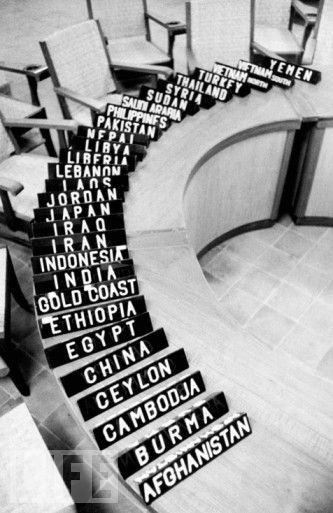
However, both the USA and the USSR opposed holding a Charter Review conference and brought most of their allies along with them. The result was that when the Charter Review conference came upon on the agenda, it was swept under the rug, and there has never been a review. Nevertheless, the diplomats of the USA and the USSR felt that some of the ‘steam’ for a Review Conference had to be lowered and this could be done by getting rid of ‘universal membership’ as an issue. Negotiations to break the logjam on pending applications started with the aim of making as close-to-possible balance between pro-USA, pro-USSR and neutral States entering the UN. The negotiations were carried out in 1954 and in 1955, before the debate on Charter Review, the membership logjam broke and Albania, Austria, Bulgaria, Cambodia, Finland, Hungary, Ireland, Italy, Jordan, Laos, Libya, Nepal, Portugal, Romania, Spain and Sri Lanka entered the UN. Japan should have been part of the group, but there was still the “enemy states” clause in the Charter which took more negotiations concerning Japan. Japan only came in the next year, 1956.

Dean Acheson, the U. S. Secretary of State who fathered the Uniting for Peace procedure at the United Nations.

Can there be something comparable in September? In an article “Coming in from the Cold: UN Membership Needed for the Phantom Republics”, I suggested at the time of the Georgia-Abkhazia-South Ossetia conflict that Abkhazia, Chechnya, Kosovo, Nagorno-Karabakh, South Ossetia and Transnistra be given UN membership as a necessary first step for security and a lessening of tensions. I had stressed that “to find mutually acceptable forms of government in these conflicts will require political creativity (breaking out of thinking in fixed patterns) and then new forms of constitutional order such as renewed forms of federal-confederal types of government, greater popular participation in decision-making and new forms of protection of minorities. Flexibility, compromise and cooperation are the hallmarks of success when it comes to resolving such conflicts concerning independence and autonomy. There is a need for a healing of past animosities and a growth of wider loyalties and cooperation.”

Both diplomats and members of the UN secretariat as well as secretariat of the Organization for Security and Cooperation in Europe where I had also floated the idea explained in detail why such a joint membership procedure would not happen. None the less, if we added upgrading the status of Palestine in the UN, another membership logjam might be broken. The point I have repeatedly made is that membership does not solve difficulties; it just provides a framework where serious negotiations might be carried out. The 1955 access to membership of Cambodia and Laos did not ‘solve’ the Indochina conflict. The French-led war in Vietnam was still going on, to be followed a decade later by the US-led war.

Thus, I think that a world citizen position is that full Palestinian membership in the UN will not ‘solve’ all the Israel-Palestine issues, and certainly not the issues of the wider Middle East. However UN membership will allow the Palestinians to come out from the shadows of the Arab States and to negotiate with the Israelis as equals. Such is a very modest step forward but it is worth taking.

(1)   For a useful discussion of the background to the Uniting for Peace procedure see Dean Acheson Present at the Creation: My Years in the State Department (New York: W. W. Norton, 1969, chapters 47-51)


René Wadlow is Senior Vice President and Chief Representative to the United Nations Office at Geneva of the Association of World Citizens.
Femmes en Arabie Saoudite: Quand Dieu punit la moitié du ciel

In Current Events, Human Rights, Middle East & North Africa, Women's Rights, World Law on June 9, 2011 at 7:58 PM

FEMMES EN ARABIE SAOUDITE:

QUAND DIEU PUNIT LA MOITIE DU CIEL

Par Bernard Henry


Le 31 mai et le 1er juin derniers, à travers deux appels signés par son Officier de Presse, le Bureau de Représentation auprès de l’Office des Nations Unies à Genève de l’Association of World Citizens (AWC) a interpellé le gouvernement d’Arabie Saoudite au sujet des droits des femmes, que la monarchie saoudienne n’a jamais vraiment reconnus et dont l’absence devient de plus en plus pénalisante pour les femmes du pays.

Et pour cause – contrairement à la plupart des pays du monde, du moins ceux où il existe une religion officielle, a fortiori quand il s’agit de l’Islam, le « royaume wahhabite », ainsi nommé parce qu’il consacre la doctrine de l’Islam développée au dix-huitième siècle par Mohammed ibn Abd el-Wahhâb, lequel souhaitait ramener l’Islam à sa « pureté d’origine » et rejetait du fait toute tradition extérieure au Coran, considère son territoire tout entier comme une mosquée, prohibant en conséquence tout autre culte que le culte musulman, et encore, tel que le conçoit l’Etat saoudien uniquement.

En règle générale, l’Islam sunnite se désolidarise du wahhabisme qu’il estime sectaire et extrémiste. Ainsi des Talibans d’Afghanistan, dont l’ « Emirat islamique » ne fut reconnu que par trois pays au monde – les Emirats Arabes Unis, le Pakistan et, bien sûr, l’Arabie Saoudite, qui s’était retrouvée à ce sujet en confrontation directe avec l’Iran de Mohammed Khatami, l’Iran chiite pour lequel les Talibans étaient des « fossiles » du sunnisme.

Une minorité chiite existe toutefois en Arabie Saoudite, et parfois, comme ici, des heurts ont lieu avec la majorité wahhabite qui tolère mal l'existence sur le sol saoudien d'une communauté religieuse, même musulmane, autre que la sienne.

Que l’on n’aille pas y voir pour autant une quelconque intention de l’AWC de s’acharner contre l’Arabie Saoudite en particulier. Les droits des femmes sont l’un des sujets qui sont pour nous les plus importants en matière de Droits de l’Homme, et nous avons interpellé dans ce cadre les gouvernements de pays aussi éloignés les uns des autres, tant géographiquement que culturellement, que le Canada, le Paraguay, l’Afrique du Sud, la Guinée-Conakry, la Belgique, l’Afghanistan, l’Australie et bien d’autres encore. Mais force est de constater qu’un système saoudien bien particulier, mêlant droit et religion – et encore, religion prise dans un sens outrageusement littéral et rétrograde – ne favorise guère le changement, celui que l’on doit pourtant bien entreprendre sitôt que l’on réalise le caractère essentiel du respect des droits des femmes si l’on veut que le pays que l’on dirige puisse connaître et la paix civile et le progrès social, l’un comme l’autre étant impossibles quand les femmes sont tenues en état d’infériorité, une infériorité qui atteint aujourd’hui les confins de l’absurde et devient du fait, pour les Saoudiennes, un poids de plus en plus lourd à porter.

La première question que nous avons donc soulevée auprès des autorités saoudiennes est celle de la tutelle masculine.

Celle-ci s’applique aux femmes saoudiennes quel que soit leur âge, mais les plus touchées sont indéniablement les jeunes femmes, car elles ne peuvent prétendre étudier sans l’accord préalable d’un tuteur masculin reconnu par la loi. Par ce système, une jeune femme peut être privée d’études à tous les niveaux, y compris dans le supérieur, et si elle ne l’est pas, elle ne peut choisir sa discipline universitaire sans l’accord de son tuteur. Quand bien même il lui est généreusement accordé d’aller à l’université, des restrictions de mouvement lui sont imposées lorsqu’elle s’y trouve, des restrictions qui font que, même en cas de maladie, elle ne peut quitter les lieux. Et s’il n’y avait que les étudiantes à être visées …  Même les enseignantes, pendant les heures de cours, sont soumises à la séquestration, leurs élèves (féminines) ne pouvant elles-mêmes sortir que si un tuteur masculin ou un conducteur désigné est venu les chercher.

Une femme en Arabie Saoudite doit constamment porter le voile, ainsi qu'une longue robe noire couvrante dénommée l'abaya.

Et de toute façon, avant de rentrer chez elles, qu’ont-elles bien pu étudier ? Ce à quoi leur tuteur masculin a consenti, certes. Mais pas l’ingénierie, l’architecture ou les sciences politiques, car dans le système saoudien, qui n’est pas mixte, aucun programme universitaire public n’existe dans ces domaines pour les femmes, tous les autres n’étant offerts que dans une qualité, et en quantité, inférieure à celle dont profitent leurs homologues mâles. Cela touche tant les infrastructures, les cours étant proposés dans des bâtiments délabrés, que les équipements pédagogiques, les bibliothèques réservées aux femmes étant sous-équipées et les bibliothèques mixtes ne leur étant que d’un accès limité. Certaines universités saoudiennes vont jusqu’à ne pas s’embarrasser de telles contingences en n’admettant pas du tout les femmes dans leurs effectifs.

Alors, bien sûr, certaines envisageront d’aller étudier à l’étranger – mais alors, il faudra vraiment que leurs parents en aient les moyens. Pour celles qui devront d’abord obtenir une bourse gouvernementale, le Ministère de l’Education exigera qu’un tuteur masculin signe un formulaire d’autorisation puis accompagne l’intéressée sur place, après quoi celle-ci devra se soumettre à un suivi régulier par l’attaché culturel de l’ambassade saoudienne de sa tutelle masculine, et au moindre écart, c’est la révocation de la bourse et le retour direct en Arabie Saoudite.

Les instances des Nations Unies en charge des droits des femmes en ont déjà maintes fois fait grief à Riyad qui, pour l’instant, a toujours fait la sourde oreille. Nous l’avons nous-mêmes rappelé au Roi Abdullah, dont nous verrons bien ce qu’il en fait. Mais déjà, pour éviter que, comme toujours depuis l’an dernier, nos lettres ne nous reviennent non ouvertes car refusées par la Cour royale et les ministères saoudiens, cette fois, nous avons tout envoyé par fax …

Il n'est toutefois pas rare de voir des femmes en voile intégral ...

Il en est de même pour la seconde question que nous avons abordée, celle-là étant vraiment une question d’actualité, au sens fort du terme.

Le 22 mai dernier, une Saoudienne du nom de Manal Al-Sharif a été arrêtée au volant d’une voiture à 4H du matin, puis remise en liberté sous caution avant que la police ne revienne l’arrêter à minuit le lendemain, cette fois à son domicile. De quoi Manal Al-Sharif s’était-elle rendue coupable au volant ? D’un excès de vitesse ? De conduite en état d’ivresse ? Quel délit routier grave avait-elle bien pu commettre pour se trouver à ce point dans le collimateur des autorités ? Tout simple. Manal était au volant, à savoir qu’elle conduisait une voiture, et ça, pour une femme en Arabie Saoudite, c’est un délit. Ou plus exactement, c’est contraire à la religion …

Mais comment, me direz-vous, peut-il exister des préceptes religieux musulmans concernant la conduite automobile puisque, lorsque l’Islam est apparu au 7ème siècle, l’automobile était loin d’exister ? Ca n’a pas gêné un imam saoudien, qui a cru bon de préciser en 1990 – au demeurant année de l’arrivée massive de troupes occidentales en Arabie Saoudite suite à l’invasion du Koweït par l’Irak de Saddam Hussein, et avec lesdites troupes de femmes soldats – que selon lui, Dieu considérait qu’une femme qui conduit une voiture était une pécheresse, rien que ça.

Dans sa fatwa, édit religieux qui n’a en théorie aucune valeur juridique, mais c’est sans compter sur l’omniprésence intrusive de la doctrine wahhabite dans le droit saoudien, le Cheikh Abdel Aziz Bin Abdallah Bin Baz nous explique ainsi, à peine immodeste, ce que le dieu de l’Islam aurait dit à Mahomet si les voitures avaient existé lorsque le Coran fut révélé à ce dernier:

« […] La question de la conduite des automobiles par les femmes. Il est connu que ceci constitue une source d’indéniables vices, inter alia, la khilwa [rencontre en privé entre un homme et une femme] interdite par la loi et l’abandon du hijab. Cela concerne aussi les rencontres entre des femmes et des hommes sans que les précautions nécessaires soient prises. Cela pourrait aussi conduire à des actes haraam [impies] et c’est pourquoi ce fut interdit. La pure Chari’a interdit également les moyens qui conduisent à la commission d’actes de nature impie et considère de tels actes haraam en eux-mêmes …  Ainsi, la pure Chari’a a proscrit toutes les voies menant au vice …  La conduite automobile féminine est l’un des moyens qui mènent à cela et c’est en soi une évidence. »

Le système judiciaire saoudien ignore totalement les Droits de l'Homme. Ici, une sentence de flagellation est exécutée en public.

Le problème, c’est que, d’une part, notre imam ne nous explique en rien le lien entre ces délires et la Chari’a qu’il invoque, ni a fortiori avec le Coran, et que, d’autre part, aucun pays musulman au monde n’a repris cette interprétation arriérée et fantasmatique des textes saints, l’Arabie Saoudite étant le seul pays au monde, toutes traditions juridiques confondues, où les femmes n’aient pas le droit de conduire une voiture.

Là encore, l’ONU a donné de la voix. Le Comité sur l’Elimination de la Discrimination contre les Femmes et le Groupe de Travail du Conseil des Droits de l’Homme pour la Revue périodique universelle ont appelé à l’unisson le royaume wahhabite à mettre fin à cette pratique, jusqu’ici à nul effet pourtant. Quant à Manal Al-Sharif, elle fut finalement libérée le 30 mai …  Mais ne peut toujours pas conduire un véhicule, ni elle ni quelque Saoudienne que ce soit.

Reste à voir maintenant si le Ministre saoudien de la Justice écoutera plus volontiers l’AWC que les instances des Nations Unies, sachant que nos fax lui sont bien parvenus et espérant qu’il n’a pas donné ordre à son personnel de jeter tout de suite tout envoi portant notre emblème, à défaut de pouvoir le refuser comme une lettre.

Après sa libération, Manal Al-Sharif retrouve son fils. Son acte de bravoure a suscité l'admiration de par le monde et chez de nombreuses Saoudiennes qui s'identifient à sa cause.

Dans leur bestseller de 2010, La moitié du ciel (en anglais, Half the Sky), Nicholas Kristof et Sheryl Wudunn, grands reporters au New York Times, lauréats du Prix Pulitzer, nous parlent des fléaux qui s’abattent sur les femmes de par le monde, tels que l’esclavage sexuel, les « crimes d’honneur », les mutilations génitales et les viols. « La moitié du ciel », c’est ce que représentent selon eux les femmes, qui constituent certes, ici sur la Terre, la moitié la plus importante de l’humanité, ne serait-ce qu’en termes purement numéraires.

Or, en regardant cette Arabie Saoudite où l’homme, non tant ici l’être humain que l’individu mâle, interprète la parole de Dieu comme étant de nature uniquement punitive, le fait de naître femme étant en lui-même une offense, l’on ne peut s’empêcher de se demander si l’on n’est pas sur une terre où, pour sainte que la veuille le « Gardien des Deux Saintes Mosquées » qu’est le Roi d’Arabie Saoudite, à tout instant et en tout lieu, Dieu punit la moitié du ciel …

Que c’est avoir mal, ou trop peu, lu le Coran que de faire ainsi. Lorsque l’Arabie Saoudite soutenait l’insensé régime taliban d’Afghanistan, même les Emirats Arabes Unis et le Pakistan qui faisaient de même n’en exigeaient pas tant de leurs ressortissantes. C’est dire.

Que l’Arabie Saoudite se considère tout entière comme une mosquée, cela ne concerne pas l’AWC, trop attachée pour y trouver à redire au droit des peuples à disposer d’eux-mêmes. Que l’Etat saoudien en prenne prétexte pour violer les droits fondamentaux de son peuple, là, en revanche, nous ne pouvons l’admettre. Et a fortiori, qu’il invoque la parole divine pour opprimer les femmes¸ autant le peuple saoudien ne sera jamais notre ennemi, autant, de ce seul fait, son gouvernement peut être assuré quant à lui que, tant qu’il continuera de le faire ou de le laisser faire, il ne sera jamais notre ami. Et sachant quelle bonne écoute nous est accordée au sein de l’ONU, c’est bien dommage pour lui.


Bernard Henry est Officier de Presse du Bureau de Représentation auprès de l’Office des Nations Unies à Genève de l’Association of World Citizens.

Bahrain and the Defense of Spiritual Liberty

In Current Events, Human Rights, Middle East & North Africa, Religious Freedom on May 24, 2011 at 11:33 AM

BAHRAIN AND THE DEFENSE OF SPIRITUAL LIBERTY

By René Wadlow


In a recent May 14, 2011 Appeal to the Kingdom of Bahrain concerning the systematic destruction of mosques used by the Shi’a citizens who are currently demonstrating for greater liberty and democracy, the Appeal pointed out that the destructions of places of worship is a direct violation of the spirit but also the letter of the UN Declaration on the Elimination of All Forms of Intolerance and of Discrimination Based on Religion or Belief.  The Declaration was proclaimed on November 25, 1981 and began “Considering that one of the principles of the Charter of the United Nations is that of the dignity and equality inherent in all human beings, and that all Member States have pledged themselves to take joint and separate action in co-operation with the Organization to promote and encourage universal respect for and observance of human rights and fundamental freedoms for all, without distinction as to race, sex, language or religion.”

The Declaration took nearly 20 years of difficult negotiations to draft.  Preparation of the declaration began in 1962, and the Declaration was proclaimed in November 1981.  Originally, UN negotiators had thought of drafting a single text which would have included the elimination of discrimination based on race, sex and religion.  However, there was too great a diversity of views.  It was easier to deal with the elements separately, all the more so that in the 1960s and 1970s in UN circles “race” was only the Apartheid policy of South Africa which everyone was, at least verbally, against.

Religion and belief were more difficult questions.  The defense of spiritual liberty has been one of the most persistent of struggles, and there is no area of the world that does not have its martyrs to the cause.  The struggle has often been against religious authorities who have wanted to maintain their faith within narrow limits claiming that they alone held the truth.  It is significant that the words “dogmatic”, “sectarian”, and “inquisition” — all arise from the religious vocabulary.  The stoning of the prophets and the auto-da-fe have been the answers of religious authorities — and often ordinary believers as well — to new ideas.  Today, in most parts of the world, religious organizations can no longer put heretics to death.  Now, religious organizations can only try to marginalize those who hold new ideas or to excommunicate them; the inquisition has lost its secular arm.

The Amir Mohammed Braighi mosque before destruction.

If religious organizations are no longer able to put to death heretics, the State has taken over the task of establishing orthodoxy and putting heretics to death.  Although today, governments are the prime agents of repression against the spiritual life, governments are also timidly building the defenses of spiritual liberty.

The Declaration of November 25, 1981 builds upon Article 18 of the Universal Declaration of Human Rights which states that “Everyone has the right to freedom of thought, conscience and religion; this right includes freedom to change his religion or belief, and freedom, either alone or in community with others and in public or private, to manifest his religion or belief in teaching, practice, worship and observance.”

One of the most difficult areas in drafting the Declaration concerned the rights of the child to have “access to education in the matter of religion or belief in accordance with the wishes of his parents and shall not be compelled to receive teaching on religion or belief against the wishes of his parents or legal guardians, the best interests of the child being the guiding principle.”  The Declaration went on to state that “The child shall be brought up in a spirit of understanding, tolerance, friendship among peoples, peace and universal brotherhood, respect for freedom of religion or belief of others, and in full consciousness that his energy and talents should be devoted to the services of his fellow men.”

The Amir Mohammed Braighi mosque now stands in ruins.

Despite the rather nondramatic title of the Declaration, it is a milestone on the path of spiritual liberty.  Thanks to the Declaration on the Elimination of All Forms of Intolerance and of Discrimination Based on Religion or Belief, we who work for a world of understanding and solidarity have a UN text on which to base our efforts to defend spiritual liberty.

The Kingdom of Bahrain which has received support from the Kingdom of Saudi Arabia in the form of tanks and soldiers and from other Gulf States in the form of police, has not yet relied to the AWC Appeal.  It seems that they are preoccupied with arresting people rather than reading UN documents by which to set their standards. However the AWC will continue to remind them of the foundations of world law.

René Wadlow is Senior Vice-President and Chief Representative to the United Nations Office at Geneva of the Association of World Citizens.
الأرض هي بيتنا المشترك

In Middle East & North Africa, Poetry, The Search for Peace on May 5, 2011 at 10:00 PM
 الأرض هي بيتنا المشترك

رينيه وادلو

حياتي مشتركة
مع حياة أخرى لا تحصر،

سوى بشرية أوغيرها ؛

معا يمكننا أبداع الكمال

هذه هي الأرض.

لا استطيع ان اكون إلا كجزء

هذا الكمال؛

بسبب ذلك الكمال

أنا مواطن عالمي.

في الإنسانية،

ويمكن أن تعكس على من هو

وبالتالي يمكن فتح البوابة

لإمكانيات جديدة ولدت

معرفة النفس.

أنا المبدع.

كما الحياة ، وأنا احد قوة

النمو والتقدم.

كما وعي، ويمكنني مباشرة

هذه القوة من الخيال و

ن العلم، من الحكمة والمهارة.

يمكنني بناء ما لم

تم بناؤه من قبل.

يمكننا أن نحب ونعرف

الحلم والتغيير.

معا ، يمكننا أننخدم

مصيرالحياةفيعالمنا
واطلاق العنان للامكانات عميقة.

هذهالخدمة

هيمفتاحهويتنا الإنسانية.

ومنخلالهذه الكفاءة

أستطيع أنأداء دوربلدي

(Drawing: Evgueni Bosyatski)

كمواطنعالمي..

ويمكنأنتنعكسعلىمن هو معي

وبالتالي يمكن فتحالبوابة

لإمكانيات جديدة وولادة

نفس مطلعة.

أناالمبدع.

  كالحياة ، وأنا احدقوة

  النمو والتقدم.

بوعيي، ويمكنني أستثمار

  قوة  الخيالو

العلم، معالحكمةوالمهارة.

يمكننيبناءمالم

تمبناؤهمن قبل.

يمكننا أن نحبونعرف

الحلموالتغيير.

معا ، يمكننا أننخدم

مصيرالحياةفيعالمنا
واطلاق العنان للامكانات عميقة.

هذهالخدمة

هيمفتاحهويتناوالإنسانية.

ومنخلالهذه المهارة

أستطيع أنأدي دوري فيبلدي

كمواطنعالمي

Syria: The Downward Spiral

In Current Events, Democracy, Human Rights, Middle East & North Africa on April 30, 2011 at 10:45 PM

SYRIA: THE DOWNWARD SPIRAL

By René Wadlow


The United Nations (UN) has tried to stop the downward spiral of Syria into repression and potential chaos. It has been five weeks that what began as peaceful protests and demands for limited reforms have been increasingly met by government violence. Discussions on what the UN could do to help the Syrian people and to speed up necessary reforms started in both New York and Geneva. Governments and UN Secretariat members discussed different possibilities against the backdrop of the UN Security Council resolutions on Libya and the continued fighting there.

The representatives of China and Russia who had not blocked the resolution to use “all necessary force” to protect the civilian population in Libya but who have grown increasingly ill-at-ease with the NATO-led attacks did not want to open the door to a possible repeat over Syria. Thus all possibility of action within the Security Council was blocked with the insistence on the part of China and Russia that the situation was an internal affair of Syria and did not pose a danger to regional peace.

Thus the UN focus moved to Geneva and the UN Human Rights Council, for if events in Syria did not pose a danger to peace in the area, events were an open violation of the UN human rights standards. Syria is a party to all the major UN human rights conventions. Thus, on Friday, 29 April 2011 — when the eyes of much of the world were turned to London and a Royal wedding — in Geneva a path-making Special Session of the UN Human Rights Council was being held. A Special Session is the “highest profile” which the Council can give to a situation. It can be called on short notice, but before a Special Session is held, there are usually intense negotiations among governments. The representatives of non-governmental organizations (NGOs) also have a short time to prepare common positions and statements for a Special Session. Since NGOs speak after the governments, there is usually time for only a few statements prior to voting on the outcome resolution. However, for this Special Session, government representatives stuck to their time limits, and 16 NGOs were able to speak even if few said anything which had not already been said by governments.

Syria's President, Bashar al-Assad, posing before the Syrian flag.

The human rights situation in Syria was well set out at the start by the Deputy High Commissioner for Human Rights Ms Kyung-Wha Kang from Korea:

Information gathered since mid-March points a disturbing picture: the widespread use of live fire against protesters; the arrest, detention, and disappearance of demonstrators, human rights defenders, and journalists; the torture and ill-treatment of detainees; the sharp repression of press freedoms and other means of communication; and the attacks against medical personnel, facilities and patients.

“Yet even these deplorable practices have been exceeded over the past week. According to reports, entire towns have been besieged. Tanks have been deployed and shelled densely-populated areas. The delivery of food has been impeded. Access to electricity has been cut. And transportation systems have been shut down. There have been reports of snipers firing on persons attempting to assist the injured or remove dead bodies from public areas.

“We have noted with concern that military and security officers have been among those killed. Still, the preponderance of information emerging from Syria depicts a widespread, persistent and gross disregard for basic human rights by the Syrian military and security forces. Syrian and international human rights organizations have already documented more than 450 killings and around four times that number of injuries…

“Let me conclude by emphasizing the importance of holding perpetrators of serious human rights violations accountable, and in this regard, the urgent need for an independent, impartial, effective and prompt investigation into recent events in Syria. The convening of this Special Session should not only convey to the people of Syria that the international community is aware of their plight and supports their struggle for fundamental rights and freedoms. It should affirm to people everywhere that the Human Rights Council will be resolute in ensuring justice for victims of human rights worldwide.”

As with all serious UN meetings, the decisions have been negotiated before the meeting starts. There was broad agreement that the Human Rights Council would vote the creation of a working group for an independent, impartial investigation to be named by the President of the Council after consultation. The consultations have started, but the names of the members have not yet been announced. It is unclear at this stage if Syria will allow the group to enter to carry out interviews and other investigations. The working group on the situation in Darfur was not able to enter Sudan, and Israel did not allow the working group chaired by Justice Goldstone to enter Israel. However, some countries have allowed Special Rapporteurs on country situations named by the Human Rights Council or the earlier Commission on Human Rights to visit the country in question.

Much of the debate during the Special Session concerned basic attitudes on general human rights matters over which negotiations would not lead to any compromise. There are States which do not want country-specific discussions, basically by fear that they might one day be discussed. This is the long-standing position of China and Cuba and can be taken up by others depending on the specific case. With the situation in Syria, there was a newer and more interesting balance to be found between those States who, in addition to the creation of an investigation body, wanted a condemnation of the current violations in Syria on the basis of information now available and those States which wanted “constructive dialog”. Those for constructive dialog stressed that while not opposing an investigation, felt that there was an opportunity to “engage in constructive dialog with the Syrian government”. They maintained that condemnation measures would hinder finding peaceful solutions. This group of States, largely led by Pakistan and the Russian Federation, put an emphasis on the reforms which had already taken place after the start of the demonstrations, in particular the lifting of the state of emergency, abolishing the State Security Court, the granting of citizenship to 250,000 Kurds who had been registered until then as “aliens” and the replacement of the Cabinet and some governors of provinces.

The Syrian Ambassador, Mr. Faysal Khabbas Hamoui, could have played on these calls for engagement and dialog, and he may have done so in private. In his public statements prior to the start of the debate and again just prior to the vote, his position was so “hard line” as to destroy any idea that “constructive dialog” was possible at all. He attacked the idea of having a Special Session at all and then went on to attack the protesters as agents of a foreign-led conspiracy and as extremists wanting violence. His presentation left no visible door open for dialog, and there was no call for a possible national reconciliation.

The United Nations Human Rights Council in session.

The vote on the only resolution, A/HRC/S-16/1 came with few surprises:

Votes in favor: 26.

Against 9: Bangladesh, China, Cuba, Ecuador, Gabon, Malaysia, Mauritania, Pakistan, Russian Federation.

Abstentions 7: Cameroon, Djbouti, Nigeria, Saudi Arabia, Thailand, Uganda, Ukraine

Left the room so they could not be counted in any category: 4: Angola, Bahrain, Jordan, Qatar

The motivations of Angola are unclear. However, given the solid structuring of power in Syria, the inter-twinning of power and wealth, the mosaic of security services, quick reforms are unlikely. As President Bashar al-Assad has said “haste comes at the expense of the quality of reforms”. There may be a possibility for external NGOs, civil society organizations in Syria and the Syrian government to discuss peaceful advances toward a more just and inclusive society. We need to keep looking for possible doors even as people are being killed on the ground.

René Wadlow is Senior Vice President and Chief Representative to  the United Nations Office in Geneva of the Association of World Citizens.

LES CITOYENS DU MONDE APPELLENT A UN CESSEZ-LE-FEU EN LIBYE ET A L’OUVERTURE DE NÉGOCIATIONS POUR UNE NOUVELLE RÉPUBLIQUE LIBYENNE

In Current Events, Democracy, Human Rights, Middle East & North Africa on March 20, 2011 at 4:29 PM

LES CITOYENS DU MONDE APPELLENT A UN CESSEZ-LE-FEU EN LIBYE ET A L’OUVERTURE DE NÉGOCIATIONS POUR UNE NOUVELLE RÉPUBLIQUE LIBYENNE

(Mis à jour le 20 mars 2011)

Par René Wadlow


Le 15 mars 2011, alors que les combats concernaient encore les seuls pro- et anti-Kadhafi, dans un message au Secrétaire Général de l’ONU, Ban Ki-moon, le Professeur René Wadlow, Représentant en Chef auprès de l’Office des Nations Unies à Genève de l’Association of World Citizens (AWC), a exhorté le Secrétaire Général à prendre l’ascendant en appelant à un cessez-le-feu en Libye qui mît fin aux hostilités en cours et à l’hémorragie de réfugiés. En se prolongeant et s’intensifiant, le conflit ne fait que placer un insupportable fardeau sur des lieux de soins médicaux déjà débordés et sur l’approvisionnement visant à répondre aux besoins élémentaires de la population.

Un cessez-le-feu constituerait aussi un premier pas en direction de négociations menant à un nouvel ordre constitutionnel et à une nouvelle République libyenne dont le fondement démocratique serait des plus larges.

Depuis les Ides de Mars, la situation s’est envenimée et a pris un caractère international, avec l’adoption d’une résolution du Conseil de Sécurité de l’ONU, un Sommet consécutif à celle-ci qui s’est tenu à Paris le 19 mars et le déclenchement des frappes aériennes et maritimes françaises, britanniques et américaines en Libye.

Pendant ce temps, les combats entre Libyens se poursuivent au sol. A ce stade, il paraît impossible de dire combien de temps durera le conflit armé et quels résultats sur le court terme il produira. La véritable question est de savoir comment aboutir à une fin des combats qui ait fait l’objet d’un accord préalable, puis d’ouvrir la porte à la nécessaire restructuration constitutionnelle du pays et à la création d’une République libyenne de large fondement démocratique.

Selon l’exemple des révolutions non-violentes de Tunisie et d’Egypte, des protestations contre le fonctionnement politique et économique de la Libye ont éclaté. Plutôt que d’entamer le dialogue, les autorités libyennes ont entrepris une politique de répression, laquelle a conduit à la violence à grande échelle que nous voyons aujourd’hui, provoquant par là même un flot massif de départs de travailleurs immigrés du pays ainsi qu’un important déplacement interne de Libyens.

Un manifestant libyen exigeant le départ de Muammar Kadhafi.

Seul un cessez-le-feu permettra le début d’un traitement en profondeur des questions constitutionnelles fondamentales que le pays a affrontées depuis l’Indépendance. Lorsque celle-ci est survenue en 1951, l’autorité reposait sur le Roi Sayyid Idriss as-Sanoussi (1890-1983), dirigeant d’une importante fraternité islamique qui se montrait de longue date plus soucieuse de réformes religieuses que de la structure du gouvernement ou de la qualité de l’administration. Son gouvernement possédait quelques attributs de décentralisation et de fédéralisme, mais reposait pour beaucoup sur des confédérations tribales qui existaient depuis bien plus longtemps. (1)

Quand les officiers de l’armée menés par le Colonel Muammar Kadhafi prirent le pouvoir à l’occasion d’un coup d’Etat en septembre 1969, la discussion s’engagea pendant un cours laps de temps quant à la forme de gouvernement qu’il convenait de développer. L’idée d’un pouvoir plus centralisé faisait l’unanimité, de même que la conservation des politiques de l’ancien roi et de la Fraternité Sanoussi en matière de religion – ce qui prit le nom de néo-salafisme. Cependant, afin de ne pas mettre d’obstacles à la future unité arabe, aucune structure étatique basée sur un accord constitutionnel ne fut officiellement créée.

Sayyid Idriss as-Sanoussi, également appelé Idriss 1er, Roi de Libye de 1951 à 1969.

Le colonel Kadhafi voulait se débarrasser du gouvernement de type parlementaire et des élections visant à élire une représentation, ce au profit de comités populaires, d’un congrès du peuple et de comités révolutionnaires, tous tenus ensemble par les présomptions idéologiques de la Troisième Théorie Universelle de Kadhafi – un concept qui englobe l’anti-impérialisme, l’unité arabe, le socialisme islamique et la démocratie populaire directe. (2)

Des désaccords sur la nature de l’Etat menèrent à d’importantes divisions au sein du cercle dirigeant, notamment en 1975. Cependant, toute discussion ouverte sur la nature de l’Etat, sur la relation entre l’Etat et la société, ou encore sur la place des tribus et des fraternités religieuses, était considérée subversive, revenant à une trahison. En pratique, bien que non en théorie, le processus de décision demeurait entre les mains du colonel Kadhafi, de sa famille, de ses amis et de ses alliés tribaux. (3)

Sur le court terme, les négociations suivant un cessez-le-feu pourraient conduire à la prorogation de la structure libyenne du pouvoir concentrant celui-ci en le seul colonel Kadhafi, ainsi que ses fils et leurs alliés. Toutefois, le degré de violence constitue une indication claire de ce que la structure de l’Etat ne fonctionne pas, et que, quoi que l’on puisse lui reprocher par ailleurs, un parlement permet à certaines des exigences du peuple d’être entendues et crée des garde-fous à l’exercice du pouvoir.

Historiquement, en Libye, il existait seize tribus marabtin renommées pour leur sagesse religieuse, lesquelles servaient de médiatrices et d’arbitres au sein des structures politiques de la Libye tribale d’avant la colonisation. Cette tradition de médiation réconciliatrice existe peut-être encore, ce qui signifie que recourir aux voies traditionnelles de médiation devrait être envisagé de manière sérieuse.

Un cessez-le-feu doit être un premier pas, et l’ONU, l’institution la plus appropriée pour maintenir ensuite le cessez-le-feu tandis que les négociations constitutionnelles commenceront.


René Wadlow est le Premier Vice-Président et le Représentant en Chef auprès de l’Office des Nations Unies à Genève de l’Association of World Citizens.


1)      Pour une analyse utile des structures de gouvernement libyennes, voir J. Davis, Libyan Politics, Tribes and Revolution (Londres: I.B. Tauris, 1987)

2)      Voir M.M. Ayoub Islam and the Third Universal Theory: The religious thought of Muamar al Qadhafi (Londres: Kegan Paul, 1987)

3)      Voir René Lemarchand (Ed). The Green and the Black: Qadhafi’s Politics in Africa (Bloomington: Indiana University Press, 1988).

WORLD CITIZENS CALL FOR A CEASEFIRE IN LIBYA AND THE START OF NEGOTIATIONS ON A BROADLY-BASED NEW LIBYAN REPUBLIC

In Current Events, Democracy, Human Rights, Middle East & North Africa on March 17, 2011 at 10:29 PM

WORLD CITIZENS CALL FOR  A CEASEFIRE IN LIBYA AND THE START OF NEGOTIATIONS ON A BROADLY-BASED NEW LIBYAN REPUBLIC

(Updated March 20, 2011)

By René Wadlow


On March 15, 2011, when the fighting was still between pro- and anti-Qaddafi forces, in a message to United Nations Secretary-General Ban Ki-moon, Prof. René Wadlow, Chief Representative to the United Nations Office at Geneva of the Association of World Citizens (AWC), urged the Secretary-General to take a lead in advocating a ceasefire in Libya that would halt the current fighting and the flight of refugees. Increased fighting provokes an intolerable burden upon the already-strained medical facilities as well as supplies to meet the basic needs of the population.

A ceasefire would be a first step toward negotiations that would lead to a new constitutional order and a broadly-based new Libyan Republic.

Since the ides of March, the situation has heated up and has been internationalized with a United Nations Security Council Resolution, a follow-up Summit in Paris on March 19 and the start of French, British and U. S. air and sea strikes in Libya.

Fighting among Libyans continues on the ground. How long the armed conflict will go on and with what short-term results is too early to say. The real issue is to move to an agreed-upon end to the fighting and to open the door to the necessary constitutional restructuring of the country and creation of a broadly-based new Libyan Republic.

Following the nonviolent people’s revolution in Tunisia and Egypt, protests against the political and economic functioning of Libya began. Rather than starting a dialogue, the Libyan authorities undertook a policy of repression, leading to the large-scale armed violence we see today, provoking a massive flow of foreign workers to leave the country and to the internal displacement of many Libyans.

A Libyan demonstrator demanding an end to the rule of Colonel Moammar Qaddafi.

Only a ceasefire will allow the start of dealing with the fundamental constitutional issues which have faced the country since its Independence.  At Independence in 1951, authority rested with King Sayyid Idris as Sanoussi (1890-1983), the leader of an important Islamic brotherhood who remained more concerned with religious reforms than with the structure of the government and the quality of the administration. His government had some decentralized, federalist aspects but was largely based on pre-existing tribal confederations. (1)

When the military officers led by Colonel Moammar Qaddafi took power in a coup in September 1969, there was for a short time some discussion as to the forms of government that they would develop. There was agreement on a greater centralization of power, as well as keeping to the religious policies of the former King and the Sanoussi Brotherhood — what has been called neo-salafyisme. However, in order not to put obstacles in the way of future Arab unity, no constitutionally-agreed upon State structures were officially created.

King Sayyid Idris as Sanoussi, aka Idriss the First, of Libya (reigned 1951-1969).

Colonel Qaddafi wanted to do away with parliamentary government and representational elections in favour of people’s committees, a people’s congress, and revolutionary committees, all held together by the ideological assumptions of his Third Universal Theory — a concept that embodies anti-imperialism, Arab unity, Islamic socialism and direct popular democracy. (2)

Disagreements on the nature of the State had led to important divisions among the ruling circle, especially in 1975.  However, all open discussions on the nature of the State, of the relation between State and society, of the place of the tribes and of religious brotherhoods were considered subversive — in fact treason.  In practice, but not in theory, decision-making was in the hands of Colonel Qaddafi, his family, friends and tribal allies. (3)

In the short term, negotiations after a ceasefire may lead to a continued role in the Libyan power structure of Colonel Qaddafi, his sons and allies.  However, the degree of violence is clear evidence that the  structure of the State does not function, that whatever its faults, a parliament allows some of the demands of the people to be heard and creates limits on the exercise of power.

Historically in Libya, there were sixteen marabtin tribes renowned for their religious wisdom who served as mediators and arbiters within the political structures of tribal, pre-colonial Libya. The tradition of reconciliatory mediation may still exist, and traditional avenues of mediation should be explored.

A ceasefire must be a first step, and the United Nations the most appropriate institution for maintaining a ceasefire while constitutional discussions start.

René Wadlow is Senior Vice President and Chief Representative to  the United Nations Office in Geneva of the Association of World  Citizens.

1)      For a useful analysis of Libyan governmental structures see: J. Davis Libyan Politics, Tribes and Revolution (London: I.B. Tauris, 1987)

2)      See M.M. Ayoub Islam and the Third Universal Theory: the religious thought of Muamar al Qadhafi (London: Kegan Paul, 1987)

3)      See Rene Lemarchand (Ed). The Green and the Black: Qadhafi’s Politics in Africa (Bloomington: Indiana University Press, 1988).

March 8: Women and the People’s Revolution

In Human Rights, Middle East & North Africa, Women's Rights on March 7, 2011 at 11:12 PM

MARCH 8: WOMEN AND THE PEOPLE’S REVOLUTION
By René Wadlow

It is only when women start to organize in large numbers that we become a political force, and begin to move towards the possibility of a truly democratic society in which every human being can be brave, responsible, thinking and diligent in the struggle to live at once freely and unselfishly.”

March 8 is the International Day of Women and thus a time to analyse the specific role of women in local, national and the world society.  2011 is the 100th anniversary of the creation of International Women’s Day first proposed by Clara Zetkin (1857-1933) at the Second International Conference of Socialist Women in Copenhagen in 1911.  Later she served as a socialist-communist member of the German Parliament during the Weimar Republic which existed from 1920 to 1933 when Hitler came to power.

Zetkin who had lived some years in Paris and was active in women’s movements there was building on the 1889 International Congress for Feminine Works and Institutions held in Paris under the leadership of Ana de Walska. De Walska was part of the circle of young Russian and Polish intellectuals in Paris around Gerard Encausse, a spiritual writer who wrote under the pen name of Papus. For this turn-of-the-century spiritual milieu influenced by Indian and Chinese thought, ‘feminine’ and ‘masculine’ were related to the Chinese terms of Yin and Yang.  Men and women alike have these psychological characteristics. ‘Feminine’ characteristics or values include intuitive, nurturing, caring, sensitive, relational traits, while ‘masculine’ are rational, dominant, assertive, analytical and hierarchical.

Clara Zetkin.

As individual persons, men and women alike can achieve a state of wholeness, of balance between the Yin and Yang.  However, in practice ‘masculine’ refers to men and ‘feminine’ to women.  Thus, some feminists identify the male psyche as the prime cause of the subordination of women around the world.  Men are seen as having nearly a genetic coding that leads them to ‘seize’ power, to institutionalize that power through patriarchal societal structures and to buttress the power with masculine values and culture.

However, when women take positions of political power, they have tended to rule according to the same ‘masculine’ values used by their male predecessors, as we saw with Golda Meir in Israel, Indira Gandhi in India and Margaret Thatcher in the United Kingdom. Thus people have asked what effects the increased entry of women into the political arena would have on public policies and priorities.  Would women assure greater equality of opportunity for all people, including their own gender, a greater emphasis in international affairs on cooperation? It may be that confronted with urgent security threats and economic instability, any prime-minister – of either gender- would govern within a ‘masculine’ framework rather than with ‘feminine’ tools of intuition, compassion, consensus-building and peacemaking.

Can the world be made safe for the ‘subversive’ feminine values?  The Italian sociologist Eleonora Masini, with whom I worked in 1977 in Hiroshima on the life histories of those who survived the atomic bombing, has  an optimistic view of the  capacity of women to be agents of change toward a more just and humane world.  “Women are capable of sensing the seeds of change which need not only rational capacities but intuitive capacities.  This intuition has not been developed by centuries of searching for better productivity, more profit, hence more consumption, which is what men do. Women instead have capacities that are of help in capturing seeds of change that are still alive such as:

a)      Capacity to grasp the wholeness of a situation other than the details, such as the feeling ill or well of a family:
b)      Capacity to act rapidly after rapidly grasping whole situations, such as stopping a child from falling out of a window;
c)      Capacity to change from one interest to others almost at the same time, ironing, reading, watching the child at play;
d)      Capacity to sacrifice herself for the good of others.  This capacity has very often been ill used.

All such capacities make a better audience for the seeds of change and better creators of vision. In the long term, the future is one of more solidarity among people, rather than hunger; one of love and understanding rather than one where the atomic bomb is present; one of peaceful living in big towns, rather than one of violence which the children experience every day.”

A test for women as agents of change toward a more just and humane world is presenting itself in the Arab-Islamic world.  The People’s Revolution which began in Tunisia followed by Egypt has now spread throughout North Africa, the Middle East and Iran.  The waves of the People’s Revolution are having an impact throughout the world.  It is being watched with hope by many and with fear by those who have interests in the status quo.

On this International Day of Women, we must ask a crucial question: How does political conflict degenerate into mass violence, generating new crises and new forms of violent conflict in the future?  How does a community pull itself out from a cycle of violence and set up sustainable ways of living in which different categories of people may be encouraged to contribute to the process?

Women, individually and in groups, have played a critical role in the struggle for justice and peace in all societies.  However, when real negotiations on the future of a society begin, women are often relegated to the sidelines. Therefore, there is a need to organize so that women are at the negotiating table to present their ingenuity, patience and determination. Solidarity and organization are crucial elements. March 8, 2011 is a reminder of the steps taken over a 100 years and the distance yet to be covered.

René Wadlow is Senior Vice President and Chief Representative to  the United Nations Office in Geneva of the Association of World  Citizens.