The Official Blog of the

Archive for the ‘Human Development’ Category

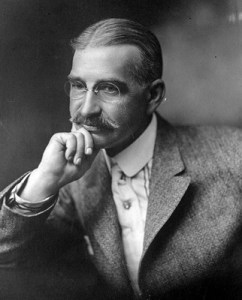
Frank Baum: The Father of the Wizard of Oz

In Being a World Citizen, Human Development, Women's Rights on May 15, 2016 at 3:38 PM

FRANK BAUM: THE FATHER OF THE WIZARD OF OZ

By René Wadlow

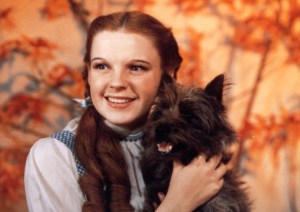
dorothy-toto

“Toto, we are not in Kansas any more …”

Frank Baum (1856-1916) whose birth anniversary we mark on May 15 is largely forgotten as a writer while his 1899 book The Wonderful Wizard of Oz lives on through the 1939 film with Judy Garland as Dorothy and references in essays to the Tin Woodman without a heart or Toto, Dorothy’s faithful dog.

The story begins as Dorothy and Toto are picked up from their farm in Kansas by a cyclone and carried into another world − the land of Oz. Dorothy wants to return to Kansas and is advised to consult the Wizard who lives in the Emerald City at the center of the Land of Oz. Dorothy and Toto set out on the Yellow Brick Road for the Emerald City. On the way they meet three companions, each of whom joins her in the hope that the Wizard of Oz will be able to give him what he lacks. The first is the Scarecrow whose head is of straw and wants some brains so he can think. The second is the Tin Woodman who wants a heart so he can love. The third is the Cowardly Lion, who should be the king of the forest, but this lion is afraid of everything. He wants courage so that he can act.

When they finally meet the Wizard of Oz, he turns out to be a human like Dorothy. He was a balloonist in Nebraska who worked in a circus, going up in the balloon to attract a crowd. One day a strong wind blew him all the way to Oz where the inhabitants took him to be a great wizard.

Frank Baum

Frank Baum

The Wizard of Oz has all the essentials of a myth. It is set in a perilous, enchanted land where the human protagonist is engaged in a quest. She faces great difficulties but is helped by extraordinary friends who are also on a quest. The three friendly helpers represent what they think they lack: intelligence, love, courage.

At the end, each finds within himself the qualities they are seeking. We each have within ourselves the qualities we seek. The myth is a metaphor for balancing energies at all levels. Just as the spiritual transformation of a person must be initiated from within, so too collective bodies such as the Emerald City must discover the inner power to balance their energies and transform themselves into more humane systems.

Both individuals and organizations can become whole only if they can balance intellect, emotions, and courage. Through this balance, individuals and organizations develop a sense of purpose, a direction for their quest. Many spiritual traditions emphasize the importance of balancing one’s energies as a means for spiritual growth, such as the Taoist Yin and Yang, thought of as ‘masculine’ and ‘feminine’ energies. The balance must occur within each person who has both masculine and feminine qualities within. The balance must be initiated from within the person, but this inner response comes from contact with external forces − thus the adventures and crises of the Oz myth.

The Wizard of Oz.jpg

Frank Baum as a newspaper editor was a strong advocate of the rights of women, and his wife was very active in efforts for the right of women to vote. Thus, it is not surprising to find Dorothy as the central character of the story. She symbolizes all the various energies and forces of the story. She finds her personal balance resulting in her spiritual transformation and her ability to achieve her quest − to return ‘home’.

As with all myths, the story can be read at different levels. However, Frank Baum had a strong interest in Asian thought, and a spiritual reading of the myth is not adding something that was not consciously there.

The MGM film with its songs sung by Judy Garland is out as a CD and merits seeing or re-seeing.

“Somewhere, over the rainbow, way up high …”

For a biography see: Katharine M. Rogers, L. Frank Baum. Creator of Oz. A Biography (New York: St Martin’s Press, 2002)
To place Oz in the broader context of U. S. myth-making, see Brian Attebery, The Fantasy Tradition in American Literature (Bloomington, IN: Indiana University Press, 1980)

Prof. René Wadlow is President of the Association of World Citizens.

A report on the UN Commission on the Status of Women, New York City, March 14-24, 2016

In Being a World Citizen, Conflict Resolution, Democracy, Environmental protection, Human Development, Human Rights, International Justice, Social Rights, Solidarity, The Search for Peace, Uncategorized, United Nations, Women's Rights, World Law on March 26, 2016 at 9:27 AM

Received from Sue Zipp, Vice-President of the Association of World Citizens:

*  *  *

UN COMMISSION ON THE STATUS OF WOMEN URGES GENDER-RESPONSIVE IMPLEMENTATION OF AGENDA 2030

Meeting concludes with agreement on foundations to accelerate action for all women and girls.

Date: 24 March 2016
Media Contacts:
Oisika Chakrabarti, +1 646 781-4522, oisika.chakrabarti@unwomen.org
Sharon Grobeisen, +1 646 781-4753, sharon.grobeisen@unwomen.org

* * *

New York — The 60th session of the UN Commission on the Status of Women concluded today with UN Member States committing to the gender-responsive implementation of Agenda 2030. A set of agreed conclusions called for enhancing the basis for rapid progress, including stronger laws, policies and institutions, better data and scaled-up financing.

The Commission recognized women’s vital role as agents of development. It acknowledged that progress on the Sustainable Development Goals at the heart of Agenda 2030 will not be possible without gender equality and the empowerment of all women and girls.

UN Women Executive Director Phumzile Mlambo-Ngcuka welcomed the agreement and the commitment of UN Member States to make the 2030 Agenda, adopted last September, a reality in countries around the world. She said: “Countries gave gender inequality an expiry date: 2030. Now it is time to get to work. These agreed conclusions entrench and start the implementation of a gender-responsive agenda 2030 with which we have the best possibility to leave no one behind.”

UN Women 1

Photo: UN Women/Ryan Brown

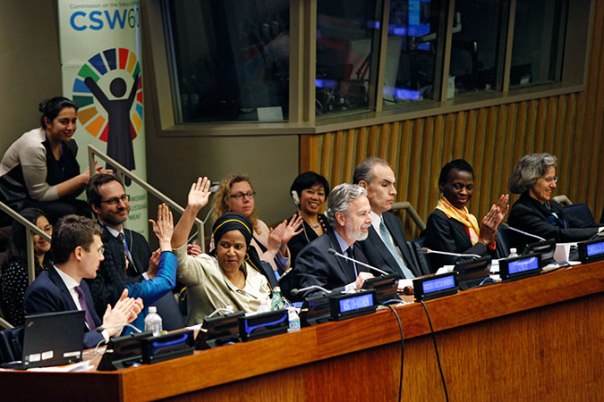
UN Women Executive Director Phumzile Mlambo-Ngcuka high-fives UN Women Deputy Executive Director Lakshmi Puri as the CSW Chair Antonio de Aguilar Patriota of Brazil announces the adoption of the agreement. Photo: UN Women/Ryan Brown.

Growing global commitment was already in evidence with a record number of more than 80 government ministers from around the world attending the Commission. Around 4,100 non-governmental representatives from more than 540 organizations participated as well, the highest number ever for one of the Commission’s regular annual meetings.

The agreed conclusions urge a comprehensive approach to implementing all 17 Sustainable Development Goals through thorough integration of gender perspectives across all government policies and programmes. Eliminating all forms of gender-based discrimination depends on effective laws and policies and the removal of any statutes still permitting discrimination. Temporary special measures may be required to guarantee that women and girls can obtain justice for human rights violations.

The Commission endorsed significantly increased investment to close resource gaps for achieving gender equality and the empowerment of all women and girls. Funds should be mobilized from all sources, domestic and international, ranging from fulfilling official development assistance commitments to combatting illicit financial flows that shortchange public resources for gender equality.

With humanitarian crises and other emergencies disproportionately affecting women and girls, the Commission underlined the imperative of empowering women in leadership and decision-making in all aspects of responding to and recovering from crisis. On the eve of the World Humanitarian Summit, it stressed prioritizing women’s and girls’ needs in humanitarian action and upholding their rights in all emergency situations. Every humanitarian response should take measures to address sexual and gender-based violence.

UN Women 2

Photo: UN Women/Ryan Brown

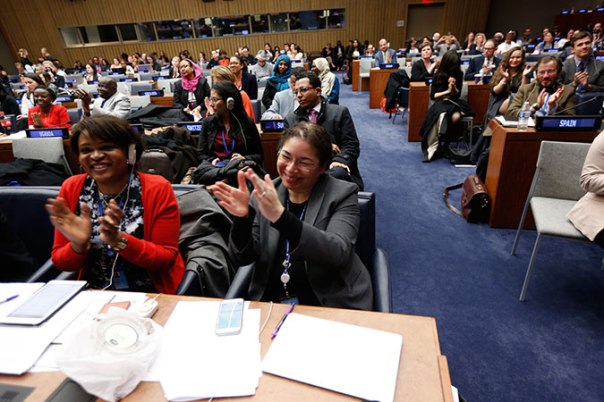
CSW60 delgates applaud as an agreement is announced during the closing plenary. Photo: UN Women/Ryan Brown.

Members of the Commission united behind ensuring women’s equal participation in leadership at all levels of decision-making in the public and private spheres, encompassing governments, businesses and other institutions, and across all areas of sustainable development. Depending on different circumstances, this may involve establishing temporary special measures, setting and achieving concrete benchmarks and removing barriers to women’s participation.

Given the major contributions to Agenda 2030 of civil society, including women’s and community-based organizations, feminist groups, human rights defenders and girls’ and youth-led organizations, the Commission welcomed open engagement and cooperation with them in gender-responsive implementation. It emphasized fully engaging with men and boys as agents of change and allies in the elimination of all forms of discrimination and violence against women and girls.

To guide systematic progress towards gender equality and women’s empowerment throughout the 2030 Agenda, the Commission stressed enhanced national statistical capacity and the systematic design, collection and sharing of high-quality, reliable and timely data disaggregated by sex, age and income. Members also agreed to bolster the role of national mechanisms for women and girls in championing their equality and empowerment.

UN Women 3

Photo: UN Women/Ryan Brown

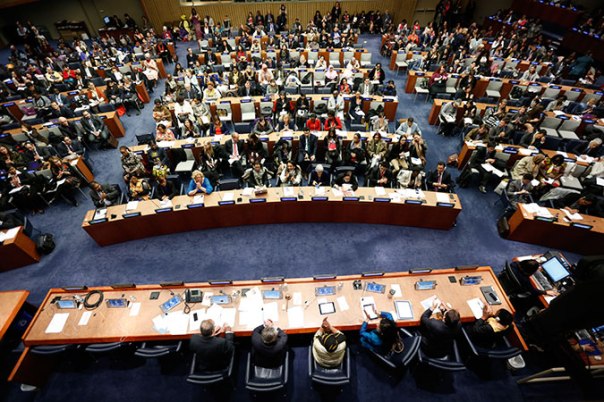
A wide view of the room during the closing plenary meeting of the 60th Session of the UN Commission on the Status of Women. Photo: UN Women/Ryan Brown.

– See more at: http://www.unwomen.org/en/news/stories/2016/3/press-release-csw60-urges-gender-responsive-implementation-of-agenda-2030#sthash.ci0a4sJ9.dpuf

Alfred Adler – Power and Social Feeling

In Being a World Citizen, Human Development, Human Rights, Social Rights, Solidarity on February 7, 2016 at 3:01 PM

ALFRED ADLER – POWER AND SOCIAL FEELING

By René Wadlow

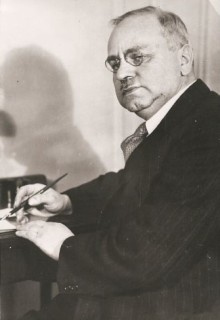
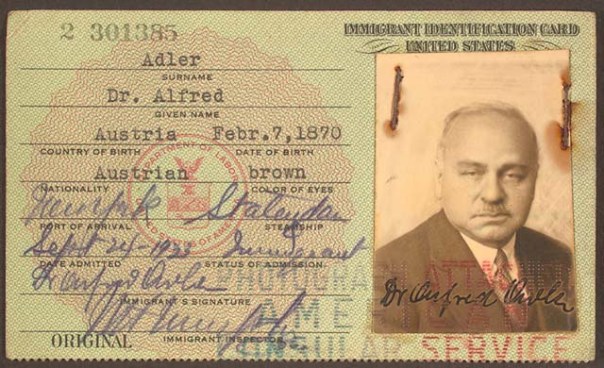
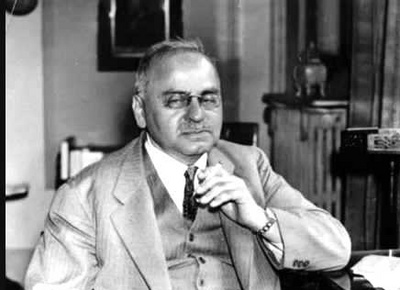
Alfred Adler, whose birth anniversary we mark on February 7, believed that there were two decisive forces at work in world history and in the life of each individual: a striving for power and a social feeling. Both forces stemmed from man’s upward striving from inferiority to perfection.

Alfred Adler (1870-1937), a Vienna psychotherapist and medical doctor, was part of the early circle of Sigmund Freud. However, the two men disagreed on what each felt to be fundamental positions. In 1911, Adler left the Freud circle and founded his own approach which he called “individual psychology”.

Adler 2.jpg

For Adler, there are similarities between the evolution of man within history and the evolution of each individual. In history, man, a physical dwarf in comparison with the animals around him and the forces of Nature, must compensate for this weakness by developing a pattern of cooperation with other humans around him. Likewise, each child is born, a dwarf in comparison to the adults around him. Thus each child must develop a sense of self-esteem. If this development is hindered in some way, as the result of brutal parents or a hostile milieu, the search for self-esteem can become neurotic. There can be over-compensation as well as a closing in on oneself.

Over-compensation can result in a quest for power. Striving for self-esteem and power is a natural process, but with over-compensation, the search for power can become the dominant aspect of the personality. Adler had read and been influenced by the writings of Friedrich Nietzsche who glorified the will-to-power. For Adler, an over-development of the will-to-power can become a deep seated neurosis. Only a health balance between the forces of cooperation and the individual will -to-power can make for a harmonious individual and a harmonious society.

In 1897, he married Raissa Epstein, a Russian who was also a student at the University of Vienna. She was part of Russian Marxist circles living in Austria and a friend of Leon Trotsky and his milieu. Through her, Adler joined socialist circles and became convinced that society helped to create the personality of the individual. Therefore, for a health personality, there needs to be a healthy society, free from domination. Adler also saw the need for a society based on equality between men and women, so that the personality of both men and women could develop fully. He was an early feminist and champion of the equality of women and men.

Adler 3.jpg

His work as a psychotherapist and writer was halted by the start of the 1914-1918 World War. As a medical doctor, he was incorporated into the Austro-Hungarian Army where he was able to contemplate man’s neurotic striving for power. At the end of the war, both by his observations and the Marxist analysis of his wife, he felt that the will-to-power dominated the sense of social-feeling and cooperation. In fact, power-hungry leaders and groups debased mass social feeling by using it as a thirst for dominance. The social feeling of soldiers during the war was used for battlefield goals with efforts to exclude any social feeling for the enemy. He wrote that when violence is to be committed, it is frequently done by “appealing to justice, custom, freedom, the welfare of the oppressed and in the name of culture.” Power-seekers transform social feeling “from an end into a means, and it is pressed into the service of nationalism and imperialism.”

The only way to counter this neurotic sense of power-seeking is to develop preventive methods by developing social feeling and cooperation. During the 1920s, Adler stressed the need for the development of social feeling by developing new, cooperative forms of childhood education within the family and schools. Adler stressed the profound experience of togetherness, an intense connection extending across the largest reaches of history and societies.

However, by 1934, he saw that the sense of togetherness in Germany and Austria was going to be used again to create togetherness among a small circle and subverting the use of social feeling by making it a facade for nationalism, racism and imperialism. Adler was considered a Jew by the Nazis because his parents were Hungarian Jews although Judaism as a religion played little role in his intellectual life. He left to teach in New York City and died in 1937 on a lecture tour in Scotland. He did not see the events of the Second World War, but there would have been little to make him alter his views on how the power principle can be utilized by antisocial leaders.

Adler 1.jpg

***********************************************

Notes:

For an overview of Adler’s views of psychology see: Henry L. Ansbacher and Rowena R. Amsbacher (eds), The Individual Psychology of Alfred Adler (New York: Harper and Row, 1964)

For the late views of Adler on the need for a society based on social feeling see his book published shortly after his death: Alfred Adler, Social Interest: A Challenge to Mankind (London, Faber and Faber, 1938)

***********************************************

Prof. René Wadlow is President of the Association of World Citizens.

Robert M. Hutchins: Building on Earlier Foundations

In Being a World Citizen, Conflict Resolution, Democracy, Human Development, Human Rights, Social Rights, The Search for Peace, United Nations, World Law on January 17, 2016 at 5:16 PM

ROBERT M. HUTCHINS: BUILDING ON EARLIER FOUNDATIONS
By René Wadlow

Much of our current work for a more just and peaceful world builds on the thinking and efforts of earlier foundations. An important foundation is the leading role of Robert M. Hutchins, long-time President of the University of Chicago (1929-1951) whose birth anniversary we mark on January 17.

Hutchins’ father, William, was President of Berea, a small but important liberal arts college, so Robert Hutchins (1899-1977) was set to follow the family pattern. He went to Yale Law School and stayed on to teach. He quickly became the Dean of the Law School and was spotted as a rising star of United States (US) education. When he was 30 years old, he was asked to become President of the University of Chicago, a leading institution. Hutchins was then the youngest president of a US university.

In the first decade of his tenure, the 1930s, his ideas concerning undergraduate education − compulsory survey courses, early admission after two years of secondary school for bright and motivated students, a concentration on “Great Books” – an examination of seminal works of philosophy in particular Plato and Aristotle − divided the University of Chicago faculty. There were strong and outspoken pro- and anti-Hutchins faculty groups. Moreover, Hutchins’ abolition of varsity football and ending the University’s participation in the “Big Ten” university football league distressed some alumni whose link to the university was largely limited to attending football games. For Hutchins, a university was for learning and discussion, not for playing sports. As he famously said, “When I feel like exercising, I sit down until the feeling goes away.”

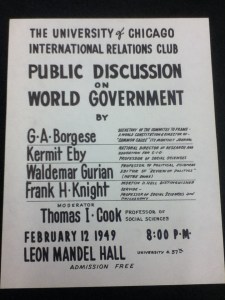
It is Hutchins’ creation and leadership of the Committee to Frame a World Constitution in 1945 which makes him one of the intellectual founders of the movement for world federation and world citizenship. After the coming to power of Hitler in Germany in 1933 and his quick decision to ban Jewish professors from teaching in German universities, many Jewish scientists and professors left Germany and came to the USA. Some of the leading natural scientists joined the University of Chicago. Thus began the “Metallurgy Project” as the work on atomic research was officially called. The University of Chicago team did much of the theoretical research which led to the Atom Bomb. While Hutchins was not directly involved in the atomic project, he understood quickly the nature of atomic energy and its military uses. He saw that the world would never return to a “pre-atomic” condition and that new forms of world organization were needed.


hutchins_0.jpg

Robert M. Hutchins

“The death of democracy is not likely to be an assassination from ambush. It will be a slow extinction from apathy, indifference, and undernourishment.”

-Robert Maynard Hutchins.


On August 12, 1945, a few days after the use of the atom bombs, Hutchins made a radio address “Atomic Force: Its Meaning for Mankind” in which he outlined the need for strong world institutions, stronger than the United Nations (UN) Charter, whose drafters earlier in the year did not know of the destructive power of atomic energy.

Several professors of the University of Chicago were already active in peace work such as Mortimer Adler, G. A. Borgese, and Richard McKeon, Dean of the undergraduate college. The three approached Hutchins saying that as the University of Chicago had taken a lead in the development of atomic research, so likewise, the university should take the lead in research on adequate world institutions. By November 1945, a 12-person Committee to Frame a World Constitution was created under Hutchins’ chairmanship. The Committee drew largely on existing faculty of the University of Chicago − Wilber Katz, Dean of the Law School and Rexford Tugwell who taught political science but who had been a leading administrator of the Roosevelt New Deal and Governor of Puerto Rico. Two retired professors from outside Chicago were added − Charles McIlwain of Harvard, a specialist on constitutions, and Albert Guerard of Stanford, a French refugee who was concerned about the structure of post-war Europe.

From 1947 to 1951, the Committee published a monthly journal Common Cause many of whose articles still merit reading today as fundamental questions concerning the philosophical basis of government, human rights, distribution of power, and the role of regions are discussed. The Preliminary Draft of a World Constitution was published in 1948 and reprinted in the Saturday Review of Literature edited by Norman Cousins and in the Bulletin of the Atomic Scientists some of whom were in the original “Metallurgy Project”. The Preliminary Draft raised a good deal of discussion, reflected in the issues of Common Cause. There was no second draft. The Preliminary Draft was as G.A. Borgese said, quoting Dante “…of the True City at least the Tower.”


WorldConstposter-e1401485123703


In 1951, Hutchins retired from the presidency of the University of Chicago for the Ford Foundation and then created the Ford Foundation-funded Center for the Study of Democratic Institutions where he gathered together some of his co-workers from the University of Chicago.

Two ideas from The Preliminary Draft are still part of intellectual and political life for those concerned with a stronger UN. The first is the strong role of regional organizations. When The Preliminary Draft was written the European Union was still just an idea and most of the States now part of the African Union were European colonies. The Preliminary Draft saw that regional groups were institutions of the future and should be integrated as such in the world institution. Today, the representatives of States belonging to regional groupings meet together at the UN to try to reach a common position, but regional groups are not part of the official UN structure. However, they may be in the future.

The other lasting aspect of The Preliminary Draft is the crucial role that nongovernmental organizations (NGOs) should play. The then recently drafted UN Charter had created a “consultative status” for NGOs, but few of the UN Charter drafters foresaw the important role that NGOs would play as the UN developed. The Preliminary Draft had envisaged a Syndical Senate to represent occupational associations on the lines of the International Labor Organization where trade unions and employer associations have equal standing with government delegates. In 1946, few people saw the important role that the NGOs would later play in UN activities. While there is no “Syndical Senate”, today NGOs represent an important part of the UN process.

Hutchins, however, was also a reflection of his time. There were no women as members of the Committee to Frame a World Constitution, and when he created the Center for the Study of Democratic Institutions with a large number of “fellows”, consultants, and staff, women were also largely absent.

The effort to envisage the structures and processes among the different structures was an innovative contribution to global institution building at the time, and many of the debates and reflections are still crucial for today.

For an understanding of the thinking of those involved in writing The Preliminary Draft see:
Mortimor Adler, How to think about War and Peace (New York: Simon and Schuster, 1944)
Rexford Tugwell, Chronicle of Jeopardy (Chicago: University of Chicago Press, 1955)
G. A. Borgese, Foundations of the World Republic (Chicago: University of Chicago Press,1953)
Scott Buchanan, Essay in Politics (New York: Philosophical Library, 1953)
For a life of Hutchins written by a co-worker in the Center for the Study of Democratic Institutions:
Harry Ashmore, Unreasonable Truths: The Life of Robert Maynard Hutchins (Boston: Little, Brown and Co, 1989)

Prof. René Wadlow is President of the Association of World Citizens.

Albert Schweitzer: Reverence for Life – A Universal Ethic

In Africa, Being a World Citizen, Environmental protection, Human Development, Human Rights, Solidarity on January 14, 2016 at 8:36 PM

ALBERT SCHWEITZER: REVERENCE FOR LIFE – A UNIVERSAL ETHIC

By René Wadlow


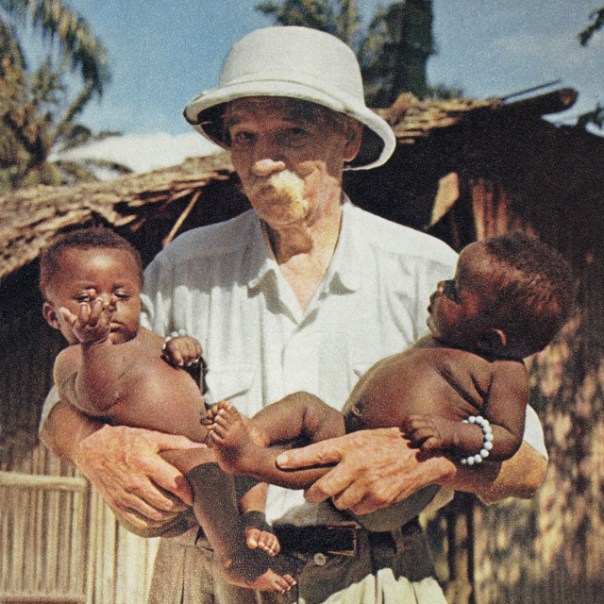
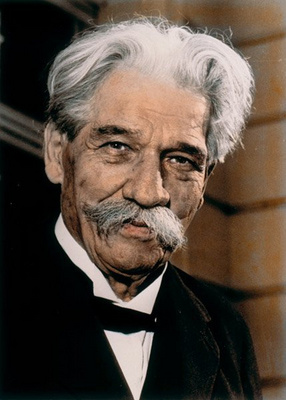
January 14 was the anniversary of the birth of Albert Schweitzer and was a special day at the hospital that he founded at Lambaréné, Gabon.  Alsatian wine would be served at lunch and conversations over lunch would last longer than usual before everyone had to return to his tasks.  In 1963, when I was working for the Ministry of Education of Gabon, and spending time at the Protestant secondary school some half-mile down river from the hospital, I was invited to lunch for the birthday celebration.  As the only non-hospital person there, I was placed next to Dr. Schweitzer, and we continued our discussions both on the events that had taken place along the Ogowe River and his more philosophical concerns.

We would often discuss his interest in the classic authors of Chinese philosophy. I had been an undergraduate research assistant of Professor Y. P. Mei at Princeton. Mei was the professor of Chinese philosophy in the Philosophy Department and in many ways a philosopher himself.  He had been president of a university in China during the Second World War and had moved to the USA after the end of the civil war in 1948.

Although the bulk of Albert Schweitzer’s philosophical reflection concerned the German philosophical tradition −Kant, Goethe, Schopenhauer, Nietzsche − he was drawn to the founders of Chinese Taoism − Lao-tzu and Chuang-tzu and the champion of universalist ethics, Mo-tzu.

albert_schweitzer_lambarene.jpg

In Schweitzer’s writings he often contrasted Indian and Chinese philosophical thought − the two major traditions of Asia.  For Schweitzer, Indian thought was dualistic, there is on the one hand matter, and on the other spirit. He saw Indian thought a fundamentally pessimistic concerning the world and matter. In Indian thought, the spirit is both higher and in a sense more ‘real’ than matter.  The aim of an individual is to detach himself from matter and unite with the spirit. As he wrote, “Their world-view is pessimistic-ethical, and contains, therefore, incentives only to the inward civilization of the heart, not to outward civilization as well.

For Schweitzer, the Chinese view, in its Taoist form at least, was optimistic with the complete integration of spirit and matter.  The Tao, which is both the source of all things but also the motor of all action, is not separate from material creation but is fully embodied in the material world and within each individual.  Thus ethics are grounded in the nature of the universe as well as in the nature of humanity.  An element that attracted Schweitzer to Taoist thought was its ethical standards which encompass all persons. The Middle East religious systems which have spread worldwide started with Zarathustra who is the foundation of Middle East religious thought.  His approach was taken over by Judaism, Christianity and Islam.  The Middle East philosophical approach divides people into the “saved” and the “unsaved”.  The saved are one’s brothers toward which there is an agreed upon ethical framework and the unsaved who are cast out, unclean and toward whom other ethical standards prevail.  This good-bad, light-darkness is incorporated into the structures of the universe where there is a constant struggle between the forces of light and those of darkness.

This division between the saved and the unsaved was eliminated by the Stoics, especially the later Roman Stoics such as Marcus Aurelius where the concept of a universal ethic for mankind comes into sight.  However, in the chaos of ideas in the late Roman Empire, Christianity emerges victorious with its idea individual redemption. Thus there is a return to the saved and the unsaved, between those who will live in the Kingdom of God and the others.

A Schweitzer.jpg

Only Chinese thought holds the seeds for a universal approach, but Chinese thought was clouded for a long time by the weak eco-political position of China.  China’s current rise is too recent and too mixed with different ideological positions to become a champion of the universal ethic of Taoist thought.  Moreover, the poetic formulation of much of Taoist writings makes its comprehension difficult for many.

Albert Schweitzer’s reverence for life which accepts that there is reciprocal relationship among all living things may be the closest to a Taoist philosophy easily understood worldwide, a philosophy needed for a deep ecology ethic.

Prof. René Wadlow is President of the Association of World Citizens.

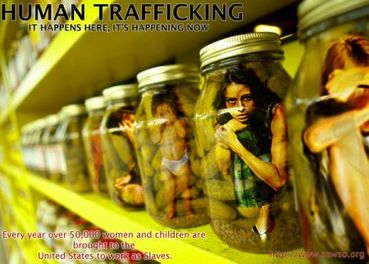
UN-Designated Day for Developing Awareness of Human Trafficking

In Being a World Citizen, Children's Rights, Current Events, Human Development, Human Rights, International Justice, Social Rights, Solidarity, United Nations, Women's Rights, World Law on January 11, 2016 at 11:23 PM

The World, Its Protection, Its Citizens

In Being a World Citizen, Conflict Resolution, Cultural Bridges, Democracy, Environmental protection, Human Development, Human Rights, International Justice, Solidarity, The Search for Peace, United Nations, World Law on December 30, 2015 at 12:13 PM

THE WORLD, ITS PROTECTION, ITS CITIZENS

By René Wadlow

-- AWC-UN Geneva Logo --
On behalf of the Association of World Citizens, I would like to send you our best wishes for 2016.

May it be a year that brings peace and harmony closer to our world. Progress in the world is based on the emergence of ideas, their acceptance, their transformation into ideals, and then into programs of action.

2015 has seen within the United Nations (UN) system two major frameworks of ideas and suggested plans of action. The first was the post-2015 Sustainable Development Goals, and the second was the Paris COP 21 goals and treaty to deal with climate change.  These guidelines require close cooperation among national governments, the UN and other multilateral government institutions such as the European Union, and the wide range of non-governmental organizations including business and agriculture associations.  We need to move from fragmented efforts to strong partnerships.

However, these positive goals need to be seen against the background of current armed conflicts and violent extremism often rooted in a deadly mix of exclusion and marginalization, mismanagement of natural resources, oppression and the alienation arising from a lack of jobs and opportunities. The World is in need of protection, both of people and Nature.  As Citizens of the World, we have a sense of responsibility to participate fully in the emerging world society where disputes among States are settled within the framework of world law and through negotiations in good faith so that common interests may be found and developed.

As Citizens of the World, we have a sense of compassion for Nature, and thus we unite to safeguard the delicate balance of the natural environment and to develop the world’s resources for the common good.

Today, we all face a choice between those forces that would drive us apart, forces and attitudes such as racism, narrow nationalism and the aggressive pursuit of self-interest on the one hand, and on the other hand, those forces which promote an emerging world society that is equitable and harmonious. I am sure that you also will choose to work for wholeness, harmony and creativity.

Prof. René Wadlow is President of the Association of World Citizens.

Crossing Cultural and Linguistic Boundaries: International Volunteer Day

In Being a World Citizen, Current Events, Environmental protection, Human Development, Solidarity, The Search for Peace, United Nations, World Law on December 5, 2015 at 5:45 PM

CROSSING CULTURAL AND LINGUISTIC BOUNDARIES: INTERNATIONAL VOLUNTEER DAY
By René Wadlow

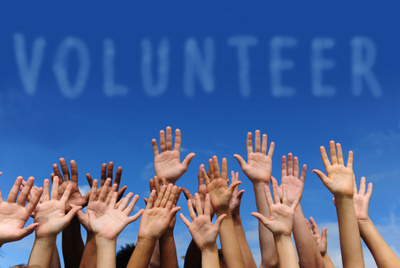
Founded on the values of solidarity and mutual trust, volunteerism transcends all cultural, linguistic and geographic boundaries. By giving their time and skills without expectations of material reward, volunteers themselves are uplifted by a singular sense of purpose.
-Ban Ki-moon, Secretary-General of the United Nations.

Volunteer Day 1.jpg

December 5 was selected as the International Volunteer Day by a 1985 UN General Assembly resolution. This year, December 5 comes as government representatives and volunteers of nongovernmental organizations (NGOs) are meeting in Paris to develop a new international climate agreement, COP 21. The NGO representatives are fewer in number than originally planned due to the November 13 shootings in Paris and thus tightened security conditions. However, those that are present are doubly active as world media attention is focused on the conference and its outcome.

In practice, as with all major UN conferences, negotiations among governments have been going on for two years with a good deal of input from NGO representatives. At the Paris stage, there is a preliminary “Final Document and Action Plan” of some 30 pages with a good number of square brackets around words or sentences on which there is no agreement. Negotiations concern making the document shorter so that the main ideas will stand out better and to remove square brackets. If a suitable word is not found, often the whole sentence will be dropped.

Both government representatives and NGOs are discussing post-Paris action and coalition building. There is also a concerted effort to bring the business community, especially transnational corporations into the action. While the UN system has a structure of consultative status for NGOs through the Economic and Social Council, the world of business is largely not represented. Only the International Labor Organization with its headquarters in Geneva has a three-party membership: governments, trade unions and business associations from each of the member States. The business world is not really a “voluntary association” in the sense of NGOs. Material reward is an important element in business.

Volunteer Day 2.jpg

COP 21 is a prime example of the need for cooperative action at the local, national and world level. As has been often said, the climate does not recognize national frontiers. The relations among ecologically-sound development, security, conflict resolution and respect for human rights have now assumed a more dynamic form than at any other time since the creation of the United Nations in 1945. To meet these strong challenges, NGOs, academic institutions, business and professional associations and the media must work together cooperatively. International Volunteer Day can serve as a time of reflection on capacity building and improved networking.

Prof. René Wadlow is President and a representative to the United Nations Office at Geneva of the Association of World Citizens.

Women as Peacemakers: An October 31 Anniversary

In Being a World Citizen, Conflict Resolution, Human Development, Human Rights, Solidarity, United Nations, World Law on October 31, 2015 at 12:22 PM

WOMEN AS PEACEMAKERS: AN OCTOBER 31 ANNIVERSARY

By René Wadlow

“Seeing with eyes that are gender aware, women tend to make connections between the oppression that is the ostensible cause of conflict (ethnic or national oppression) in the light of another crosscutting one: that of gender regime. Feminist work tends to represent war as a continuum of violence from the bedroom to the battlefield, traversing our bodies and our sense of self. We glimpse this more readily because as women we have seen that ‘the home’ itself is not the haven it is cracked up to be. Why, if it is a refuge, do so many women have to escape it to ‘refuges’? And we recognize, with Virginia Woolf, that ‘the public and private worlds are inseparably connected: that the tyrannies and servilities of one are the tyrannies and servilities of the other.

Cynthia Cockburn, Negotiating Gender and National Identities.


October 31 is the anniversary of the United Nations (UN) Security Council Resolution 1325 which calls for full and equal participation of women in conflict prevention, peace processes, and peace-building, thus creating opportunities for women to become fully involved in governance and leadership. This historic Security Council Resolution 1325 of October 31, 2000 provides a mandate to incorporate gender perspectives in all areas of peace support. Its adoption is part of a process within the UN system through its World Conferences on Women in Mexico City (1975), in Copenhagen (1980), in Nairobi (1985), in Beijing (1995), and at a special session of the U.N. General Assembly to study progress five years after Beijing (2000).

Since 2000, there have been no radical changes as a result of Resolution 1325, but the goal has been articulated and accepted. Now women must learn to take hold of and generate political power if they are to gain an equal role in peace-making. They must be willing to try new avenues and new approaches as symbolized by the actions of Lysistrata.

Lysistrata, immortalized by Aristophanes, mobilized women on both sides of the Athenian-Spartan War for a sexual strike in order to force men to end hostilities and avert mutual annihilation. In this, Lysistrata and her co-strikers were forerunners of the American humanistic psychologist Abraham Maslow who proposed a hierarchy of needs: water, food, shelter, and sexual relations being the foundation. (See Abraham Maslow, The Farther Reaches of Human Nature) Maslow is important for conflict resolution work because he stresses dealing directly with identifiable needs in ways that are clearly understood by all parties and with which they are willing to deal at the same time.

Addressing each person’s underlying needs means you move toward solutions that acknowledge and value those needs rather than denying them. To probe below the surface requires redirecting the energy towards asking ‘what are your real needs here? What interests need to be serviced in this situation?’ The answers to such questions significantly alter the agenda and provide a real point of entry into the negotiation process.

It is always difficult to find a point of entry into a conflict, that is, a subject on which people are willing to discuss because they sense the importance of the subject and all sides feel that ‘the time is ripe’ to deal with the issue. The art of conflict resolution is highly dependent on the ability to get to the right depth of understanding and intervention into the conflict. All conflicts have many layers. If one starts off too deeply, one can get bogged down in philosophical discussions about the meaning of life.

However, one can also get thrown off track by focusing on too superficial an issue on which there is relatively quick agreement. When such relatively quick agreement is followed by blockage on more essential questions, there can be a feeling of betrayal.

Since Lysistrata, women, individually and in groups, have played a critical role in the struggle for justice and peace in all societies. However, when real negotiations begin, women are often relegated to the sidelines. However, a gender perspective on peace, disarmament, and conflict resolution entails a conscious and open process of examining how women and men participate in and are affected by conflict differently. It requires ensuring that the perspectives, experiences and needs of both women and men are addressed and met in peace-building activities. Today, conflicts reach everywhere. How do these conflicts affect people in the society — women and men, girls and boys, the elderly and the young, the rich and poor, the urban and the rural?

In the 1990s a young French singer, Olivier Villa, son of the famous French comic impersonator and TV show host Patrick Sébastien, released a first single entitled “Debout les Femmes” (Stand Up Women) in which, along the lines of Aristophanes’ Lysistrata, he called on women worldwide to deny any sexual intercourse until men have renounced war and violence for good.

“Only you, mothers, only you, women, can stop war.

Close your hearts until all men have laid down their weapons.”

There has been a growing awareness that women and children are not just victims of violent conflict and wars −’collateral damage’ − but they are chosen targets. Conflicts such as those in Rwanda and the former Yugoslavia have served to bring the issue of rape and other sexual atrocities as deliberate tools of war to the forefront of international attention. Such violations must be properly documented, the perpetrators brought to justice, and victims provided with criminal and civil redress.

I would stress three elements which seem to me to be the ‘gender’ contribution to conflict transformation efforts:

  1. The first is in the domain of analysis, the contribution of the knowledge of gender relations as indicators of power. Uncovering gender differences in a given society will lead to an understanding of power relations in general in that society, and to the illumination of contradictions and injustices inherent in those relations.
  2. The second contribution is to make us more fully aware of the role of women in specific conflict situations. Women should not only be seen as victims of war: they are often significantly involved in taking initiatives to promote peace. Some writers have stressed that there is an essential link between women, motherhood and non-violence, arguing that those engaged in mothering work have distinct motives for rejecting war which run in tandem with their ability to resolve conflicts non-violently. Others reject this position of a gender bias toward peace and stress rather that the same continuum of non-violence to violence is found among women as among men. In practice, it is never all women nor all men who are involved in peace-making efforts. Sometimes, it is only a few, especially at the start of peace-making efforts. The basic question is how best to use the talents, energies, and networks of both women and men for efforts at conflict resolution.
  3. The third contribution of a gender approach with its emphasis on the social construction of roles is to draw our attention to a detailed analysis of the socialization process in a given society. Transforming gender relations requires an understanding of the socialization process of boys and girls, of the constraints and motivations which create gender relations. Thus, there is a need to look at patterns of socialization, potential incitements to violence in childhood training patterns, and socially-approved ways of dealing with violence.

There is growing recognition that it is important to have women in politics, in decision-making processes and in leadership positions. The strategies women have adapted to get to the negotiating table are testimony to their ingenuity, patience and determination. Solidarity and organization are crucial elements. The path may yet be long but the direction is set.

Prof. René Wadlow is President of the Association of World Citizens.

Peacebuilding: A Focus for UN Day

In Being a World Citizen, Conflict Resolution, Human Development, United Nations, World Law on October 24, 2015 at 11:37 AM

PEACEBUILDING: A FOCUS FOR UN DAY

By René Wadlow

UN Flags 

As we mark United Nations (UN) Day this October 24, we are reminded that the UN remains the only universally representative and comprehensively empowered body the world has to deal with threats to international peace and security. As Brian Urquhart, one of the early UN civil servants said, “In the great uncertainties and disorders that lie ahead, the UN, for all its shortcomings, will be called on again and again because there is no other global institution, because there is a severe limit to what even the strongest powers wish to take on themselves, and because inaction and apathy toward human misery or about the future of the human race are unacceptable.” However, the nature of the threats to international security is ever changing. The UN, just as the national governments which make it up, have difficulties meeting new challenges.

“From the outset of my mandate”, said in 1993 then Secretary General of the UN Boutros Boutros-Ghali, “I have been convinced that the structure of the Organization must mirror, as closely as possible, the tasks it is assigned to undertake. An institution must reflect the objectives it pursues … The UN therefore faces the difficult task of relating our aims to our means, of updating and reforming institutions set up at different times and with different imperatives.” Boutros-Ghali proposed measures to promote coordination and decentralization within the UN system, greater cooperation with non-governmental organizations and regional bodies, and creating more effective UN financing and budget-making mechanisms.

He went on to stress the vast challenges of famine, drought, AIDS, civil wars, uprooted and displaced populations and deepening human misery in many parts of the world. These situations make dramatic demands on the UN system and require a better field presence and operational capabilities. The UN system is called upon to respond to much diversified requirements, often involving the provisions of crucial and direct aid to peoples in deep distress and involving sensitive new fields of social, economic and political transformations. However, the crisis we face is not about the administration of UN bodies, but about a tragically broken world where poverty and violence are ever more visible and where there is an ever-diminishing willingness to help those in need.

Over a decade later, Kofi Annan made many of the same observations as he set out his own proposals for structural reforms “In Larger Freedom”. However, the current structures of the UN for government representatives work “just well enough” that they do not want to take the risk of making changes. Increasingly, it is the representatives of nongovernmental organizations who are pushing for change and are organizing to undertake tasks which some governments are unwilling to do.  We see this with the current flow of migrants-refugees to Europe where some non-governmental groups have stepped in to help refugees even when their governments have an unwelcoming and negative policy.

UN Day

One potentially important innovation is the creation within the UN of the Peacebuilding Commission. Hopefully this Commission will be more than a name change for the same functional relief efforts in post-conflict situations. The Peacebuilding Commission was created as a response to the observation that conflicts are rarely settled, and they often take on new forms of violence as we saw in the Afghanistan case after the end of the Soviet intervention, in Kosovo after the other ex-Yugoslav conflicts had died down, in Somalia despite repeated ceasefires and the creation of “unity governments”.

We all have limited attention spans for crisis situations in which we are not directly involved or do not have strong emotional links. We are constantly asked to pay attention to a new crisis, to new tensions, to new difficulties. Political leaders have even shorter attention spans unless there are strong domestic reasons for remaining involved. Therefore, there is a need both within the UN system and within national governments for a group of persons will a long-range holistic vision, who are able to see trends and the links between situations. Such a body needs to be able to organize long-term cooperation drawing upon the knowledge and resources of universities, religious groups, NGOs and government services at all levels. There needs to be greater public awareness and the ability to organize to articulate values and the implementation of goals.

Just as ecological concerns require actions by a multitude of actors who do not always see the relationship between their actions, so peacebuilding has material, intellectual and spiritual dimensions. Finding the way these fit together in a manner understandable to policy makers is not easy. However, this is the challenge before us. The process will take time and vision. Peacebuilding can be a major focus as we mark UN Day on October 24.

Prof. René Wadlow is President of the Association of World Citizens.