By René Wadlow
The continuing armed conflicts in Ukraine and the Gaza Strip, increased tensions between Mainland China and Taiwan with the lack of any formal governmental negotiations forces us to ask if more can be done on the part of Nongovernmental Organizations (NGOs) to encourage negotiations in good faith.
Governmental efforts, bilateral or within the United Nations (UN) can be called Track One. Track One diplomacy is official government negotiations with the backup resources of government research and intelligence agencies. There can also be Track One “back channels” of informal or unofficial contacts.
Track Two diplomacy is a non-official effort usually by an NGO or an academic institution. The use of non-official mediators is also increasing as awareness grows that there is a tragic disjuncture between the UN mandate to keep peace and its inability to intervene in conflicts within a State – often confrontations between armed groups and government forces and sometimes among different armed groups.
Track Two talks are discussions held by non-officials of conflicting parties in an attempt to clarify outstanding disputes and to explore the options for resolving them in settings that are less sensitive than those associated with formal negotiations. The participants usually include scholars, senior journalists, former government officials and former military officers. They should be in close contact with national leaders and decision-makers. The purposes of Track Two talks vary, but they are all related to reducing tensions. Much depends on the caliber and dedication of the participants and their relations with governmental leadership.
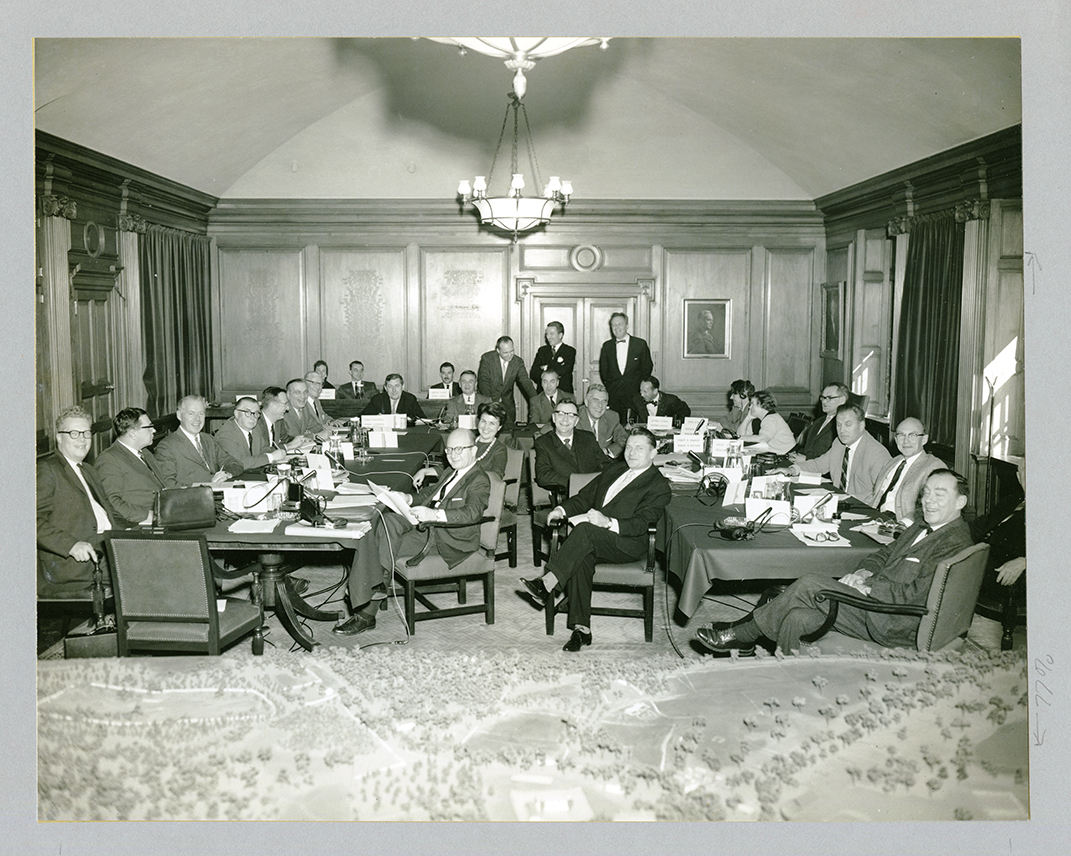
Citizens of the World were involved in one of the earliest continuing Track Two efforts. In 1959 President Eisenhower asked the world citizen Norman Cousins, editor of the New York-based journal The Saturday Review of Literature, if there were some way that could be arranged to get private Soviet and United States (U.S.) citizens together to discuss U.S.-Soviet relations.
The first meeting was held at Dartmouth College and became known as the Dartmouth Conferences held in many different places in the USA. David Rockefeller, chief of the Chase Manhattan Bank, whose name as a capitalist was known by most Soviets, was one of the active participants. Rockefeller and his family had many contacts with U.S. intellectuals and scholars on whom they could call to participate in the Dartmouth meetings.
As Kenneth Boulding, a Quaker economist who often participated in Track Two efforts wrote:
“When Track One will not do,
We have to travel on Track Two.
But for results to be abiding,
The Tracks must meet upon some siding.” (1)
Note:
1) Quoted in John W. McDonald with Noa Zanolli, The Shifting Grounds of Conflict and Peacebuilding (Lanham, MD: Lexington Books, 2008, 241 pp)
Prof. René Wadlow is President of the Association of World Citizens.
 Association of World Citizens