The Official Blog of the

Archive for the ‘World Law’ Category

Syria: Reforms and Mediation

In Current Events, Democracy, Human Rights, Middle East & North Africa, World Law on July 3, 2011 at 6:49 PM

SYRIA: REFORMS AND MEDIATION

By René Wadlow

Hope has never trickled down. It has always sprung up.

Studs Terkel

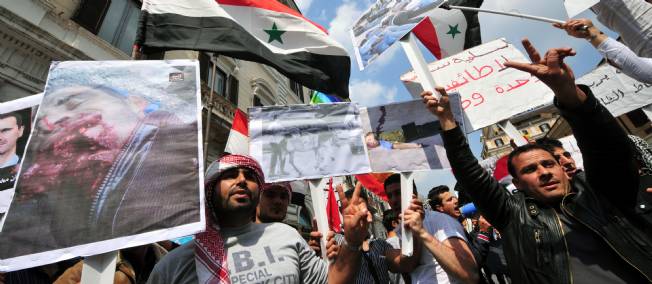
The situation in Syria seems to have reached a critical turning point. There is a possibility that popular protests continue as they have since mid-March and that they continue to be met by military and police violence in violation of the spirit and letter of humanitarian international law. The Syrian army and militias have responded to unarmed nonviolent demonstrations with disproportionate force. Humanitarian international law has as its base the Martens Clause named after the legal advisor of the Russian Czar at the time of the Hague Peace Conferences. The clause is included in the Preamble to the 1899 Hague Convention. It is taken up again in Article 3, common to the four Geneva Conventions of August 12, 1949. The Martens Clause states that “the means that can be used to injure an enemy are not unlimited” but must meet the test of ‘proportionality’ meaning that every resort to armed force be limited to what is necessary for meeting military objectives. The shooting of unarmed demonstrators does not meet the test of proportionality.

For several months, the Syrian people have been sending a clear message to President Bashar al-Assad: The time has come for him to step aside.

However, there seems to be a real possibility of negotiations between the government led by President Bashar al-Assad and members of different opposition groups. President Assad, after two months of silence during which time demonstrations spread and repression increased on June 20 has called for a “national dialog” that could usher in changes. However, there were few specifics as to what topics such a national dialog would cover.

Many opposition leaders consider the proposal as a bid for more time during which arrests continue and over 1,000 persons have been killed in response to non-violent demonstrations. Moreover, it is not clear that the leaders of the longstanding but divided leadership of opposition groups are in control of the demonstrators. As in Tunisia and Egypt, Syrian demonstrators are young, come from an increasingly educated middle class and are influenced by the spirit of the ‘Arab Spring’ rather than by the ideology of the historic opposition groups.

As a sign that the proposal for a national dialog was real, the government allowed a meeting on June 27 in Damascus of some opposition figures. Those who met stressed that they did not claim to speak for all the demonstrators, and not all open opposition figures attended. In addition there are opposition figures in exile, and those in hiding fearful of arrest. There are also, no doubt, those who are waiting to see which way the wind blows. President Assad has spoken of starting the national dialog on July 12, but it is not clear who will attend and how representative they will be.

The savagery of the Damascus regime in suppressing dissent knows no boundaries. President Assad will resort even to heavy military force to silence his own people.

Civil society participation — religious, education, labor, women, cultural and media — is crucial to build public support for a real national dialog and to broaden constituencies for peace. A national dialog is merely the beginning of a deep reordering of the political and economic structures and relationships among elements of the society. There is a need for continual adjustments to adapt to new developments. There also needs to be quick post-agreement benefits to give people a stake in the readjustment process and to reduce the capacity of spoilers.

In some conflict situations, external mediators from the United Nations, national governments or nongovernmental organizations have played a useful role. Currently, the situation seems to have reached a stalemate when neither the government nor the protesters can resolve the crisis on their own terms. There are few signs that the government is open to external mediators, but with refugees from Syria going to Turkey, there is a real danger that the conflict will take on trans-frontier dimensions. A real national dialog could set out a framework for reforms which have been promised in the past but which never came to birth. As a result, sentiments have hardened, and trust has been lost. As external but concerned parties, we should encourage a broadly-based national dialog as a first important step on the road to reform.

René Wadlow is Senior Vice President and Chief Representative to the United Nations Office at Geneva of the Association of World Citizens.

Let My Children Go: World Efforts to Eliminate the Worst Forms of Child Labor

In Children's Rights, Human Development, Human Rights, Solidarity, World Law on June 11, 2011 at 11:52 PM

LET MY CHILDREN GO:

WORLD EFFORTS TO ELIMINATE THE WORST FORMS OF CHILD LABOR

By René Wadlow


June 12 is a red letter day on the United Nations (UN) agenda of events as the World Day against Child Labor. It marks the June arrival in 1998 of hundreds of children in Geneva, part of the Global March against Child Labor that had crossed 100 countries to present their plight to the International Labor Organization (ILO).

“We are hurting, and you can help us” was their message to the assembled International Labor Conference which meets each year in Geneva in June. One year later, in June, the ILO had drafted ILO Convention N° 182 on child labor which 165 States have now ratified — the fastest ratification rate in the ILO’s 89-year history.

The ILO is the only UN organization with a tripartite structure, governments, trade unions and employer associations are all full and equal members. All the other UN bodies are governments-only with non-governmental organizations (NGOs) playing a “fifth wheel” role. Yet NGOs within the UN system as a whole played an important role in highlighting children working in circumstances that put their physical, mental and social development at risk, children working in situations where they are exploited, mistreated and denied the basic rights of a human being. Today, millions of children, especially those living in extreme poverty, have no choice but to accept exploitive employment to ensure their own and their family’s survival. However, the ILO is the UN agency most directly related to conditions of work. Thus the ILO has often been an avenue for ‘unheard voices’ to be heard, usually through the trade union representatives; more rarely the employer representatives have played a progressive role.

The flag of the International Labor Organization.

Child labor and the increasing cross-frontier flow of child labor did not have a high profile on the long agenda of pressing labor issues until the end of the 1990s. At the start of the 1990s, there was only one full-time ILO staff member assigned to child labor issues; now there are 450, 90 percent in the field.

Child labor was often hidden behind the real and non-exploitive help that children bring to family farms. However, such help often keeps children out of school and thus outside the possibility of joining the modern sector of the economy. The ILO estimates that of the some 200 million child laborers in the world, some 70 percent are in agriculture, 10 percent in industry/mines and the others in trade and services — often as domestics or street vendors in urban areas. Globally, Asia accounts for the largest number of child workers — 122 million, Sub-Saharan Africa, 50 million, and Latin America and the Caribbean, 6 million. Young people under 18 make up almost half of humanity, a half which is virtually powerless in relation to the other half. To ensure the well-being of children and adolescents in light of this imbalance of power, we must identify attitudes and practices which cause invisibility.

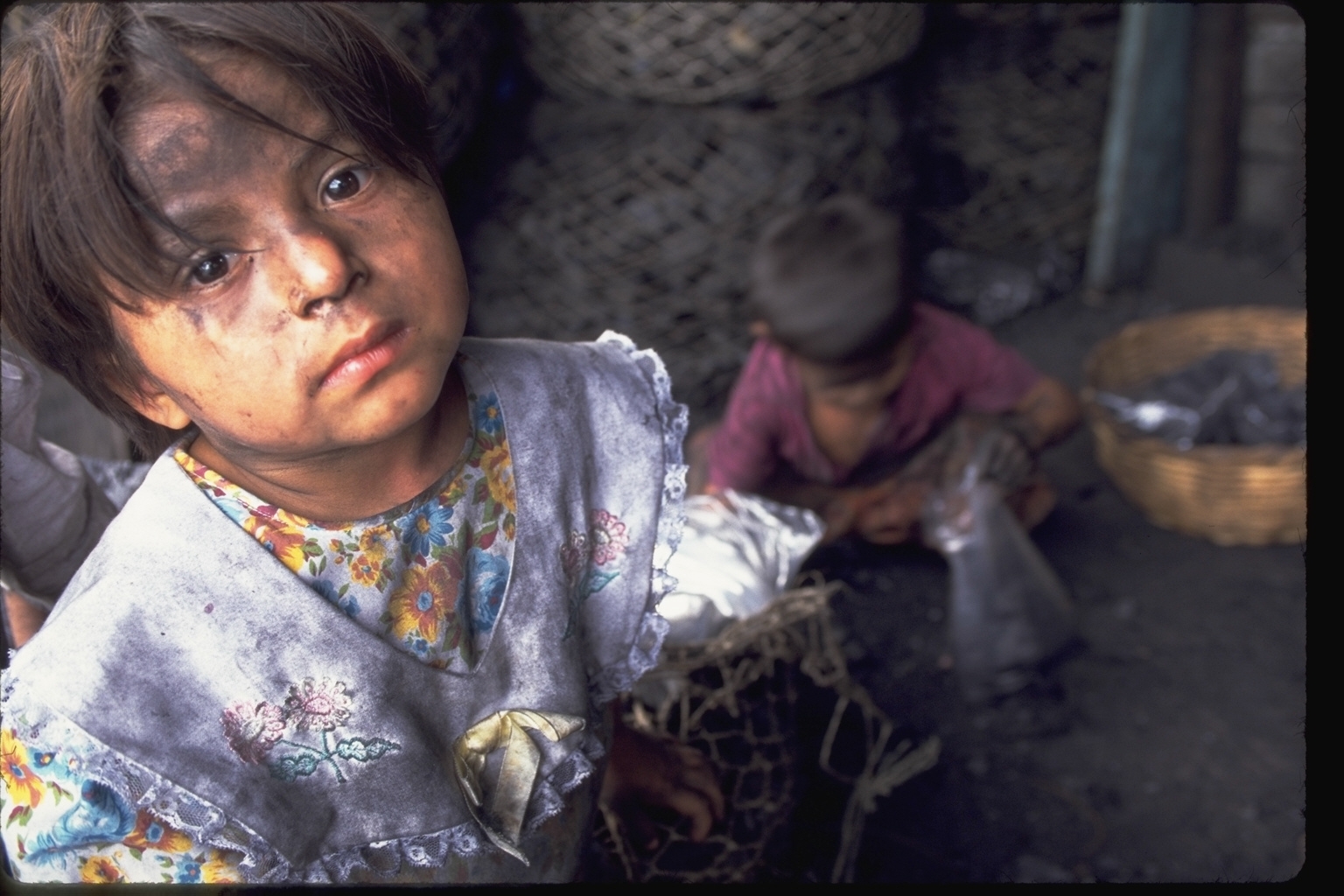
The grim faces of child labor: In El Salvador, a 4-year-old girl and her 6-year-old brother working to fill coal bags.

But statistics are only one aspect of the story. It is important to look at what type of work is done and for whom. The image of the child helping his parents on the farm can hide wide-spread bonded labor in Asia. Children are ‘farmed out’ to others for repayment of a debt with interest. As the interest rates are too high, the debt is never paid off and ‘bonded labour’ is another term for a form of slavery.

In Africa, children can live at great distances from their home, working for others with no family ties and thus no restraints on the demands for work. Girls are particularly disadvantaged as they often undertake household chores following work in the fields. Schooling for such children can be non-existent or uneven at best. There is often a lack of rural schools and teachers. Rural school attendance is variable even where children are not forced to work. Thus, there is a need for better coordination between resources and initiatives for rural education and the elimination of exploitive child labor.

There is still a long way to go to eliminate exploitive child labor. Much child labor is in what is commonly called the non-formal sector of the economy where there are no trade unions. Child labor is often related to conditions of extreme poverty and to sectors of the society where both adults and children are marginalized such as many tribal societies in Asia, or the Roma in Europe or migrant workers in general.

Thus, the task of both governments and NGOs is to understand better the scope of exploitive child labor, its causes, the possibility of short-term protection of children and the longer-range efforts to overcome exclusion and poverty.


René Wadlow is Senior Vice President and Chief Representative to the United Nations Office at Geneva of the Association of World Citizens.

Femmes en Arabie Saoudite: Quand Dieu punit la moitié du ciel

In Current Events, Human Rights, Middle East & North Africa, Women's Rights, World Law on June 9, 2011 at 7:58 PM

FEMMES EN ARABIE SAOUDITE:

QUAND DIEU PUNIT LA MOITIE DU CIEL

Par Bernard Henry


Le 31 mai et le 1er juin derniers, à travers deux appels signés par son Officier de Presse, le Bureau de Représentation auprès de l’Office des Nations Unies à Genève de l’Association of World Citizens (AWC) a interpellé le gouvernement d’Arabie Saoudite au sujet des droits des femmes, que la monarchie saoudienne n’a jamais vraiment reconnus et dont l’absence devient de plus en plus pénalisante pour les femmes du pays.

Et pour cause – contrairement à la plupart des pays du monde, du moins ceux où il existe une religion officielle, a fortiori quand il s’agit de l’Islam, le « royaume wahhabite », ainsi nommé parce qu’il consacre la doctrine de l’Islam développée au dix-huitième siècle par Mohammed ibn Abd el-Wahhâb, lequel souhaitait ramener l’Islam à sa « pureté d’origine » et rejetait du fait toute tradition extérieure au Coran, considère son territoire tout entier comme une mosquée, prohibant en conséquence tout autre culte que le culte musulman, et encore, tel que le conçoit l’Etat saoudien uniquement.

En règle générale, l’Islam sunnite se désolidarise du wahhabisme qu’il estime sectaire et extrémiste. Ainsi des Talibans d’Afghanistan, dont l’ « Emirat islamique » ne fut reconnu que par trois pays au monde – les Emirats Arabes Unis, le Pakistan et, bien sûr, l’Arabie Saoudite, qui s’était retrouvée à ce sujet en confrontation directe avec l’Iran de Mohammed Khatami, l’Iran chiite pour lequel les Talibans étaient des « fossiles » du sunnisme.
Une minorité chiite existe toutefois en Arabie Saoudite, et parfois, comme ici, des heurts ont lieu avec la majorité wahhabite qui tolère mal l'existence sur le sol saoudien d'une communauté religieuse, même musulmane, autre que la sienne.

Que l’on n’aille pas y voir pour autant une quelconque intention de l’AWC de s’acharner contre l’Arabie Saoudite en particulier. Les droits des femmes sont l’un des sujets qui sont pour nous les plus importants en matière de Droits de l’Homme, et nous avons interpellé dans ce cadre les gouvernements de pays aussi éloignés les uns des autres, tant géographiquement que culturellement, que le Canada, le Paraguay, l’Afrique du Sud, la Guinée-Conakry, la Belgique, l’Afghanistan, l’Australie et bien d’autres encore. Mais force est de constater qu’un système saoudien bien particulier, mêlant droit et religion – et encore, religion prise dans un sens outrageusement littéral et rétrograde – ne favorise guère le changement, celui que l’on doit pourtant bien entreprendre sitôt que l’on réalise le caractère essentiel du respect des droits des femmes si l’on veut que le pays que l’on dirige puisse connaître et la paix civile et le progrès social, l’un comme l’autre étant impossibles quand les femmes sont tenues en état d’infériorité, une infériorité qui atteint aujourd’hui les confins de l’absurde et devient du fait, pour les Saoudiennes, un poids de plus en plus lourd à porter.

La première question que nous avons donc soulevée auprès des autorités saoudiennes est celle de la tutelle masculine.

Celle-ci s’applique aux femmes saoudiennes quel que soit leur âge, mais les plus touchées sont indéniablement les jeunes femmes, car elles ne peuvent prétendre étudier sans l’accord préalable d’un tuteur masculin reconnu par la loi. Par ce système, une jeune femme peut être privée d’études à tous les niveaux, y compris dans le supérieur, et si elle ne l’est pas, elle ne peut choisir sa discipline universitaire sans l’accord de son tuteur. Quand bien même il lui est généreusement accordé d’aller à l’université, des restrictions de mouvement lui sont imposées lorsqu’elle s’y trouve, des restrictions qui font que, même en cas de maladie, elle ne peut quitter les lieux. Et s’il n’y avait que les étudiantes à être visées …  Même les enseignantes, pendant les heures de cours, sont soumises à la séquestration, leurs élèves (féminines) ne pouvant elles-mêmes sortir que si un tuteur masculin ou un conducteur désigné est venu les chercher.
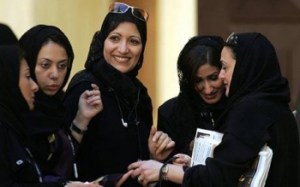
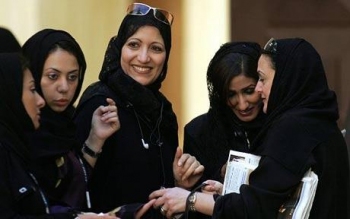
Une femme en Arabie Saoudite doit constamment porter le voile, ainsi qu'une longue robe noire couvrante dénommée l'abaya.

Et de toute façon, avant de rentrer chez elles, qu’ont-elles bien pu étudier ? Ce à quoi leur tuteur masculin a consenti, certes. Mais pas l’ingénierie, l’architecture ou les sciences politiques, car dans le système saoudien, qui n’est pas mixte, aucun programme universitaire public n’existe dans ces domaines pour les femmes, tous les autres n’étant offerts que dans une qualité, et en quantité, inférieure à celle dont profitent leurs homologues mâles. Cela touche tant les infrastructures, les cours étant proposés dans des bâtiments délabrés, que les équipements pédagogiques, les bibliothèques réservées aux femmes étant sous-équipées et les bibliothèques mixtes ne leur étant que d’un accès limité. Certaines universités saoudiennes vont jusqu’à ne pas s’embarrasser de telles contingences en n’admettant pas du tout les femmes dans leurs effectifs.

Alors, bien sûr, certaines envisageront d’aller étudier à l’étranger – mais alors, il faudra vraiment que leurs parents en aient les moyens. Pour celles qui devront d’abord obtenir une bourse gouvernementale, le Ministère de l’Education exigera qu’un tuteur masculin signe un formulaire d’autorisation puis accompagne l’intéressée sur place, après quoi celle-ci devra se soumettre à un suivi régulier par l’attaché culturel de l’ambassade saoudienne de sa tutelle masculine, et au moindre écart, c’est la révocation de la bourse et le retour direct en Arabie Saoudite.

Les instances des Nations Unies en charge des droits des femmes en ont déjà maintes fois fait grief à Riyad qui, pour l’instant, a toujours fait la sourde oreille. Nous l’avons nous-mêmes rappelé au Roi Abdullah, dont nous verrons bien ce qu’il en fait. Mais déjà, pour éviter que, comme toujours depuis l’an dernier, nos lettres ne nous reviennent non ouvertes car refusées par la Cour royale et les ministères saoudiens, cette fois, nous avons tout envoyé par fax …

Il n'est toutefois pas rare de voir des femmes en voile intégral ...

Il en est de même pour la seconde question que nous avons abordée, celle-là étant vraiment une question d’actualité, au sens fort du terme.

Le 22 mai dernier, une Saoudienne du nom de Manal Al-Sharif a été arrêtée au volant d’une voiture à 4H du matin, puis remise en liberté sous caution avant que la police ne revienne l’arrêter à minuit le lendemain, cette fois à son domicile. De quoi Manal Al-Sharif s’était-elle rendue coupable au volant ? D’un excès de vitesse ? De conduite en état d’ivresse ? Quel délit routier grave avait-elle bien pu commettre pour se trouver à ce point dans le collimateur des autorités ? Tout simple. Manal était au volant, à savoir qu’elle conduisait une voiture, et ça, pour une femme en Arabie Saoudite, c’est un délit. Ou plus exactement, c’est contraire à la religion …

Mais comment, me direz-vous, peut-il exister des préceptes religieux musulmans concernant la conduite automobile puisque, lorsque l’Islam est apparu au 7ème siècle, l’automobile était loin d’exister ? Ca n’a pas gêné un imam saoudien, qui a cru bon de préciser en 1990 – au demeurant année de l’arrivée massive de troupes occidentales en Arabie Saoudite suite à l’invasion du Koweït par l’Irak de Saddam Hussein, et avec lesdites troupes de femmes soldats – que selon lui, Dieu considérait qu’une femme qui conduit une voiture était une pécheresse, rien que ça.

Dans sa fatwa, édit religieux qui n’a en théorie aucune valeur juridique, mais c’est sans compter sur l’omniprésence intrusive de la doctrine wahhabite dans le droit saoudien, le Cheikh Abdel Aziz Bin Abdallah Bin Baz nous explique ainsi, à peine immodeste, ce que le dieu de l’Islam aurait dit à Mahomet si les voitures avaient existé lorsque le Coran fut révélé à ce dernier:

« […] La question de la conduite des automobiles par les femmes. Il est connu que ceci constitue une source d’indéniables vices, inter alia, la khilwa [rencontre en privé entre un homme et une femme] interdite par la loi et l’abandon du hijab. Cela concerne aussi les rencontres entre des femmes et des hommes sans que les précautions nécessaires soient prises. Cela pourrait aussi conduire à des actes haraam [impies] et c’est pourquoi ce fut interdit. La pure Chari’a interdit également les moyens qui conduisent à la commission d’actes de nature impie et considère de tels actes haraam en eux-mêmes …  Ainsi, la pure Chari’a a proscrit toutes les voies menant au vice …  La conduite automobile féminine est l’un des moyens qui mènent à cela et c’est en soi une évidence. »
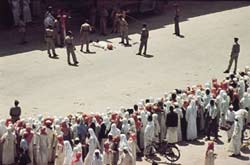
Le système judiciaire saoudien ignore totalement les Droits de l'Homme. Ici, une sentence de flagellation est exécutée en public.

Le problème, c’est que, d’une part, notre imam ne nous explique en rien le lien entre ces délires et la Chari’a qu’il invoque, ni a fortiori avec le Coran, et que, d’autre part, aucun pays musulman au monde n’a repris cette interprétation arriérée et fantasmatique des textes saints, l’Arabie Saoudite étant le seul pays au monde, toutes traditions juridiques confondues, où les femmes n’aient pas le droit de conduire une voiture.

Là encore, l’ONU a donné de la voix. Le Comité sur l’Elimination de la Discrimination contre les Femmes et le Groupe de Travail du Conseil des Droits de l’Homme pour la Revue périodique universelle ont appelé à l’unisson le royaume wahhabite à mettre fin à cette pratique, jusqu’ici à nul effet pourtant. Quant à Manal Al-Sharif, elle fut finalement libérée le 30 mai …  Mais ne peut toujours pas conduire un véhicule, ni elle ni quelque Saoudienne que ce soit.

Reste à voir maintenant si le Ministre saoudien de la Justice écoutera plus volontiers l’AWC que les instances des Nations Unies, sachant que nos fax lui sont bien parvenus et espérant qu’il n’a pas donné ordre à son personnel de jeter tout de suite tout envoi portant notre emblème, à défaut de pouvoir le refuser comme une lettre.
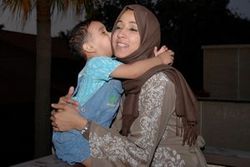
Après sa libération, Manal Al-Sharif retrouve son fils. Son acte de bravoure a suscité l'admiration de par le monde et chez de nombreuses Saoudiennes qui s'identifient à sa cause.

Dans leur bestseller de 2010, La moitié du ciel (en anglais, Half the Sky), Nicholas Kristof et Sheryl Wudunn, grands reporters au New York Times, lauréats du Prix Pulitzer, nous parlent des fléaux qui s’abattent sur les femmes de par le monde, tels que l’esclavage sexuel, les « crimes d’honneur », les mutilations génitales et les viols. « La moitié du ciel », c’est ce que représentent selon eux les femmes, qui constituent certes, ici sur la Terre, la moitié la plus importante de l’humanité, ne serait-ce qu’en termes purement numéraires.

Or, en regardant cette Arabie Saoudite où l’homme, non tant ici l’être humain que l’individu mâle, interprète la parole de Dieu comme étant de nature uniquement punitive, le fait de naître femme étant en lui-même une offense, l’on ne peut s’empêcher de se demander si l’on n’est pas sur une terre où, pour sainte que la veuille le « Gardien des Deux Saintes Mosquées » qu’est le Roi d’Arabie Saoudite, à tout instant et en tout lieu, Dieu punit la moitié du ciel …

Que c’est avoir mal, ou trop peu, lu le Coran que de faire ainsi. Lorsque l’Arabie Saoudite soutenait l’insensé régime taliban d’Afghanistan, même les Emirats Arabes Unis et le Pakistan qui faisaient de même n’en exigeaient pas tant de leurs ressortissantes. C’est dire.

Que l’Arabie Saoudite se considère tout entière comme une mosquée, cela ne concerne pas l’AWC, trop attachée pour y trouver à redire au droit des peuples à disposer d’eux-mêmes. Que l’Etat saoudien en prenne prétexte pour violer les droits fondamentaux de son peuple, là, en revanche, nous ne pouvons l’admettre. Et a fortiori, qu’il invoque la parole divine pour opprimer les femmes¸ autant le peuple saoudien ne sera jamais notre ennemi, autant, de ce seul fait, son gouvernement peut être assuré quant à lui que, tant qu’il continuera de le faire ou de le laisser faire, il ne sera jamais notre ami. Et sachant quelle bonne écoute nous est accordée au sein de l’ONU, c’est bien dommage pour lui.


Bernard Henry est Officier de Presse du Bureau de Représentation auprès de l’Office des Nations Unies à Genève de l’Association of World Citizens.

June 8 – Day of the Law of the Sea: Introducing Ralph Townley

In The Search for Peace, World Law on June 7, 2011 at 7:16 PM

JUNE 8: DAY OF THE LAW OF THE SEA

By René Wadlow


The United Nations (UN) General Assembly has designated June 8 each year to be the The Day of Oceans and the Law of the Sea. For a decade, from 1973 to 1982, the United Nations negotiated a far-reaching Convention on the Law of the Sea which declared that the oceans beyond the limits of national jurisdiction to be the common heritage of mankind.

Much of the spirit for the law of the sea and the regulation of trade by ships is due to the pioneer international law writing of Hugo Grotius. Ralph Townley, a former high UN secretariat member had outlined the contribution of Grotius in an article in Transnational Perspectives (www.transnational-perspectives.org) republished here:


Ruit Hora!: Hugo Grotius and the Rule of Law

By Ralph Townley

Hugo Grotius was born in Delft on Easter Sunday 1583 into a family with a long tradition of public service and one characterized by deep religious devotion. Similar in this respect to the background of Dag Hammarskjold, their lives were an expression and an elaboration of this dual heritage. An infant prodigy, Grotius received his first primer at the age of one from the renowned Lipsius. At three, he could read it and recite the psalms. At six Grotius was a passable astronomer, and at eight wrote a Latin elegy on the death of his infant brother. When eleven, Grotius entered Leyden University and graduated covered in honours three years later. Rather like the young Mozart, Grotius was hawked around Holland at public expense to display his erudition. Not unexpectedly he grew up a little arrogant, touchy, priggish, sanctimonius, and sensitive to criticism.

Grotius’ entry into the world of diplomacy, jurisprudence and statecraft began at fifteen when he was appointed as a diplomatic envoy in a mission to Henri IV. On the way, he had his first experience of a naval battle between Dutch and Spanish men-o’-war. On the way back, he stopped off to take a doctorate in laws at the University of Orleans. Called to the bar at sixteen he soon held high office as Advocate-Fiscal and State Historian. At that time he translated from Dutch into Latin the latest navigational and astronomical commentaries by Mercator and others. He also wrote and published in 1601 his first play Adamus Exul to serve, as he put it, “as a little exercise in Latin.”

As a jurist, Grotius first found international recognition when the Dutch East Indies Company captured a Portuguese treasure ship: Portugal at that time being ruled by Spain. The Company retained him to prepare a brief which was, in essence, a defence of piracy. De jure Pradae provided him with the elements of his first major work of international law Mare liberum published anonymously in 1608. That year he married Marie Van Reigersberch with whom he exchanged love letters in Greek and who was to bear him seven children.

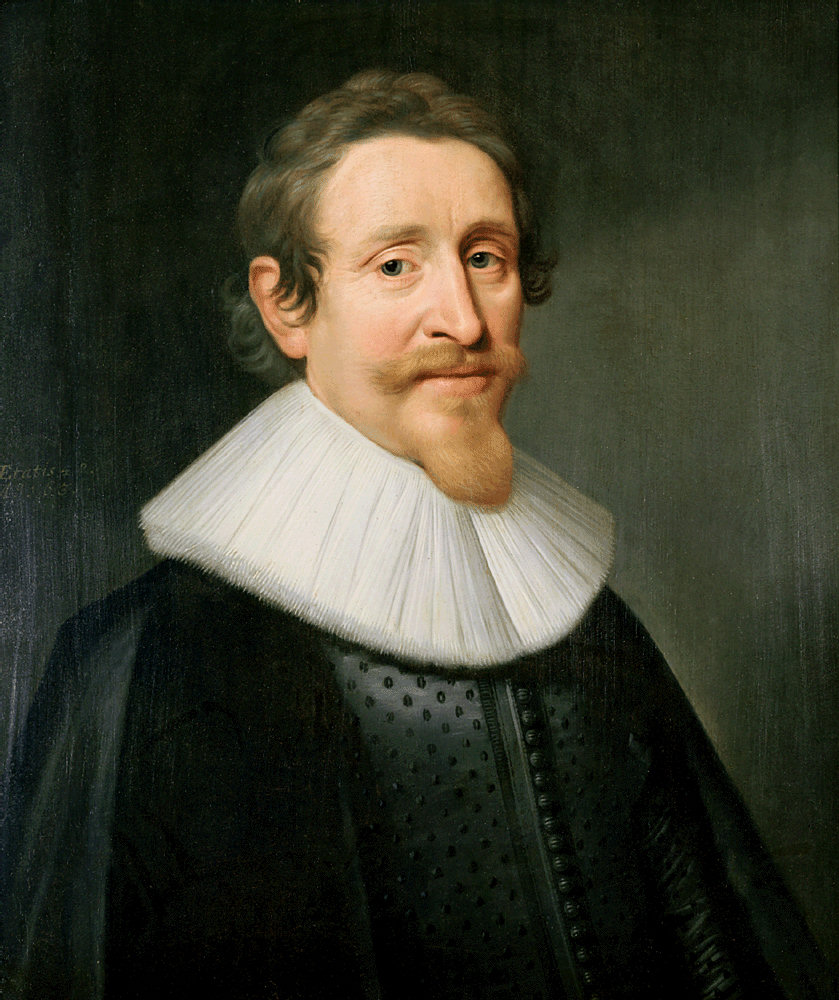
A portrait of Hugo de Groot, aka Grotius, by Michiel Jansz van Mierevelt.

His career was interrupted abruptly when, in 1619, he was condemned to life imprisonment. Two years later, his resourceful wife arranged his escape from the fortress of Loevestein in the library chest in which she normally sent his books and in which he had dutifully returned those he had read. Disguised as a plumber, Grotius escaped with Marie to Paris where, as all good internationalists do when unemployed, he tutored students.

It was in Paris in 1625 that he published his magisterial work De jure Belli ac Pacis. It was a masterpiece commanding instant recognition, and receiving an enduring reputation. Two years later, he finished “Concerning the Truth of the Christian Religion”. It rivals The Imitation of Christ in its popularity. Both have been translated into almost every language and have remained in print ever since.

Grotius’ attempts to return to his own country were well-nigh disastrous and, in due course, he entered the service of the Swedish court serving as ambassador to France. He justified his decision by stating that, like Joseph in Egypt, his people having no further use for him, he was at liberty to enter the service of others. His public probity, however, was never questioned. Throughout his exile, he steadfastly refused all commissions that might have injured the commerce or the political interests of Holland.

While on his grand tour, the young poet John Milton was sent to Grotius by Lord Scudamore, the British ambassador, who, as Milton wrote, “gave me a card of introduction to the learned Hugo Grotius at that time ambassador from the queen of Sweden to the French Court.” It is from Adamus Exul that Milton lifted much of the language for Paradise Lost. (As my friend and colleague Dr Calvin Plimpton once stated “You British never plagiarize, you plunder!”)

As ambassador, the position of Grotius was not enviable. Serving under the redoubtable Chancellor Oxenstierna, he had to attempt to extricate Sweden from an offensive alliance it had had no business concluding with France. With that country at the height of its powers and Sweden by then in decline, Sweden was no match for France. Nor was Grotius a match for Richelieu: Grotius was incapable of dissembling or deceit – very much the tools of the trade of diplomacy in those days – or of demonstrating those vulpine qualities of Richelieu that reveal themselves so startlingly in de Campaigne’s triple portrait of him.

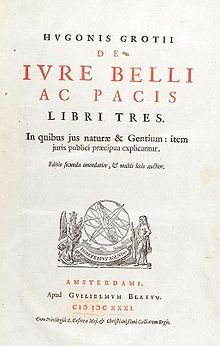
"De jure belli ac pacis", title page from the second edition of 1631.

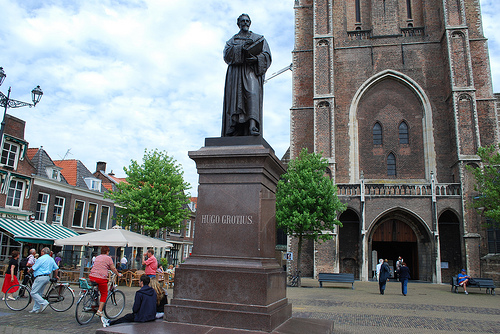
In 1645, while returning from a visit to Queen Christina, Grotius was shipwrecked in the Baltic and died shortly afterwards in Rostock. He lies buried in his native Delft alongside those princes of the House of Orange who, in life, hounded him so relentlessly.

Grotius’ contribution to his world was two-fold: in an age of unbridled religious passion and persecution: tolerance; and at a time of the brutality and horror of the Thirty Years War: the precepts by which nations should govern their conduct with one another and with their subjects.

The sacerdotal, obscurantist, Catholic south of Europe was then locked in a bitter struggle with the Protestant north. With the Huguenots defeated in France, the standard bearers of Calvinism became the House of Orange. Their belief in a dour and awesome God, and a mankind whose fate was predestined became an obsession in the face of Catholic persecution. They sought to establish a highly authoritarian, rigid theocracy in Holland and particularly in that country’s South American colonies under Prince Maurice the absolutism of Bacon and the leviathan of Hobbes came close to reality. While the House of Orange found strong support in the lower classes, the patrician scholars and businessmen rejected Calvinism in favour of a more generous and liberal Lutheranism. Holland had by its own industry and the accidents of history replaced Venice. Holland became the centre of world trade, banking, shipping, agriculture, industry, and scientific inquiry. With a congruence, that can often be remarked in history, politics, religion and the needs of commerce all called for a liberal and spacious government making treaties with any state, a commerce that traded with anyone and a freedom of scientific inquiry unfettered by religious constraints.

That wise and resourceful statesman Oldenbarneveldt, one of the founding fathers of his country, led this movement of enlightenment. The Calvinist synod sought support from Armenius, the noted theologian from Leyden. Instead of helping to scotch the viper in their midst, his research led him to the conclusions that there were no biblical grounds for the belief in predestination, and that man had free will which enabled him to accept – or reject – God’s grace.

Prince Maurice moved swiftly. In 1619 Oldenbarneveldt was executed, Armenius disgraced and Grotius condemned to life imprisonment. Amidst all this, Grotius remained an apostle of tolerance, believing with Erasmus and Nicholas of Cusa that “to know nothing completely is the surest faith.” Grotius continued to translate and write commentaries on the Old and New Testaments as well as to translate Euripides and write his own plays. He advocated reconciliation between Catholic and Protestant to give freedom to the many sects and schools of thought to which Holland was rapidly becoming host. But the separation of man from nature and both from God was already in evidence in Dutch life, art and belief. Some historians have seen the rapidly expanding glass industry as being particularly significant in this process. The wide use of glass and the invention of the lens not only extended the working day and the workman’s working life, but through the invention of the telescope and microscope ushered in the secular era.

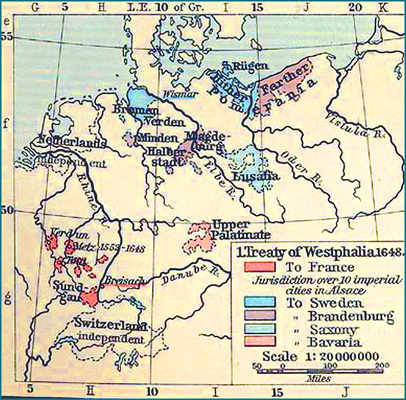
This process was most visible in the collapse of Christendom and the rise of the nation-state. Historians date the Treaty of Westphalia of 1648 as the beginning of a world of sovereign independence. But in Grotius’ time this was already a reality, and Grotius did not seek to change it. The nation-state was here to stay. What he sought to do was to rescue from the old order the works of early writers on international law so as to restore the jus naturalis as the overriding obligation not only of mankind but of states as well.

A historical Map of the Treaty of Westphalia.

The natural law to the earlier writers was divine law. It was that which was right and just and the righteous man would be a just man. Grotius saw natural law regardless whether it was divine or secular in origin, as binding on the conduct of nations as well as on man. In his major works, Grotius drew on the Spanish school of de Vitoria, Soto, Vasquez, and Suarez as well as the Italian Gentile, and through them reached back to Aquinas and Augustine. Grotius’ writings lacked the sharp edge of the Spanish School and being a practicing lawyer preferred to quote precedent 2,000 years old rather than contemporary cases.

But he codified the law as it applies to the rights, duties and obligations of states on land, at sea, in war and at peace. He sought to create a moral cosmos in which states not only observed the law in international relations with one another but also towards their own citizenry. This social order paralleled in his mind the physical order of the heavens then being revealed by Galileo and his precursors. Much of this thinking can be found in Adamus Exul in which, at seventeen, Grotius was already exploring the moral as well as the physical order of the universe.

His importance today? It is not difficult to trace the Grotian legacy in what is called the constitutive process. Beginning with Jay’s Treaty (when Jay graduated from King’s College, he travelled to Delft on a fellowship to study the Grotius papers), arrangements for arbitration and other methods of peaceful settlement began to feature in international instruments. The Alabama Claims Arbitration was a triumph for Grotian principles. The Hague Conventions and the League of Nations were similar expressions. Less visible but of much greater importance have been the everyday observance of international rules of conduct. This observance gives the lie, I think, to those positivists who regard law as only that which can be enforced.

The Grotian legacy can be found in the pursuit of human rights although it is unlikely, given his rather shaky stand on slavery, that Grotius would have seen the role of the state as an enhancer of human rights. As a realist he only hoped that the observance of natural law would restrain the state from becoming an instrument of oppression.

Many international lawyers see the Grotian legacy slipping away. The seas that for 300 years have been used by everyone as being inclusive, will, under the United Nations Law of the Sea Convention, fall for the most part under exclusive jurisdiction. Law may still have a role but it does not rule. There were more cases before the old Hague Court in the first year of the League of Nations than during the first twenty of the United Nations. As Antony Eden once remarked, “There is too much accommodation between the fire brigade and the fire.” In fact, as Kurt Waldheim has demonstrated, you can get away with almost anything as long as your timing is right.

With a statue of Grotius in front of its Gothic-style Nieuwe Kerk (New Church), birthplace Delft proudly celebrates the native son.

So many say. But these trends are not a refutation of Grotius’ moral cosmos but the product of new voices raised in the international community who state that it was an immoral cosmos and one in the making of which they had had no voice: hence the search for new approaches to an equitable sharing of the world’s resources, one where the benefits of science and technology can be made universally available and one where even information would be transmitted with a greater sense of international responsibility. These new voices call not for a rejection but a redefinition of the rules that should govern the conduct of the international community.

The Grotius family motto was Ruit Hora. This was not just a Calvinist reminder not to waste time; but, that man has but a brief spell before he exchanges time for eternity and that in that period he has certain obligations to fulfil. In our international activities particularly, we are more likely to run into the would-be-Richelieu than a would-be-Grotius. All the more reason then that we should take his family’s motto and restore ourselves by making it our own.

************


Ralph Townley, a retired director in the United Nations Secretariat, is the author of United Nations: A View from Within.