The Official Blog of the

Archive for the ‘United Nations’ Category

The Horn of Africa: Refugees, Famine, Conflicts

In Africa, Conflict Resolution, Current Events, Solidarity, The Search for Peace, United Nations, World Law on July 31, 2011 at 11:24 PM

THE HORN OF AFRICA: REFUGEES, FAMINE, CONFLICTS

By René Wadlow


Only a crisis — actual or perceived — produces real change.  When the crisis occurs, the actions that are taken depend on the ideas that are lying around.  That, I believe, is our basic function: to develop alternatives to existing policies, and to keep them alive and available until the politically impossible becomes politically inevitable.

– Milton Friedman


Heavy fighting started again on July 28, 2011 in Mogadishu, the capital of what was once Somalia, in a battle between the African Union peacekeeping force (Amisom) and the Islamic insurgency al-Shahab. The fighting prevents aid from reaching the tens of thousands of refugees who have arrived in Mogadishu fleeing famine. The United Nations (UN) World Food Program says it cannot reach some two million people in need in areas controlled by al-Shahab which had expelled Western nongovernmental organizations (NGOs) who were providing relief.

The Horn of Africa, in particular Ethiopia, Somalia and Kenya, faces a deep crisis, a combination of refugee flows, famine in part linked to drought, and persistent conflicts.  There is a broad consensus in the UN system that radical measures are needed to deal with the Horn of Africa crisis and that these measures will have to be taken in a holistic way with actions going from the local level of the individual farmer to the national level with new government policies, to measures to be undertaken by the African Union and the UN system, in particular the Food and Agriculture Organization (FAO) in Rome.

Combatants with Somalia's al-Shabab Islamist militia.

Today, cooperation is needed among the UN family of agencies, national governments, NGOs, and the millions of food producers. There is a need for swift, short-term measures to help people now suffering from lack of food, inadequate distribution and situations of violence. Such short-term action requires additional funding for the UN World Food Program and the release of national food stocks. However, it is the longer-range and structural issues on which world citizens have focused their attention. The world requires a World Food Policy and a clear Plan of Action.

While constant improvements in technology, mechanization, plant breeding and farm chemicals have steadily increased food production per acre in much of the world, African food production per acre has stagnated, and in some areas has gone down. Likewise, the portion of development assistance in Africa dedicated to agriculture has declined from 15 per cent in the 1980s to 4 per cent in 2006.

As a July 11, 2011 UNCTAD study Economic Development in Africa stresses “One of the major challenges which African countries currently face is to generate productive jobs and livelihoods for the 7-10 million young people entering the labor force each year. This is difficult to achieve simply through commodity exports but rather requires a complementary process of agricultural productivity growth and development of non-agricultural employment opportunities in both industry and services.”
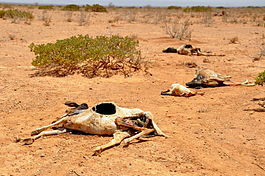
Carcasses of dead sheep and goats in the drought-stricken region of Waridaad, Somaliland.

Thus, the first need in Africa is to develop the local economies: currently, poverty, lack of adapted technology, population pressure on ecologically fragile areas, a growth of urban slums due to rapid rural to urban migration is the lot of many Sub-Saharan African countries.

Increased action to improve rural life needs to be taken quickly.  As the recent UN-sponsored Millennium Ecosystem Assessment warns “Human activity is putting such strains on the natural function of Earth that the ability of the planet’s ecosystem to sustain future generations can no longer be taken for granted. It is becoming ever more apparent that human society has a rapidly shrinking window of opportunity to alter its path.”

The Horn of Africa is an extreme case. The Horn possesses all the resources needed to make it one of Africa’s major economic centers, and yet there seems to be no halting the environmental decay and political insecurity it engenders. In fact, when one looks at the Horn’s problems, one must conclude that urgent and well-directed international action is needed to prevent a mega-disaster. Due to an often unenlightened management of the environment, its willful mismanagement to extract short-term economic gain, and confrontational rather than conciliatory policies, the squandering of the region’s resources has gathered speed.

A map of the ongoing famine in the Horn of Africa. The facts speak for themselves.

Environmental degradation is part of a cycle that upsets the traditional balance between people, their habitat and the socio-economic systems by which they live. Insecurity leads to strife; strife results in inter-clan feuding, civil war, cross-border raiding and military confrontation. Environmental degradation and insecurity continue to interact, swinging back and forth like a pendulum of destruction. A shrinking resource base breeds insecurity; insecurity spreads conflict, and conflict causes environmental destruction.

It is hard to know how to improve the situation. There is a long-term need for people to modify their living patterns to bring about a better quality of life, with increased security.  There is a need to break the cycle of chaos so that people can transform insecurity into confidence. Yet social change is slow, and the necessary limiting of the birth rate can take generations. Agricultural patterns also change slowly. There is no political leadership within the area, and there is no cooperation among the states of the Horn. The African Union’s conflict management structures do not function, and the UN has hoped that the African Union could take the lead in the area’s conflict resolution. This was a hope based on an unwillingness to get involved rather than a realistic evaluation of the situation.

The cycle of chaos is likely to speed up, and more refugees will be on the move.  However, as Milton Friedman noted only a crisis produces real change. Just as the “Arab Spring” brought a new generation of leadership into action — though not yet into power — the Horn of Africa might see a new generation of non-governmental leadership coming to the fore. The older political and clanic leadership has failed and is discredited. However, they have guns and plan to stay in control. Yet what is politically impossible today in the Horn may become politically inevitable.


René Wadlow is Senior Vice President and Chief Representative to the United Nations Office at Geneva of the Association of World Citizens.

See also Somalia: Signs of Danger (https://awcungeneva.wordpress.com/2011/05/17/somalia-signs-of-danger/)

Will the UN be a Fairy Godmother for the Birth of South Sudan?

In Africa, Current Events, United Nations, World Law on July 9, 2011 at 9:46 PM

WILL THE UN BE A FAIRY GODMOTHER FOR THE BIRTH OF SOUTH SUDAN?

By René Wadlow

On July 9, 2011, South Sudan became an independent State, six months after the January referendum in which the south Sudan population voted overwhelmingly for independence. However, Sudan is not really structured to be divided in two. There are no natural dividing lines, neither physical nor social. During much of the English colonial period, southern Sudan was administered from Uganda as road communications were easier than from Khartoum, the capital in the north of the country. In fact, ‘administered’ is too strong a term. South Sudan had no real crops for export or minerals to mine, and so there was very little administration. In place of any government development activities, the Colonial Office encouraged Christian missionaries, mostly Church of England and Roman Catholic to set up schools and clinics. Thus south Sudan was ‘Christianized’ in that the educated had gone to church schools and been treated in Christian clinics. However, most people continued also to practice traditional rituals as these were considered as part of tribal life and not as the rituals of a particular religion. Thus when considering Sudan, the often-used terms of ‘Muslim’, ‘Christian’, and ‘Animist’ cover a more complex reality.

In December 2010, no less than 98.83% of South Sudanese voters chose independence at the polls.

Complexity is a term which is true for all Sudanese life — political, economic, and geographic. The failure to deal creatively with complexity has led to fighting for nearly all of its history as an independent State since 1956. On the eve of Independence, with the makeup of a new national army being the spark which set the fire, civil war broke out, basically on a North-South basis. There have been two phases to the Sudan Civil War. The first phase (1954-1972) had ended with negotiations facilitated by the All-African Conference of Churches with back up help from the World Council of Churches in Geneva.

The 1972-1982 decade was one of relative peace, but it was not used to heal the divisions or to work out forms of government, administration, and legal systems that would be acceptable to all segments of Sudanese society. International attention on Sudan had diminished once the 1972 peace agreement was signed. The warning signals that all was not well were ignored internationally. Thus in 1982, southern soldiers who had been integrated into the national army revolted, and the second phase of the civil war continued from 1983 until the end of 2004.

As a North-South peace agreement was nearly set, groups in Darfur, western Sudan, who had not been part of the North-South conflict decided that violence was the only way to get attention and to get a ‘piece of the pie’ of the natural resources, especially the oil revenue. They hoped for a short war after which they would be invited to participate in the North-South negotiations. In practice, the Darfur conflict has not been short — starting in 2003 and continuing still today, and the Darfur factions have not been invited to the North-South negotiations.

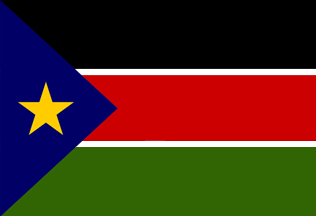
The flag of the Republic of South Sudan, originally the flag of the Sudanese People's Army/Movement (SPLAM).

Darfur (the home of the Fur) was always marginal to the politics of modern Sudan. In the 19th century, Darfur, about the size of France, was an independent Sultanate loosely related to the Ottoman Empire. It was on a major trade route from West Africa to Egypt and so populations from what is now northern Nigeria, Niger, Mali and Chad joined the older ethnic groups of the area: the Fur, Masalit, Zaghawa and the Birgit. Nomads from Libya also moved south into Darfur. As the population density was low, a style of life with mutual interaction between pastoral herdsmen and settled agriculturalists with some livestock developed. Increasingly, however, there was ever-greater competition for water and forage made scarce by environmental degradation and the spread of the desert.

France and England left Darfur as a buffer zone between the French colonial holdings — what is now Chad — and the Anglo-Egyptian controlled Sudan. French-English rivalry in West Africa had nearly led earlier to a war — the Fashoda crisis of 1898. Thus a desert buffer was of more use than its low agricultural and livestock production would provide to either European colonial power. It was only in 1916 during the First World War when French-English colonial rivalry in Africa paled in front of the common German enemy that the English annexed Darfur to the Sudan without asking anyone in Darfur or the Sudan if such a ‘marriage’ was desirable.

Darfur continued its existence as an environmentally fragile area of Sudan. It was marginal in economics but largely self-sufficient. Once Sudan was granted its independence in 1956, Darfur became politically as well as economically marginal. Darfur’s people have received less education, less health care, less development assistance and fewer government posts than any other region.

The seal of the government of the new sovereign nation.

In 2000, Darfur’s political leadership had met and wrote the Black Book which detailed the region’s systematic under-representation in national government since independence. However, at the level of the central government, the Black Book led to no steps to increase the political and economic position of Darfur. This lack of reaction convinced some in Darfur that only violent action would bring recognition and compromise as the war with the South had done.

An armed insurgency began in 2003 led by the more secular but tribal Sudan Liberation Army (SLA) and the Islamist-leaning Justice and Equality Movement (JEM). Since then, there have been splits in the JEM and the SLA largely along tribal lines. These splits make negotiations with the government of Sudan all the more difficult. The interests of many people in Darfur are not represented by either the government or the insurgencies, but it is nearly impossible for other voices to be heard.

In Darfur, there is a joint African Union-UN peacekeeping mission (UNAMID), but there is no peace to keep. Although the peacekeeping force has a mission to protect populations, it is unable to do so. As Mohammed Otham noted in his UN report (A/HRC/14/41) “In Darfur, notwithstanding the general improvement in the security situation, banditry, criminal activities and intermittent military activities by the parties to the conflict have continued. In some areas, aerial bombardment and troop mobilization by the Sudanese Armed Forces have been reported. In the context of this ongoing violence, United Nations and humanitarian personnel face significant risks to their lives. A significant number of UNAMID and humanitarian staff were deliberately attacked; some were abducted and held in captivity for long periods.” The level of suffering in Darfur — people killed and displaced, the agricultural infrastructure destroyed — has been very high. The reconciliation and reconstruction of Darfur will be difficult. We must be on the lookout for possibilities to help.

This is what the new country will look like in political and administrative terms. The AWC wishes South Sudan well and looks forward to working with its government toward the protection and promotion of world law.

The UN has had Special Representatives in Darfur responsible for facilitating negotiations, but they have made little progress. Darfur will continue as part of North Sudan and should be a priority of concern.

As there are no sharp natural or cultural dividing lines between North and South Sudan, there will be non-Muslim populations left in the North and Muslim populations in the South. We must hope that there will not be the massive transfer of populations as at the independence of India and Pakistan. There are possibilities of continued conflict in the northern non-Muslim areas such as the Blue Nile and Southern Kordofan provinces. There is also a mixed population on the frontier between North and South in Abyei. It is less the fact that the population is mixed than that the area is oil-rich that has attracted international attention. The UN Security Council in resolution 1990 of 29 June 2011 decided to establish the UN Interim Security Force for Abyei (UNISFA).

Thus, the United Nations is present as the Fairy Godmother at the birth of South Sudan. As in the folk tales, the Fairy Godmother has some presents for the newly born as well as certain conditions and demands. The UN brings few material goods, and peacekeeping forces have been largely unable to bring peace. However, the UN has brought the present of world attention, a willingness to help and high international standards to meet. We will have to watch closely as the newborn grows.

René Wadlow is Senior Vice President and Chief Representative to the United Nations Office at Geneva of the Association of World Citizens.

Palestinian Status at the UN: Breaking the Logjam

In Conflict Resolution, Current Events, Middle East & North Africa, The Search for Peace, United Nations on June 30, 2011 at 7:44 PM

PALESTINIAN STATUS AT THE UN: BREAKING THE LOGJAM

By René Wadlow

There is a good deal of discussion in the halls of the United Nations (UN), both in New York and Geneva, concerning a possible application of full membership in the UN by the Palestinian Authority. The discussions reflect similar discussions within Foreign Ministries in the hope that there can be an agreed-upon program of action (or non-action) by September when the new General Assembly meets. Currently Palestine has observer status at the UN from a time when liberation movements were given observer status — two organizations for South Africa, one for South West Africa as Namibia was then, and for the PLO. With the changes in South Africa and Namibia, the liberation movement observer status was dropped for the three, and only the PLO remained.

In practice, there is little effective difference between observer status and full membership. Observers cannot vote, but voting in the UN has been largely replaced by ‘consensus making’. Effectiveness for all countries except for a small number of Great Powers depends on the skills of the diplomats which represent them. The Vatican has only observer status but a good deal of influence due to an effective diplomatic team. The Palestinian diplomats in Geneva have been weak, in New York somewhat stronger. The Palestinian diplomats have always been in the shadows of the representatives of the Arab States who want to play ‘Big Brother’, but with the exception of Egypt which has always had a strong core of diplomats, the Arab diplomats have rarely been more competent than the Palestinians.

Being overshadowed by the larger Arab States would probably not change even if full membership is granted, but full membership would be a symbolic victory of legitimacy and open the door to the independent use of the World Court. As Mahmoud Abbas has written “Palestine’s admission to the United Nations would pave the way for the internationalization of the conflict as a legal matter, not only a political one. It would also pave the way for us to pursue claims against Israel at the United Nations, human rights treaty bodies and the International Court of Justice.”

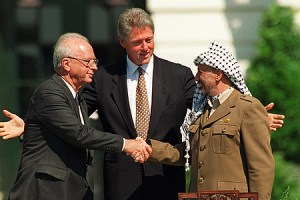
The Middle East came this close to peace when Israeli Prime Minister Yitzhak Rabin and PLO Chairman Yasser Arafat shook hands on the White House lawn on September 13, 1993.

As of now, there are a number of variations being discussed around three possible approaches:

1)      The first approach favored by the USA, some of the Western European members of the European Union, in particular Germany, and a few others including Israel is that the issue should go away. It is felt that there are enough problems in the world, especially in the Middle East not to have a complicated procedural battle in September. This has been the ‘advice’ given to the Palestinians by the US, Canada, and some Western European States. It may be also what some of the Arab States are saying more privately. To reinforce their arguments, the US and the Western European governments have a strong card — they can cut off funding to the Palestinian Authority. The pretext would be the Hamas support or participation in a ‘unity government’ even if such a government is made of ‘non-political technocrats’. Hamas is still listed by the USA and the European Union as a ‘terrorist organization’ and so cannot receive funds from the US or EU governments. The Palestinian Authority depends largely on external financing; thus cutting off financing is an argument that carries weight — even if it is called ‘blackmail’ in other settings.

In exchange for dropping the full membership application, there would be some sort of short Israel-Palestine meeting where each side would speak of a ‘peace process’ through September when the membership issue has gone by. Such a sleight of hand will not advance real negotiations but may ‘buy time’ which is what many governments now want.

2)      There is, however, a real possibility that the Palestinian Authority will ask for full membership in September. This will depend in part on discussions among the Palestinian leadership and the views of the three key States concerning the Middle East: Egypt, Turkey, and Iran. Iran which is one of the Vice Presidents of the upcoming General Assembly will be particularly influential in procedural matters. The UN Charter states that the admission of new members “will be effected by a decision of the General Assembly upon the recommendation of the Security Council”. The Council makes its membership recommendation through a resolution; thus it must be approved by at least nine of the Council’s 15 members and not be vetoed by the one of the five permanent members. If the USA abstains — abstentions are not considered a veto — it is likely that there would be at least nine positive votes for Palestinian membership in the Security Council. Then it is most likely that the General Assembly would follow the Security Council recommendation as it has always done in the past. Thus current discussions turn around what could convince the US to abstain rather than veto. We will return to this key issue after a consideration of a third possibility.

3)      The third possibility in the case of a US veto is to move the issue to the General Assembly under what is known now as the “Uniting for Peace” mechanism. UN General Assembly resolution 377(V) of November 3, 1950, first known as ‘the Acheson Plan’ from the name of the US Secretary of State who proposed it and later renamed Uniting for Peace states that in cases where the UN Security Council fails to act to maintain international peace and security, owing to disagreement among the five permanent members, the matter shall be discussed immediately by the General Assembly. If the General Assembly is not in session, an Emergency Special Session can be called. This procedure has been used 10 times since its 1950 start. (1) As from September to December, the General Assembly will be in session, a Special Session will not have to be called. For a resolution to pass under the Uniting for Peace mechanism, there must be a 2/3 majority, meaning now 135 States if all are present and voting. However, not being present is a ‘diplomatic’ way of not having to be seen making a choice. Currently, 112 UN members recognize a Palestinian State within the pre-1967 frontiers. What cannot be analyzed is how hard the USA and some of its allies would work to prevent the 135 positive voters.

To turn back to the Security Council procedure, we can ask could there be a ‘deal’ that would satisfy no one completely but not dissatisfy any of the five permanent powers to the extent of their casting a veto. Here we can turn to precedent because at the UN everything functions by precedent. If something has been done once, one can argue that it can be done again. If it has never been done, it takes an exceptional situation and a few highly skilled diplomats to get any innovation.

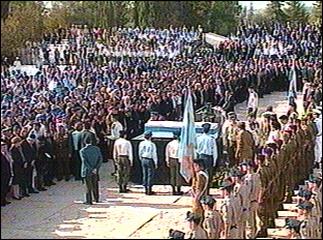
A picture of the funeral of Yitzhak Rabin after he was shot dead on November 4, 1995 by an Israeli nationalist named Yigal Amir.

Thus we can turn to the 1954 period and the breaking of the ‘logjam’ on membership. During the first ‘hot round’ of the Cold War — the June 1950 to July 1953 Korean War — the Soviet Union and the USA blocked each other’s potential allies from UN membership. At the end of the Korean War, there was a host of pending membership applications on which no progress had been made. There seemed to be little possibility of moving things forward.

The 1954 membership issue was my start at looking closely at diplomatic negotiations around procedural issues at the UN. At a time when I should have spent my time chasing girls, I was a university student representative on the Executive Committee of what was then the United World Federalists in the USA. In 1955, the issue of a review conference on the UN Charter was to be placed automatically on the agenda of the General Assembly. During the 1945 negotiations that led to the creation of the UN Charter, a review conference on the Charter after 10 years was to be placed on the agenda. This was a demand of some of the smaller States at San Francisco, in particular Australia. It was expected in 1945 that such a review conference would be held and that was still the expectation in the period 1953-1954. There was a good deal of reflection on how to improve and strengthen the Charter during such a Review Conference. Universal membership was one of the demands of UN reformers, both some diplomats and activists such as those in the United World Federalists who had taken a lead on the Charter Review issue.

However, both the USA and the USSR opposed holding a Charter Review conference and brought most of their allies along with them. The result was that when the Charter Review conference came upon on the agenda, it was swept under the rug, and there has never been a review. Nevertheless, the diplomats of the USA and the USSR felt that some of the ‘steam’ for a Review Conference had to be lowered and this could be done by getting rid of ‘universal membership’ as an issue. Negotiations to break the logjam on pending applications started with the aim of making as close-to-possible balance between pro-USA, pro-USSR and neutral States entering the UN. The negotiations were carried out in 1954 and in 1955, before the debate on Charter Review, the membership logjam broke and Albania, Austria, Bulgaria, Cambodia, Finland, Hungary, Ireland, Italy, Jordan, Laos, Libya, Nepal, Portugal, Romania, Spain and Sri Lanka entered the UN. Japan should have been part of the group, but there was still the “enemy states” clause in the Charter which took more negotiations concerning Japan. Japan only came in the next year, 1956.

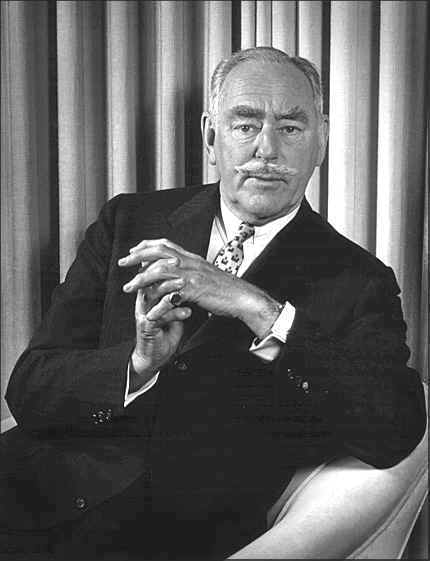
Dean Acheson, the U. S. Secretary of State who fathered the Uniting for Peace procedure at the United Nations.

Can there be something comparable in September? In an article “Coming in from the Cold: UN Membership Needed for the Phantom Republics”, I suggested at the time of the Georgia-Abkhazia-South Ossetia conflict that Abkhazia, Chechnya, Kosovo, Nagorno-Karabakh, South Ossetia and Transnistra be given UN membership as a necessary first step for security and a lessening of tensions. I had stressed that “to find mutually acceptable forms of government in these conflicts will require political creativity (breaking out of thinking in fixed patterns) and then new forms of constitutional order such as renewed forms of federal-confederal types of government, greater popular participation in decision-making and new forms of protection of minorities. Flexibility, compromise and cooperation are the hallmarks of success when it comes to resolving such conflicts concerning independence and autonomy. There is a need for a healing of past animosities and a growth of wider loyalties and cooperation.”

Both diplomats and members of the UN secretariat as well as secretariat of the Organization for Security and Cooperation in Europe where I had also floated the idea explained in detail why such a joint membership procedure would not happen. None the less, if we added upgrading the status of Palestine in the UN, another membership logjam might be broken. The point I have repeatedly made is that membership does not solve difficulties; it just provides a framework where serious negotiations might be carried out. The 1955 access to membership of Cambodia and Laos did not ‘solve’ the Indochina conflict. The French-led war in Vietnam was still going on, to be followed a decade later by the US-led war.

Thus, I think that a world citizen position is that full Palestinian membership in the UN will not ‘solve’ all the Israel-Palestine issues, and certainly not the issues of the wider Middle East. However UN membership will allow the Palestinians to come out from the shadows of the Arab States and to negotiate with the Israelis as equals. Such is a very modest step forward but it is worth taking.

(1)   For a useful discussion of the background to the Uniting for Peace procedure see Dean Acheson Present at the Creation: My Years in the State Department (New York: W. W. Norton, 1969, chapters 47-51)


René Wadlow is Senior Vice President and Chief Representative to the United Nations Office at Geneva of the Association of World Citizens.

Ratko Mladić: Arrest and Coming Trial – A Step Forward for World Law

In Current Events, Human Rights, International Justice, The Balkan Wars, The Search for Peace, United Nations on May 27, 2011 at 7:23 PM

RATKO MLADIĆ: ARREST AND COMING TRIAL – A STEP FORWARD FOR WORLD LAW

By René Wadlow

On May 26, 2011, President Boris Tadić of Serbia announced the arrest of General Ratko Mladić, the Yugoslav general become head of the Bosnian Serb forces of Republika Srpska. General Mladić had been charged by the War Crimes Tribunal for ex-Yugoslavia in the Hague for genocide, crimes against humanity and war crimes and thus should be sent from Belgrade to the Hague to stand trial shortly. General Mladić is particularly charged with commending the 1992-1995 siege of Sarajevo during which much of the city was destroyed and some 10,000 persons killed, often shot by snipers. The genocide charge arises mainly from the killing in July 1995 of some 8,000 Muslim men at Srebrenica which had been declared a neutral safe haven guarded by UN troops.

Mladić had been forced from his position in Republika Srpska after the 1995 Dayton Agreement, largely facilitated by the US envoy Richard Holbrooke. Mladić moved to Serbia and lived mostly in Belgrade, having changed his name. He was arrested at the farm of a cousin some 50 miles north of Belgrade in the Vojvodina area. His arrest and trial was one of the conditions set by the European Union for advancing with negotiations on Serbia joining the EU. Negotiations are now at a serious stage, and the arrest of Mladić was necessary to open the door further. Mladić kept out of sight, but he was not hiding. He had supporters in the Serbian army, police and in certain nationalist political circles. Thus an arrest earlier would not have been worth the political outcries and tensions an arrest might have provoked. Now, when EU membership and the economic future of the country are at stake, his arrest is not a very high price to pay.

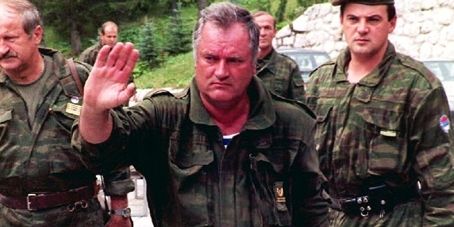
Ratko Mladić, here as the Bosnian Serb forces' top general during the civil war in Bosnia-Herzegovina (1922-1995).

It is not really satisfaction when one sees those who have betrayed one’s proposals are finally taken down. However, there is a sense of “closure” – a recognition that karma is finally at work. I did not know Ratko Mladić but saw him a number of times in the halls of the Palais des Nations — the European Headquarters of the United Nations (UN). I was in contact with Radovan Karadžić, the political head of the Bosnian Serbs — officially Prime Minister of Republika Srpska. I had been asked to be an advisor to Karadžić on UN procedures when negotiations began in Geneva in 1992. After discussions, I turned down the offer although it would have been a possibility to be a direct participant in the negotiations.

Whatever credibility I had in the Yugoslav conflict came from being a neutral and not linked to one side, although I was generally seen as pro-Serb. My first efforts had been to help Milan Babić, the leader of the Serb enclave in Croatia called Krajina. I had Babić address the UN Commission on Human Rights in February 1991 to warn of the consequences if Yugoslavia broke up. His presentation was filmed and widely shown on Yugoslav TV. I am still convinced that had his warning been taken seriously, things might have been different. However, the Commission on Human Rights was not really equipped to deal with “early warning”, and nothing was done until fighting broke out in June 1991.

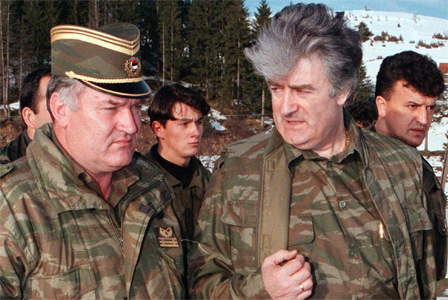
Here with then General Ratko Mladić, former Bosnian Serb political leader Radovan Karadžić.

In June, Krajina declared its independence from Croatia, calling itself the Republic of Serbian Krajina. Babić was named Prime Minister. From August to December 1991, Serbs from Krajina killed hundreds of Croats and drove some 80,000 from their homes. Ratko Mladić was the head of the Krajina forces at the time and a close co-worker with Babić.

In 1992, Babić was eased out of power by behind-the-scenes pressures by Prime Minister of Serbia, Slobodan Milosevic, who wanted someone with a less independent character, at which time Mladić left Krajina and went to Bosnia where he had been born.

In 2004 Babić was sentenced to 13 years in prison for war crimes by the Yugoslav War Crimes Tribunal in The Hague and shortly afterwards committed suicide.

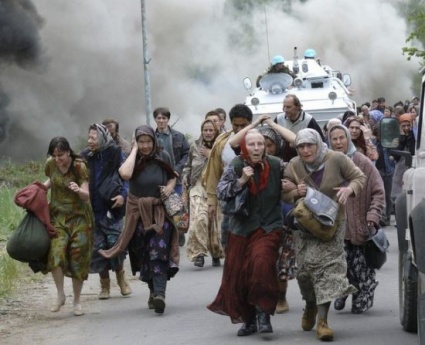
On July 11, 1995, General Ratko Mladić and his troops stormed the Bosnian Safe Haven of Srebrenica. With the most unwelcome participation of UN peacekeepers there, they secured the place for the Bosnian Serb army and took some 7,000 unarmed Bosnian civilians to their death.

In March 1992, Bosnia-Herzegovina declared its independence from Yugoslavia, and at the same time, Republika Srpska declared itself independent under the leadership of Radovan Karadžić. Many at the time questioned the wisdom of a unilateral splitting of Bosnia, but Mladić said “The existence of the Republika Srpska may be contested internationally, but the existence of its army cannot be contested. The Republika Srpska exists because we have our territory, our nation, our government and all the attributes of a state. Whether they acknowledge it or not — that’s their problem. The army is the fact.”

A month later, in April 1992, the siege of Sarajevo began with Ratko Mladić in charge of the Serb forces. The siege was to illustrate that a multi-ethnic society could not exist, Sarajevo being the Yugoslav city with the most ethnically-mixed population.

I had been in Belgrade in 1991 at the start of the Yugoslav fighting, just at the time of the fall of Vukovar, the first major battle, to see if NGOs could play any role in conflict reduction. But once the fighting had broken out there was really nothing that NGOs could do to prevent the spread of the conflict. The International Committee of the Red Cross tried, with great difficulty, to maintain some humanitarian efforts, but NGO conflict mediation was not really possible.

In September 1992, with fighting still going on, the Geneva Peace Conference on Bosnia began at the UN headquarters under the co-leadership of Lord David Owen on behalf of the EC and Mr. Cyrus Vance, former U. S. Secretary of State for the UN. Vance later withdrew, discouraged by the lack of progress and was replaced by Thorvald Stoltenberg, a former Minister of Foreign Affairs of Norway.

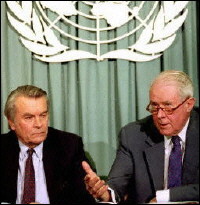
Lord David Owen, Special Representative of the European Community for Bosnia-Herzegovina, and the UN Special Envoy, former U. S. Secretary of State Cyrus Vance.

Late in 1992, as fighting was increasing and political proposals for the future of Bosnia were bogged down, David Arnott, an English Buddhist who had been working with me on Burma issues and I were the first to propose in the UN Commission on Human Rights and in a text sent to the members of the UN Security Council the creation of a number of security zones or “safe areas” within Bosnia-Herzegovina. I had been working closely with Tadeusz Mazowiecki, a former Prime Minister of Poland, who was the Special Rapporteur of the Commission on Human Rights on ex-Yugoslavia. In his November 1992 Report to the Commission, he had proposed the establishment of a security zone encompassing Sarajevo and its airport in order to facilitate the delivery of humanitarian supplies.

Building on this proposal, in an oral statement of December 1, 1992 to the “Special Session of the Commission on Human Rights devoted to Human Rights in Former Yugoslavia”, I stressed the need to create a larger number of safe havens and emphasized “that the declaration of protected Safe Haven Zones is an interim arrangement with a humanitarian purpose and in no way reduces the urgent and imperative need to find negotiated political solutions.”

Safe havens, called neutralized zones, are provided for in article 15 of the 4th Geneva Convention of August 12, 1949. On October 30, 1992, the International Committee of the Red Cross had proposed that “protected zones be set up for the civilian population at risk, away from combat areas. They would not be intended for the inhabitants of besieged towns for whose protection other solutions should be found, such as a cessation of hostilities.” This was basically a call for protected refugee camps while ours was for “protected cities” since ‘cessation of hostilities’ were not in the cards.

General Sir Michael Rose, the British senior military man who in 1994 served as Commander of the Bosnian segment of the United Nations Protection Force (UNPROFOR Bosnia). When the Bosnian Serb army attacked a UN-declared Safe Haven for the first time (that was Goražde in April 1994), General Rose and his UNPROFOR troops stood idle and let the Bosnian Serbs invade the city.

Thus our proposal was not original but rather what was needed for the hour. On April 16, 1993, the UN Security Council proclaimed Srebrenica a safety zone and on May 6 added Sarajevo, Žepa, Goražde, Bihać and Tuzla to the list. Our proposal was quoted by the then Ambassador of Afghanistan, Mr. Farhadi, during the debate on safe havens.

Thus I followed with interest how the safe havens were put into place. Srebrenica had been a middle-sized town of 6,000 prior to the fighting. It had grown to over 70,000 as families left the countryside for the relative safety of the town; infrastructure, however, could not keep up.

In July 1995, the “safe havens” of Žepa and Srebrenica were taken over by the forces led by Ratko Mladić. The UN forces led by soldiers from the Netherlands did not try to resist. A month earlier in June, UN forces had been taken hostage for two weeks but finally were released. Although NATO planes were dropping bombs on Serb positions at the time, it is not clear that any NATO forces would have come to the defense of the Dutch. The UN troops stood by as Mladić separated the women and children from the men. He had his soldiers kill some 8,000 male prisoners and had their bodies put into mass graves.

General Philippe Morillon, the French peacekeeper whose efforts to protect the UN-designated Safe Havens quickly made him a living legend in Bosnia-Herzegovina.

There had been so many violations of the laws of war and human rights in the Yugoslav conflicts, that there was not much public outcry at the time, although Tadeusz Mazowiecki resigned his UN position as Special Rapporteur writing to the UN Secretary-General Boutros Boutros-Ghali and making his letter public that his resignation was forced by the “horrendous tragedy which has beset the population of those ‘safe havens’ guaranteed by international agreement…I believe we have a certain hypocrisy as far as Bosnia is concerned when we are claiming to defend it but in fact we are abandoning it. The same goes for hypocrisy about the protection of human rights. I hope that my decision will also be understood as a protest against this hypocrisy.”

The wheels of karma turn slowly. As there is no longer anything at stake, more people today will agree that killing people who thought that they were protected in UN-proclaimed safe havens is not a good thing. There have been no new proposals for safe havens since and thus none has been created. I still think that it was a good idea at the time. Yet I share the observation of Michèle Mercier who had been for a long time part of the International Committee of the Red Cross team in former Yugoslavia “The word most frequently heard in the ranks of humanitarian workers is frustration. Their leaders are powerless to settle by themselves the problems involved with security and they have worn themselves out negotiating and renegotiating with opposite numbers of the most unlikely kind agreements that lose all their meaning before they are reached.” (1)

René Wadlow is Senior Vice-President and Chief Representative to the United Nations Office at Geneva of the Association of World Citizens.

(1)  Michèle Mercier Crimes Without Punishment: Humanitarian Action in Former Yugoslavia (London: Pluto Press, 1995, p. 165)

UN Peacekeeping Forces: Limits and Opportunities

In Conflict Resolution, The Search for Peace, United Nations on May 24, 2011 at 8:40 PM

UN PEACEKEEPING FORCES: LIMITS AND OPPORTUNITIES

By René Wadlow


May 29 has been designated by the United Nations (UN) General Assembly as a Day to honor UN Peacekeeping troops. Thus we are reminded that the UN remains the only universally representative and comprehensively empowered body the world has to deal with threats to international peace and security.

Peacekeeping operations have made the UN visible in many parts of the world, and the “blue helmets” have symbolized the peacemaking and conciliation role of the UN. The Nobel Peace Prize awarded to the “blue helmets” in 1988 testifies to the respect and confidence placed in them. The UN is the logical choice to provide a framework for multilateral engagement. The UN operates under its Charter which outlines norms of behavior, establishes means for the settlement of disputes and gives sweeping powers to the Security Council under Chapter VII for enforcement of peace. These powers are internationally binding and in many countries, carry the force of domestic laws.

Yet the UN does not have its own peacekeeping forces and must always rely on the goodwill of a relatively small number of Member States to provide soldiers and finance. Often the UN peacekeeping operations are determined not by the situation but by the resources available. In practice, the UN must accept what it can get from any state that offers units. The UN Secretariat is designed to serve its member states and does not have the authority to impose standards on contributing countries — except where UN soldiers break national laws, such as having sexual relations with under-age children.

There are situations which objectively threaten international peace and security, and the maintenance or restoration of order would require police actions, often swift and prolonged. However, for some types of action, the military working for the UN are only relatively trained. Most come from the ex-British Empire: India, Pakistan, Bangladesh, Nepal and Nigeria. They share the methods of training of the British Army and speak English. Now China is starting to provide troops with a non-English tradition.

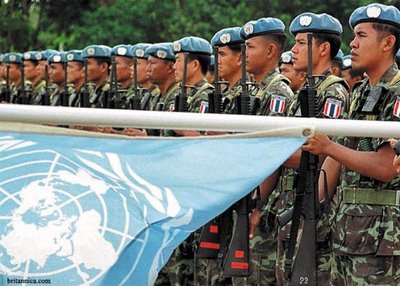
In 1988 the UN Peacekeeping Forces were awarded the Nobel Peace Prize.

There have been a good number of suggestions that the UN create a “ready response” force of its own that would be on call and would have had special training for the broad tasks which UN troops now undertake. These suggestions have always come up against the “wall of costs” and some fears that the UN would become a “super-state” if ever it had its own forces. The UN Secretariat has established a “standby forces” study group to study equipment compatibility, standardization and shaping national units tasked for multilateral activities. Nothing visible has arisen from these studies, but they may be dusted off in future emergencies.

The ending of the “East-West Cold War” confrontation has seen the proliferation and diversification of UN peacekeeping missions, increasingly complex and difficult to conduct. Yet, “blue helmets” are increasingly called upon not so much to safeguard a peace agreement but to create a situation of peace and to transform earlier relationships, as we see in Darfur, Sudan and the eastern provinces of the Democratic Republic of Congo (basically North and South Kivu).

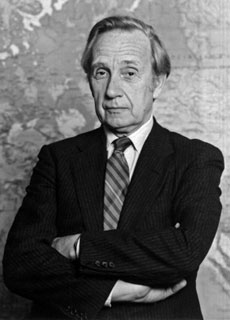
Sir Brian Urquhart, former UN Undersecretary-general for Peacekeeping Operations. The British diplomat is widely regarded as the father of UN peacekeeping as we know it today.

Currently, there is no such thing as consistency and predictability in UN actions to preserve order. The world is too complex, and UN Security Council resolutions are voted on the basis of national interests and political power considerations. UN “blue helmet” operations have grown both in numbers and complexity. Even with the best planning, the situation in which one deploys troops will always be fluid, and the assumption on which the planning was based may change by the time the force is ready for deployment or even as the force hits the ground.

Policemen, civilian political officers, human rights monitors, electoral officials, refugee and humanitarian aid specialists all play important roles along with the military. To be successful, UN peacekeeping operations need clear objectives, but such objectives cannot be set by the force commanders themselves. Peacemaking forces are temporary measures that should give time for political leaders to work out a political settlement. The parties in conflict need to have a sense of urgency about resolving the conflict. Without that sense of urgency peacekeeping operations can become eternal as they have in Cyprus and Lebanon. There needs to be real international support for UN peacekeeping operations, otherwise there is a danger that they will be overburdened, under-funded and overstretched.

UN Forces do not exist in a vacuum. They are part of world politics. They have limited but crucial roles. UN forces are one element in a peacemakers tool kit, but there needs to be a wide range of peace-building techniques available. It is not enough to say “Support our UN troops”; there must be concerned efforts by both diplomatic representatives and non-governmental organizations to resolve the conflicts where UN troops serve, as in Darfur, in the Congo, in the Middle East.


René Wadlow is Senior Vice-President and Chief Representative to the United Nations Office at Geneva of the Association of World Citizens.