The Official Blog of the

Archive for the ‘Social Rights’ Category

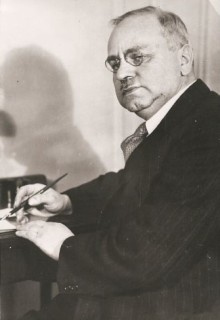
Alfred Adler – Power and Social Feeling

In Being a World Citizen, Human Development, Human Rights, Social Rights, Solidarity on February 7, 2016 at 3:01 PM

ALFRED ADLER – POWER AND SOCIAL FEELING

By René Wadlow

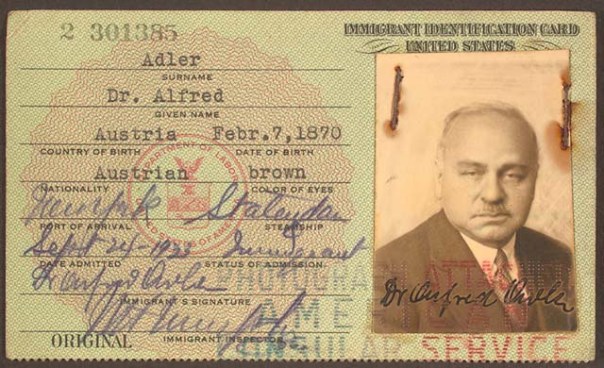
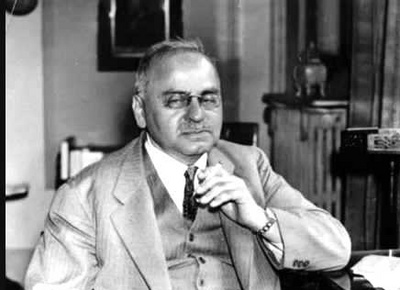
Alfred Adler, whose birth anniversary we mark on February 7, believed that there were two decisive forces at work in world history and in the life of each individual: a striving for power and a social feeling. Both forces stemmed from man’s upward striving from inferiority to perfection.

Alfred Adler (1870-1937), a Vienna psychotherapist and medical doctor, was part of the early circle of Sigmund Freud. However, the two men disagreed on what each felt to be fundamental positions. In 1911, Adler left the Freud circle and founded his own approach which he called “individual psychology”.

Adler 2.jpg

For Adler, there are similarities between the evolution of man within history and the evolution of each individual. In history, man, a physical dwarf in comparison with the animals around him and the forces of Nature, must compensate for this weakness by developing a pattern of cooperation with other humans around him. Likewise, each child is born, a dwarf in comparison to the adults around him. Thus each child must develop a sense of self-esteem. If this development is hindered in some way, as the result of brutal parents or a hostile milieu, the search for self-esteem can become neurotic. There can be over-compensation as well as a closing in on oneself.

Over-compensation can result in a quest for power. Striving for self-esteem and power is a natural process, but with over-compensation, the search for power can become the dominant aspect of the personality. Adler had read and been influenced by the writings of Friedrich Nietzsche who glorified the will-to-power. For Adler, an over-development of the will-to-power can become a deep seated neurosis. Only a health balance between the forces of cooperation and the individual will -to-power can make for a harmonious individual and a harmonious society.

In 1897, he married Raissa Epstein, a Russian who was also a student at the University of Vienna. She was part of Russian Marxist circles living in Austria and a friend of Leon Trotsky and his milieu. Through her, Adler joined socialist circles and became convinced that society helped to create the personality of the individual. Therefore, for a health personality, there needs to be a healthy society, free from domination. Adler also saw the need for a society based on equality between men and women, so that the personality of both men and women could develop fully. He was an early feminist and champion of the equality of women and men.

Adler 3.jpg

His work as a psychotherapist and writer was halted by the start of the 1914-1918 World War. As a medical doctor, he was incorporated into the Austro-Hungarian Army where he was able to contemplate man’s neurotic striving for power. At the end of the war, both by his observations and the Marxist analysis of his wife, he felt that the will-to-power dominated the sense of social-feeling and cooperation. In fact, power-hungry leaders and groups debased mass social feeling by using it as a thirst for dominance. The social feeling of soldiers during the war was used for battlefield goals with efforts to exclude any social feeling for the enemy. He wrote that when violence is to be committed, it is frequently done by “appealing to justice, custom, freedom, the welfare of the oppressed and in the name of culture.” Power-seekers transform social feeling “from an end into a means, and it is pressed into the service of nationalism and imperialism.”

The only way to counter this neurotic sense of power-seeking is to develop preventive methods by developing social feeling and cooperation. During the 1920s, Adler stressed the need for the development of social feeling by developing new, cooperative forms of childhood education within the family and schools. Adler stressed the profound experience of togetherness, an intense connection extending across the largest reaches of history and societies.

However, by 1934, he saw that the sense of togetherness in Germany and Austria was going to be used again to create togetherness among a small circle and subverting the use of social feeling by making it a facade for nationalism, racism and imperialism. Adler was considered a Jew by the Nazis because his parents were Hungarian Jews although Judaism as a religion played little role in his intellectual life. He left to teach in New York City and died in 1937 on a lecture tour in Scotland. He did not see the events of the Second World War, but there would have been little to make him alter his views on how the power principle can be utilized by antisocial leaders.

Adler 1.jpg

***********************************************

Notes:

For an overview of Adler’s views of psychology see: Henry L. Ansbacher and Rowena R. Amsbacher (eds), The Individual Psychology of Alfred Adler (New York: Harper and Row, 1964)

For the late views of Adler on the need for a society based on social feeling see his book published shortly after his death: Alfred Adler, Social Interest: A Challenge to Mankind (London, Faber and Faber, 1938)

***********************************************

Prof. René Wadlow is President of the Association of World Citizens.

Robert M. Hutchins: Building on Earlier Foundations

In Being a World Citizen, Conflict Resolution, Democracy, Human Development, Human Rights, Social Rights, The Search for Peace, United Nations, World Law on January 17, 2016 at 5:16 PM

ROBERT M. HUTCHINS: BUILDING ON EARLIER FOUNDATIONS
By René Wadlow

Much of our current work for a more just and peaceful world builds on the thinking and efforts of earlier foundations. An important foundation is the leading role of Robert M. Hutchins, long-time President of the University of Chicago (1929-1951) whose birth anniversary we mark on January 17.

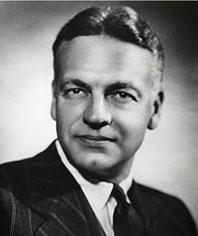
Hutchins’ father, William, was President of Berea, a small but important liberal arts college, so Robert Hutchins (1899-1977) was set to follow the family pattern. He went to Yale Law School and stayed on to teach. He quickly became the Dean of the Law School and was spotted as a rising star of United States (US) education. When he was 30 years old, he was asked to become President of the University of Chicago, a leading institution. Hutchins was then the youngest president of a US university.

In the first decade of his tenure, the 1930s, his ideas concerning undergraduate education − compulsory survey courses, early admission after two years of secondary school for bright and motivated students, a concentration on “Great Books” – an examination of seminal works of philosophy in particular Plato and Aristotle − divided the University of Chicago faculty. There were strong and outspoken pro- and anti-Hutchins faculty groups. Moreover, Hutchins’ abolition of varsity football and ending the University’s participation in the “Big Ten” university football league distressed some alumni whose link to the university was largely limited to attending football games. For Hutchins, a university was for learning and discussion, not for playing sports. As he famously said, “When I feel like exercising, I sit down until the feeling goes away.”

It is Hutchins’ creation and leadership of the Committee to Frame a World Constitution in 1945 which makes him one of the intellectual founders of the movement for world federation and world citizenship. After the coming to power of Hitler in Germany in 1933 and his quick decision to ban Jewish professors from teaching in German universities, many Jewish scientists and professors left Germany and came to the USA. Some of the leading natural scientists joined the University of Chicago. Thus began the “Metallurgy Project” as the work on atomic research was officially called. The University of Chicago team did much of the theoretical research which led to the Atom Bomb. While Hutchins was not directly involved in the atomic project, he understood quickly the nature of atomic energy and its military uses. He saw that the world would never return to a “pre-atomic” condition and that new forms of world organization were needed.


hutchins_0.jpg

Robert M. Hutchins

“The death of democracy is not likely to be an assassination from ambush. It will be a slow extinction from apathy, indifference, and undernourishment.”

-Robert Maynard Hutchins.


On August 12, 1945, a few days after the use of the atom bombs, Hutchins made a radio address “Atomic Force: Its Meaning for Mankind” in which he outlined the need for strong world institutions, stronger than the United Nations (UN) Charter, whose drafters earlier in the year did not know of the destructive power of atomic energy.

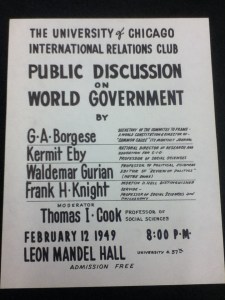
Several professors of the University of Chicago were already active in peace work such as Mortimer Adler, G. A. Borgese, and Richard McKeon, Dean of the undergraduate college. The three approached Hutchins saying that as the University of Chicago had taken a lead in the development of atomic research, so likewise, the university should take the lead in research on adequate world institutions. By November 1945, a 12-person Committee to Frame a World Constitution was created under Hutchins’ chairmanship. The Committee drew largely on existing faculty of the University of Chicago − Wilber Katz, Dean of the Law School and Rexford Tugwell who taught political science but who had been a leading administrator of the Roosevelt New Deal and Governor of Puerto Rico. Two retired professors from outside Chicago were added − Charles McIlwain of Harvard, a specialist on constitutions, and Albert Guerard of Stanford, a French refugee who was concerned about the structure of post-war Europe.

From 1947 to 1951, the Committee published a monthly journal Common Cause many of whose articles still merit reading today as fundamental questions concerning the philosophical basis of government, human rights, distribution of power, and the role of regions are discussed. The Preliminary Draft of a World Constitution was published in 1948 and reprinted in the Saturday Review of Literature edited by Norman Cousins and in the Bulletin of the Atomic Scientists some of whom were in the original “Metallurgy Project”. The Preliminary Draft raised a good deal of discussion, reflected in the issues of Common Cause. There was no second draft. The Preliminary Draft was as G.A. Borgese said, quoting Dante “…of the True City at least the Tower.”


WorldConstposter-e1401485123703


In 1951, Hutchins retired from the presidency of the University of Chicago for the Ford Foundation and then created the Ford Foundation-funded Center for the Study of Democratic Institutions where he gathered together some of his co-workers from the University of Chicago.

Two ideas from The Preliminary Draft are still part of intellectual and political life for those concerned with a stronger UN. The first is the strong role of regional organizations. When The Preliminary Draft was written the European Union was still just an idea and most of the States now part of the African Union were European colonies. The Preliminary Draft saw that regional groups were institutions of the future and should be integrated as such in the world institution. Today, the representatives of States belonging to regional groupings meet together at the UN to try to reach a common position, but regional groups are not part of the official UN structure. However, they may be in the future.

The other lasting aspect of The Preliminary Draft is the crucial role that nongovernmental organizations (NGOs) should play. The then recently drafted UN Charter had created a “consultative status” for NGOs, but few of the UN Charter drafters foresaw the important role that NGOs would play as the UN developed. The Preliminary Draft had envisaged a Syndical Senate to represent occupational associations on the lines of the International Labor Organization where trade unions and employer associations have equal standing with government delegates. In 1946, few people saw the important role that the NGOs would later play in UN activities. While there is no “Syndical Senate”, today NGOs represent an important part of the UN process.

Hutchins, however, was also a reflection of his time. There were no women as members of the Committee to Frame a World Constitution, and when he created the Center for the Study of Democratic Institutions with a large number of “fellows”, consultants, and staff, women were also largely absent.

The effort to envisage the structures and processes among the different structures was an innovative contribution to global institution building at the time, and many of the debates and reflections are still crucial for today.

For an understanding of the thinking of those involved in writing The Preliminary Draft see:
Mortimor Adler, How to think about War and Peace (New York: Simon and Schuster, 1944)
Rexford Tugwell, Chronicle of Jeopardy (Chicago: University of Chicago Press, 1955)
G. A. Borgese, Foundations of the World Republic (Chicago: University of Chicago Press,1953)
Scott Buchanan, Essay in Politics (New York: Philosophical Library, 1953)
For a life of Hutchins written by a co-worker in the Center for the Study of Democratic Institutions:
Harry Ashmore, Unreasonable Truths: The Life of Robert Maynard Hutchins (Boston: Little, Brown and Co, 1989)

Prof. René Wadlow is President of the Association of World Citizens.

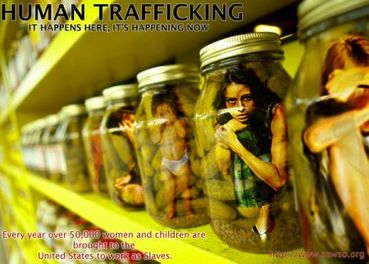
UN-Designated Day for Developing Awareness of Human Trafficking

In Being a World Citizen, Children's Rights, Current Events, Human Development, Human Rights, International Justice, Social Rights, Solidarity, United Nations, Women's Rights, World Law on January 11, 2016 at 11:23 PM

World Food Day: A Renewal of Collective Action

In Being a World Citizen, Foundations for the New Humanism, Human Development, Human Rights, International Justice, Social Rights, Solidarity, The Search for Peace, Uncategorized, United Nations, World Law on October 16, 2015 at 8:30 AM

WORLD FOOD DAY: A RENEWAL OF COLLECTIVE ACTION

By René Wadlow


[…] determined to promote the common welfare by furthering separate and collective action for the purpose of raising levels of nutrition and standards of living […]” 

-Preamble of the Food and Agriculture Organization Constitution.


October 16 is the UN-designated World Food Day, the date chosen being the anniversary of the creation of the FAO in 1945 with the aim, as stated in its Constitution of “contributing towards an expanding world economy and ensuring humanity’s freedom from hunger.” Freedom from hunger is not simply a technical matter to be solved with better seeds, fertilizers, cultivation practices and marketing. To achieve freedom from hunger for mankind, there is a need to eliminate poverty. The elimination of poverty must draw upon the ideas, skills and energies of whole societies and requires the cooperation of all countries. 

World Citizens have played an important role in efforts to improve agricultural production worldwide and especially to better the conditions of life of rural workers. Lord Boyd-Orr was the first director of the FAO; Josue de Castro was the independent President of the FAO Council in the 1950s when the FAO had an independent Council President. (The independent presidents have now been replaced by a national diplomat, rotating each year. Governments are never happy with independent experts who are often too independent.) The World Citizen, René Dumont, an agricultural specialist, is largely the “father” of political ecology in France, having been the first Green Party candidate for the French Presidency in 1974.

As Lester Brown, the American agricultural specialist says “We are cutting trees faster than they can be regenerated, overgrazing rangelands and converting them into deserts, overpumping aquifers, and draining rivers dry. On our croplands, soil erosion exceeds new soil formation, slowly depriving the soil of its inherent fertility. We are taking fish from the ocean faster than they can reproduce.”

To counter these trends, we need awareness and vision, an ethical standard which has the preservation of nature at its heart, and the political leadership to bring about the socio-economic changes needed. For the moment, awareness and vision are unequally spread. In some countries, ecological awareness has led to beneficial changes and innovative technologies. In others, the governmental and social structures are disintegrating due to disease, population pressure upon limited resources, and a lack of social leadership. Worldwide, military spending, led by the USA, dwarfs spending on ecologically-sound development and the necessary expansion of education and health services.

World Food Day

Some 795 million people in the world do not have enough food to lead a healthy active life. That’s about one in nine people on earth. (World Food Program)

As Lester Brown has written “The sector of the economy that seems likely to unravel first is food. Eroding soils, deteriorating rangelands, collapsing fisheries, falling water tables, and rising temperatures are converging to make it more difficult to expand food production fast enough to keep up with demand…food is fast becoming a national security issue as growth in the world harvest slows and falling water tables and rising temperatures hint at future shortages.”

Yet there are agricultural techniques which can raise protein efficiency, raise land productivity, improve livestock use and produce second harvests on the same land. However, unless we quickly reverse the damaging trends that we have set in motion, we will see vast numbers of environmental refugees — people abandoning depleted aquifers and exhausted soils and those fleeing advancing deserts and rising seas.

David Seckler of the International Water Management Institute writes “Many of the most populous countries of the world — China, India, Pakistan, Mexico, and nearly all the countries of the Middle East and North Africa — have literally been having a free ride over the past two or three decades by depleting their groundwater resources. The penalty of mismanagement of this valuable resource is now coming due, and it is no exaggeration to say that the results could be catastrophic for these countries, and given their importance, for the world as a whole.” Unfortunately, the International Water Management Institute does not manage the world’s use of water but can only study water use. While there are some planners who would like to be able to tax or make people pay for water, most water use is uncontrolled. Payment for water is a way that governments or private companies have to get more revenue, but the welfare of farmers is usually not a very high priority for them.

Yet as Citizens of the World have stressed, ecologically-sound development cannot be the result only of a plan, but rather of millions of individual actions to protect soil, conserve water, plant trees, use locally grown crops, reduce meat from our diets, protect biological diversity in forest areas, cut down the use of cars by increasing public transportation and living closer to one’s work. We need to stabilize and then reduce world population and to encourage better distribution of the world’s population through planned migration and the creation of secondary cities to reduce the current growth of megacities. We need to encourage wise use of rural areas by diversifying employment in rural areas. We also need to develop ecological awareness through education so that these millions of wise individual decisions can be taken.

In 1989 The Christians sang, “When will there be a harvest for the world?” Well … We wish we knew.

Lester Brown underlines the necessary link between knowledge and action. “Environmentally responsible behaviour also depends to a great extent on a capacity to understand basic scientific issues, such as the greenhouse effect or the ecological role of forests. Lacking this, it is harder to grasp the link between fossil fuel burning and climate change or between tree cutting and the incidence of flooding or the loss of biological diversity…The deteriorating relationship between the global economy and the earth’s ecosystem requires an all-out effort to bring literacy to all adults in order to break the poverty cycle and stabilize population.”

Education and vision require leadership, and it is ecologically-sound political leadership that is badly lacking today. Thus Citizens of the World and all of good will are called upon to provide wise leadership to work for a redirection of financial resources to protect the planet, and to encourage ecologically-sound individual and collective action. 

Prof. René Wadlow is President of the Association of World Citizens.

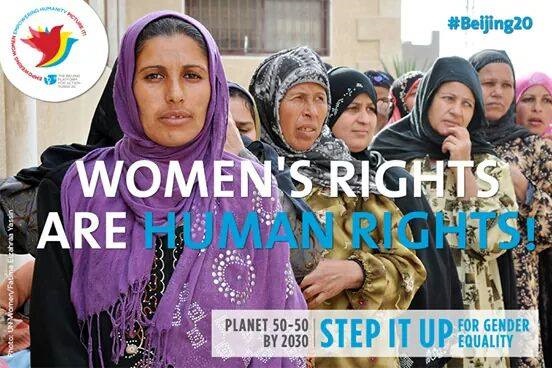
March 8, 2015: International Women’s Day – Balance of Yin and Yang

In Being a World Citizen, Current Events, Democracy, Human Development, Human Rights, International Justice, Social Rights, Solidarity on March 7, 2015 at 9:48 AM

MARCH 8, 2015: INTERNATIONAL WOMEN’S DAY – BALANCE OF YIN AND YANG

By René Wadlow

It is only when women start to organize in large numbers that women become a political force, and begin to move towards the possibility of a truly democratic society in which every human being can be brave, responsible, thinking and diligent in the struggle to live at once freely and unselfishly.

March 8 is the International Day of Women and thus a time to analyze the specific role of women in local, national and world society. International Women’s Day was first proposed by Clara Zetlin (1857-1933) at the Second International Conference of Socialist Women in Copenhagen in 1911. Later, she served as a socialist-communist member of the German Parliament during the Weimar Republic which existed from 1920 to 1933 when Hitler came to power.

Zetkin had lived some years in Paris and was active in women’s movements there who were building on the 1889 International Congress for Feminine Works and Institutions held in Paris under the leadership of Ana de Walska. De Walska was part of the circle of young Russian and Polish intellectuals in Paris around Gerard Encausse (1865-1916), a spiritual writer who wrote under the pen name of Papus and edited a journal L’Initiation (1). Papus stressed the need for world peace and was particularly active on the human rights of Armenians.

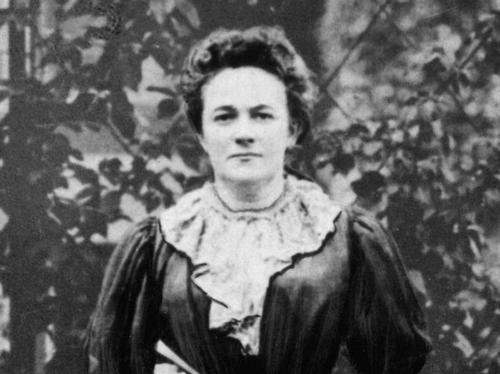
Clara Zetkin (1857-1933), the initiator of International Women's Day.

Clara Zetkin (1857-1933), the initiator of International Women’s Day.

This turn-of-the-century spiritual milieu was influenced by Indian and Chinese thought. Translations of fundamental Asian philosophical texts were increasingly known in an educated public. ‘Feminine’ and ‘masculine’ were related to the Chinese terms of Yin and Yang − not opposed but in a harmonic balance. Men and women alike have the Yin and Yang psychological characteristics. ‘Feminine’ characteristics or values include intuitive, nurturing, caring, sensitive and relational traits. ‘Masculine’ traits are rational, assertive and analytical.

As individual persons, men and women alike can achieve a state of wholeness, of balance between the Yin and Yang. However, in practice, ‘masculine’ refers to men and ‘feminine’ to women. Thus, some feminists identify the male psyche as the prime cause of the subordination of women around the world. Men are seen as having nearly a genetic coding that leads them to ‘seize’ power, to institutionalize that power through patriarchal societal structures and to buttress that power with masculine values and culture.

Thus Clara Zetkin saw the need to call attention in a forceful way to the role that women as women play in society and the many obstacles which men place in their way. She made her proposal in 1911 and today March 8 is widely observed.

Women, individually and in groups, have played a critical role in the struggle for justice and peace in all societies. However, when real negotiations start to pull a community out from a cycle of violence, women are often relegated to the sidelines. There is a need to organize so that women are at the negotiating table to present their ingenuity, patience and determination.

The emerging world society has been slow to address the problem of injustice to women, because it has lacked a consensus on sex-based inequality as an urgent issue of political justice. The outrages suffered every day by millions of women − domestic violence, child sexual abuse, child marriage, inequality before the law, poverty and lack of dignity − are not uniformly regarded as ignominious and seen as human rights abuses.

Solidarity and organization are crucial elements to create sustainable ways of living in which all categories of people are encouraged to contribute. March 8, 2015 is a reminder of the positive steps taken but also the distance yet to be covered.

Prof. René Wadlow is President and Chief Representative to the United Nations Office at Geneva of the Association of World Citizens.

(1) See the biography by Marie-Sophie André and Christophe Beaufils, Papus.

Celebrating Social Justice: The People’s Revolution is On the March

In Being a World Citizen, Democracy, Human Development, Human Rights, Middle East & North Africa, Social Rights, Solidarity on February 22, 2015 at 4:45 PM

CELEBRATING SOCIAL JUSTICE: THE PEOPLE’S REVOLUTION IS ON THE MARCH

By René Wadlow

Social Justice

The United Nations (UN) General Assembly, on the initiative of Nurbch Jeenbrev, the Ambassador of Kyrgyzstan to the UN in New York, has proclaimed February as the “World Day of Social Justice”.

The World Day of Social Justice gives us an opportunity to take stock of how we can work together – the whole year round – at the local, national and global level on policy and action to achieve the goals set out in the resolution of “solidarity, harmony and equality within and among states.”

As the resolution states, “Social development and social justice are indispensable for the achievement and maintenance of peace and security within and among nations, and that in turn, social development and social justice cannot be attained in the absence of peace and security or in the absence of respect for all human rights and fundamental freedoms.”

The Preamble to the UN Charter makes social justice one of the chief aims of the organization using the more common expression of that time “social progress”. The Preamble calls for efforts to “promote social progress and better standards of life in larger freedom.”

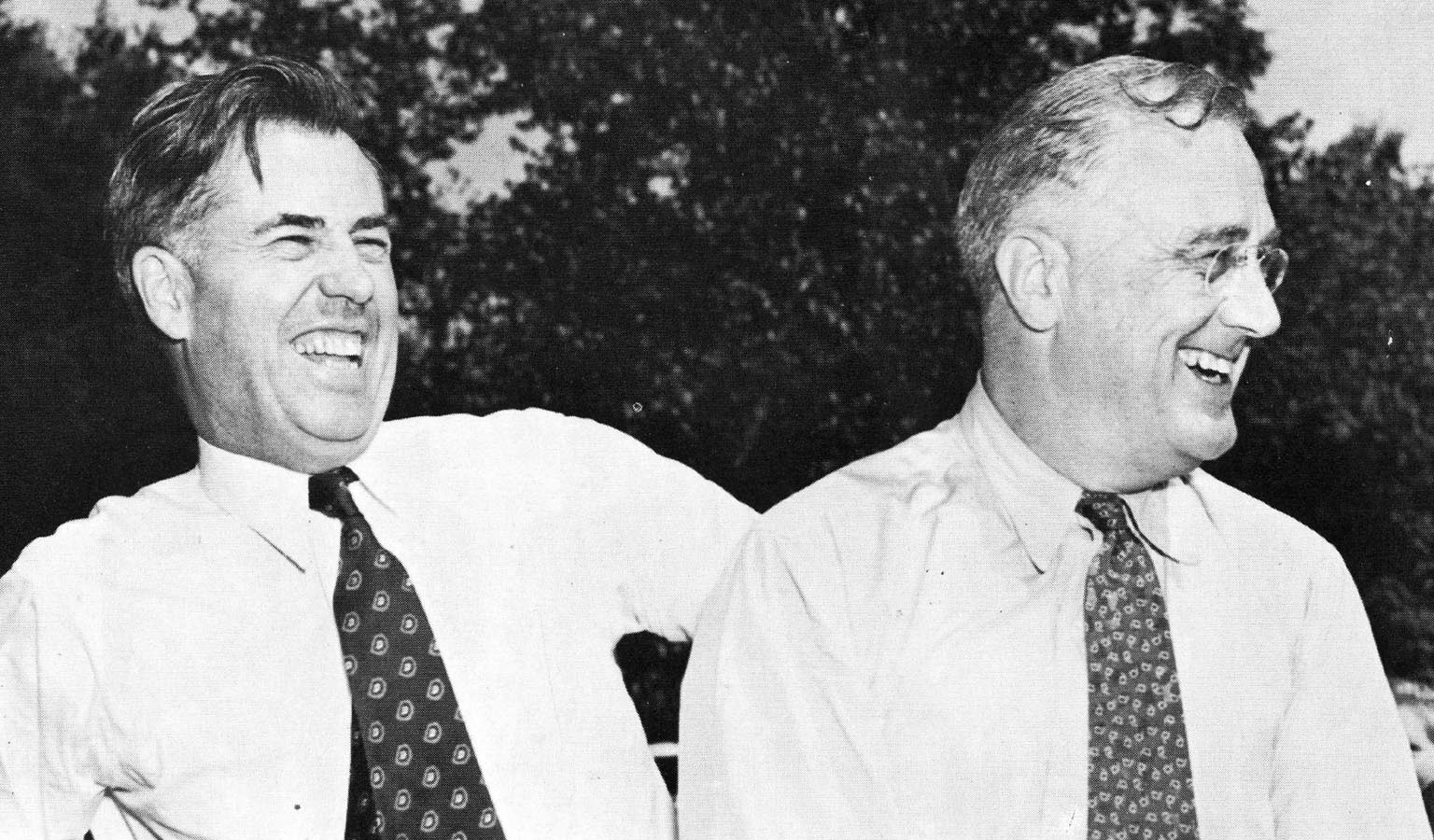
The United States (U. S.) representatives who worked on the draft of the UN Charter were strongly influenced in their views of social progress by the “New Deal” legislation of President Roosevelt and its philosophy as it had been set out by his Vice-President Henry A. Wallace in 1942 when he set out the U. S. war aims. Wallace’s speech was the first time that the war aims of a country were not stated in terms of “national interest” and limited to the demands that had produced the start of the war.

Wallace, who had first been the Secretary of Agriculture and who had to deal with the severe depression facing U. S. agriculture, was proposing a world-wide New Deal based on the cooperative action of all of humanity. Wallace said “The people’s revolution is on the march. When the freedom-loving people march — when the farmers have an opportunity to buy land at reasonable prices and to see the produce of their land through their own organizations, when workers have the opportunity to form unions and bargain through them collectively, and when the children of all the people have an opportunity to attend schools which teach them truths of the real world in which they live — when these opportunities are open to everyone, then the world moves straight ahead…The people are on the march toward ever fuller freedom, toward manifesting here on earth the dignity that is in every human soul.”

Henry A. Wallace (left), Vice-President of the United States from 1941 to 1945. After the third and final reelection of Franklin Delano Roosevelt (right) to the presidency in 1944, Wallace was succeeded by Harry S. Truman, who himself succeeded Roosevelt as President of the United States after Roosevelt died on April 12, 1945.

Henry A. Wallace (left), Vice-President of the United States from 1941 to 1945. After the third and final reelection of Franklin Delano Roosevelt (right) to the presidency in 1944, Wallace was succeeded by Harry S. Truman, who himself succeeded Roosevelt as President of the United States after Roosevelt died on April 12, 1945.

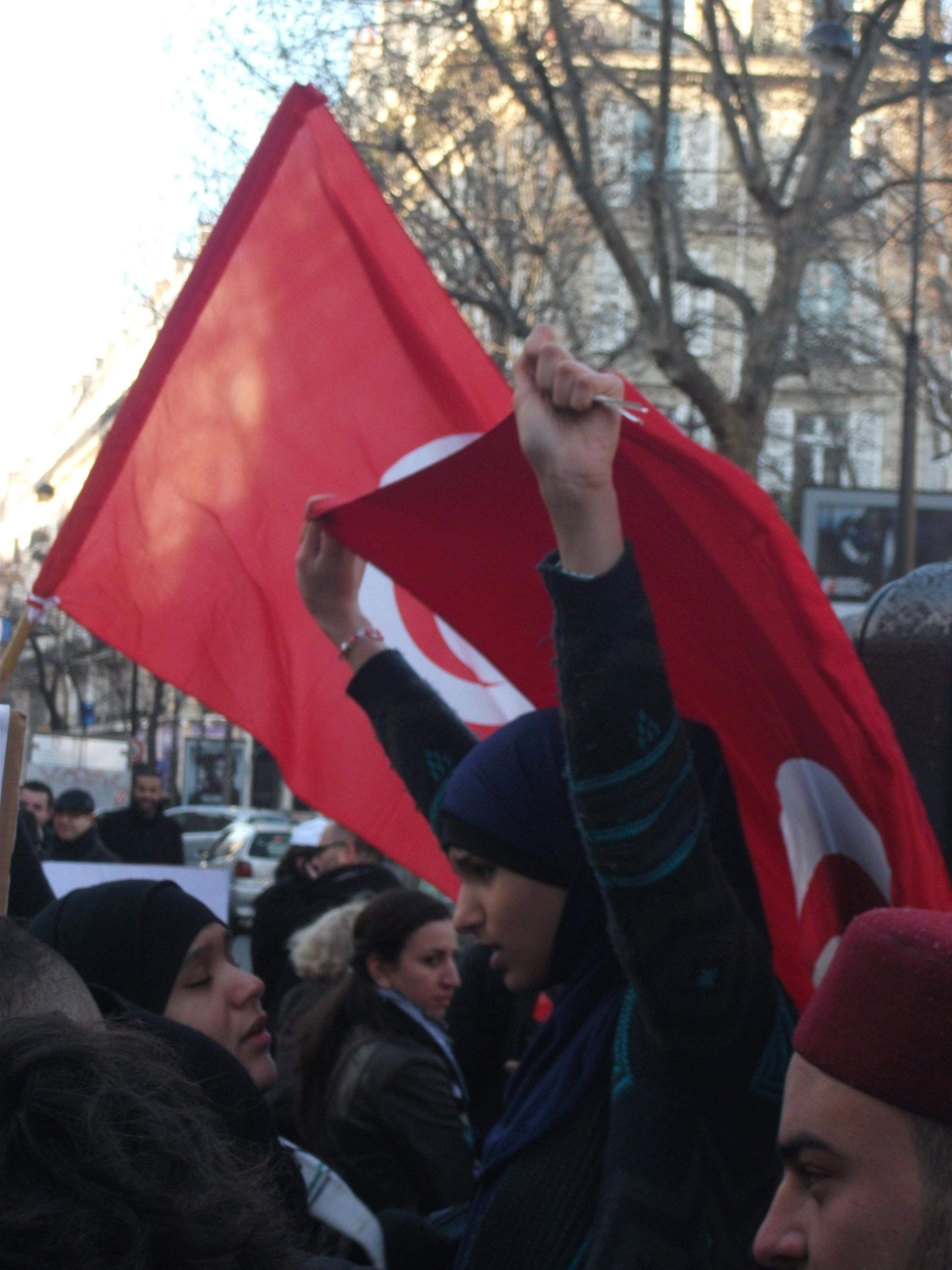
The People’s Revolution found its expression in the cry of the Tunisian uprising — Work-Liberty-Dignity. Today in the demands of “Work-Liberty-Dignity” we hear the demands of farmers to own land under sure conditions, to receive a fair price for their crops as well as the right to organize to protect their interests. We hear the crises of industrial and urban workers to be able to organize and to have their work appreciated for its full value. We hear the demands of students and the young for an education that opens minds and prepares for meaningful work.

A Tunisian demonstrator in Paris, France, as the Tunisian community there celebrated the first anniversary of the revolution on January 14, 2012. (C) Bernard J. Henry/AWC

A Tunisian demonstrator in Paris, France as Tunisians living there were celebrating the first anniversary of their revolution on January 14, 2012. (C) Bernard J. Henry/AWC

The people’s revolution is on the march. While the forces of the status quo are still strong and often heavily armed, the energy has shifted from the rulers to the people. The concept of Social Justice has articulated and focused deep demands for liberty, jobs, and dignity. The people’s revolution is not that of an elite willing to replace the existing ruling elite. The people’s revolution is a wave of all moving together, with deep currents below the surface. The tide moves with only a few visible waves but the collective demands for social justice and dignity is what makes the difference between the people’s revolution and a military coup. This is the true meaning of the World Day of Social Justice.

“For the wretched of the earth,
There is a flame that never dies,
Even the darkest night will end
And the sun will rise.”

Les Miserables, “Do You Hear the People Sing – Epilogue”.

In 2011, as the Tunisian and Egyptian revolutions were underway, the AWC adopted this song as its unofficial anthem.

* * *

Prof. René Wadlow is President and Chief Representative to the United Nations in Geneva of the Association of World Citizens.