By René Wadlow
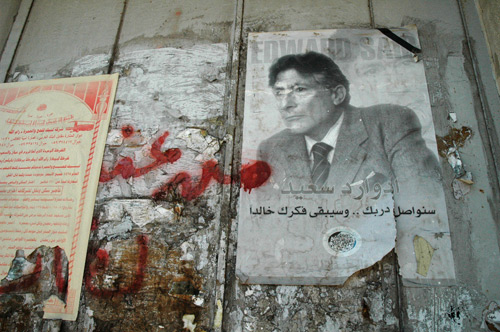
Edward Said, the late Palestinian-American scholar (and my Princeton University classmate), said, “Writing is the final resistance that we have against the inhuman practices and injustices that disfigure human history.”
Today, we see inhumanity, injustice, and armed violence in the wider Middle East: the Gaza Strip, the West Bank, the Golan Heights, Lebanon, Syria, Yemen with an impact in Iraq, Iran, and Turkey.
In many of these Middle East conflicts, there were no contacts to be cut. The process of creating contacts must start from point zero. Thus, peacebuilders must develop political legitimacy by trying to develop contacts with politically active groups and by bringing in new voices such as feminist constituencies. There is a need to engage conflicting parties – governments, armed groups and militias – so that there can be negotiations in good faith and an end to armed conflicts. The increasingly complex nature of conflicts requires diverse forms and levels of peacebuilding. This complexity makes the remaking of communications difficult. There needs to be flexibility, innovation, and cooperation.
Both formal and informal efforts are needed to create a web of alternative approaches with the ability to seize the initiative when there is an opportunity for action. Our focus here is on informal approaches which can be carried out by Nongovernmental Organizations (NGOs) such as the Association of World Citizens (AWC).
Social media is a recent form of contact beyond the older face-to-face approach. Social media has become an important mobilizing force. It can drive debates and political change, but it can also be used to divide societies, incite violence and xenophobia. For peacebuilders, social media allows direct access to the general public. Thus, for peacebuilders, they need to learn to use social media creatively.
For NGOs such as the AWC, the first step is an analysis of the nature and the parties in the conflict. Information can be gathered from people already active on the issue such as academics and members of other NGOs. For the wider Middle East conflicts, there are citizens from these countries living in Europe and the U.S.A. as well as persons who visit Middle East countries regularly. It is important to get a wide range of views. For organizations such as the AWC, with consultative status at the United Nations (UN), it is possible to discuss with UN Secretariat members and with diplomats.
Resolving armed conflicts and lowering persistent tensions involves a change in the attitudes that are at the core of the conflict. We work to create possibilities for dialogue and confidence-building so as to increase mutual trust. Remaking contacts is a way of facilitating better communications between leaders holding antagonistic views, thus promoting cross-cultural communications. As we begin 2025 with tensions in the Middle East at a high level, creative action is needed. Join in this vital process.
Prof. René Wadlow is President of the Association of World Citizens.
 Association of World Citizens
[…] Horace Alexander: Unofficial Diplomacy and Mediation When There Are No Governmental Negotiations: Build Stronger Track Two Networks Remaking Contacts to End Violent Conflicts […]