By René Wadlow
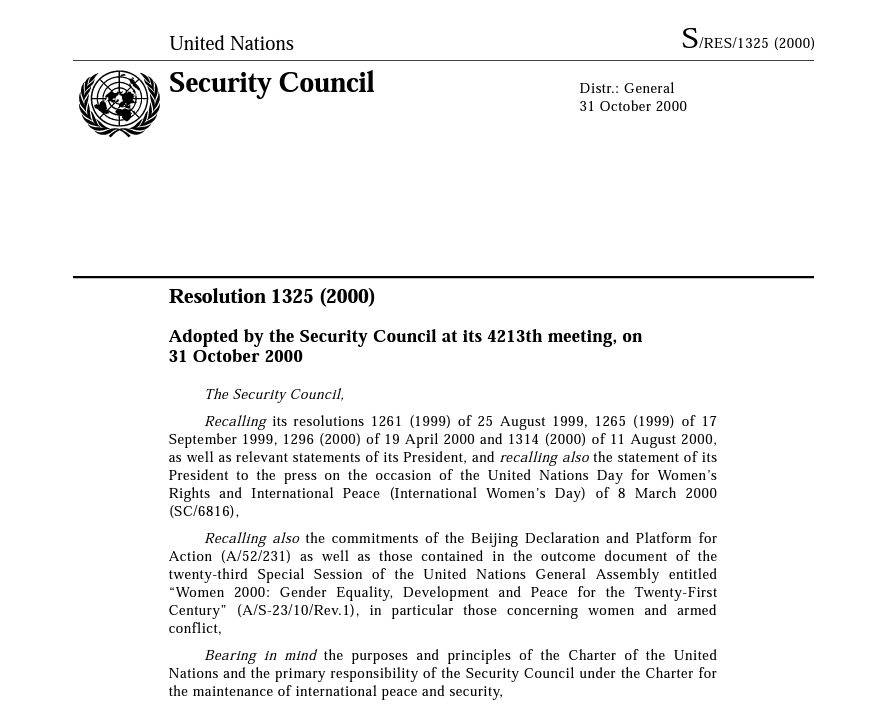
October 31 is the anniversary of the United Nations (UN) Security Council Resolution 1325 which calls for “the full and equal participation of women in conflict prevention, peace processes, and peacebuilding, thus creating opportunities for women to become fully involved in governance and leadership.” This historic Security Council Resolution 1325 of October 31, 2000 provides a mandate to incorporate gender perspectives in all areas of peace support.
Since 2000, there have been no radical changes in UN or governmental practices as a result of Resolution 1325, but the goal has been articulated and accepted.
As UN Secretary-General Antonio Guterres wrote in his 2023 Report on Women, Peace, and Security, “Despite our best efforts, women represented just sixteen percent of negotiators or delegates in the peace processes led, or co-led, by the United Nations.” Women were almost completely missing from peace processes in situations monitored by the UN Security Council such as Ethiopia, Sudan, Libya, and Myanmar.
There has been a growing awareness that women are not just victims in violent armed conflicts and wars – “collateral damage” – but are chosen targets. Recent conflicts have served to bring rape and other sexual atrocities as deliberate tools of war to the forefront of international attention. Such violations must be properly documented; the perpetrators brought to justice; and victims provided with redress.
However, women should not only be seen as victims of war. They are often significantly involved in taking initiatives to promote peace. Some writers have stressed the essential link between women, motherhood, and nonviolence, arguing that those in mothering work have distinct motives for rejecting war which run in tandem with their ability to resolve conflicts nonviolently. Others reject this position of a gender bias toward peace and stress rather that the same continuum of nonviolence to violence is found among women as among men.
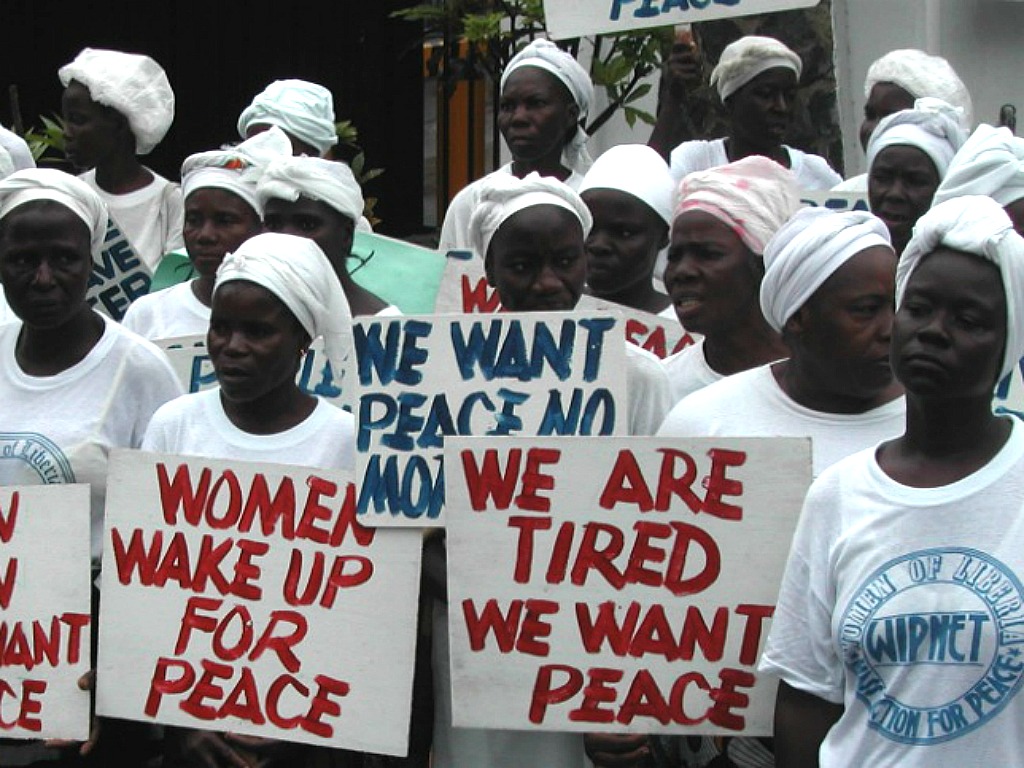
In practice, it is never all women nor all men who are involved in peacemaking efforts. Sometimes, it is only a few persons, especially at the start of peacemaking efforts. The basic question is how best to use the talents, energies, and networks of both women and men for efforts at conflict resolution.
October 31 can serve as a day of rededication to inclusive processes for peacebuilding.
Prof. René Wadlow is the Association of World Citizens.
 Association of World Citizens