By René Wadlow
A. Fonseca Pimentel, Democratic World Government and the United Nations.
Brasilia, Escopa Editions, 1980, 158pp.
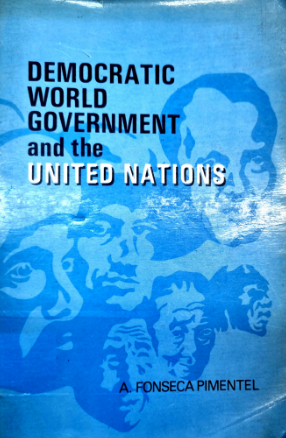
The United Nations (UN) was created in the spirit of world citizenship (“We the Peoples…”). The history of the UN can be seen as the development of world citizen values and world law. The world community is in a period of vast transformation being brought about by powerful economic, political, and cultural agents to cope with the challenges of growing interdependence among all peoples and the growing impact of people on the natural environment.
Structures of world law are needed to provide a framework for this transformation. The UN General Assembly has proclaimed the standards of international law such as the Universal Declaration of Human Rights (1948) which has become the world standard and guide for both regional and national human rights law. Such declarations are part of a trend of building and strengthening a world peace structure composed of world law and intergovernmental institutions which command such general acceptance that resort to world law will replace unilateral actions of States based on narrow domestic political considerations. Governments, business corporations, and transnational social movements are increasingly convinced that they all possess a stake in an orderly world society which can be endangered by the use of force.
However, as Pimentel points out, an orderly world society is not a world society without change. No rule of law is possible without sufficient methods for solving grievances.
Fonseca Pimentel was a Brazilian scholar and economist with long experience in public administration and as a UN advisor on administrative reforms. As he notes, “The dilemma facing the United Nations is to find a way to go further on the road to world citizenship.” At this time when there is armed violence in many parts of the world and consistent violations of human rights, he sets out the challenges clearly.
Prof. René Wadlow is President of the Association of World Citizens.
 Association of World Citizens