The Official Blog of the

Archive for the ‘Solidarity’ Category

Let My Children Go: World Efforts to Eliminate the Worst Forms of Child Labor

In Children's Rights, Human Development, Human Rights, Solidarity, World Law on June 11, 2011 at 11:52 PM

LET MY CHILDREN GO:

WORLD EFFORTS TO ELIMINATE THE WORST FORMS OF CHILD LABOR

By René Wadlow


June 12 is a red letter day on the United Nations (UN) agenda of events as the World Day against Child Labor. It marks the June arrival in 1998 of hundreds of children in Geneva, part of the Global March against Child Labor that had crossed 100 countries to present their plight to the International Labor Organization (ILO).

“We are hurting, and you can help us” was their message to the assembled International Labor Conference which meets each year in Geneva in June. One year later, in June, the ILO had drafted ILO Convention N° 182 on child labor which 165 States have now ratified — the fastest ratification rate in the ILO’s 89-year history.

The ILO is the only UN organization with a tripartite structure, governments, trade unions and employer associations are all full and equal members. All the other UN bodies are governments-only with non-governmental organizations (NGOs) playing a “fifth wheel” role. Yet NGOs within the UN system as a whole played an important role in highlighting children working in circumstances that put their physical, mental and social development at risk, children working in situations where they are exploited, mistreated and denied the basic rights of a human being. Today, millions of children, especially those living in extreme poverty, have no choice but to accept exploitive employment to ensure their own and their family’s survival. However, the ILO is the UN agency most directly related to conditions of work. Thus the ILO has often been an avenue for ‘unheard voices’ to be heard, usually through the trade union representatives; more rarely the employer representatives have played a progressive role.

The flag of the International Labor Organization.

Child labor and the increasing cross-frontier flow of child labor did not have a high profile on the long agenda of pressing labor issues until the end of the 1990s. At the start of the 1990s, there was only one full-time ILO staff member assigned to child labor issues; now there are 450, 90 percent in the field.

Child labor was often hidden behind the real and non-exploitive help that children bring to family farms. However, such help often keeps children out of school and thus outside the possibility of joining the modern sector of the economy. The ILO estimates that of the some 200 million child laborers in the world, some 70 percent are in agriculture, 10 percent in industry/mines and the others in trade and services — often as domestics or street vendors in urban areas. Globally, Asia accounts for the largest number of child workers — 122 million, Sub-Saharan Africa, 50 million, and Latin America and the Caribbean, 6 million. Young people under 18 make up almost half of humanity, a half which is virtually powerless in relation to the other half. To ensure the well-being of children and adolescents in light of this imbalance of power, we must identify attitudes and practices which cause invisibility.

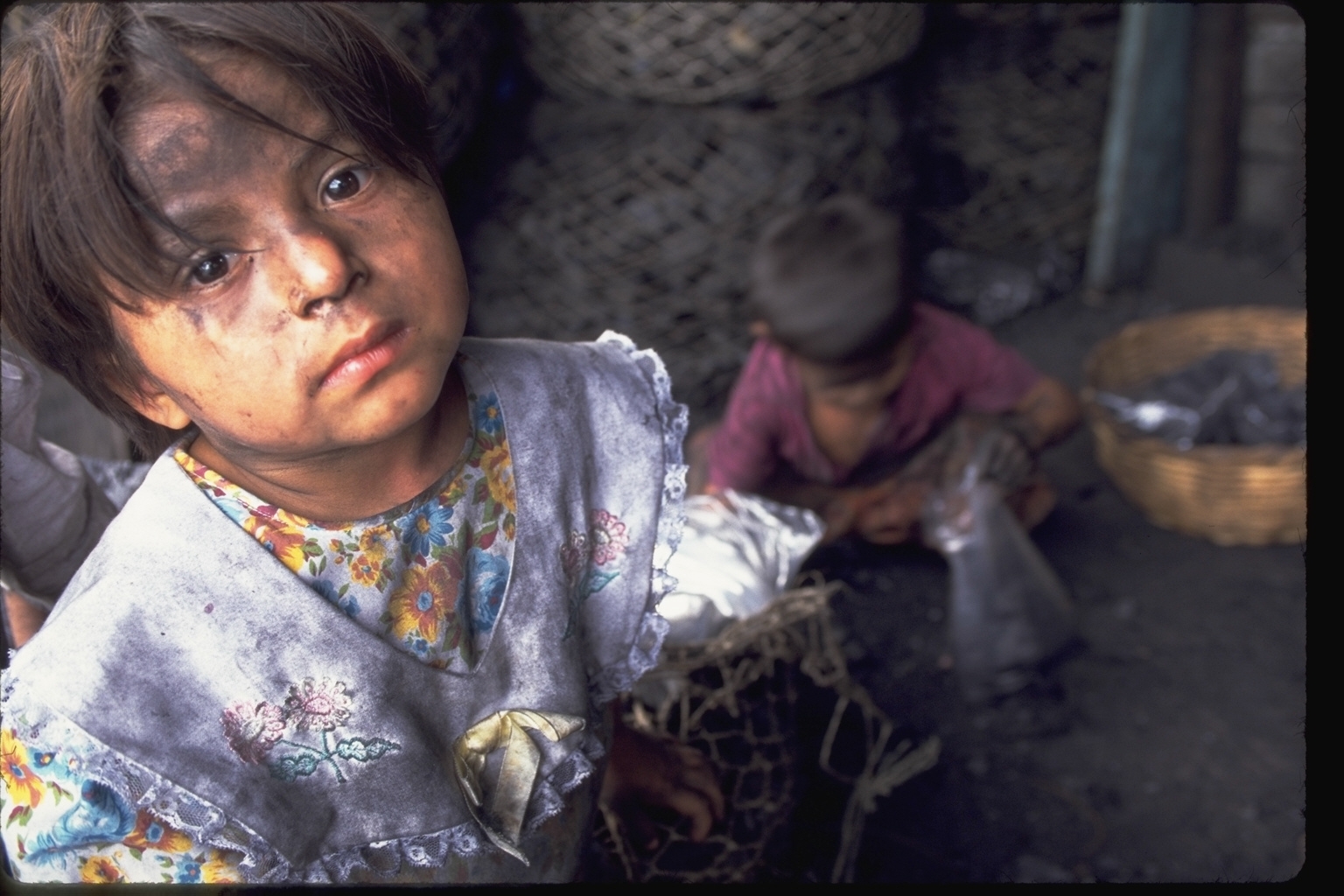
The grim faces of child labor: In El Salvador, a 4-year-old girl and her 6-year-old brother working to fill coal bags.

But statistics are only one aspect of the story. It is important to look at what type of work is done and for whom. The image of the child helping his parents on the farm can hide wide-spread bonded labor in Asia. Children are ‘farmed out’ to others for repayment of a debt with interest. As the interest rates are too high, the debt is never paid off and ‘bonded labour’ is another term for a form of slavery.

In Africa, children can live at great distances from their home, working for others with no family ties and thus no restraints on the demands for work. Girls are particularly disadvantaged as they often undertake household chores following work in the fields. Schooling for such children can be non-existent or uneven at best. There is often a lack of rural schools and teachers. Rural school attendance is variable even where children are not forced to work. Thus, there is a need for better coordination between resources and initiatives for rural education and the elimination of exploitive child labor.

There is still a long way to go to eliminate exploitive child labor. Much child labor is in what is commonly called the non-formal sector of the economy where there are no trade unions. Child labor is often related to conditions of extreme poverty and to sectors of the society where both adults and children are marginalized such as many tribal societies in Asia, or the Roma in Europe or migrant workers in general.

Thus, the task of both governments and NGOs is to understand better the scope of exploitive child labor, its causes, the possibility of short-term protection of children and the longer-range efforts to overcome exclusion and poverty.


René Wadlow is Senior Vice President and Chief Representative to the United Nations Office at Geneva of the Association of World Citizens.

Rio Plus 20 – UN Desert Decade

In Current Events, Environmental protection, Solidarity on May 20, 2011 at 8:30 PM

RIO PLUS 20

By René Wadlow


The United Nations (UN) Conference on Sustainable Development will take place in Brazil on June 4-6, 2012 to mark the 20th anniversary of the 1992 UN Conference on Environment and Development in Rio de Janeiro. Thus the popular name of the upcoming conference: “Rio plus 20”. The Conference will be an opportunity to bring together all the UN-designated efforts underway or the protection and wise use of Nature. As humanity, we are at the mid-point of the UN-designated Water for Life Decade (2005-2015). We are at the start of the International Decade of Deserts and Desertification (2010-2020) and nearly halfway into the UN-designated 2011: Year of Forests.

UN-designated Years rarely make newspaper headlines, and most governments limit themselves to voting for the Year in the UN General Assembly and then go on as before. The designated Year or Decade gives some legitimacy and support to the UN and the UN Specialized Agencies which are already working on the issue. However, successful years are always the result of non-governmental organization (NGO) activities. The most successful UN-designated Year was 1975: The International Year of Women.

In 1975, there were already, worldwide, women’s organizations, often well-structured, and which were prepared to use the designation of the UN Year as a platform to present their work, to network among themselves and to reach out to new partners. Moreover, 1975 fell into a period of intense discussion in Western Europe and the USA on the role of women, on relations between women and men, and what was generally called “consciousness-raising” among women. The emphasis was on the ways – sometimes subtle and often less so – that women were hindered in their full development as persons.

Deserts have no such already-organized supporters. Thus it is more difficult to draw attention to issues of desertification and the livelihood of people living at the edge of deserts. However, there are important issues related to deserts. World citizens are making an effort to highlight the Decade as in the following essay:


UN DESERT DECADE

By René Wadlow

God created lands filled with water as a place for man to live; and the desert so that he can discover his soul.


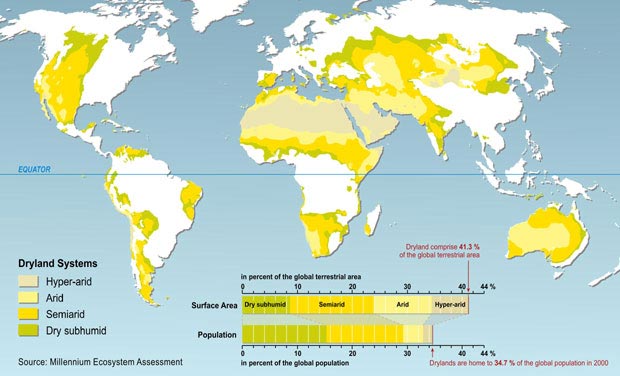
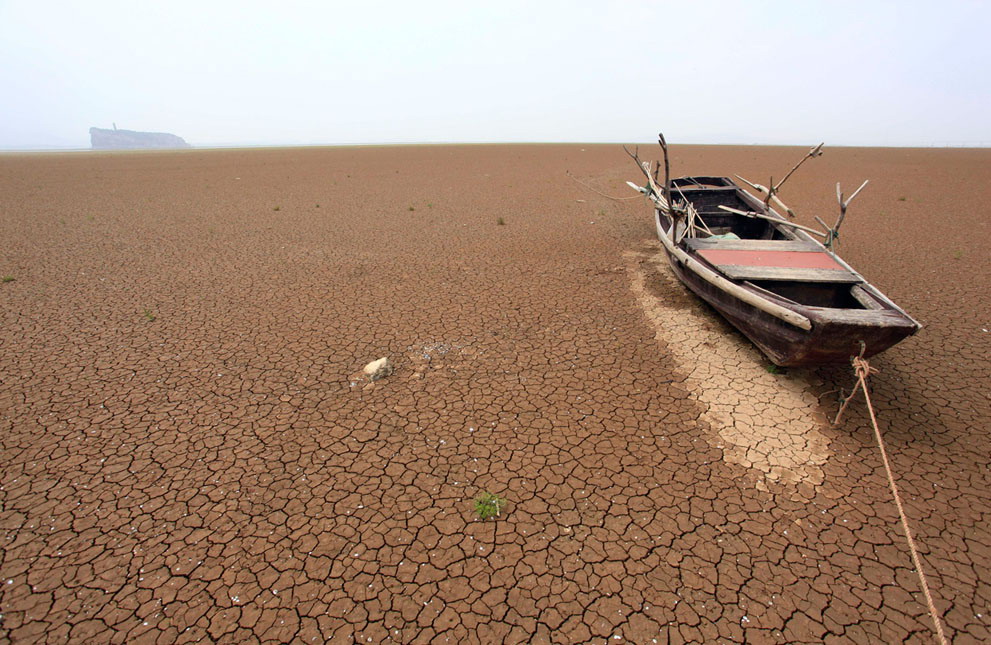
The decade 2010 to 2020 has been designated by the UN General Assembly as The International Decade of Deserts and Desertification. It is estimated that dry lands cover approximately 40 percent of the world’s landmass. The Decade marks the efforts begun in 1977 with the UN Conference on Desertification held in Nairobi. The desertification conference was convened by the UN General Assembly in the midst of a series of catastrophic droughts in the Sudano-Sahelian region of Africa. The conference was designed to be the centerpiece of a massive worldwide attack to arrest the spread of deserts or desert-like conditions not only in Africa south of the Sahara but wherever such conditions encroached on the livelihood of those who lived in the desert or in their destructive path. The history of the conference is vividly recalled by James Walls in his book Land, Men and Sand (New York: Macmillan, 1980).

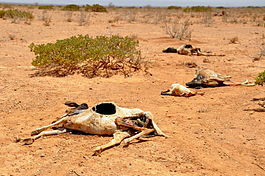
At the conference, there was a call for the mobilization of human and financial resources to hold and then push back the advancing desert. “Attack” may have been the wrong word and “mobilization” too military a metaphor for the very inadequate measures taken later in the Sudano-Sahelian area. In 2010 at the start of the Decade, there are real possibilities of famine in West and East Africa on the edges of the desert. Niger and Mali and parts of Senegal and Chad in the Sahel belt are facing the consequences of serious drought as are parts of northern Kenya and Somalia.

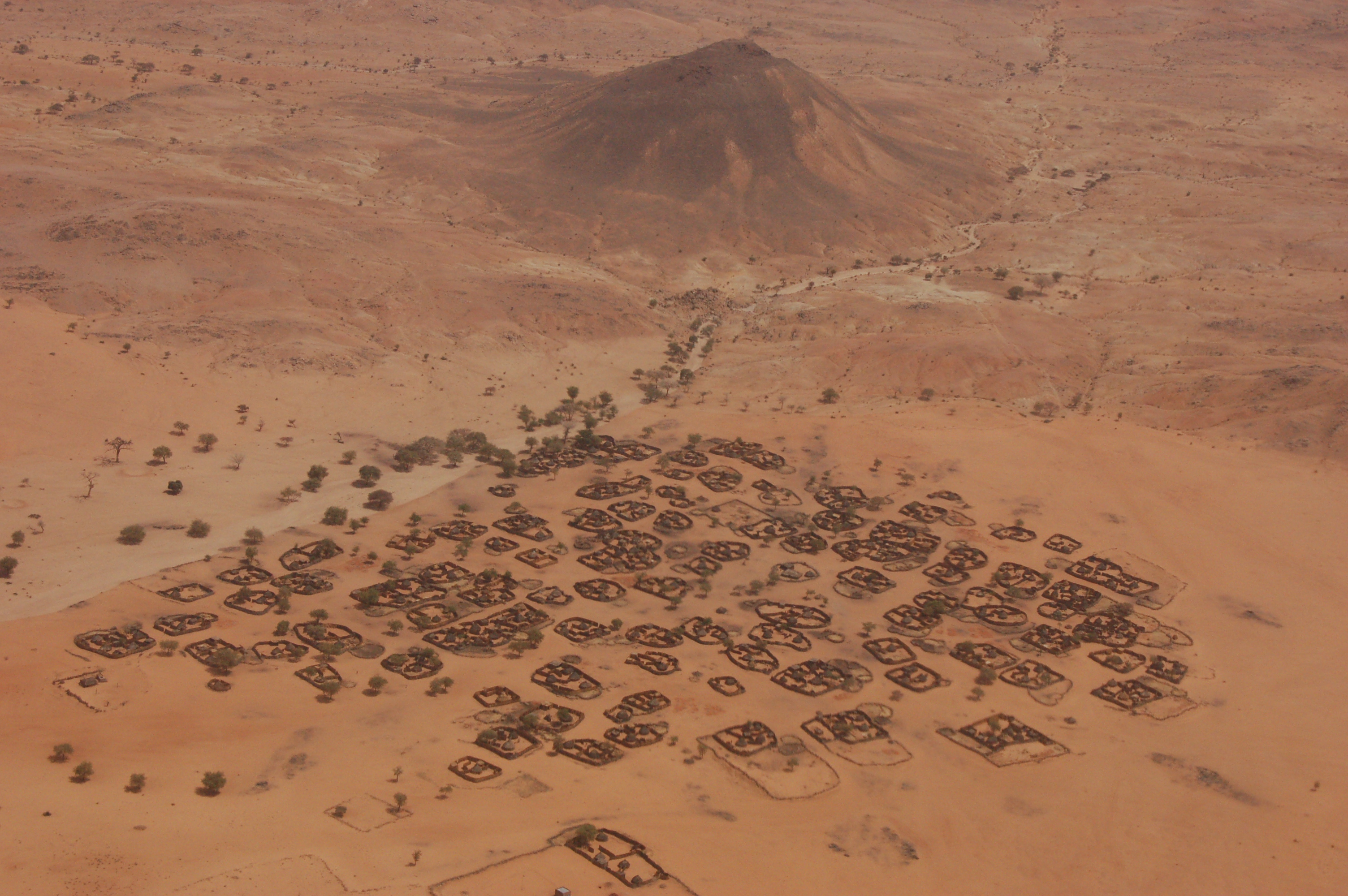
The most dramatic case is that of Darfur, Sudan which partakes of the Sahel drought but which also faces a war in which the conflicts between pastoralists and settled agriculturalists have become politicized. It is estimated that 300,000 have been killed since the start of the war late in 2003. Some two and a half million people have been uprooted. The agricultural infrastructure of homes, barns and wells has been deliberately destroyed. It will be difficult and costly to repair this destruction. The Darfur conflict highlights the need for a broader approach to the analysis and interpretation of active and potential armed conflicts in the Sahel region. This analysis needs to take into consideration the impact of environmental scarcity and climate variation in complex situations.

Earth is our common home, and therefore all, as world citizens, must organize to protect it. It is up to all of us concerned with ecologically-sound development to use the Decade to draw awareness to both the dangers and the promises of deserts. What is the core of the desertification process? The destruction of land that was once productive does not stem from mysterious and remorseless forces of nature but from the actions of humans. Desertification is a social phenomenon. The causes of dry land degradation include overgrazing, deforestation, agricultural mismanagement, fuel wood over-consumption, and industry and urbanization. Thus, by preventing land degradation and improving agricultural practices, action to combat desertification can lead to increased agricultural productivity and alleviate poverty. Humans are both the despoiler and the victim of the process. Increasingly, populations are eking out a livelihood on a dwindling resource, hemmed in by encroaching plantations and sedentary agriculturalists, by towns and roads. Pressure of population upon resources leads to tensions which can burst into violence as we see in Darfur and which spilled over into eastern Chad.
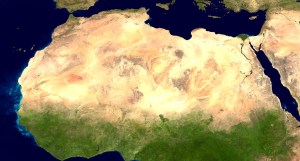
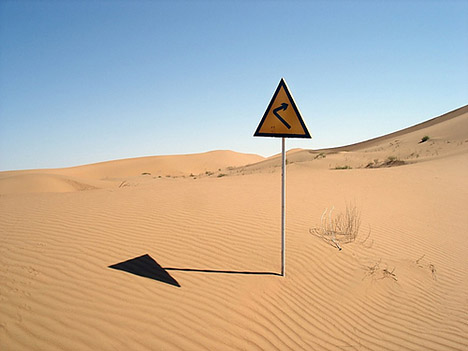
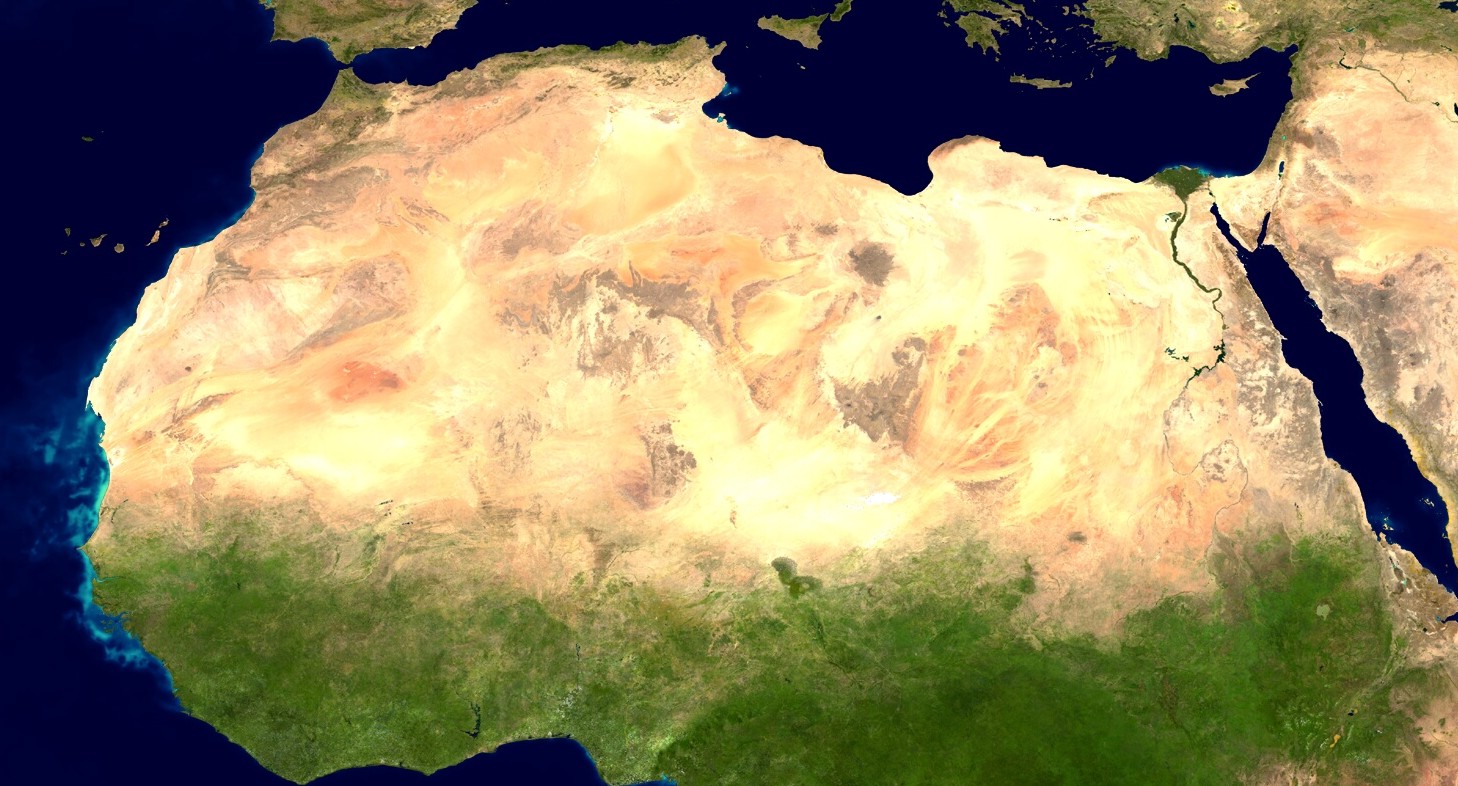
The Sahara (in Arabic, الصحراء الكبرى‎, "Aṣ Ṣaḥrā´ al Kubrā", "The Great Desert" in English) is the world's largest non-polar (hot) desert.

Desertification needs to be seen in a holistic way. If we see desertification only as aridity, we may miss areas of impact such as the humid tropics. We need to consider the special problems of water-logging, salinity or alkalinity of irrigation systems that destroy land each year. The value of UN-designated decades is that the process of identifying major clusters of problems, bringing the best minds to bear on them so as to have a scientific and social substratum on which common political will can be found and from which action will follow.

Desertification is a plague that upsets the traditional balance between people, their habitat, and the socio-economic systems by which they live. Because desertification disturbs a region’s natural resource base, it promotes insecurity. Insecurity leads to strife. If allowed to degenerate, strife results in inter-clan feuding, civil war, cross-border raiding and military confrontation. Yet dry land communities have great resources that can be put to fighting poverty and desertification, provided they are properly empowered and supported.

Only with a lessening of insecurity can cultivators and pastoralists living in or near deserts turn their attention to adapting traditional systems. There can be no reversion to purely traditional systems. But for insecurity to abate, a lengthy process of conciliation must begin and forms of conflict resolution strengthened. People must be encouraged to understand that diversity is a crucial element of ecologically-sound development. Judicious resource management breeds security and an improved quality of life for everyone. We can see what efforts can be made to encourage reforestation and to slow the unwanted advances of deserts.
An overview of global desertification: Now is the time to take action.

The contrast between widespread rural poverty and environmental degradation, on the one land, and the opportunities which can be created on a small scale through community empowerment, access to groundwater and sustainable land management, defines the ideals of the Decade of Deserts. The Decade is not about fighting deserts, it is about reversing land degradation trends, improving living conditions and alleviating poverty in rural dry lands. Thus, the Decade of Deserts can be a decade during which we can learn more of the lives of the people in and on the edge of the deserts.

Deserts can also have a positive image. There is a significant role in the literature and mythology of spirituality – the 40 years in the desert before entering the “Promised Land” of Israel, the 40 days in the desert before starting his mission for Jesus, the life in the desert of the early Christian church fathers. Today, there are an increasing number of spiritual retreats in the desert chosen for its silence and for the essential nature of the landscape. Thus, it is a Decade in which we can all usefully participate.

René Wadlow is Senior Vice President and Chief Representative to the United Nations Office at Geneva of the Association of World Citizens.

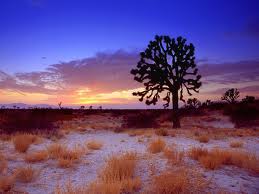
Painting by Lona Towsley.

Note: The UN website for the Decade is http://unddd.unccd.int
Le Kef, Tunisie: Il suffit d’une ville pour soutenir une révolution

In Current Events, Democracy, Human Development, Middle East & North Africa, Solidarity on March 4, 2011 at 1:19 PM

LE KEF, TUNISIE: IL SUFFIT D’UNE VILLE POUR SOUTENIR UNE REVOLUTION

Par Cherifa Maaoui

Je suis une Citoyenne du Monde, membre de l’AWC depuis 2007, mais je suis aussi, au départ, une Tunisienne.

Pendant la révolution, une partie de ma famille était en visite chez moi, dans la banlieue de Paris, pour les Fêtes de Fin d’Année, et le matin même de la chute de Zine el Abidine ben Ali, ils étaient là, avant de prendre quelques heures plus tard le vol du retour …  C’est du moins ce qu’ils pensaient, que nous pensions tous. Après la réouverture de l’espace aérien tunisien, quand ils sont revenus là-bas, ce n’était plus le même pays, du moins sur le plan politique. Car chez nous, dans la ville de nos racines, malgré la révolution, rien n’avait vraiment changé.

Je suis née dans une ville du nord-ouest de la Tunisie, El-Kef, ou plutôt, pour les Français, « Le Kef ». L’Algérie n’est pas loin, à quarante kilomètres seulement, plus proche que Tunis qui se trouve à 175 kilomètres de chez nous. C’est une ville de montagne, perchée à 780 mètres d’altitude, une ville qui conserve les traces de la colonisation romaine entre les anciens remparts qui l’enserrent. Là-bas, les trois religions abrahamiques ont bâti chacune un ou plusieurs lieux de culte, entre le mausolée Sidi ben Makhlouf et la mosquée El Qadriya pour l’Islam, la synagogue de Ghriba pour le judaïsme et l’ancienne basilique romaine pour le christianisme. Nous avons des écoles supérieures et la ville est aussi, excusez du peu, un chef-lieu de gouvernorat, ce qu’on appellerait en France une préfecture. Bref, il y a tout chez nous pour faire penser que nous avons de la chance par rapport au reste de la Tunisie.

Et pourtant, c’est loin d’être le cas. Le Kef est une ville où règne la pauvreté, une de ces villes où, sous Ben Ali, les uns et les autres ont été forcés de partir vers les villes plus grandes ou les zones côtières pour trouver un travail, souvent avec peu de succès. Tous les gens qui ont eu entre leurs mains le destin de la Tunisie nous ont oubliés, tant le protectorat français qu’Habib Bourguiba puis Ben Ali, comme si notre sort n’intéressait personne.

A l’hôpital du Kef, il existe une salle de jeux où les enfants peuvent s’amuser, mais ce n’est que depuis trois ans tout au plus, parce que, grâce à l’aide de mes amis ici en France, j’ai pu y faire installer une climatisation. Avant, la salle était trop froide l’hiver, cet hiver montagnard rigoureux que, depuis l’étranger, l’on n’imagine pas possible en Tunisie, et trop chaude l’été. Mais derrière ce problème résolu, il en reste bien d’autres en souffrance. Nous avons beau avoir des écoles supérieures, cela ne nous empêche pas d’avoir aussi chez nous des quantités de jeunes gens diplômés qui, parfois jusqu’à l’âge de quarante ans, restent sans travail malgré leurs hautes qualifications, ce qui est particulièrement vrai des diplômés du supérieur en langue et littérature arabe.

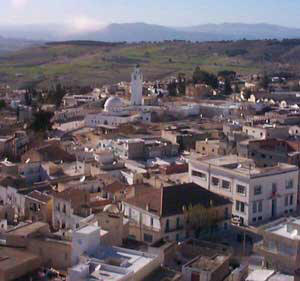
Le Kef, ville oubliée de l'histoire.

Déjà sans aller jusqu’à ce niveau, dans le lycée local, il n’y a pas de salle informatique, le seul cybercafé de la ville étant privé et facturant des sommes exorbitantes aux usagers. Il en faudrait peu pour trouver sur place de quoi équiper chaque écolier d’un cartable et le lycée d’une salle informatique digne de ce nom, la seconde opération pouvant être réalisée pour moins de 300€. Mais je ne peux pas le financer toute seule, d’où ma frustration et ce sentiment d’impuissance qui sont les miens.

En comparaison de l’avenir d’un pays tout entier – le premier pays arabe à avoir évincé son dictateur dans une révolution populaire – le sort d’une seule ville, une ville perdue dans la montagne, peut paraître insignifiant. Mais c’est justement là, dans ce genre d’endroits oubliés de l’histoire, que se jouent les destins des révolutions. C’est lorsque des villes comme Le Kef se sentent soutenues, incluses dans le changement et non exclues de celui-ci, que ce changement qui affecte donc tout un pays est vraiment possible. Sinon, cela donne des violences comme celles qui ont frappé Le Kef début février dernier, des morts, des immeubles brûlés, et la peur, celle qui, s’ajoutant au désespoir, vous tue.

L’ancienne Première Dame américaine Hillary Clinton, aujourd’hui Secrétaire d’Etat, a écrit en 1996 un livre qui s’intitulait Il faut tout un village pour élever un enfant. Moi, je suis convaincue qu’il suffit d’une ville pour soutenir une révolution, et cette ville, je suis bien persuadée que c’est Le Kef.

Cherifa Maaoui (maaoui.cherifa@yahoo.fr) est Officier de Liaison pour le Maghreb du Bureau de Représentation auprès de l’Office des Nations Unies à Genève de l’Association of World Citizens.