The Official Blog of the

Archive for the ‘Environmental protection’ Category

Kunlabora Spirito kaj Ĝiaj Multaj Elmontriĝoj

In AWC Esperanto Division, Environmental protection, Human Development, Solidarity, The Search for Peace, United Nations, World Law on January 25, 2012 at 10:20 PM

KUNLABORA SPIRITO KAJ ĜIAJ MULTAJ ELMONTRIĜOJ

de René Wadlow

esperantigite de Bernard Henry


La Ĝenerala Asembleo de Unuiĝintaj Nacioj (UN), en ĝia Rezolucio A/RES/64/136, konsekris 2012 kiel Internacia Jaro por Kooperativoj, celante antaŭenmeti la larĝan rolon kiun kooperativoj ludas en ekologiema disvolvo kaj malapliigo de malriĉeco. Kiel diris UN-Ĝeneralsekretario Ban Ki-moon, “Kooperativoj estas rememorigilo al la internacia komunumo, ke eblas ja celi al kaj ekonomia kaj sociala respondeco”. La kooperativa movado ludas larĝan rolon en ambaŭ la produkado kaj la disdono de komercaĵoj kaj servoj tra la mondo. Kvankam malpli videblaj ol private posedataj, transnaciaj korporacioj (kiuj havas larĝajn reklambuĝetojn kaj tiel igas siajn komercaĵojn neĉirkaŭpaseblaj), kooperativoj estas grava parto de la monda ekonomio kaj meritas la atenton kiun la UN-jaro kapablas alporti (1).

Tamen, malantaŭ kooperativoj de produkado kaj disdono, loĝas unuavice “Kunlabora Spirito” kiu elmontriĝas laŭ multegaj manieroj, kiuj estas ĉiuj bazitaj sur kunlaboro sed ne ĉiuj nomiĝas “kooperativo”. Kunlabora Spirito substrekas renoviĝon, kunlaboron, mutualan helpon, kaj komunecon kiel “tagordo” je la surloka, nacia, kaj monda niveloj. Kunlaboro estas nepra neceso por la venontaj paŝoj en homa evoluo.

Kunlabora Spirito aperas en multaj formoj. Homoj tra la mondo pli kaj pli ekkonscias, ke ĉiuj el ni estas interligitaj kun aliaj personoj, per la aero kiujn ni spiras kaj akvosistemoj, la grundo kaj ĉiuj vivoformoj. Ju pli ni povas plipovigi unu la alian por ekflori sen noci al aliaj, des pli ni kreas mondan kunlaboran socion. Tial ĉiu ago de la individuo – aŭ neago – povas havi forserĉajn konsekvencojn ambaŭ por ĉiuj homoj en la mondo kaj por la naturmedio je kiu ni ĉiuj dependas.

Kunlabora Spirito evidentiĝas en la kreskaj zorgoj de Verda – ekologiema – Ekonomio. Eŭropo subtenas komercan kaj kunlaboran disvolvon de karbonmalpliigaj teknologioj kun miksaĵo de registara investado, impostosenpezoj, pruntedonoj kaj leĝoj. Ekzistas agnoskata neceso ŝirmi la naturmedion, investi en puran energion kaj krei daŭripovajn laborpostenojn, sed multo restas por fari en la tuta mondo.

Tra la mondo, ni ĉiuj estas enirantaj periodon de ŝanĝiĝo por kiu estas neniaj antaŭplanoj. Tial nepras ke ni scipovu kunan laboron. La formoj de kunlabora agado fontas el historiaj cirkonstancoj, surloka kulturo, kaj ekologiaj kondiĉoj. Tamen ekzistas komuna zorgo pri kunlabora uzo de naturvivrimedoj, komercaĵoj kaj servoj. Kunlabora agado loĝas en la koro de la ekonomia kaj politika alturno al mondnivela disvolvo de vivrimedoj kaj pli bona vivokvalito.

Ekzistas multaj formoj tradiciaj de kunlaboro, de mutuala helpo en periodoj de manko. 2012 devas utili kiel ŝanco alrigardi la multajn manierojn laŭ kiuj Kunlabora Spirito elmontriĝas en la mondo. Tial 2012 devas esti nia ĉefa interesocentro koncerne al la plifortigo de la konvinkoforto de Kunlabora Spirito.


(1)  Bv vidi la UN-retejon pri la Jaro: http://social.un.org/coopyear


Prof. René Wadlow estas Prezidanto kaj Ĉefreprezentanto ĉe UN en Ĝenevo de la Asocio de la Mondcivitanoj.

Bernard Henry estas la Oficisto pri Eksteraj Rilatoj de la Oficejo ĉe UN en Ĝenevo kaj la Ĝenerala Direktoro de la Esperanto-sekcio de la Asocio de la Mondcivitanoj.

June 17: A UN Emphasis on the Wise Use of Dry Lands

In Africa, Environmental protection, Human Development, Solidarity on June 17, 2011 at 7:30 PM

JUNE 17 : A UN EMPHASIS ON THE WISE USE OF DRY LANDS

By René Wadlow

 
The World Day to Combat Desertification, June 17 each year, was proclaimed by the United Nations (UN) General Assembly in resolution A/RES/49/1995. The day has been observed since 1995. However United Nations efforts on Desertification began in 1977 with the UN Conference on Desertification held in Nairobi. The desertification conference was convened by the UN General Assembly in the midst of a series of catastrophic droughts in the Sudano-Sahelian region of Africa. The conference was designed to be the centerpiece of a massive worldwide attack to arrest the spread of deserts or desert-like conditions not only in Africa south of the Sahara but wherever such conditions encroached on the livelihood of those who lived in the desert or in their destructive path. The history of the conference is vividly recalled by James Walls in his book Land, Men and Sand (New York: Macmillan, 1980).

At the conference, there was a call for the mobilization of human and financial resources to hold and then push back the advancing desert. “Attack” may have been the wrong word and “mobilization” too military a metaphor for the very inadequate measures taken later in the Sudano-Sahelian area. Today, in 2011, there are real possibilities of famine in West and East Africa on the edges of the desert. Niger and Mali and parts of Senegal and Chad in the Sahel belt are facing the consequences of serious drought as are parts of northern Kenya and Somalia.

The most dramatic case is that of Darfur, Sudan which partakes of the Sahel drought but which also faces a war in which the conflicts between pastoralists and settled agriculturalists have become politicized. It is estimated that 300,000 have been killed since the start of the war late in 2003. Some two and a half million people have been uprooted. The agricultural infrastructure of homes, barns and wells has been deliberately destroyed. It will be difficult and costly to repair this destruction. The Darfur conflict highlights the need for a broader approach to the analysis and interpretation of active and potential armed conflicts in the Sahel region. This analysis needs to take into consideration the impact of environmental scarcity and climate variation in complex situations.

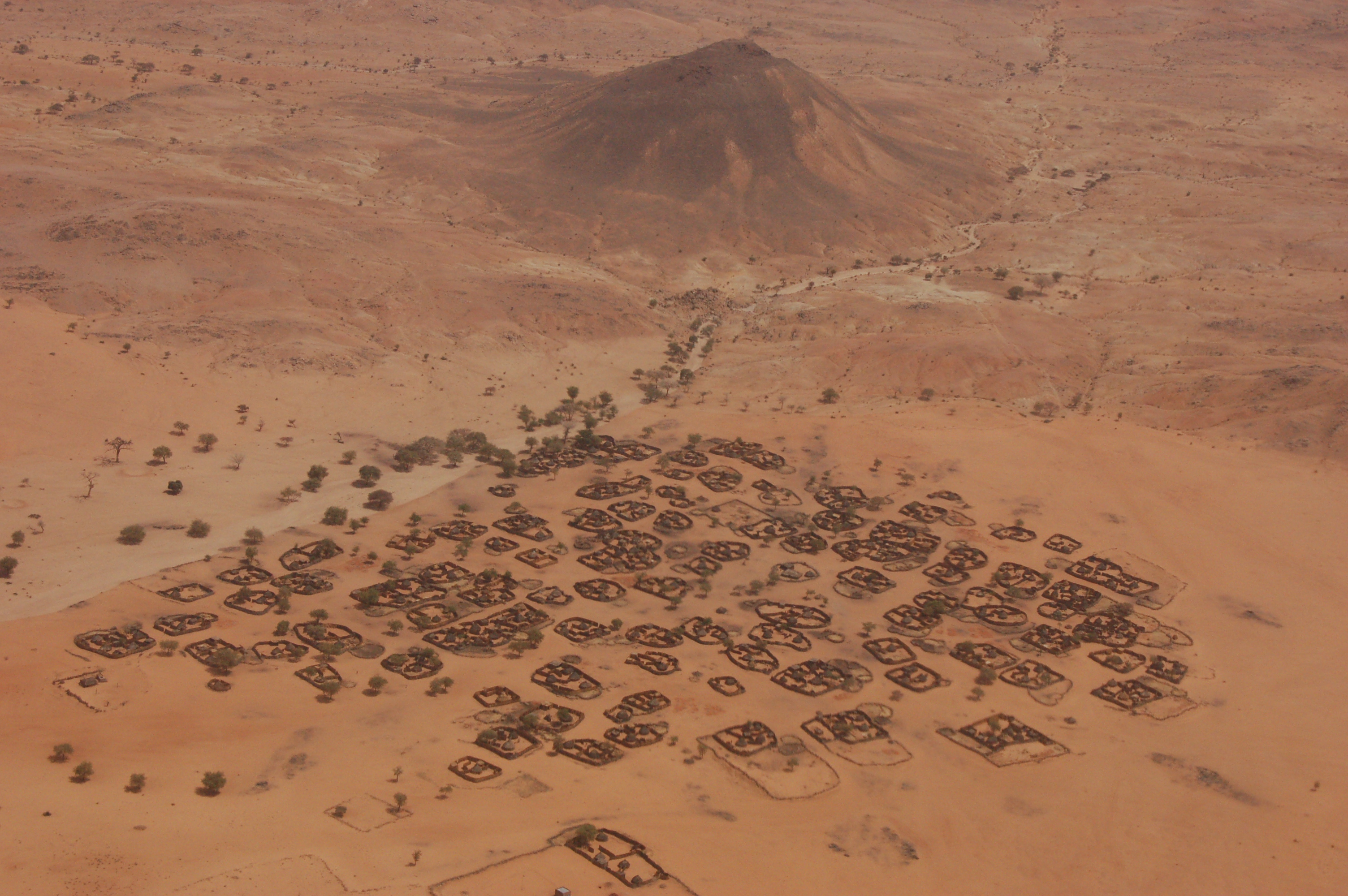
A settlement in the semi-desert north of El Fasher, Northern Darfur.

Earth is our common home, and therefore all, as world citizens, must organize to protect it. It is up to all of us concerned with ecologically-sound development to draw awareness to both the dangers and the promises of deserts. What is the core of the desertification process? The destruction of land that was once productive does not stem from mysterious and remorseless forces of nature but from the actions of humans. Desertification is a social phenomenon. The causes of dry land degradation include overgrazing, deforestation, agricultural mismanagement, fuel wood over-consumption, and industry and urbanization. Thus, by preventing land degradation and improving agricultural practices, action to combat desertification can lead to increased agricultural productivity and alleviate poverty. Humans are both the despoiler and the victim of the process. Increasingly, populations are eking out a livelihood on a dwindling resource, hemmed in by encroaching plantations and sedentary agriculturalists, by towns and roads. Pressure of population upon resources leads to tensions which can burst into violence as we see in Darfur and which spilled over into eastern Chad.
Desertification needs to be seen in a holistic way. If we see desertification only as aridity, we may miss areas of impact such as the humid tropics. We need to consider the special problems of water-logging, salinity or alkalinity of irrigation systems that destroy land each year. The value of UN-designated Days is the creation of a process of identifying major clusters of problems, bringing the best minds to bear on them so as to have a scientific and social substratum on which common political will can be found and from which action will follow.

Desertification is a plague that upsets the traditional balance between people, their habitat, and the socio-economic systems by which they live. Because desertification disturbs a region’s natural resource base, it promotes insecurity. Insecurity leads to strife. If allowed to degenerate, strife results in inter-clan feuding, civil war, cross-border raiding and military confrontation. Yet dry land communities have great resources that can be put to fighting poverty and desertification, provided they are properly empowered and supported.

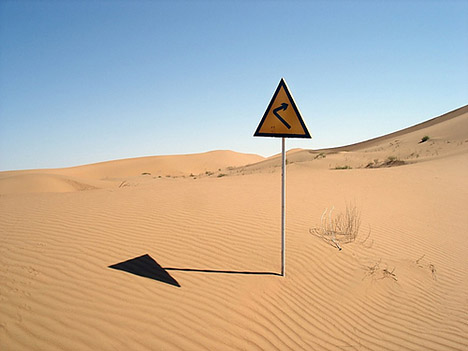
In China, desertification spreads 1,300 square miles per year.

Only with a lessening of insecurity can cultivators and pastoralists living in or near deserts turn their attention to adapting traditional systems. There can be no reversion to purely traditional systems. But for insecurity to abate, a lengthy process of conciliation must begin and forms of conflict resolution strengthened. People must be encouraged to understand that diversity is a crucial element of ecologically-sound development. Judicious resource management breeds security and an improved quality of life for everyone. We can see what efforts can be made to encourage reforestation and to slow the unwanted advances of deserts.
The contrast between widespread rural poverty and environmental degradation, on the one land, and the opportunities which can be created on a small scale through community empowerment, access to groundwater and sustainable land management, defines the ideals of the Day. The Day is not about fighting deserts, it is about reversing land degradation trends, improving living conditions and alleviating poverty in rural dry lands. Thus, the World Day to Combat Desertification can be a Day during which we can learn more of the lives of the people in and on the edge of the deserts.

Even trees can grow in the desert ... A sign of hope indeed. Now let's act on it.

Deserts can also have a positive image. There is a significant role in the literature and mythology of spirituality — the 40 years in the desert before entering the “Promised Land” of Israel, the 40 days in the desert before starting his mission for Jesus, the life in the desert of the early Christian church fathers. Today, there are an increasing number of spiritual retreats in the desert chosen for its silence and for the essential nature of the landscape. Thus, during this Day our emphasis must not be on “combat” but on wise and ecologically-sound use of dry lands.

René Wadlow is Senior Vice President and Chief Representative to the United Nations Office at Geneva of the Association of World Citizens.

Rio Plus 20 – UN Desert Decade

In Current Events, Environmental protection, Solidarity on May 20, 2011 at 8:30 PM

RIO PLUS 20

By René Wadlow


The United Nations (UN) Conference on Sustainable Development will take place in Brazil on June 4-6, 2012 to mark the 20th anniversary of the 1992 UN Conference on Environment and Development in Rio de Janeiro. Thus the popular name of the upcoming conference: “Rio plus 20”. The Conference will be an opportunity to bring together all the UN-designated efforts underway or the protection and wise use of Nature. As humanity, we are at the mid-point of the UN-designated Water for Life Decade (2005-2015). We are at the start of the International Decade of Deserts and Desertification (2010-2020) and nearly halfway into the UN-designated 2011: Year of Forests.

UN-designated Years rarely make newspaper headlines, and most governments limit themselves to voting for the Year in the UN General Assembly and then go on as before. The designated Year or Decade gives some legitimacy and support to the UN and the UN Specialized Agencies which are already working on the issue. However, successful years are always the result of non-governmental organization (NGO) activities. The most successful UN-designated Year was 1975: The International Year of Women.

In 1975, there were already, worldwide, women’s organizations, often well-structured, and which were prepared to use the designation of the UN Year as a platform to present their work, to network among themselves and to reach out to new partners. Moreover, 1975 fell into a period of intense discussion in Western Europe and the USA on the role of women, on relations between women and men, and what was generally called “consciousness-raising” among women. The emphasis was on the ways – sometimes subtle and often less so – that women were hindered in their full development as persons.

Deserts have no such already-organized supporters. Thus it is more difficult to draw attention to issues of desertification and the livelihood of people living at the edge of deserts. However, there are important issues related to deserts. World citizens are making an effort to highlight the Decade as in the following essay:


UN DESERT DECADE

By René Wadlow

God created lands filled with water as a place for man to live; and the desert so that he can discover his soul.


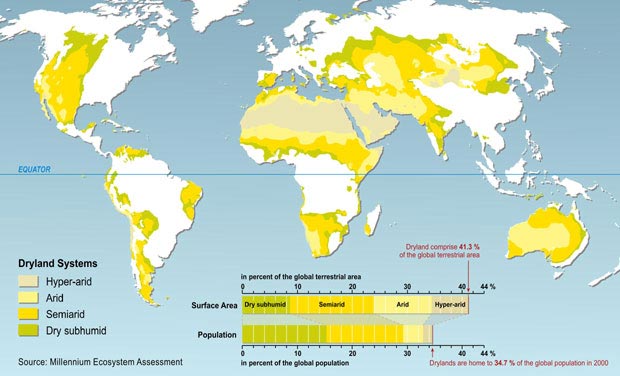
The decade 2010 to 2020 has been designated by the UN General Assembly as The International Decade of Deserts and Desertification. It is estimated that dry lands cover approximately 40 percent of the world’s landmass. The Decade marks the efforts begun in 1977 with the UN Conference on Desertification held in Nairobi. The desertification conference was convened by the UN General Assembly in the midst of a series of catastrophic droughts in the Sudano-Sahelian region of Africa. The conference was designed to be the centerpiece of a massive worldwide attack to arrest the spread of deserts or desert-like conditions not only in Africa south of the Sahara but wherever such conditions encroached on the livelihood of those who lived in the desert or in their destructive path. The history of the conference is vividly recalled by James Walls in his book Land, Men and Sand (New York: Macmillan, 1980).

At the conference, there was a call for the mobilization of human and financial resources to hold and then push back the advancing desert. “Attack” may have been the wrong word and “mobilization” too military a metaphor for the very inadequate measures taken later in the Sudano-Sahelian area. In 2010 at the start of the Decade, there are real possibilities of famine in West and East Africa on the edges of the desert. Niger and Mali and parts of Senegal and Chad in the Sahel belt are facing the consequences of serious drought as are parts of northern Kenya and Somalia.

The most dramatic case is that of Darfur, Sudan which partakes of the Sahel drought but which also faces a war in which the conflicts between pastoralists and settled agriculturalists have become politicized. It is estimated that 300,000 have been killed since the start of the war late in 2003. Some two and a half million people have been uprooted. The agricultural infrastructure of homes, barns and wells has been deliberately destroyed. It will be difficult and costly to repair this destruction. The Darfur conflict highlights the need for a broader approach to the analysis and interpretation of active and potential armed conflicts in the Sahel region. This analysis needs to take into consideration the impact of environmental scarcity and climate variation in complex situations.

Earth is our common home, and therefore all, as world citizens, must organize to protect it. It is up to all of us concerned with ecologically-sound development to use the Decade to draw awareness to both the dangers and the promises of deserts. What is the core of the desertification process? The destruction of land that was once productive does not stem from mysterious and remorseless forces of nature but from the actions of humans. Desertification is a social phenomenon. The causes of dry land degradation include overgrazing, deforestation, agricultural mismanagement, fuel wood over-consumption, and industry and urbanization. Thus, by preventing land degradation and improving agricultural practices, action to combat desertification can lead to increased agricultural productivity and alleviate poverty. Humans are both the despoiler and the victim of the process. Increasingly, populations are eking out a livelihood on a dwindling resource, hemmed in by encroaching plantations and sedentary agriculturalists, by towns and roads. Pressure of population upon resources leads to tensions which can burst into violence as we see in Darfur and which spilled over into eastern Chad.

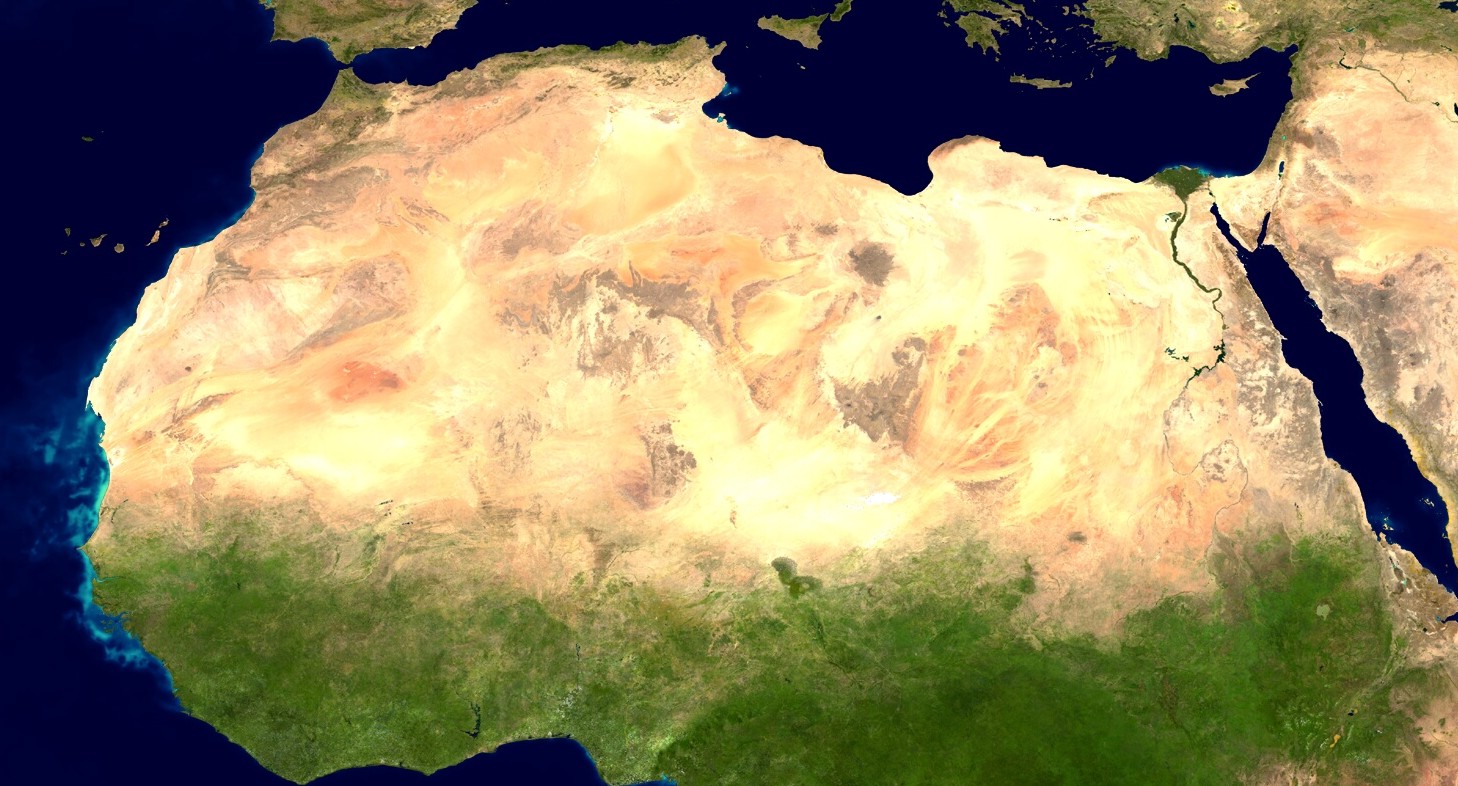
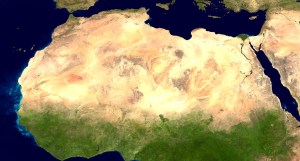
The Sahara (in Arabic, الصحراء الكبرى‎, "Aṣ Ṣaḥrā´ al Kubrā", "The Great Desert" in English) is the world's largest non-polar (hot) desert.

Desertification needs to be seen in a holistic way. If we see desertification only as aridity, we may miss areas of impact such as the humid tropics. We need to consider the special problems of water-logging, salinity or alkalinity of irrigation systems that destroy land each year. The value of UN-designated decades is that the process of identifying major clusters of problems, bringing the best minds to bear on them so as to have a scientific and social substratum on which common political will can be found and from which action will follow.

Desertification is a plague that upsets the traditional balance between people, their habitat, and the socio-economic systems by which they live. Because desertification disturbs a region’s natural resource base, it promotes insecurity. Insecurity leads to strife. If allowed to degenerate, strife results in inter-clan feuding, civil war, cross-border raiding and military confrontation. Yet dry land communities have great resources that can be put to fighting poverty and desertification, provided they are properly empowered and supported.

Only with a lessening of insecurity can cultivators and pastoralists living in or near deserts turn their attention to adapting traditional systems. There can be no reversion to purely traditional systems. But for insecurity to abate, a lengthy process of conciliation must begin and forms of conflict resolution strengthened. People must be encouraged to understand that diversity is a crucial element of ecologically-sound development. Judicious resource management breeds security and an improved quality of life for everyone. We can see what efforts can be made to encourage reforestation and to slow the unwanted advances of deserts.

An overview of global desertification: Now is the time to take action.

The contrast between widespread rural poverty and environmental degradation, on the one land, and the opportunities which can be created on a small scale through community empowerment, access to groundwater and sustainable land management, defines the ideals of the Decade of Deserts. The Decade is not about fighting deserts, it is about reversing land degradation trends, improving living conditions and alleviating poverty in rural dry lands. Thus, the Decade of Deserts can be a decade during which we can learn more of the lives of the people in and on the edge of the deserts.

Deserts can also have a positive image. There is a significant role in the literature and mythology of spirituality – the 40 years in the desert before entering the “Promised Land” of Israel, the 40 days in the desert before starting his mission for Jesus, the life in the desert of the early Christian church fathers. Today, there are an increasing number of spiritual retreats in the desert chosen for its silence and for the essential nature of the landscape. Thus, it is a Decade in which we can all usefully participate.

René Wadlow is Senior Vice President and Chief Representative to the United Nations Office at Geneva of the Association of World Citizens.

Painting by Lona Towsley.

Note: The UN website for the Decade is http://unddd.unccd.int