By Raphael Cohen-Almagor
Giles Milton, The Stalin Affair: The Impossible Alliance That Won the War.
New York: Henry Holt and Co., 2024, 336pp.
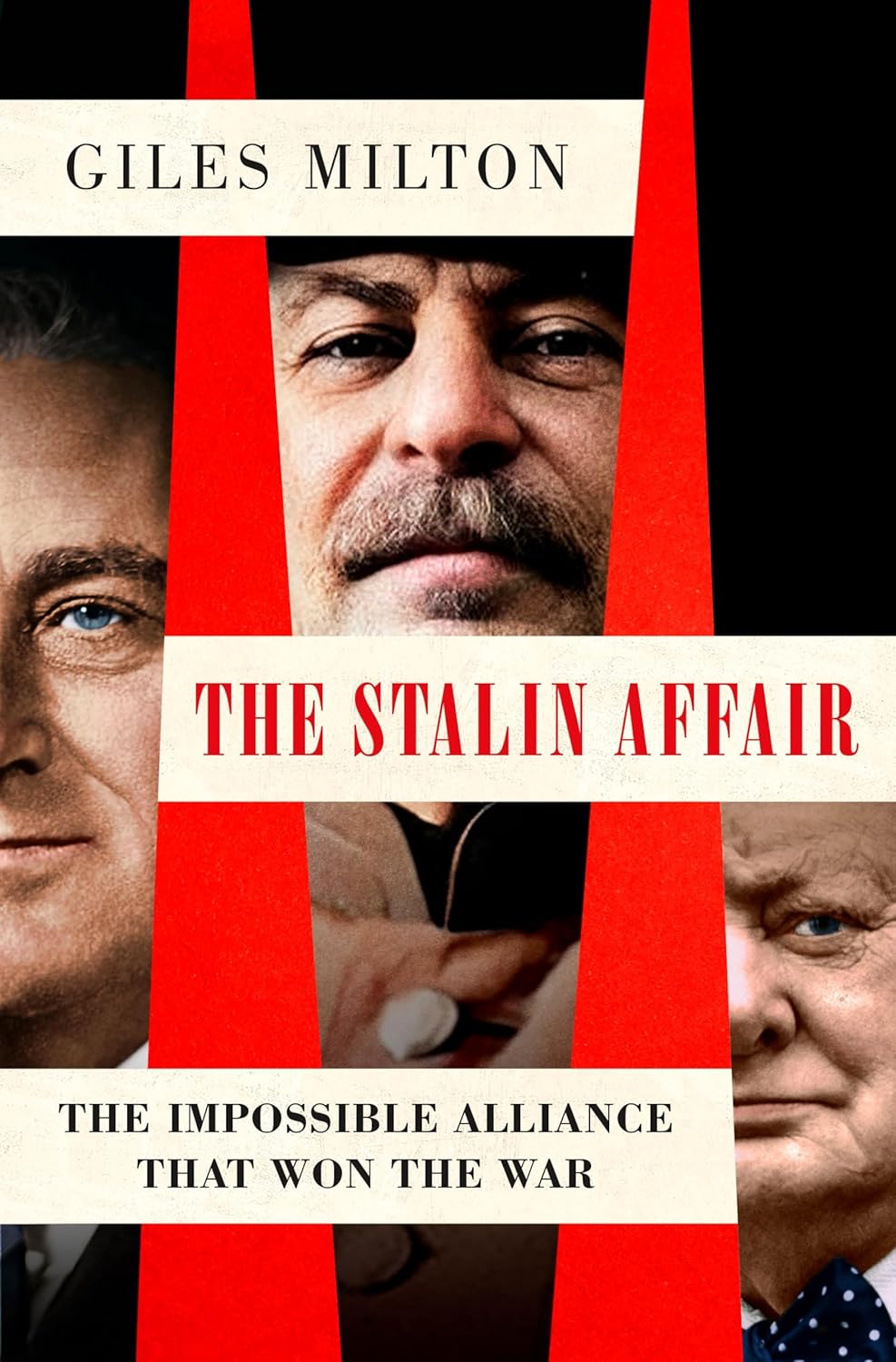
This is a gripping narrative of the uneasy partnership between Churchill, Roosevelt and Stalin during World War II. Drawing on unpublished diaries, letters, and secret reports, Milton reveals how a diverse cast of diplomats and political figures—including U.S. billionaire envoy W. Averell Harriman, his charming daughter Kathy and Archibald “Archie” Clark Kerr, the British ambassador to the Soviet Union—worked to manage Stalin’s volatile temperament and secure Soviet cooperation against Hitler.
The book explores how Churchill, despite his deep mistrust of Stalin, recognized the strategic necessity of alliance after Hitler’s invasion of the Soviet Union. It also details the internal resistance in both Britain and the U.S., where many preferred isolationism or hoped the two dictators would destroy each other. The turning point came with Japan’s attack on Pearl Harbor and Hitler’s declaration of war on the United States, forcing a reluctant unity.
The book is filled with many small stories, impressions, romantic affairs and anecdotes that shed light on historic events and on the personalities of the three leaders who came together to fight Nazism – Churchill out of conviction, Stalin as a result of Hitler’s betrayal, and Roosevelt due to the Japanese surprise attack on the American navy in Hawaii. The colourful descriptions are captivating. Of particular interest is the story of Churchill’s “naughty document”. Officially known as the Percentages Agreement, this informal pact was struck between Winston Churchill and Joseph Stalin during the Fourth Moscow Conference in October 1944. On a simple scrap of paper, Churchill proposed dividing postwar influence in Eastern Europe by percentages—essentially carving up the region into spheres of control. The document suggested to divide post-war countries between the Soviet Union and Britain, behind Roosevelt’s back. The countries and percentages were: Romania: 90% Soviet, 10% others; Greece: 90% British (in accord with the U.S.), 10% Soviet; Yugoslavia: 50/50; Hungary: 50/50, and Bulgaria: 75% Soviet, 25% others. Churchill famously referred to it as his “naughty document” because he knew how blunt and imperialistic it appeared. He even remarked that the Americans would be “shocked” by its crudeness. Stalin reportedly ticked the paper in approval, and the agreement was honoured in some cases—most notably in Greece, where Britain retained dominant influence even during civil unrest. The document was later published in Churchill’s memoirs and has since become a symbol of the realpolitik that shaped the postwar order.
Milton paints vivid scenes of nervous negotiations, clashing personalities, festive dinners and the fragile diplomacy that held the alliance together long enough to defeat Nazi Germany—though it ultimately could not survive the postwar tense reality. The book offers both sweeping historical insight and intimate character studies, making it a compelling read for anyone interested in the political complexities behind wartime strategy.
Prof. Raphael Cohen-Almagor is an Israeli-British academic.
 Association of World Citizens