By René Wadlow
“Is not this what I require of you … to snap every yoke and set free those who have been crushed?”
Isaiah, 58 v 6
There are many ways that we are held in chains as individuals through our own desires and habits. There are also many ways that society keeps others in chains. Our task is to help snap the individual bonds of slavery through our efforts at self-liberation and self-realization. To break the chains that society creates, we must work together cooperatively.
Slavery today, as in the past, can have one or more of the following characteristics: A slave is forced to work though mental or physical threat. The person is owned or controlled by an “employer” usually through mental or physical abuse and threats. The person is dehumanized by being treated as a commodity and bought and sold as if property. There are also restrictions placed on a person’s freedom of movement and kept isolated from those who might help to break the chains.
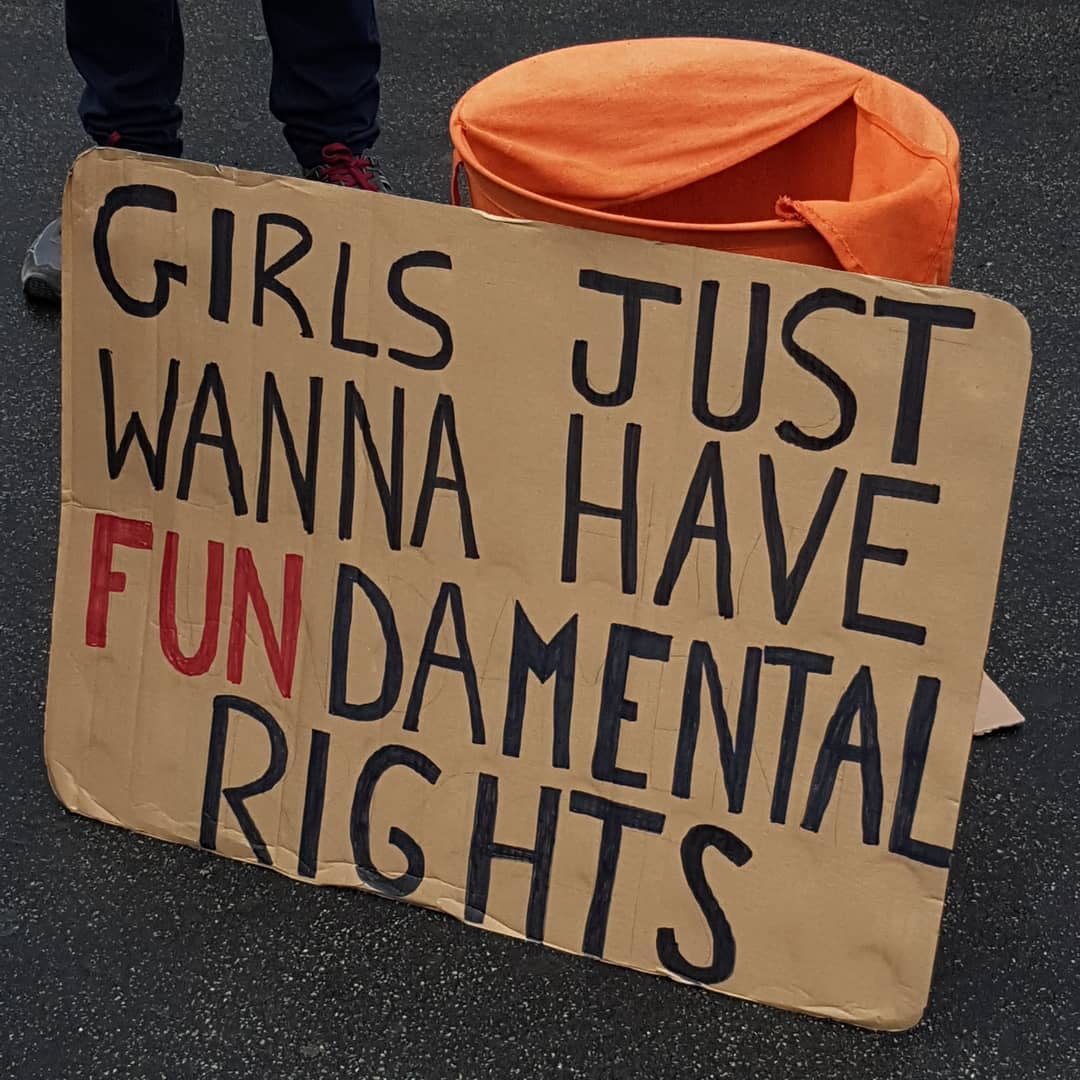
Women are often the victims of diverse forms of servitude, and International Women’s Day is an appropriate time to analyze patterns and our efforts to liberate. Here we can look at four categories through there are often links among them.
A first category is debt bondage, especially practiced in South Asia. It is estimated that there are some 20 million people held in debt bondage throughout the world, even though debt bondage is forbidden by the Supplementary Convention of 1956 on the Abolition of Slavery, the Slave Trade and Institutions and Practices Similar to Slavery. Debt bondage is largely a rural practice, and local government officials and police often overlook its consequences. The debt is usually contracted in an emergency such as sickness or to cover expenses between harvests. However, often the person making the debt from money lenders or richer farmers cannot read and, therefore, has no idea of what “rates of interest” means, nor do they know when they have worked off the debt. It is often a child or younger member of the family who is “given” to work to pay off the debt. The debt is often never considered to have been paid and will go from one generation to the next.
Child labor is a second and related category of contemporary slavery. The International Labor Organization (ILO) estimates that there are some 180 million youth aged between 5 and 17 years old who are in the worst forms of child labor – work that is hazardous to their mental and physical health. The ILO Convention of 1999 (N° 182) is devoted to the “Worst Forms of Child Labor.” Translating these ILO efforts to the local workplace is a large job and needs to be done with care as some families depend heavily on income from children’s work.
Early and forced marriage is a third category of contemporary slavery. This form is often overlooked or excused as “custom” for it is usually carried out by the families themselves. In many societies, marriage is an alliance between families with elements of social control over wealth, power, and the sexuality of women as the motive. Women and girls are married without choice and often forced into lives of servitude. Because the girl child is seen in some communities as having lower priority, she is often denied access to such basic necessities as education which could ultimately protect her from exploitation.
A fourth category is human trafficking, often linked to prostitution which is the fastest-growing means by which people are enslaved today. Women, children and men are coerced and deceived by traffickers who promise work and good pay in areas far from their family and community. The reality is usually a harsh contrast. People are forced through the threat and use of violence to work against their will. Trafficking in persons is often carried out by groups which also traffic guns, drugs and pornography. These groups are willing to kill to keep their trade growing and often corrupt local officials and police.
Thus, on this International Women’s Day, we need to evaluate closely the challenges which face us within global society and to set out clearly the steps which must be undertaken for equality and justice.
Also available on our Official Blog:
March 8: Women and the People’s Revolution (2011)
March 8 – International Day of Women: Women as Peacemakers (2012)
March 8, 2015: International Women’s Day – Balance of Yin and Yang
March 8: Start of the Russian Revolution (2017)
The Spiritual and Socialist Start of International Women’s Day (2019)
Prof. René Wadlow is President of the Association of World Citizens.
 Association of World Citizens